

Mitcham · Garden recovery in practical working stages
Gardeners Mitcham
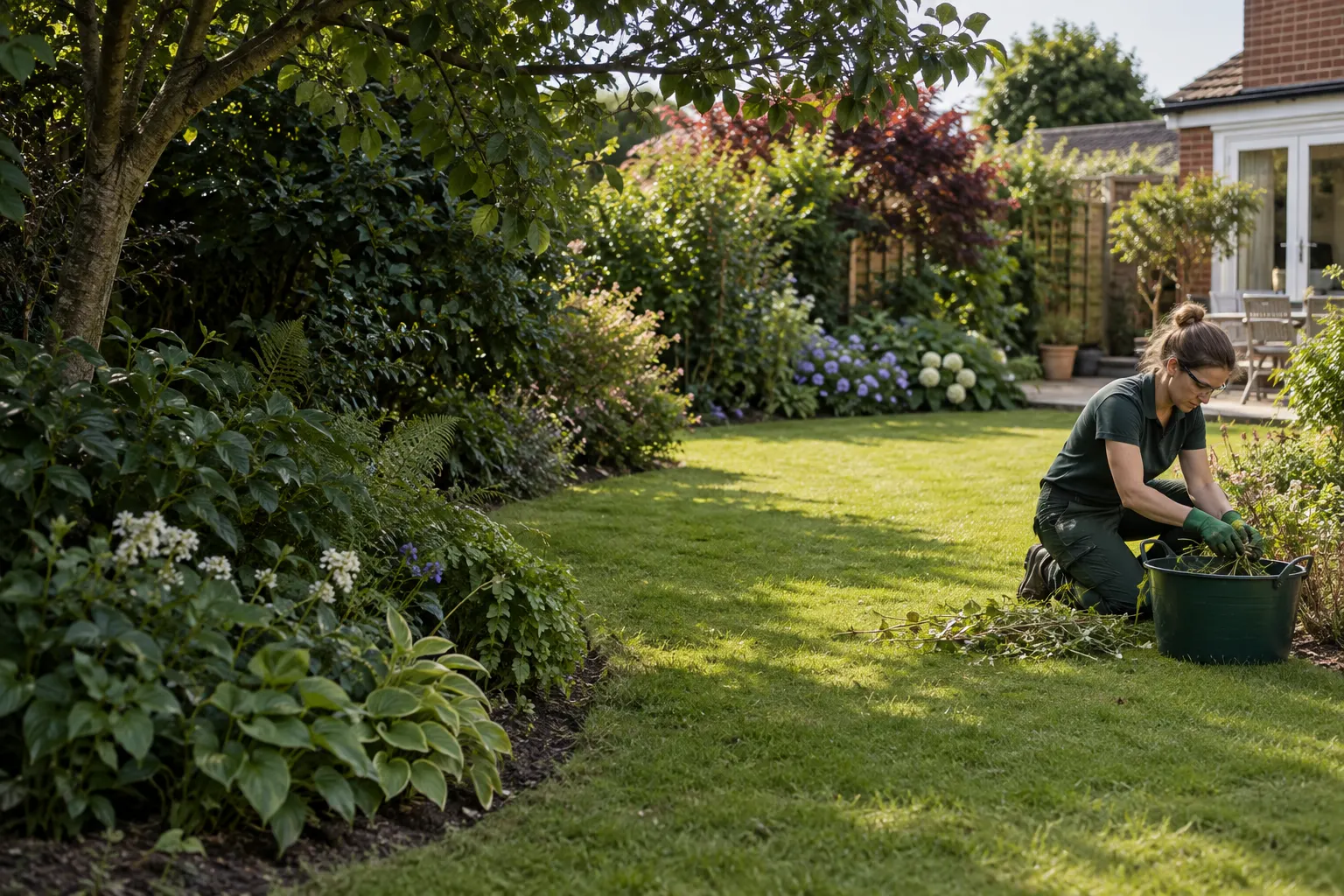
We recover overgrown areas by separating long grass, tangled stems and woody material from useful planting. Work progresses from an accessible edge, with collection and a defined first result coordinated together. The exposed ground then informs further lawn, root or planting operations, giving the garden a practical sequence from initial recovery into continuing maintenance.
- How do you handle hidden objects during clearance? Work pauses in the affected section when wire, sharp pieces or unknown material appears, before powered cutting approaches the obstruction.
- How is the first recovery stage selected? Our gardeners prioritise useful access and a workable area, keeping completed ground clear while more demanding sections remain separately identified.
Controlled clearance that reveals the next operation
How do your gardeners begin work in an overgrown garden?
We identify plants to keep and open an accessible working area before progressing through the growth. Long grass, climbing stems and woody material are handled differently, with collection keeping the next edge visible. The operation advances in sections as ground and roots are exposed. This gives recovery a controlled sequence instead of cutting indiscriminately through useful plants and concealed obstructions to produce the largest immediate pile.
What does the first clearance establish for later work?
The first layer can reveal sound paving, bare ground, weak turf and roots still needing attention. We use those findings to distinguish completed clearance from the next lawn or planting operation. The proposal does not assume removal of visible growth resolves every condition below it. That first stage provides an understood working space and a clearer basis for what the garden requires afterwards.
Material handled at the working edge
Cut stems controlled before carrying through the garden
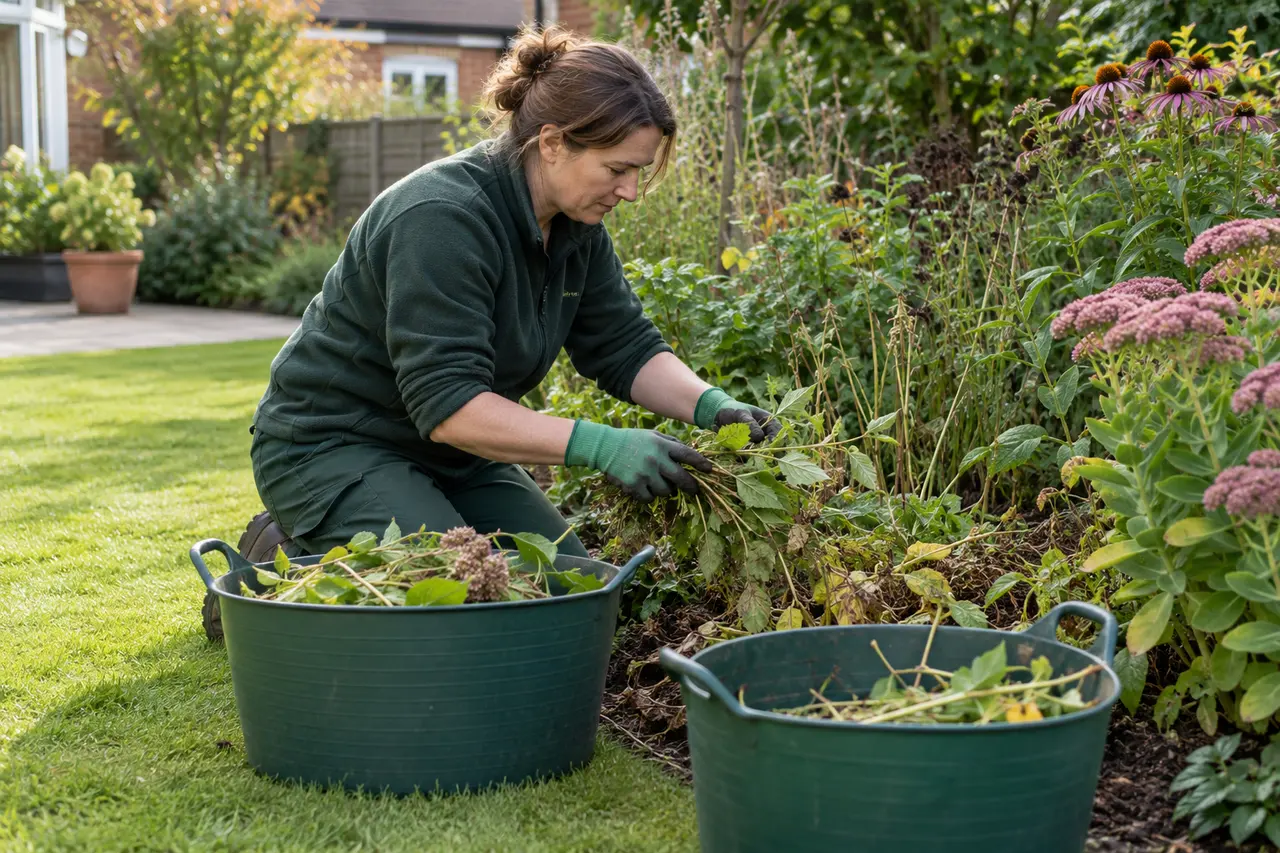
Long detached stems can catch neighbouring plants on their way out. Our gardeners shorten commissioned cut material into manageable lengths where appropriate, control pointed ends and gather loose pieces from the route before the next trip. This keeps the working edge visible and the outgoing load separate from living growth. Material already cut is not dragged back through the bed simply because the route is narrow or the load looks easier to pull together.
We begin at a visible edge and expose a manageable area before powered cutting advances. Wire, damaged supports and sharp objects can then be distinguished from the vegetation. If an obstruction or unknown item appears, that section pauses until its nature and handling are established. Progress is measured by the usable ground recovered and material properly gathered, not solely the height of the first cuttings pile.
Our garden clean-up establishes a usable working area and collects commissioned green growth. Its volume and carrying route inform the operation, with household material identified separately. The garden-waste disposal guide distinguishes the different items uncovered during progress. This gives the newly exposed section an outgoing arrangement for its actual contents while the remaining garden stays clear for further recovery.
- We trace tangled stems before releasing them from useful shrubs.
- Visible soft growth and woody branches receive different handling.
- The affected section pauses when hidden wire or sharp items appear.
- Detached stems are gathered from the newly opened route.
- Remaining roots are identified before further recovery is selected.
A defined first completed area
Useful access recovered before work expands
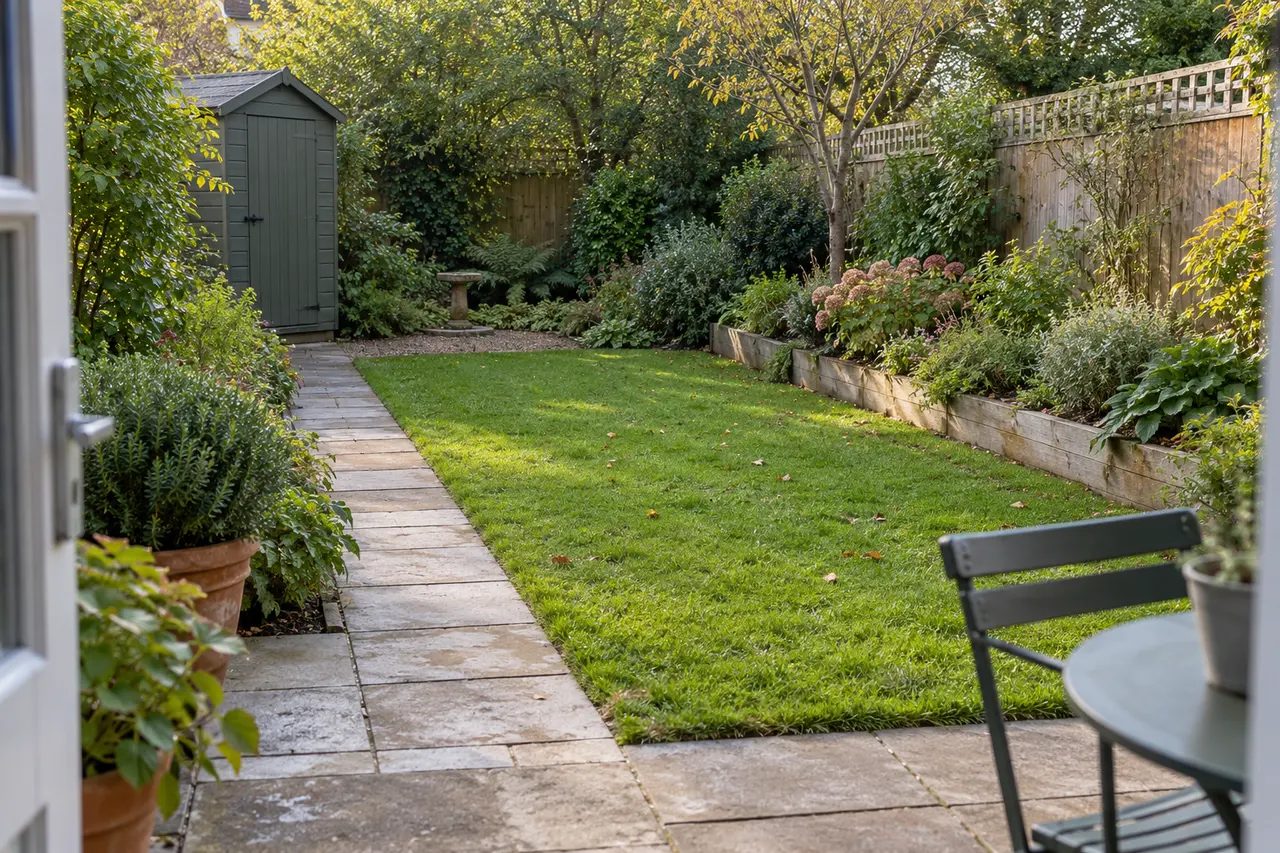
Our first stage can open the route to a shed and recover an adjoining bed while a more demanding corner awaits another operation. The boundary between those areas stays clear. Outgoing material is not allowed to spread back onto completed ground, and the next section retains its own access. This gives the household a practical improvement without describing the entire garden as finished before later work has been assessed.
The first area is selected for useful access and controlled handling. An opened path improves carrying, while exposed paving can provide firm footing. A bed containing useful perennials receives the close attention it needs. These different starting points let the team recover practical space while preserving the plants discovered within it, with later stages identified around the usable result already achieved.
After the opening clearance, ongoing maintenance can collect new fallen material, manage smaller weeds and attend to appropriate regrowth. That is a different workload from the initial recovery. We identify unfinished sections so continuing visits do not repeatedly tidy the easiest exposed space while a more difficult area disappears from the plan. The sequence moves the recovery forward with its different stages still understandable.
The lawn beneath taller growth
Grass condition assessed as the surface becomes visible
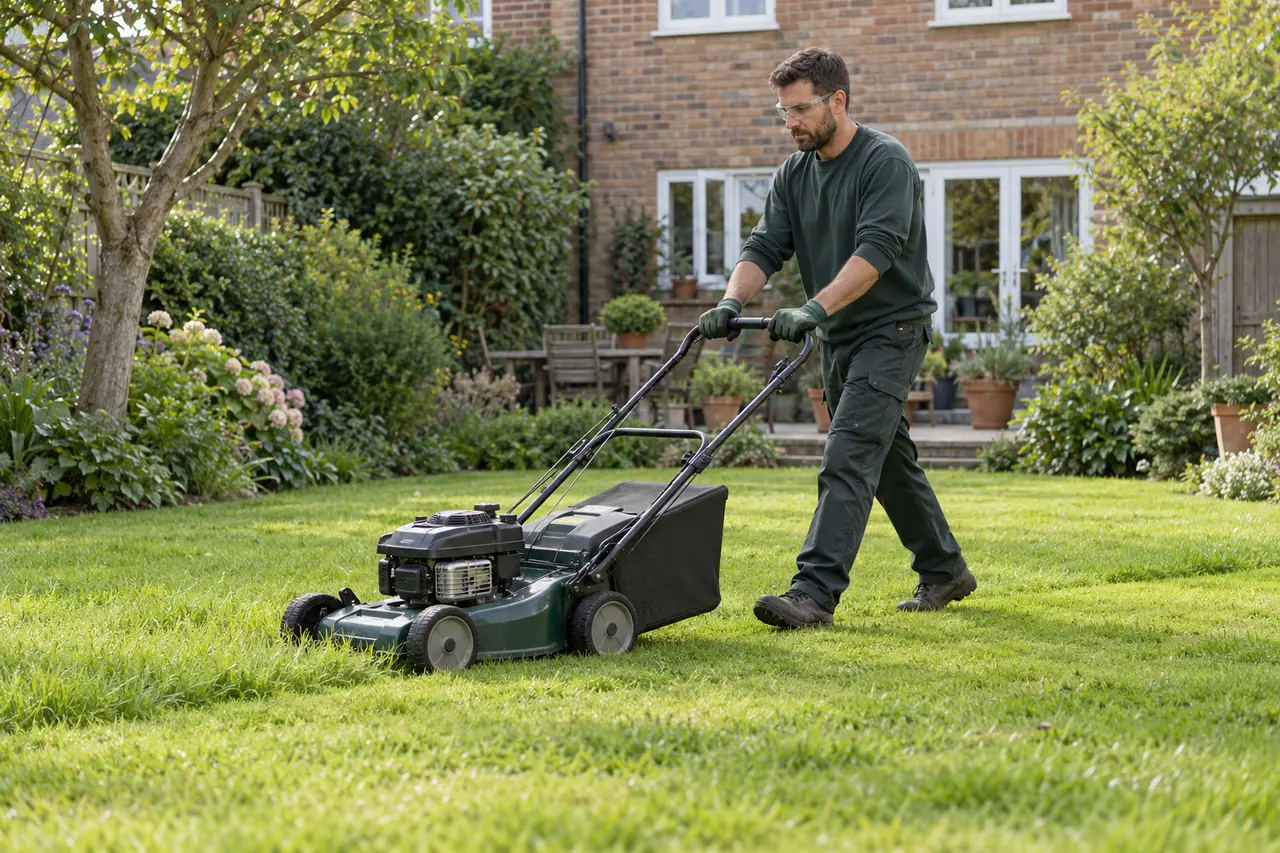
The first controlled reduction of long grass allows the gardener to see more of the turf and ground. Visible debris is collected and the method follows the growth and surface available. Stressed grass is not immediately taken to a very short finish. A first pass can expose unevenness without correcting it, so our result distinguishes a safely opened view of the lawn from a promise of an instantly even surface.
The first cut can reveal thatch, bare soil or coarse growth requiring closer consideration. Those observations inform the next lawn operation. Mowing can manage some returning growth, while a depression or unsuitable growing condition needs a different response. The clearer surface therefore gives a basis for selecting useful follow-up, with the grass worth maintaining and the affected portions both visible.
Further lawn care identifies seeding, treatment or renovation where the exposed surface requires it. Timing and extent are described for that operation. Meanwhile, traffic and stored loads stay clear of the weakest newly visible areas. This leaves the lawn available for its appropriate next stage, keeping recovery work distinct from the routine mowing that can continue on suitable established grass.
The boundary remaining in place
Recovery stops at the identified hedge section
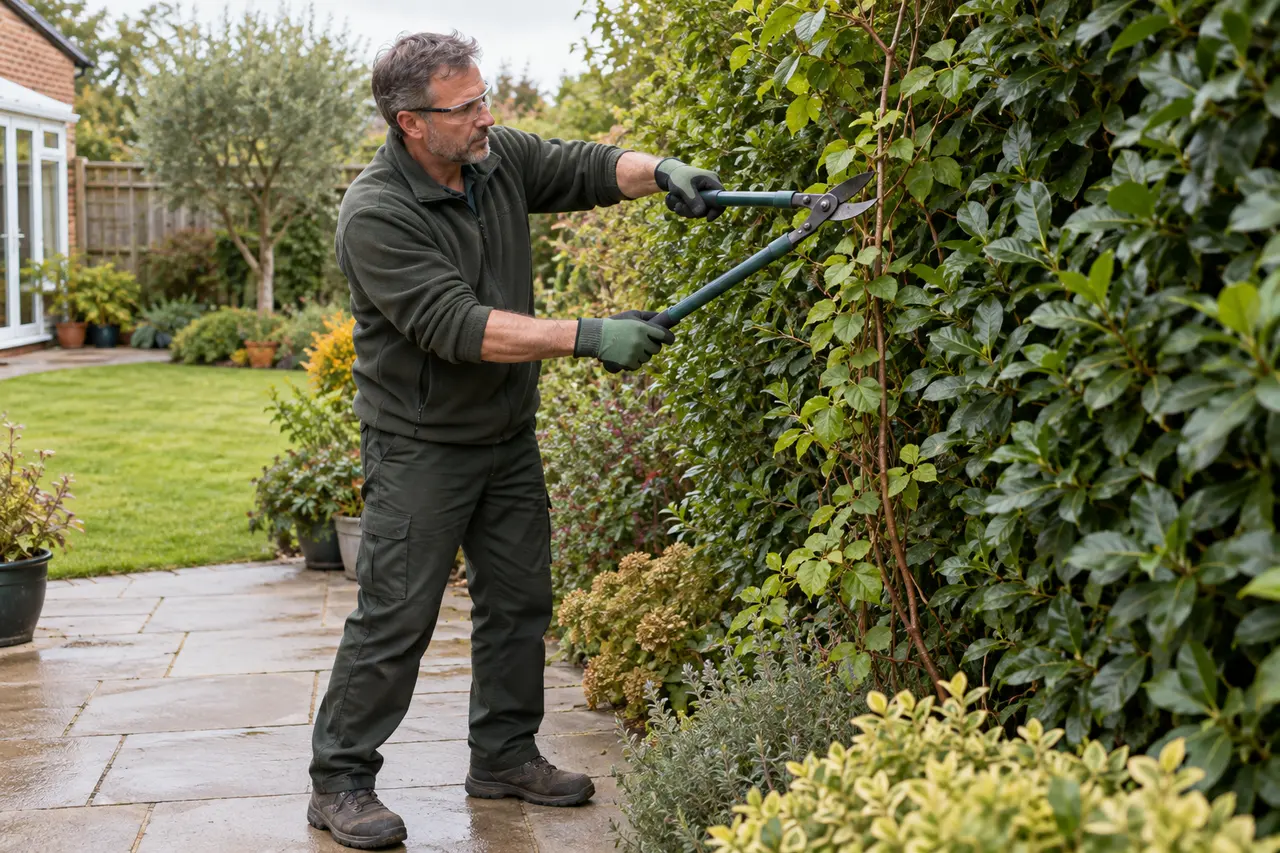
We identify a fixed reference where clearance meets a hedge staying untouched, such as a post or an agreed end plant. Cut material is lifted into the working area, keeping the screen clear of the outgoing load. The maintained boundary remains apparent as access opens beside it. This gives the local recovery a precise stopping point through cutting and collection.
Within the commissioned section, a reachable face can be trimmed for the species and condition of the hedge. The first operation may only restore access, with a deeper reduction considered separately. Leafy outer growth is not taken as proof that exposed old wood will regenerate successfully. This keeps routine maintenance and a more substantial change recognisable as different work on the same boundary.
Small cuttings are gathered from the base so stems and ground remain visible. Nesting activity is kept undisturbed and affected cutting postponed. Substantial wood, uncertain supports and growth beyond an appropriate working position receive a different consideration. The clearance does not extend into climbing, pulling or cutting through a structure whose support is unclear, simply because the newly recovered area makes it easier to approach.
Useful planting within the opened beds
Competing growth removed around existing plants
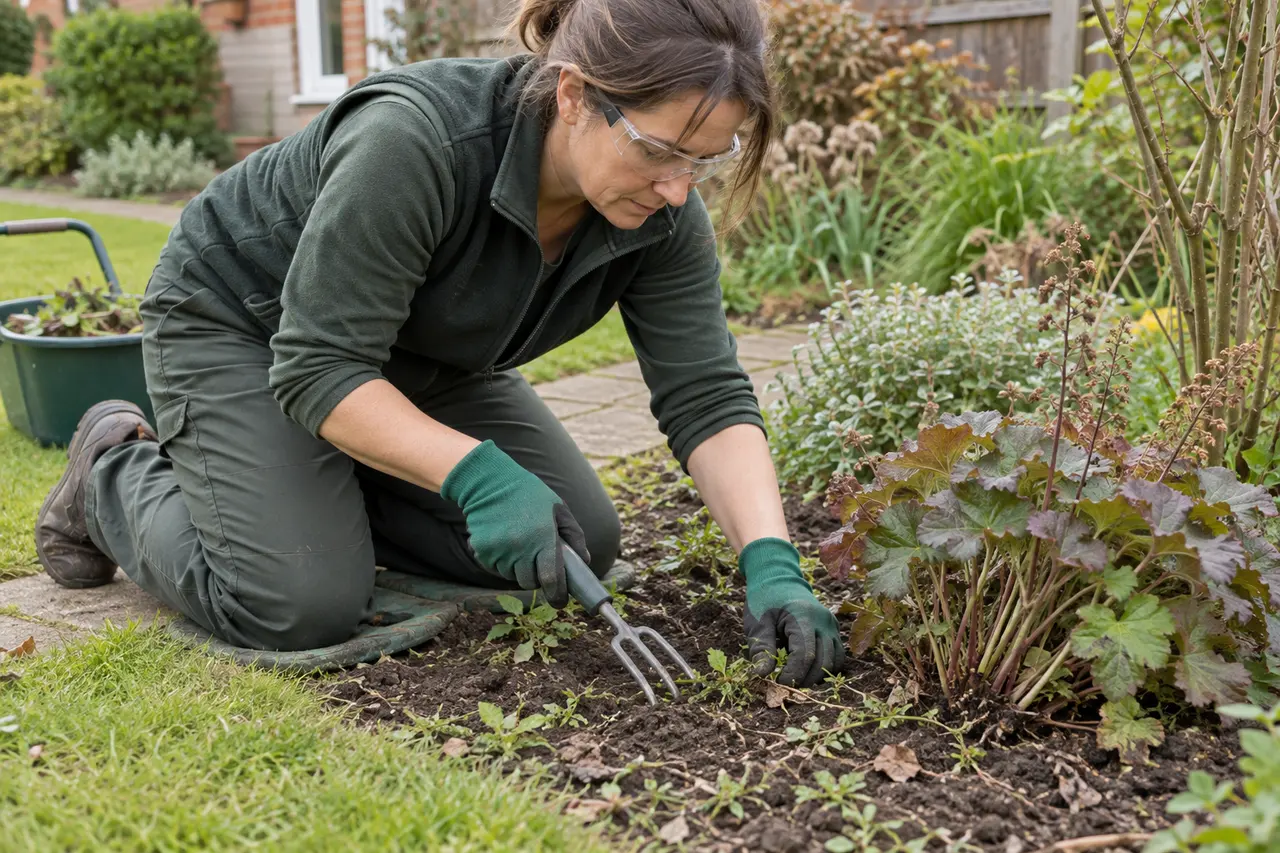
Useful planting hidden beneath weeds is released in manageable portions. The gardener separates visible stems and examines the plant revealed, with slower hand work where roots intertwine. The wanted crown remains seated while competing material is collected around it. This gives the bed room and a clear view of its occupants before any further planting proposal is considered.
Newly exposed gaps are not automatically filled on the first visit. Dormant planting can remain below the surface, and existing plants may spread after competition is removed. The clearer soil also makes returning weeds easier to identify. Observation can therefore inform the next planting proposal, instead of buying replacements before the bed’s useful occupants and remaining growth have become apparent.
Commissioned planting follows the actual light, rooting space and watering access. Old stumps or unidentified material are addressed before the receiving surface is finished. The team keeps the growing position accessible and aftercare clear, particularly where other parts of the plot remain under recovery. New plants then enter an understood area, with their requirements connected to the ground prepared for them.
Continuing the recovery
Returning growth used to select the next maintenance task
Fresh shoots, a blurred grass edge and accumulated path leaves can identify the next recurring tasks. Our follow-up uses those observations to direct work to the affected areas. A returning stem is considered for its source before another method is chosen. This keeps later maintenance moving forward from the exposed garden, with each operation attached to the condition now present.
Accessible small weeds are gathered and the commissioned routes kept open while useful plants resume growth. Persistent issues receive consideration of their specific source and appropriate method. A settling bed is not disturbed repeatedly solely to reproduce the first day’s appearance. This keeps follow-up selective and realistic, without presenting any single clearance technique as a permanent answer to all unwanted vegetation in the garden.
Pruning, planting and lawn work can require different seasonal opportunities, and soft ground can alter carrying routes. The year-round care guide reflects those changing stages. Our actual programme follows the recovered plants and surfaces, so later attention develops from what has been exposed. It is not simply another full repetition of the opening clearance regardless of the growth now occupying the area.
The next projects after initial recovery
Design develops from the space and features actually exposed
Our Garden design uses recovered dimensions and continuing features once the growth is reduced. Temporary handling positions remain distinguishable from proposed permanent spaces. The design can then develop how the garden will be used, with the actual ground and features visible for its arrangement. This gives the later project a defined basis beyond the initial access area needed to carry out clearance.
Tree removal distinguished from stump work
A tree-surgery quotation identifies whether work concerns the visible tree, its stump or another operation. Removing the trunk does not automatically remove roots, and the remaining stump can affect later digging and mowing. A self-seeded tree within recovery is therefore not described simply as routine green clearance. The appropriate tree work is identified separately, keeping the next use of the ground in view without promising that all below-ground material disappears with the stem.
Paving cleaning measured from the recovered hard surface
Our jet-washing assessment identifies the actual paving exposed, including concealed strips and disconnected areas. The cleaning extent is measured from those surfaces and kept distinct from the plant removal needed to reveal them. Their ends provide a practical boundary for the wash. This gives the operator the hard area involved and leaves the preceding clearance described as its own completed task.
Rooted gutter deposits handled as rainwater-system material
For gutter cleaning, rooted vegetation and the condition of the channel are considered before removal. Dense matting is not pulled blindly, where the force could load joints or brackets. The affected run is identified for an appropriate method. This differs from ordinary weeding in an accessible border: visible leaves above a roofline do not establish that their roots can simply be tugged down from below.
Seasonal tree selection includes its natural outline
Our Christmas-tree arrangement considers the natural shape alongside height. A broad lower tier and a narrow upright tree occupy a display differently, while branch spacing affects decoration. The selected format is matched to the intended setting without describing a living plant as a perfectly symmetrical catalogue silhouette. This keeps the choice practical and reduces reliance on unnecessary cutting to force the tree into a shape it did not have when selected.
Gardening time for separation and collection
Our quotation reflects sorting, cutting and material handling within dense mixed growth. The general guide rates below are for gardening time; even a modest ground area can require several controlled stages where useful plants and different materials occupy the same space.
| Time allowance | Guide rate |
|---|---|
| First hour | £83 |
| Each subsequent hour | £65 |
Prices are GBP guides. The complete quotation identifies the commissioned scope, waste arrangements, VAT treatment and applicable access or parking costs. Further root, tree, lawn or layout operations remain distinguishable from the first accessible clearance.
Practical stages within garden recovery
Can the least overgrown section be done first?
A manageable first section can restore useful ground or access while a more demanding area is planned separately. Its boundary and collection position remain defined, keeping the next stage available. This allows recovery to begin with a practical accessible result, giving subsequent carrying and plant work an appropriate route through the garden.
Why can a small overgrown bed produce so many cuttings?
Our collection allowance follows the volume and nature of growth as well as the bed’s ground area. Long woody lengths and tangles can produce substantial material from a narrow strip. Their receiving position and removal route are established for the load created. This gives clearance its complete handling stage while the recovered ground remains usable beside the collection.
Should all bare soil be planted immediately after clearance?
A newly bare-looking bed can still contain dormant planting or roots that were concealed earlier. Our next planting decision follows the exposed conditions and the response of useful plants. Where planting is needed promptly, its positions and care are still identified before installation. The visible size of a gap alone does not determine its replacement load or justify clearing the remaining life beneath it.
Does woody regrowth mean the whole area needs reclearing?
Follow-up can address accessible individual shoots where another broad clearance is unnecessary. We identify their source and the patch’s intended use, distinguishing small new growth from roots or stumps needing a different operation. The next work is then proportionate to the actual return. This keeps the recovered area maintained while larger unresolved features remain identifiable for a specific proposal.
Can part of the recovery wait for a better planting season?
Initial clearance and later planting can be separate stages where the deferred area remains safe and outside the working route. Smaller maintenance tasks can keep the exposed space manageable between them. Our proposal does not describe the garden as fully finished before those later decisions occur. It identifies the useful result already provided and the distinct operation awaiting its appropriate planting opportunity.
Recovery with an identifiable first completed stage
Our gardening service overview connects the first completed result with its next operation. A route can be opened, a bed released or grass exposed for further consideration, with the outgoing material moved clear. The current work then has a useful stopping point and the garden retains space for its following stage. This provides practical recovery without presenting one initial cut as a finished layout.