

Tooting · Clear routes, cared-for planting
Tooting gardeners for tight spaces
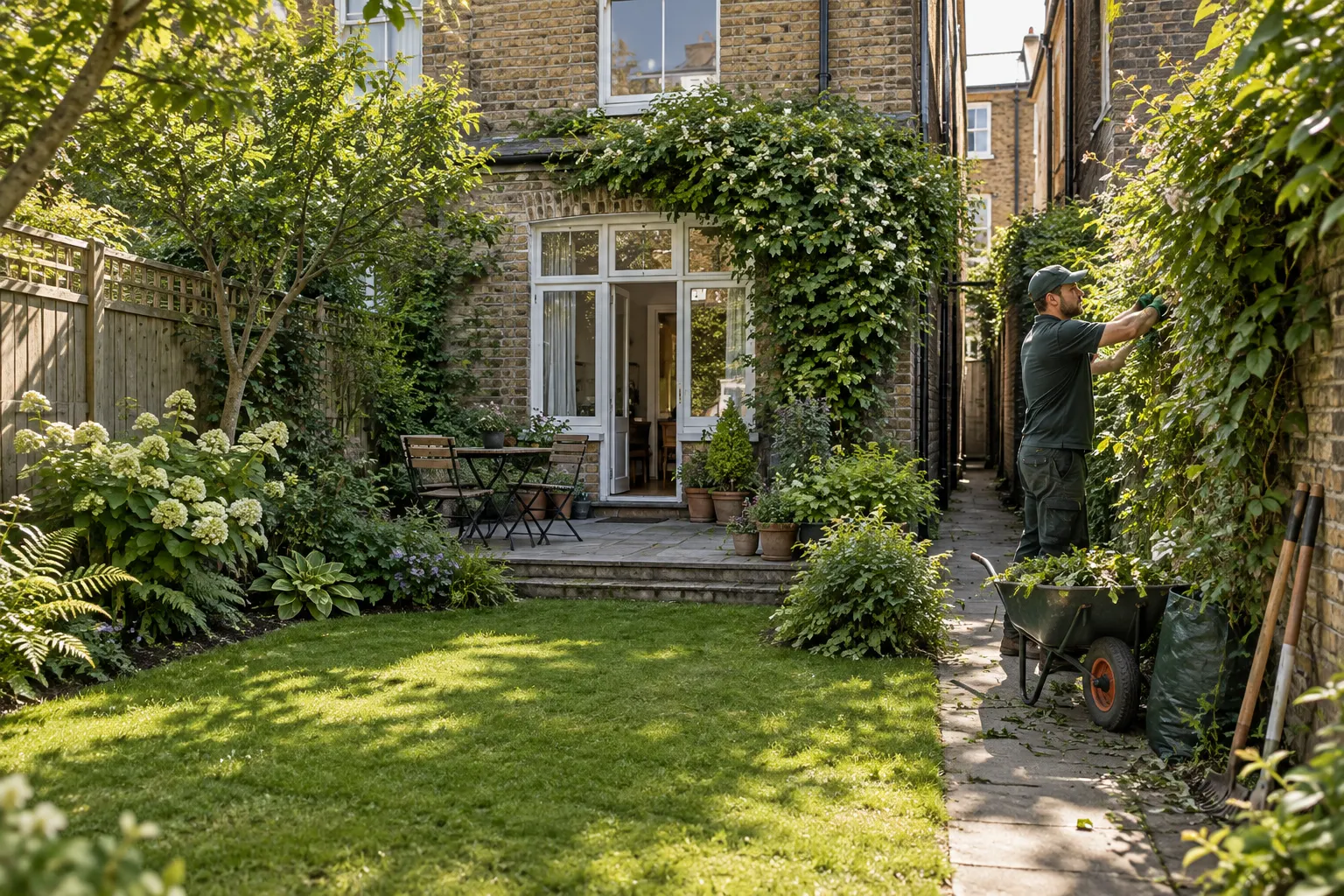
When growth closes over the route through a garden, even straightforward upkeep becomes awkward. We clear the working space, cut suitable growth and care for the grass and beds, with equipment chosen around the route into the property.
Start with what can be reached and what needs doing
Can gardening be organised through a narrow side passage?
The width, turns and surface of the passage help determine suitable equipment and carrying arrangements. Photographs should show the whole route, including gates and steps. Routine gardening may still be practical in a restricted space, but the actual tasks and access need to be assessed together.
What work helps when climbing plants have spread across a small garden?
Separate the plants being retained from unwanted growth first. Suitable pruning, careful tying-in and clearing weeds from below can recover room without treating every climber as waste. A damaged support, heavy woody growth or a major removal may need a different scope from ordinary garden maintenance.
Access before detail
Open the route that the rest of the work depends on
If a path is covered by long stems and self-seeded growth, there may be no useful place to stand while more detailed work is attempted. Recovering a route allows equipment and cut material to move through the garden with less disturbance to the planting on either side. That first strip of work can determine how the remainder is tackled.
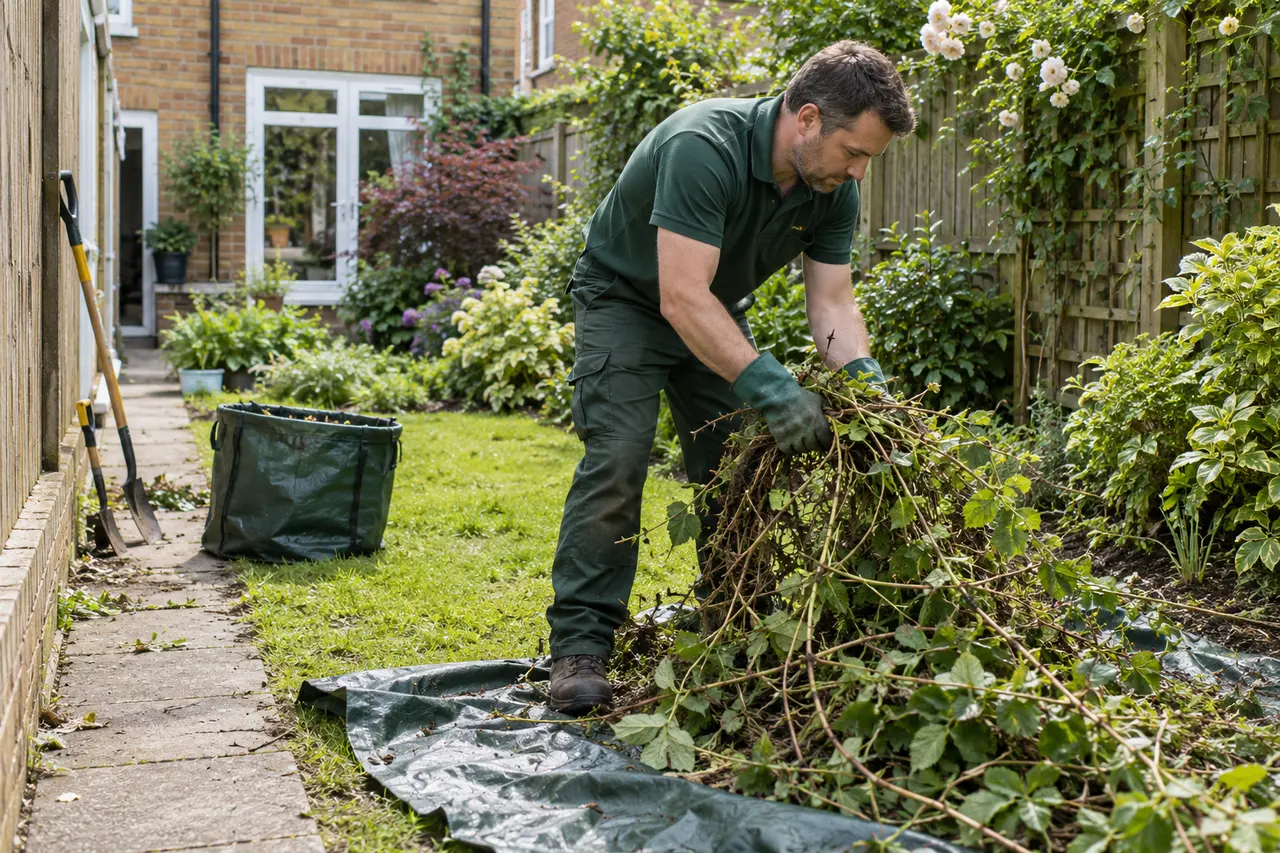
Growth is cut and lifted in manageable sections, with retained plants identified rather than pulled along with the unwanted vegetation. Hidden edging, old pots and loose objects can become visible as the area opens. Cables, broken glass or unstable materials need to be recognised before the next stage proceeds, so clearance does not continue blindly into an unseen obstruction.
Garden clearance also involves deciding where the cuttings go while the work is happening. A pile left across the only passage can stop progress elsewhere. Where removal is required, the type, volume and carrying route need to be included. The garden-waste guide sets out why ordinary green material and other discarded items need separate consideration.
- Show the narrowest point of the equipment route in a photograph.
- Keep the only exit free of temporary clipping piles.
- Mark climbers that must remain before tangled growth is separated.
- Finish lawn edges with a tool suited to the available width.
- Protect low planting while cut stems are carried past it.
Hedges and climbing plants
Reduce the tangle without losing the plants that belong
A vigorous climber can put out long growth beyond its support and into nearby shrubs. Tracing that growth back to the plant makes the work more accurate. Cutting every visible strand in the same place can leave the wrong stem retained, damage neighbouring planting or remove a part of the climber that was meant to stay.
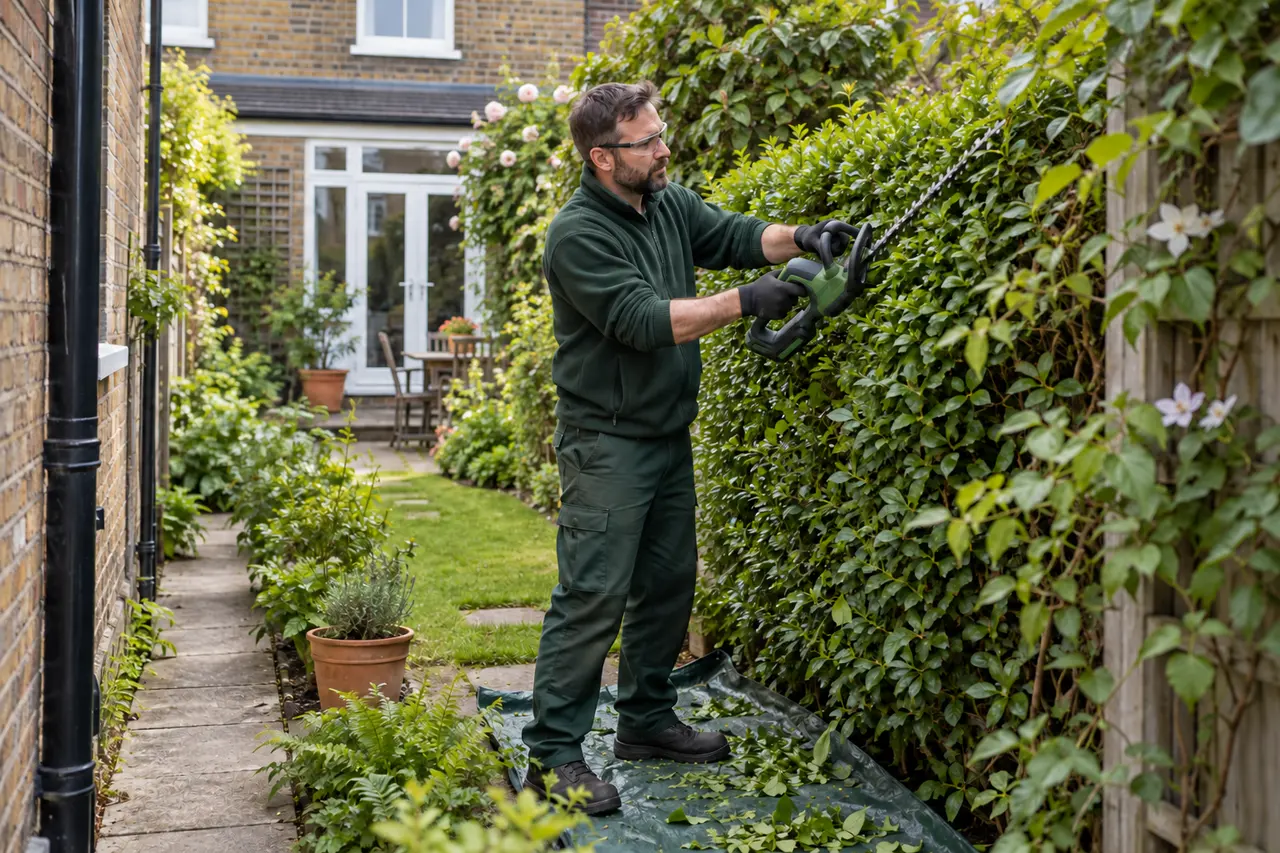
Where appropriate, suitable shoots can be directed back towards an existing sound support, with pruning selected for the plant and its condition. A hedge beside the same route may need a different operation: controlling its face and shortening the extension that narrows the path. The position from which the work can be reached affects both tasks.
Loose stems are gathered carefully when they are intertwined with wanted growth. The support and boundary should remain visible enough to see what is being worked around. Active nests are checked for before cutting, and affected vegetation is left undisturbed while a nest is in use. Large woody material or work beyond ordinary safe reach needs a separate assessment.
Mowing in confined areas
Give small strips of grass a deliberate finish
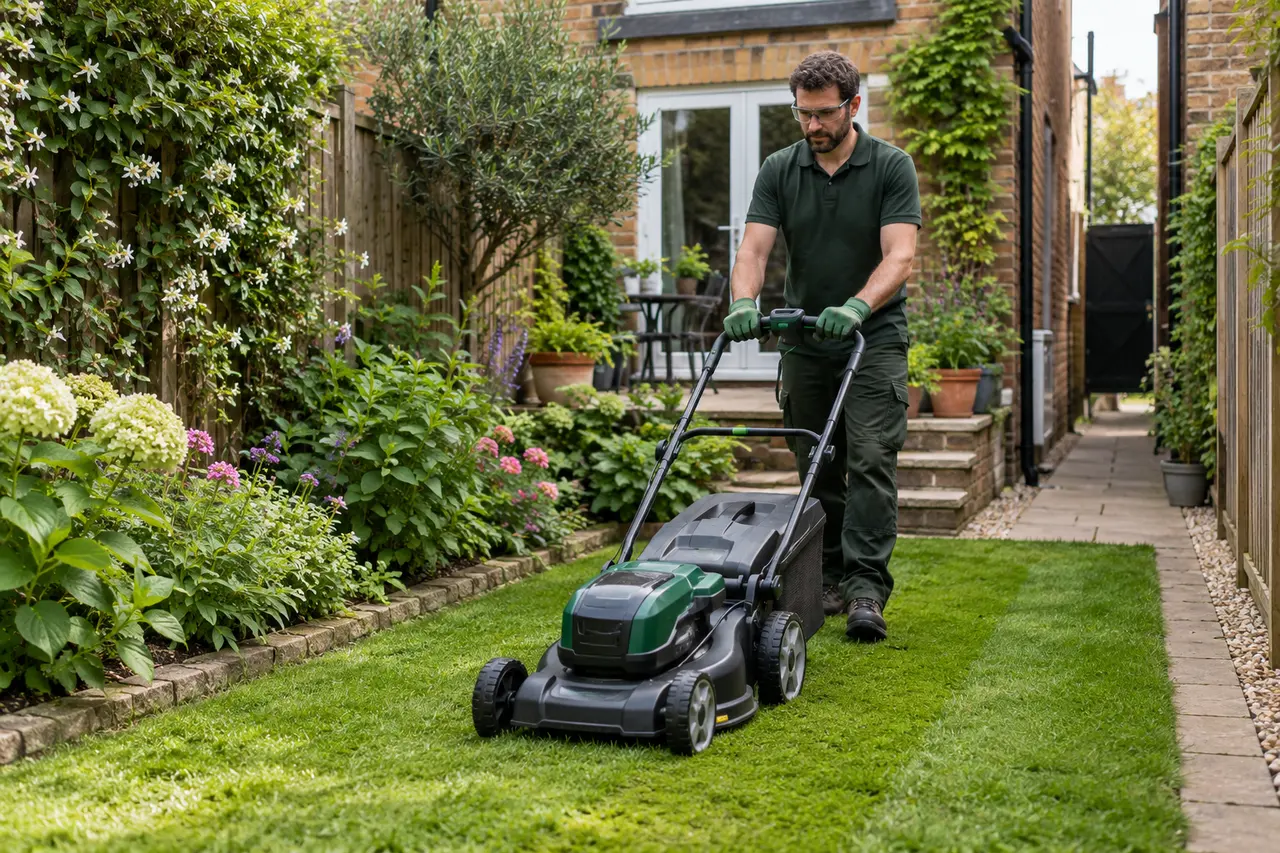
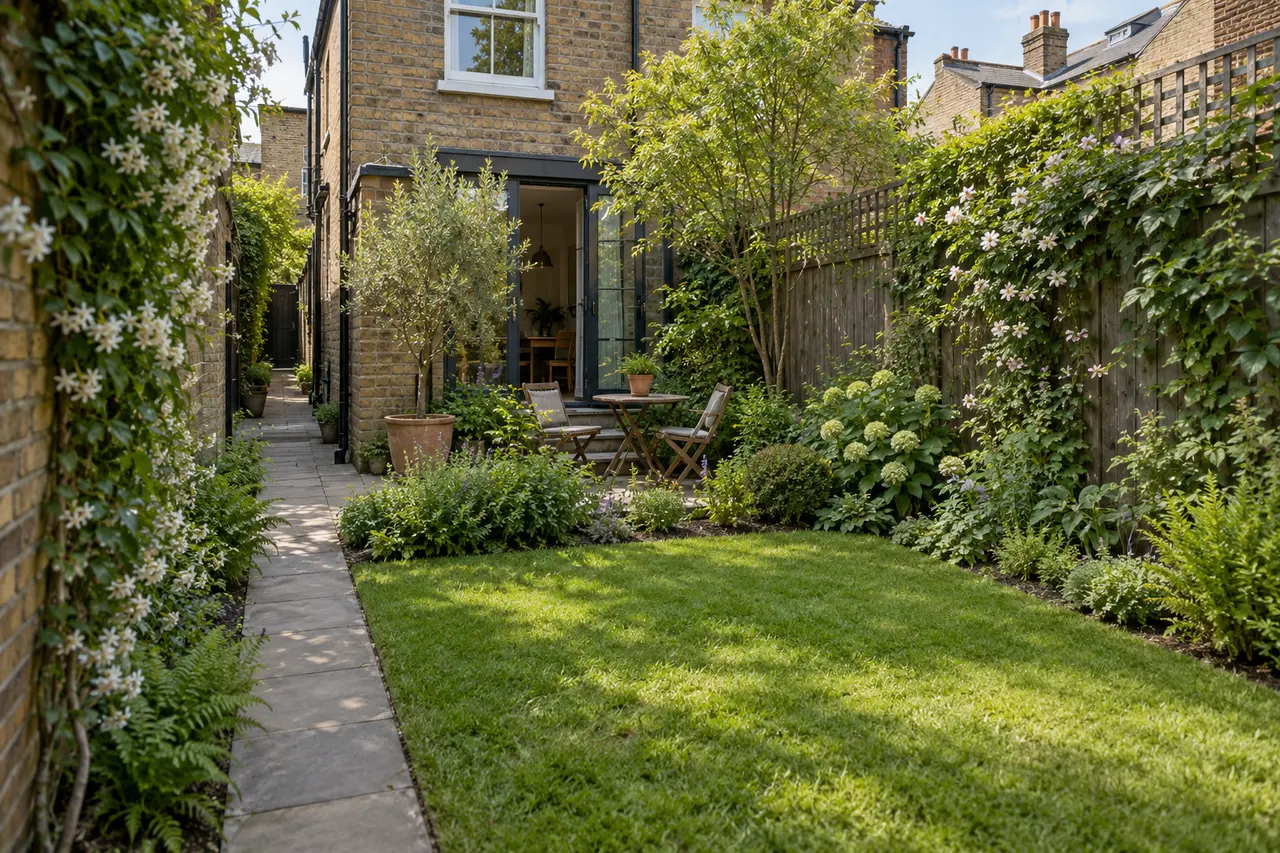
A narrow lawn can demand more manoeuvring than a larger open rectangle. Pots, a low step or a bed that projects into the grass can reduce the space further. A suitable machine needs to reach the area first, and its working route should allow the cut without repeatedly turning in the same cramped corner.
The long runs are approached with the available width in mind. Grass close to a fence or the base of a planter can then be finished using an appropriate smaller tool, protecting the adjacent surfaces and plant stems. Loose stones and other objects need to be lifted from the area before equipment is used, including those hidden near the edge.
Mowing and lawn care should leave the narrow space easier to use, with a clear boundary where grass meets paving or a bed. Long or neglected grass may require its height reduced in stages. Persistent bare patches and uneven ground need their own attention, rather than being treated as an instruction to cut the whole strip progressively shorter.
Planted borders
Weed around roots, pots and the edge of the path
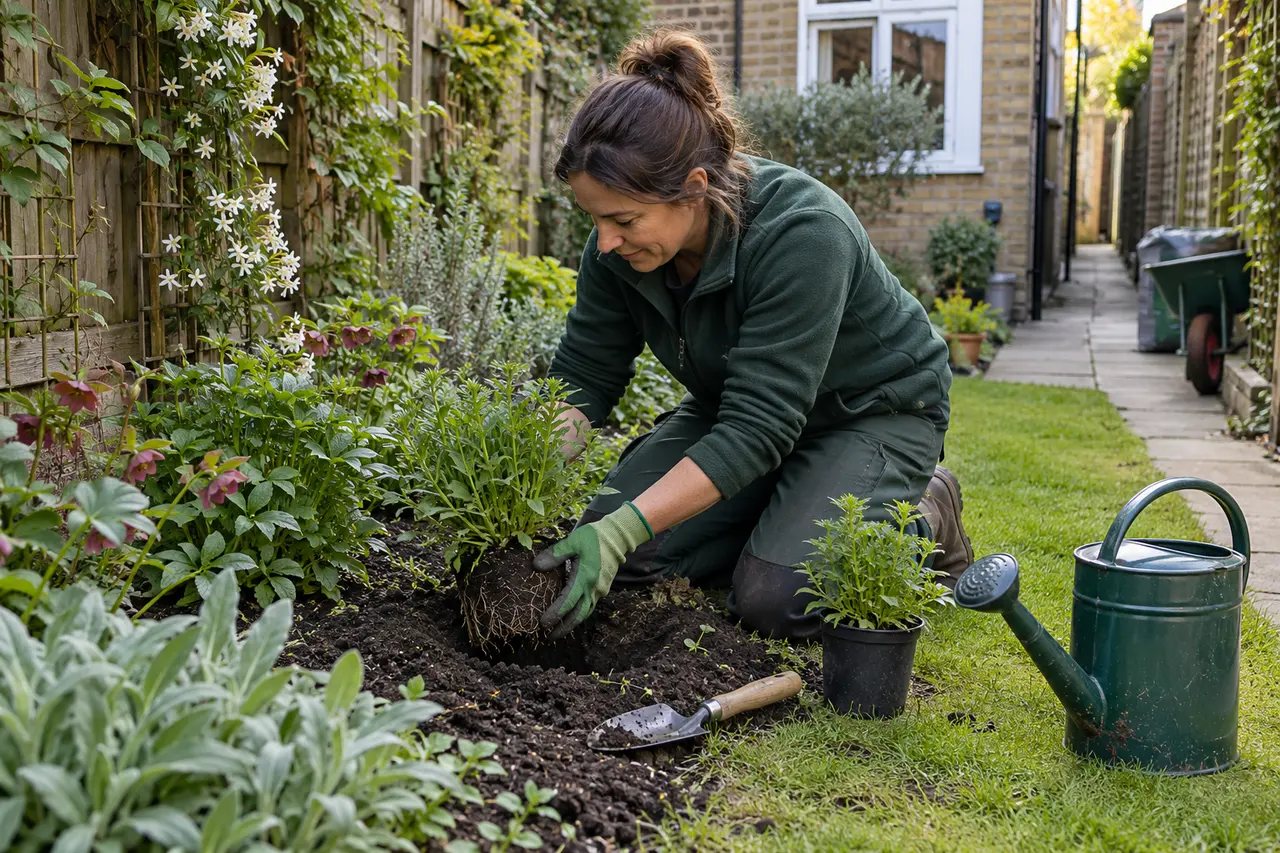
In a confined border, the roots of wanted plants and weeds can occupy much of the same small space. Careful hand work gives more control around those plants than dragging a tool through the whole bed. The aim is to loosen and remove the unwanted growth while retaining the planting and keeping soil from spilling across the adjacent path.
Containers can make the working area tighter still. Before a pot is shifted, its weight, stability and a suitable temporary position matter. A large container full of wet compost should not be assumed to be an easily movable obstacle. Work can instead be arranged around fixed items, with reachable soil and foliage attended to from the available standing space.
New planting should be chosen around the room it will eventually occupy. An attractive plant in a small pot may later overhang the only route through the garden. Where planting is included, positions, watering-in and access for subsequent care belong in the job. Recently planted areas can then be incorporated into ongoing maintenance alongside the established beds.
Keeping the work manageable
Set the next visit around the growth that is likely to return
After a garden has been opened up, the next useful task is not always another extensive cutback. A cleared bed may produce fresh weeds while the hedge still holds its outline, or climbing growth may need directing towards its support before it stretches across the path again. Returning care should follow those different rates of change.
Keeping a short record of retained plants and areas left untouched helps the work remain consistent. Newly planted material, bulbs below the surface and a corner being retained for wildlife are all worth identifying. Their presence changes how nearby weeding, cutting and leaf collection should be approached, even when the rest of the garden needs a straightforward tidy.
A regular arrangement also needs realistic carrying and finishing time. Moving a few manageable loads through a restricted route is different from leaving the whole clearance volume until the end. By keeping the main passage, planted edges and grass under control, the visit can spend more time on useful care and less on repeatedly recovering access to the same part of the garden.
Seasonal attention
Reach the leaves and debris that collect in the tight corners
Autumn material can settle behind pots, around the base of climbing plants and beneath the edge of a hedge. Those pockets may need hand collection or a smaller tool, even when a rake works well on the open grass. The work should lift the loose material without pulling established stems or scooping the border's mulch onto the path.
Earlier in the growing season, small emerging plants can make the same corners more delicate to work around. Weeding needs a view of what is coming through the soil, and appropriate cutting should allow retained plants room to develop. Where the ground is very wet or frozen, staying off the lawn may be more sensible than following an unchanged mowing routine.
The garden's changing use matters as well. Pots may have been added, seating moved or an access gate altered since the last visit. Bringing those changes into the task list helps the next round of work remain practical. The year-round garden-care article gives broader seasonal context without imposing the same operations on every garden.

Further work when access and space need a different approach
Designing around the route through
When the path, storage and planting no longer fit together, garden design can look at their arrangement as a whole. The space needed to carry tools and reach the beds should remain part of the layout. A new planting position is more useful when it can be maintained afterwards.
Allow for turning long material through the passage
Show bends at doorways and the space at each end when requesting tree surgery behind a narrow passage. A straight gap may admit equipment yet leave no room to turn a long piece of cut material. The handling plan needs to account for both the journey in and the material coming out, including a suitable collection point. Do not assume that access suited to mowing equipment settles the route for a tree operation.
Clean a narrow paved strip in manageable lengths
Where pressure cleaning is appropriate, jet washing can progress along a narrow paved strip in manageable lengths. The hose is kept out of the section being cleaned, and the direction of working accounts for where water and loosened dirt can travel. That keeps the process organised around the available drainage and avoids repeatedly carrying debris across an already cleaned patch.
A practical route for gutter-vacuum equipment
Where ground-operated vacuum equipment is appropriate, gutter cleaning removes loose material through a pole system. The pole’s working line needs sufficient space around overhead growth and fittings, as well as a suitable position at ground level. Access through the passage and access to the channel are assessed together so equipment can be chosen for the gutter being cleaned.
Compare what the seasonal package includes
The Christmas-tree service page separates delivery-only options from installation with a stand. Compare equivalent sizes before choosing the package: a delivery figure and a combined installation-and-collection price describe different work. The order should identify which stages are required, with current stock and dates checked for that request.
Guide rates for time spent on the garden
The gardening rates are the site's published general guide. Restricted access, the amount of vegetation and separately required removal or specialist work affect the complete scope and quotation; these figures are not a special Tooting tariff.
| Gardening time allowance | Guide price |
|---|---|
| First hour | £83 |
| Each subsequent hour | £65 |
GBP guide rates. Check the full total, VAT treatment and any applicable additional charges when arranging the booking.
Access and plant-care questions for a confined garden
Which passage measurements are useful before a visit?
The narrowest clear width, gate opening and any steps or tight turns are useful, supported by photographs. Also show low fittings or overhead growth that affects carrying. These details help identify suitable equipment, although the work still needs to be scoped around the garden itself.
Can a climber be retained when its growth has become tangled?
Often the retained growth can be separated and suitable care selected once the plant and support are understood. The amount of work depends on how it is intertwined with other planting. Mark the climber you want to keep instead of treating the whole tangle as clearance waste.
Will every large pot need to be taken out of the garden?
No. Heavy or fixed containers can remain part of the working layout, with the accessible surroundings cared for accordingly. Light movable pots may be put aside where that is safe and useful. The visit should not rely on shifting a heavy container without an appropriate method.
Where can cuttings wait if there is only one path?
A temporary collection point needs to stay clear of the working and exit routes. The practical location depends on the space available and the material being removed. Carrying smaller loads out during the work may be more appropriate than allowing a large pile to close the path.
Is a small grass area always a quick mowing job?
Its area is only one factor. Access, the shape of the lawn, fixed obstacles and the condition of its edges can all add work. A small strip surrounded by plants may need careful finishing even when the open grass itself takes relatively little time to cut.
Make the route workable and give the planting room
Recover the route, keep the right plants and give the grass a finish that works in the space available. Explore the wider gardening options if the job also involves design, tree work or outside cleaning.