

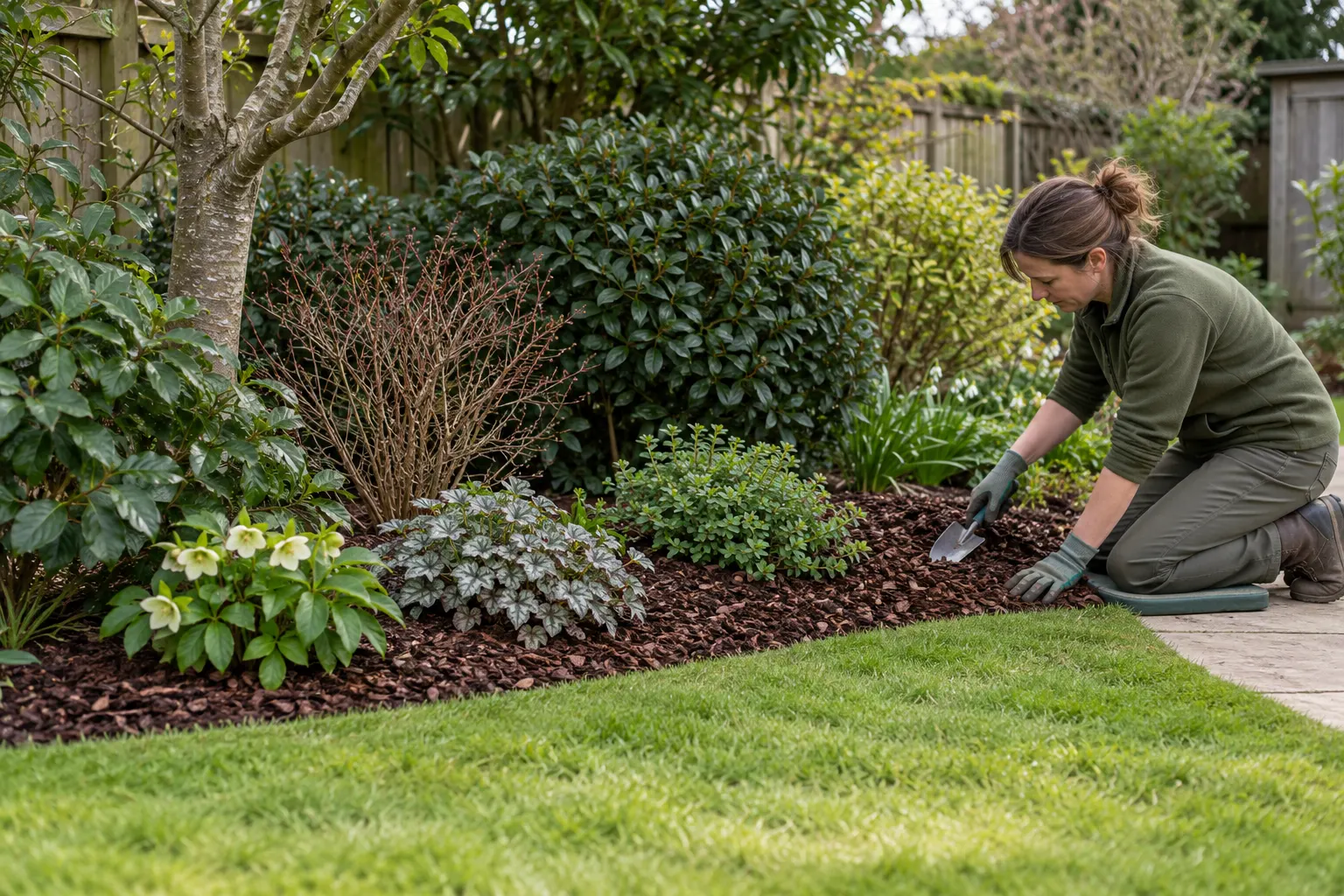
Prepared soil and retained plants beneath a suitable covering
Gardeners Beddington
Our mulching work combines the specified bed preparation with controlled placement of the chosen material. We remove accessible unwanted growth, keep stems and crowns clear and gather spills from adjoining grass. The layer follows the actual soil area and planting, with supplies and continuing care related to the purpose of that bed.
- What does your mulch application cover? We place suitable material on the prepared soil surface; working material down through established roots is a different operation.
- How is moisture addressed before the layer goes down? We assess the soil and plants, completing suitable included watering before the covering is applied to the prepared receiving surface.
The material, preparation and application as one sequence
How does your mulching differ from soil incorporation?
Our mulch application places the selected covering on the soil surface around retained plants. Incorporation through the ground has a separate method and effect around established roots. We identify the material and purpose before handling, then complete the appropriate surface preparation and placement. This keeps the actual operation and its receiving area clear from the first delivered bag to the finished layer.
How do you prepare the moisture conditions?
We assess the receiving soil and plants before application, including their suitable moisture conditions. Any required watering within the work precedes placement of the covering. Frozen or waterlogged ground retains its own timing decision. Our sequence connects those observations with the preparation and material used, giving the bed an appropriate starting condition for the planned surface operation around its retained planting.
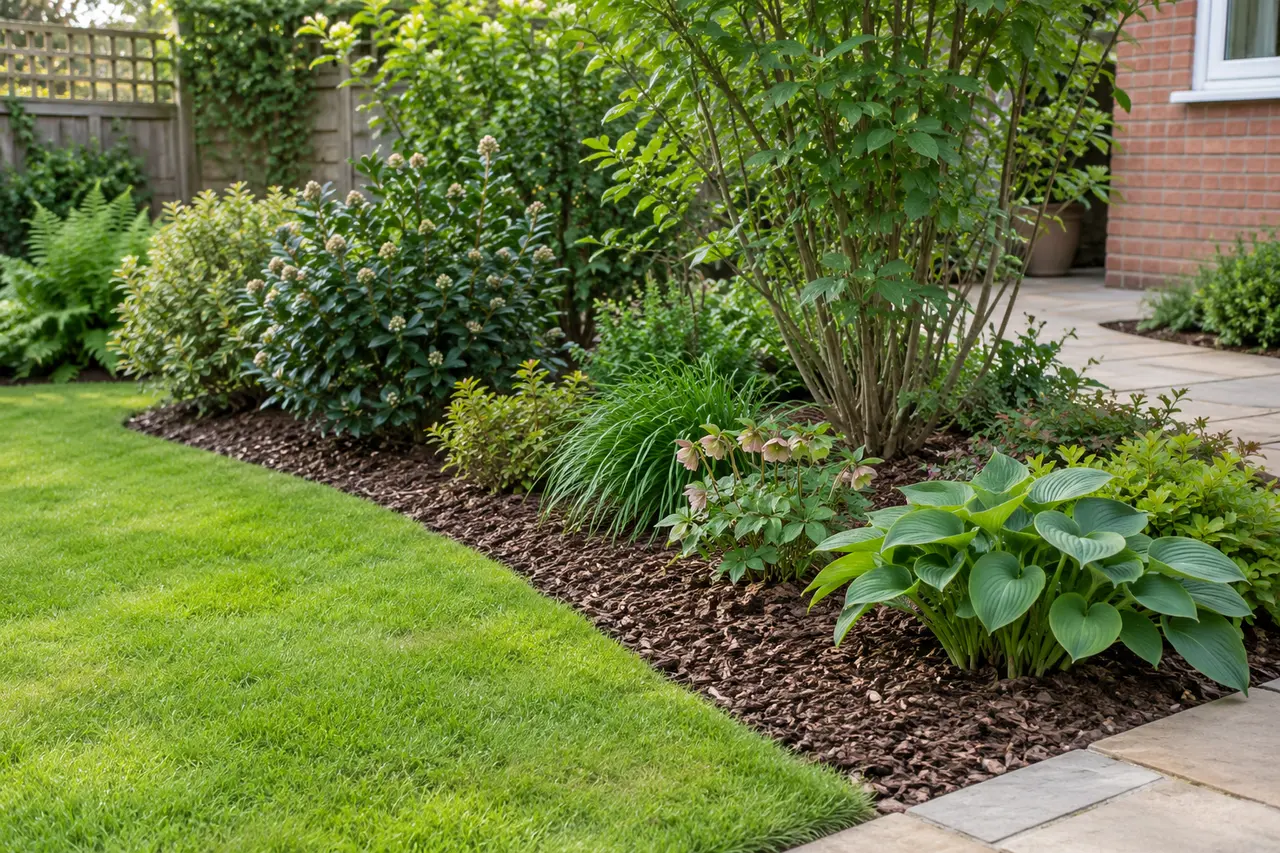
A covering with a defined function
Material selected for the actual planted bed
Our preparation identifies the covering by its material and intended function. Bark, composted organic matter and other mulches have their own structures and behaviours, relevant to the bed and existing surface. We relate that selection to the retained plant arrangement and its care, keeping the actual product recognisable through handling so the resulting layer follows the receiving area’s purpose as well as its appearance.
Before placement, we establish the positions of woody stems, low crowns and smaller plants around the application area. Some apparently open soil can be occupied by growth that develops later. Our working view keeps those positions distinguishable so material can be distributed deliberately around them. An even-looking colour is not achieved by tipping across every visible surface and hiding the bed’s living occupants.
Named mulching can form part of Garden maintenance, with preparation and supplies identified as components of that task. We establish the receiving area and suitable quantity, then keep unopened material distinct from the portions already distributed. Manageable handling positions support the progression through the bed, allowing the selected material to reach the intended soil around its retained plants and keeping any remaining supplies clear for their later use.
The receiving surface before covering
Weeds and loose waste removed from the application area
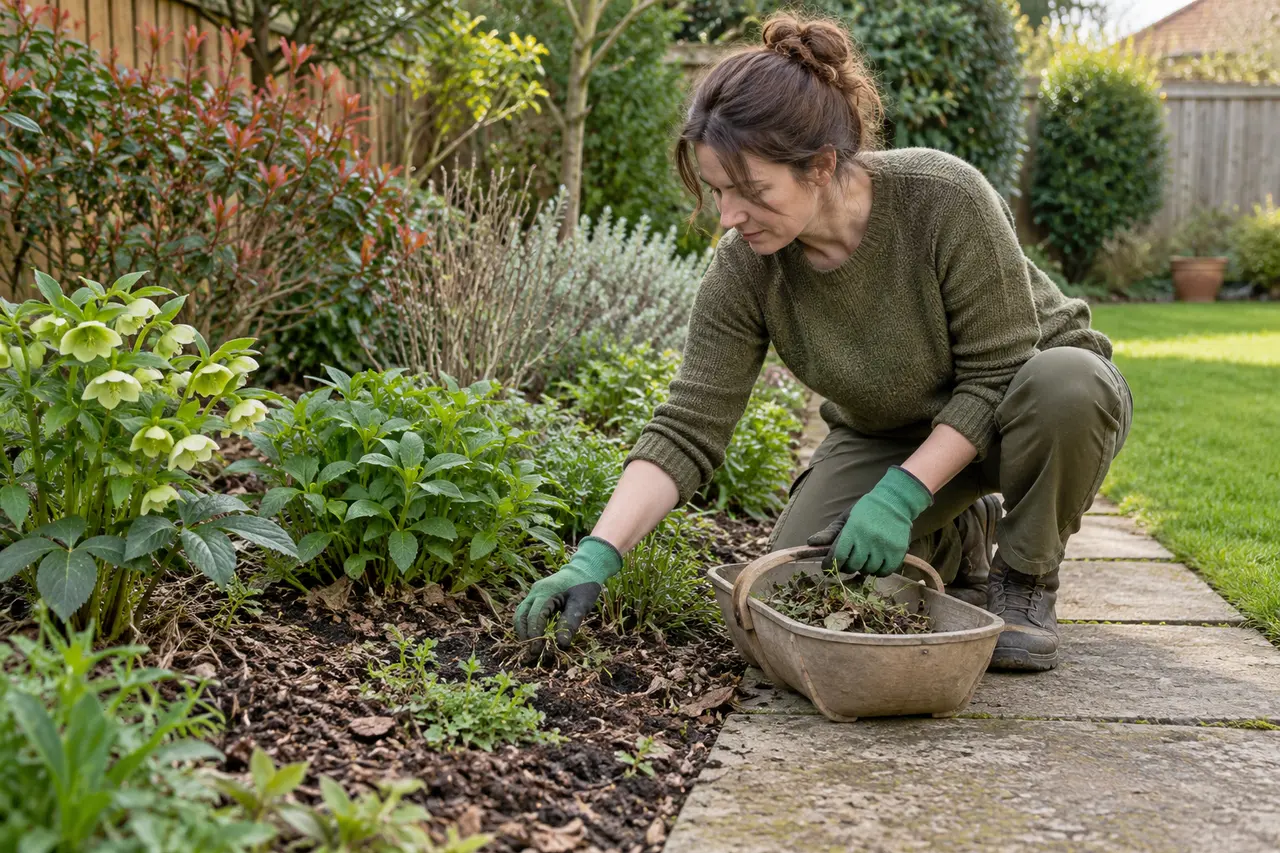
Our ground preparation identifies retained planting and accessible unwanted growth before the new layer arrives. Suitable weeds are loosened and detached material gathered from the receiving area. Thick rooted growth can need a further preparation stage, which remains clear within the sequence. This exposes the soil ready for application and preserves the view of the plant bases around which the covering will be placed.
We sort the preparation load as it is gathered, keeping litter, fastening pieces and broken containers distinct from useful material staying in the bed. Existing covering retained for reuse has a suitable holding place clear of removed weeds. The cleared soil, reusable batch and new supplies then remain identifiable through the operation, with each portion directed to its appropriate destination as the application progresses.
A larger backlog can first receive a defined garden clean-up. Our receiving arrangement follows the distinctions in the garden-waste guide, including the suitable holding place for any retained covering. The preparation leaves the plants and intended application soil visible together. This gives the next operation a clear receiving surface and keeps material selected to leave separate from the supplies and existing components continuing in use.
- Our application starts with the identified mulch material, not an unmarked bag.
- Accessible weed preparation is completed before the receiving soil is covered.
- Woody stems and low crowns retain suitable clearance from the layer.
- Material spilled onto grass is gathered before mowing reaches the margin.
- Fresh lawn clippings stay separate from the covering supplied for the bed.
Placement around living stems and crowns
A controlled layer across the intended soil
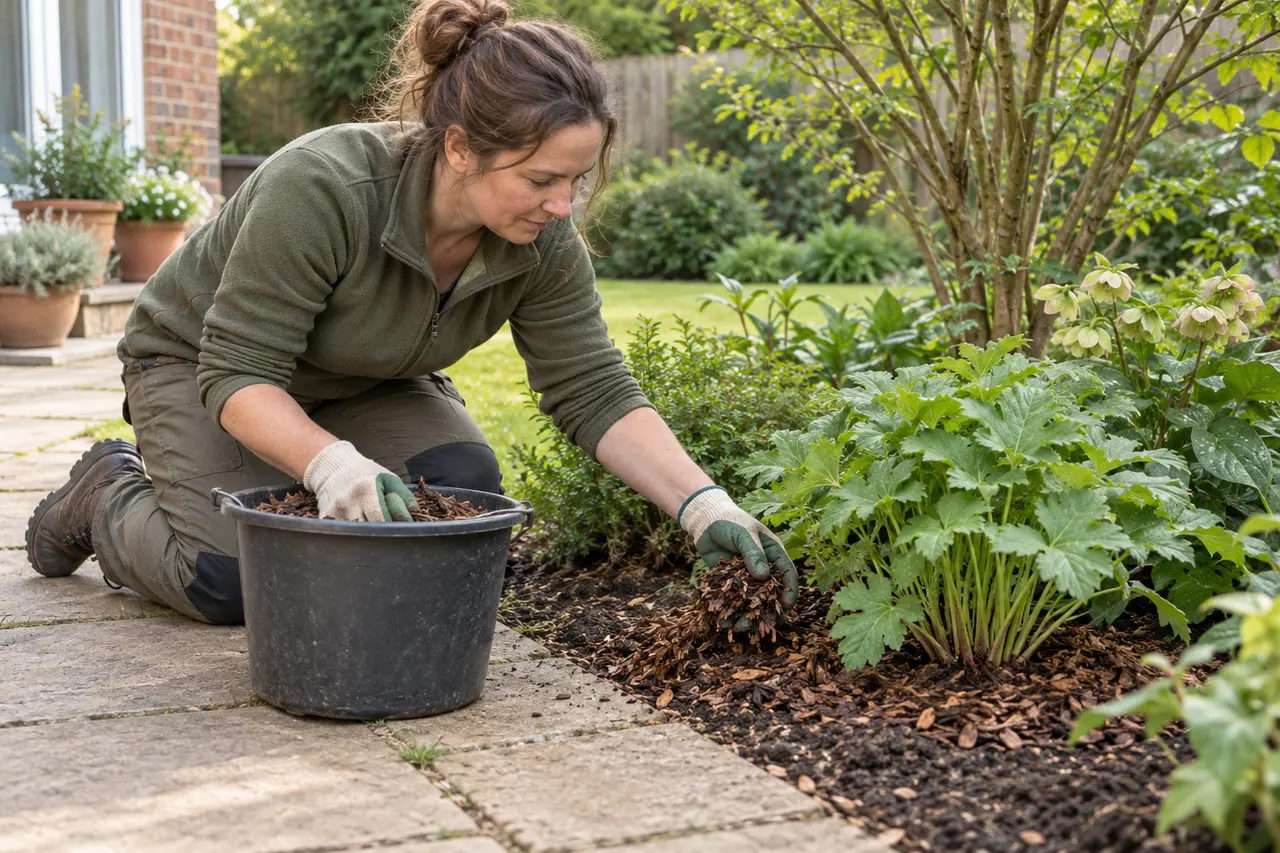
We bring manageable amounts into the bed from a position providing controlled reach. Each portion is distributed across its intended soil with a depth suited to the selected material, plants and conditions. Our progression connects the covered sections and the remaining receiving area, keeping local piles available for spreading and the retained plant positions visible throughout the work until the suitable layer is complete.
Clearance around woody stems and vulnerable crowns is reviewed as each portion is placed. We lift material that has fallen into a plant centre, then check the finished level where separate applications meet. Those close contact points remain visible during distribution, allowing local build-ups to be corrected while the layer is still being worked. This joins the overall surface finish to the individual plants receiving care.
The RHS mulching advice provides context for suitable coverings and preparation. Where new plants share the task, we establish their positions and complete the appropriate planting within the sequence. The layer is then finished around those occupants with their centres identifiable and access available for watering and hand attention. This connects the surface application to the actual planted arrangement and its continuing care after the visit.
Grass outside the new covering
Spills collected before the adjacent lawn operation
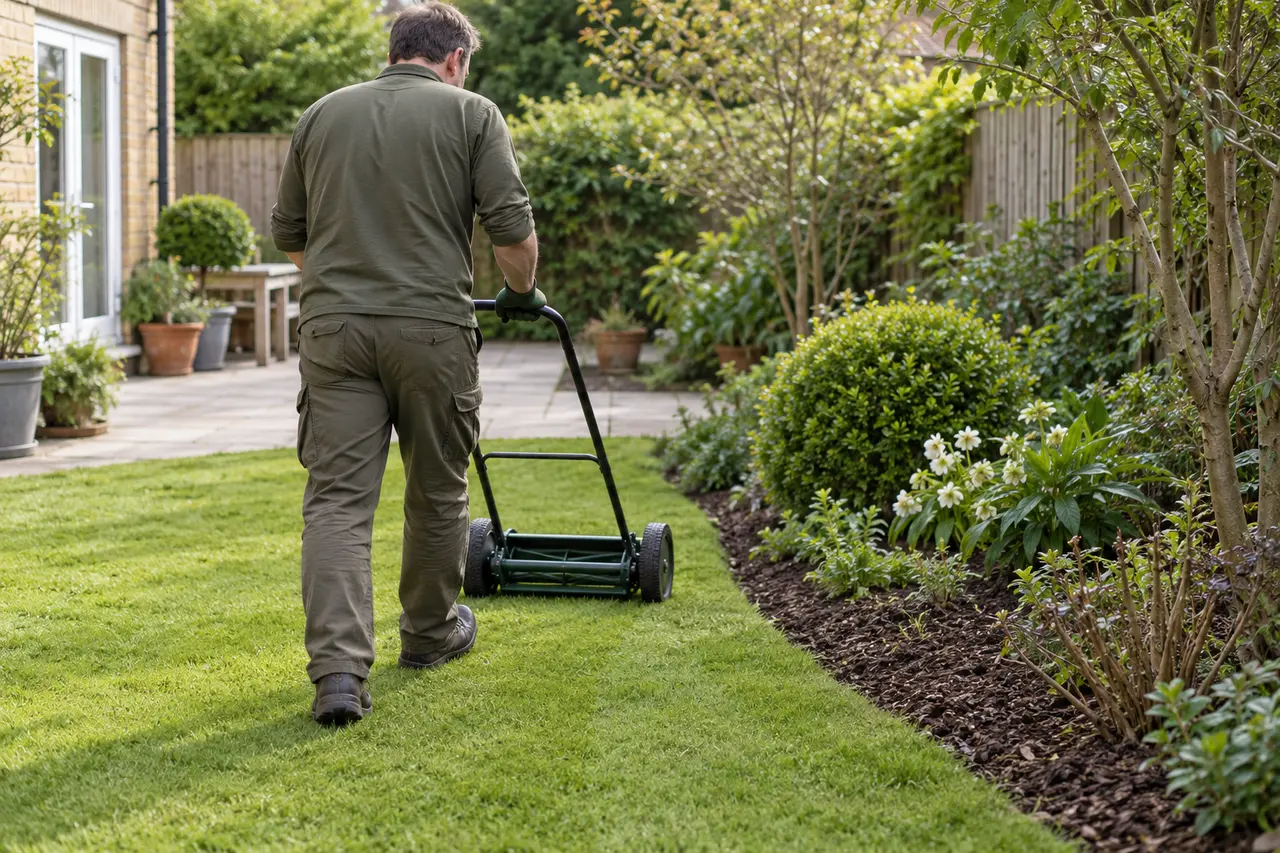
We gather bark and other material spilled along the grass before mowing reaches it. Suitable pieces return to the intended bed, and any different contents remain identified for their own handling. This preparation gives the adjoining lawn its clear receiving surface, with the bed supply retained where it belongs and the loose spill collected from the margin before the separate cutting operation begins.
The neighbouring lawn-care work follows a route and setting suited to the turf. Equipment remains supported on grass alongside the new layer, with an appropriate separate tool where a narrow margin needs its own finish. Our movement follows the existing edge and available space, allowing the lawn to receive its suitable cut while the bed’s newly placed material and retained plants keep their finished positions.
We also distinguish the supplied covering from materials intended for the lawn itself. A chunky shrub-bed mulch is not automatically a lawn dressing, and any grass recovery has its own proposed operation and materials. The ordinary cut ends with the appropriate clippings handling and loose fragments gathered from usable surfaces, keeping that grass load separate from the remaining bed supplies.
Hedge work before the bed finish
Cutting and collection coordinated above the application area
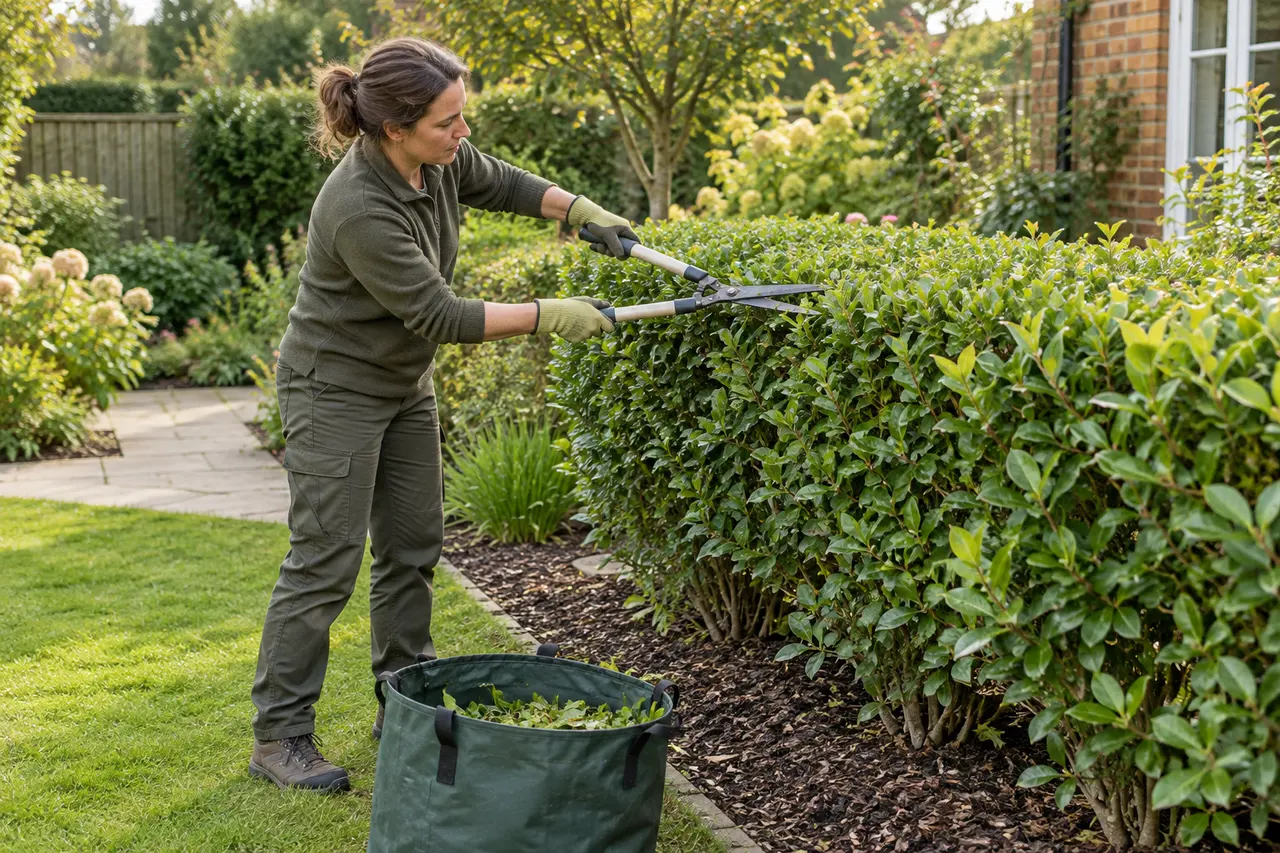
Where suitable hedge trimming is included above the receiving bed, we coordinate its cutting and collection before the final layer is placed. Accessible fragments are gathered with the retained plants and existing useful material distinguishable beneath them. The prepared soil can then receive its covering as the finishing stage, with the hedge load already moved to its appropriate position and the application area available for controlled placement.
The hedge treatment follows its species, condition and stable reachable working position. We check for nests being built or used and postpone disturbing cutting where necessary. The resulting fragments are gathered as their own material, not automatically buried in the following mulch application. Fresh cuttings and the chosen covering may have different preparation and purposes even though both originally came from plants.
Any trimming material deliberately retained for another use has an identified destination and its included processing. We gather it clear of the stems and distinguish it from the selected bed covering. The boundary and receiving soil can then have their respective finishes, leaving the hedge’s retained structure visible while the named mulch is distributed in the positions prepared for its actual purpose around the plants.
The living planting after application
Continued access as the covering settles and changes
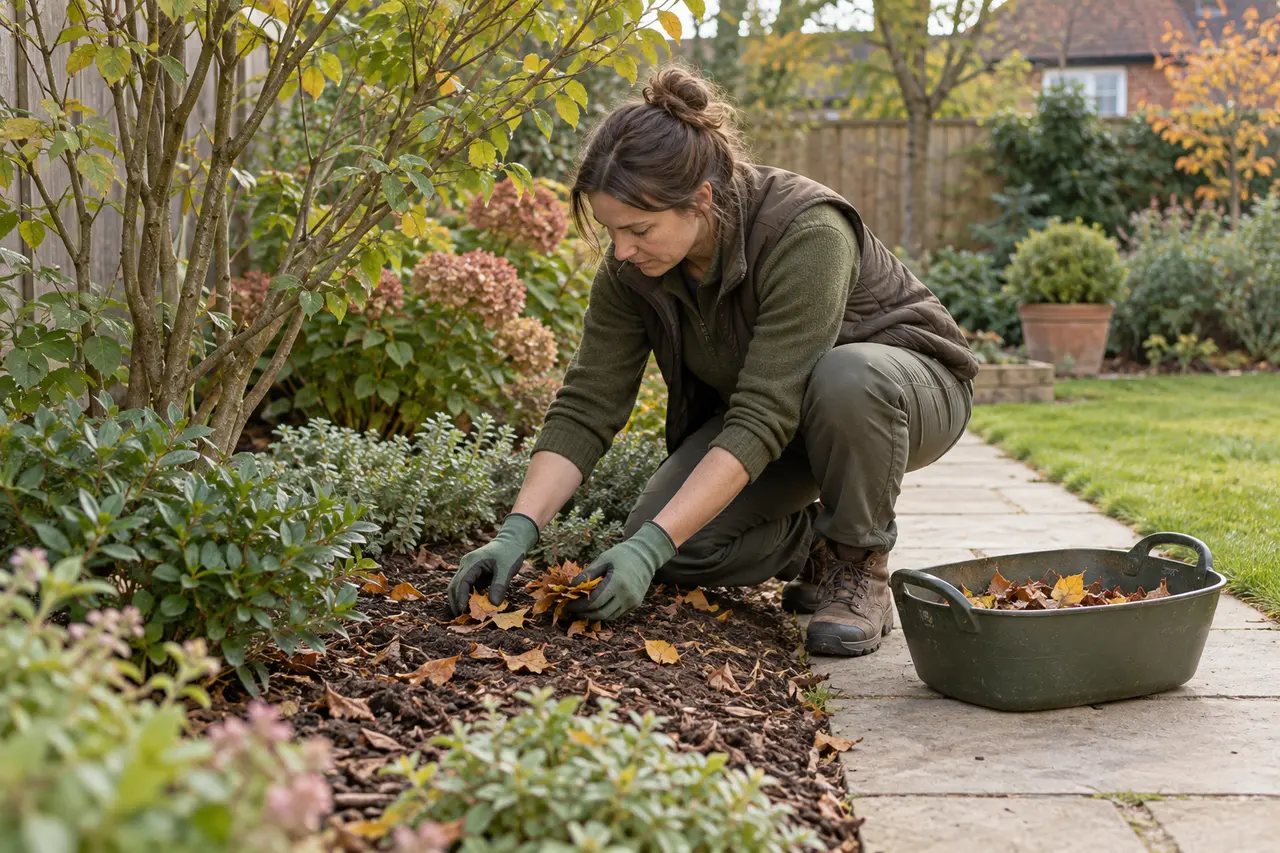
The finished layer remains part of a living planted bed. Our later attention follows emerging growth and suitable clearance around crowns, keeping small plants identifiable as the covering settles. Their known positions guide appropriate watering and selective weeding. This gives continuing care an actual plant reference within the surface arrangement, retaining access to the occupants that will develop through the material in subsequent growth stages.
Biodegradable materials change as they break down, and our replenishment assessment follows what remains and the intended function. We check shifted local build-ups alongside thinner areas before selecting suitable additional placement. The receiving plants and current layer guide that quantity, with any usable material already present kept in view. The result maintains the bed’s practical covering through its changing texture and condition.
During seasonal leaf collection, we distinguish new loose leaves from the covering intended to remain. Suitable continuing watering stays in the plant-care arrangement, particularly for recent additions. Mulch can help reduce moisture loss while the rootball still requires an appropriate water supply. Our attention therefore connects the retained surface material with the actual receiving soil and plants as they develop after application.
Other work around the covered planted bed
Design of a lasting ground-cover arrangement
Our garden-design plan relates the ground covering to mature planting and the arrangement intended through later growth. Some surfaces may remain prominent, while others become less visible as plants fill their space. We connect those areas and materials to the future crowns, stems and care positions, giving the proposed visible finish a practical role within the bed’s living composition and continuing maintenance requirements.
Fruit-tree growth retained by its actual role
A tree-care proposal for a suitable spur-bearing fruit tree identifies short fruiting growth alongside vigorous extension. The proposed cuts follow the retained structure and its role within the actual tree. We keep the intended crop-bearing wood visible in that plan, with species and purpose guiding selective attention. The operation addresses that plant-care result while any later harvest remains subject to the tree and its growing conditions.
Pressure cleaning within the applicable water-use rules
Our pressure-cleaning task proposal accounts for current supplier restrictions relevant to the actual activity and water source. We establish the permitted basis for the proposed use and the appropriate arrangement before the operation is scheduled. Those rules remain connected to the work and conditions, with the equipment selected for the suitable method once the relevant requirements for that particular clean are understood.
Gutter runs with more than one receiving outlet
Our gutter cleaning identifies the existing configuration where a run feeds several outlets. We follow the respective flow routes and the booked channel sections, keeping each entrance identifiable through the clearance. The method and collection then address the actual arrangement, with the condition of both receiving paths understood as the work progresses along the length and its deposit becomes visible.
A seasonal tree suited to the intended decorations
Where existing ornaments influence the Christmas tree choice, we account for branch sturdiness as well as spacing. Fine tips and stronger inner growth have different load-bearing roles in the intended display. The actual tree and decoration instructions guide suitable placement, relating each ornament to the branch receiving it and retaining a practical opened arrangement for reaching and caring for the tree afterwards.
Include preparation and material handling in the plan
The general gardening time guides are below. Identify the agreed material, application area, preparation and waste handling in the complete proposal rather than pricing a bed from bag count alone.
| Gardening time | General guide rate |
|---|---|
| First hour | £83 |
| Each subsequent hour | £65 |
GBP guide rates. Confirm supplies, the work and removal arrangements, VAT treatment and any applicable access, parking or congestion charges.
Questions about our mulching work
How do you distinguish similar-looking coverings?
We identify the covering from its actual description and intended purpose. Bark and composted material can share a brown appearance while behaving differently within a bed. Our selection remains connected to the planned application and the layer already present, so the supplied material can be placed appropriately around retained stems with its continuing care requirements understood.
Does your mulch application replace a specified plant feed?
Our plant-care arrangement keeps any specified feed identified separately from the surface covering. Suitable biodegradable mulch contributes organic matter as it breaks down, while a particular nutrient application follows its own product and rate. Both can have useful roles, with their respective materials and purposes clear alongside the actual plants receiving attention in the bed.
How is the material quantity established?
Our material requirement follows the soil area intended for covering and the suitable depth, with paths and retained plants accounted for. We measure that receiving space and relate it to the selected product. The resulting supply arrangement supports manageable distribution through the bed, keeping the amount available and the portions already applied understandable as the work progresses.
How are fresh grass clippings handled beside the mulch?
We keep the mowing load distinct from the supplied covering unless a suitable use is expressly selected. Fresh grass can form a dense wet mat, while loose bark has a different structure. The collection therefore follows the actual material and destination, leaving the named mulching operation with its identified product and the lawn clippings handled according to the separate grass task.
A bed finish connected to the plants beneath it
Our Beddington mulching sequence connects prepared soil with controlled placement of the selected covering. Usable clearance remains around stems and crowns, and the wider gardening services can coordinate suitable mowing, hedge collection and continuing attention. The finished layer stays part of that planted arrangement as the bed develops through its next care stages.