

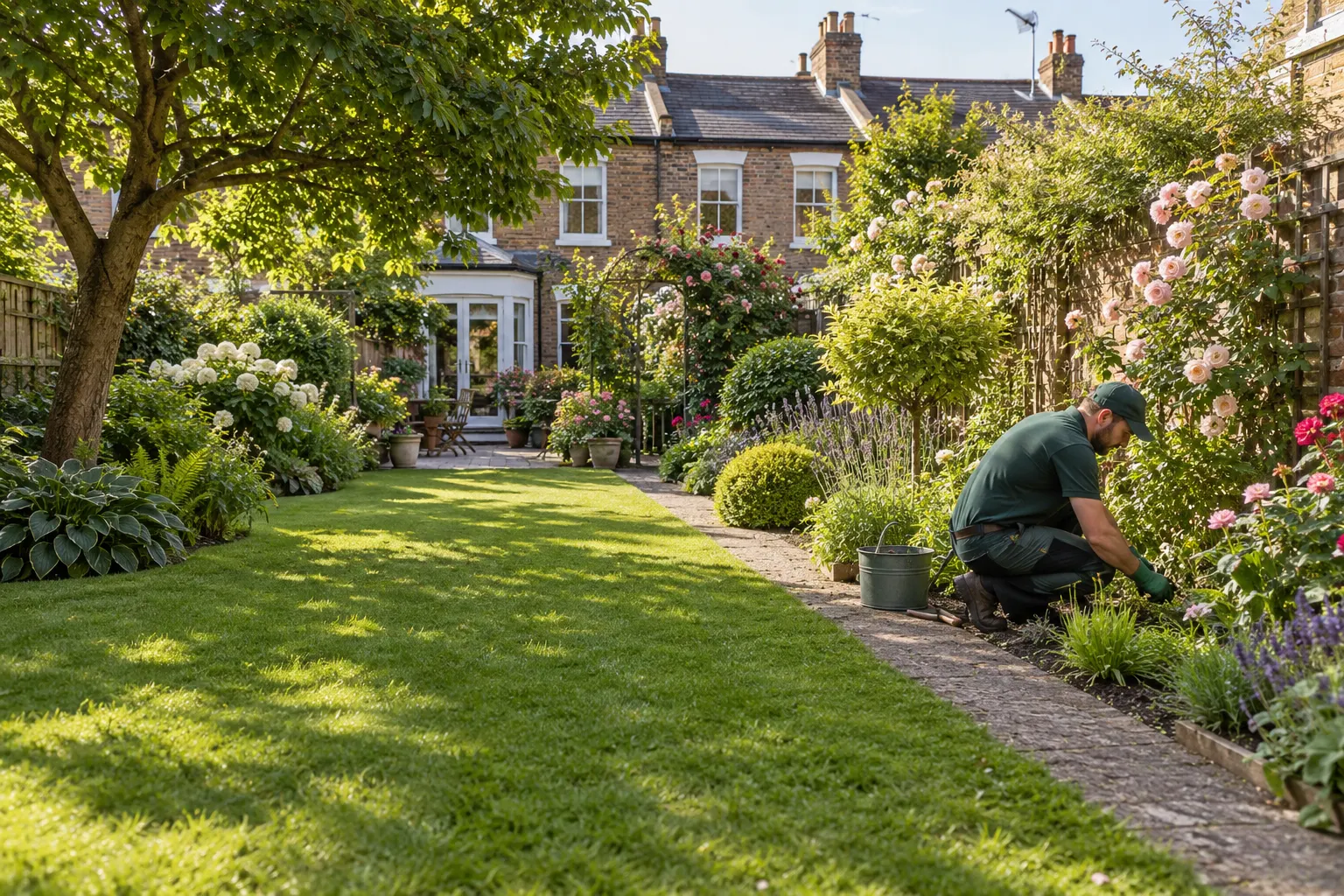
Plant-by-plant care across front and rear gardens
Gardeners Balham
We organise lawn, rose and mixed-border work around the growth present in each part of the garden. Suitable cutting is combined with careful weeding and collection, giving particular plants the attention they need. Front and rear areas receive their own practical sequence within the visit.
- How are front and rear gardens covered? We allocate the tasks and material handling to each area, including the route used for tools and collection between them.
- Can rose care leave other planting intact? Our selected rose work preserves neighbouring plants unless their own suitable treatment or removal forms part of the visit.
Coordinated work for grass and mixed planting
How do you organise a visit across two gardens?
We identify the front and rear jobs individually and account for their connecting route. Close hand work at an entrance can sit alongside more open mowing behind the house. Our allocation follows the actual tasks and carrying needed in each space, giving both a defined place within the sequence and time for their appropriate collection and finish.
How is border care combined with the lawn cut?
Our sequence clears loose branches and objects from the grass while identifying fragile shoots beside it. Mowing then has a usable route, and border weeding and suitable pruning retain their own working positions nearby. Larger planting changes and additional treatments are identified as separate operations so the combined routine work has a clear result in each part of the garden.
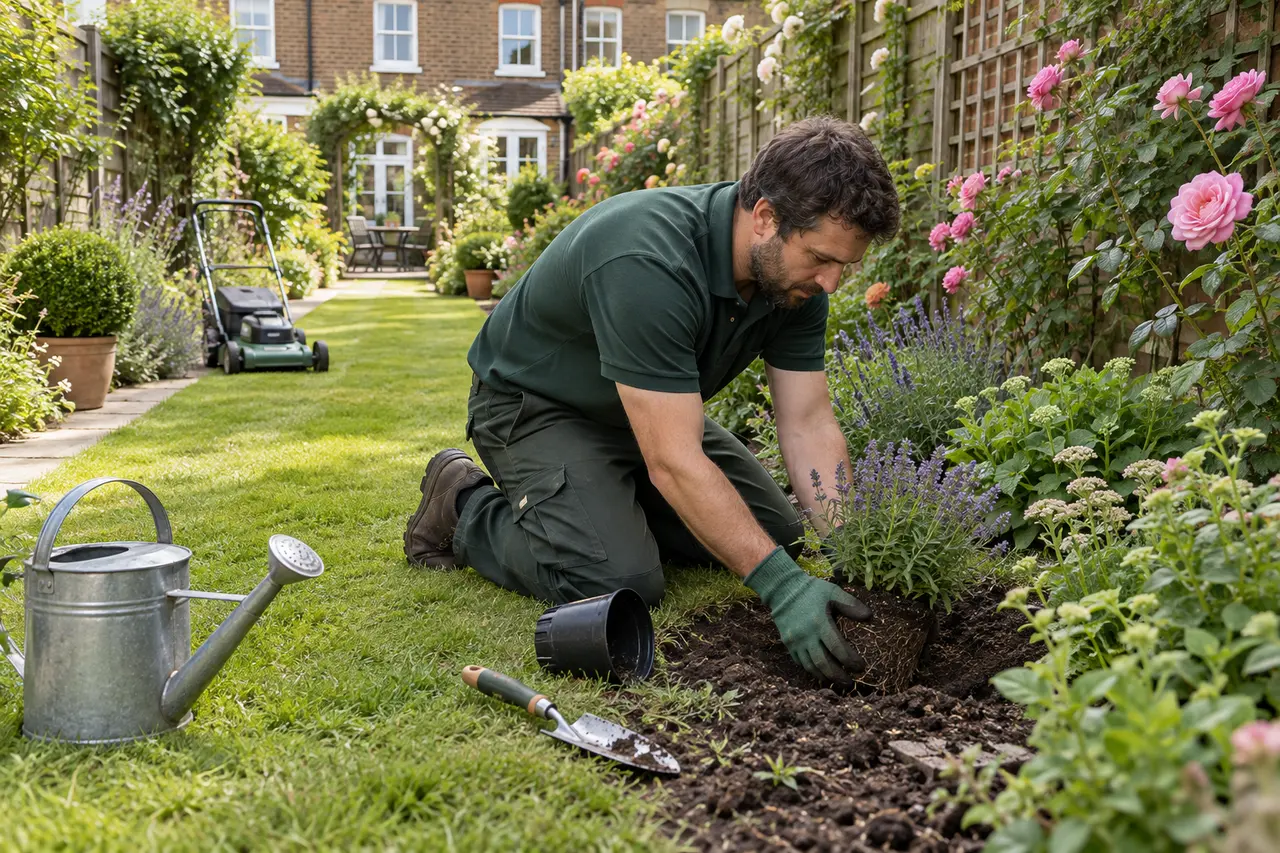
Roses among shrubs and perennials
Individual treatment within the mixed bed
Our gardeners work through the retained planting before selecting the cuts. Repeat-flowering plants, shrubs carrying flowers on older wood and perennials emerging near soil level can share one bed without needing the same treatment. Weeding opens the view around their bases and makes those separate plants easier to follow, particularly where a filled-out border has allowed stems to overlap across the intended positions.
Rose attention follows the type and growth habit. We distinguish spent flowers, damaged stems and long climbing shoots, selecting the relevant operation for each. Suitable tying-in can preserve useful loose growth beside a path, while appropriate cuts address stems that need removal. That individual treatment keeps the rose’s structure understandable through the work and retains the growth selected for its continuing display.
Labels and marked positions remain useful throughout the visit. In regular garden maintenance, smaller planting and border attention follow the existing occupants and the space required for their later spread. Where a substantial rearrangement is wanted, it has its own planting or design proposal. Our routine work therefore leaves the retained bed recognisable and any intended future changes clearly distinguished within the garden.
- Labelled roses remain distinct from volunteer seedlings during our hand work.
- Accessible weeds are removed around the root zones of retained perennials.
- Fallen cut stems are collected before the mowing stage begins.
- Front and rear areas receive their own task sequence and material handling.
- New planting retains usable space for watering and later attention.
The entrance and the garden behind
Separate task sequences for separate outdoor areas
We account for entrance planting as its own working area. Weeds, loose leaves and a projecting shrub can need close attention there while the rear presents a larger grass cut or wider bed work. The front tasks have their place before equipment is packed away, with accessible stems attended, the route finished and the material gathered from the entrance as part of the completed visit.
Movement between the two areas forms part of the practical work. A side gate, passage or route through the house guides the suitable tool arrangement. We keep the carrying line usable and position the gathered material where it can wait clear of that access. This gives both active gardening and the load awaiting removal appropriate room within the available space.
For returning work, the balance changes with the growth in each space. A front hedge may hold its outline while newly disturbed rear soil develops more weeds; later, the entrance can need the closer attention. We use those changes to allocate the next tasks and their collection, keeping the two working areas connected through a suitable responsive maintenance sequence.
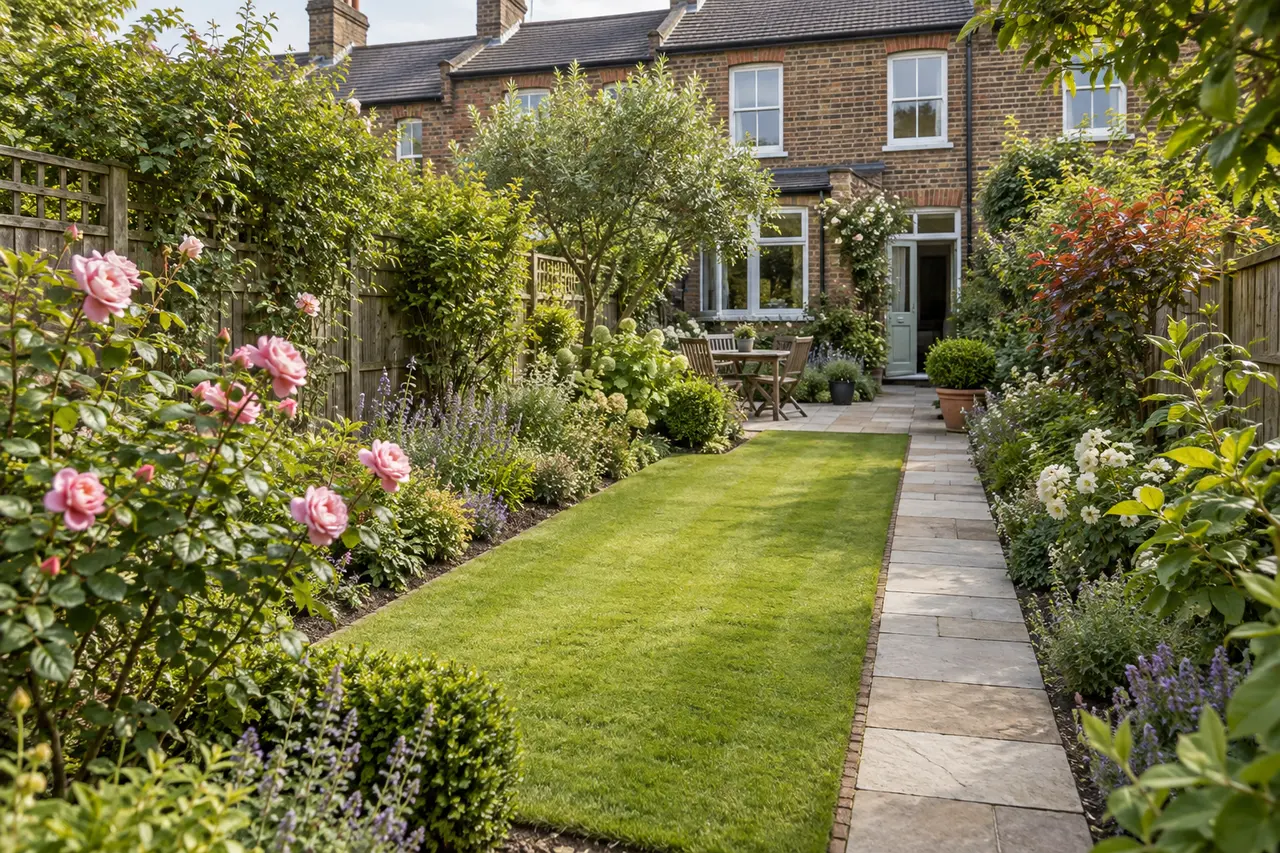
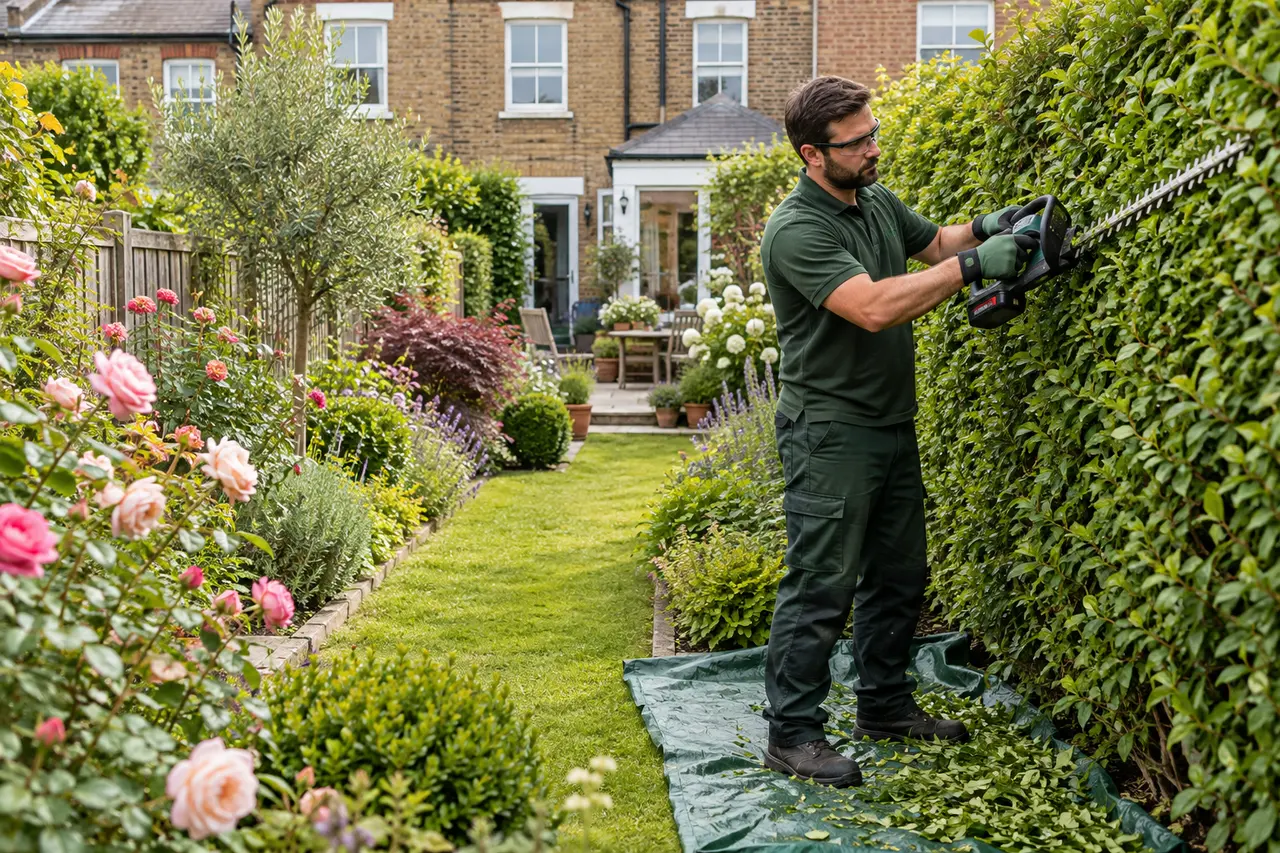
Hedges framing the flower beds
An accessible outline on both sides of the boundary
Our hedge work relates the visible outline to the routes beside it. We review the accessible face from the lawn and from the path, where individual shoots can project even when the screen appears straight from the other side. The intended finish accommodates people and equipment as well as the flowering bed, with the retained line understood before new extension is shortened.
On suitable growth, we trim the accessible extension consistently and use separate hand attention at awkward corners or beside neighbouring plants. Collection is positioned to keep the base from disappearing beneath the load. Suitable sheets and a controlled sweep help retrieve small fragments before they lodge among low foliage or in the gravel around the entrance, where later gathering becomes more difficult.
A substantial hedge reduction has its own assessment of thick wood, available standing space and access to both sides. Our ordinary shaping follows suitable reachable growth, with affected vegetation checked for nests being built or used. Disturbing cuts are postponed where required. The planned operation therefore retains a clear extent, with larger changes identified separately from the lighter maintained outline.
The meeting of lawn and border
Grass finishing beside retained flowers
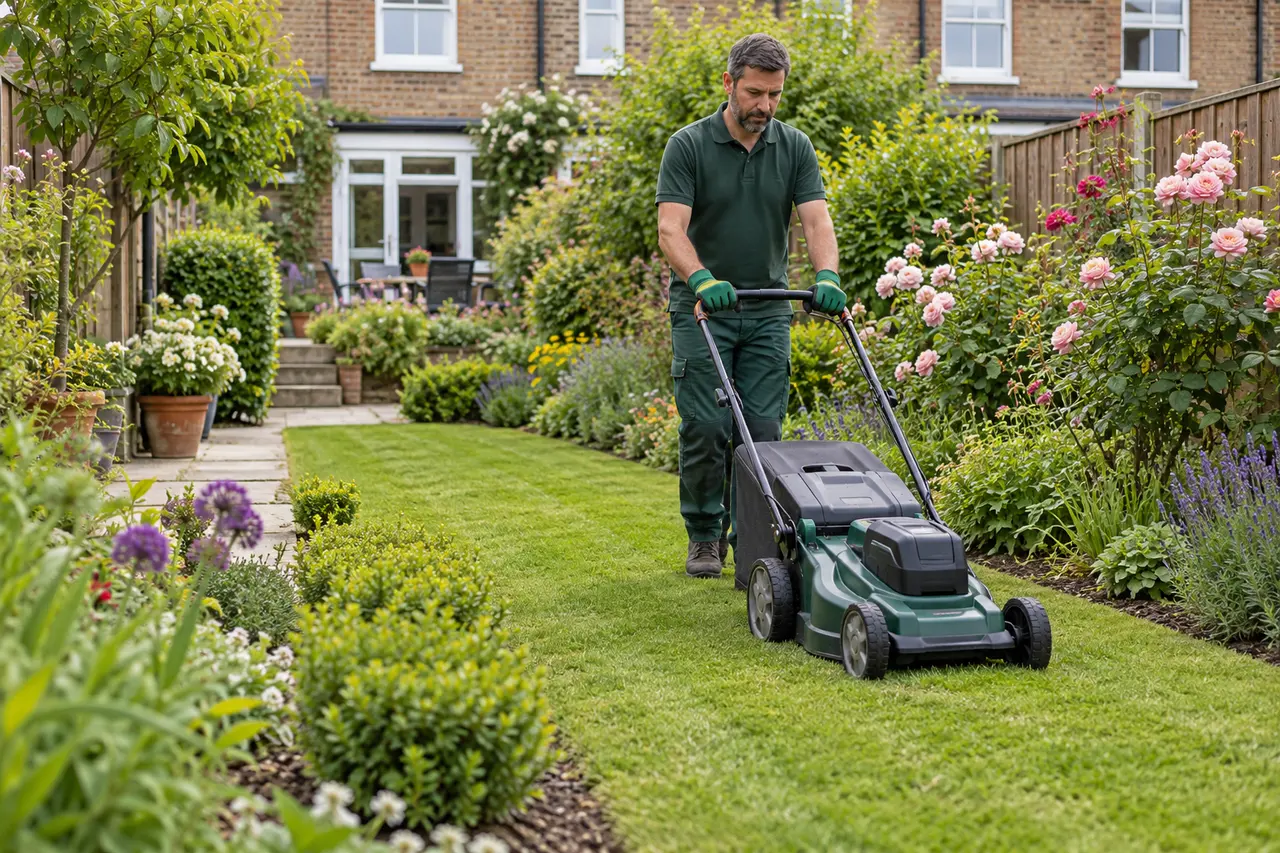
We identify the intended lawn division before cutting beside a strongly growing bed. Grass can extend into the soil while flower stems lean across the original line. Our route follows that retained edge, especially near fresh planting, giving the accessible turf an appropriate finish while the adjacent living stems remain within their identified border positions.
The open cut is arranged without repeatedly pivoting equipment on delicate edges. At posts, low plants and narrow corners, an appropriate smaller finishing tool can address the margin more effectively than pressing the mower into the gap. Our collection keeps loose grass from accumulating over adjacent foliage, with clippings gathered or handled according to the cut and finish actually being carried out.
The Lawn care operation also identifies areas where cutting alone is not the whole job. Repeated wear, thinning growth or grass remaining damp under surrounding planting may need a separate condition assessment. We keep that potential recovery distinct from ordinary mowing, while suitable accessible turf still receives its intended cut and the adjoining bed remains outside the machine’s working surface.
Work through changing growth stages
Seasonal attention follows the plants in the bed
Our hand care follows the different stages present in a mixed garden. We clear suitable space around emerging perennials while established shrubs receive the attention appropriate to their current growth. As the display develops, selected deadheading and pruning join weeding and mowing in the sequence, keeping useful stems and flowers identifiable as the tasks change around them.
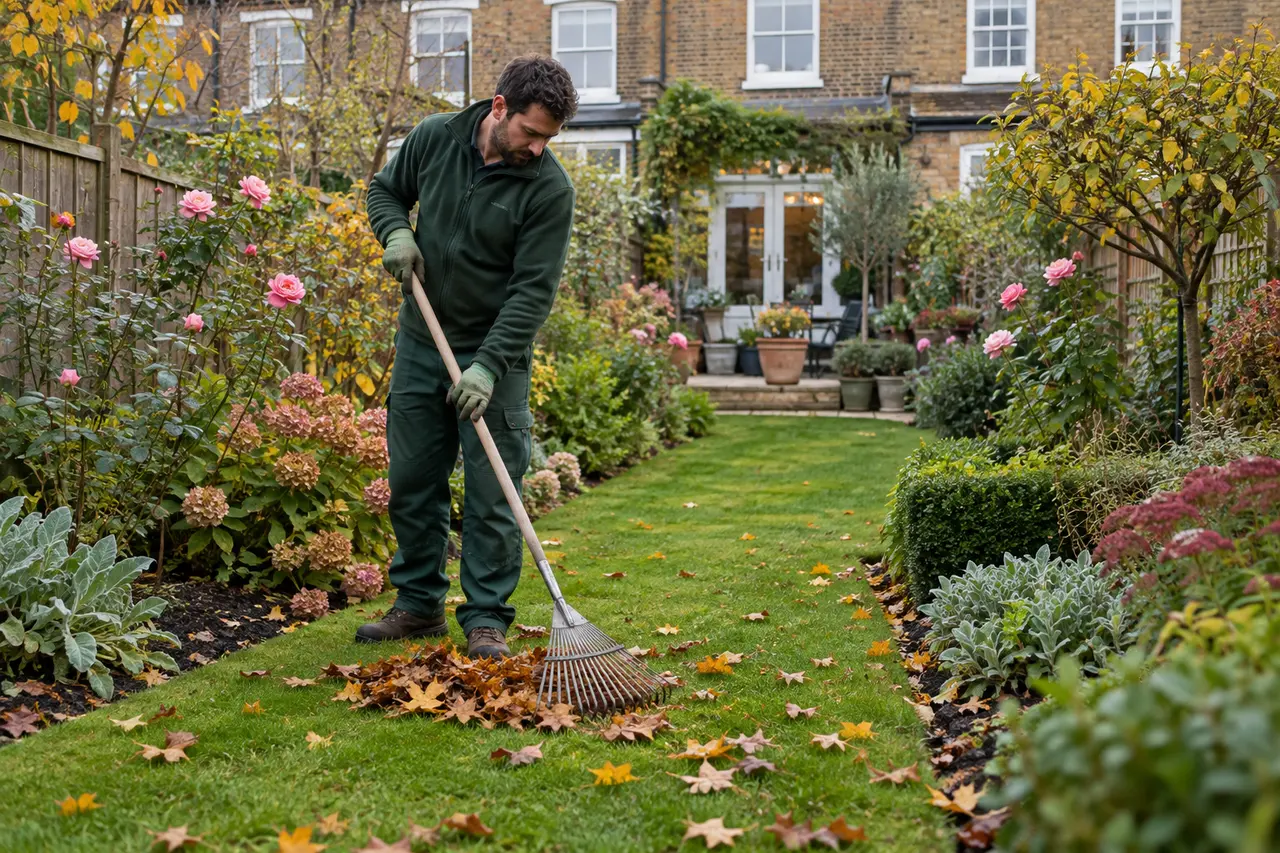
Later collections reach the pockets where leaves accumulate against supports, around pots and under low branches. Our finish includes those reachable places as well as the open paving. Material resting on tender foliage is lifted with a suitable controlled method; equipment useful on open grass is not carried indiscriminately through a crowded border. That distinction retrieves the loose load while preserving the plants beneath it.
Winter work follows the actual access and growth. Suitable reachable tasks can continue where soft turf needs to wait, and the identified plant determines the pruning stage. Our guide to caring for a garden through the year offers broader seasonal context, while the practical visit addresses the property’s receiving surfaces, available routes and retained planting, with any deferred area left clear for its appropriate later attention.
Recovery before routine border care
Overgrowth cleared around the plants being retained
When dense weeds and long grass have hidden a garden’s divisions, our initial work opens a usable section before close maintenance resumes. Revealing the bed edge and walking line gives the next operation a reference. We identify the remaining planting from that clearer position, progressing through the accumulated growth without treating every stem in the obscured area as material destined for removal.
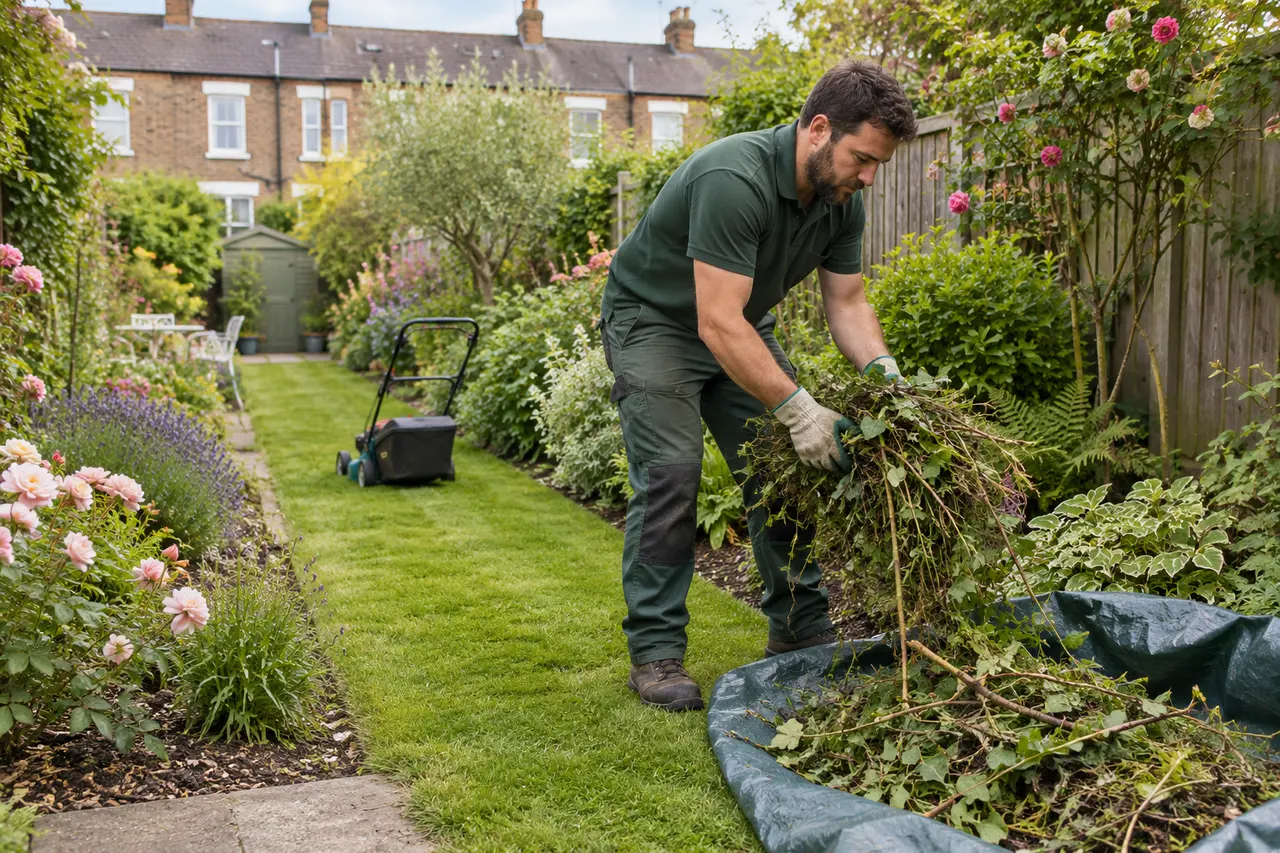
An established rose or shrub can remain within a recovered bed even where weeds have tangled through it. Our gardeners distinguish the retained branches and work in smaller portions to release unwanted growth. This offers more control than pulling an interwoven mass across the planting. The collection then follows the detached material, leaving the wanted plant available for its own appropriate subsequent care.
Our Garden clearance accounts for gathering and carrying the substantial load that can come from a modest-looking patch. Any separate removal arrangement stays explicit. The recovered bed and accessible routes then provide a manageable basis for continuing attention, with the amount completed related to the actual vegetation, handling space and requested work in that portion of the garden.
Further work around established planted gardens
Garden design that retains a valued bed
Our Garden design can develop seating, movement and new planting around an established bed worth retaining. We account for its occupied space and the positions needed for weeding, watering and reaching the plants as they develop. The proposal connects old and new elements through a workable layout, keeping the valued bed accessible alongside the additional features planned for the surrounding garden.
Tree proposals related to the planting below
Where a crown change is intended to affect light over a border, our tree-surgery assessment identifies that receiving bed and considers the particular tree. The proposed operation follows the defined aim and applicable permissions. We keep its appropriate extent clear, with the planting below giving context to the work and the expected practical result discussed for the actual tree being assessed.
Cleaning different front and rear paving materials
Our Jet washing proposal identifies the front path and rear patio as separate receiving areas. Their materials and condition determine suitable methods, including where a decorative step differs from the more extensive paving behind the house. We account for water supply and equipment access to each space, leaving the cleaning result and working route understandable for both surfaces.
Gutter clearance across different rooflines
A gutter-cleaning plan identifies the individual front and rear runs and the structures below them. An extension can change the available working position at one roofline, while another section may be more readily accessible. We relate the clearance method to each receiving arrangement so the proposal addresses the actual channel sections and their separate practical approaches.
Seasonal tree collection with accessories retained
Our tree collection arrangement follows the specified tree and collection position after the display is taken down. The preparation separates lights, ornaments and accessories from the outgoing material, with a stand or pot retained unless the selected service expressly covers it. This leaves the collection tied to the actual tree, avoiding an indistinct load in which reusable display items become mixed with material intended to leave.
An hourly guide for the maintenance work
Our published gardening rates provide the time-based basis for the actual task list. Plant purchases, substantial clearance, extra waste removal and specialist jobs retain any separately identified charges within the proposal.
| Time on the gardening visit | Published guide price |
|---|---|
| First hour | £83 |
| Each subsequent hour | £65 |
GBP rates. The final booking total, VAT position and applicable access-related charges must be established before booking.
Questions about our mixed-garden maintenance
How is rose care kept separate from other plants?
We identify the rose and the operation it needs within the mixed bed, then work on that selected material. Surrounding plants remain in place unless their own suitable attention or removal is included. This allows particular rose care without turning the whole border into a shared cutback or clearance task.
How are front-garden jobs included in the visit?
We can include the front garden with rear work where both areas and their route form part of the arrangement. The allocation covers individual jobs, close entrance-bed attention and the carrying involved between spaces. That gives a small front area a defined share of the visit according to its practical detail, with the suitable finish and collection completed there as well.
What happens around an unidentified plant?
Our work preserves uncertain planting while its identity and intended treatment are established. Existing labels, reliable earlier photographs or marked positions help connect the plant with the retained arrangement. Accessible weeds around it can be addressed first, improving the working view without making an irreversible removal or pruning choice on an unsupported assumption.
How does planting follow the weeding stage?
Where small planting is included, we prepare suitable positions and materials after the selected weeds are removed. The additions have room for their later spread, relevant light and usable watering access. A substantially rearranged bed has its own planting or design proposal, while the routine operation completes its identified work around the existing occupants remaining in place.
How does continuing care follow an overgrown-bed clearance?
After the specified clearance, returning hand work can follow new weeds, incoming roots and suitable surface care. The interval and method respond to what develops in that bed. We use the recovered access to attend to those changes while the plants are recognisable, connecting the initial operation with practical continuing maintenance rather than a permanent weed-prevention claim.
Mixed planting maintained as individual living plants
Our Balham work gives roses, emerging perennials and established shrubs their own suitable attention within the wider lawn-and-border sequence. Through the garden-care services, that detailed care can sit alongside the further jobs the garden requires, with collected material and retained planting remaining clearly separated at the finish.