

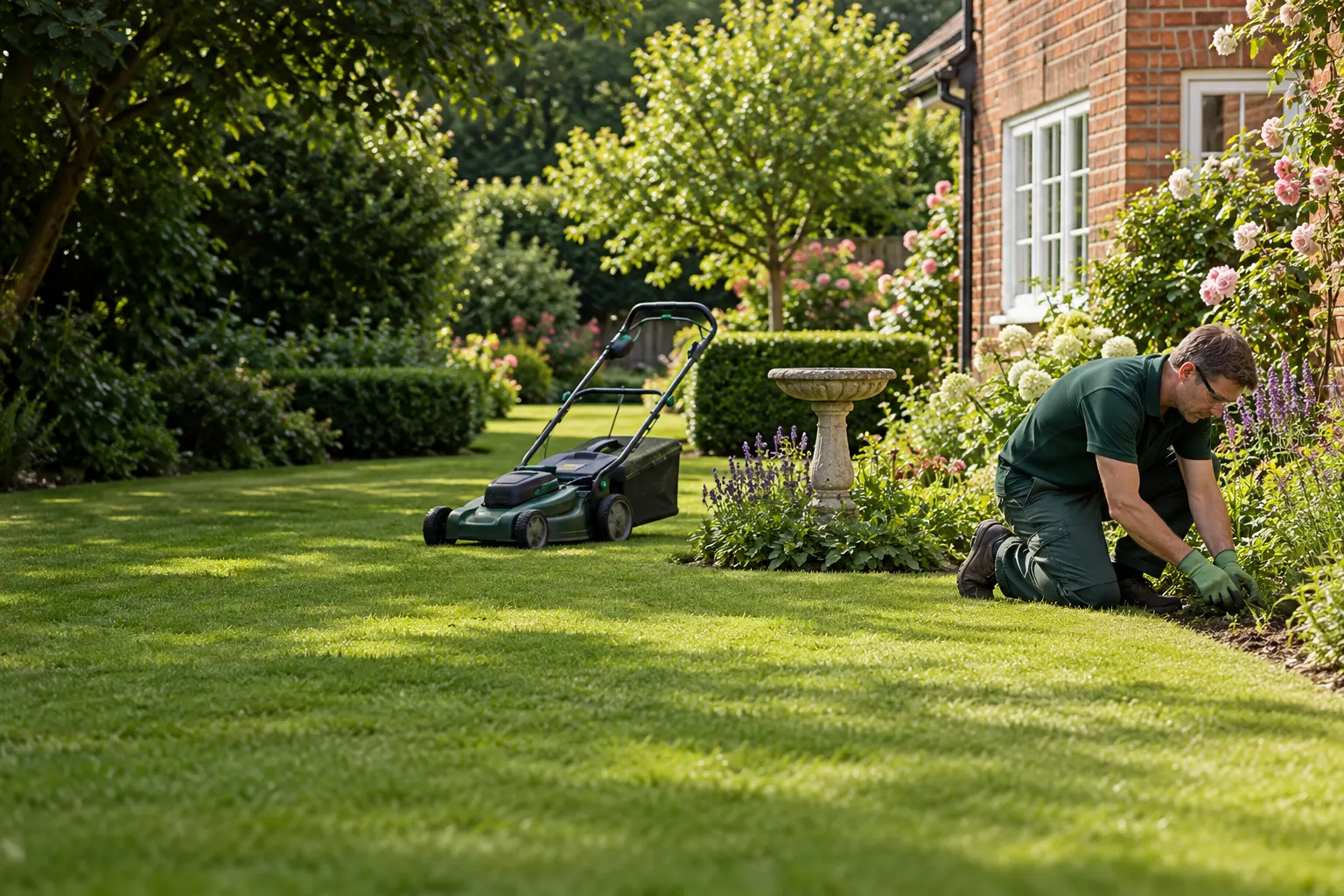
The planted setting maintained around its fixed features
Gardeners Carshalton
We care for grass, beds and suitable boundary growth around ornaments, built-in seating and water-feature edges. Our gardeners plan the reachable finish around the object’s full outline, using separate hand attention where larger tools cannot work. The result is a maintained setting with fixed features and their fittings left recognisable.
- Does nearby gardening include the birdbath itself? Our surrounding plant care leaves the feature undisturbed unless separate suitable work on the object is expressly included.
- How is access to water-feature fittings retained? We position and tend nearby plants with relevant fittings visible and reachable for their continuing use and appropriate separate attention.
Gardening around features that remain in place
How do you maintain grass around a fixed ornament?
We treat the feature as part of the working boundary and cut the accessible lawn around it. A narrow fringe beyond the mower’s reach can receive a suitable separate finish, alongside selective nearby weeding. The operation concerns the setting; lifting, cleaning or restoring the ornament is not automatically included because grass grows against its base.
What does your gardening beside a pond cover?
Our work can maintain suitable surrounding grass and terrestrial planting while keeping the pond edge and fittings identifiable. That is distinct from cleaning the water, managing aquatic plants or servicing equipment. The practical sequence therefore follows the reachable ground around the feature, without extending a routine garden task into work within the water itself.
The complete outline of the retained feature
Equipment positioned clear of projecting edges
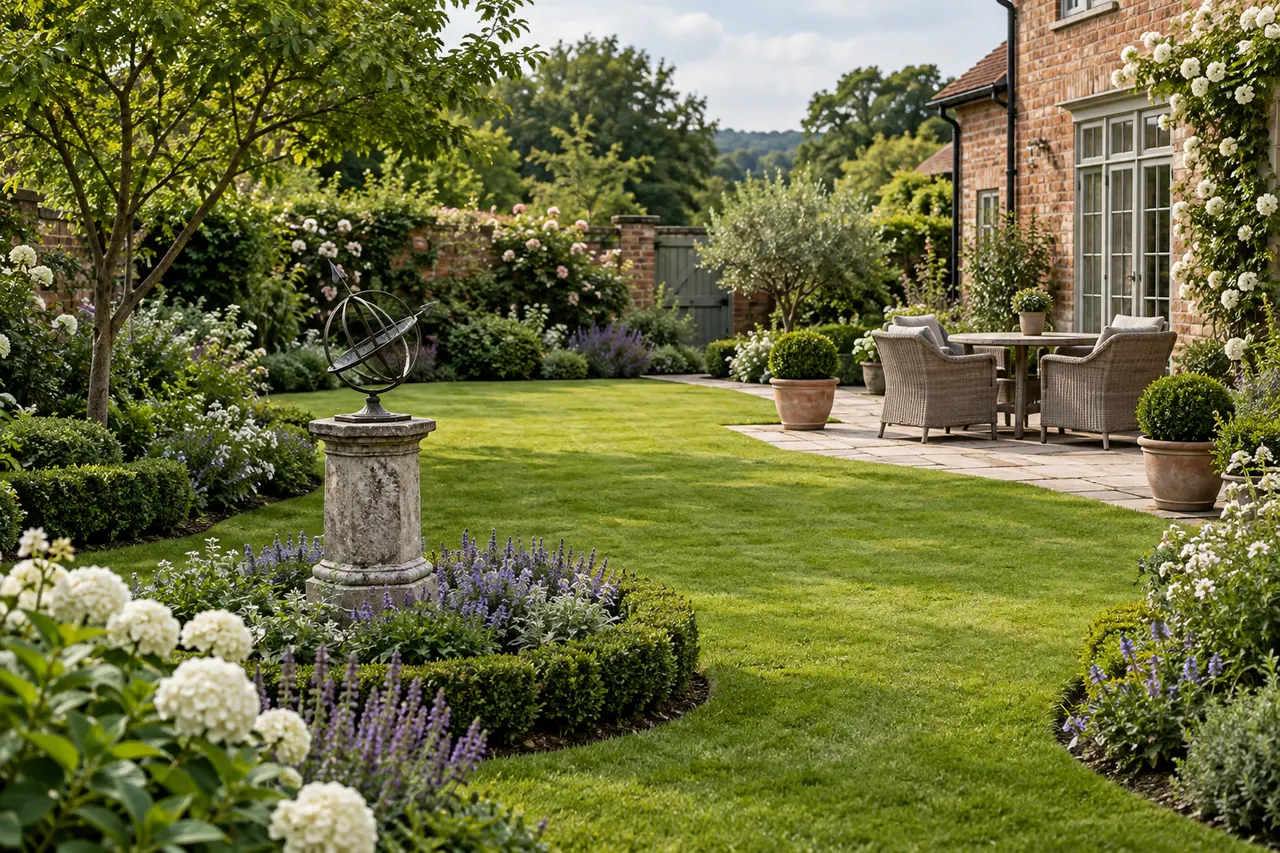
Our initial view includes the base and projecting parts of a sundial, birdbath or fixed seat, not only the section above the planting. Grass can conceal a footing while another edge lies in the route of a carried handle. We relate equipment movement to that whole outline, accounting for mower wheels, long tools and receiving tubs before close work begins beside the finish.
Tools and gathered material have their own suitable resting positions. A surface that resembles stone may still contain vulnerable joints or decorative pieces, so the object is not used as a brace or temporary workbench. Where a feature appears unstable, our nearby operation avoids loading it while its condition and the appropriate next step remain unresolved. This keeps plant maintenance distinct from testing the construction by leaning against it.
The garden maintenance service can bring together accessible grass, weeds and suitable plant attention around the object. Those practical tasks leave the feature visible in a cared-for setting without implying restoration of the fixed item. Our finish respects its edges and preserves recognisable neighbouring plants, so the relationship between the ornament and its surroundings remains understandable after the growth has been attended to.
- Our mower route keeps wheels clear of projecting ornament bases.
- Collection tubs have a suitable receiving position beside the active plant work, clear of the retained seat.
- Loose stems are lifted away from water-feature edges with controlled handling.
- Suitable hand tools attend to narrow gaps within the surrounding planting.
- Retained fittings stay visible and accessible through our gathering of the loose material produced around them.
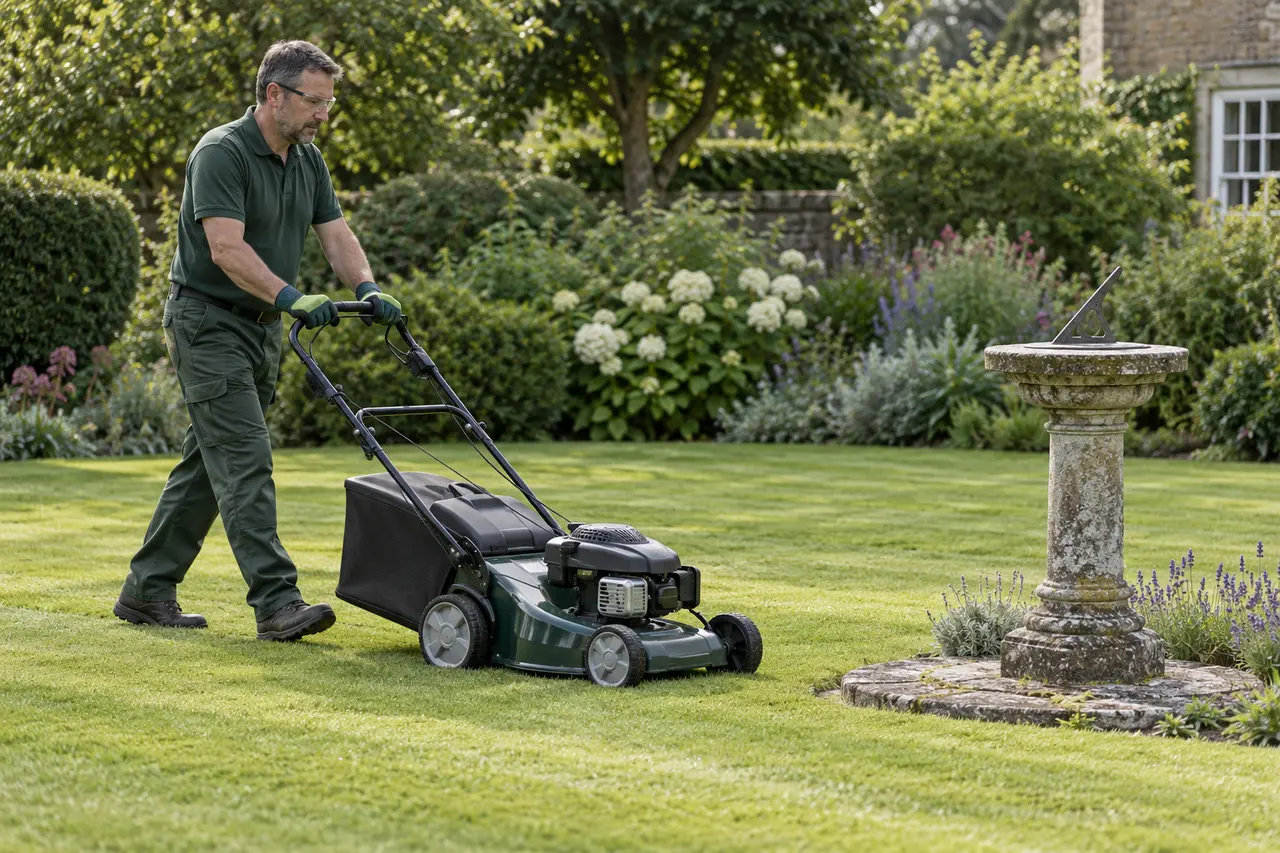
The narrow grass fringe at a base
Separate finishing beyond the main mowing deck
We cut the open grass on a suitable route before attending to a fringe beyond the deck’s useful reach. Moving the main machine closer can scrape the object without improving that remaining strip. Our finishing method follows the available width and the material beside it, providing a controlled way to reach suitable grass without relying on contact with the fixed base.
Loose gravel, displaced edging and decorative stones are identified before powered margin work. Loose stones remain separate from the receiving turf, and any uncertain portion is exposed for assessment before its suitable finishing method is selected. Grass extending over a sound edge is treated as a different task from rebuilding a broken base or reinstating adjoining paving. Our method follows the feature’s actual condition at that point.
A separate lawn-care proposal can address wear around a frequently used seat or ornament. Repeated standing creates a different pattern from growth shaded by neighbouring plants, and the proposed recovery follows the particular condition. Routine cutting continues to have its own purpose; it is not represented as levelling the surface or repairing every weak patch merely because the surrounding fringe is now visible.
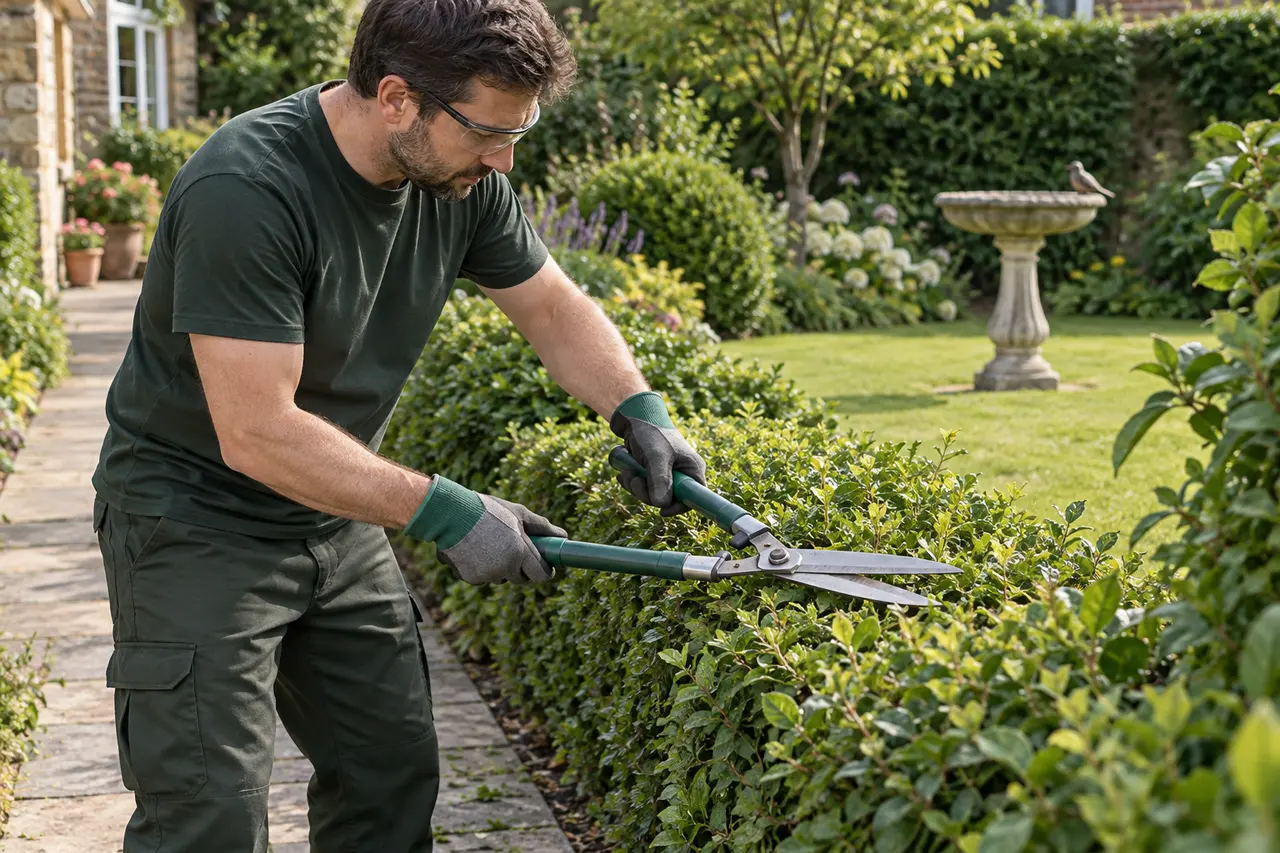
The hedge working position
Handle movement and stable footing beside the ornament
Our hedge arrangement includes the room needed for the shear handles as well as the blades. A feature behind the operator can restrict that movement even where the face appears reachable from the path. We establish stable footing and room for controlled handle movement before selecting the accessible hedge section beside the retained object.
The hedge’s species and growth determine the reasonable trim. We distinguish soft extension from older wood and retain the intended screen as the suitable identified growth receives attention around the feature. Nest checks cover the affected vegetation and disturbing work is postponed where nests are being built or used. Substantial branches or work beyond suitable reach retain their own separate assessment.
Once cutting has stopped, we gather fragments from reachable ledges and low foliage around the feature. The finish includes those receiving places as well as the hedge face above them. Our collection places material into its appropriate load, keeping beds, water and the accessible working area clear for their next suitable use.
Loose growth released from fixed projections
A manageable clearance load around retained fittings
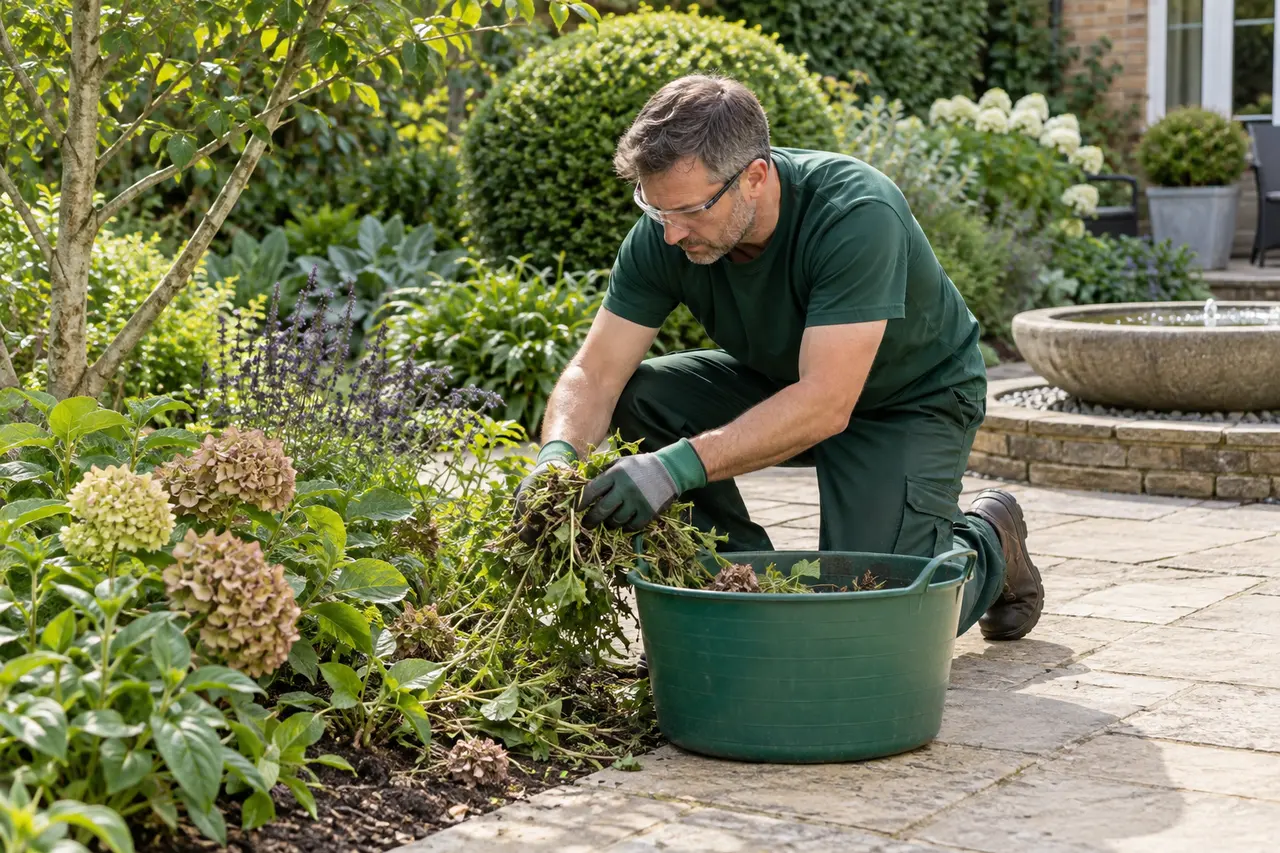
We gather trailing stems in manageable portions and lift them clear of taps, fittings and decorative projections before they are carried. We follow the actual snagging points and lift each manageable portion free of the fittings before carrying it from the working area. The retained planting and fixed object remain stable as the detached stems are collected and moved clear through their suitable route.
During garden clean-up, any concealed hose or electrical fitting remains part of the retained arrangement. An unclear line is identified before cutting approaches that section. This makes exposure of the garden a controlled progression, with the equipment and fittings that belong there preserved as the surrounding vegetation is removed. The working view develops without treating an unknown covered component as another stem in the load.
Our sorting keeps green material separate from broken ornaments, packaging and unrelated rubbish revealed during the work. The garden-waste guide describes why the actual contents matter to that handling. A cut stem and a ceramic fragment do not follow one unquestioned disposal route simply because both were hidden by foliage; our removal arrangement is based on what the opened area actually contains.
Plant care around the focal base
Weeding and planting with the feature’s edges retained
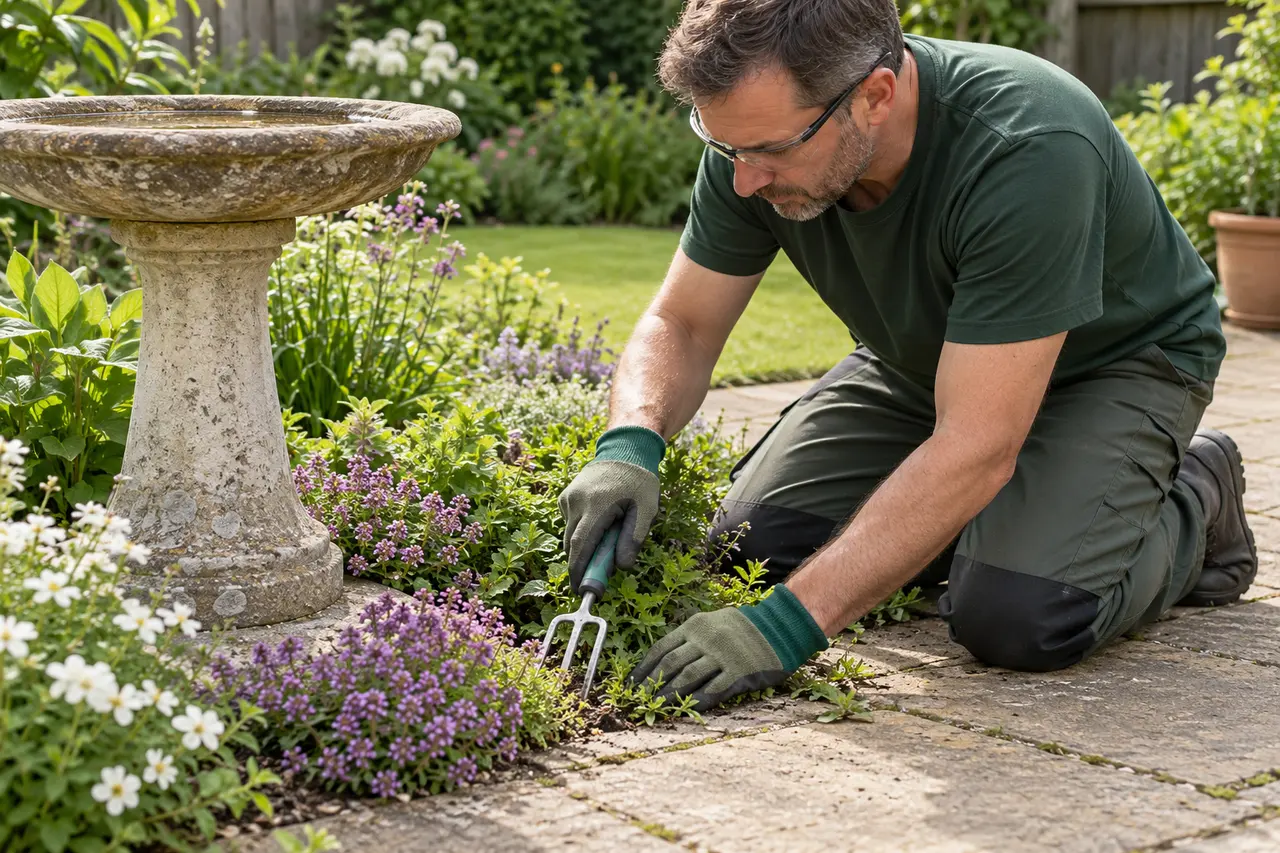
Our hand attention can reveal the relationship between low planting and a fixed base without removing the whole planted setting. Accessible weeds and collapsed stems are separated from the plants being kept. We work from a suitable position with the tool controlled around the retained roots and the feature’s finish clear of its movement.
Where additional planting forms part of the visit, we set out the positions against the future spread and the space needed to see and maintain the object. Existing fittings remain relevant to soil preparation and watering access. The intended result is a workable bed around the retained feature, not a collection of additions placed into every visible opening until the base and its useful approach disappear.
The existing construction remains visible enough to understand at soil level. We do not disguise an awkward junction by piling material against it; any proposed ground change has its own decision. Close plant care can improve the setting while drainage, stone resetting or restoration remain distinct operations. This keeps the completed gardening honest about the surface it has maintained and the structure it has left in place.
Seasonal material caught around edges
Collection suited to ledges, planting and open turf
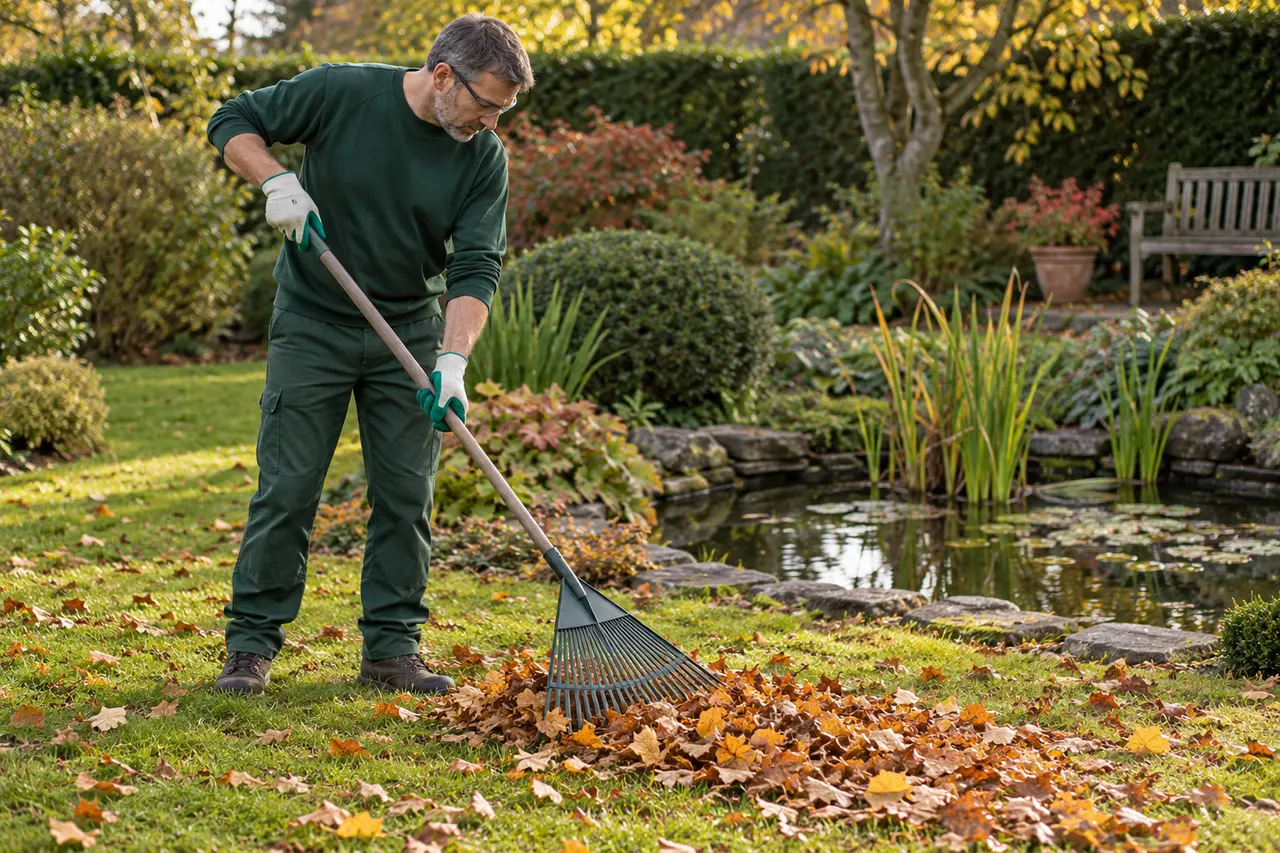
Our leaf work follows the different receiving places around the feature. A bench base, low wall and open lawn do not offer the same surface beneath a deposit. We gather manageable amounts outwards from the pockets where material catches, selecting tools for the ground below. This avoids pushing a dense accumulated layer across delicate planting to reproduce the movement used on unrestricted grass.
Where a pond is present, our garden-cutting and leaf loads stay outside its edge. The surrounding ground receives its appropriate care from a suitable standing place, with the water edge and any unreachable portion clearly identified. Aquatic equipment remains untouched within that ordinary task, keeping a controlled garden collection separate from a different operation inside the feature.
The year-round care guide offers wider context for seasonal changes while our visit addresses the useful accessible tasks in this setting. A route to the seat can receive collection even when a wet lawn is unsuitable for traffic. The work therefore keeps usable areas open without forcing every nearby surface into one shared operation or relying on the object itself to reach an otherwise inaccessible deposit.
Further services around a retained focal feature
Garden design around the feature’s changing setting
Our garden-design proposal can retain an ornament as a focal point while reconsidering the beds and paved areas around it. We relate the ornament’s scale to the revised space and retained elements, connecting the focal point with the proposed beds and usable approaches around it. Moving or restoring the feature remains an explicit project decision, distinct from developing a more suitable planted setting around it.
Tree work specified beyond a single boundary line
A tree-surgery proposal considers the resulting tree as a whole when one side affects the garden. A fence line alone does not provide a complete cutting specification. We identify the actual obstruction or concern and consider the resulting tree as a whole when specifying its suitable operation.
Area-based washing with its stated minimum charge
Our jet-washing guide lists £4 per square metre with an £83 minimum charge. The measured receiving area, surface and setup inform the complete quotation within that guide basis. For a small standalone visit, the minimum governs the guide total, while the £4 rate describes the measured-area calculation. The actual proposed work can produce a total above the minimum, with the included operation clear for the particular paved area.
Channel clearance distinguished from fascia appearance
Our gutter-cleaning booking identifies removal of accumulated material from the channel as its practical result. Washing marks from the fascia or soffit is a separate surface operation, so a clear gutter is not presented as a complete roofline appearance service. The outside may remain weathered after the booked deposit has been removed. We keep any additional washing distinct from the channel work actually specified.
Room for the seasonal tree’s delivery movement
Our Christmas-tree delivery handling needs clearance for the moving tree and crew, which can occupy more room than the eventual display position. The carrying route accounts for the tree’s turning movement and the room needed around the crew before it reaches its final display position. Children and pets need to remain outside that immediate handling area while carrying takes place, keeping that brief working space available before the load begins to move.
Include the close work around fixed objects
The general gardening rates below apply to time, with preparation and careful finishing included in the work allowance. A fixed feature can add detail without adding much ground area.
| Gardening time | Guide price |
|---|---|
| First hour | £83 |
| Each subsequent hour | £65 |
GBP guide prices. Agree the full scope, waste handling, VAT treatment and any applicable access or parking charges in the quotation.
Questions about our garden work around fixed features
Is birdbath cleaning included with the nearby bed work?
Our surrounding weeding and plant attention leave the feature itself undisturbed unless separate suitable cleaning is included. The object and its use need an appropriate method of their own. Attending to plants near its base is therefore not treated as a general instruction to wash the bowl or alter the retained feature.
Where do you place cuttings beside a built-in seat?
We use a suitable separate receiving position for the cuttings, keeping the bench available and its finish clear through the plant work. Wet material can mark a finish and conceal sharp stems against its joints. A tub close to the active work provides a clearer collection arrangement, preserving the seat that the surrounding gardening is intended to leave usable.
Does grass finishing reset an unstable stone base?
Our grass work maintains the surrounding growth and remains separate from construction repair. If the base moves or appears unsound, equipment does not press against it while the concern is identified. A tidy margin is not used to conceal a feature needing its own structural decision or imply that the base has been reinstated.
How are pipes kept accessible within nearby planting?
We position and tend plants with the continuing visibility and reach of relevant fittings in mind. Foliage is not used to hide every component around the water feature. The surrounding bed can receive care while servicing or alteration of the equipment remains separate, leaving the retained installation understandable for the person responsible for it.
Can one vulnerable ornament corner be excluded?
Our lawn operation can follow the suitable accessible area with that corner intentionally outside its boundary. We retain the exclusion clearly so a longer fringe is not mistaken for an overlooked strip. Working around the feature can provide a useful cut without forcing an unsuitable finishing pass into the part requiring a different approach.
A maintained setting with its fixed point respected
Our Carshalton gardening service range can connect close grass finishing, selective bed care and controlled collection around the feature being retained. That work improves the accessible setting while preserving the object’s edges, fittings and separate care requirements through the suitable surrounding gardening.