

GARDEN CLEARANCE ACROSS LONDON & THE M25
Garden clean-up in London
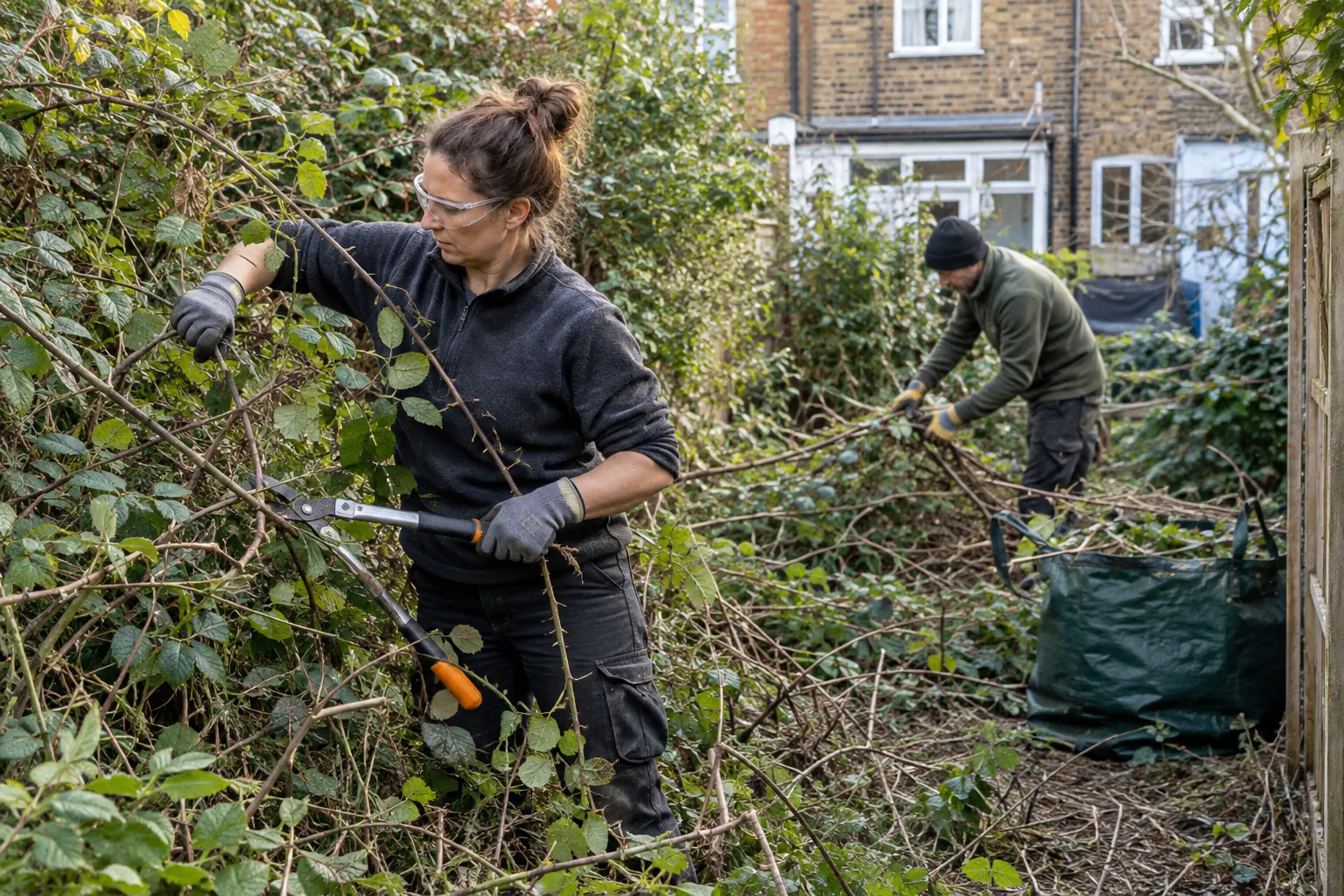
Our garden clean-up removes the specified unwanted vegetation and accumulated growth to recover usable routes, beds and outdoor space. The team identifies retained plants before cutting, then gathers and handles the resulting material within the defined operation. The service follows what is actually in the garden, with the carrying route and intended cleared areas established alongside the vegetation selected to leave.
The result of our defined garden clean-up
Our clearance attends to the included weeds, brambles, overgrowth and garden debris. As the work opens the area, the retained features and ground become visible and accessible. Any existing paving damage, border reconstruction or new garden arrangement has its own intended operation. This gives the customer a recovered starting space and a clear view of what further work may be appropriate.
How our collection distinguishes the materials
The load is identified by its actual contents. Green cuttings, soil, rubble, timber, furniture and household items need different handling and destinations. Our proposal sets out the material being dealt with and the removal arrangement for that job. This keeps the vegetation operation and its collection clear where a garden contains other stored or concealed objects.
Preparation through the visible and concealed areas
The initial view establishes the proposed working route and included sections. An apparently continuous overgrowth can cover a former path, separate planting, useful shrubs and uneven ground. Our gardener identifies that visible arrangement before progressing through manageable areas. The surface and contents revealed during cutting then inform the next part of the operation, with appropriate handling selected as the actual working space becomes clearer.
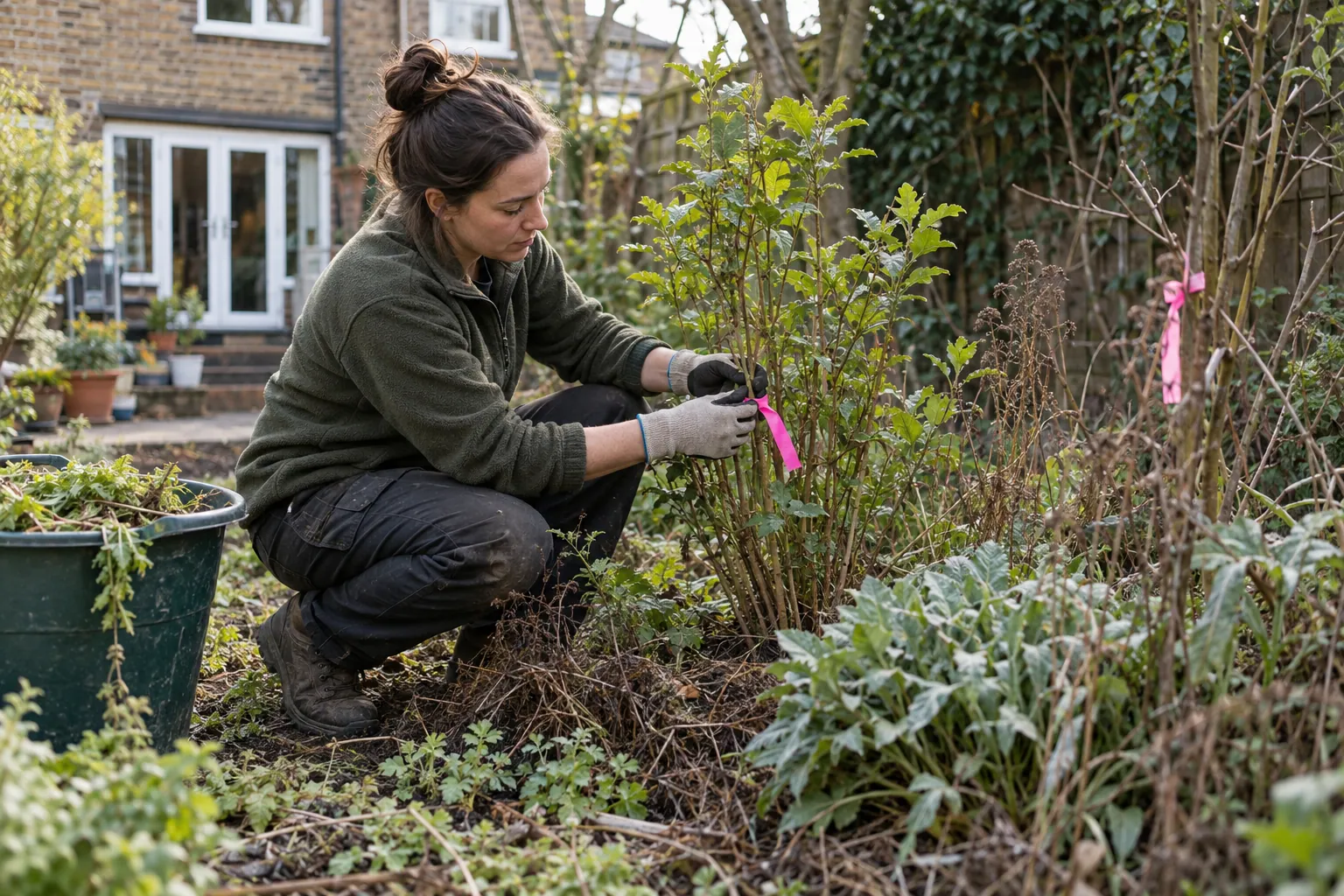
Retained plants and features remain distinguishable throughout the removal. A young tree or rose can be hidden within brambles, while bulbs can occupy apparently open soil at another time of year. Our preparation follows that known planting and any uncertain growth before cutting around it. Shared boundaries and excluded areas stay separate from the included clearance, preserving the features intended to remain within the recovered garden.
An open route for the following work
Where access is obstructed, the first manageable opening gives the team a route for equipment and collection. Suitable projecting growth is reduced within that area and the detached material gathered as it appears. This keeps the completed portion useful for moving to the next section. The sequence links cutting with handling, leaving an identifiable route through the garden as the wider operation progresses.
Exposed paving and objects are considered as the surface opens. Wire, broken slabs and stored items remain distinct from the plant material being removed. The gardener identifies those conditions for appropriate separate attention while suitable work continues in the available area. The recovered route therefore shows the actual surface remaining, with any repair or other subsequent operation clearly distinguished from the vegetation clearance already completed.
Controlled removal of dense growth
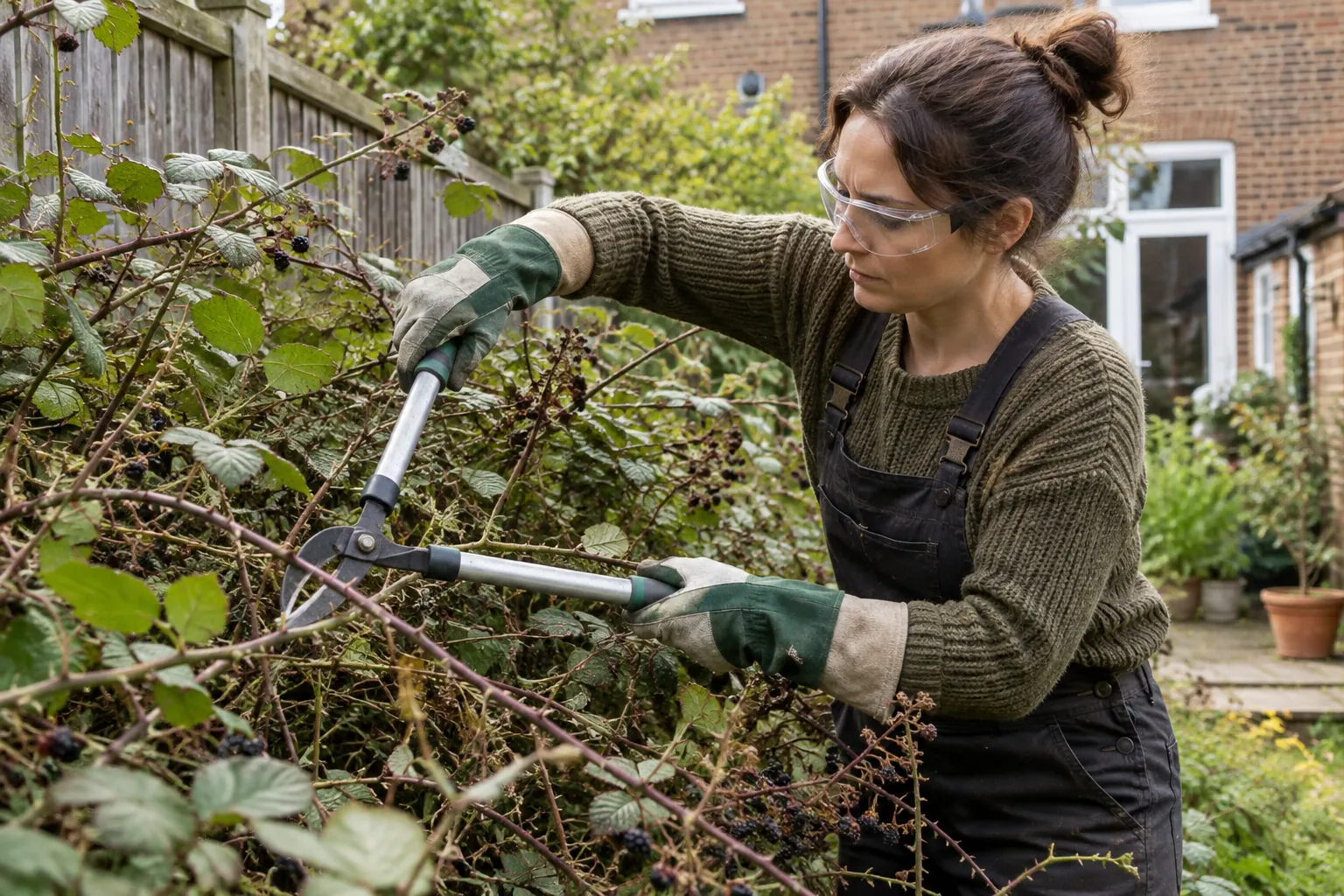
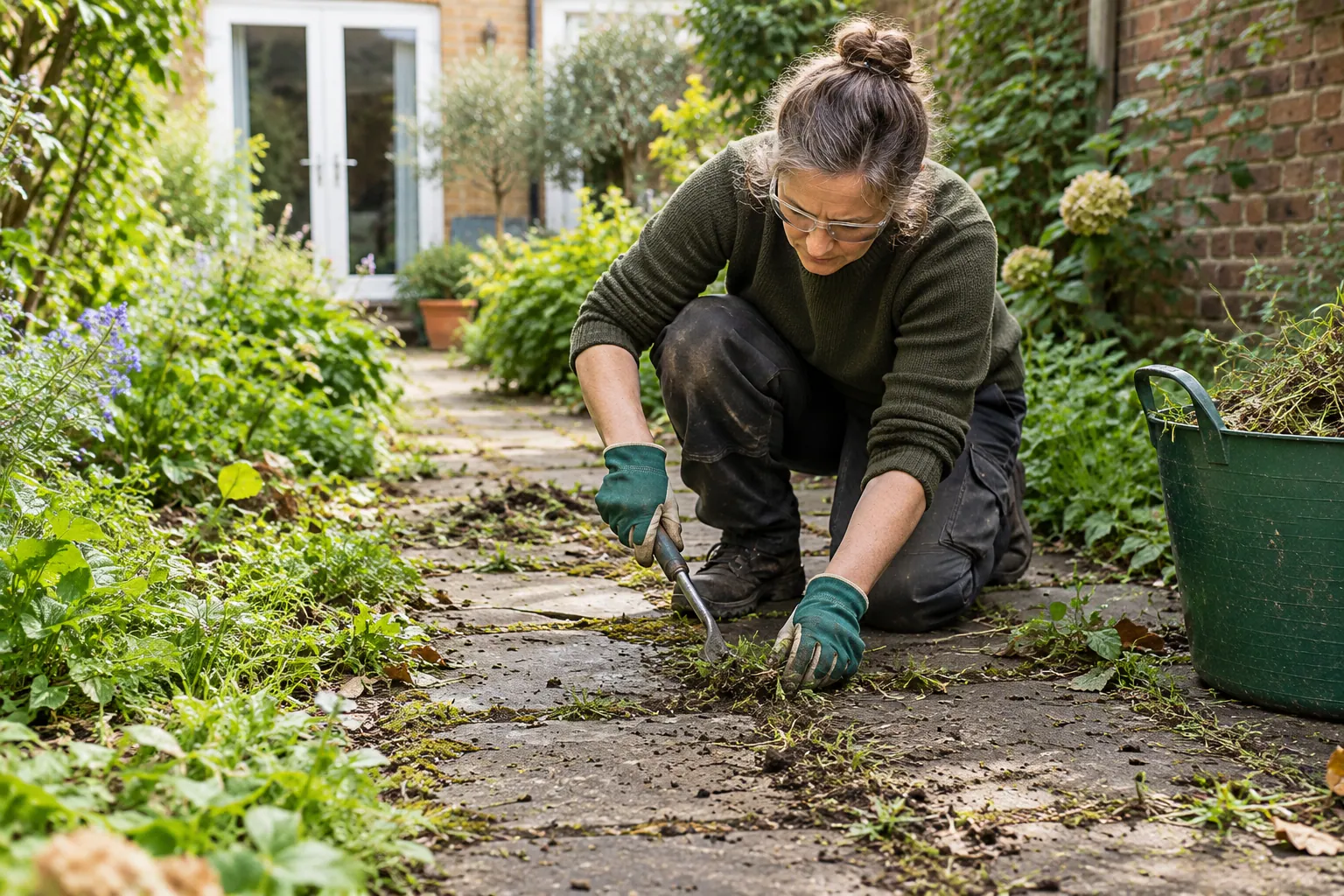
The team works through suitable sections of bramble and other dense vegetation so the stems and underlying material remain manageable. Hand tools or appropriate powered equipment follow the accessible growth and surroundings. An open unwanted patch and a retained shrub caught within that growth receive different approaches. The method keeps the intended plants and features identifiable as the selected vegetation is cut and brought into collection.
Our proposal distinguishes visible stem reduction from any specified root lifting and later ground preparation. Persistent plants can produce fresh growth where living material remains underground, so those different stages are described accurately. The completed surface shows the actual removal carried out and any root work still required. Subsequent attention can then follow returning growth or an additional planting operation according to its own defined purpose.
Selective clearance around established plants
In a planted bed, accessible unwanted growth is separated from the specimens remaining. The gardener uses controlled hand work where a broad cut would affect low foliage or established stems. Soil condition, roots and density influence what can be lifted suitably and the pace of progress. The collection follows each section, keeping detached material clear of the retained groups as their surrounding ground is revealed.
An established plant can remain in position with unwanted competition removed around it. Where identity is uncertain, that growth stays for an appropriate decision while clearly defined removal progresses elsewhere. This keeps the clearance connected to the specified result and preserves the intended planting arrangement. The finished area provides practical access for later care, with the plants still recognisable and any larger bed change separately identified.
Different treatment for grass and woody plants
Long grass is assessed for concealed objects and surface changes before its suitable initial reduction. That work can reveal thin turf or other areas needing additional attention. Our lawn-care service distinguishes an ordinary cut from recovery proposed for the lawn's actual condition. The customer receives the selected grass operation and a clear view of the surface remaining, with subsequent improvement considered on that specific basis.
Our shrub work follows the intended retained structure or separately identified removal. A suitable cut to reopen a path has a different purpose from taking out an unwanted specimen. Substantial limbs and tree operations receive their own assessment through tree surgery. The clearance keeps those jobs distinguishable, allowing the gardener to complete appropriate vegetation work while a more demanding woody operation follows its own method and handling requirements.
Collection progresses with the cutting
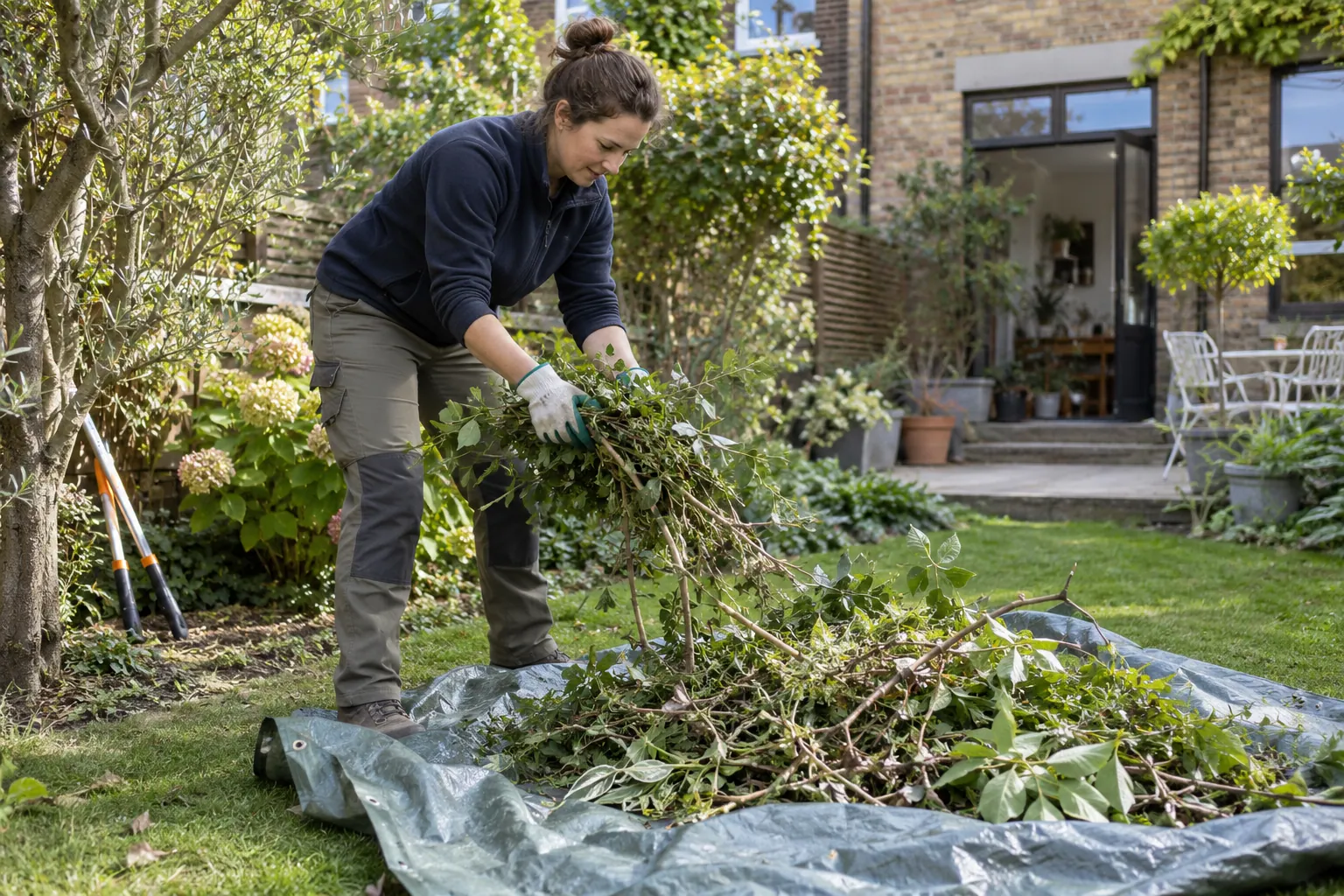
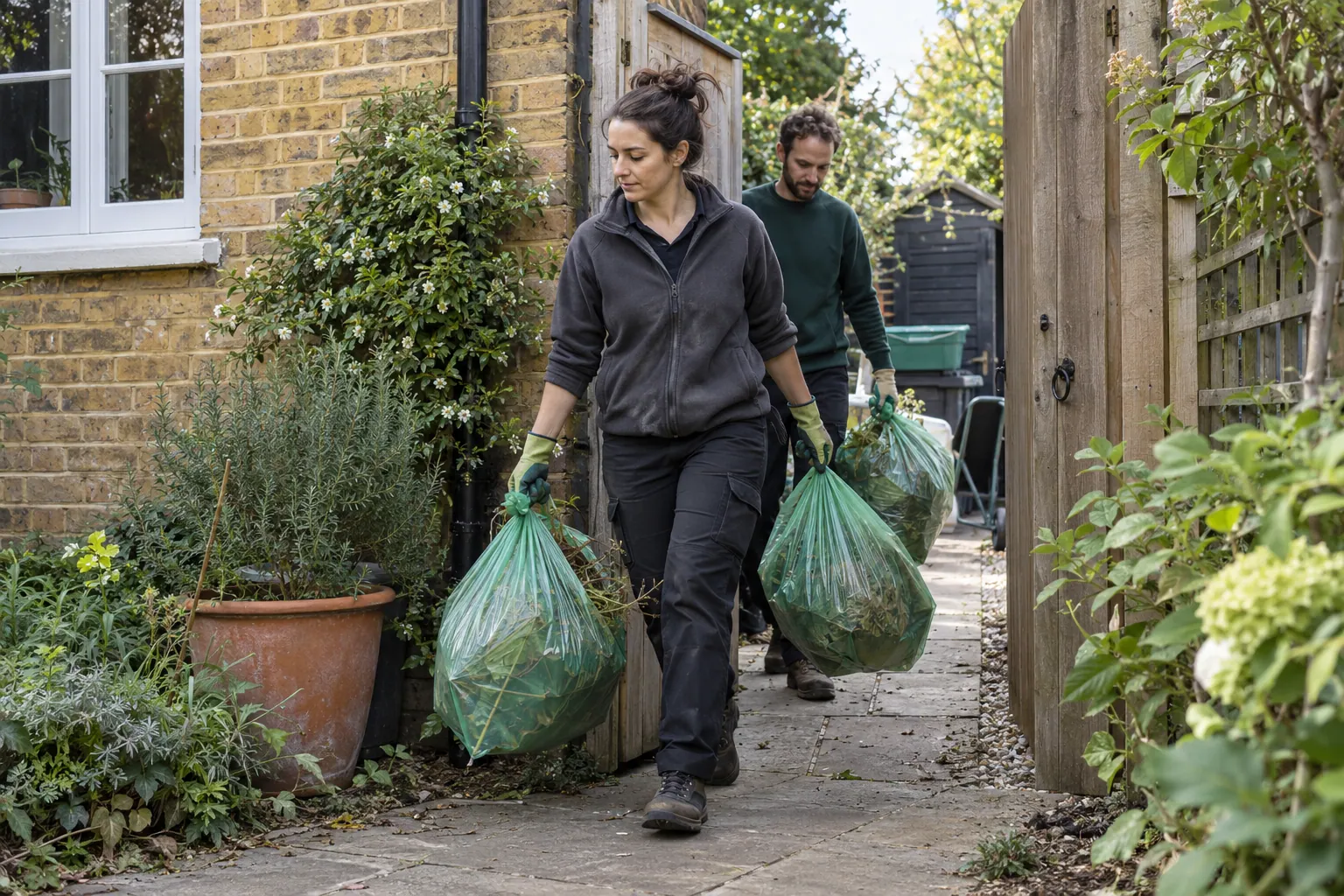
Loose stems can quickly occupy the room needed for the next task. Our gathering brings them into the specified receiving area as each portion is completed, keeping the working route open. Dense woody material has a different shape and handling requirement from loose leaves. The load is therefore considered through its actual contents and bulk alongside the garden's footprint, with manageable movement as the clearance develops.
Suitable vegetation retained for composting goes to an identified accessible destination. Where material is leaving, steps, carrying distance and an approach through the house inform the handling required. Our price guide separates labour and green-waste allowances so additional contents can be identified in the quotation. This makes the outgoing load part of the planned operation and keeps the recovered route usable while collection proceeds.
Different destinations for different contents
| Material found | Relevant distinction | Practical consequence |
|---|---|---|
| Grass, leaves and soft cuttings | Ordinary green material | Composting or the booked green-waste arrangement |
| Larger woody branches | Greater bulk and handling | Separate volume and scope assessment |
| Soil or rubble | Not ordinary cut vegetation | A suitable disposal route is needed |
| Old furniture and household rubbish | Mixed non-garden material | Not automatically part of clearance |
| Unidentified or hazardous items | Condition is uncertain | Stop and establish appropriate handling |
Sensitive features and concealed objects
The team considers known nesting activity and other sensitive features before working through dense vegetation. A newly discovered occupied area can change the immediate operation and timing. Relevant cutting is postponed where necessary, with the affected section kept identifiable. Concealed objects also receive appropriate consideration as they appear, allowing the suitable surrounding clearance to progress while the next step for that particular finding is established.
Initial enquiry preparation can use overall photographs and known property information without the household entering unstable ground or reaching into hidden contents. The appropriate assessment establishes how the affected work can proceed. Our handling follows the visibility and actual issue present in that section, keeping it distinct from ordinary accessible vegetation. This makes preparation useful while leaving a specific concern for the appropriate method and response.
Useful stages through a larger clear-up
A larger neglected garden can be addressed through defined starting areas. Recovering the main route, opening a seating space or clearing one border gives the first operation a useful result. The following stage then responds to the features and condition revealed. This lets the customer see progress through an actual completed area and relate the next work to the garden now available for assessment and access.
The sequence balances cutting with the amount that can be handled and held suitably at the property. Our operation keeps collection moving alongside the removal so an opened area stays useful. Later root tasks, planting preparation and repairs retain their separate purpose and quotation where needed. This connects the first clearance with subsequent work without losing track of the contents and access required for the current stage.
The visible result of the completed clearance
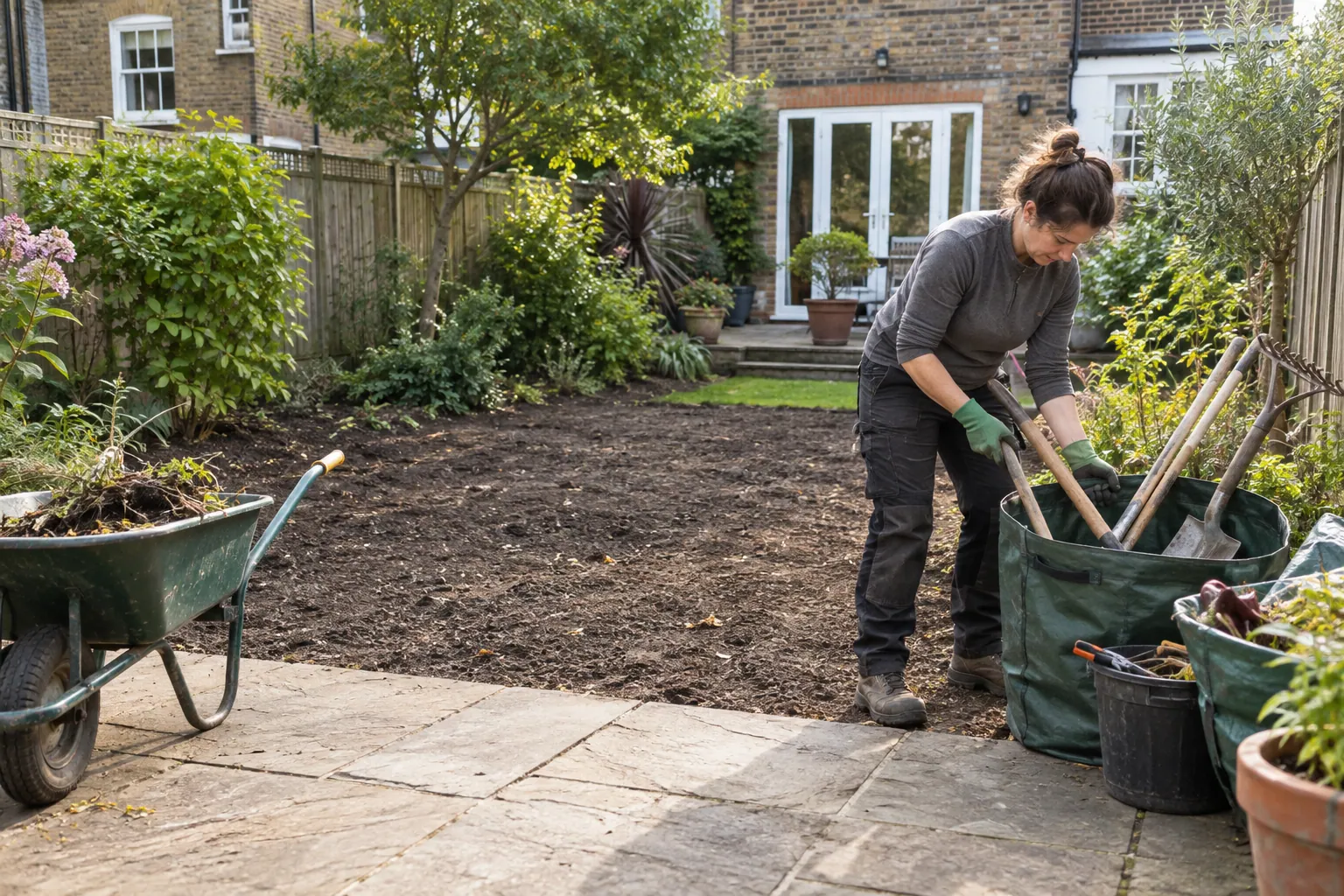
The included area is left easier to see and reach, with specified cut vegetation dealt with under its handling arrangement. Bare soil, weak grass, worn paths or damage can be more apparent once the cover is removed. Those findings establish the actual starting condition for further work. The customer receives a clear completed vegetation operation and identifiable next requirements for the plants and surfaces that remain.
Our maintenance can follow the recovered space with suitable attention to fresh growth. Where the intended arrangement changes, garden design can develop a different layout or planting proposal from that visible starting area. Each service has its own purpose and implementation requirements. This gives the clear-up a practical place within the garden's continuing care, connecting access gained now to the particular work that may follow.
The actual workload behind the estimate
Growth type, density and retained planting influence the operation alongside the volume of material. The route out and extent of any specified root work are also considered during preparation. Overall views, useful approximate dimensions and the intended first-stage result help establish that context. Our quotation relates those details to the proposed removal, keeping the method and handling clear for the actual garden being attended to.
The complete scope identifies the vegetation work, green-waste handling and any separately included material. Our garden-waste handling guidance distinguishes the relevant contents and their destinations. For the particular job, allowances and extra removal charges are specified together with the labour and access arrangement. This allows the customer to assess the intended clear-up and collection as one defined operation, with different materials still accurately identified.
A DEFINED CLEARANCE AND COLLECTION ARRANGEMENT
Guide prices for our garden clean-up service
Our estimate follows the growth, retained features and carrying route alongside the plot's dimensions. Green-waste quantities remain identified in the booking so the complete proposal sets out both the labour and removal arrangement.
| Clearance charge | Price | Unit or allowance |
|---|---|---|
| First hour | £83 | Hourly clearance work |
| Each subsequent hour | £65 | Additional hour |
| Included green waste | No additional charge | One black bin bag |
| Extra green waste | £5 | Per black bin bag |
| Jumbo green-waste bag | £55 | Per bag |
Scroll the table sideways to see every column.
The complete quotation identifies the total and applicable VAT treatment before booking.
Questions about our clearance work
How does your team approach ivy on a fragile fence?
The fence's condition informs the proposed vegetation handling. Growth can conceal damaged panels or contribute to their present support, so the two issues are considered before removal proceeds there. Our clearance operation remains distinct from fence repair, with its intended method related to the structure and material actually encountered along that boundary.
How is a concealed pond treated during preparation?
A known or newly revealed pond changes the working area and appropriate approach. The liner, water and associated features remain distinguishable from ordinary ground or mixed clearance material. Our team relates the selected removal to that position, keeping any separate work on the pond clearly identified while suitable surrounding vegetation is attended to.
Can your clearance retain planted containers?
Yes. The containers selected to stay are identified before their surroundings are cleared, with a suitable position established for appropriate movement where needed. Weight, condition and damaged pots inform that handling. The retained plants remain separate from the outgoing contents, giving the customer a recovered area with the specified containers still identifiable within its intended arrangement.