

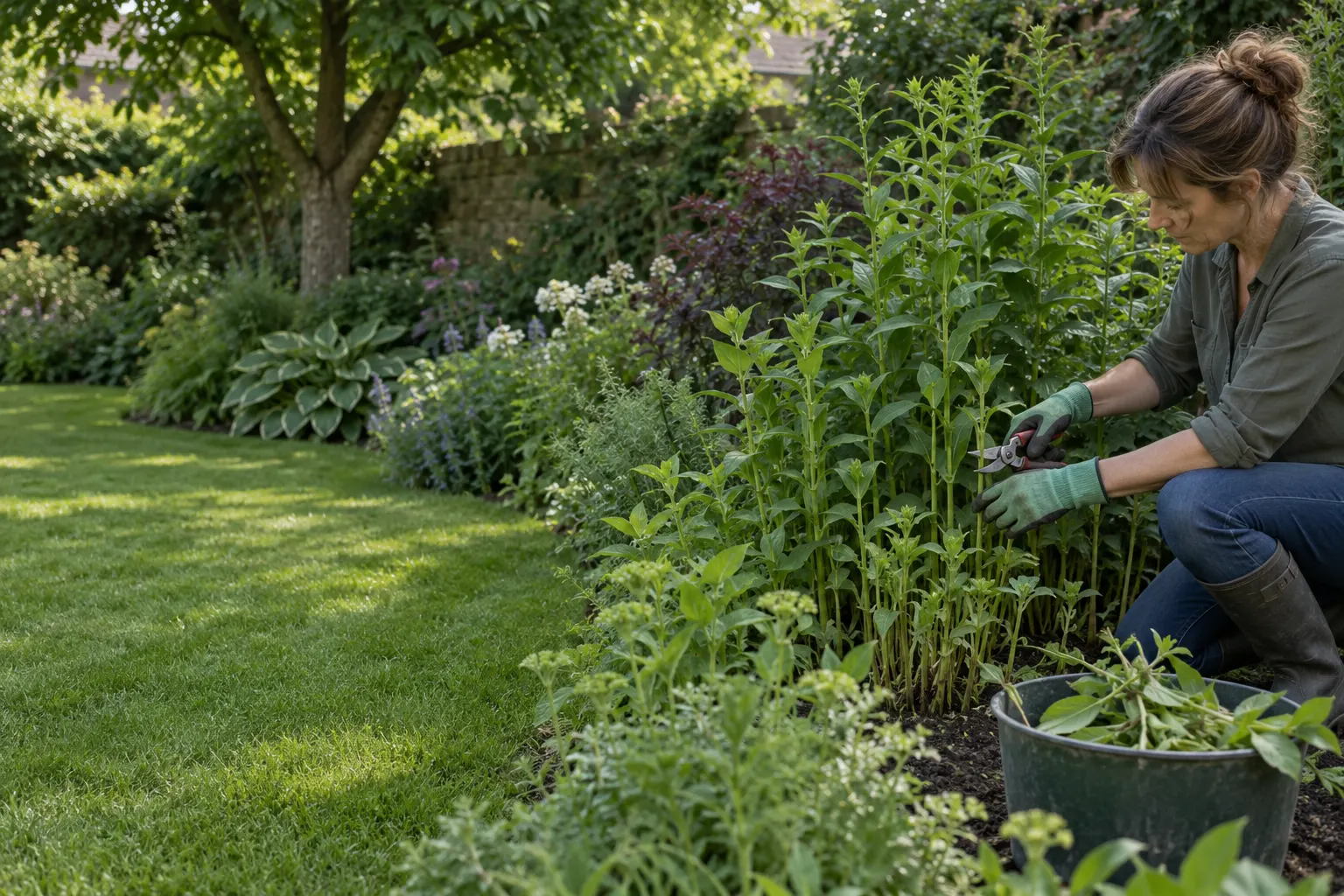
A selected pre-flowering cut within the perennial border
Gardeners Croydon
We can carry out an expressly selected Chelsea-chop treatment on suitable late-flowering perennials, keeping the intended shortened and uncut portions distinct. Our gardeners follow the identified plant and its retained leafy growth, gather the soft tips and maintain the grass and hedge around that developing display. The selected plants and retained portions give this work its own intended response within the wider perennial-care sequence.
- What encourages the extra side branching? Our selected tip removal on suitable plants releases side buds to develop while the intended lower leafy growth remains.
- What flower effect is the operation intended for? Suitable shortening can produce smaller, more numerous flowers and a later display; our work is not specified as a larger-bloom treatment.
The particular cut and the display it is intended to influence
What does your selected Chelsea-chop work change?
We shorten suitable growing shoots before flowering to encourage a more branched, compact habit and generally a later display. The identified late-flowering perennial and intended effect govern the amount removed. That operation is distinct from removing faded flowers after their display, so the task remains connected to the plant’s current growing stage and the leafy portion retained below the cut.
How is a partial treatment carried through the clump?
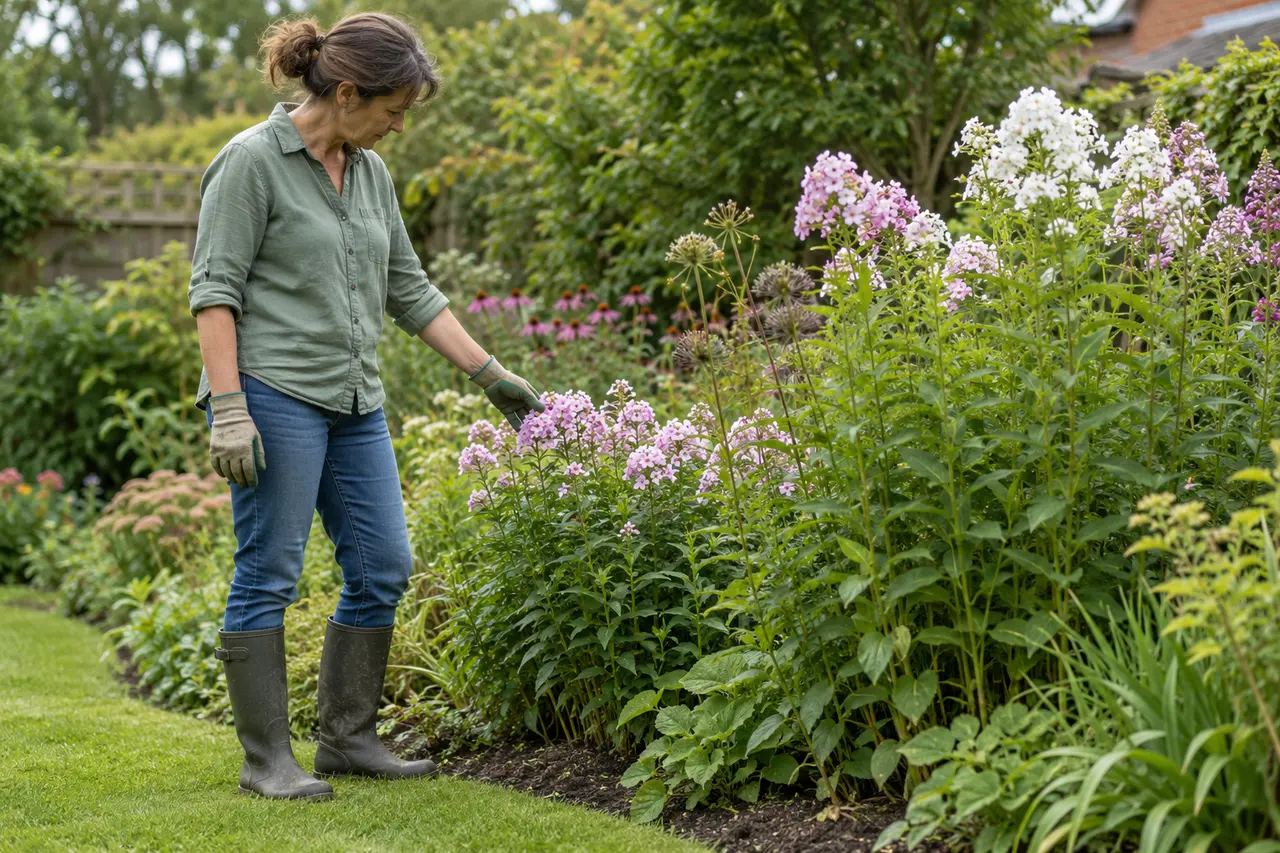
We identify the chosen stems while the original heights remain visible. The operation may shorten one part of a suitable clump or selected clumps within a group, leaving others uncut for a different height and flower stage. The identified boundary stays readable through cutting and collection, keeping the chosen partial extent clear beside the growth deliberately left at its original height.
The identified perennial before flowering
Selected shortening for a suitable plant and effect
We begin with the perennial and the change intended for its habit or display. Suitable examples include border phlox and certain upright hylotelephiums, but a mixed bed contains plants needing different treatment. Our gardeners separate the selected clump from neighbouring foliage and establish which stems belong in the operation. An uncertain plant remains outside that pass while its appropriate care is determined.
The Chelsea chop is generally associated with late May or early June, before the intended flowering develops. Our selected amount follows the actual plant, with the relevant lower leafy section retained below the suitable cutting point. Suitable tools and a clear view allow the planned lower leafy section to remain. The choice therefore relates the material removed to the living framework that must continue developing afterwards.
As an explicit garden-maintenance task, the operation identifies the plants, extent and intended effect before cutting. It can alter a display expected earlier in summer, so that change remains part of the arrangement. Simply finding a taller plant at the next visit does not by itself authorise the technique. The operation remains attached to its appropriate effect and selected clump, with subsequent extension assessed as the retained plant develops.
- The selected shoots belong to an identified suitable late-flowering perennial.
- Our arrangement identifies whether all, part or none of a clump is shortened.
- The intended leafy growth remains below the chosen cutting points.
- Detached tips are collected without extending the pass into untouched stems.
- Later attention compares the treated growth with the retained portion.
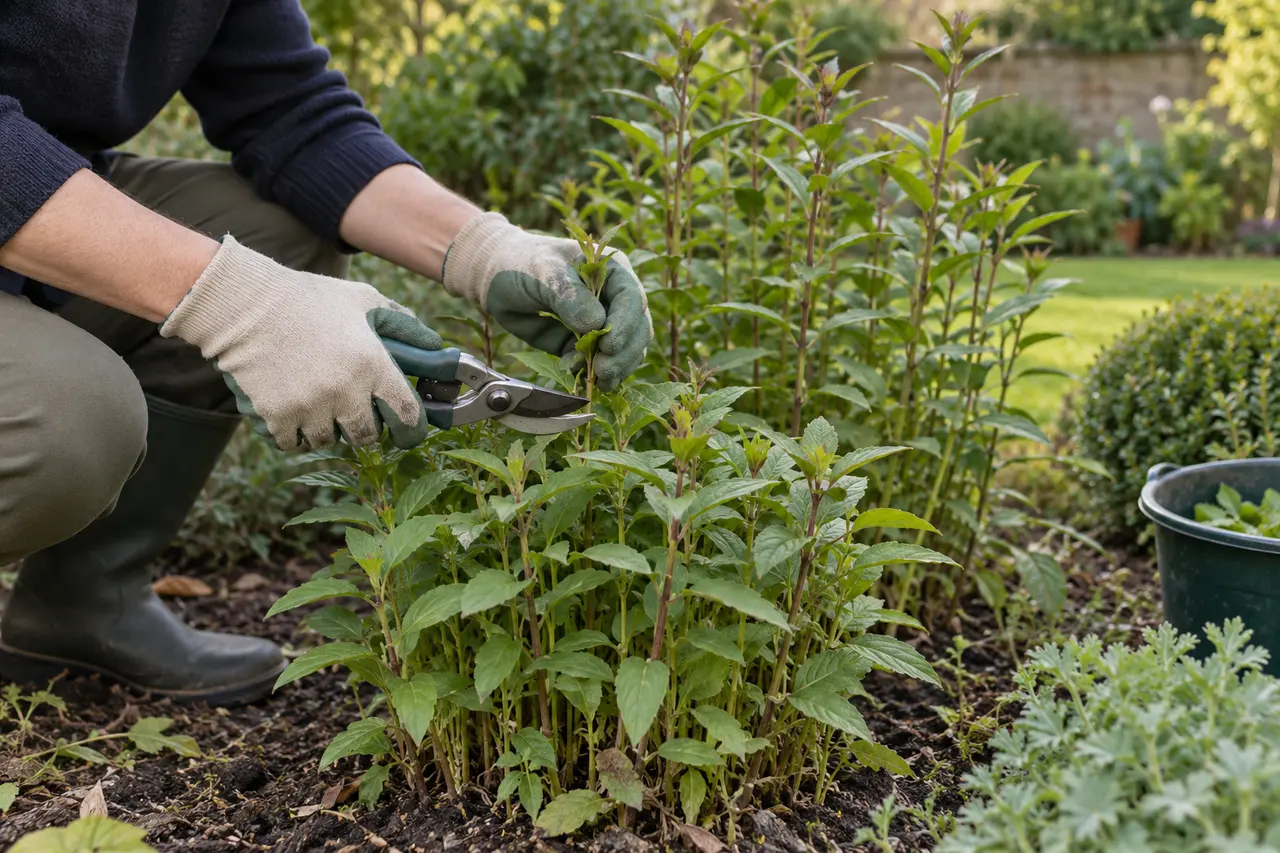
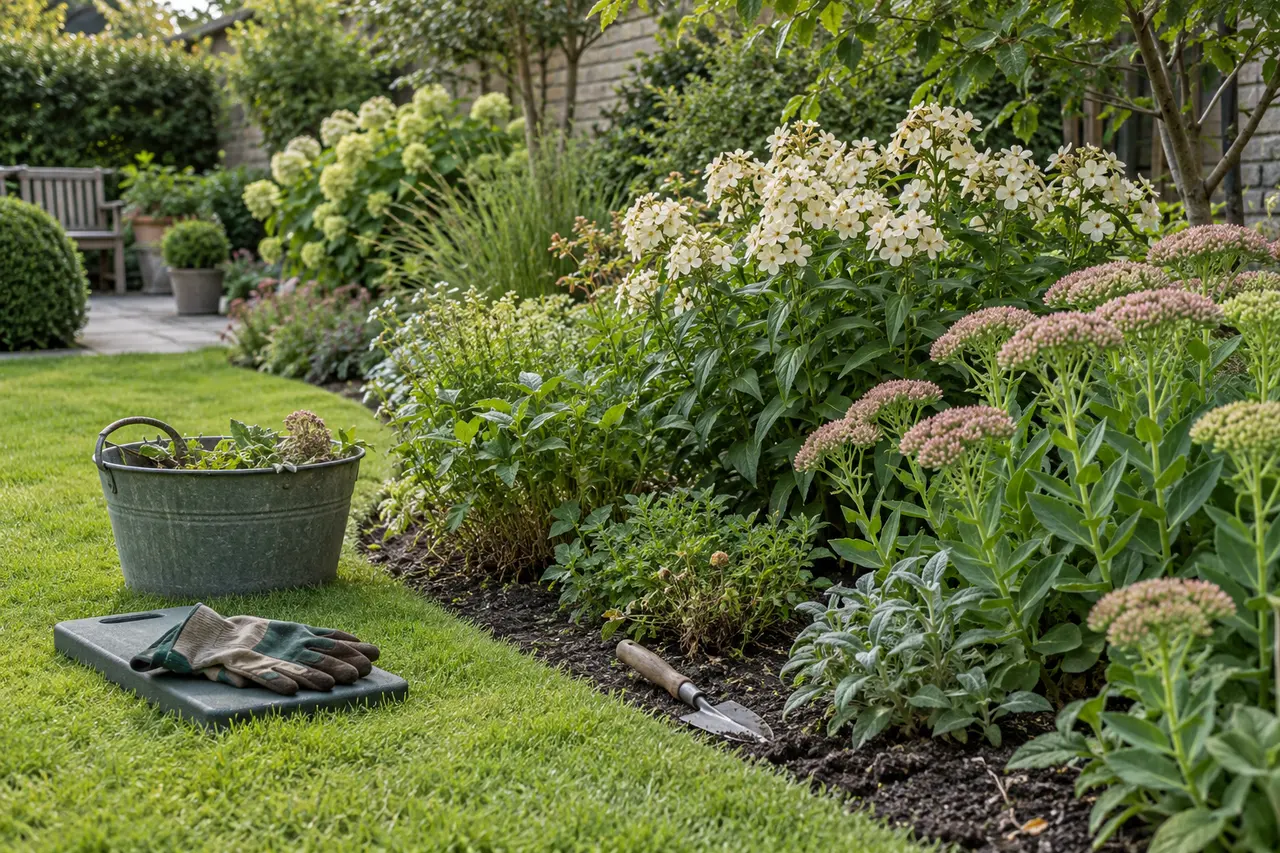
Two parts of the intended display
Retained stems kept visible beside the shortened portion
Where only part of a clump is treated, we establish its extent before the first height change removes that reference. The front can be selected while the rear remains, or one whole clump can stay beside another receiving the cut. Our working position retains that distinction throughout the pass, replacing a vague instruction about balance with the actual growth selected to be shortened.
For suitable border phlox, pre-flowering shortening can postpone part of the display and create different stages within the planting. We relate the different flowering stages to neighbouring plants and the actual viewpoints, preserving the planned mixture of treated and retained growth. The retained and treated growth can remain visibly different because that contrast forms part of the planned result, not evidence that the lower portion needs further matching.
Our cut ends at its identified boundary without continually borrowing another stem from the retained side to refine the outline. That discipline keeps a partial operation from becoming full-clump shortening. After the selected work is complete, its partial treatment stays identifiable for later review of the different heights and flowering stages as they develop.
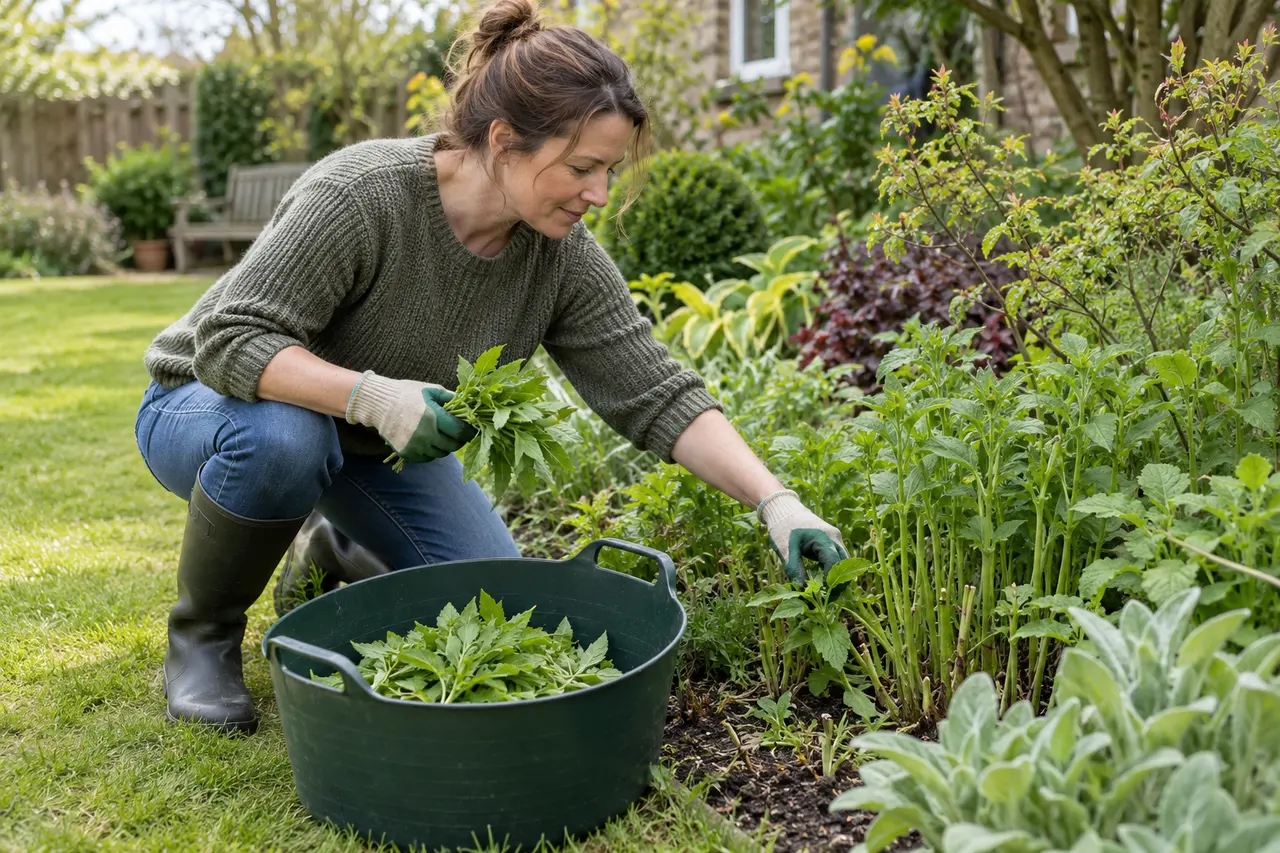
Soft tips and the living canopy below
Collection during the selected cutting progression
We support manageable groups of detached tips and place them into a suitable nearby container or sheet. Leafy pieces can disappear rapidly among retained stems, so gathering as the work proceeds keeps the selected cuts visible. This gives the next movement a clear reference and reduces unnecessary repeat shortening of a section that already received its intended treatment.
Fully released fragments are lifted with an open view of the remaining stems. We avoid combing a rake through the entire clump, where fresh growth can be damaged and an uncut stem caught in the load. The soft character of the offcuts does not make every pulling movement harmless. Our collection separates what has been detached from the living material that remains part of the display.
A wider garden clean-up can include this particular operation while retaining its selected extent. Soft healthy tips follow the agreed green-material handling, with weeds, seed-bearing growth and other rubbish directed according to their contents. Before collection sheeting returns across the planting, it is cleared appropriately. This keeps its last fragments from falling back into the clump and obscuring the growth just prepared for its next stage.
The lawn in front of the altered outline
Grass cutting at the established bed boundary
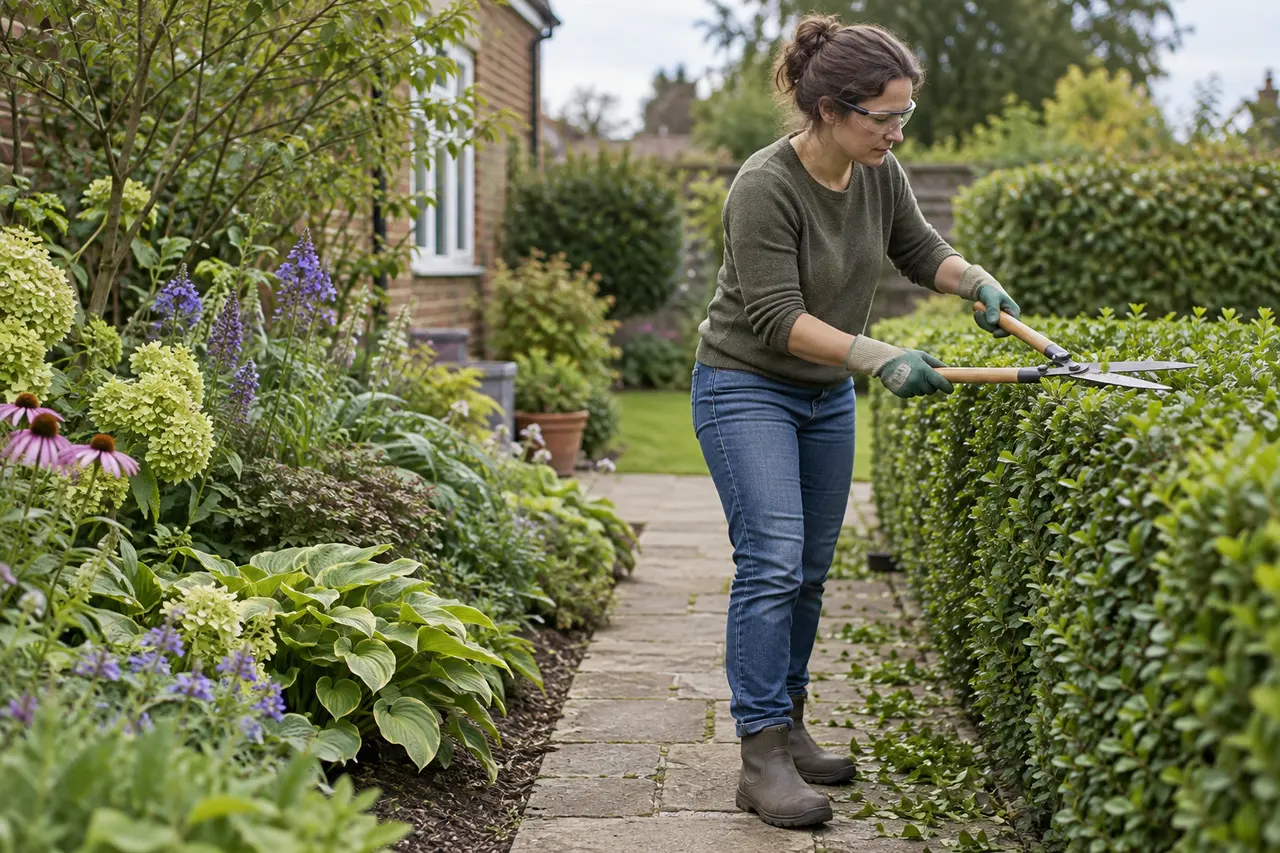
Our lawn route continues to follow the ground boundary after the front clump becomes lower. The more open view above it does not shift the edge or create another area of grass. We gather escaped soft tips and retain taller stems clear of the mower, keeping the grass operation related to the established planted footprint at ground level.
The lawn cut remains a suitable turf operation with supported wheels and an appropriate collection or discharge arrangement. Fresh grass is kept off the shortened foliage, where it could conceal the retained shoots needed for further development. The lawn and selected perennial therefore receive separate finishes, despite the two tasks sitting immediately beside each other in the same working view.
Where a small grass strip would require standing inside the clump, we select another appropriate finishing approach. Shortening the upper growth has not made the plant’s crown and roots available for a boot or machine turn. Our accessible turf work retains the border’s footprint, completing what can suitably be reached without treating the newly lowered outline as evidence that the occupied ground has become empty.

A hedge above varied perennial heights
Independent cutting instructions for the screen and border
We establish the hedge face independently from the perennial stems in front of it. A continuous hedge outline can sit behind deliberately varied border heights, with tools and working movements selected accordingly. Our hedge pass does not continue down through the foreground to tidy the shorter plants into the same plane. The retained tall stems and shortened lower portions remain recognisable as the particular display arrangement chosen for the border.
Our hedge work follows supported footing, controlled reach and checks for nests being built or used, with disturbing cutting postponed where necessary. If retained taller perennials restrict the intended position, the reachable extent or sequence is adjusted.
After the hedge operation, we gather reachable fragments from the foreground, lifting small woody pieces out of the softer perennial growth. That careful gathering removes the fresh hedge fragments while the perennial’s completed cut and its retained leafy growth remain visible. The finished area therefore retains the intended taller stems beside the shortened leafy portion, with the new hedge debris removed without changing the plant-care decision already made below it.
The branching response after the cut
Subsequent care for growth allowed to develop
Suitable upright hylotelephiums can become bushier after new stems are shortened, and our follow-up allows that response time to develop. Newly emerging side growth is not automatically reset to the earlier cutting line. The next visit follows the new side branching and flower stage, allowing the plant’s selected response to develop within the border’s intended later display.
The ordinary care required by the particular plants continues alongside that response. Accessible weeds and appropriate moisture attention remain relevant, including in dry conditions. We also retain the actual support arrangement under review as stems develop. The selected cut is not presented as removing every need for support or guaranteeing that none of the later growth can lean as the border fills out.
At a later seasonal visit, our comparison looks at branching, height and flower stage in the treated and retained portions. The number of stems removed is only one part of that history. Observing the resulting display can inform whether the partial treatment suits this planting or a different selection would be preferable on another occasion, keeping the next operation connected to the border’s actual response.
Further work around the intended border display
Garden design for a deliberate flower palette
Our garden design can relate a chosen family of flower colours or a stronger contrast to the plants already retained. Foliage and permanent features form the background in which each new bloom will be seen. We develop flower colours together with retained foliage and permanent features, relating the selected planting to the actual background and receiving positions within the garden.
A hollow trunk assessed as an actual living structure
Our tree-work assessment distinguishes visible central decay from the tree’s remaining living outer tissues. A hollow centre alone establishes neither a dead tree nor a safe structure. The particular tree and its condition require assessment for the proposed operation, so the opening is not treated automatically as a removal instruction or as evidence that the tree’s continuing structure can be assumed sound.
The joint-sand stage following a block-paving wash
After cleaning of conventional sand-jointed block paving, any proposed re-sanding remains a specified stage using suitable material and dry conditions. Suitable dry conditions allow the selected joint sand to move freely through the narrow receiving gaps during the specifically arranged finishing stage. We keep the wash and subsequent joint filling defined, with the separate material specification retained for any permeable aggregate-jointed construction present.
Existing scaffold checked for the intended gutter task
A gutter-cleaning operation does not automatically use scaffold already present at a property. Its suitability, authorised access and required competent inspection arrangements remain relevant to the intended work. Guardrails and platforms remain intact within the authorised suitable setup, with any necessary alteration receiving its appropriate competent arrangement before the intended work. Any necessary alteration needs its appropriate competent arrangement, keeping the clearance method tied to the actual authorised working structure.
Tree collection separate from the length of a display
A booked Christmas-tree collection identifies the tree, receiving position and practical removal arrangement for the selected date. A dry cut tree needs appropriate removal from use, with its changed condition retained when suitable disposal or a confirmed collection variation is arranged. A suitable disposal route or confirmed booking change remains separate, without implying that an earlier attendance follows automatically from the concern.
Scope the selected perennial work alongside the garden tasks
Our working sequence accounts for stem selection, the specified partial cut and collection of soft material, alongside any separately included mowing or hedge attention.
| Gardening time | Guide rate |
|---|---|
| First hour | £83 |
| Each subsequent hour | £65 |
GBP guide rates. The full quotation confirms the work, any supplies and removal, VAT and relevant access, parking or congestion charges.
Questions about our selected perennial shortening
What sort of flowering result is the cut intended for?
Our suitable shortening can lead to a more branched plant with smaller, more numerous flowers and a later display. Larger blooms on every stem are not the purpose. The operation is selected for the appropriate effect on that perennial, with its retained growth and receiving conditions remaining relevant as the response develops.
How do you protect perennials outside the selected treatment?
We identify the suitable species and intended method before working, keeping neighbouring clumps distinct. Some plants respond poorly and can lose their flowers for the year if shortened inappropriately. Our pass follows the identified suitable growth with neighbouring clumps left distinct, retaining the intended cuts and their actual depth within that selected operation.
Why is the retained lower growth important?
On a suitable plant, the growing tip can suppress side-bud growth. Selected removal allows those buds to form more branches, changing the habit of the portion left behind. We preserve the relevant living lower structure and its side buds, connecting the selected tip removal with the branching response intended for the retained plant.
Can the treatment guarantee flowers for one event date?
Our work is specified for a suitable plant-care effect, not a fixed flowering appointment. Species, growing conditions and extent of shortening influence the response. The technique can alter the display, while the actual opening of every flower on one chosen day remains outside what the pruning operation can guarantee.
The selected cut kept connected to its intended effect
Our Croydon gardening services can include a suitable lower, later portion within the perennial border while keeping an identified untreated part beside it. The selection stays visible through cutting, collection and subsequent growth, giving later care an actual comparison between the treated portion and the stems retained beside it.