

Cut-and-collect care for an established flowering-grass area
Gardeners Crystal Palace
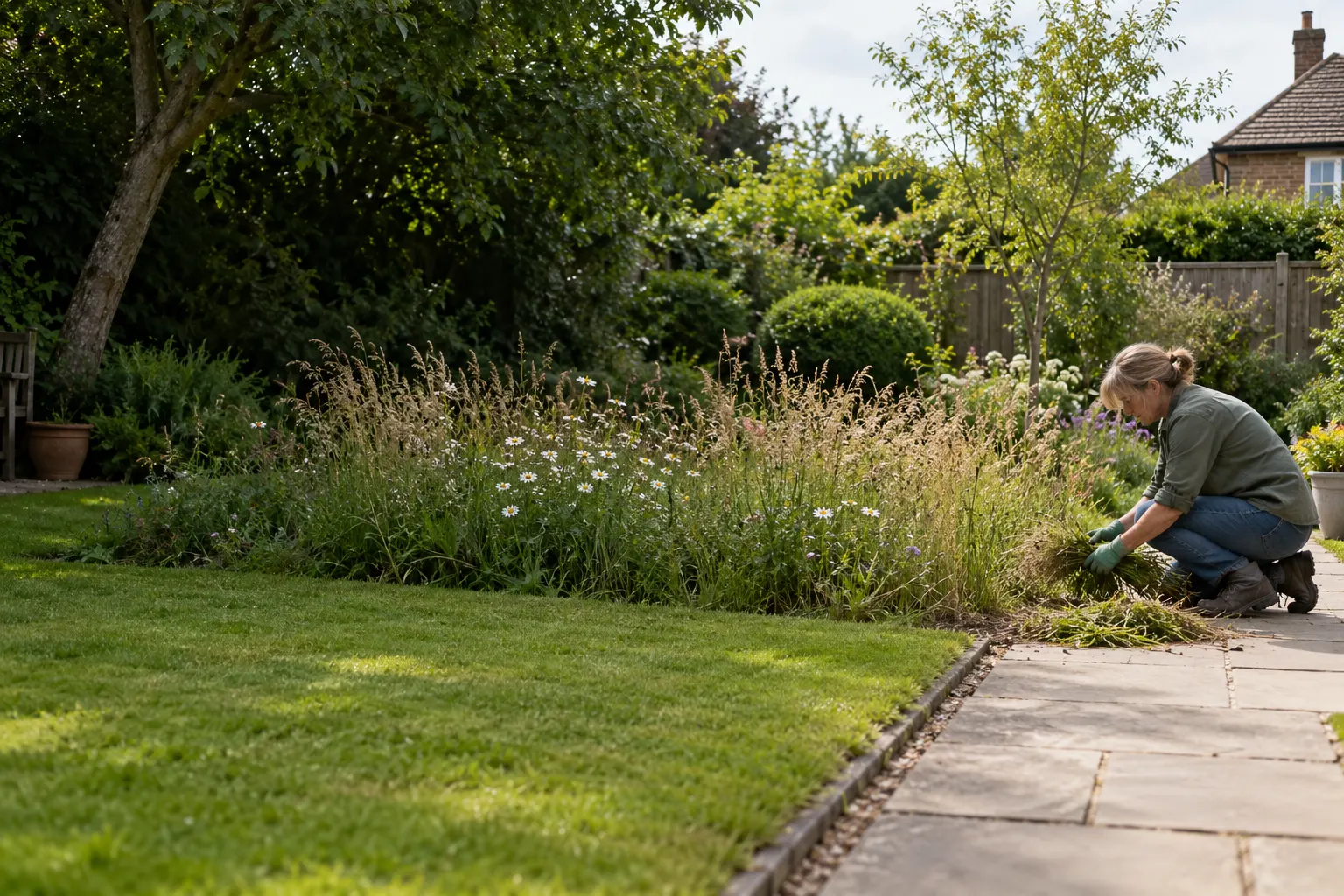
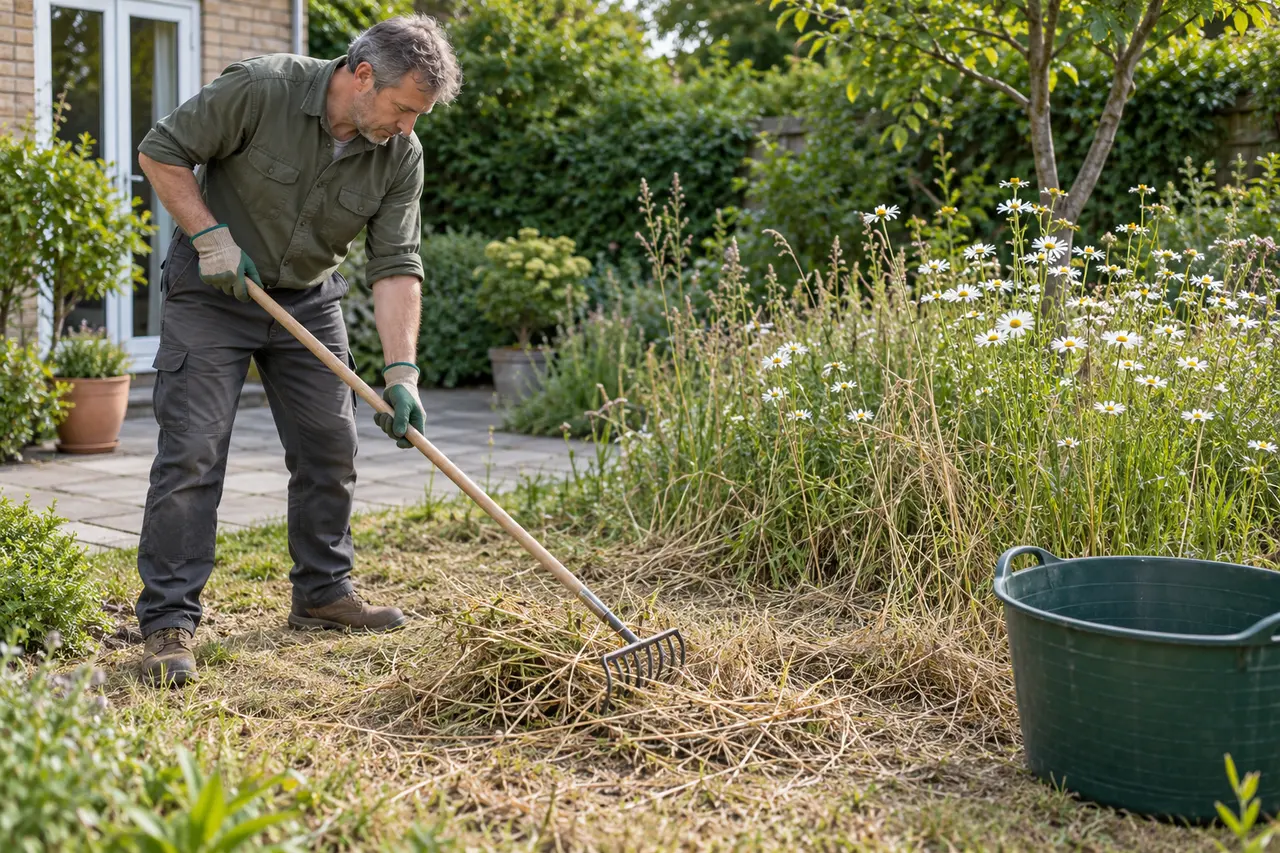
We maintain existing meadow-style planting through the suitable identified cutting and collection cycle. Our gardeners follow the plants and growth stage present, distinguish any brief seed-release pause from the final removal and keep neighbouring lawn and hedge loads separate. The operation follows the existing feature through its suitable seasonal stage, with any new creation or major planting change separately identified.
- Why can cut meadow stems remain briefly? Where suitable seed can shed, our planned short drying stage can precede collection as part of the same complete operation.
- How is the flowering patch kept outside ordinary feeding? We distinguish its intended grass-and-flower balance from the ornamental lawn, since increased fertility can favour vigorous grasses over the desired flowers.
The established patch and its complete seasonal operation
What does your flowering-grass maintenance cover?
We identify the existing perennial or mixed meadow-style area and the suitable cutting needed for its grass-and-flower balance. The plants being retained and their current stage govern the timing and method. We identify that task separately from ordinary mowing, selecting a suitable cycle for the actual plants and development within the established feature.
How does collection complete the task?
Our sequence accounts for the cut load as well as the standing plants. A heavy layer left indefinitely can cover living growth and return nutrients as it breaks down. Where suitable seed release is intended, its short drying stage and later gathering stay explicit within the same complete maintenance operation.
The life cycle of the feature already growing
Cutting care based on the existing plant community
We distinguish an established perennial flowering-grass feature from a seasonal sowing of annual flowers before choosing its work. The first contains plants intended to return within an ongoing balance, while the annual display has a different life cycle. Our operation follows the feature actually present, so a colourful appearance or the general meadow name does not conceal different preparation and subsequent cutting needs.
The retained plants and their current stage inform the meadow-cutting approach. A spring-flowering patch can need a different main operation from one intended for later colour. We relate the selected cut to that purpose and the actual standing growth, retaining the reasons for leaving one portion while another is ready. The selected cycle gives the standing portions and area ready for cutting their appropriate place within the actual plant community.
A garden-maintenance visit can combine that identified operation with suitable tasks elsewhere while keeping the patch’s purpose clear. Its standing portions and area ready for treatment remain recognisable within the plan. Creating a new meadow, supplying seed or changing the whole mixture is a different project. Our maintenance addresses what is already established, without treating attendance at the patch as an instruction to replace its character.
- Our preparation identifies the existing annual or perennial character of the patch.
- The selected cut follows the intended plants and their actual growing stage.
- The working area receives wildlife checks before the affected cutting operation.
- Any brief drying stage has an identified purpose and a planned collection finish.
- The included cut load leaves before it becomes an indefinite heavy covering.
Standing growth different from the short lawn
The first cutting method selected for height and density
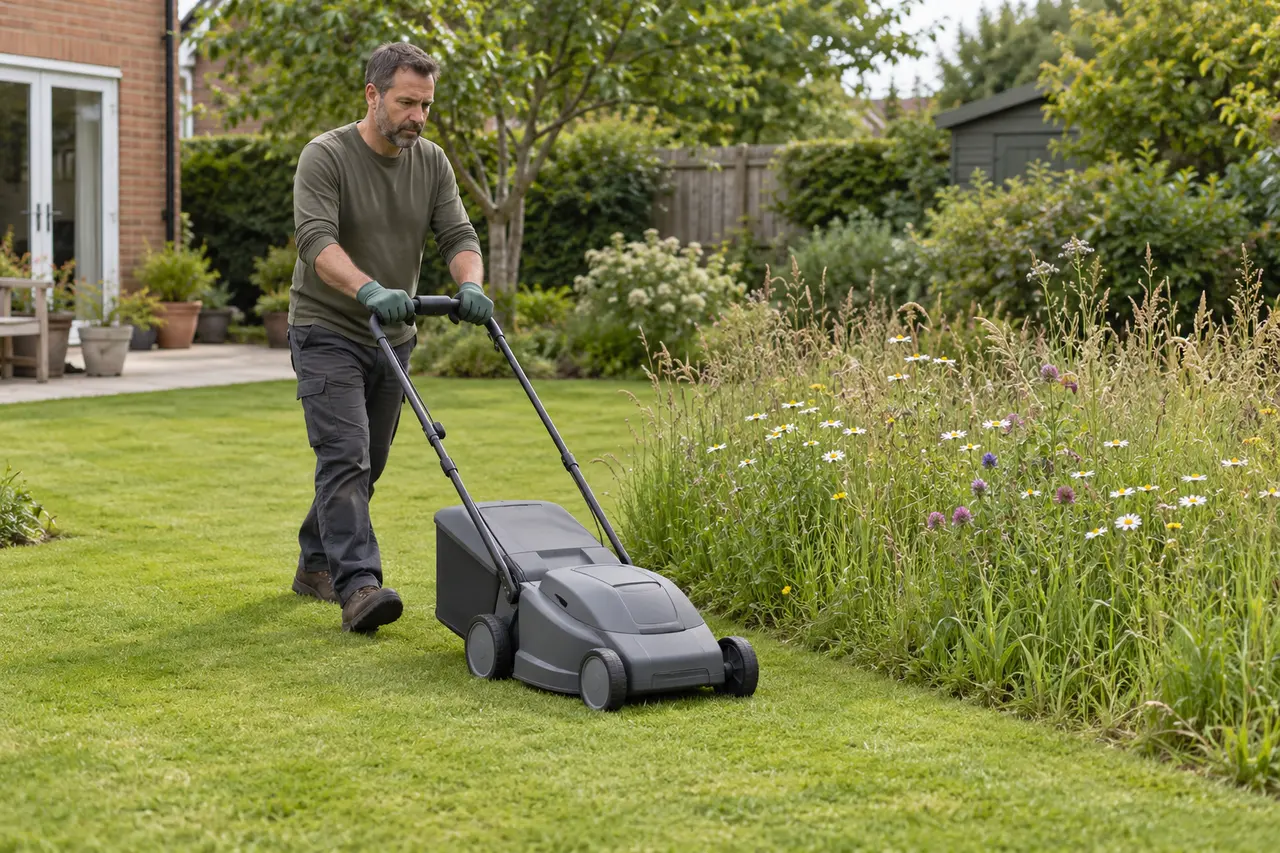
Our inspection covers the surface hidden by tall flowering stems, including loose objects and uneven ground less obvious than on short turf. Equipment is selected for the receiving height, density and condition. The machine appropriate on the adjacent lawn is not automatically carried into that different growth. We keep the two operations distinct while the suitable initial cut is established for the existing patch.
Wildlife checks include the part of the area affected by the planned movement, with work organised through controllable portions. A nest within grass remains a relevant constraint just as one in a hedge does. Our wildlife check follows the actual occupied area, with affected cutting changed or postponed where needed to preserve its relevant living constraints.
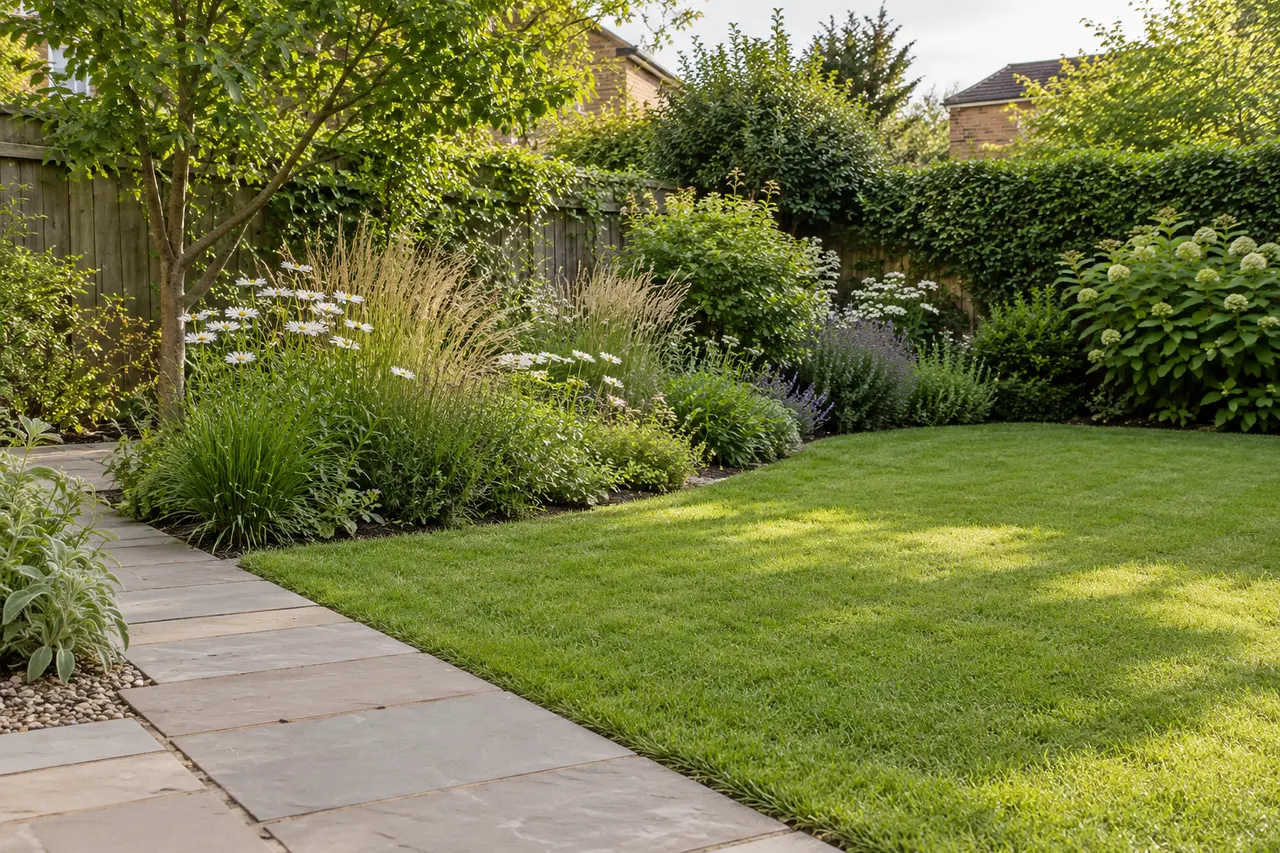
The surrounding lawn-care work can continue over turf intended to remain short with its own height and turning arrangement. Those settings do not determine the method within the flowering feature. Any further short pass follows the condition left by the seasonal operation and the actual regime intended for that distinct flowering area.
The selected material after cutting
A short seed-release stage with a defined end
Where the actual plants carry suitable seed to shed, our arrangement can leave cut material briefly to dry before collection. That is a deliberate part of the operation with its own finish, not forgotten handling or a general storage point for other waste. The seed condition and weather remain relevant alongside the plants present, connecting the planned pause to a specific purpose within the established patch.
We keep the selected material suitably spread for its brief planned stage, with its current seed and moisture condition available for the later collection assessment. Hedge fragments and unrelated rubbish remain outside the layer. If the sequence extends across visits, its later collection is explicit within the arrangement. The planned pause therefore does not create an unspecified pile assumed to disappear at whichever future gardening appointment happens to occur next.
Before moving the material, we assess its current condition and any change caused by weather. Seed release does not establish a fixed future flower count or mixture, so our task retains a realistic maintenance objective. Suitable removal is still needed to complete the selected cycle, keeping the brief drying purpose connected to the surface that must remain available to the living plants underneath.
The finishing collection
Cut stems lifted without pulling up the living surface
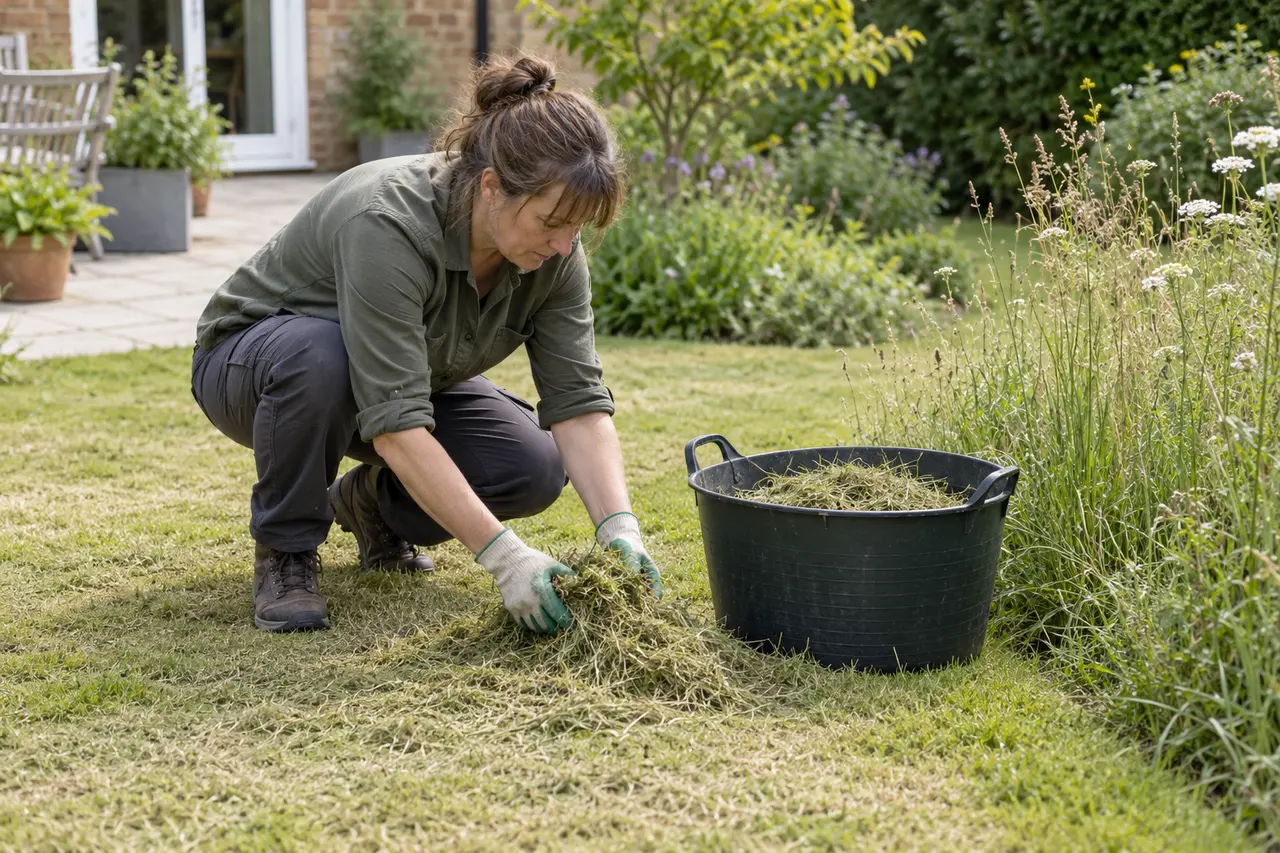
We gather manageable portions with a suitable controlled tool, separating any partly caught stem before moving the larger load. Collection retrieves the detached layer without drawing living leaves and roots into the same container. The worked surface remains a planted feature, not a place to scrape clean indiscriminately. Our movement follows the material that has actually been cut while the growth below it stays seated.
An associated garden clean-up keeps the known cut material distinct from supports, stones and ordinary rubbish revealed nearby. We control projecting stem ends before carrying, especially where a small tub cannot contain their full length. We control the long stem ends through the carrying route, leaving the gathered material identifiable and the suitable path available after the operation.
The garden-waste destination follows the actual outgoing load. Removing the cut growth also removes material that would otherwise return nutrients to this area, relevant to the intended balance between vigorous grasses and desired flowers. Our finish therefore does not immediately cover the patch with rich fresh lawn clippings from elsewhere. Keeping the imported lawn load separate preserves the flowering area’s intended nutrient balance and the practical purpose of removing its selected cut material.
Selective hand work within the mixture
Wanted plants distinguished from unwanted growth
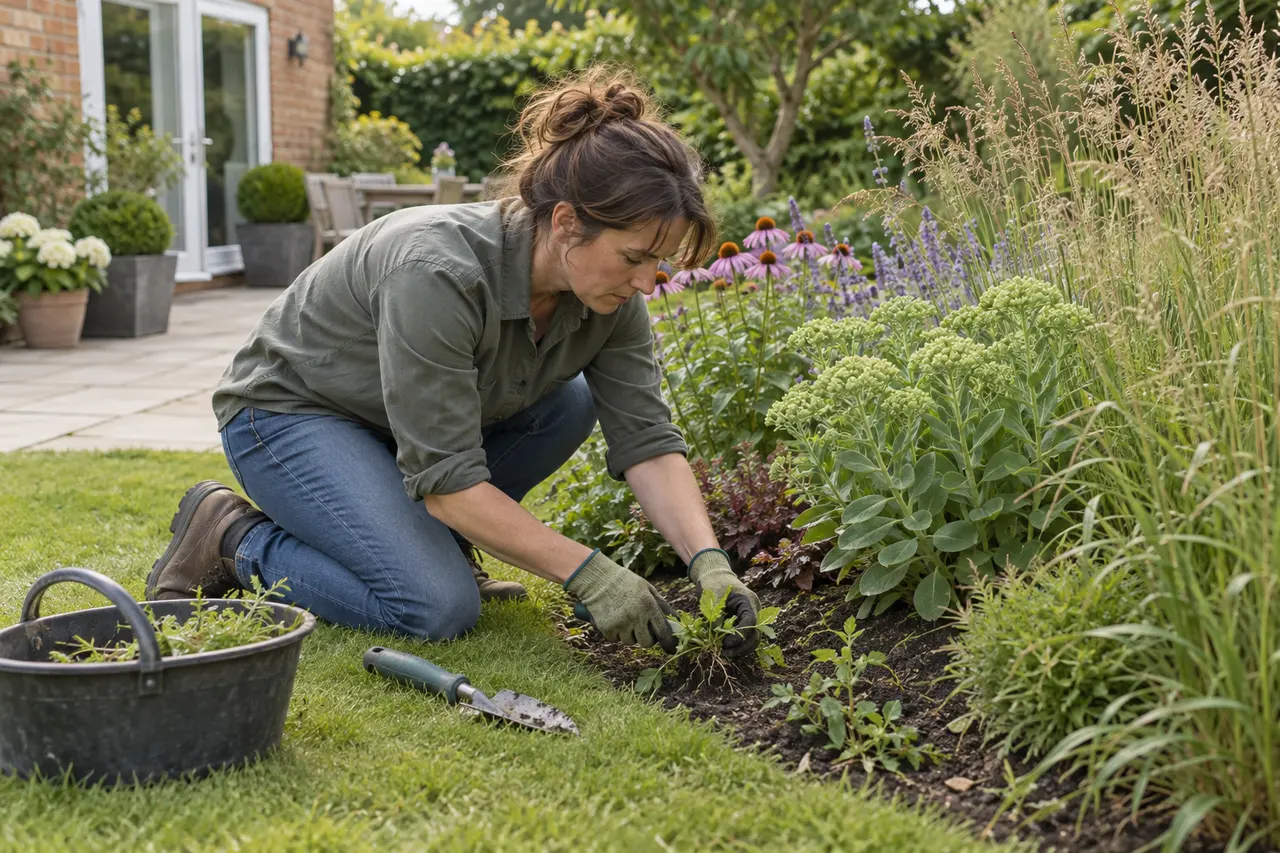
Our hand operation identifies the particular unwanted growth and its rooting position among the plants retained for the flowering feature. A suitable visible position and method protect the surrounding retained growth. The patch can contain both desirable display plants and weeds, so selection follows their actual role. A broad disturbance could change more of the mixture than the small visible problem warrants, making the identity of the chosen growth important.
The ornamental border beside it retains a separate boundary. A grass shoot spreading into a named perennial may be unwanted there even where similar grass remains within the flowering patch. Conversely, an intended flowering stem at the patch edge is not gathered as ordinary bed waste by default. We keep the border and flowering-patch plants identifiable at their actual boundary, giving each selected hand operation a clear receiving area.
Our seasonal work follows the new growth that appears after the collection, without presenting one pass as permanent weed control. Broader preparation, additional planting or a change of purpose remains separately identified. The feature’s existing purpose stays explicit while suitable maintenance proceeds, with any broader preparation or conversion identified as a separate project.
The hedge and its separate load
Fresh woody fragments kept out of the meadow stage
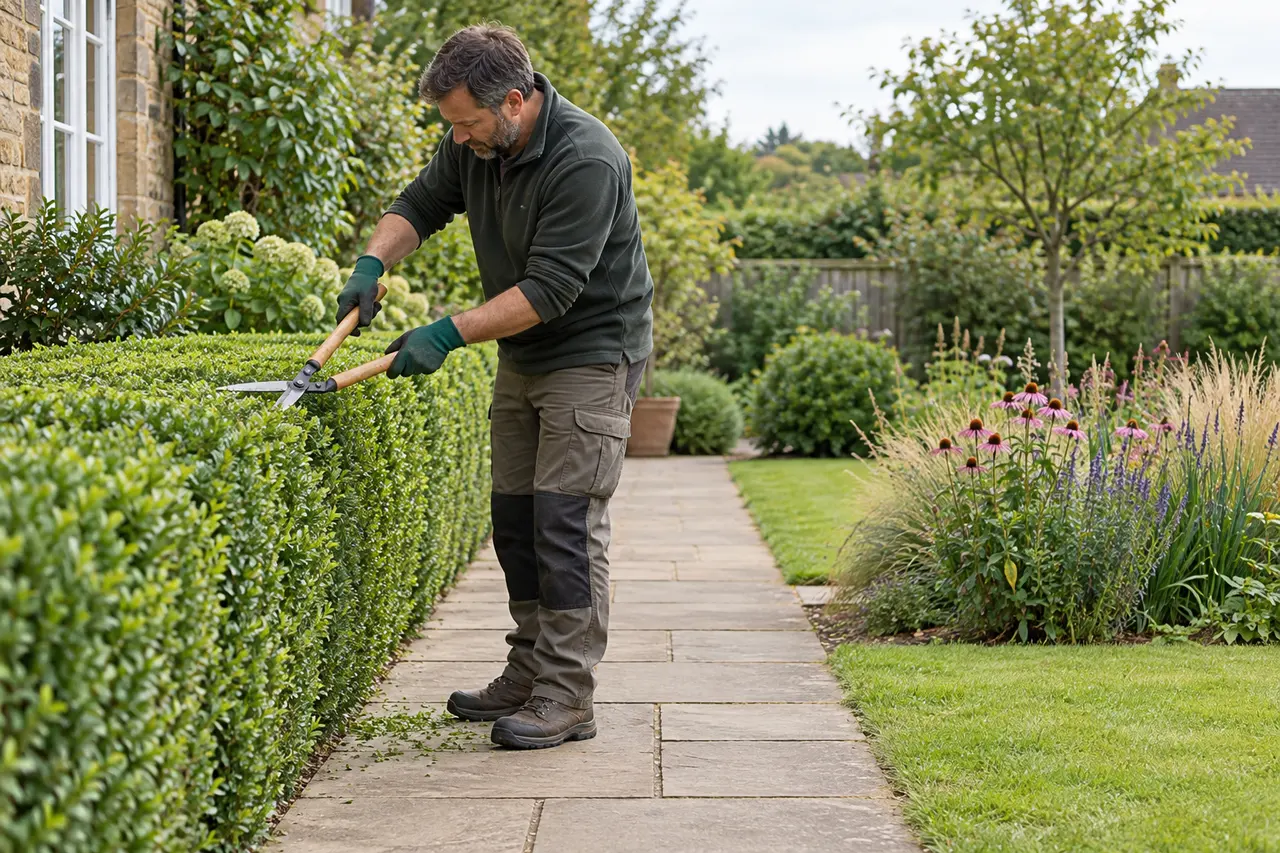
Where a hedge borders the feature, our accessible trim has a receiving arrangement clear of any selected stems drying for seed release. Fresh woody fragments follow a different purpose and are collected into their own suitable load. The separated receiving positions preserve the hedge and meadow loads, keeping the latter’s brief drying cycle clear for its appropriate later gathering.
Our hedge movement follows firm suitable footing and controlled reach, with checks for nests being built or used and postponement of disturbing cuts where necessary. The flowering area is not treated as spare standing ground merely because a later cut is planned. Its present growing stage remains relevant while the boundary is attended, retaining the plants beneath the working position as part of the active garden.
Where both operations share a visit, their order preserves completed work. The hedge fragments have a clean receiving position and the meadow stems retain their identified destination. The result can include an appropriately clipped screen beside a deliberately staged flowering feature. Those different finishes remain understandable without imposing the boundary’s tidy outside plane on the plant community developing at its base.
Further services around an established flowering feature
Design of new wildflower additions within existing growth
Our planting design can distinguish suitable seedbed sowing from selected plug plants placed among existing growth. The two approaches require different preparation and establishment care. We relate seedbed sowing or selected rooted plugs to the existing competition, prepared positions and suitable establishment care for that proposed addition.
Tree care following a recent transplant
Our tree-pruning proposal accounts for a recently moved ornamental tree and the remaining foliage relevant to its recovery. A severe crown cut is not automatically used to balance the root mass that moved. We distinguish necessary damaged growth from wholesale shortening, keeping suitable establishment care and selective pruning as different decisions. The transplanted tree’s actual condition and retained foliage inform its suitable care, with any selected damaged growth identified before further pruning is proposed.
Cleaning-product stages suited to surface temperature
Where an appropriate product forms part of paving cleaning, its temperature and drying requirements govern the working portion and conditions. Strong sun or hot paving can dry an application before its intended stage is complete. Our method follows the identified product’s instructions, using suitable receiving conditions and manageable areas to complete its required application stages.
Gutter work separated from an occupied insect nest
Known active wasp or bee activity remains explicit before gutter cleaning proceeds at an affected roof edge. A nest or entrance is not ordinary leaf debris to disturb with a cleaning nozzle. The appropriate handling of that situation stays separate from the channel task, without assuming the booked clear-out supplies pest treatment or decides the requirements of an identified colony as part of an ordinary deposit removal.
The offered tree assessed beyond fragrance alone
Different Christmas-tree species can have different scents, and our product discussion keeps that preference separate from the individual tree’s condition. Subtle fragrance alone does not establish an old or dry item, while a strong scent is not a complete freshness test. The actual offered tree and its appropriate care remain relevant, preventing one sensory preference from replacing attention to the product that will form the display.
Price the seasonal operation separately from a light lawn pass
The general gardening guide rates relate to agreed time. A suitable seasonal cut, any planned short drying stage and removal of the resulting load need a clear work arrangement alongside ordinary upkeep.
| Gardening time | Guide rate |
|---|---|
| First hour | £83 |
| Each subsequent hour | £65 |
GBP guide rates. Establish tasks, any separate visits, supplies, waste handling, VAT treatment and applicable access or parking charges in the complete quotation.
Questions about our meadow-style maintenance
How are annual displays distinguished from perennial patches?
Our work identifies whether the plants complete their cycle after flowering and setting seed or form an ongoing perennial grassy feature. Those different starting points affect preparation and later cutting. We select the maintenance from the actual existing planting and its life cycle, retaining its appropriate preparation and later cutting within the arranged task.
How is the patch treated beside a fed ornamental lawn?
We retain the flowering area’s own maintenance decision. Increased fertility can favour vigorous grass and affect the intended mix, so an unrelated lawn-feed application does not automatically extend into it. The selected boundary keeps that distinction visible while ordinary grass elsewhere receives the suitable treatment specified for its different purpose.
How does newly sown perennial growth affect the cutting plan?
We identify its sowing history and mixture before applying a mature-feature routine. The first season can need more frequent suitable cuts to support root development and manage vigorous competition. That establishment stage remains distinct from the main seasonal treatment of an older patch, giving the young growth an operation suited to its actual condition.
What result can the cut-and-collect cycle realistically provide?
Our appropriate cutting and collection support the intended maintenance regime, while later work responds to the plants that actually develop. Seed, competition and conditions influence the future mixture and display. The following season’s flowers develop according to the living mixture, seed, competition and growing conditions, giving later care an observed basis for the next suitable operation.
The cut, any planned pause and the collection kept connected
Our Crystal Palace garden maintenance can carry the established feature through its suitable current stage, including how the cut material leaves the surface. A purposeful seed-release pause and completed removal remain clear parts of that same cycle, alongside the distinct grass and hedge work around the retained flowering area.