

Raynes Park · Lawn, hedge and border finishing
Gardeners Raynes Park
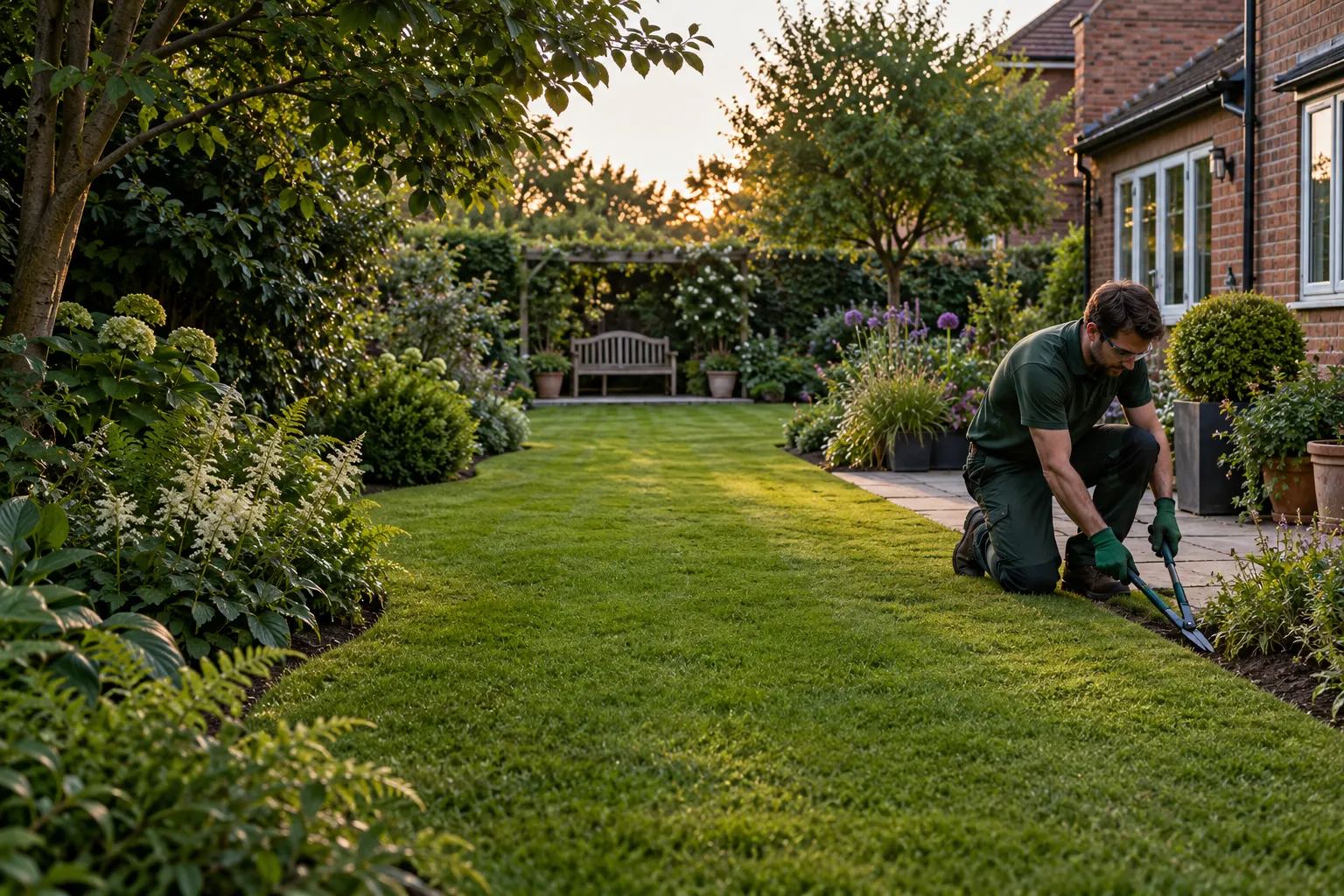
We maintain the junctions that make the garden usable: grass beside paving, hedge returns around a gate and planting along the mowing line. Preparation, cutting and collection are organised as one sequence. Open areas receive their main work while posts, corners and close margins receive the additional finishing their position requires.
- How do you protect lawn ends during mowing? Our gardeners use the available turning space and ground condition, keeping repeated tight pivots away from weak turf beside the bed.
- How are short roofline corners included? Gutter returns and corner outlets are identified alongside the long elevation, giving the cleaning proposal the building’s actual shape.
A maintenance visit that includes its close finishing
What does your lawn maintenance include beyond the main pass?
We prepare the surface, select a working route and attend to the accessible perimeter. Grass beside a post, wall or bed can need another finishing method after the mower has completed the open area. Loose clippings are gathered and the adjoining hard surface cleared. These connected operations give the lawn a completed edge as well as a cut through its centre.
How do your gardeners coordinate mowing and bed attention?
Where both tasks are commissioned, we identify the planted edge and clear loose growth from the mower’s route first. The grass is then cut with the plants outside its movement. Close weeding attends to the planted side from an appropriate position, with collection following the two operations. This gives each side its own method while reducing repeated crossing of the freshly worked lawn.
The detailed junctions within the visit
Corners and edges included in the working sequence
Our gardeners identify the small areas needing attention alongside the broad cuts: long grass at a post, weeds at a bed edge and clippings caught in paving joins. They are included in the sequence so equipment and collection can finish through the same area in an organised way. This prevents an apparently complete central cut from leaving every awkward point for another journey across the garden.
Preparation identifies obstructions and the edge condition before tools approach. We follow a sound existing grass line, with a broken or obscured boundary examined first. Growth hanging over the lawn is moved clear or receives appropriate plant work where included. Exposed grit and nearby glazing or delicate plants inform the finishing method, keeping the operation controlled at the junction as well as on the grass itself.
Our garden-maintenance visit coordinates mowing, weeding, trimming and the finishing collection for the spaces actually used. A doorway, lawn-side chair or shed route provides a practical reference for those junctions. The completed visit leaves the larger cuts alongside a usable surrounding area, with loose material gathered through the work. This gives the close finishing its own defined place within maintenance.
- We keep mower wheels on turf at the planted edge.
- Loose stones are gathered before powered finishing.
- Gate movement is checked before nearby growth is trimmed.
- Grass fragments are collected from adjoining paving.
- Low flowering stems remain clear of the cutting route.
Mowing routes and turning positions
Each pass given a controlled beginning and end
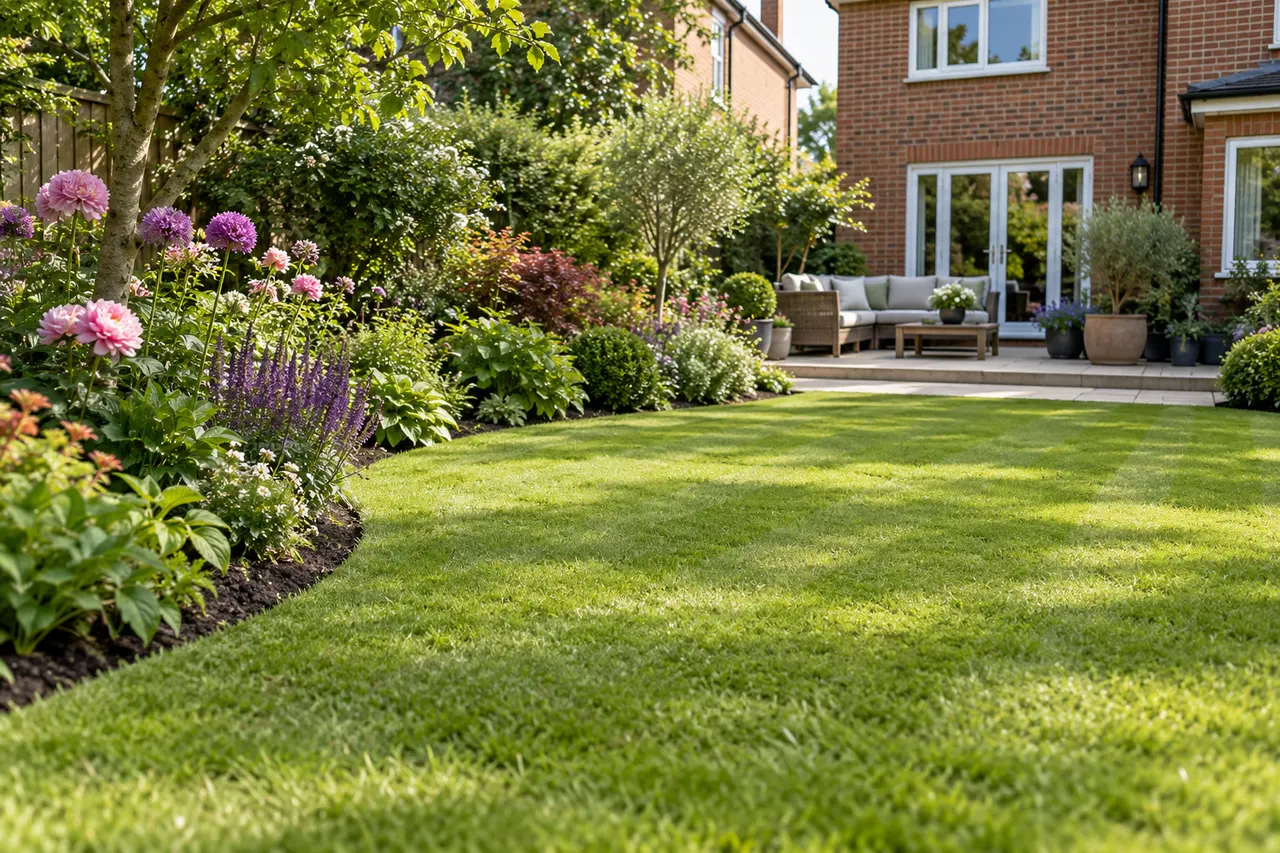
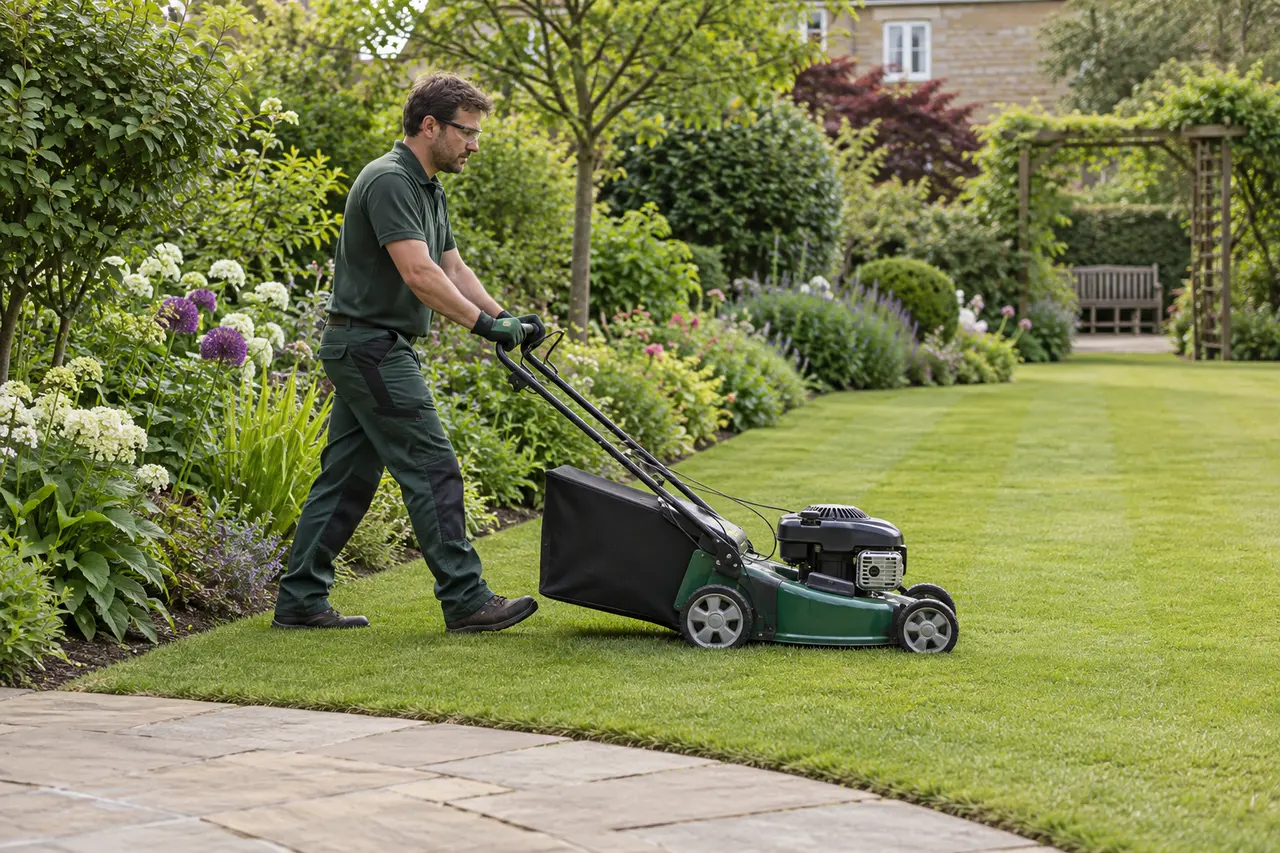
We consider the turning area as well as the straight run. Lawn ends can receive greater wheel traffic, particularly where a confined pattern repeats the same pivot. The route uses available room with the ground condition in view, keeping weak or soft turf outside heavy repeated turns. This gives the cut a practical pattern for that lawn instead of imposing stripes as the only measure of the result.
The mower setting follows the grass and its condition before the first pass. Taller or stressed growth can need a gradual reduction, with later cutting selected when appropriate. Sticks, toys and fallen fruit are collected from the route. This completes preparation alongside the height decision, preserving a clear working surface for the actual growth being maintained.
Bench legs and narrow grass tongues receive a finishing method selected for the obstacle and nearby surfaces. We allow for the close work and the possibility of loose material being thrown by a powered tool. Where thin areas persist, further lawn care can consider wear and growing conditions. The particular weak patch remains identifiable, keeping its next requirement separate from the quality of the ordinary mowing pass.
Hedge ends and entrance openings
Returns maintained alongside the long cutting face
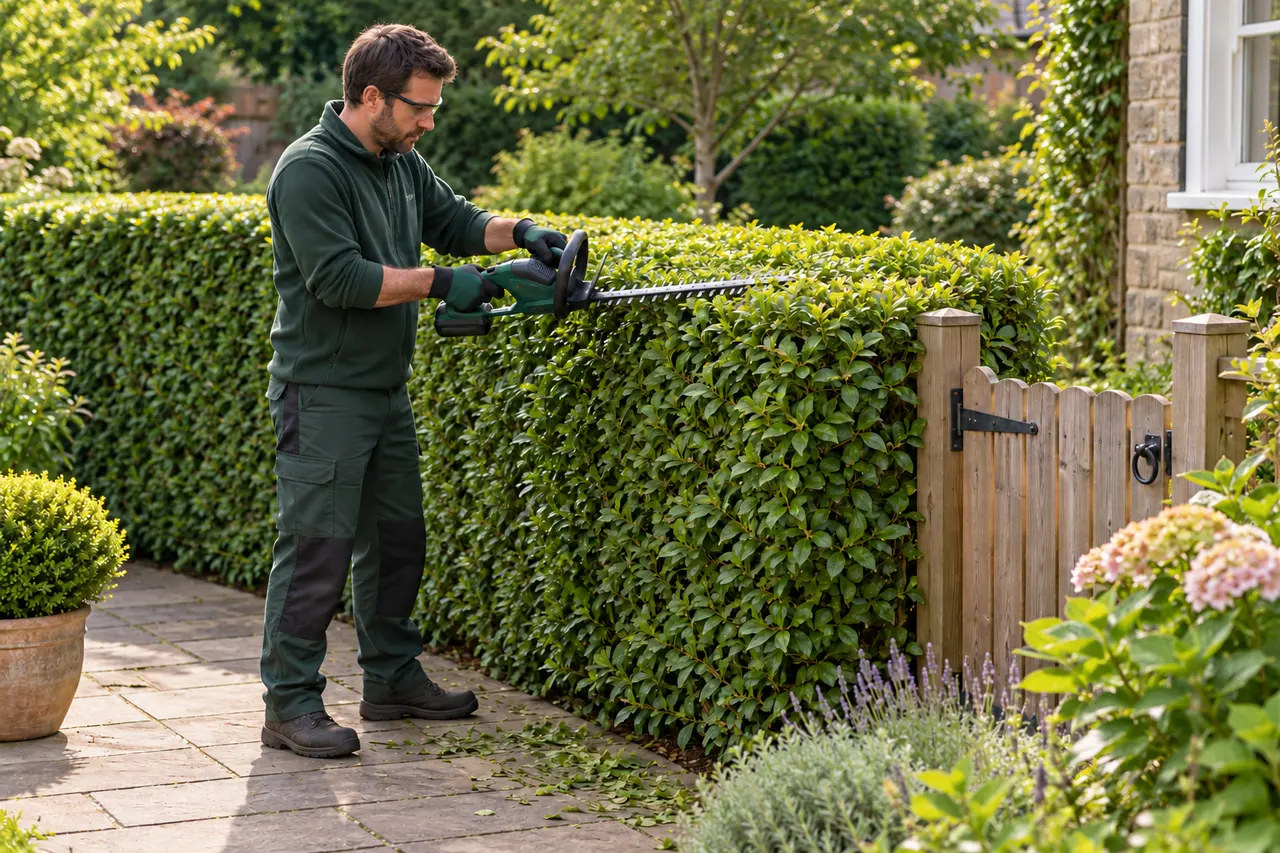
Our trimming follows growth around the hedge return as well as the broad side. Projecting shoots near a latch can catch movement even where the long elevation appears neat. The gardener checks how the gate opens and keeps the working boundary visible. This gives the entrance its intended clearance without extending the tool into hidden obstructions or unarranged neighbouring space to reproduce a continuous line.
The plant and screening purpose determine the extent of cutting. Young extension is distinguished from old wood requiring another decision, including whether the particular hedge can respond appropriately. The base and accessible top are checked for tangled stems, wire and other plants passing through. That preparation gives the gardener the actual cutting face, with separate growth recognised before the trim begins.
Once cutting stops, the gardener gathers trapped pieces at posts and returns by hand and collects material from the paving. Nesting activity leaves affected work postponed. Substantial limbs and inaccessible portions receive separate consideration. The completed return has its base clear alongside the maintained outline, giving the entrance its detailed finish through collection as well as the main hedge cut.
Clearance ahead of finishing
The surface exposed before the next tool is selected
We open dense material in visible sections, lifting loose stems to reveal edging, old supports and broken objects beneath them. A corner covered by growth receives the same controlled attention as the space outside the doorway. The next method is selected once that surface can be understood. This makes edge recovery a defined operation, with the material at ground level considered before powered finishing reaches it.
During collection, green cuttings are distinguished from dry wood, wet grass and intact containers. Loads follow a practical carrying route with the receiving position kept clear of access. Sharp stems are gathered from the lawn, and unfamiliar or household material receives its own handling decision. This preserves the distinction between vegetation and unrelated objects while keeping the worked area usable as each portion is cleared.
Our garden clean-up can open a larger backlog and expose useful planting for its next care. Root work, new surfacing or a different bed arrangement are identified separately. The garden-waste guide follows the actual outgoing material, allowing its collection route and destination to be described. The result gives subsequent finishing a clear surface while keeping the next project distinct from the initial recovery needed to see the area.

The planted side of the lawn edge
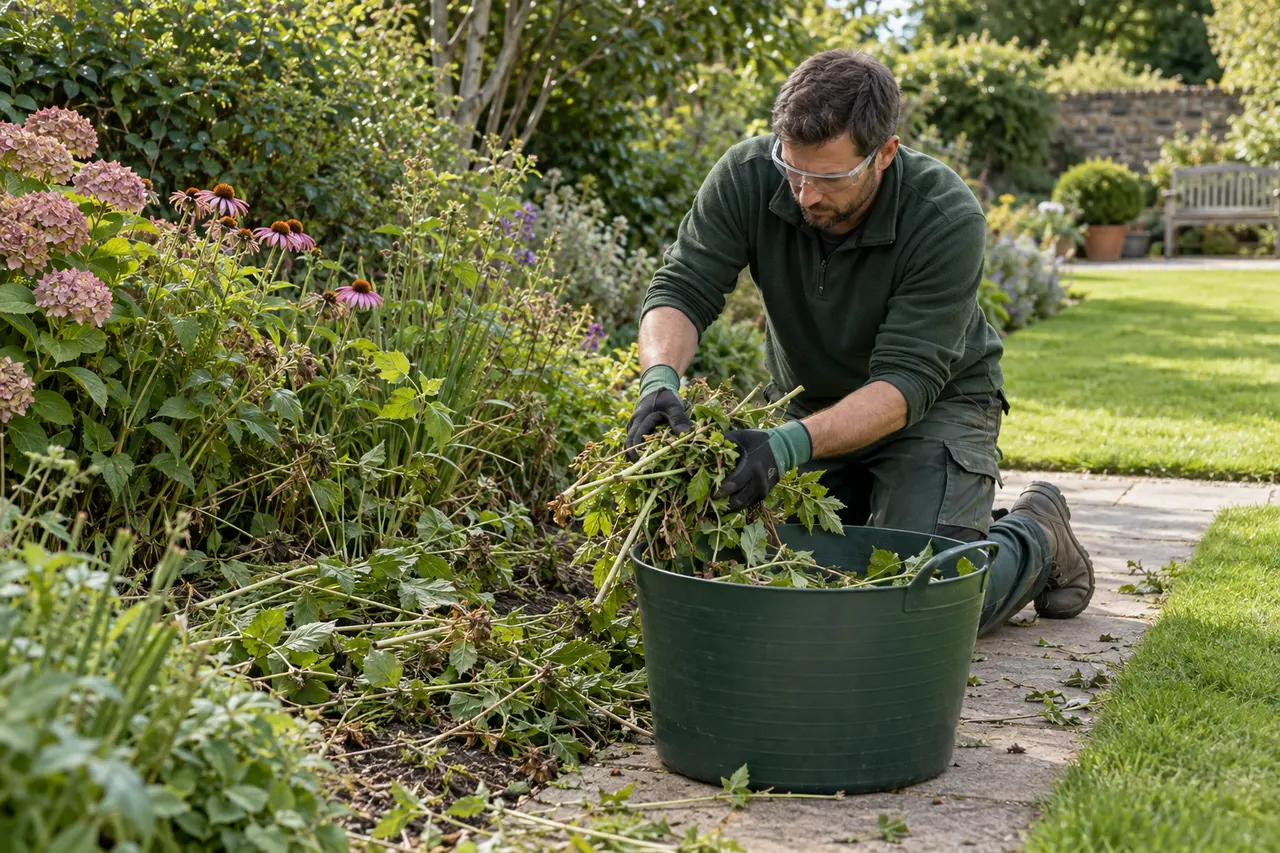
Selective weeding with neighbouring roots left seated
We trace unwanted stems at the border before loosening their roots. Grass near the edge may be rooted among perennial plants, so close hand work distinguishes the two. Wanted crowns remain seated while weeds are removed, with unknown shoots identified before selection. This keeps bed attention focused on the actual unwanted plant instead of lifting a complete mixed clump to produce a quick clear strip beside the lawn.
Low planting can soften the edge while remaining outside the mowing route. Our gardeners select spent flowers or collapsed stems where that attention suits the plant, preserving useful foliage in its natural outline. New planting includes room for its developed spread and access. The border can therefore receive a clear finish without taking every plant to one height or filling the last working gap solely for immediate fullness.
After weeding, appropriate displaced soil is returned within the bed with crowns and woody stems kept at their proper levels. Loose material is gathered from adjoining grass and paving. Continuing attention can then address new-plant watering, loose supports and accessible returning weeds. This gives the planted edge a workable surface for later care and completes the hand operation beyond the moment its most visible weed is lifted.
The finish through changing seasons
Work selected for present ground and plant conditions
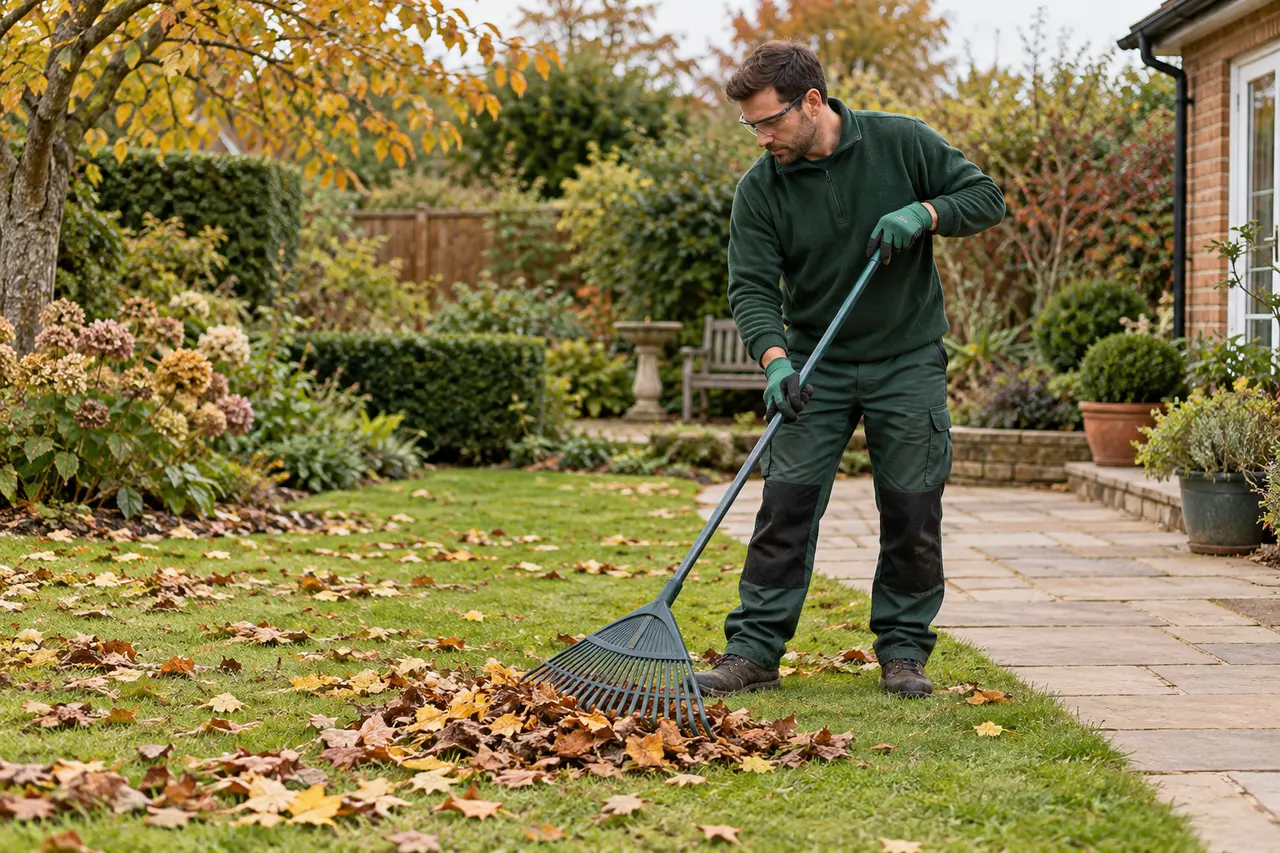
Seasonal attention includes leaves covering step edges and corners used for mower turns. They are gathered before grass work so the surface is visible again. Tender planting receives a gentler collection method than open turf, with the actual loose material lifted from its position. The maintained result therefore follows the season’s accumulation as well as the growth that needs cutting.
When feet or wheels would mark wet ground deeply, we direct the visit towards firm paths and reachable bed work where appropriate. During dry periods, new planting may take priority over a cosmetic cut. The actual condition selects the useful task. This allows the garden to remain under care while an unsuitable surface waits for another opportunity, instead of pursuing the same visual finish regardless of the ground supporting it.
A recurring arrangement preserves useful finishing standards while changing the work needed to achieve them. One visit may combine grass cutting with hedge returns; another can collect leaves and clear collapsed growth from paths. The year-round gardening guide covers those different stages of attention. Our programme selects from them for the garden’s actual growth and access, carrying the maintained junctions forward as the seasons change.
Related projects beyond routine finishing
Lawn design includes a practical cutting outline
Our Garden design can reconsider tight curves, narrow strips and their relationship with a seating area. The proposed geometry includes turning space and the hand finishing likely to be needed. A simpler line can retain generous planting while giving equipment an appropriate route. This is a layout decision with its own purpose; ordinary edging maintains the existing arrangement while a permanent change is being considered.
Grass finishing near a tree respects its bark and roots
For tree care, a wound, weak attachment or concerning growth is identified as the particular subject needing consideration. Grass at the base is finished with the bark and roots outside the cutting action, since repeated contact can injure them. The lawn line does not determine a root or bark removal. The appropriate assessment selects any tree operation, preserving that distinction alongside the routine grass work.
Paving margins identified within the cleaning area
Our jet-washing quotation identifies reachable margins beneath seating and along kerbs alongside the central paving. Their material, shape and working position inform the method. The quotation describes the actual extent included, distinguishing narrow points within that surface from another separate paved area. This gives close cleaning an appropriate place in the operation and leaves the working boundary clear.
Short gutter returns identified with the main elevation
For gutter cleaning, short returns and corner outlets are identified with the longer visible elevation. The method follows the included building sections and access available to each. This gives the roofline a defined cleaning extent, keeping small lengths within the assessment even where they need a different position. The operation then accounts for the actual arrangement from one completed section to the next.
Seasonal tree collection with the booked material distinguishable
Our Christmas-tree collection identifies the tree and selected arrangement separately from ordinary branch cuttings or garden clearance piles. Preparation follows the confirmed collection information, with the material kept recognisable at its receiving position. This distinguishes one cut tree from another quantity or load requiring a different agreement. The seasonal booking remains attached to what was commissioned, keeping unrelated garden waste out of an unspecified mixed collection.
Gardening time includes preparation and the perimeter
Our time-based quotation accounts for route preparation, close edge finishing and gathered cuttings as well as the main mower passes. The guide rates below support that complete task description, including the detailed junctions that can take attention within a relatively small lawn.
| Gardening time | Guide price |
|---|---|
| First hour | £83 |
| Each subsequent hour | £65 |
GBP guide rates. The quotation establishes the commissioned work, waste arrangements, VAT treatment and any applicable access or parking charges. Further recovery or layout operations remain separately identifiable alongside routine finishing within the complete proposal.
Close finishing and the work around the lawn
Why is there still grass beside a post after mowing?
A strip beside a post can receive a separate finishing method after stones, wire and vulnerable materials are identified. The mower completes the accessible broader surface while the tight junction has its own allowance. This gives the corner a deliberate cut with the post and bed outside the tool movement, completing the different areas through the method appropriate to each.
Can a narrow grass tongue be left longer?
A narrow grass tongue can stay longer where that is the chosen arrangement. We identify it within the cutting plan and maintain an appropriate boundary beside paving, plants or an opening. This distinguishes deliberate variation from a missed patch. The route and its edges remain understandable while different grass lengths receive the treatment intended for them.
Does edging mean installing a new border material?
Our edging follows or recuts an existing grass boundary. Supply and installation of a new border material are separately specified project work. A collapsed or unstable edge is identified before the maintenance finish conceals its condition. This keeps the accessible grass task clear while allowing any required new construction to receive its own proposal and materials.
Should the same mower pattern be used every time?
The mowing route follows the lawn’s shape, ground condition and obstacles. The gardener uses available turning space to avoid repeated wear on one point. Stripes can be considered where appropriate, but are not imposed at the cost of handling the surface badly. The practical result is an even suitable cut produced through a controlled route for the actual garden.
Will sweeping clippings into the bed finish the job?
Loose clippings on worked paving are gathered to their identified destination. Where material is being kept for composting, its collection position is part of that arrangement. The bed is left clear of an accidental mowing load, protecting low growth and the planting finish. This makes collection the final stage of the grass task instead of transferring its remaining debris to a different growing area.
The worked junction completed on both sides
Our garden-care services leave a defined meeting point between grass, paving and planting, with the close cutting and loose-material collection completed alongside the main task. A post, gate return or narrow border edge remains a recognisable part of the finish. This gives the garden’s everyday routes the same practical attention as the open areas visible in its broader view.