

Isleworth · Planting and usable edges around the garden
Gardeners Isleworth
We maintain grass, planted margins and reachable hedges around fences, gates and paving. Tangled stems are traced to their plants before removal, with useful climbers, their ties and fixed fittings kept distinct. Close collection and edge finishing leave the connections between garden areas usable alongside the cared-for planting.
- How do you assess vegetation around a gate? Our gardeners check its full swing, low edge and latch area, then work on the actual stems and loose material obstructing movement.
- How is ivy on a tree handled? A trunk obscured by ivy is identified within the tree-work proposal, keeping inspection needs separate from routine pulling at fence margins.
Maintenance at the junctions between garden areas
What work do your gardeners undertake along garden boundaries?
We mow accessible grass, weed planted margins, gather loose material and trim reachable growth according to the plants involved. The task distinguishes vegetation from the adjacent fence, gate and paving. Repair work, access from neighbouring land and substantial tree reductions remain different operations. This gives boundary maintenance a practical purpose without treating every feature along the line as part of one general clearance.
How do you clear an obstructed route while keeping useful planting?
Our gardeners identify whether the obstruction comes from projecting shoots, loose leaves or ground-level growth before selecting removal. Work can concentrate on those points while useful plants remain. The required usable space informs the result, with cutting following the plant and working position and affected nesting activity left undisturbed. Clearing access therefore need not begin by removing the whole bed beside it.

Planted margins at the fence
Stems traced before the tangle is separated
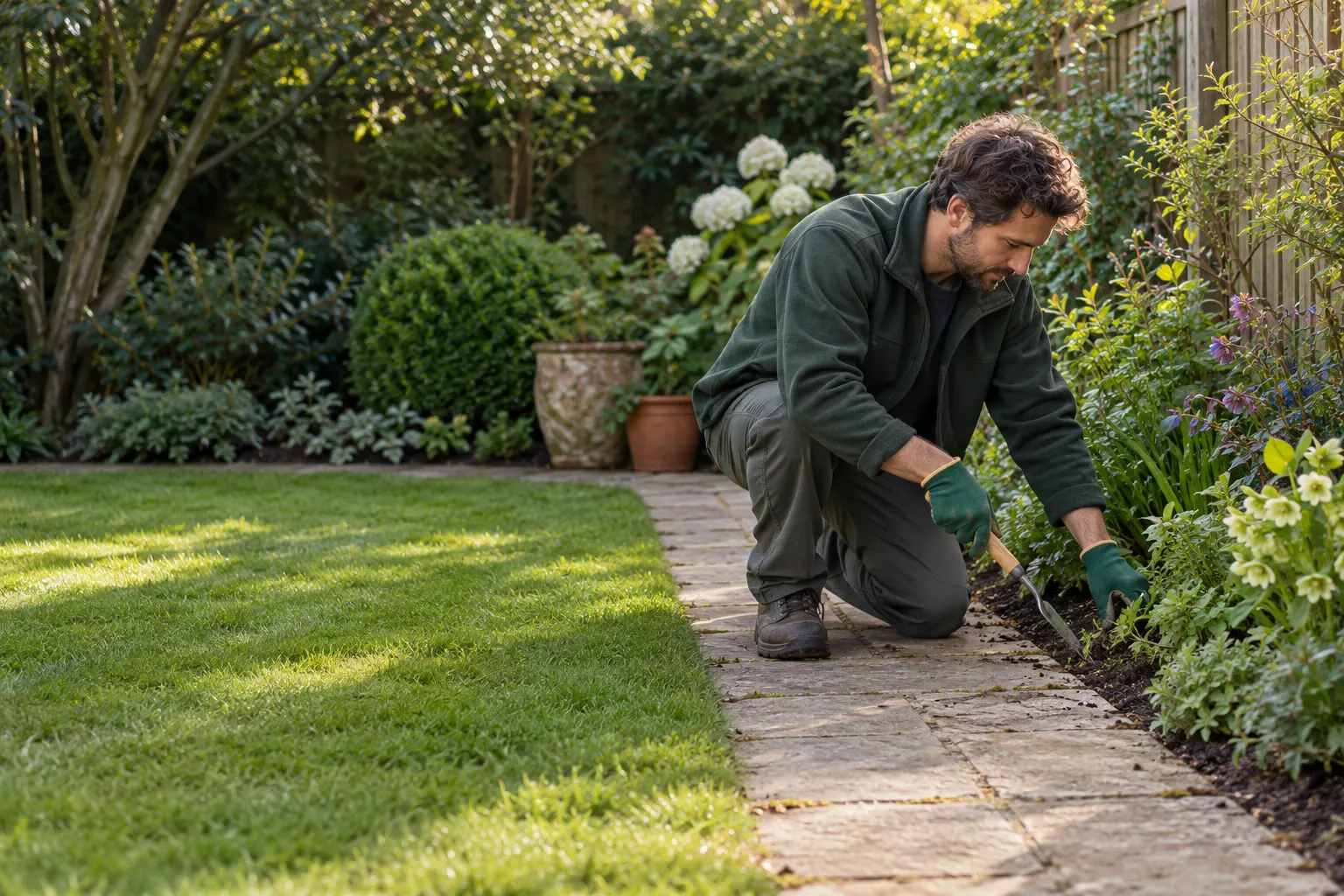
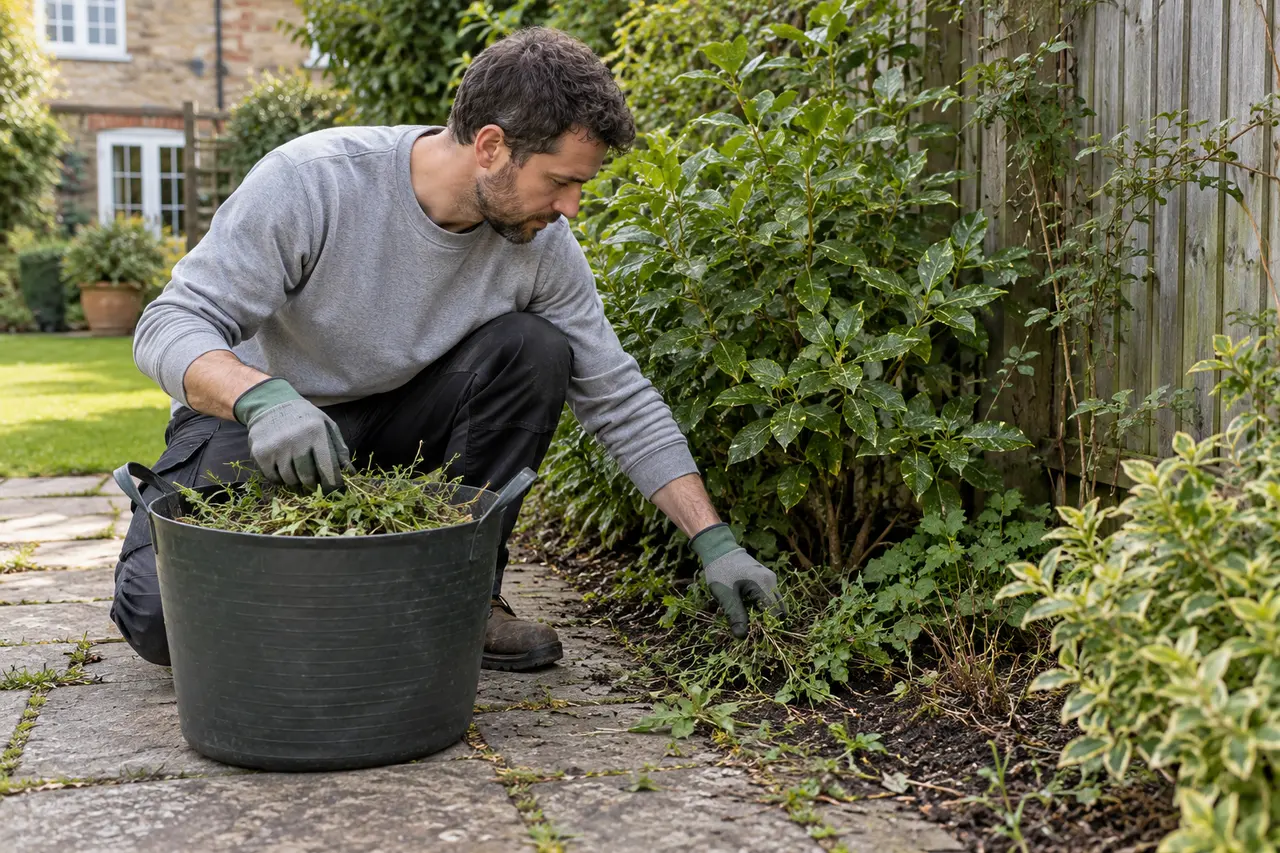
A narrow fence strip can contain a wanted climber, annual weeds, shrub branches and material caught around a post. We follow visible stems back towards their origins before separating the growth. The whole tangle is not pulled away as a single handful. This identifies the planting that will remain and keeps adjacent fittings out of a removal task intended for vegetation, even where foliage has made the different parts look connected.
With the plants identified, accessible weeds are loosened at their roots and gathered from the base. Hand tools stay clear of known cables, irrigation lines and fixings. Trapped growth can be separated into manageable pieces, using a position where the gardener can see the working hands and roots. The fence is not used as an anchor to pull against, keeping collection controlled around both the planting and the fixed boundary.
Our Garden maintenance maintains a recognisable margin with room around useful plant bases. Accessible weeds and loose fragments are gathered while the fence remains a distinct fixed feature beside them. The resulting strip is available for continuing care, with its climbers and other plants identifiable. The next hand task can then begin from the planting actually present along the boundary.
- We follow tangled stems to their plants before removal.
- Loose leaves are gathered from the gate’s opening edge.
- Edging tools stay clear of posts and visible fittings.
- Useful climber ties and supports remain during nearby weeding.
- The paving and lawn junction is swept after cutting.
Vegetation around the entrance
The gate’s operating space cleared as a complete movement
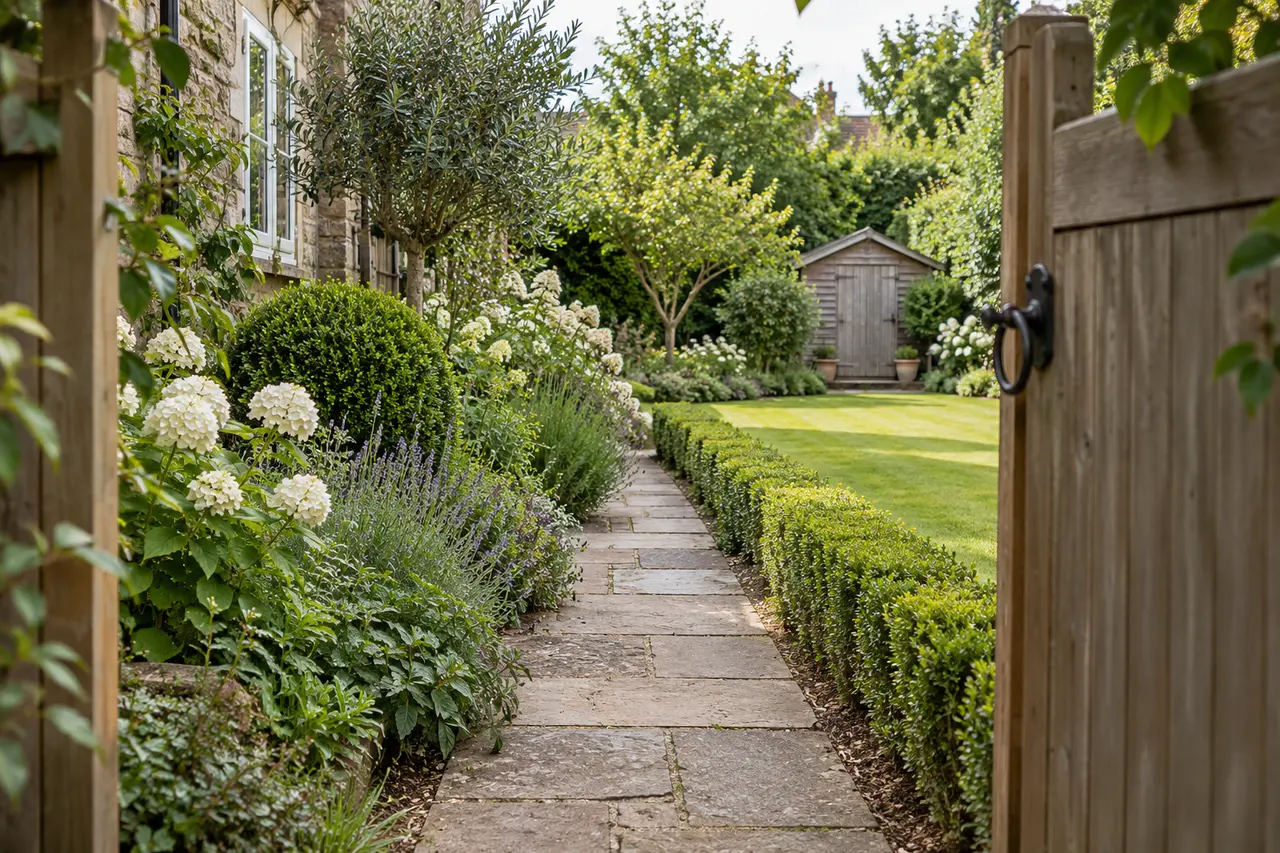
Our gardeners check the space used when the gate opens, not only its appearance when shut. The low edge, latch area and full swing can reveal a trailing stem, leaf pile or grass over the paving as the actual obstruction. That movement identifies the points needing attention. Work then follows the plant material or debris involved instead of imposing a wider reduction merely to make the closed entrance look neat.
Loose material is gathered before close cutting around hardware. Appropriate projecting shoots can be shortened individually, with the plant’s main framework kept outside the swing. Deliberately supported foliage is recognised before any cut. Collection tubs stay out of the opening while the margin is worked, so the maintenance itself does not block the access being restored. The sequence keeps the gate’s operation visible throughout the task.
The opening is checked again once vegetation and collection are finished, including fragments at the threshold. Where the gate still drags because of its hinges or another structural cause, that remaining issue is identified separately. Additional healthy planting is not removed simply to pursue a problem outside vegetation maintenance. The result records what the gardening has cleared and what requires another remedy.
Lawn edges beside fixed features
Grass finished with tools clear of adjoining materials
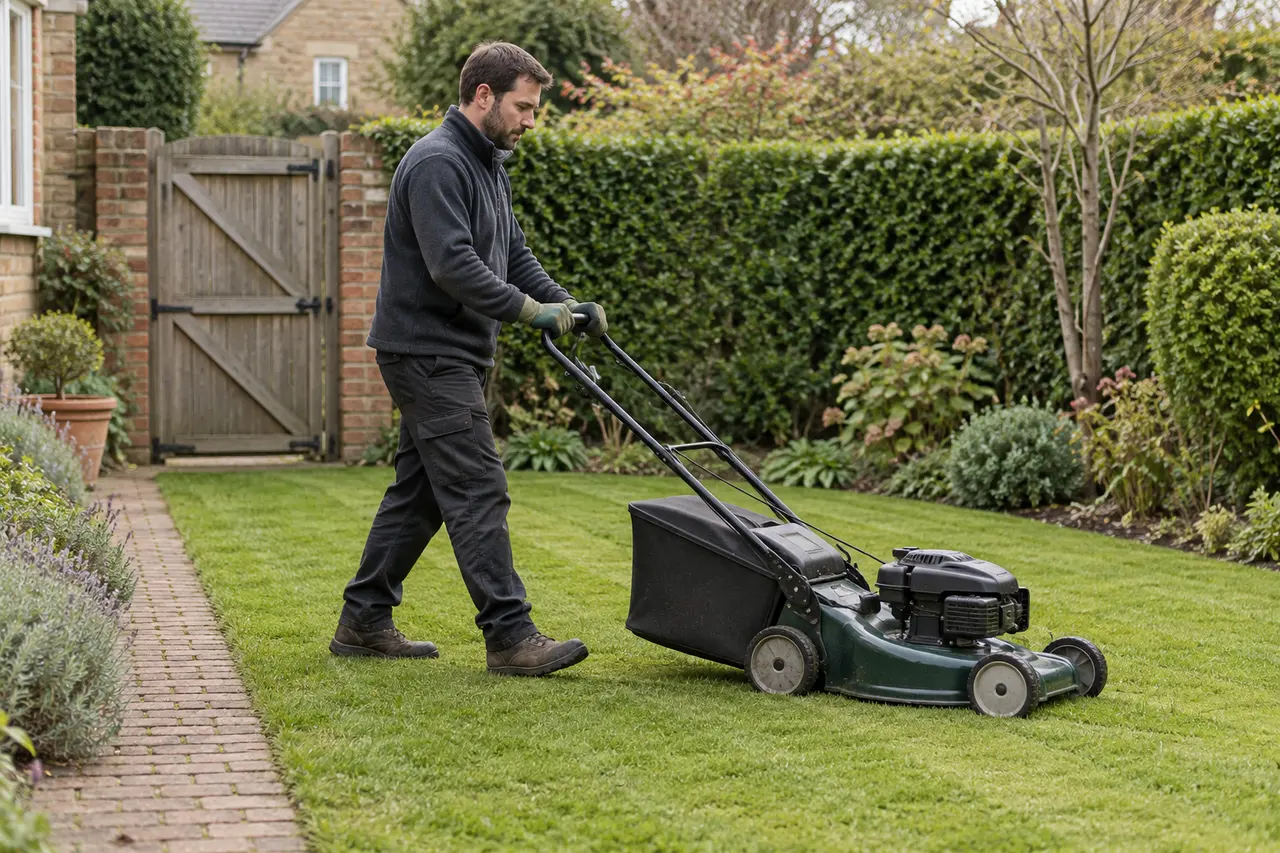
At posts, edging boards and paving, we collect loose gravel and small objects before powered cutting. The tool works from the grass side with space to avoid the adjacent fixed material. Awkward corners receive finishing attention instead of being forced into the main mower pass. This gives the visible lawn line a deliberate finish without using the fence or edging as a cutting stop.
We select a firm turning position outside planted soil. Ground softness can change the route or the mowing decision, and concealed edging in long grass is identified before powered equipment approaches. The operator follows the surface available for control, with inaccessible or obstructed portions left clear in the task record. This keeps the cut appropriate along the detailed boundary as well as its open run.
Our lawn-care service combines the main cut with an appropriate finish at accessible edges. Loose clippings are collected where required and swept from the path. Close work with shears can address a narrow corner without leaving a tuft or forcing every cut through the same machine. The time and method reflect the junction being finished as well as the larger open grass area.
Reachable hedge maintenance
Each face considered from its actual working position
Hedge faces, top and returns are assessed separately for reach. A gap behind the hedge provides a working position only where stable space permits controlled equipment use. Our gardener establishes that approach before cutting begins. The available operation is then identifiable from the actual ground, giving the quoted work a clear relationship to the faces and access present.
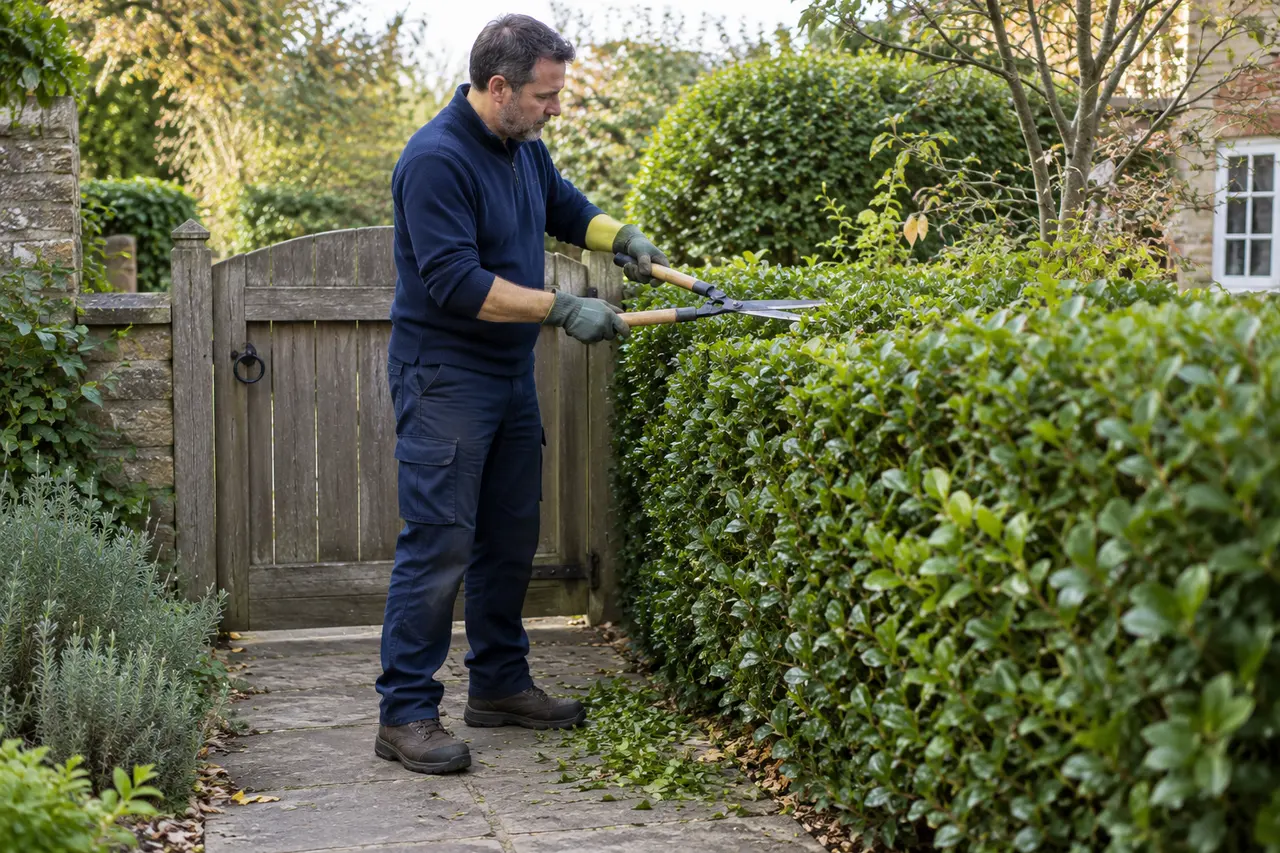
We follow an appropriate outline on reachable hedge growth, collecting material at each post and return as the portion finishes. Accessible bases and openings remain clear. Individual hand cuts can attend to broad leaves or isolated stems, giving those details their own method. This completes the face alongside the entrance features, including the fragments beneath and between them.
Work on a far face requires the necessary access and method; neighbouring land is not silently assumed available. Affected growth is checked for nests being built or in use and disturbing cutting is postponed. Plant type and condition also inform the amount removed. A substantial reduction is therefore distinguished from following an existing maintained surface, even where both tasks would take place on the same hedge.
Loose material trapped at the base
Collection exposes the surface without concealing mixed debris
Accessible leaves and old cuttings are removed in stages from the junction of fence, bed and path. The gardener distinguishes vegetation, broken pots and wire as the surface opens. Sharp or unknown items prompt a handling decision for the affected patch before collection continues. This gives the outgoing load identifiable contents and leaves the growing area understandable throughout recovery.
Our garden clean-up progresses through identified sections while keeping a material route open. Manageable loads are moved without dragging full bags through low foliage. Completed corners remain visible as the next section opens. Collection then follows its destination, preserving the space already cleared and giving subsequent work a usable approach through the plot.
Once loose debris is out, accessible weeds are distinguished from rooted woody growth needing another method. The cleared surface shows the next plant task without implying every root below has disappeared. Our disposal guide keeps outgoing vegetation separate from unrelated items. The finish therefore gives the margin a usable and understood condition, not merely a clean-looking top over materials that were never selected for ordinary green collection.
Continuing attention to the joins
Small accumulations gathered while the working edge is visible
A recovered edge gives the next visit a clearer starting surface. New weeds can be identified against visible soil, a projecting shoot dealt with before it reaches the latch, and leaves gathered before a wet compacted layer forms at the threshold. Our continuing maintenance follows those actual changes. It is a different workload from opening a long-neglected strip, with close attention directed to the small points affecting everyday access.
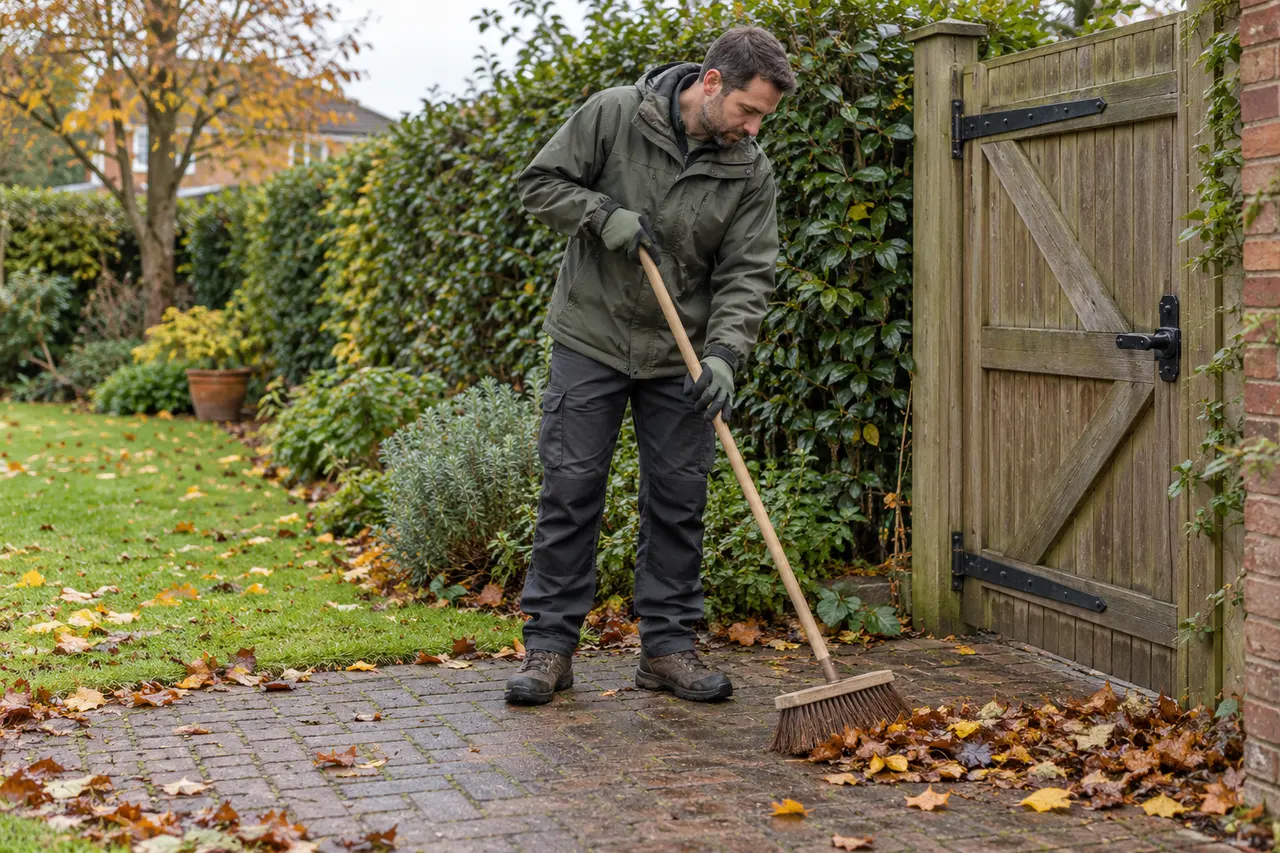
Our seasonal collection work uses methods matched to the surface: appropriate sweeping on paving, hand collection within tender planting and raking of usable grass without scraping exposed roots. Collected leaves go into a container or identified holding position during the work. They are not piled against the nearest plant to make the route appear clear, which would simply move the obstruction into another part of the maintained margin.
Additional operations around the boundary
Garden layouts allow for the full gate movement
Our garden-design project considers the gate’s open movement alongside its closed view. Bed edges, paving and proposed shrubs are positioned for that operating space, including their future spread. This gives the entrance an arrangement that can be maintained through ordinary care. The permanent layout and its access are developed together, supporting the planted view without making repeated hard cutting the only way to keep it usable.
Tree proposals identify trunk features hidden by ivy
For tree surgery, dense ivy covering a trunk is identified as part of the inspection question. The climbing foliage can hide relevant tree features, and its own healthy leaves do not establish the tree’s condition. Its handling is included in the proposed operation. This gives the obscured trunk appropriate consideration while routine fence-margin collection remains directed to accessible loose material and selected growth.
Hard-surface washing finishes within its specified boundary
Our Jet washing arrangement identifies the end of the paved strip and any adjoining surface or feature outside the clean. The working direction accounts for that boundary instead of pushing loosened dirt across it and declaring completion. Excluded walls, gates and neighbouring paving are not automatically added to the pressure-cleaning operation. The proposal covers the actual hard surfaces commissioned and the material movement involved in washing them.
Gutter access considered separately from climbing garden growth
Our gutter-cleaning service considers the actual channel behind climbing growth and the access needed to its deposits. The plants and their attachments are identified for an appropriate approach, with high or uncertain parts recorded as limits. This gives the roofline operation a defined method and separates it from ordinary work on climbers and weeds at the base of the garden boundary.
Seasonal collection with an accessible agreed position
A private Christmas-tree collection uses the material, timing and collection position identified for that booking. The tree remains accessible without being stored across a public pavement or shared passage. Placing it outside does not create a removal arrangement with a council or passing contractor. Our collection proposal therefore defines where the tree is being received and taken from, keeping the access route usable for other people.
Gardening time at detailed margins
Our quotation accounts for separating growth, finishing around fixed features and gathering the load, alongside any main cut. The shared general rates below guide gardening time. The task description reflects the detail at the actual boundary, including corners and access, giving those close operations an allowance within the complete visit.
| Gardening time | Guide rate |
|---|---|
| First hour | £83 |
| Each subsequent hour | £65 |
GBP guide prices. The full quotation reflects the commissioned work, waste arrangements, VAT treatment and applicable access or parking costs. Routine plant maintenance and separately required structural or exterior operations remain identified within that arrangement.
Maintenance around gates and fixed garden features
Can the growth around a latch be cut without reshaping the hedge?
Where a few projecting shoots are the obstruction, our gardeners can shorten them selectively without reshaping the entire hedge. The cut follows the plant, with supports and the surrounding intended outline identified. Work takes place from a controlled position after the relevant nesting checks, distinguishing the local correction from a general boundary reduction. This gives the access problem a proportionate vegetation operation.
What if the gate still catches after leaves and stems are removed?
Where the gate still catches after plant material is collected, we identify the remaining cause. Fittings or the surface beneath it can require a different operation from gardening. The vegetation work remains recorded for what it has cleared, with that separate obstruction visible. This provides an understood next step while preserving healthy planting outside the access task already completed.
Will a strimmer be run directly against timber edging?
The finishing tool and its working distance are selected to keep fixed features outside the cutting action. Tight junctions can receive a more selective approach, with stones and other hard loose objects collected before powered work. Damaged edging is identified separately. This maintains the grass beside timber or other boundaries without treating those materials as a convenient stop for a strimmer or another cutting tool.
How is a wanted climber separated from weeds at the fence base?
Climber stems are followed to their plant before neighbouring weeds are loosened. Existing ties help show the intended arrangement, with accessible unwanted growth handled individually. If identity remains unclear, the section waits for that information before removal. This keeps useful supported growth recognisable through the visit and gives the gardener an identified plant to continue caring for at the boundary.
Does a visible gap behind the hedge guarantee it can be trimmed?
A visible gap is assessed for stable footing, room to control equipment and the necessary access before hedge work is proposed. Trapped material or restricted width can prevent that approach even where daylight is visible through it. The reachable face and any additional operation are defined for those actual conditions. The arrangement does not promise a behind-hedge cut solely because a narrow opening exists.
Recognisable planting at a usable garden boundary
Our gardening service overview connects the completed margin with any distinct operation still required. Useful stems remain on their intended supports, loose cuttings are gathered from the planted strip and the points affecting movement are visible. This gives subsequent maintenance a recognisable junction between planting and fixed features, instead of leaving another mixed tangle behind an apparently tidy outer face.