

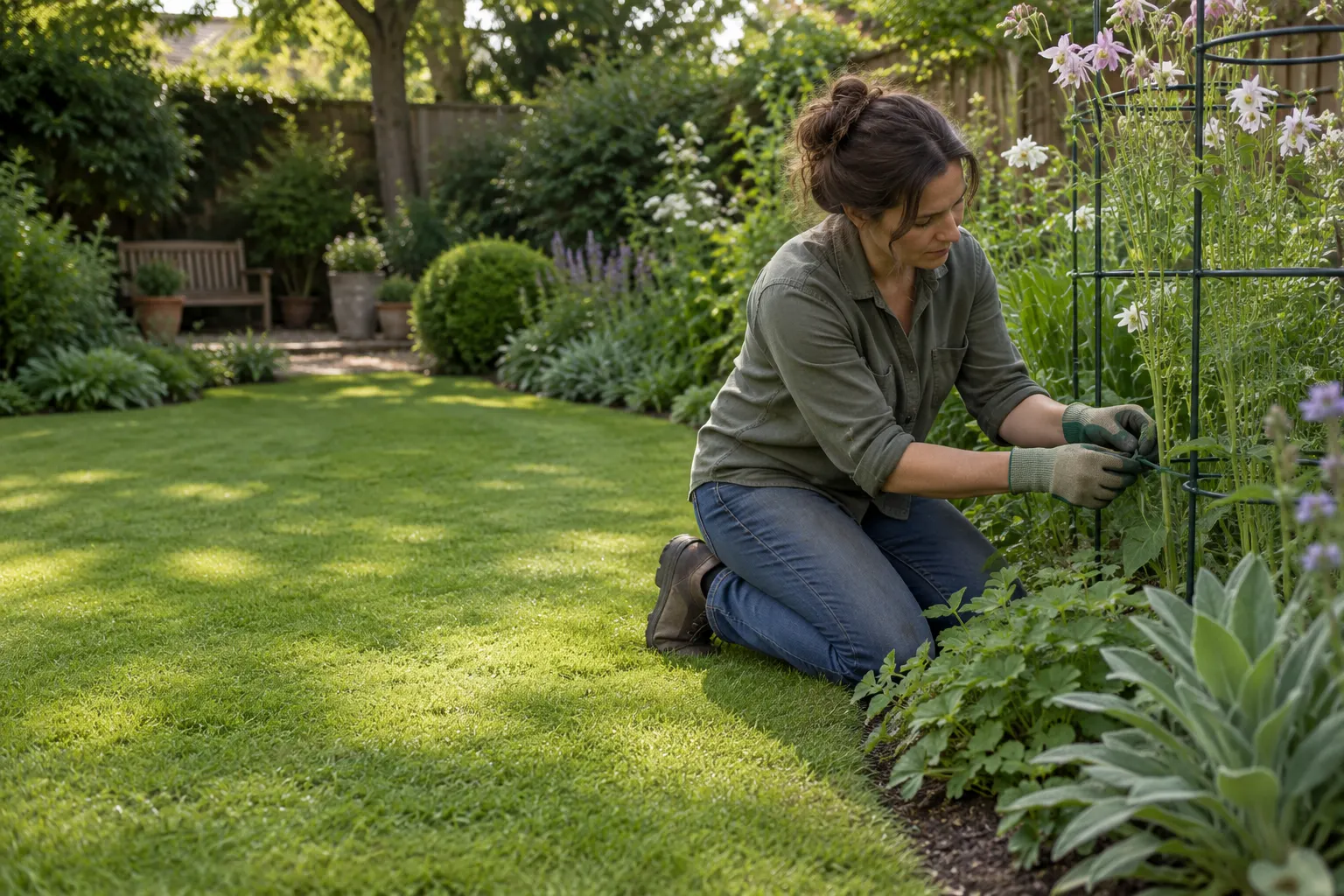
Accessible support work for the plant’s developing growth
Gardeners Ealing
Our gardeners can check and adjust specified plant supports and ties alongside suitable border care. We match the arrangement to individual stems or clumps, keep fastenings visible and gather unwanted hardware separately from green material. Suitable grass and hedge attention follows the retained support positions, with the fastenings and selected plants kept identifiable through the adjacent cutting.
- When is suitable support positioned around a perennial? We assess the plant and insertion points before the space fills, selecting a controlled arrangement appropriate to its clump or individual stems.
- How do you check a tie hidden by leaves? Our inspection follows its actual contact with the stem, not only the loose visible end, before selecting any adjustment.
Plant support as a defined part of the maintenance
What can your support-and-tie task include?
We can inspect accessible retained supports, adjust suitable fastenings and identify any specified new materials for the plants concerned. A leaning stem is assessed before selecting cutting, guidance or another response to damage. This keeps the actual support operation distinct from supplying a new framework everywhere or assuming that every shoot crossing the edge needs to be removed.
What sort of hold do you aim to provide?
Our suitable support relates to the plant’s size, habit and condition, retaining appropriate growth and movement without constricting stems into a rigid bundle. Contact points remain identifiable for later attention as the plant develops. We reassess the contact and fit as growth develops, selecting any suitable adjustment from the stem’s actual condition and receiving support.
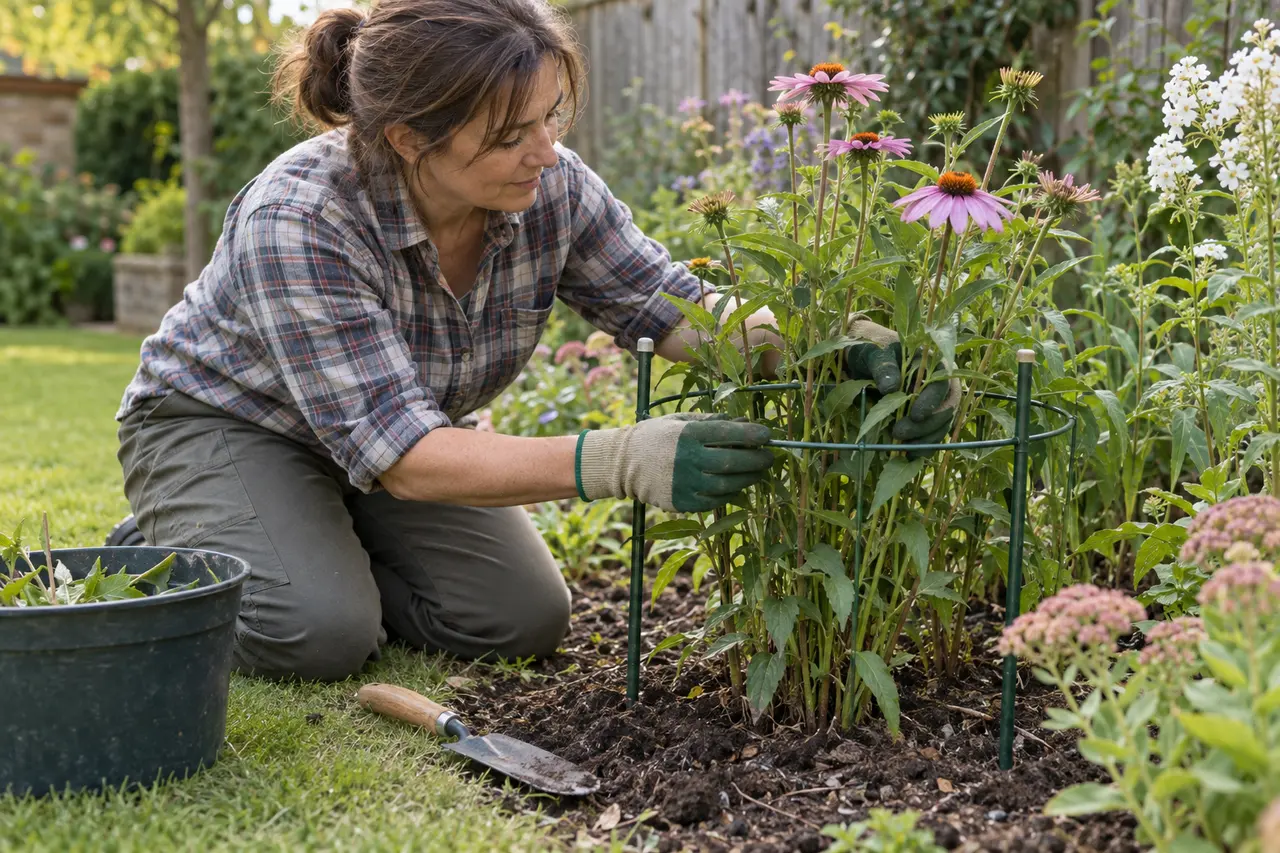
The clump or stem receiving support
An arrangement matched to the actual growth
We distinguish the role of a ring surrounding a clump from a cane beside an individual tall stem. Our choice follows the plant’s growth and the individual stem or clump that the selected support is intended to hold. The RHS perennial-support advice explains those different approaches, and our work relates the particular support to the material it will hold. The receiving plant therefore guides the suitable ring, cane or other arrangement identified for its particular occupied position.
Where support is included, our preparation establishes the insertion positions and known crown before growth completely occupies the area. Early placement can offer better control than pushing a frame down through a fully developed clump. We retain suitable space for hands and tools, using the known crown and existing growth to establish a controlled position for the selected support.
The garden maintenance service identifies the supports and supplies actually included. Checking retained ties remains a different task from providing a new structure for each plant. Our attention follows the clumps selected for that operation, keeping their required support and retained neighbouring planting clear through the visit.
Contact between the fastening and the stem
Tie checks as growth changes the original fit
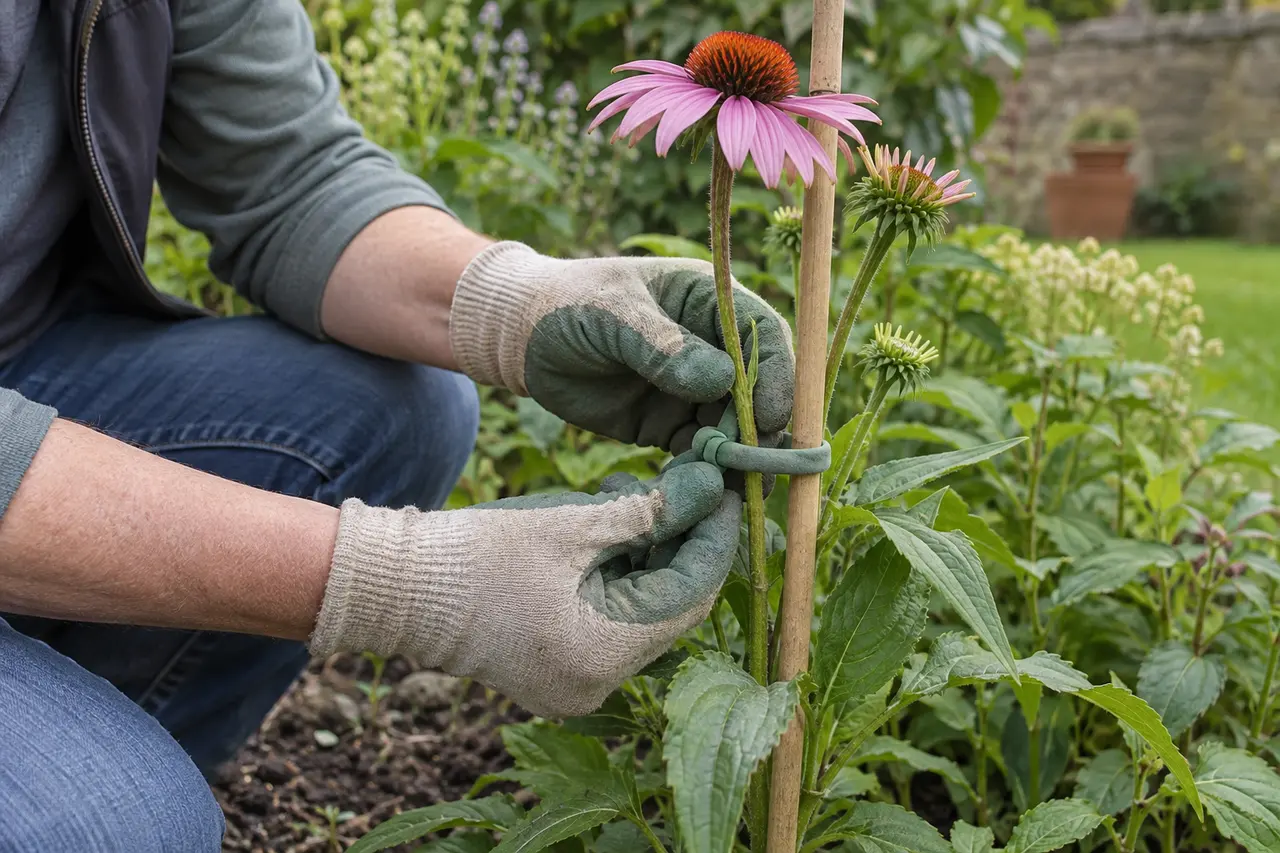
Our inspection follows the contact point as well as whether the flower remains upright. A stem’s development can alter an earlier suitable fit, while rubbing, constriction or a shifted support can create a different condition. We assess the current fit, movement and contact before selecting suitable adjustment of the actual fastening against the stem and receiving frame.
A loose tie, failed frame and snapped stem receive separate decisions. Our adjustment does not present a fastening as repair of an already broken connection, and more tension is not used to stabilise unsuitable hardware. Where the plant or support cannot be moved without damage, the affected portion waits for a different appropriate approach. The chosen operation follows the identified stem or frame issue, with the affected component and appropriate next attention kept visible.
After suitable adjustment, we check leaves and adjoining stems around the fastening. They remain free of unintended traps even where the main stem now stands straight. Plant identity and deliberately retained growth stay clear, giving the next inspection a specific starting point. The same supported stem can then be followed at the next check, using its recorded position and visible contact as the practical reference.
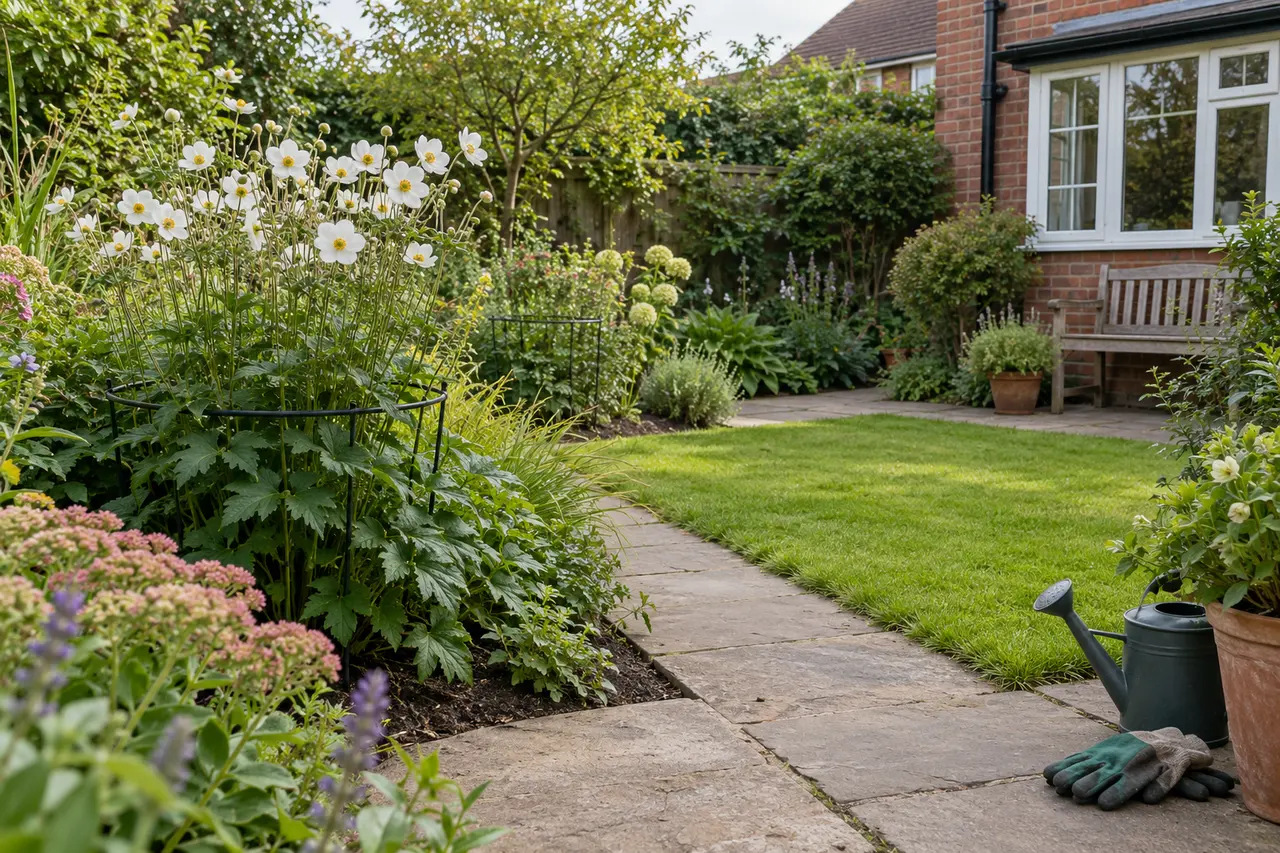
Supports after their active season
Hardware deliberately retained or released from the planting
Our later work locates frames and ties before cutting or raking around a clump that has died back. Hardware hidden by summer leaves can remain attached to material being gathered, so only the selected components are removed. We release the selected fastenings carefully around retained shoots, with the plant material and reusable structure identified as the parts separate.
Reusable rings and canes remain distinct from brittle ties or failed parts. We gather small fastening lengths as the operation progresses and keep them out of soft plant waste. Their size does not remove the need for collection: the visible frame’s departure is not the end of the task if loose pieces remain across the lawn margin where the next machine will operate.
Our year-round care guide gives context to seasonal changes while the actual removal follows the hardware still doing a useful job. Retained supports and the storage positions for released reusable items remain recorded. That record carries the retained supports and stored items into the next growing stage, giving subsequent attention an actual position and component reference.
- Our choice distinguishes a clump-supporting frame from an individual-stem arrangement.
- Existing ties are checked at their actual stem-contact points.
- Low support rings remain identifiable within the intended planted edge.
- Loose fastening pieces are collected before mowing returns beside the bed.
- Reusable structures stay separate from broken or discarded garden hardware.
Low hardware beside the grass
Mowing clear of the support’s full footprint
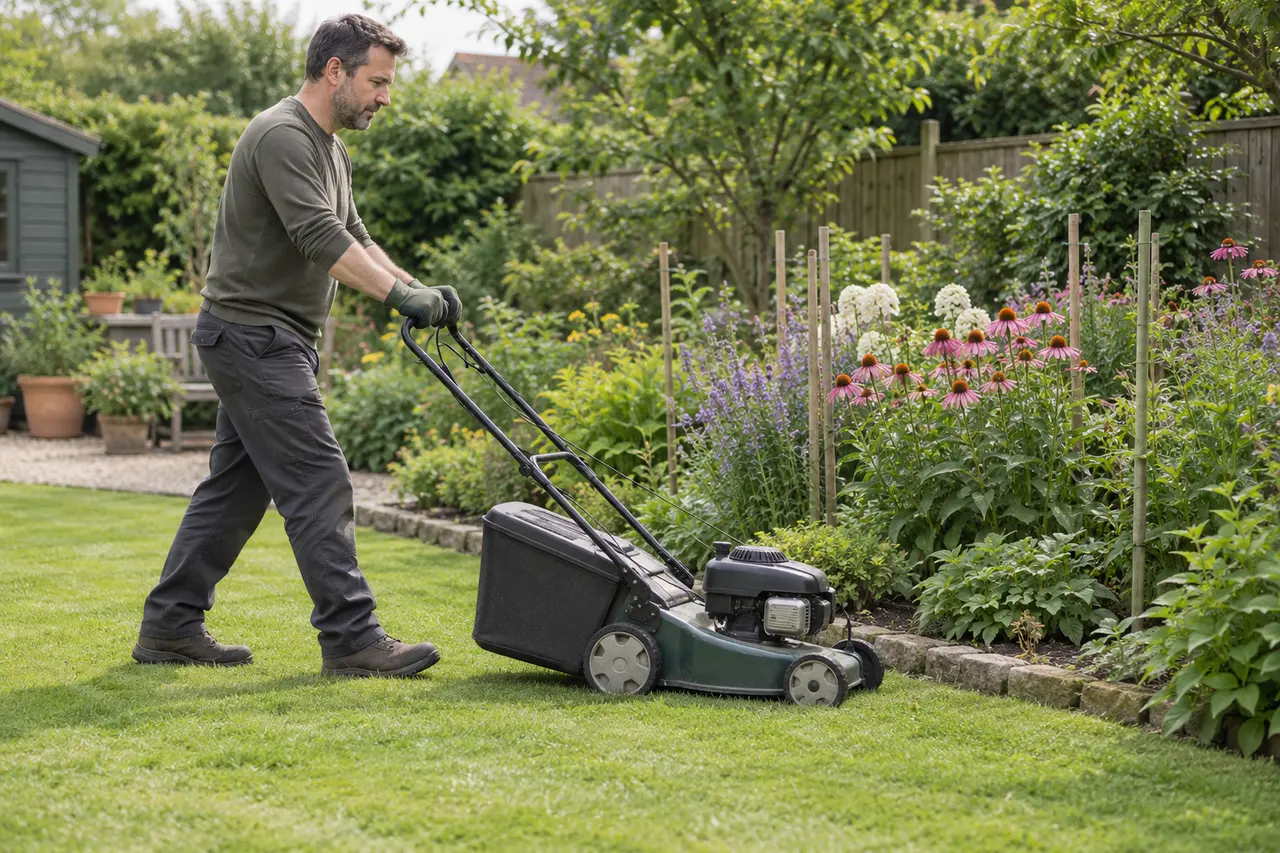
Before mowing, we follow the ground-level hardware as well as the foliage above it. A ring can extend beyond the leaves, and spare canes or fallen ties can lie along the grass edge. Our preparation gathers loose items and identifies the fixed hardware at the grass edge, defining the equipment route from the actual receiving surface.
The deck and wheels remain on suitable turf, with an appropriate finish beside the bed. Supported growth leaning towards that route receives its own position assessment, not automatic removal to speed up the pass. This protects the purpose of the earlier plant work: a flower retained and supported through the border operation is not cut away incidentally as the neighbouring lawn is completed.
We identify any recurring conflict between the frame’s actual footprint and the available lawn-cutting position as part of the continuing plant arrangement. A suitable support adjustment may help, or the planting arrangement may need another proposal. Ordinary cutting retains the established edge while that obstruction and its practical effect remain clear for the appropriate support or planting decision.
The hedge beside supported planting
Fastenings retained outside the boundary’s cutting movement
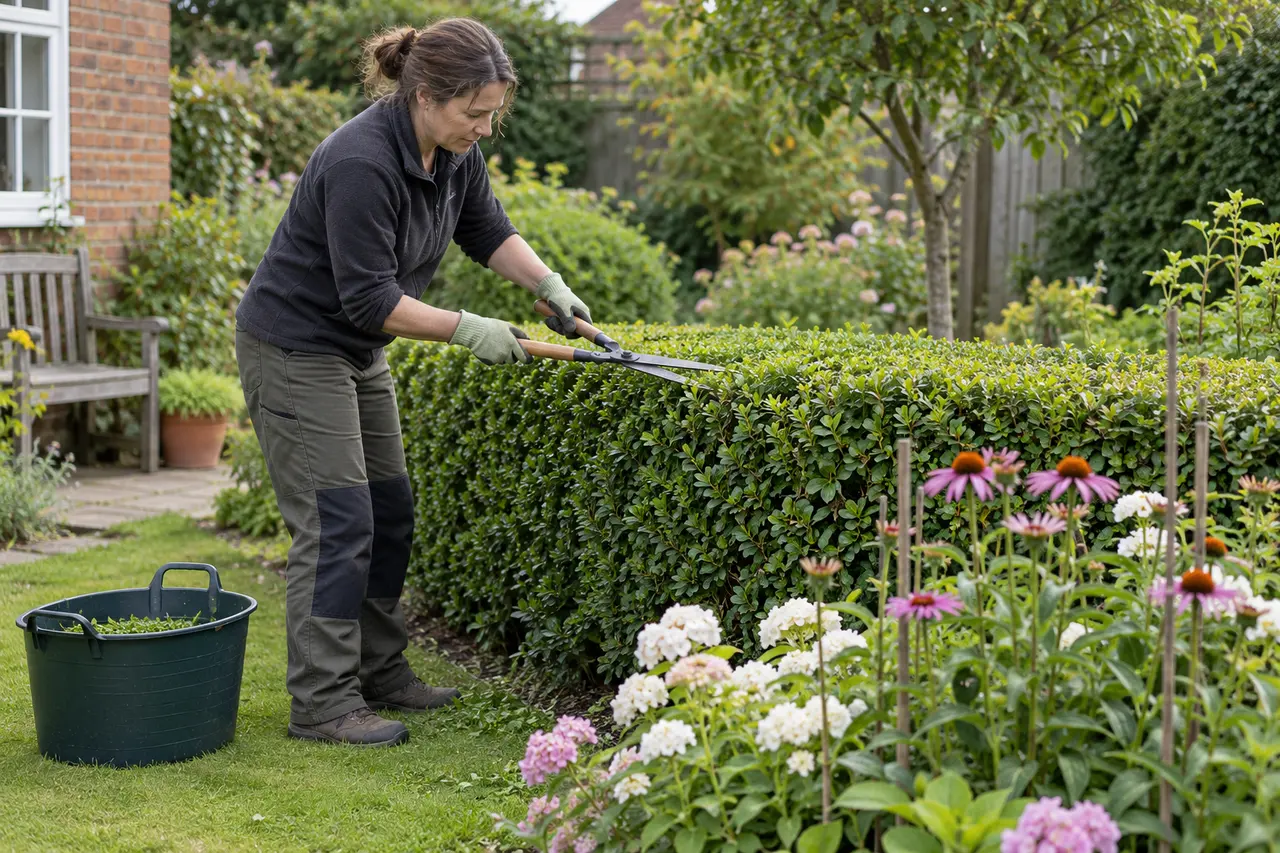
Our hedge preparation identifies nearby ties and framework before the tool moves along the selected face. A fastening supporting a neighbouring plant remains different from a hedge shoot in the same plane. The working route stays visible, with an uncertain attachment retained for identification. This keeps the clipping operation from severing a useful part of the adjacent support simply because it is thin and close to the new growth.
Suitable reachable extension is attended from a steady position with a receiving arrangement for the fragments. A crowded bed can restrict where a person stands or a sheet rests, and that limit remains part of the method. Our collection keeps pieces from lodging around support bases without flattening the plants beneath to create an apparently easier receiving surface for the higher cut.
Checks for nests being built or used can postpone the affected cutting, while heavy branches or work outside controlled reach require their own appropriate arrangement. Those constraints remain relevant even where the immediate purpose is to reveal a supported plant below. The hedge and the growth tied beside it keep separate instructions, so attending to one does not automatically authorise cutting the other.
Old pieces within accumulated growth
Collection that preserves the useful supporting structure
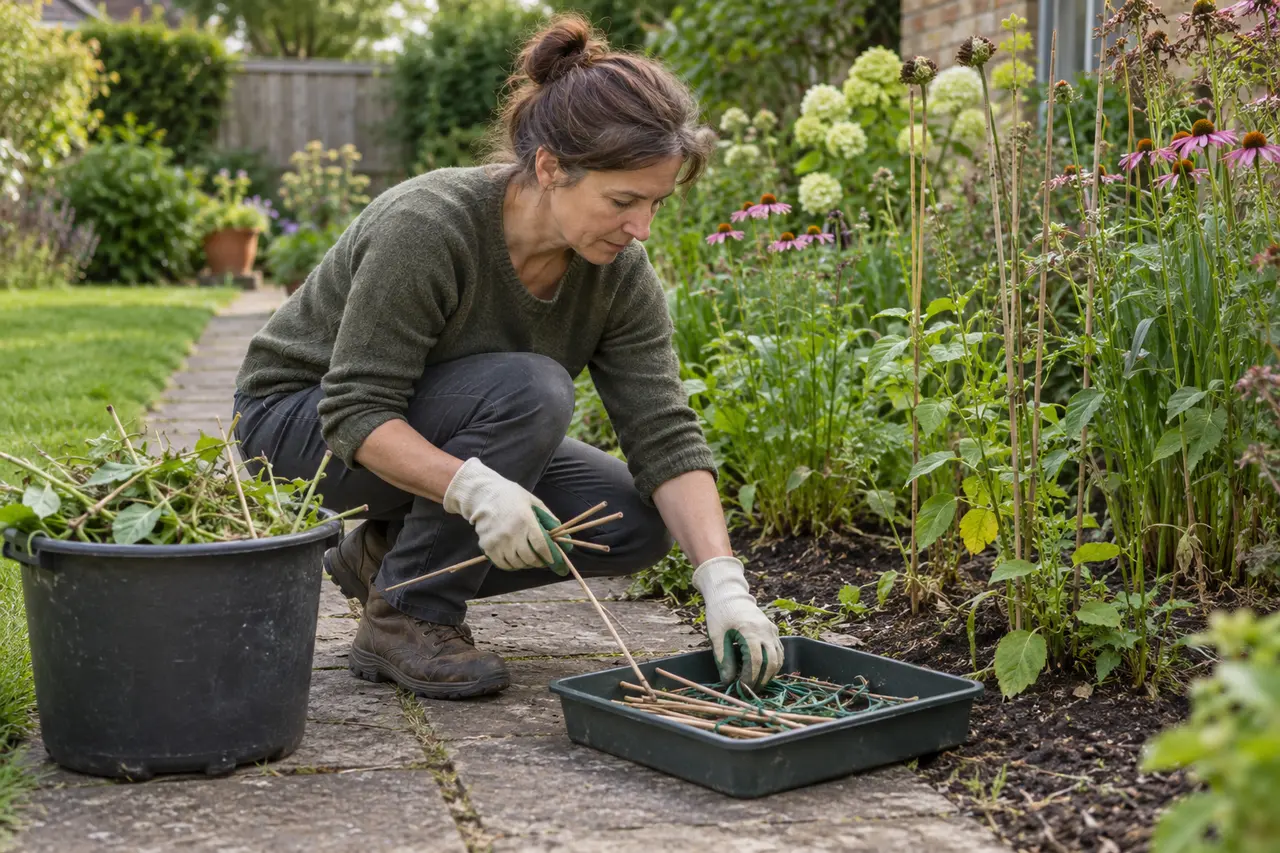
A garden clean-up can reveal old hardware as well as weeds, with our selection retaining plants and sound components meant to stay. We open a suitable working view to identify the old components and their connections before selecting and gathering the loose material included for removal. A cane passing through a clump is followed before movement, allowing detached unwanted pieces to be gathered without pulling retained stems out with them.
Our sorting separates metal, plastic and broken supports from green cuttings as collection progresses. The garden-waste guide provides context for those different destinations. We keep metal, plastic and sharp or unidentified pieces in their appropriate handling group, clear of the soft plant waste and retained soil.
The finish checks the exposed soil for loose fastening pieces and the retained stems for connections still serving a purpose. Reusable pieces go to the identified storage position, leaving the path and newly accessible plant-care area available after collection. The cleared area is then available for continuing plant attention with its useful support understood, not merely a more open view above discarded material still left at ground level.
Further services related to supported planting
Planting design with continuing support accounted for
Our garden-design proposal can relate tall and heavy-flowered plants to the supports and access their mature growth will need. That practical arrangement sits alongside colour and flowering period. We assess how suitable structure can remain within the bed, avoiding a choice whose later working needs repeatedly occupy the adjoining path or lawn. The proposed display therefore includes the future standing positions, support space and access needed as the selected plants develop towards their mature growth.
Young-tree ties assessed against the developing trunk
Our tree-care assessment can identify a tie pressing into bark or a trunk rubbing against its stake. Suitable support allows appropriate movement without constriction, while an unstable tree or damaged attachment needs its own response. We do not substitute another tight loop for that assessment, keeping the purpose of the stake and the tree’s developing condition separate from a general cosmetic tidy.
Paving water managed outside a pond edge
Our jet washing arrangement identifies the pond boundary and a suitable method of controlling used water before the operation reaches it. Dirty runoff and any product used on the paving stay outside the water feature. Surface compatibility does not establish harmlessness in pond water, and the hard-surface task remains separate from pond cleaning. The actual edge and flow route govern the working position.
An identified hopper within the roof-drainage task
A gutter-cleaning proposal can include the collector box feeding a downpipe where that component is specifically identified. We relate the hopper’s actual position to its incoming water routes, keeping its included extent and suitable method explicit alongside the separate eaves channel. Its inclusion and suitable method remain explicit, keeping the booked result connected to the actual box and its access.
Protective tree netting separated at handover
Where a cut Christmas tree arrives wrapped for handling, our handover follows the relevant opening instructions. The netting serves the handling stage, with the branches allowed to open for their appropriate display arrangement after the relevant handover instructions are followed. We gather the removed wrap into its suitable separate receiving load, leaving the opened tree available for its next indoor display stage.
Support checks within the gardening work
The general gardening rates below are a guide. Inspecting and adjusting individual plants can take careful hand work alongside the larger cutting jobs.
| Gardening time | Published guide rate |
|---|---|
| First hour | £83 |
| Each subsequent hour | £65 |
GBP guide rates. Confirm the complete scope, any support materials, waste arrangements, VAT treatment and applicable parking or access costs.
Questions about our plant-support work
How does early positioning help the support operation?
We can establish suitable insertion points before fully developed growth fills the receiving space. Once stems have fallen, their condition needs assessment before lifting the clump around a new frame. The method follows that actual state, because fitting a support cannot make a snapped connection intact even where the plant appears more upright afterwards.
How do you avoid constricting a supported clump?
Our arrangement follows the plant’s natural habit with suitable room around individual stems for movement, growth and later attention to their contact points. A dense bundle can trap leaves and concentrate strain at that point. The completed support gives that living form its suitable hold while leaves and retained stems remain distinct within the developing clump.
What happens when leaves conceal a fastening?
We find the actual stem-contact point before adjustment or cutting, checking that neighbouring stems have not entered the same loop. The loose end visible outside the foliage does not describe the fit underneath. Our decision then follows whether that retained fastening remains suitable or needs an appropriate change for the plant’s present growth.
How are rings left in the bed after dieback identified?
We retain them only as deliberate suitable components with their positions understandable for later care. They stay clear of becoming hidden mowing-edge obstacles, while loose, failed or unwanted pieces follow collection. The earlier presence of a plant inside a ring is not itself the reason to leave every associated item scattered after the top growth has gone.
Does support checking include permanent framework repairs?
Our tie or temporary-support task is distinguished from the fence, trellis or other permanent structure behind it. A damaged panel remains identifiable before it receives more growth or load. Any necessary permanent repair has its own suitable arrangement, with the plant’s current tie or temporary-support attention identified separately within the work.
Supported growth with room for continuing care
Our Ealing gardening work can connect suitable ties and frames with the flowers, grass margin and neighbouring planting around them. The supported stem remains able to develop, and its contact points stay identifiable for later attention while the discarded pieces have their own completed collection.