

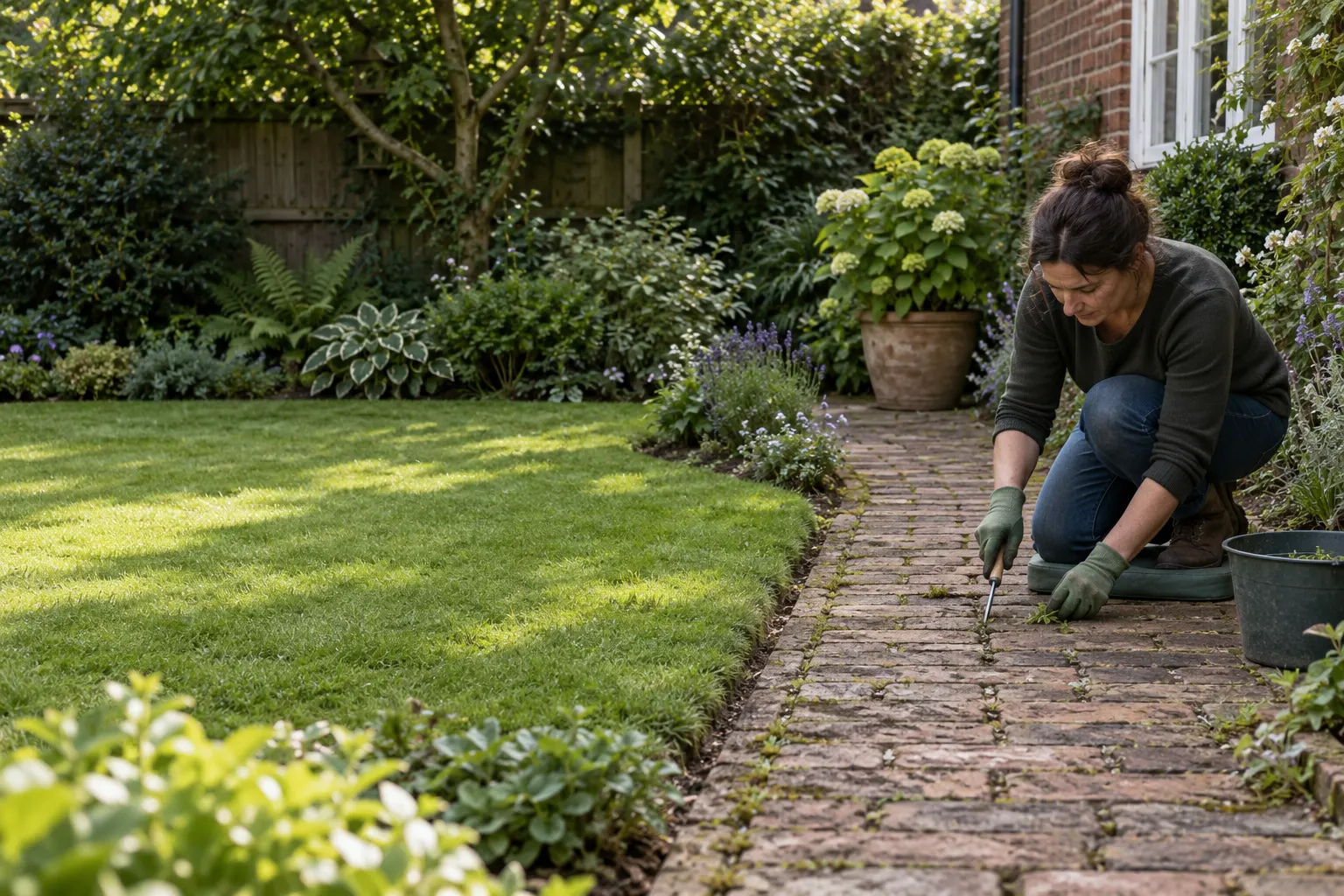
Close hand work through paved garden areas
Gardeners Acton
Our gardeners remove accessible weeds from paving joints, gather loose build-up and care for the beds and grass alongside the path. We work on the growth actually rooted there, preserving suitable joint material and keeping access points visible. Surface maintenance is distinguished from repairs to the paving itself.
- How do you tackle weeds between slabs? We separate surface sweeping from suitable root-level hand work, using the condition of each joint to guide the method.
- Can a planted gap remain part of the path? We retain intentional planting in the selected gaps, attending to unwanted growth and spread across the walking line separately.
Paved-area weeding within the garden visit
What does your Acton joint-weeding work cover?
We assess the growth and receiving surface, then use suitable hand methods on accessible weeds. Small seedlings and established roots receive attention suited to their actual connection and the available gap. Sound joint material remains in place as the plant is loosened and collected. Repairs, repointing and relaying remain separate operations, with any relevant surface issue identified alongside the completed weeding.
How do you assess greenery in a paving joint?
Our inspection separates plants near the surface from substantial rooted growth and checks the joint for movement, broken edges or failed material. Those observations guide the suitable hand operation. Where the revealed paving needs construction attention, we identify that separately, keeping its condition clear beside the plant-removal result and giving the next appropriate task a usable starting point.
The rooted plant and its joint
Controlled removal within the available gap
We begin with the growing point and the space surrounding it. A narrow line can hold several seedlings or one established plant occupying more of the joint. Our hand-tool selection follows that distinction, loosening the accessible growth with the paving visible. If a block moves during extraction, the affected work stops for the surface condition and suitable next approach to be established.
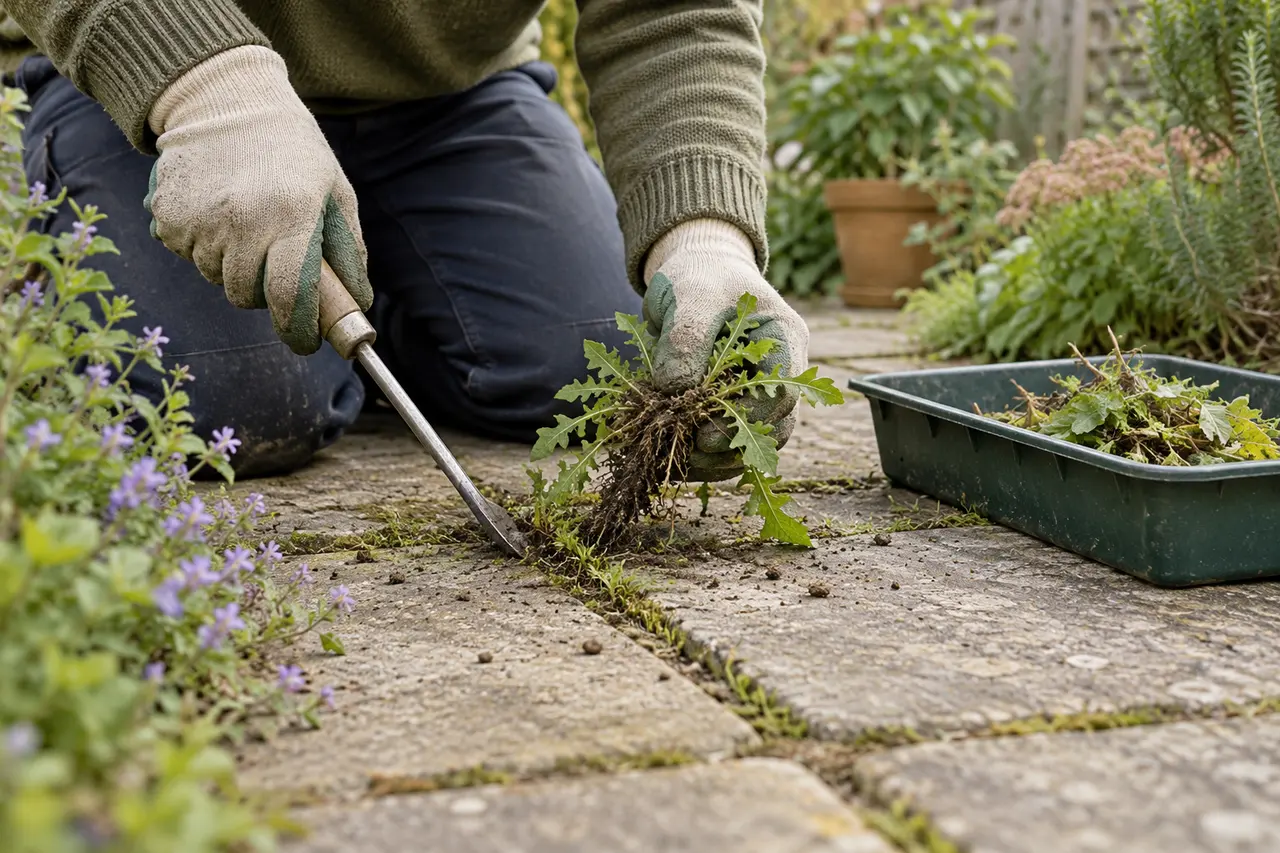
A suitable narrow tool allows accessible growth to be worked along the gap without forcing a broader implement over the paving. We direct the movement at the weed, gather what has been loosened and preserve sound jointing material around it. An empty-looking trench is not our measure of successful weeding: the intended result is removal of the specified plant while the serviceable joint remains.
The hand methods described in RHS advice on weeds in hard surfaces provide context for this work. Where substantial vegetation has hidden a path, a related garden clean-up can first uncover a usable working section. We expose that surface in manageable portions so the remaining planting, joint material and paved edges can be identified. Any separate repair revealed by that progress remains recorded alongside the vegetation that has been removed.
Sweeping and root-level work
Separate results for loose debris and living weeds
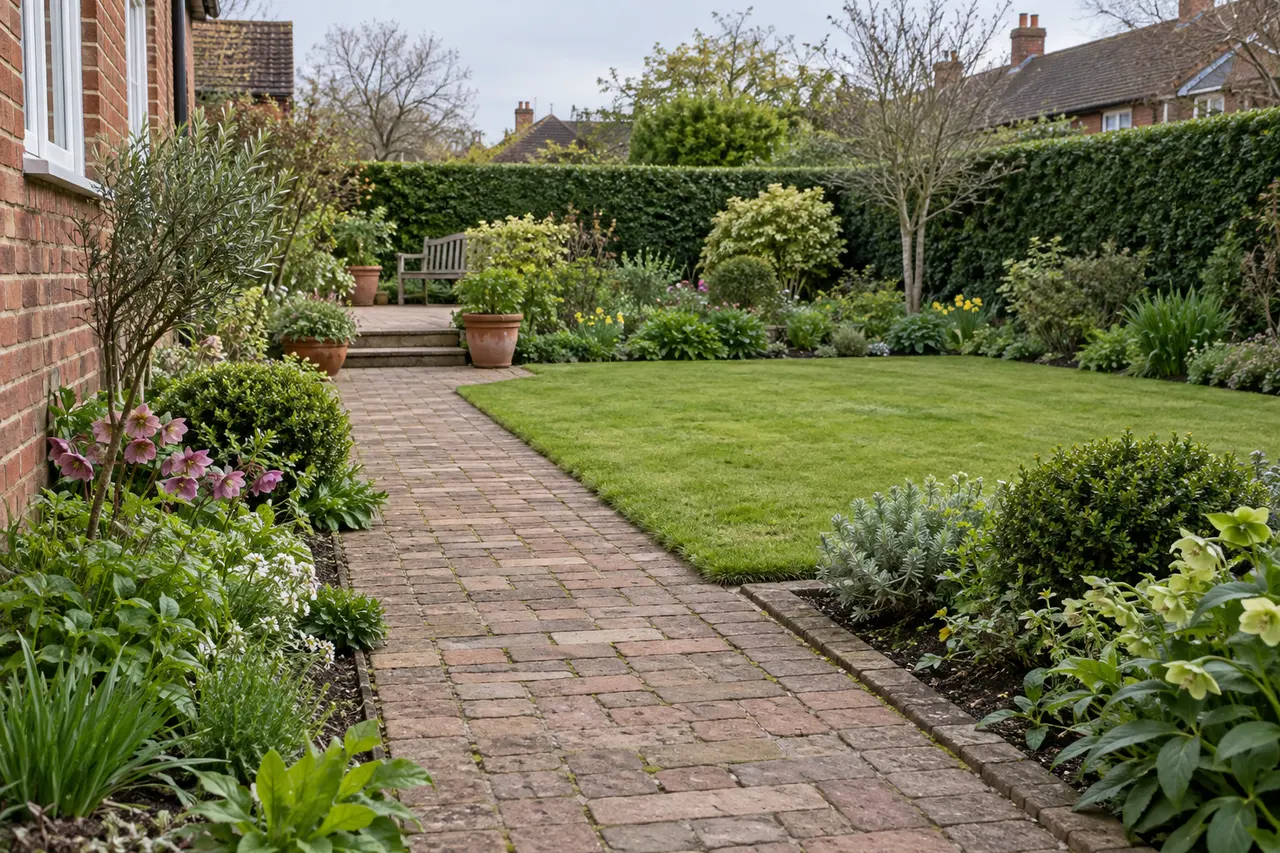
Our Garden maintenance attends first to loose material on the path and then to plants rooted within it. Sweeping gathers the leaves, soil fragments and surface build-up, giving the next hand operation a clearer view. We identify any weeds remaining in the joints and select the suitable accessible method for their roots, completing the two different practical stages within the working area.
Collection follows each manageable worked section. We gather the released roots and stems before proceeding farther, keeping them out of the joints just attended to. A suitable nearby container gives that material a destination without filling the walking line. This sequence leaves the completed portion visible and avoids repeatedly sweeping the same loose weeds from one end of the path to the other.
A narrow opening can limit the root accessible through it. We gather the material actually released and identify any connection remaining beside or beneath the joint. The finished visible line then provides a clear reference for subsequent care and any returning growth. This keeps the useful surface result connected to the real extent of the hand work completed at that point.
The connection to adjoining beds
Weed removal follows the actual rooting point
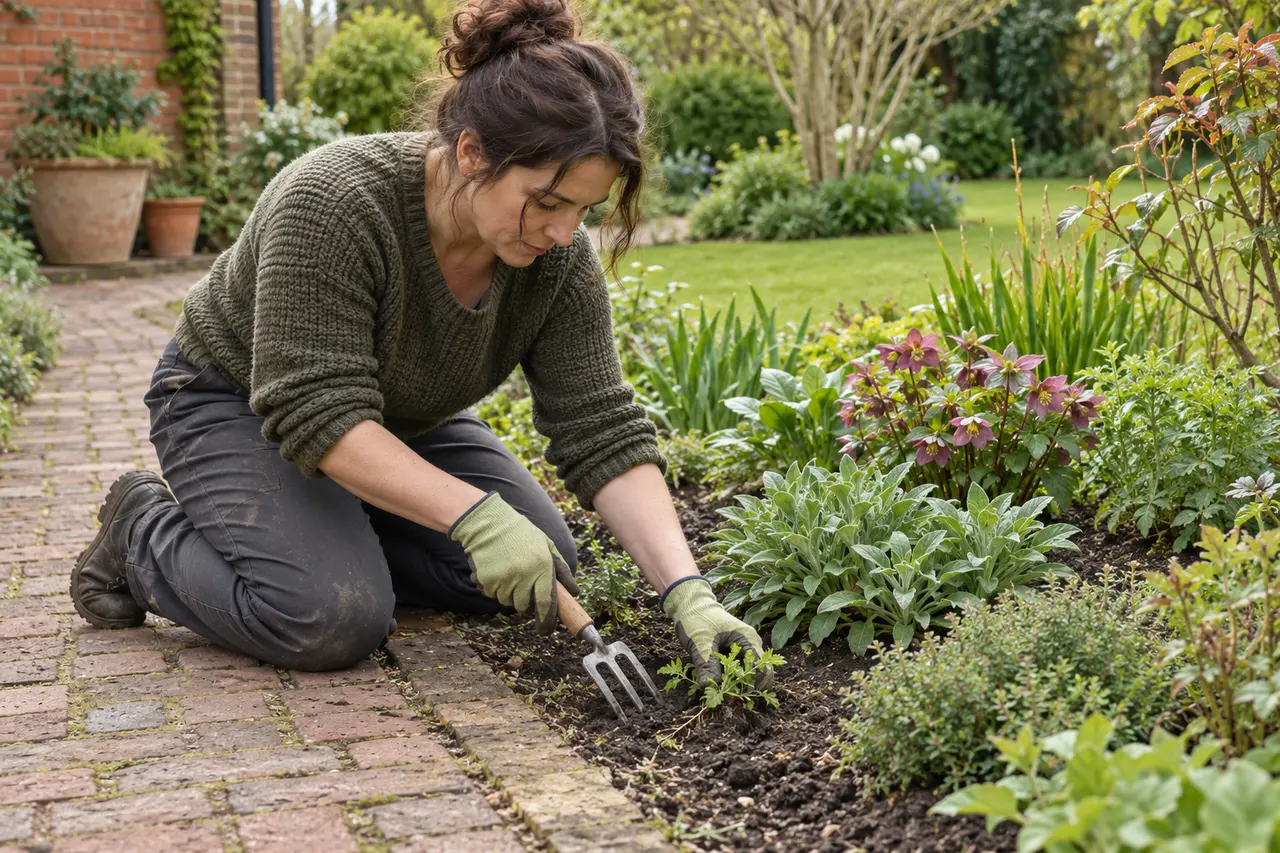
A stem resting on a slab can originate in the adjoining bed. Our gardeners follow that connection before selecting the working point, distinguishing wanted trailing planting from unwanted growth crossing the same surface. The resulting operation reaches the identified root position with an appropriate hand method, keeping the plant’s origin and the condition of the neighbouring joint visible through removal.
For roots in planted soil, our hand work follows the retained plants sharing that margin. Accessible weeds are loosened locally, and detached lengths are gathered clear of neighbouring foliage. Any entanglement with wanted roots is assessed before further extraction, defining the portion that can suitably be completed. The bed’s occupants remain seated while the removal progresses through the reachable identified growth.
Any planting position exposed during that work is assessed against the existing occupants. Roots or seasonally absent top growth may already use an apparently open gap. Where new planting is part of the task, we relate it to the receiving conditions and eventual spread. The space revealed by weeding is therefore evaluated as living bed space, not automatically filled because the soil has become visible.
- Our tool selection follows the weed’s accessible growing point.
- Sound joint material stays out of the removed vegetation.
- Released roots are gathered before the next path section is worked.
- Trailing stems are traced back to their real rooting position.
- Grass finishing leaves existing access covers recognisable.
Grass around inspection points
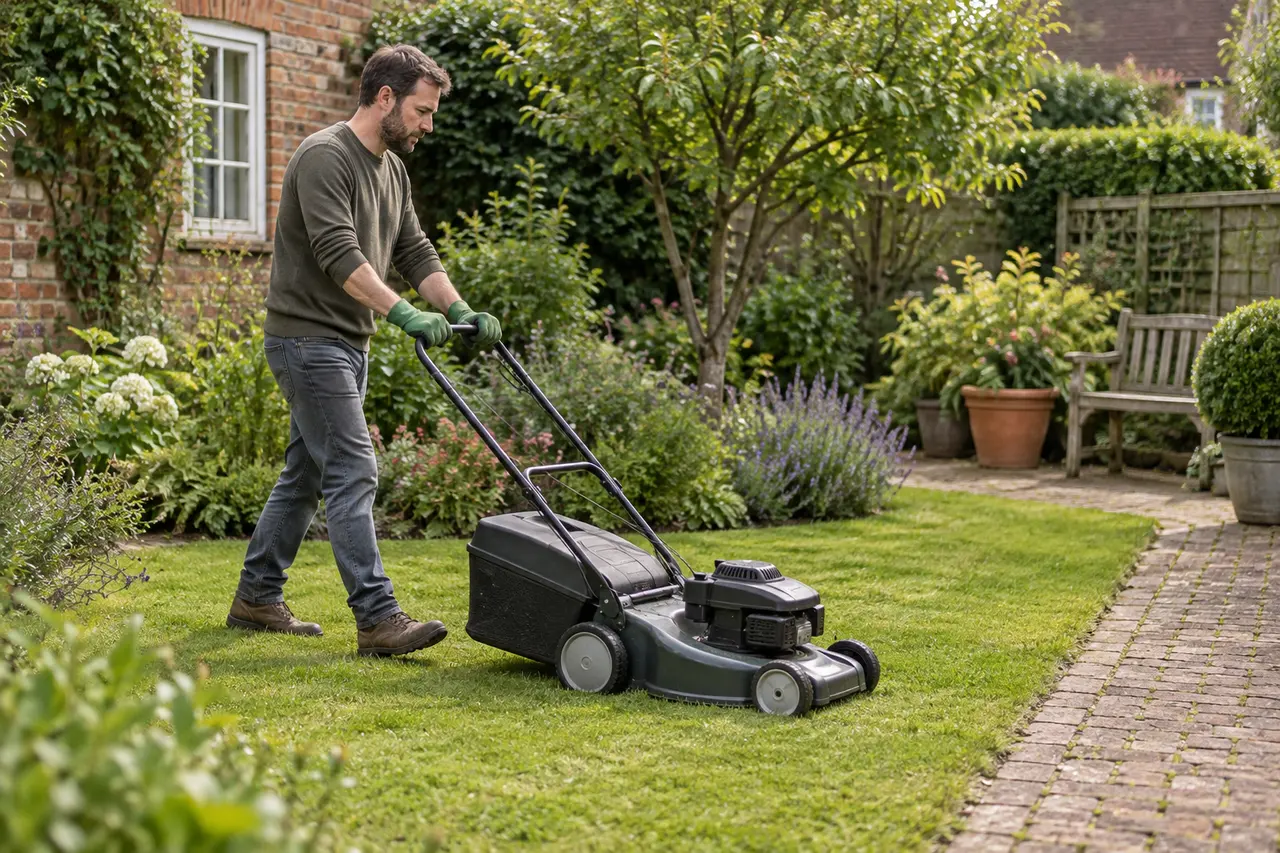
Mowing with access-cover edges kept visible
Before mowing, we locate covers within or beside the grass and inspect their visible surroundings from a suitable position. A rim can remain hidden even when the main cover is obvious. Our route avoids using the cutting deck to discover that edge, and the appearance of a level surface is not taken as assurance that a cover will support equipment.
The grass finish keeps the access point identifiable. We gather loose clippings without packing them into a recess and keep displaced bed soil away from the cover. Our attention concerns the surrounding grass and reachable margin, not opening or repairing the service beneath. That distinction leaves the surface feature available for its actual purpose after the gardening has been completed.
Across the remaining lawn, we follow a route suited to the grass condition and keep objects and collected weeding material clear of the cutting area. Finishing connects the path, turf and access point without hiding one beneath another. The customer receives an understandable boundary between those features, with no loose clearance pile left in the place needed for subsequent inspection or ordinary passage.
Hedge material above the path
Clipping collected away from freshly worked joints
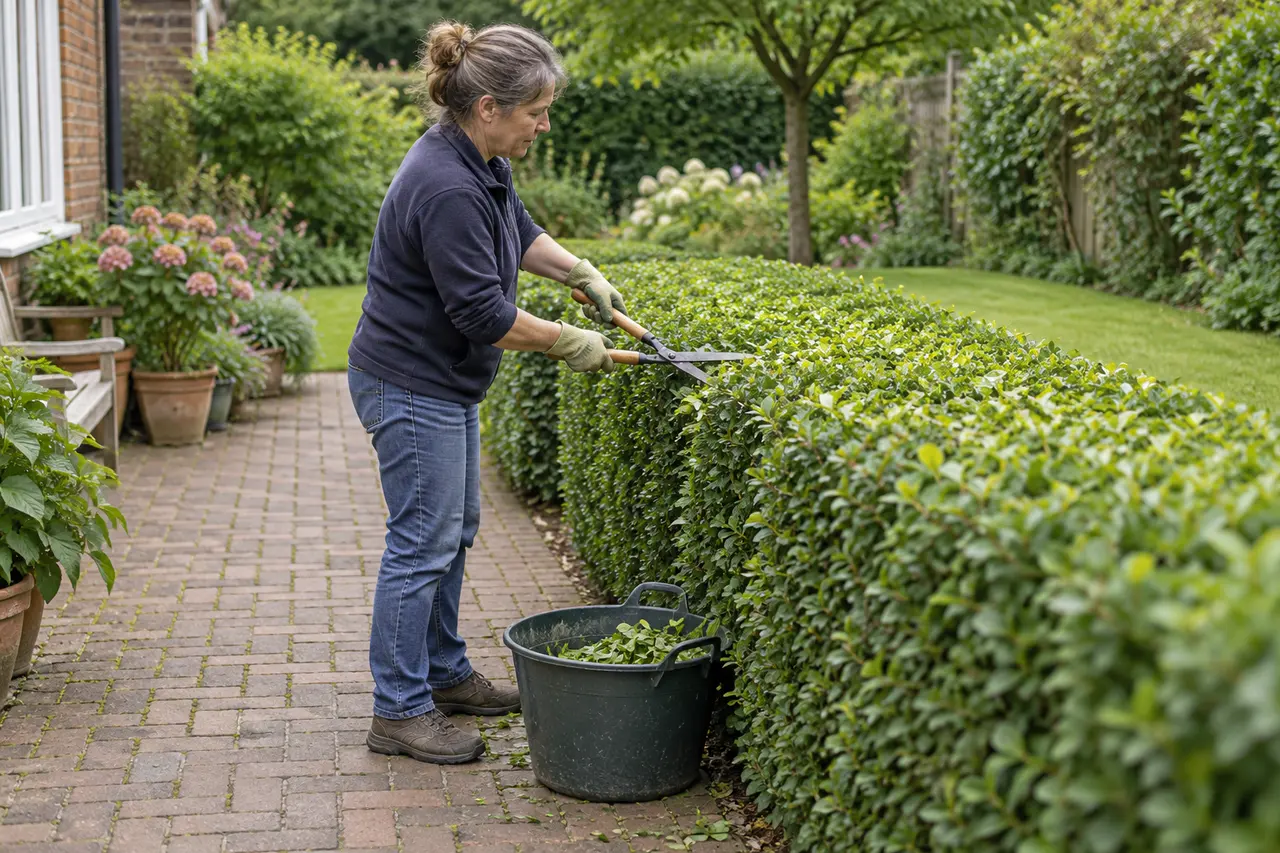
Where a hedge overhangs paving, our trimming sequence includes a receiving arrangement for its fragments. We relate sheets or controlled gathering to nearby plants and the stable position available for cutting. Manageable sections keep material accessible as it falls, with close collection beneath the lower face so the freshly weeded joints remain identifiable throughout the boundary work.
On suitable reachable growth, we follow the hedge’s intended outline and gather the load through manageable sections. Once the blades have stopped, accessible pieces below the face are lifted or swept with care for the joint condition. That collection separates detached hedge fragments from the material belonging between the stones, leaving the receiving paving clear for its appropriate continued use.
Our pre-cutting checks include nests being built or used, with disturbing work postponed where necessary. The usable reach and the proposed reduction also govern the operation. A heavier change or growth outside a controlled working position is assessed separately, while suitable accessible collection and path work can retain their own defined purpose.
Seasonal surface collection
Loose build-up removed without excavating joints
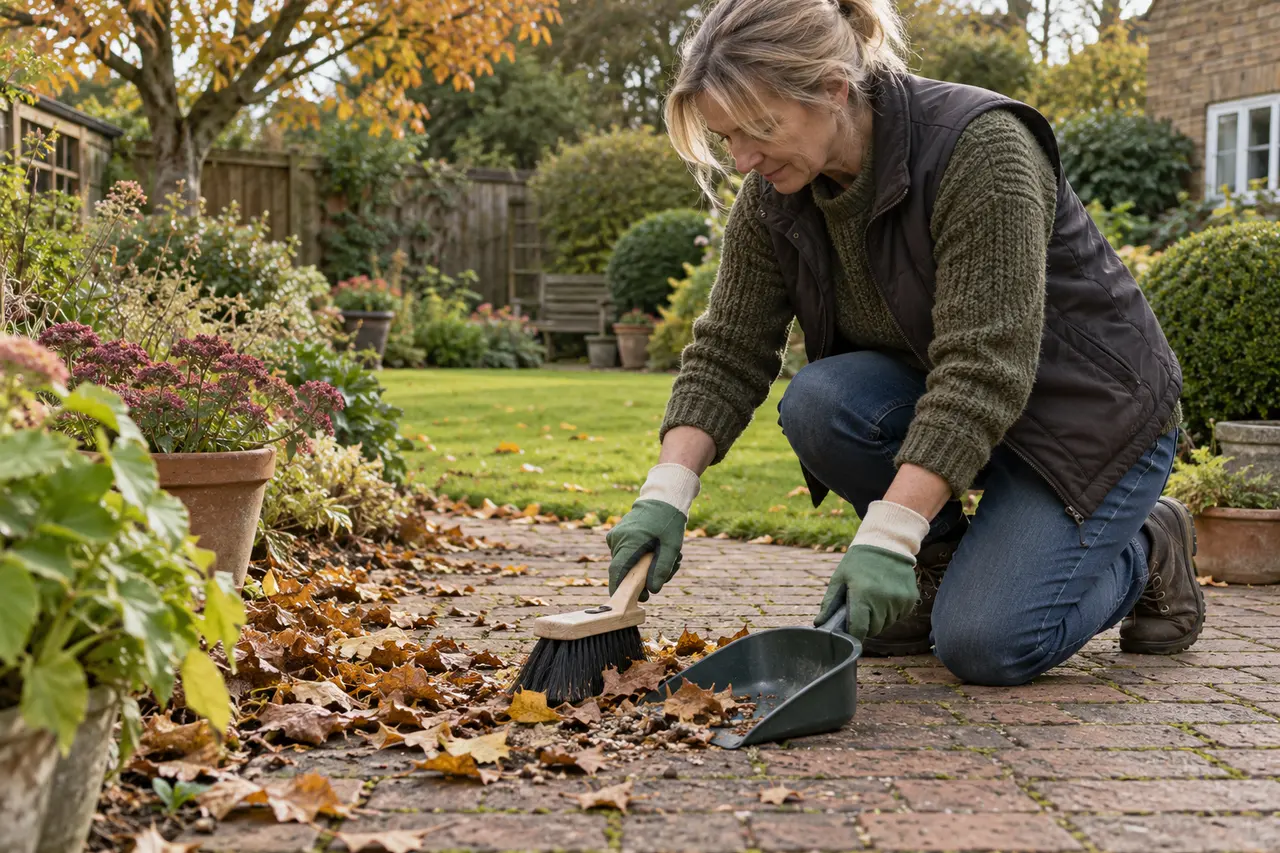
Fine leaves and plant fragments collect particularly where a border meets the walking surface. We lift the loose layer with a suitable brush and controlled gathering for the paving condition. Sound jointing stays in place while its surface is exposed, allowing the next inspection to follow the actual line and any rooted plants that have developed within it.
Our seasonal garden tasks can include small collections after leaves and stems spread over the route. The receiving container stays outside the section already cleared, and the progression moves each gathered portion towards its identified destination. This leaves a visible sequence of finished path behind the work, with suitable access retained for reaching the next section still carrying loose material.
The gathered load follows its intended handling, with litter and broken objects separate from vegetation. The garden-waste guide explains those material differences alongside the practical collection. Removing the loose layer exposes the joint for subsequent inspection, so later attention can identify fresh plants and follow their roots with a usable view of the paved surface around them.
Other services connected to the garden’s surfaces
Planting intentions within a path layout
Our garden-design brief distinguishes deliberately planted gaps from joints intended to remain clear. The selected low plants, positions and management of spread form part of that arrangement. We relate the intended growth to the usable walking line and the condition of surrounding paving, giving intentional planting its suitable care while accessible unwanted weeds are addressed elsewhere along the path.
Tree work with species-appropriate timing
For tree surgery, our proposal relates pruning to the particular species and selected operation. Cherries and plums have timing considerations distinct from some other trees, and we retain those requirements when coordinating related garden tasks. The suitable window remains attached to the actual tree and treatment, with the surrounding routine work placed in a sequence that respects its appropriate stage.
Paving washing and subsequent joint finishing
A quotation for jet washing identifies the cleaning operation and whether any required replenishment of joint material is included or remains separate. The paving system guides the appropriate material and finishing method. This gives the customer a defined result for the wash and a clear description of any later stage needed to complete the surface arrangement after that wet operation.
Eaves-channel clearance below a roof junction
Our gutter-cleaning work identifies the relevant roof valley and the eaves channel receiving its water or loose material. That view helps define the booked run and its deposit. Clearance at the higher junction has its own appropriate access and method, while the channel task retains its specified result below. Both positions remain distinguishable within the building arrangement being assessed.
Collection preparation for a water-holding tree stand
When a cut Christmas tree is collected, the handling arrangement accounts for its support and any water still present. Preparation follows the stand’s instructions so separation and water handling do not leave a leaking load along the exit route. The specified collection makes clear what handling is involved, without silently assuming that every support will be emptied or dismantled by the collector during removal.
Joint-weeding time and receiving conditions
These general gardening rates are a guide. A small paved area with established rooted growth can require more close work than a larger surface needing only loose material collected.
| General gardening time | Guide rate |
|---|---|
| First hour | £83 |
| Each subsequent hour | £65 |
Prices are GBP. Confirm the work and removal scope, VAT treatment and any applicable parking or access charges in the complete quotation.
Questions about our paved-area garden care
What happens when a paving block moves during weeding?
We stop the affected extraction and distinguish that surface condition from the weed itself. Removing a plant does not restore bedding or support underneath the block. The loose area needs an appropriate separate assessment, with our hand work confined to what can be completed without making the movement worse.
How do you treat roots left after sweeping?
Our sweeping first removes the loose layer and exposes remaining rooted growth for suitable hand attention. The two stages have their own results within the overall task: surface debris gathered, then accessible selected weeds worked through at their joints. We retain the actual root-removal extent clearly so later attention can follow any returning plant from a visible prepared starting point.
How is intentional planting in joints preserved?
We distinguish the selected planted gaps from joints scheduled for weed removal. Their growth is maintained within the intended position so the path remains a usable walking surface. The operation addresses unwanted spread without automatically removing the whole planted feature merely because some surrounding joints require weeding.
Does joint weeding include repointing?
Our weeding follows plants growing in the joints and gathers the accessible material released. Repointing has a separate construction method and purpose. Where a revealed joint needs that additional attention, we identify its condition alongside the completed plant work, leaving a clear basis for the next suitable repair proposal and keeping serviceable surrounding material in place.
How do surface conditions affect hand weeding?
We select the hand method from the actual footing, joint material and growth. Moist receiving material can help some accessible weeds release, while slippery paving or a vulnerable joint can limit the operation. Our route and tool movement follow a suitable working opportunity, with the selected plant and surrounding surface visible as each portion is loosened and gathered.
A clearer path through the planted garden
Our paved-area work follows rooted growth, collects the released material and preserves the joints and access features that remain useful. The wider gardening services can connect that detailed attention in Acton with suitable care for the grass and planting beyond the path.