

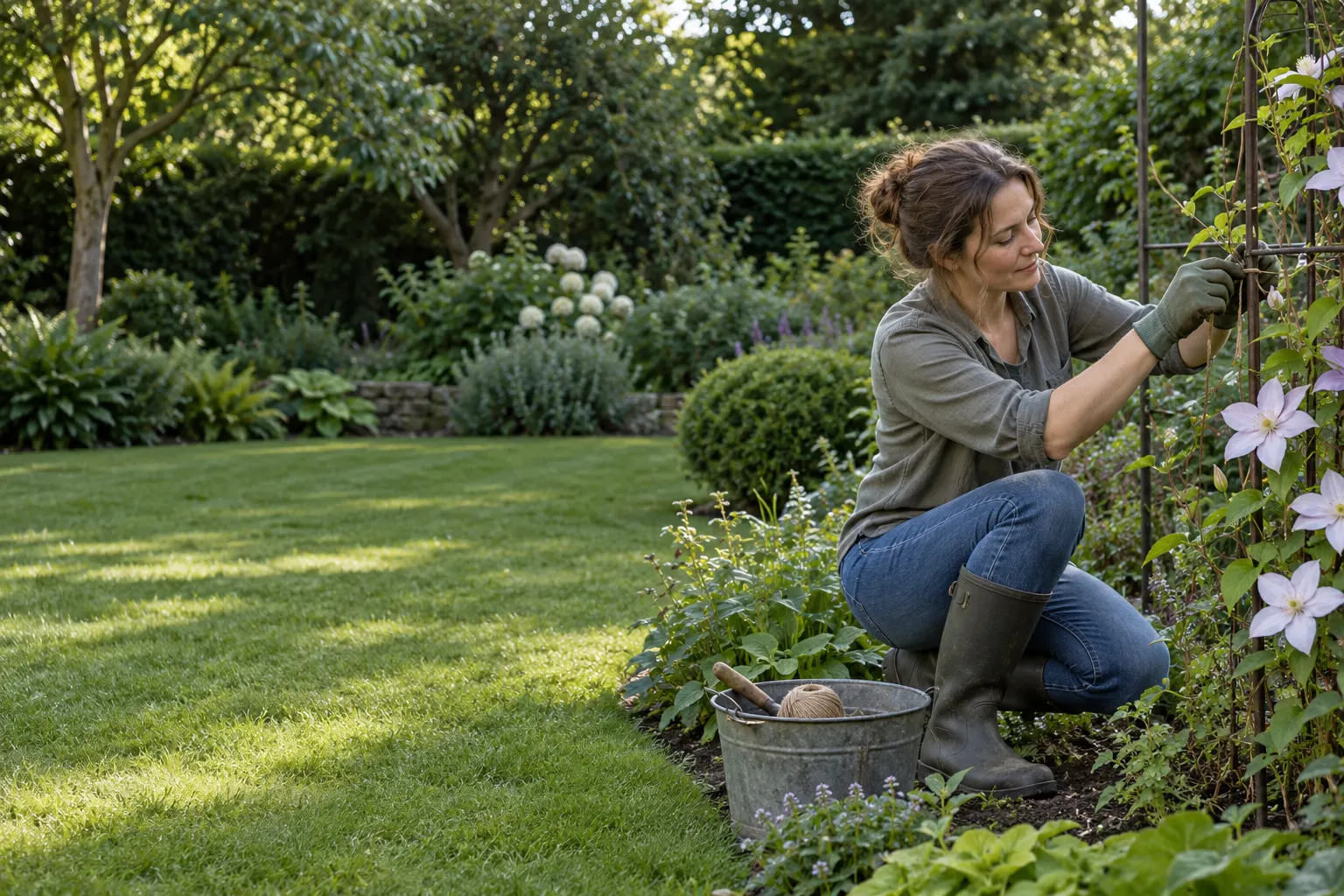
Identified clematis cared for on its existing framework
Gardeners Beckenham
We prune and guide suitable reachable clematis as individual plants, following the growth needed for their flowering group. Our gardeners separate selected cut vines from the support, attend to fresh extension and maintain the lawn and planting around the base. A shared trellis can therefore retain different plants with different care requirements.
- How do you work with an unknown clematis? We use reliable planting and flowering information before selecting a substantial cut, keeping uncertain growth identifiable while its treatment is established.
- Do your methods account for non-climbing clematis? We follow the actual plant’s habit, distinguishing herbaceous non-climbing types from vines that hold a framework with their leaf stalks.
The individual plant behind the shared trellis
How do you prune clematis sharing one support?
We trace reachable stems to their separate bases and identify the flowering regime for each clematis. Different ages of wood can carry the coming flowers even where two plants use the same panel. Our selected cuts follow those individual connections, leaving the intended stems in place and the released material distinguishable for collection as the operation progresses across the framework.
How do you guide a climbing clematis?
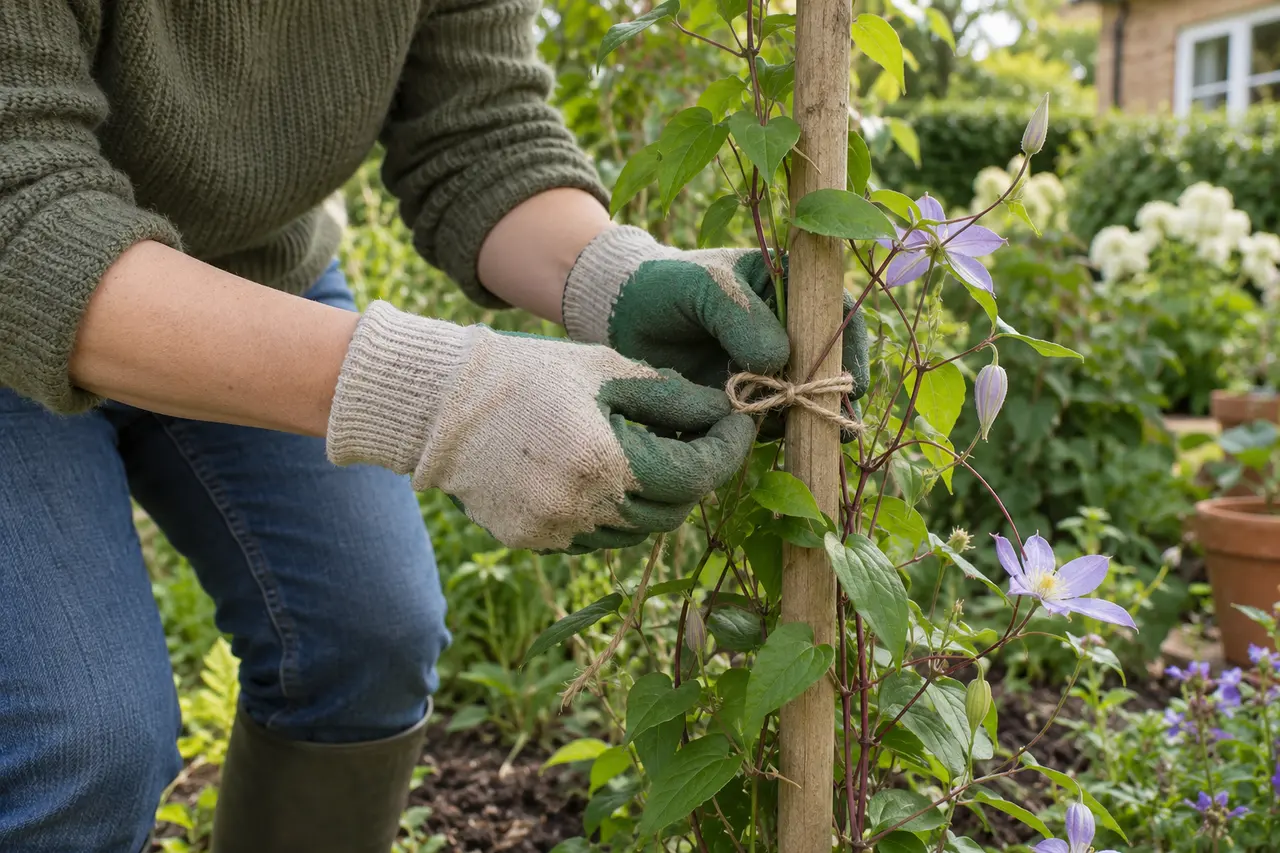
Our training works with the leaf-stalk attachments that hold a climbing clematis to slender supports. Soft extension can receive suitable temporary guidance with loose ties and room for its own hold to develop. We review each stem’s attachment and new reach as growth progresses, maintaining a visible spread of individual shoots across the framework for subsequent care.
Plant identity and flowering wood
Pruning selected for the growth that will flower
Our preparation connects a reliable name, planting record or flowering history with the clematis present. We follow accessible stems from the base towards the support before selecting cuts. Where two plants overlap, each origin remains distinguishable throughout the work, allowing their separate treatments to follow the appropriate stems while the shared panel retains the intended flowering arrangement.
The established-clematis pruning groups distinguish early flowers on previous growth, early-summer flowers from older shoots and later flowers on current-season growth. Our choice follows that difference. A suitable group-three plant may receive its appropriate late-winter cut while an early-flowering neighbour needs little routine shortening. The low-cut instruction for the first plant is not extended across the support simply because the second vine stands beside it.
Within the garden maintenance, we retain the stems identified for the intended display and work from a stable reachable position. The selected cutting point remains visible, and one identified piece is completed before another is chosen. That controlled progression avoids producing a row of severed tops first and only afterwards discovering that some of the underlying growth should have remained part of the flowering framework.
- Our stem tracing distinguishes clematis that overlap on the same panel.
- Plant identification stays connected to its useful flowering record.
- Selected cuts retain the wood required by the relevant pruning group.
- Cut vine lengths are gathered before the nearby grass operation.
- Fresh extension receives guidance without tight winding around a post.
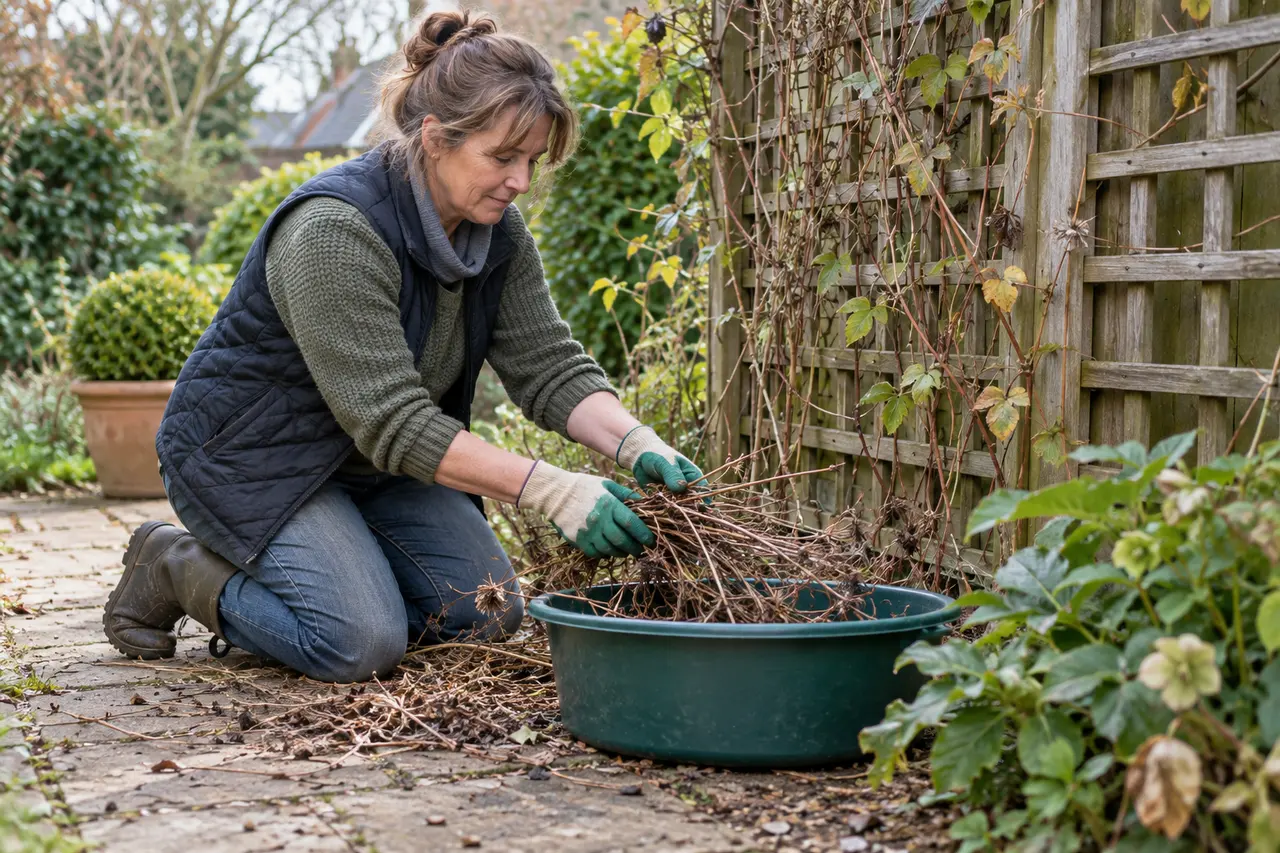
Selected vines released from the frame
Leaf-stalk attachments separated from retained supports
Climbing clematis can hold one length against the framework through several curled leaf stalks. Our garden clean-up follows those smaller attachments with the main stem. At each point, the selected plant tissue is identified alongside mesh, wire and adjoining living growth. We release the chosen attachments through manageable portions, keeping retained support and stems visible as the detached vine is gathered.
We release the chosen attachments with the relevant strand and its surroundings visible. A thin brown plant loop can lie close to a wire without making them the same material. Freed portions go into the cut-vine collection before work moves to the next attachment. Small remaining loops receive individual attention where suitable, avoiding a forceful pull across the panel that would load other stems still being retained.
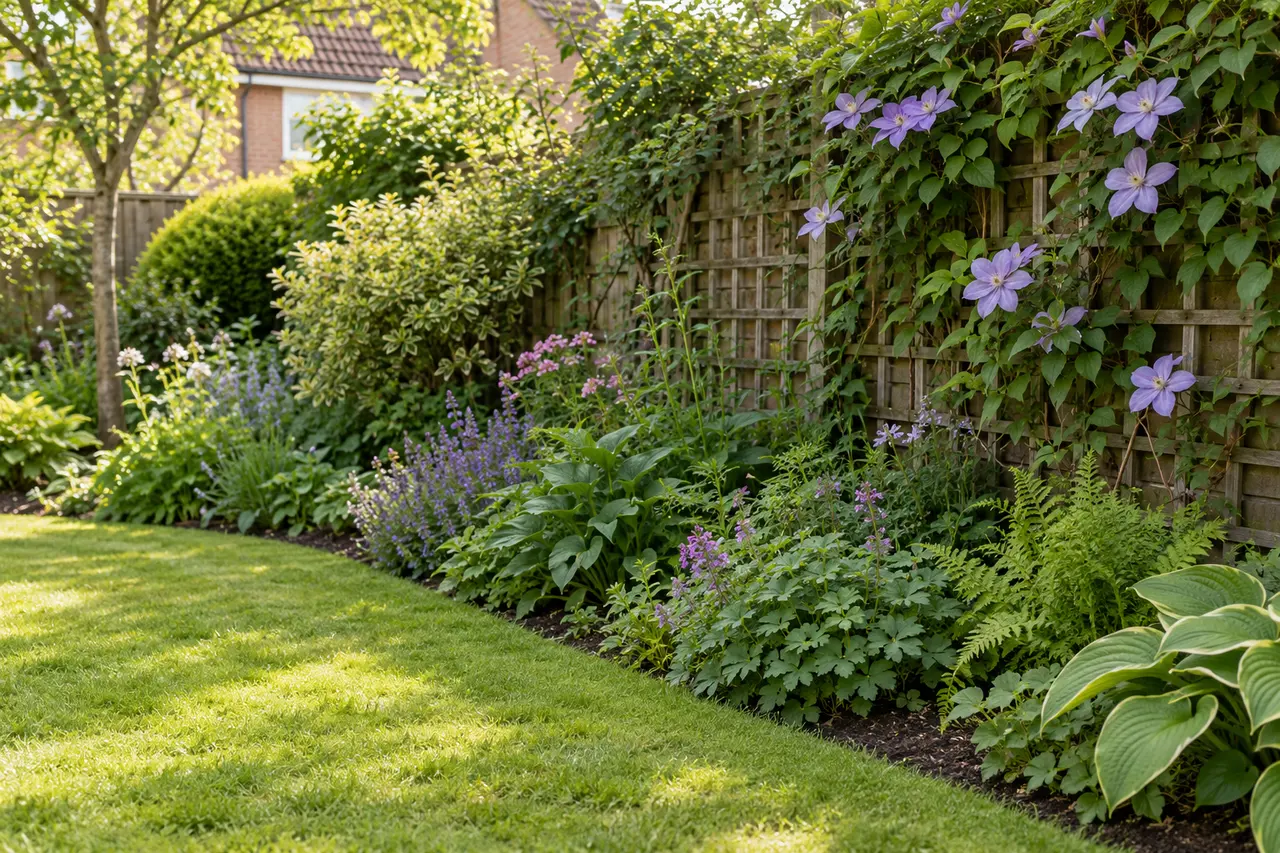
Flexible shoots and their next position
Training fresh extension across the available framework
Our new-growth attention spreads suitable flexible shoots across reachable parts of the framework. We follow a gentle direction appropriate to each stem and its existing attachment. The developing vine remains supported while fresh extension is positioned to occupy the intended space, with already fixed sections assessed before movement so the actual hold and flexibility guide each training adjustment.
Where temporary guidance is useful, we use suitable loose figure-of-eight ties with room between stem and support. A visible fastening holds its intended position clear of the growing tip, and its fit remains available for later checks. This supports the plant’s developing attachment while allowing the next extension to be followed from the actual point already guided on the framework.
We assess the receiving framework before bringing additional stems onto it. Loose panels, projecting fixings and broken wires are identified for their appropriate separate attention. Suitable training then uses the retained sound arrangement, with the plant’s route and the structure’s condition kept visible together. This leaves the support clear for continued care as the new foliage develops across its selected position.
The mower’s clearance beside the trellis
Grass cutting with the whole equipment route in view
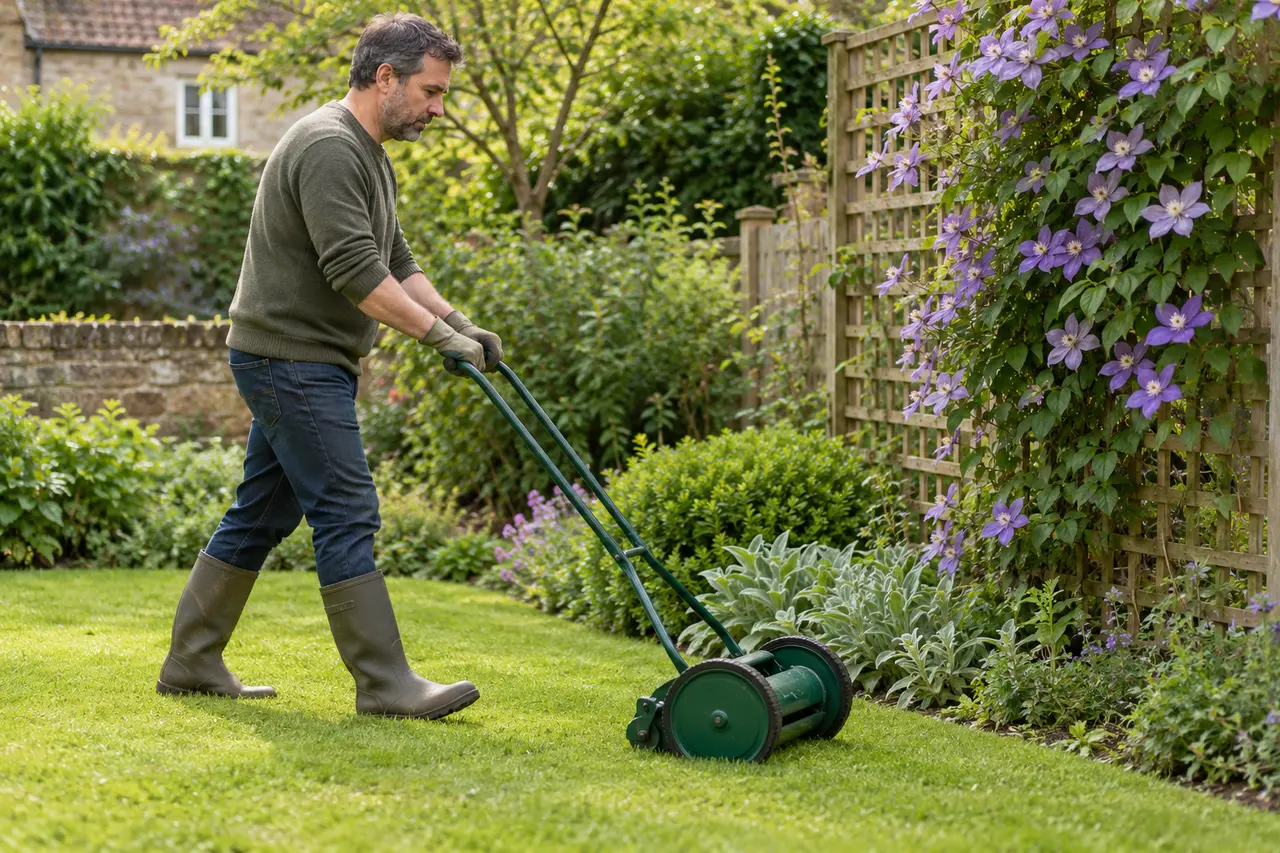
For the lawn-care pass, we assess the machine and operator position as a whole beside the support. A clear wheel line can still place a handle, collector or shoulder close to the trained shoots above it. Our approach accounts for that upper clearance as well as the grass margin, leaving soft extension beyond the movement required to make the pass.
We use controlled lawn runs and a suitable turning position clear of the panel. Narrow grass beyond the equipment’s practical movement receives an appropriate separate finish. The retained climber stays within its identified framework while the machine and operator have room for the actual pass, preserving the trained stems alongside the accessible turf being attended to.
Our collection or discharge arrangement follows the neighbouring planting, with loose clippings gathered from the accessible margin after mowing. Detached vine lengths are collected before the lawn stage and retain their own handling destination. The grass finish then follows its agreed edge while the support and shoots above it remain in their intended positions for continuing growth.
A separate hedge operation nearby
Collection positioned clear of the clematis base
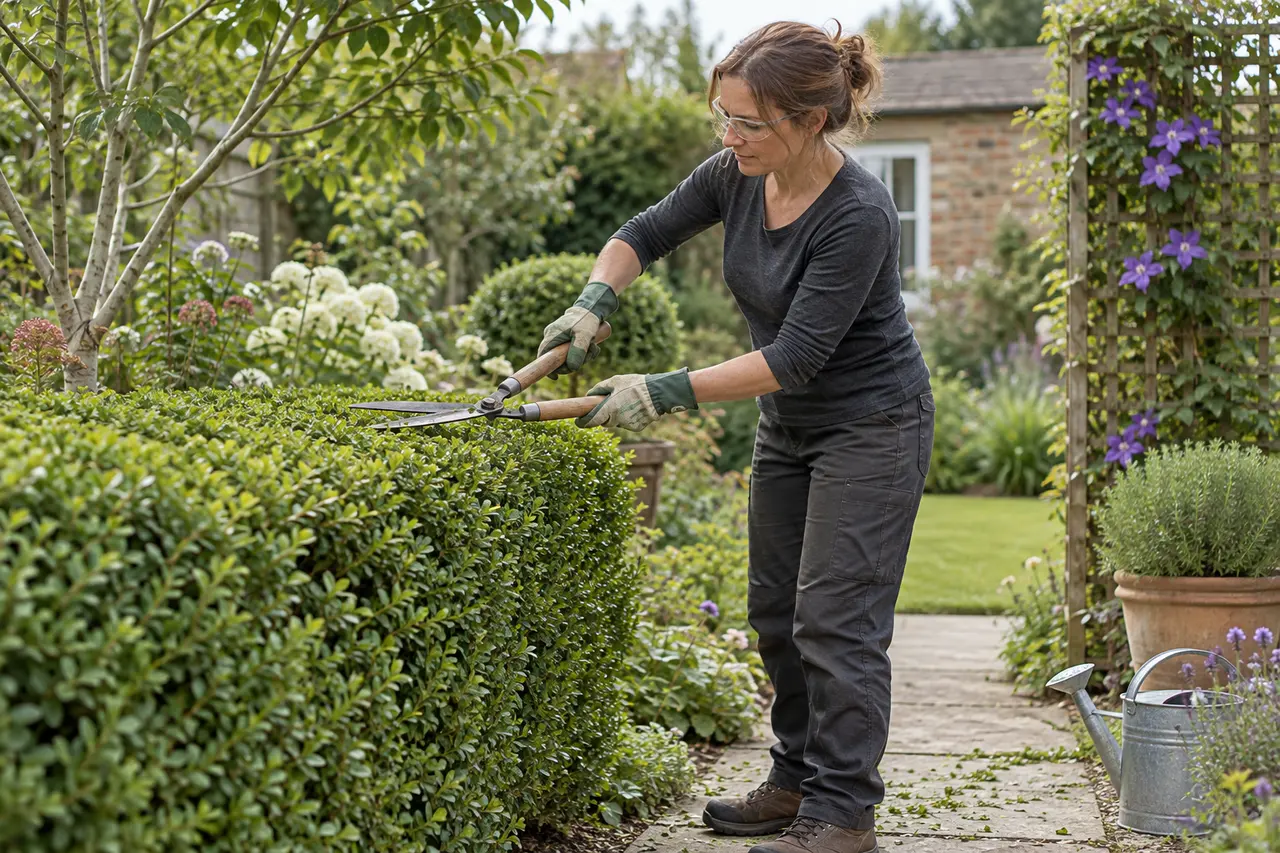
Where hedge trimming is included, we position suitable receiving sheeting without covering the clematis base or pulling its lower stems. The sheet’s edge remains visible and its manageable contents are lifted from an open side. This accounts for the load’s removal as well as where it first lands, so a filled sheet is not drawn back through the shoots that have just received training.
Our hedge checks cover nests being built or used, with disturbing cuts postponed where necessary. Suitable supported footing and controlled reach guide the operation clear of the trellis. After cutting, we retrieve accessible fragments from below, leaving the new climber attachments visible. This completes the boundary task with its load gathered around the retained plant’s working space.
Returning to a developing vine
Later care for new reach and soil-level growth
A later visit follows stems extending beyond their first fastening points. Our gardeners select suitable guidance, attend to any growth entering the route and adjust temporary ties where appropriate. The earlier pruning remains part of the treatment record while fresh extension receives its own current attention, connecting the selected new positions to the plant’s actual development on the support.
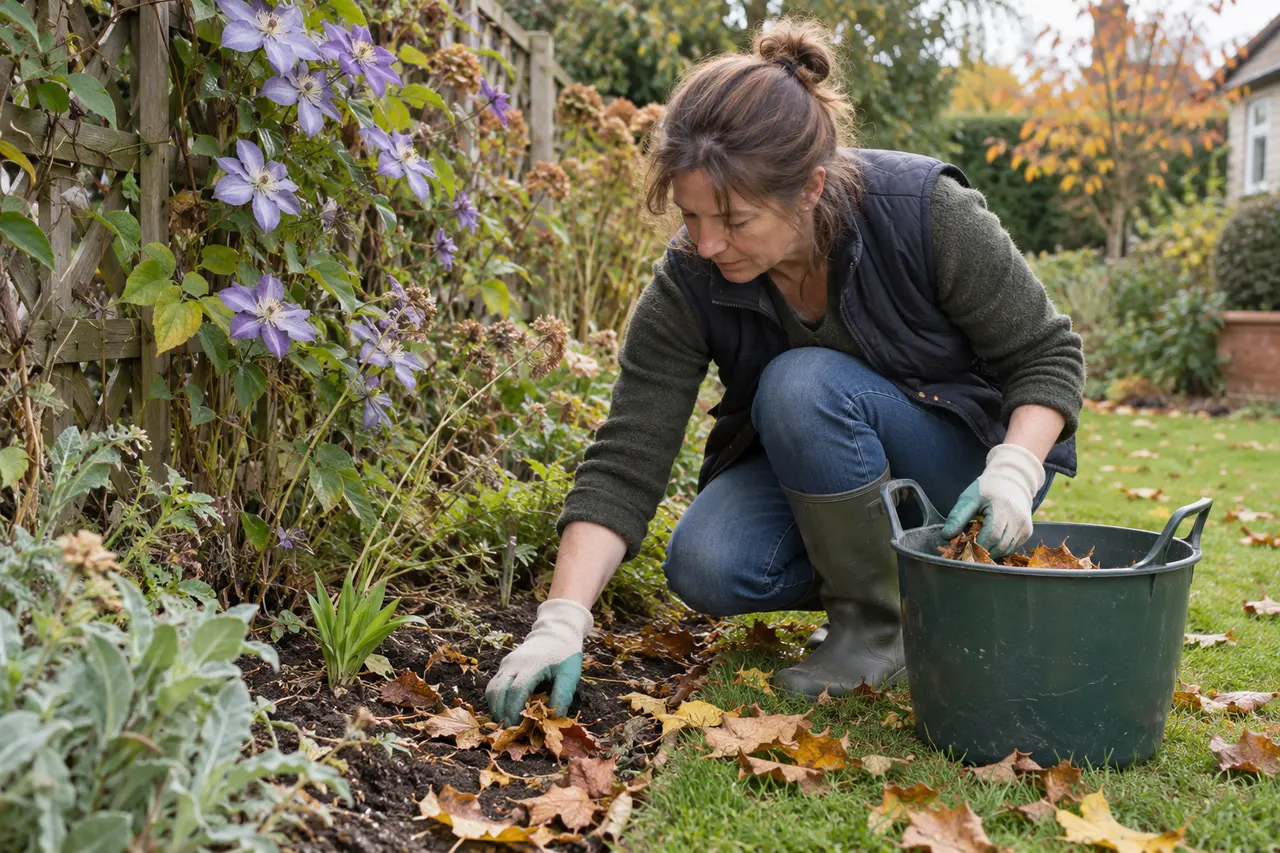
At the base, we lift accessible loose leaves and work around individual weeds with the plant seated. Suitable moisture attention can form part of the task in dry conditions, including a container’s own receiving needs. The actual soil or compost guides that operation, with relevant care between visits identified alongside the reachable work carried out around the established stem.
Our returning care cycle connects those operations as the clematis develops. A record of a shoot guided into another panel retains its intended position for the next visit. Its attachment, growth and usable reach then provide the reference for suitable further training or plant care, keeping the sequence attached to the individual vine occupying that part of the framework.
Further services around trained climbers
Planting design for compatible shared supports
Our planting-design proposal can relate successive flowering periods to the maintenance needed on a shared framework. Two attractive climbers may occupy the same space while requiring different retained wood and cutting access. We account for how each plant will develop and be reached, including whether separate panels would make the display easier to maintain. The resulting arrangement addresses the later work as well as the initial combined flowers.
Retained logs handled as freshly cut material
Where logs remain after tree work, our arrangement identifies the retained load and a suitable holding position. Fresh wood contains moisture and needs appropriate seasoning before fuel use, subject to the relevant appliance and fuel requirements. We keep those continuing needs associated with the cut material, so its destination and intended later use remain clear alongside the completed branch operation.
A consistent method through the paving clean
Our pressure cleaning uses the appropriate working distance and controlled movement for the receiving material and equipment. The selected approach stays consistent through each suitable portion, with the surface reviewed as the pass progresses. This maintains a clear basis for judging the clean across adjoining strips and keeps the actual method connected to the finish being produced on the paving.
Accessible roof-edge deposits collected
The London Fire Brigade’s wildfire precautions include clearing flammable debris from guttering as well as attention to water obstruction. Our booked gutter clean can retrieve the assessed accessible deposit at the roof edge. The collection follows the actual run and receiving conditions, leaving less dry combustible material in that position and a clear account of the channel section attended within the operation.
Tree-display care with electrical connections kept clear
Our Christmas-tree display position accounts for stand-watering access alongside the lights. The arrangement keeps plugs and connections clear of the pouring area and follows the equipment instructions. It leaves the fitted support accessible for the tree’s continuing water care, connecting the indoor display position with the practical attention required after its initial preparation and handover.
Price the selected cuts and the surrounding upkeep
Climber selection and careful release can take a different amount of time from an open mowing pass. Identify both in the booked gardening tasks.
| Gardening time | Guide rate |
|---|---|
| First hour | £83 |
| Each subsequent hour | £65 |
GBP guide rates. Confirm labour, any materials, green-waste arrangements, VAT and applicable parking, access or congestion charges in the complete proposal.
Questions about our clematis maintenance
How do you proceed when the pruning group is unknown?
We use reliable flowering observations with any label or planting record before selecting a drastic all-over cut. Uncertain growth remains identifiable while the appropriate treatment is established. The aim is a suitable plant-specific operation, not using the shared support’s outline to choose a cut that may remove the next flowering wood.
How are non-climbing clematis treated?
Our method follows the actual clematis habit. Herbaceous non-climbing types may use suitable supports or grow through neighbouring plants, while climbing vines have their own framework relationships. We identify the retained growth and choose the appropriate support and pruning arrangements for that plant, keeping its natural form and the intended position understandable through the visit.
How is container moisture included in the visit?
We assess the compost and receiving conditions when specified container care forms part of the task. Its restricted root run remains relevant to the appropriate moisture attention. The operation follows the actual potted plant alongside any separate open-soil work, with supplies, reachable access and continuing care between visits identified for that particular container position.
Does an initial clematis prune become its permanent routine?
Our treatment distinguishes formation of a newly planted climbing clematis from its later established flowering regime. A suitable initial cut can encourage basal stems, with existing growth and planting stage guiding the operation. That purpose stays in the record as the plant develops, allowing later pruning to follow the individual vine’s flowering wood and retained structure.
Different flowering regimes retained on a shared framework
Our Beckenham garden care keeps the suitable operation for each clematis attached to its individual stems, even where two plants occupy the same panel. That distinction carries through the released-vine collection, fresh training and nearby lawn finish, leaving the intended flowering wood within a recognisable working arrangement.