

Forest Hill · Selective care for established flowering shrubs
Gardeners Forest Hill
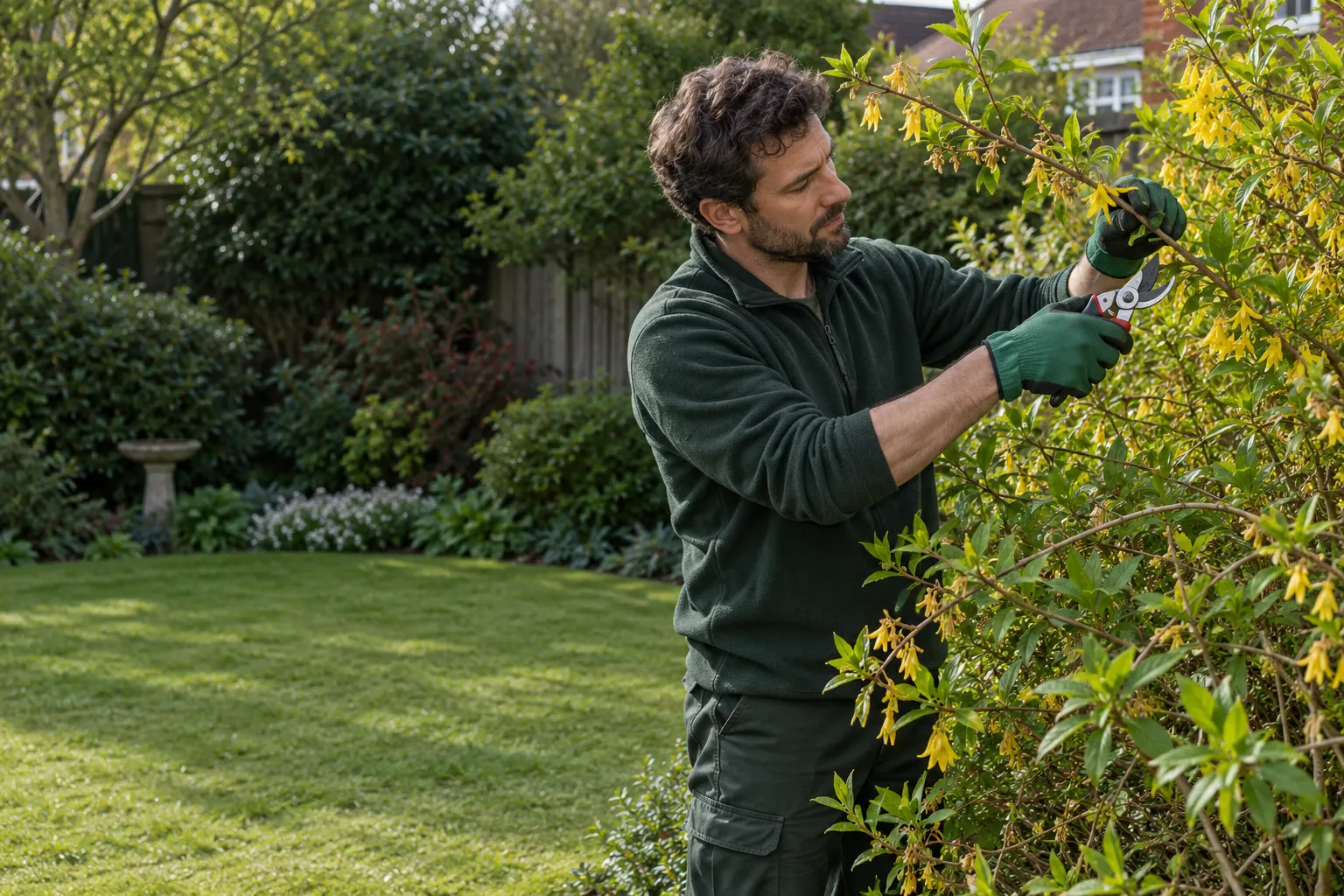
Our gardeners prune suitable established forsythias after flowering, selecting retained shoots and older stems to support the plant’s continuing natural form. That focused shrub work is coordinated with mowing, selective weeding and neighbouring hedge care, with the resulting woody material gathered separately from growth remaining on the plant.
- How do you select the forsythia stems to shorten? We trace flowered branches to useful lower shoots, selecting the continued growth and collecting the lengths removed during the prune.
- What happens to the woody material after pruning? Our gardeners separate detached lengths from connected branches, then gather the commissioned outgoing material without packing fragments around retained stems.
Forsythia pruning within a practical garden-maintenance visit
When do your gardeners prune an established forsythia?
We normally prune appropriate established plants after flowering, selecting flowered growth and renewal stems while useful new shoots remain. Forsythia’s display develops on earlier growth. Identity, condition and the intended branch direction guide our work alongside that seasonal stage. The completed plant keeps the growth chosen to develop after the selected flowering lengths have been removed.
How does your work differ on a young forsythia?
Our gardeners distinguish a recently planted shrub developing its framework from an established bush with crowded older stems. A young plant generally needs little pruning, whereas selected older-stem renewal may suit the established plant. The flowering stage alone does not justify applying the older shrub’s treatment to the new one; our selection follows the actual growth being maintained.
Tracing the established shrub’s branching
Flowered branches identified within the retained plant
Our pruning starts with the branches that carried the display, following their course into the shrub. Long arching growth and upright new shoots are considered together. The gardener identifies useful lower growth before cutting, giving the branch a continuing direction. Selection therefore works through the individual plant, with the removed flowering length and the shoot remaining clearly distinguished.
Crossing stems can conceal their origins even where tips are easily reached. We follow selected branches individually and identify the shoots that will remain. The gardener can then locate the useful replacement farther inside the shrub before making the cut. This controlled sequence keeps the retained branching visible throughout the operation and gives each removed piece a known connection to the plant.
Identified pruning is incorporated into garden maintenance with the reachable extent and intended renewal described for that visit. A manageable established shrub and a large neglected mass represent different workloads. Our proposal relates to the plant’s actual condition, the selected growth and its collection, giving the seasonal operation a defined purpose. A general request for a smaller outline does not replace the practical distinction between shortening flowered branches and undertaking more extensive renewal.
Selective cuts following the display
Flowered growth shortened to useful lower shoots
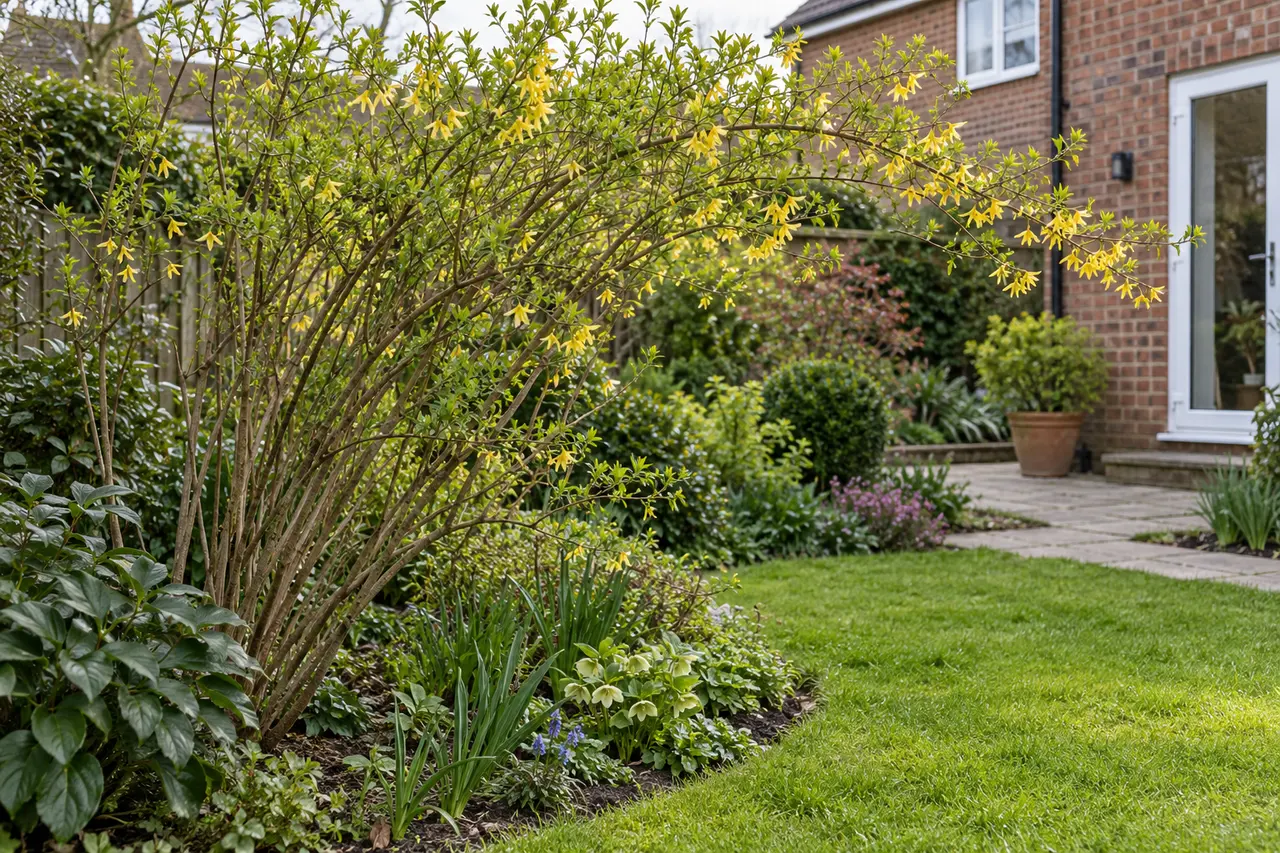
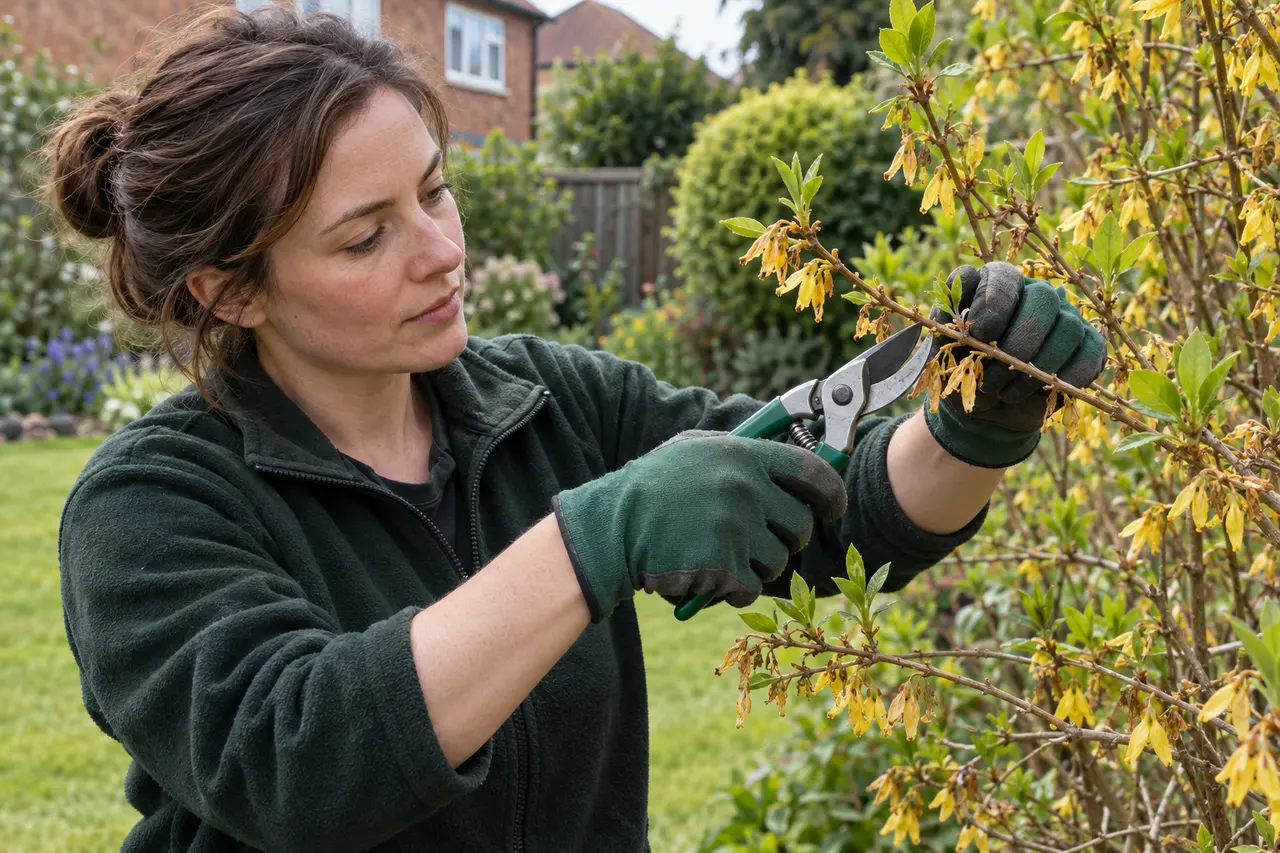
On suitable established plants, we shorten selected flowered growth to vigorous upward- or outward-growing shoots lower down. The retained shoot remains identifiable during selection and cutting, giving the branch a continuing growing point. This follows the plant’s actual structure instead of leaving an arbitrary length chosen only to match an adjoining surface. Different branches can therefore finish at different positions while contributing to the same natural shrub form.
The amount removed follows each branch and the intended result. Our gardeners select tools for its stem size and working space, using the positions of useful shoots to guide the cut. More substantial or inaccessible pieces receive a separate proposal. This defines the reachable pruning operation while leaving the remaining growth recognisable for collection and subsequent care.
Selected new growth is retained to develop after the prune. Repeated tip trimming to preserve a rigid outline can remove growth relevant to the following flowering cycle, so our finished work distinguishes deliberately retained shoots from lengths already shortened. The resulting shrub need not resemble a tightly clipped hedge. That distinction is carried into subsequent maintenance, where another superficial tidy would otherwise risk removing the growth that the selective operation was intended to keep.
Renewal within an established framework
Selected older stems removed without emptying the centre
Where renewal is appropriate, we choose a limited proportion of the oldest stems for removal at their bases. The plant keeps an understood mixture of useful growth. Its condition determines the amount taken during the visit, with the chosen stems distinguished before cutting. This makes renewal a selective operation within the established framework and leaves its continuing centre identifiable.
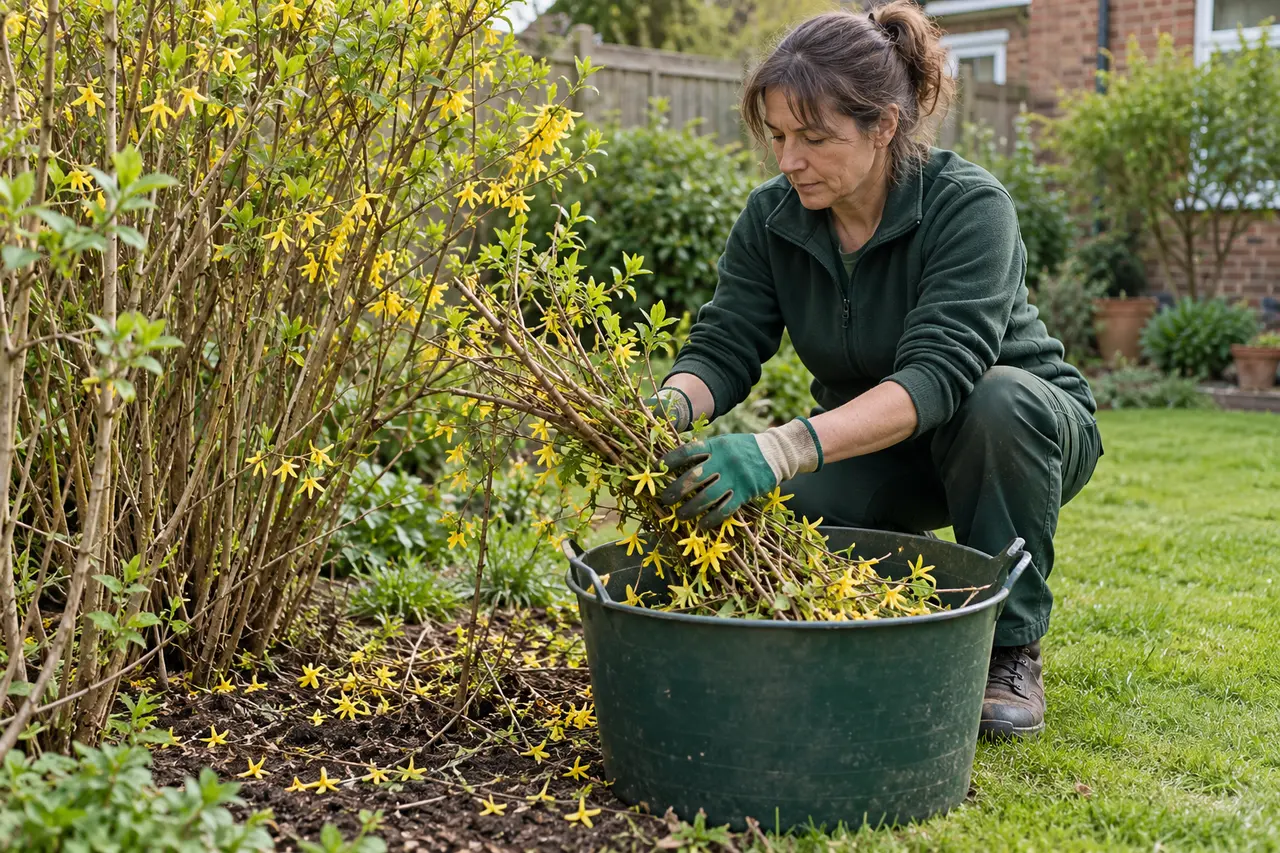
Each chosen stem is traced to its base before cutting, including where its upper branches are interwoven with shoots that remain. After detachment, the length is released with attention to that retained growth. Removed material is kept separate as the operation progresses. This avoids pulling a large bundle through the plant and only afterwards finding that useful shoots have been caught in the outgoing load or dragged away with it.
Our associated garden clean-up gathers the longer woody lengths and smaller fragments from the prune. The outgoing handling identifies their destination and any shortening of already detached pieces. The gardener collects material around the remaining bases so the shrub’s stems stay visible. This completes the cutting and clearance together, with outgoing wood separated from the framework continuing in the bed.
Grass maintained beside arching branches
Mowing routes separated from connected woody growth
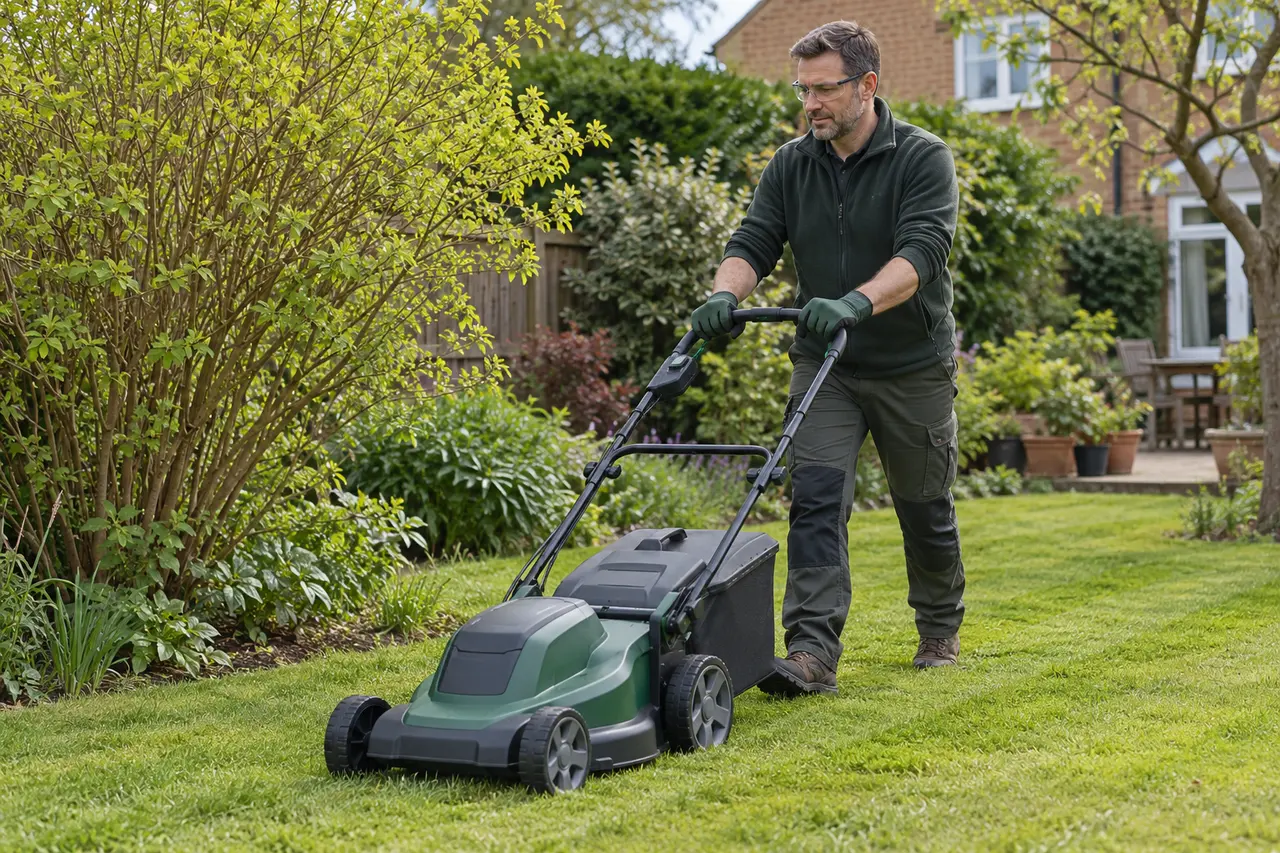
Before mowing, we identify low arching branches and the lawn surface around them. The mower follows available grass, keeping connected wood outside its cutting action. The shrub can retain its natural outline while the lawn receives appropriate maintenance beside it. The boundary is followed at ground level, with any restricted margin identified for its own finishing method.
Our lawn mowing and edging follows the grass that can be worked appropriately around the retained plant. Loose pruning fragments are gathered first, including small twigs that can be difficult to distinguish from connected growth at a glance. The mower stays on its suitable lawn surface as the work follows the curve. Separate collection and an understood boundary allow grass finishing to accompany shrub pruning without confusing their materials or cutting purposes.
Where an arching branch repeatedly conflicts with lawn use, we identify the relationship for a planting or layout decision. Routine mowing continues within the accessible grass area. A proposed change to shrub form or bed outline is described separately, giving the household a clear account of the issue and its next operation while the existing garden remains under care.
Individual shrubs and clipped boundaries
Neighbouring hedge work follows a separate cutting method
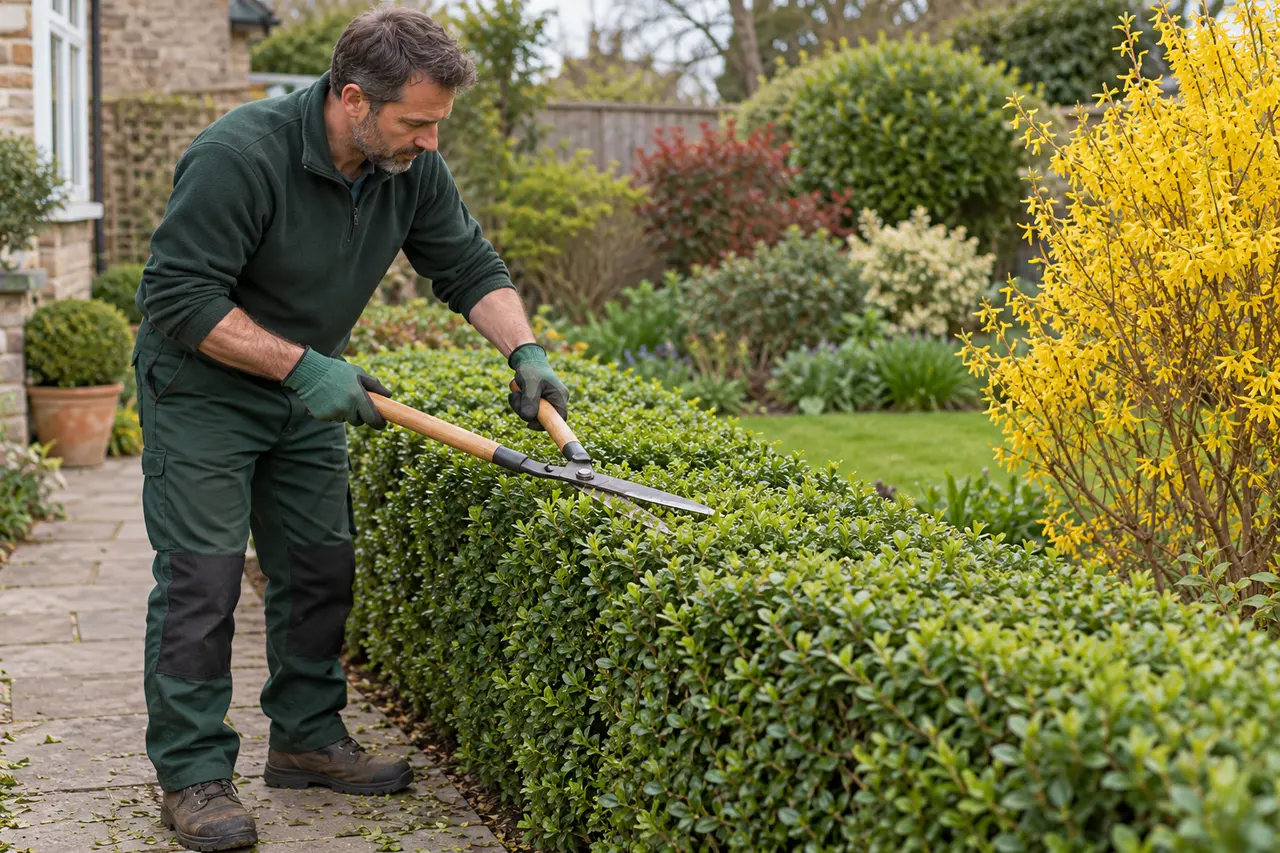
We distinguish an individual forsythia’s flowering branches from the face of a neighbouring clipped hedge. Where their growth overlaps, the team traces it back to the plant concerned before selecting a cut. The hedge’s visible plane is not used as the pruning instruction for every forsythia shoot reaching across it. This preserves the practical difference between maintaining a screen’s intended outline and retaining suitable lower growth within a flowering shrub.
Our hedge trimming follows that plant’s species, condition and intended shape. Its fragments are collected separately from the forsythia stems. The two operations can share a visit while keeping their own cutting instructions and material recognisable. This allows the screen and flowering shrub to finish in forms appropriate to their different roles within the garden.
Our pre-cut checks cover the affected shrub and hedge for nests being built or in use, and disturbing work is postponed where necessary. Dense branching is considered before cutting begins. Retained growth can remain untouched where that constraint applies while other suitable commissioned tasks proceed in a separate part of the garden. This keeps the sequence responsive to the actual planting and avoids treating the appearance of a bird during cutting as the first point of attention.
Ground care around the retained shrub
Selective weeding beneath the newly opened branching
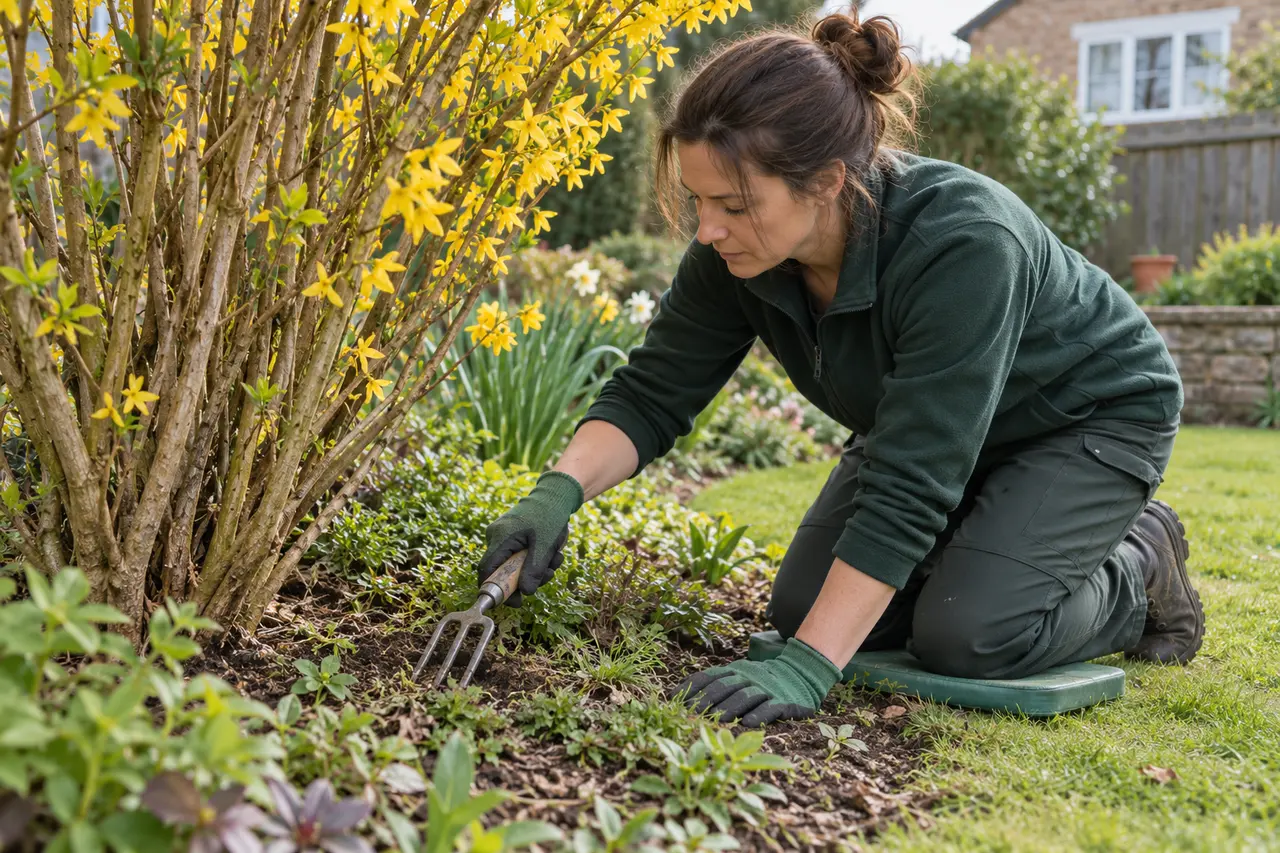
Once pruning opens the view beneath the shrub, our gardeners work through unwanted growth on the visible soil surface. Retained stems and roots stay in place while suitable hand work separates weeds from the plant being maintained. More open ground does not become permission for indiscriminate digging into its crown. The improved visibility is used for controlled maintenance, extending the practical benefit of the prune without introducing another unplanned removal operation.
Strong young forsythia shoots are distinguished from unwanted growth at the base. Their origin and intended renewal role guide our selection, even where their position makes the shrub less uniformly tidy. Useful shoots remain identifiable through later seasonal care, when leaves and neighbouring plants can again obscure them. This continuity between pruning and weeding protects the selected framework, so that later ground maintenance does not remove the growth retained during the earlier shrub operation.
- Our gardeners identify the shrub and its actual flowering stage.
- Selected branches are traced to useful retained lower growth.
- Older-stem renewal is limited to the appropriate selected material.
- Detached woody lengths are separated from connected branches.
- Useful new shoots remain identifiable during subsequent weeding.
Related services with their own practical objectives
Planting design considers the actual driveway view
Our garden-design brief can identify vegetation affecting a driveway or vehicle entrance. We consider the actual direction of sight from the relevant standing or seated position, including how a shrub occupies that view. The required visibility is recorded with the planting arrangement, giving the design a practical access purpose and a reference for its later maintenance.
Tree work distinguishes a stem-girdling root
Within a tree surgery proposal, a known root encircling and pressing against the stem base is considered as a root-to-stem relationship. As the stem and root thicken, that position can compress the stem; it differs from an ordinary root spreading outward through the soil. The proposed intervention therefore follows appropriate consideration of its position and effect. It is not included in routine border weeding or cut away merely because it crosses the visible ground beneath neighbouring plants.
Jet-washing supply matched to the actual washer
For jet washing, the permitted clean-water supply follows the requirements of the selected machine. A nearby rainwater butt is not connected simply because it is convenient. Where the equipment permits stored water, its specified suction and filtration arrangement is part of the setup, keeping sediment from being drawn in with the supply. This distinguishes an available water source from a compatible one without assuming that every washer accepts the same connection or stored-water arrangement.
Gutter access avoids loading the plastic channel
Our gutter cleaning arrangement accounts for the upper equipment contact as well as the standing surface below. A plastic channel remains outside the ladder’s bearing load. The access method follows the building and equipment, with the intended gutter section identified. This gives the operation an appropriate supporting arrangement while preserving the distinction between rainwater goods and structural support.
Seasonal tree preparation includes the cut-base geometry
For a cut Christmas tree, base preparation relates to the intended support and water supply. The National Christmas Tree Association recommends a cut perpendicular to the stem rather than an angled or V-shaped base. We distinguish that geometry from simply shortening the tree: it affects the supported position and water contact. The seasonal arrangement can therefore identify the form of the base as well as the selected tree itself.
Gardening time for selected shrub work and adjoining tasks
Our quotation identifies the established plant, reachable pruning, collection and surrounding maintenance being commissioned. The table below provides general gardening guide rates; the selected work is described for the actual condition and extent of the planting.
| Gardening time | Guide rate |
|---|---|
| First hour | £83 |
| Each subsequent hour | £65 |
GBP guide rates. The complete quotation sets out the work, supplied materials, outgoing cuttings, VAT treatment and any applicable parking, congestion or access charges, keeping the particular shrub operation distinguishable from the general time guide.
Forsythia care within an ongoing maintenance service
Can forsythia begin flowering while its branches still look bare?
Our gardeners recognise that common garden forsythias flower before their foliage fully develops. Yellow blooms along otherwise bare stems can be a normal spring stage, with leaves following later. The plant record distinguishes those seasonal appearances and the operations associated with them. This keeps the next pruning decision tied to the actual growth cycle visible in the shrub.
Can an arching forsythia branch root where it rests on soil?
We distinguish a possible rooted layer from the shrub’s original central base where a low arching stem remains on the soil. Roots can develop while it stays connected to the parent. The connection is identified before nearby work, explaining the ground now occupied and giving collection or weeding a clear account of the growth present at the edge.
Will forsythia provide an evergreen screen through winter?
Our design work accounts for forsythia’s deciduous habit where screening is required. The spring flowers, later leaves and winter structure contribute differently. Their appearance across the year informs the arrangement, including whether another feature is needed for winter cover. This gives plant selection a complete seasonal basis while preserving the flowering shrub’s particular role within the proposed layout.
Can suitable pruning material be kept for propagation?
Where suitable material is specifically being retained for the household’s propagation, it is identified before the outgoing woody load is gathered. Our collection separates those selected pieces from general prunings. Material type, timing and subsequent growing care still determine suitability; not every removed length becomes a usable cutting. This handling keeps a defined retained batch available without presenting ordinary pruning as an included propagation or nursery service.
Selective maintenance carried into the following flowering stage
Our garden care follows the retained growth through its development and subsequent flowering, using the actual plant stage to inform the next selective prune. The record of useful lower shoots and older stems supports continuity between visits. A returning calendar date alone does not trigger another trim of growth deliberately left to develop during the previous operation.