

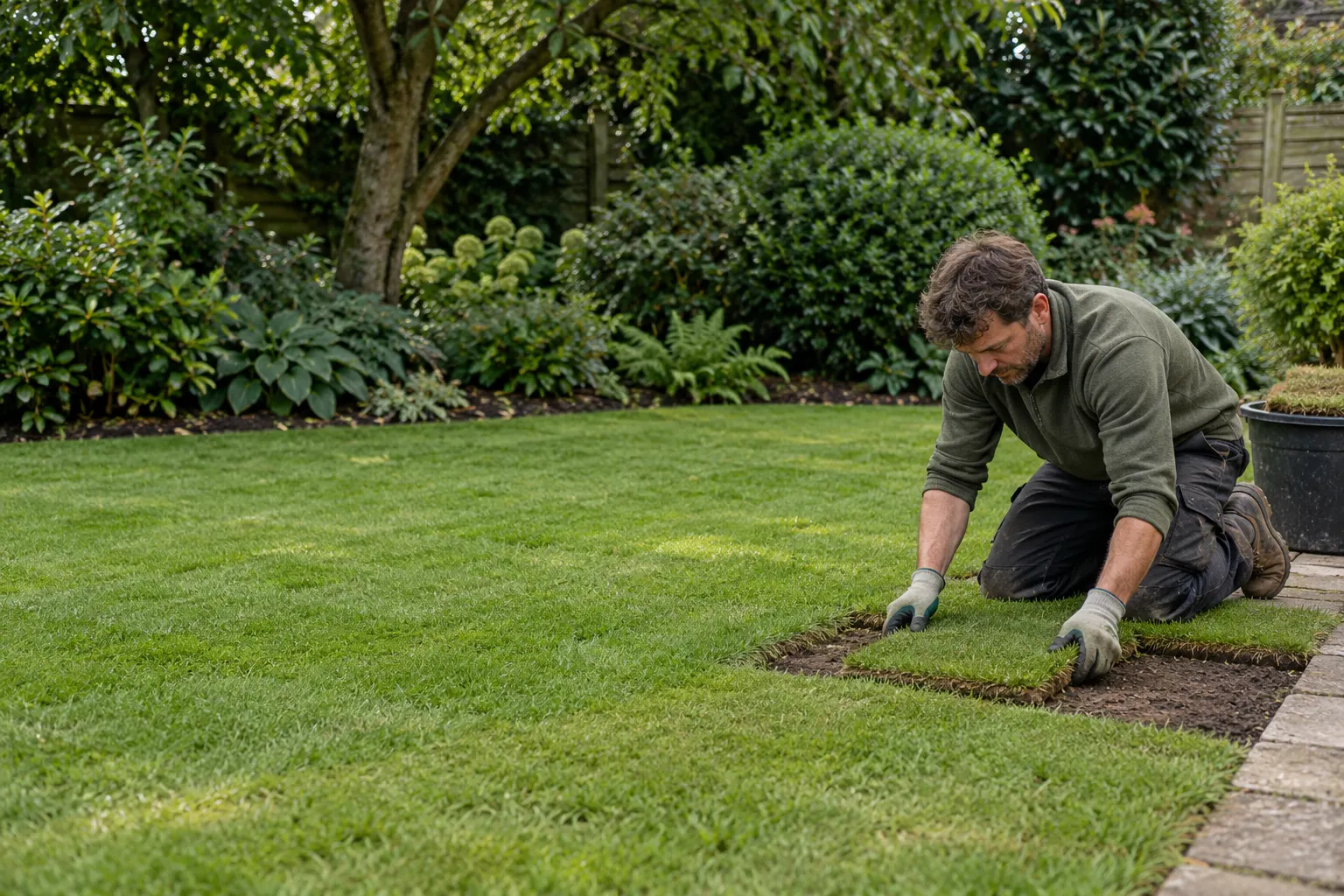
Grove Park · Small turf repairs within established lawns
Gardeners Grove Park
Our lawn-care work can include an expressly agreed small turf repair, from selected removal and receiving-ground preparation to fitting and establishment care. The new piece is joined to the retained grass at an appropriate level, with surrounding gardening organised to leave the young repair outside routine turning and loading.
- How do you prepare the join around new turf? We fit an appropriate piece against sound existing grass, preparing its support and checking the finished level across the join.
- What do your gardeners check beneath a patch? The receiving soil and contact are checked before fitting; a green surface is not treated as evidence of support beneath it.
A fitted repair with appropriate ground preparation
How do you assess the fit of a new turf patch?
We check the prepared support, contact beneath the piece and finished level against existing grass. The turf is fitted without an open void below or overlap at its edge. Immediate green colour is not our sole quality check, because the retained and replacement grass can differ in appearance. The operation addresses the supporting surface and join as well as the visible top.
How is watering selected for the newly fitted piece?
The watering arrangement addresses the turf’s rooting zone and receiving soil, not only damp grass blades. We use suitable checks for the actual conditions and a controlled application where watering is included. Light rain or a quick surface wetting is not assumed to have supplied the soil beneath. Continuing care avoids both drying and prolonged saturation during establishment.
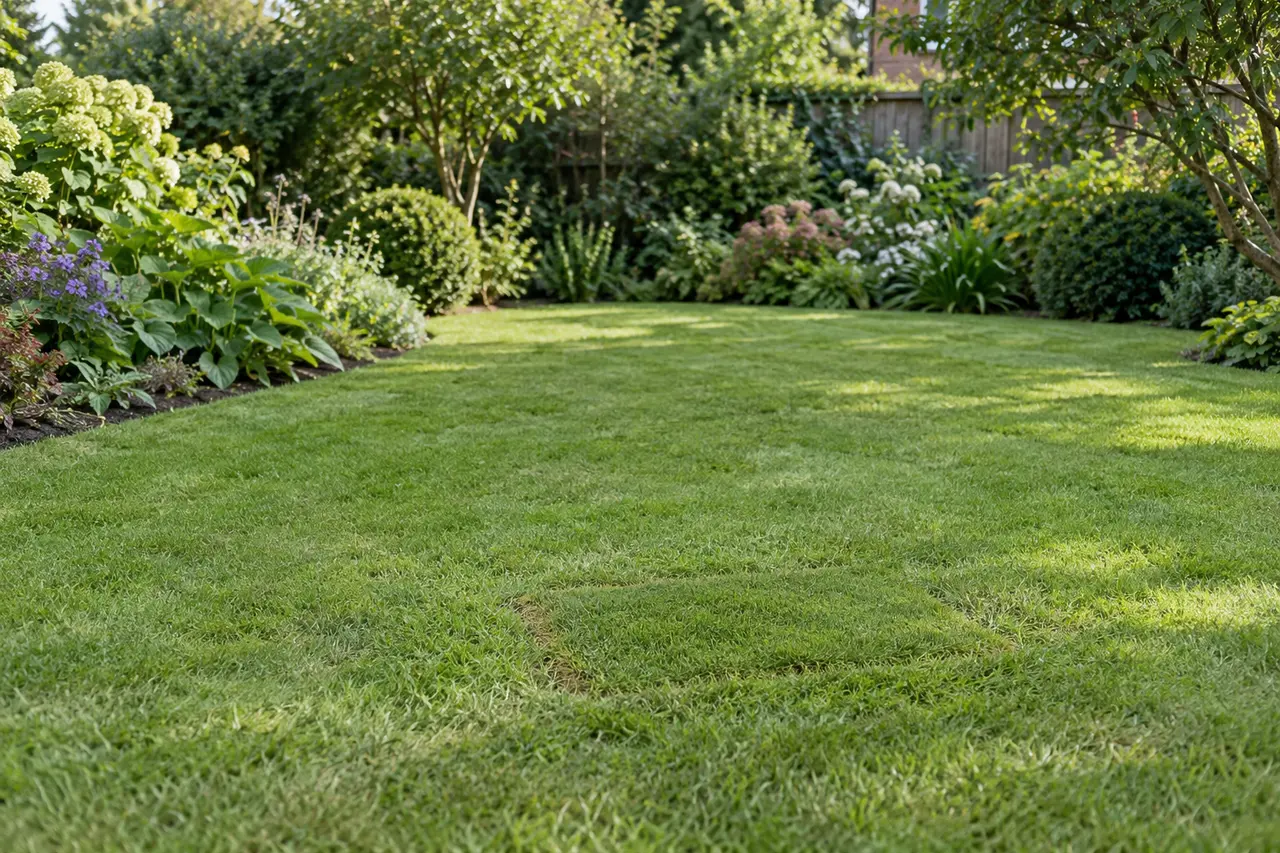
The selected area within the lawn
Damaged turf distinguished from sound grass to retain
Our gardeners identify the damaged area and surrounding grass staying in place. The visible condition and intended use inform whether a turf piece is appropriate. Repeated damage and a simple missing patch are considered differently. The receiving footprint is then defined for the material and work, keeping the sound lawn available around a clearly identified small repair.
We specify lawn patch repair separately from ordinary mowing, including the compatible turf material, supply, preparation and aftercare being commissioned. This operation concerns a suitable small repair within an existing lawn, not an assumed replacement of the whole grass area. The retained boundary and receiving ground are prepared for the new piece before it is fitted, keeping the material connected to the actual surface it will join.
We establish standing and handling space outside the patch while the original surface can still be assessed. Material and sequence are prepared before the ground is opened. Each receiving area has its own support and route within the visit. This keeps the operation manageable through removal, preparation and fitting, with the next stage ready while the shallow opening is being finished.
- We retain sound grass around the selected damaged portion.
- The receiving depth accounts for the replacement turf’s thickness.
- Fitted edges meet without overlap or an unsupported opening.
- Watering addresses the rooting zone and receiving soil.
- Establishing turf stays outside ordinary turning and load routes.
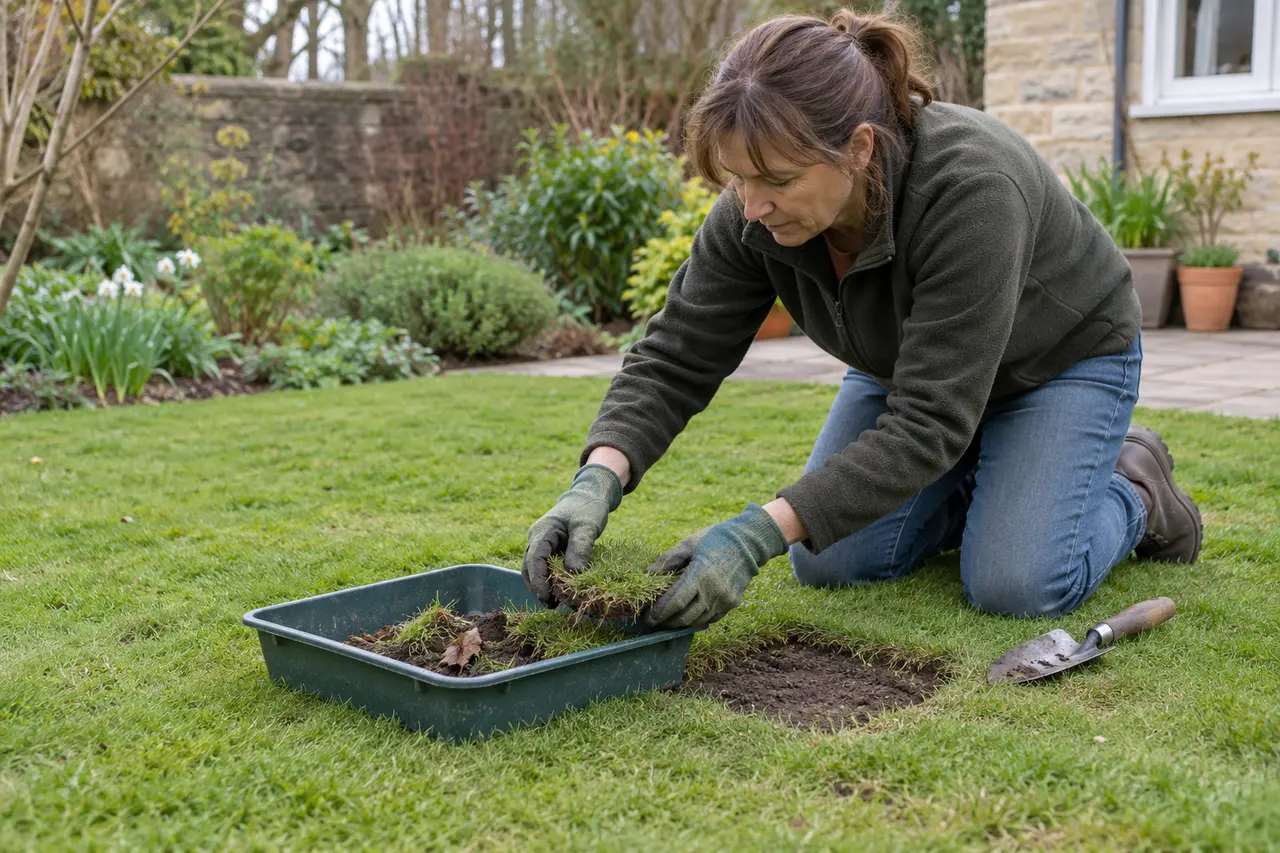
Removal and receiving-ground preparation
Old material gathered before the replacement level is set
Selected damaged turf is removed in controlled pieces, with fully detached material collected and the retained edge left visible. Old cut turf is not pushed beneath the replacement to fill a low area. The gardener prepares the receiving ground for the new roots instead of concealing an irregular layer of removed material beneath a green top. This leaves the supporting surface available for the fitting decision that follows.
Where associated garden clean-up is commissioned, removed turf and loose surrounding material follow the agreed handling route. Loads are collected from a surface outside the repair, with planting and other lawn areas kept clear. A tray can contain small pieces and soil during preparation. Collection then progresses beside the receiving work, leaving the patch accessible for its next fitting stage.
The removed-turf and garden-material arrangement follows the actual load being taken away. Within the receiving area, unwanted debris is removed and suitable soil prepared before laying. The depth includes the replacement turf’s own thickness: an opening level with the old grass before the piece is added would not necessarily finish level afterwards. Our preparation therefore distinguishes the soil support from the final surface that the material will create.
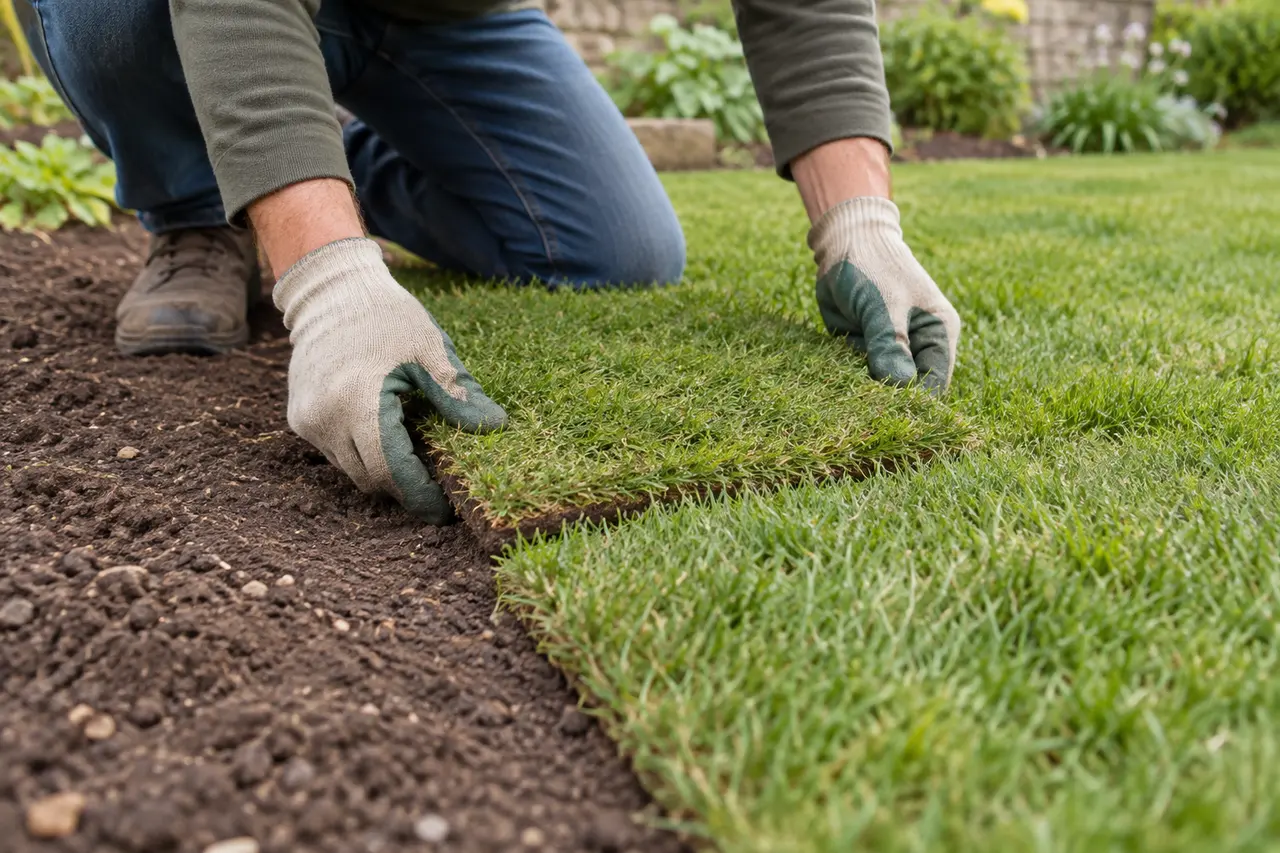
Supporting soil and fitted seams
The replacement brought into contact with its prepared base
The gardener prepares firm, level support at the required receiving depth. Its condition allows the replacement’s roots an appropriate growing surface, with a hard compacted layer considered before fitting. The prepared base supports the whole piece across its area. This gives the new turf direct contact beneath the centre as well as the edges joining the existing lawn.
We fit the replacement to its prepared shape, bringing edges against the sound existing grass without overlap. Any level adjustment is made through the support and fit before final light firming. The completed join accounts for appearance and the later mower route. This leaves the piece positioned on an appropriate base, with the final surface understood across the boundary.
The gardener works from outside the new turf and supports the material during fitting. Weak corners stay out of the pulling load, with movement kept controlled across the receiving position. Light firming completes contact once the shape and support are correct. The next task then follows the roots and establishment conditions, preserving the completed fit as the young piece begins its growth.
Moisture following fitting
Root-level care arranged for the establishing repair
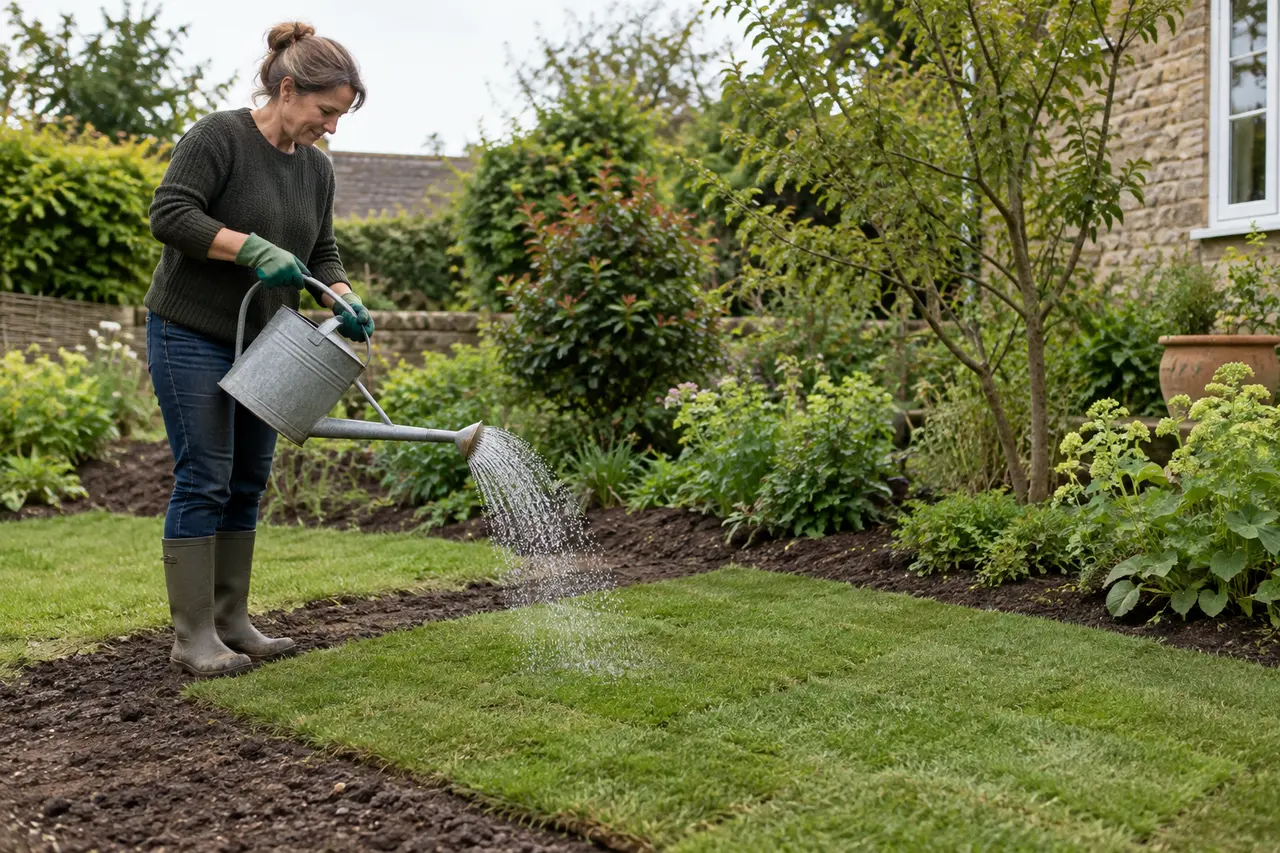
Our arrangement is to Water appropriately through establishment, with moisture reaching through the piece into its receiving ground. The application is controlled at exposed edges to keep preparation in place. Surface colour is considered alongside moisture beneath, particularly before roots have entered the soil. The amount and ongoing attention follow the actual patch, keeping the establishment task specific to its condition.
The repair proposal identifies the checks needed between visits. Its moisture needs can differ from the mature lawn, and pooling prompts consideration of the receiving condition. The fitted position stays recorded so walking, mowing and collection use appropriate established surfaces. This gives the small new area an understood establishment period while the rest of the garden continues to receive its work.
Established grass around the new piece
Routine mowing continues outside the young repair
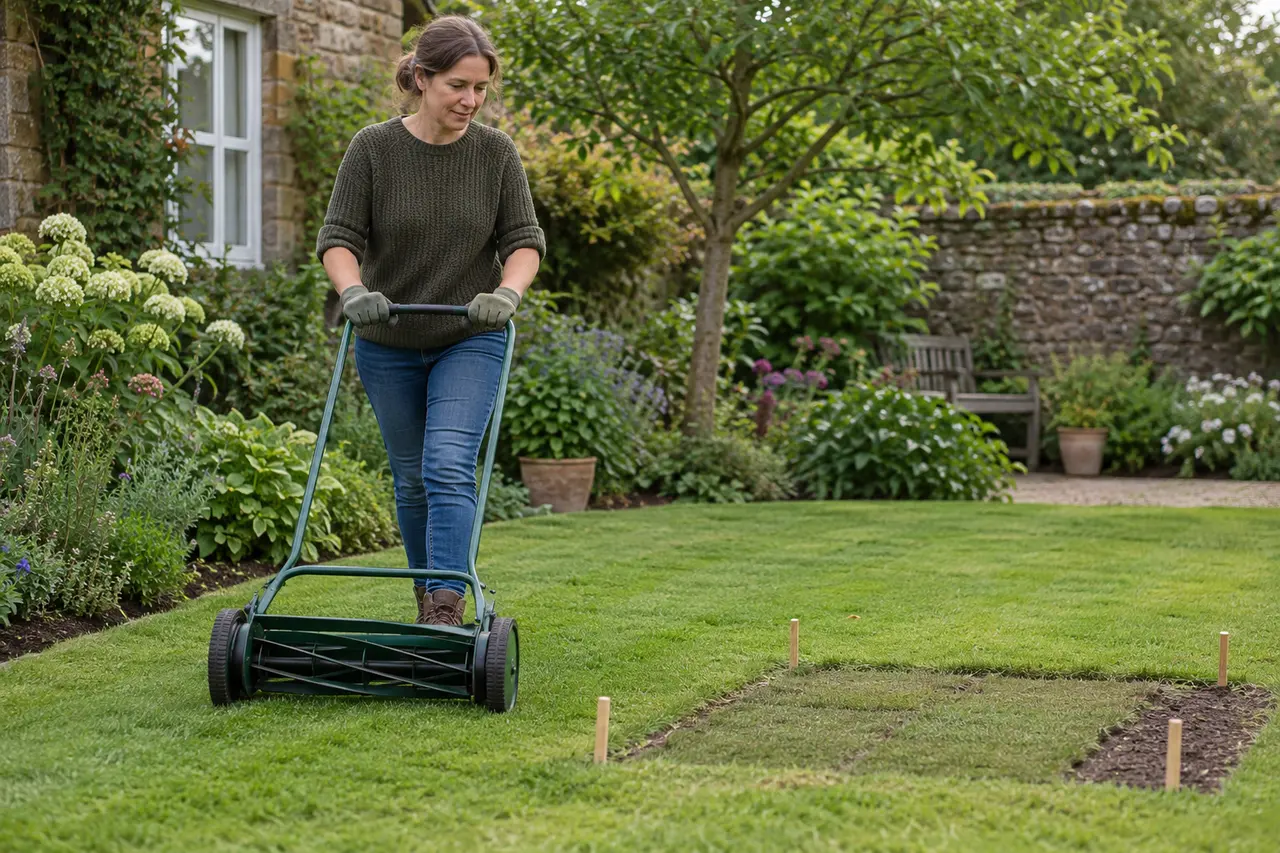
Suitable existing grass can continue to receive mowing where it is accessible without crossing or turning on the new patch. Our cutting route deliberately leaves that small exclusion out. The presence of grass on top does not establish that the roots are anchored below, and equipment movement can shift the piece before it has joined the soil. The operation therefore follows the stage of the repair as well as the mature lawn.
Equipment storage and collector emptying use suitable established surfaces, not the newly fitted corner between the grass and waste tub. Hand tools and spare material are gathered before mowing begins, with any marker identifying the repair preserved for its continuing care. This keeps the lawn operation practical while avoiding the repeated shortcut or temporary loading position that could disturb the small area being established.
Boundary work alongside the repair
Clipping collection positioned away from newly fitted turf
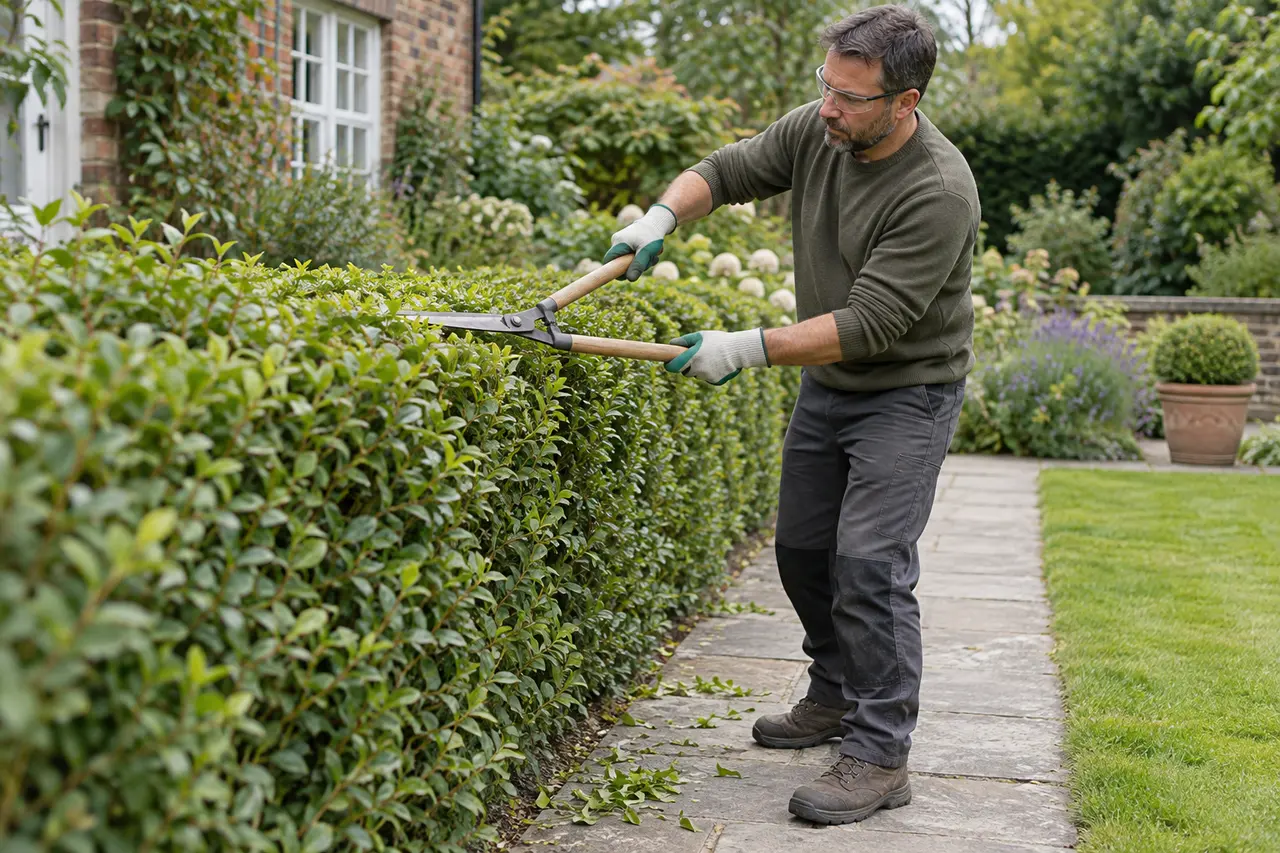
Where suitable hedge work accompanies the repair, we organise its collection before fresh material needs moving across the new piece. The receiving point and withdrawal route remain on ground suitable for the loaded work. A small repair can otherwise become overlooked once a large collection sheet is full. Positioning the operation first keeps the young grass separate from the movement required to finish the boundary task.
Our gardeners check affected hedges and shrubs for nests being built or in use and postpone disturbing cutting. Work proceeds from firm supported footing within controlled reach, with the repaired area outside the equipment route. Fresh turf is not used as a platform to obtain additional reach along a hedge face. Its green appearance does not alter the establishment stage or make it suitable to carry that working load.
The commissioned garden-maintenance visit can also cover ordinary border upkeep while the repair remains identifiable. Accessible hedge fragments are collected from established surfaces and the young piece is left to its appropriate care. This allows useful work around the wider garden without repeatedly bringing every task across the one area that requires a quieter establishment period. Each operation is sequenced for the surfaces it actually uses.
Related services around an existing lawn
Repair material considered within the intended lawn finish
Our garden-design discussion can consider grass material for the intended lawn finish. Texture, maintenance character and growing position inform compatibility alongside colour. The proposal identifies the piece joining the existing turf and the conditions it will occupy. This gives the repair a practical material choice with its future care understood, keeping immediate photographic appearance within a wider planting decision.
Older-tree care distinguishes natural crown retrenchment
Our tree-care proposal considers the actual ageing structure where an ancient tree develops a smaller lower crown through natural retrenchment. That reorganisation is distinguished from previous topping or whole-tree death. The observed form informs the proposal alongside appropriate consideration of the individual tree. It is not used alone as a safety verdict, preserving the distinction between a natural feature and the assessment required.
Paving cleaning coordinated with existing automatic watering
For a paving-cleaning area reached by automatic watering, we coordinate the existing cycle with the cleaning sequence. A sprinkler can add water during a selected product’s contact or drying stage, so any agreed timing uses the household’s controls with plant care understood. This accounts for the actual water arriving at the surface throughout the operation and gives both tasks a practical sequence.
Roofline access sequenced before a planned turf repair
Where gutter cleaning uses the route of a planned lawn repair, we coordinate the sequence before the piece is fitted. Roofline work can use an appropriate established position first, or another suitable approach can be selected. The new turf then keeps its quieter establishment period, with repeated equipment and collection movements following the ground capable of supporting that operation.
Seasonal tree adjustment follows its installed support
For an installed Christmas tree requiring straightening or turning, the support’s actual adjustment method governs the handling. The trunk is not forced against a fixed grip merely to change the direction of the branches. Appropriate support is maintained through any reset, with the secure position established again before decoration. This distinguishes a controlled adjustment of the selected stand from twisting a base that remains held by its mechanism.
Repair preparation and care distinguished from mowing time
Our complete repair proposal identifies the selected patch, turf supply, preparation, fitting and continuing care. The general hourly guide below is a starting point for gardening time, not an automatic allowance covering every material and establishment task.
| Gardening time | Guide rate |
|---|---|
| First hour | £83 |
| Each subsequent hour | £65 |
GBP guide rates. The quotation sets out materials, removed turf, waste arrangements, VAT and any relevant parking, congestion or access charges, keeping the small fitted repair and routine lawn cutting distinguishable within the agreed work.
Small turf-repair work and subsequent establishment
Are very narrow leftover strips always useful for the patch edges?
Our fitting plan uses a workable piece and join for the small repair. Very narrow scraps can dry more readily and be harder to establish, so the selected shape includes appropriate support and root care. The material is chosen for that receiving area, giving the gardener a defined piece to fit and the household a clear arrangement for its subsequent establishment.
Can spare turf remain rolled up indefinitely for future repairs?
Turf supply is coordinated with the intended fitting because the material remains living while rolled or stacked. Where a short delay is unavoidable, its handling follows the supplier’s information. Spare material is not treated as an indefinite store of ready-made repair pieces. This keeps the supply decision associated with the work being carried out instead of assuming a green roll remains suitable regardless of storage time.
Does the new piece join the usual mowing routine on a fixed day?
The team uses actual rooting, growth and conditions when selecting the first suitable cut. A fixed calendar day does not itself establish anchorage. That first mowing is gentle and appropriate to the young repair, while the existing grass around it may already have continued under a different routine. The two stages therefore remain distinguishable even though they now appear within one lawn surface.
Will a new piece by itself correct a patch that stays waterlogged?
Before fitting in a persistently wet position, we consider the ground and the reason water remains. The repair is proposed for appropriate receiving conditions. A new green surface alone does not establish that underlying wetness has been resolved, so the relevant preparation or different location needs attention first. This keeps establishment connected to the actual soil supporting the replacement.
A fitted patch with its establishment period understood
Our gardening arrangement identifies the fitted location and continuing care after the tools leave. The mature lawn can remain useful while the new piece receives appropriate establishment attention. This leaves a small repair prepared and fitted within the existing grass, with its next stage clear. Later maintenance can follow the same identified area as its roots develop into the receiving soil.