

Hither Green · Hosta care from emerging shoots to autumn dieback
Gardeners Hither Green
We maintain hostas through their changing leaf stages, selecting damaged foliage, weeding accessible soil and collecting collapsed autumn material. Lawn and hedge work follows the space around the developing clump. The plant’s position stays identifiable when its broad summer leaves have gone, ready for the next stage of garden maintenance.
- How do you work after hosta foliage dies back? We collect collapsed leaves while keeping the dormant base identifiable, recording its position before later work uses the more open-looking ground.
- How is hosta choice linked to recurring leaf damage? Our planting proposals can consider thicker, waxier-leaved cultivars alongside growing conditions, using the existing damage history without promising immunity.
Hosta maintenance follows the plant’s leaf stage
How do your gardeners select damaged hosta foliage?
We trace the stalk of the damaged or unsightly leaf and remove the selected material while protecting neighbouring growth. Useful foliage can remain even where the outline is ragged. The whole clump’s condition informs the choice, including the leaves still contributing to it. One damaged blade is not treated as an instruction to shorten every leaf or clear the plant to ground level.
How is vulnerable new growth considered on a hardy hosta?
The plant’s winter hardiness is distinguished from the vulnerability of its soft emerging leaves to frost. Our care follows the actual new growth and forecast when temporary protection is considered. A damaged spring leaf does not by itself show that the established dormant plant has died. This lets the next operation address the plant’s real stage instead of making a complete-removal decision from the appearance of one leaf.
Selective leaf work
The chosen stalk traced through overlapping foliage
Our gardener follows the individual leaf stalk back into the clump. Broad leaves can overlap enough to conceal the stalk behind the one selected, so only the foliage needed for a clear cutting point is moved. An appropriate hand tool removes that material while surrounding healthy leaves keep their natural position. The plant is not gathered into a bundle for one fast cut through different stalks at once.
The garden-maintenance task identifies whether attention is limited to a few unsightly leaves or requires another plant decision. A leaf with a small damaged patch and a fully collapsed leaf provide different information. We consider the useful foliage remaining across the whole clump before removal. This gives a close cosmetic task a proportionate extent and leaves contributing leaf area in place instead of treating every imperfection as a reason for complete defoliation.
Where hosta leaves meet neighbouring stems, we identify the contact and the growth actually requiring attention. An overlapping stem can change the visible outline without either plant needing general reduction. Loose tree litter is also distinguished from attached hosta leaves before collection. This close selection allows the team to gather material around the clump without inadvertently pulling a living leaf simply because it lies across the surface being cleared.
Spring work around pointed shoots
The emerging plant located before hand weeding
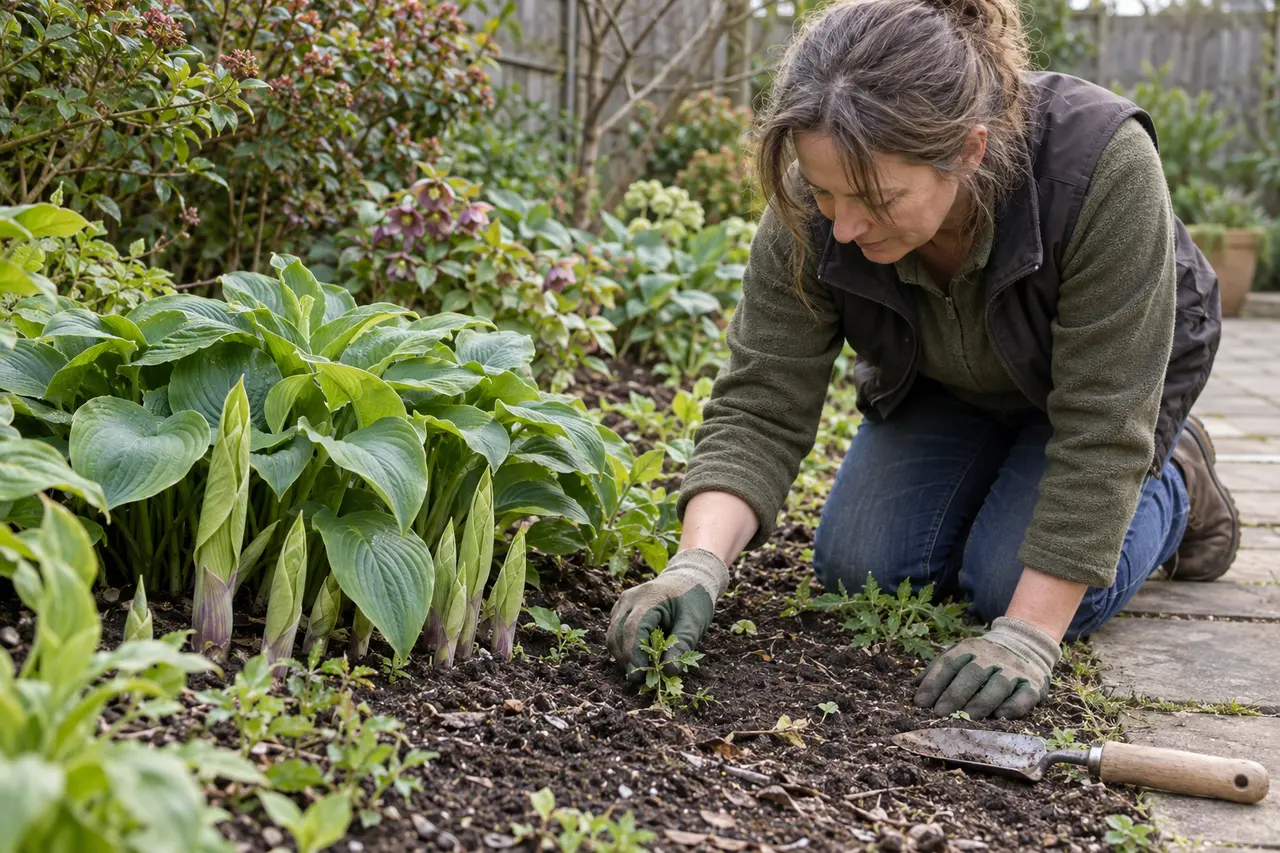
Early pointed shoots occupy much less space than the summer mound. We locate those growth points before working the surrounding soil, keeping hands and the small tool’s direction visible beside them. Open ground between shoots provides access to a weed, not a resting position for a loaded container or knee. The working area is therefore selected for the emerging plant that is present, even before it fills its expected outline.
Accessible weeds are loosened from outside the growing points and lifted without their tops being dragged through new hosta growth. The gardener works through small soil patches, gathering each removed plant as the operation proceeds. A weed tightly rooted within the hosta base is considered separately. We do not lever through the growing clump merely to keep the whole border moving at one pace.
Tools temporarily used beside the early shoots are gathered before later foliage can hide them. Needed labels or small supports remain visible, with the planted position understood as the surface changes. Our finish leaves the surrounding soil accessible and the emerging plant undisturbed. It does not excavate a completely bare circle around every shoot simply because a smaller spring outline appears to leave more open ground.
- We locate rolled shoots before nearby hand work begins.
- The actual stalk is traced before a leaf is removed.
- Containers and kneeling positions stay outside the emerging clump.
- Loose tree litter is lifted separately from attached foliage.
- Autumn collection follows the plant’s natural leaf dieback.
The developing summer spread
Grass cutting follows the boundary outside broad leaves
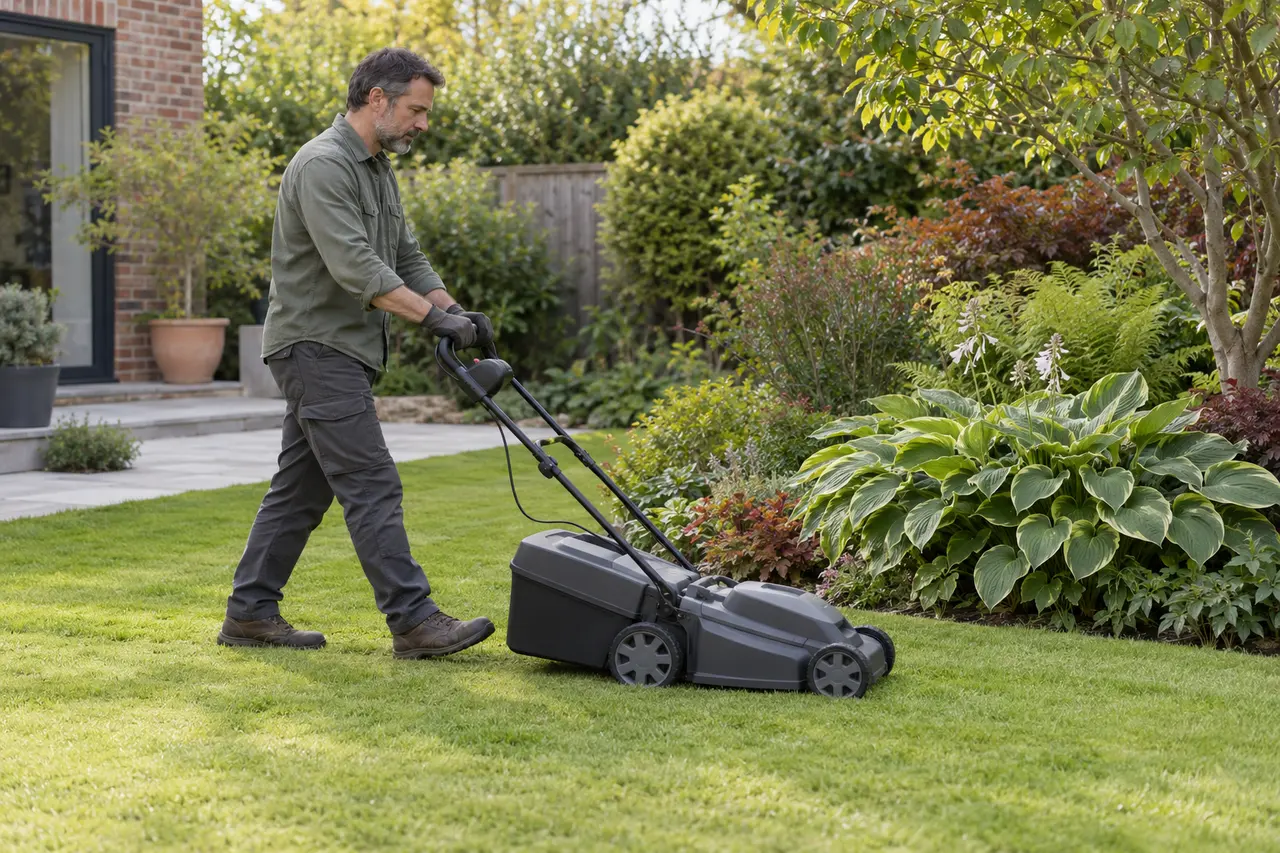
Before mowing, we locate the lawn boundary beneath hosta leaves extending from the bed. The available space changes as foliage develops, with the machine and turns kept on actual grass. Narrow points receive an appropriate separate finish. This keeps the plant’s growing spread identifiable and the bed outside the equipment route while the accessible lawn receives its cut.
Preparation around foliage is completed with equipment stopped. The lawn-care work uses a controlled route instead of holding leaves beside an operating blade to gain the last gap. Where the summer spread repeatedly occupies the grass, that relationship is identified for a considered planting or edge decision. Routine cutting does not repeatedly shave the leaves to reproduce the wider route that was available before they opened.
Loose grass on accessible lower leaves is gathered gently after cutting. The gardener uses a controlled method around the broad foliage, leaving the hosta’s natural outline in place. The lawn and bed retain their readable junction, with the machine width and plant spread both accounted for. The two finishes can then remain coherent as the clump continues developing beside the grass.
Collection after natural dieback
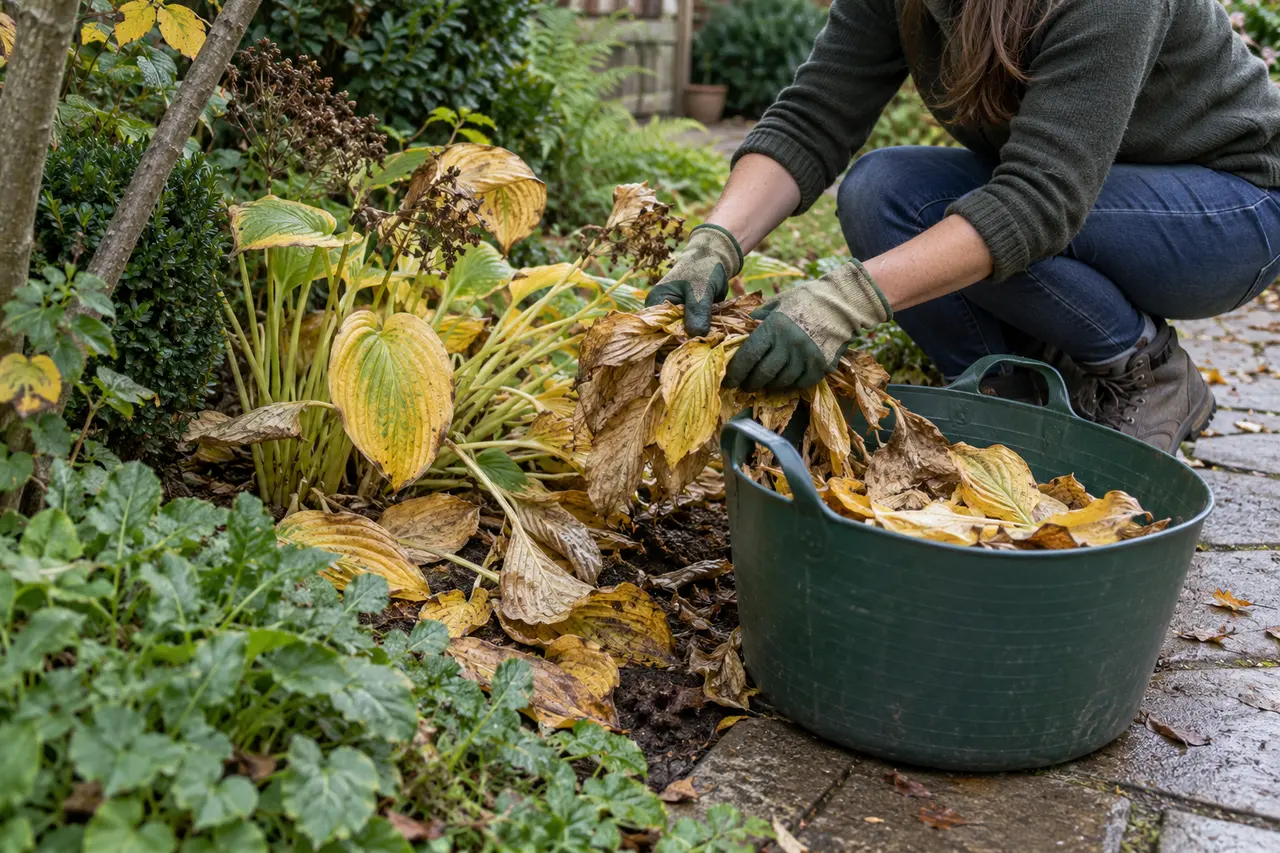
Collapsed foliage gathered without lifting the dormant base
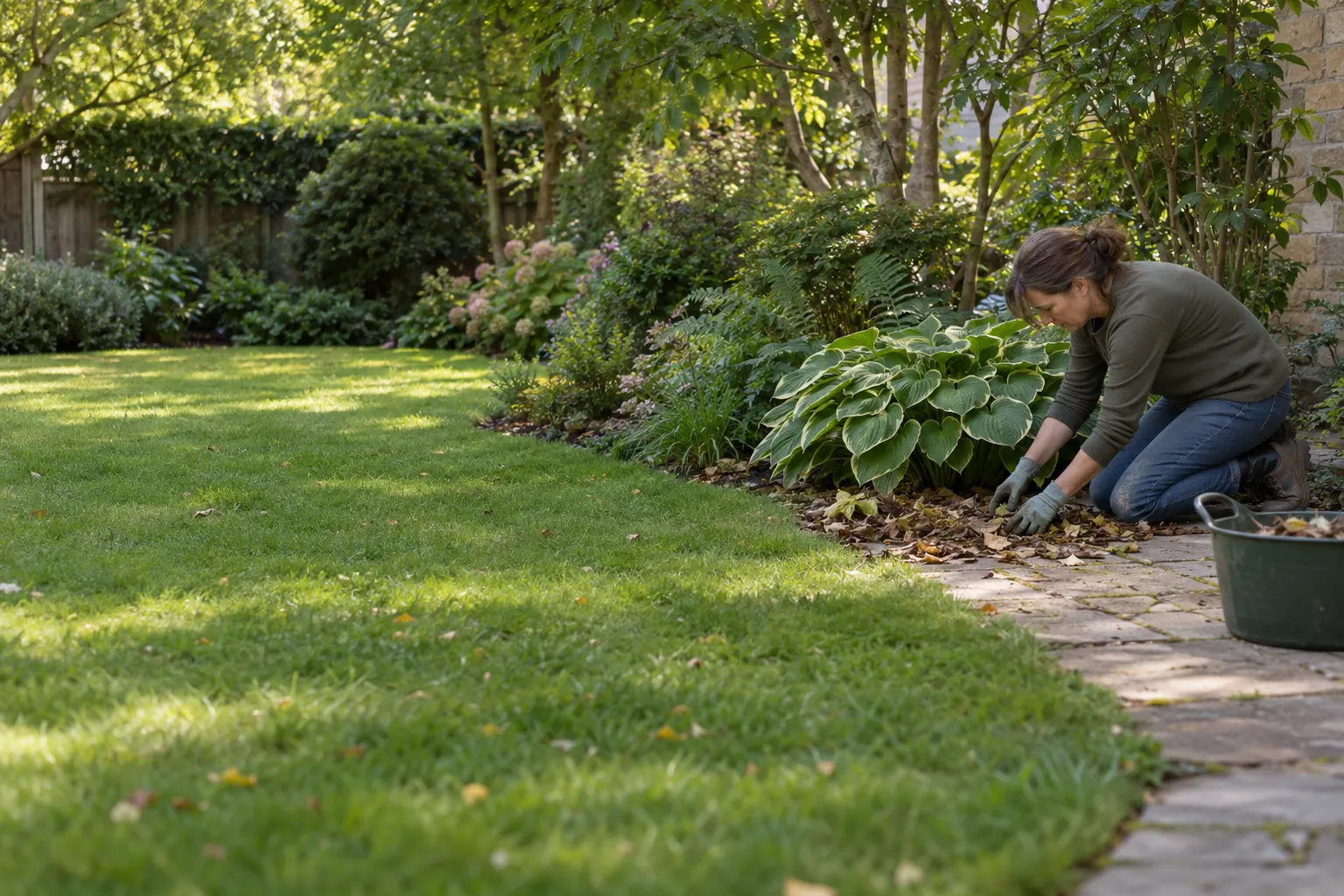
We let the hosta’s natural autumn dieback determine this collection stage. Still-useful green leaves are not removed simply because other border plants have finished. Once foliage has collapsed appropriately, the team gathers manageable portions into a nearby container, following visible attachments and keeping the base identifiable. A resistant mass is not pulled out whole as though the plant itself were part of the outgoing seasonal material.
Our garden clean-up can collect that foliage without lifting the hosta. Small pieces mixed with tree leaves are gathered through controlled hand work at the accessible surface. The former summer mound then becomes a much quieter planted position, which remains in the work record. Subsequent gardening can use that information before approaching ground that now looks open but still contains the dormant plant.
The collected foliage follows the garden-material destination, with known plant-health concerns identified before material is combined with a retained home-compost load. The operation leaves the dormant base available for its next growth cycle and the adjoining route clear of loose slippery leaves. The outgoing material is moved to its destination, not merely relocated into an unexplained heap beside the plant that has just been cleared.
Hedge work beside the hosta bed
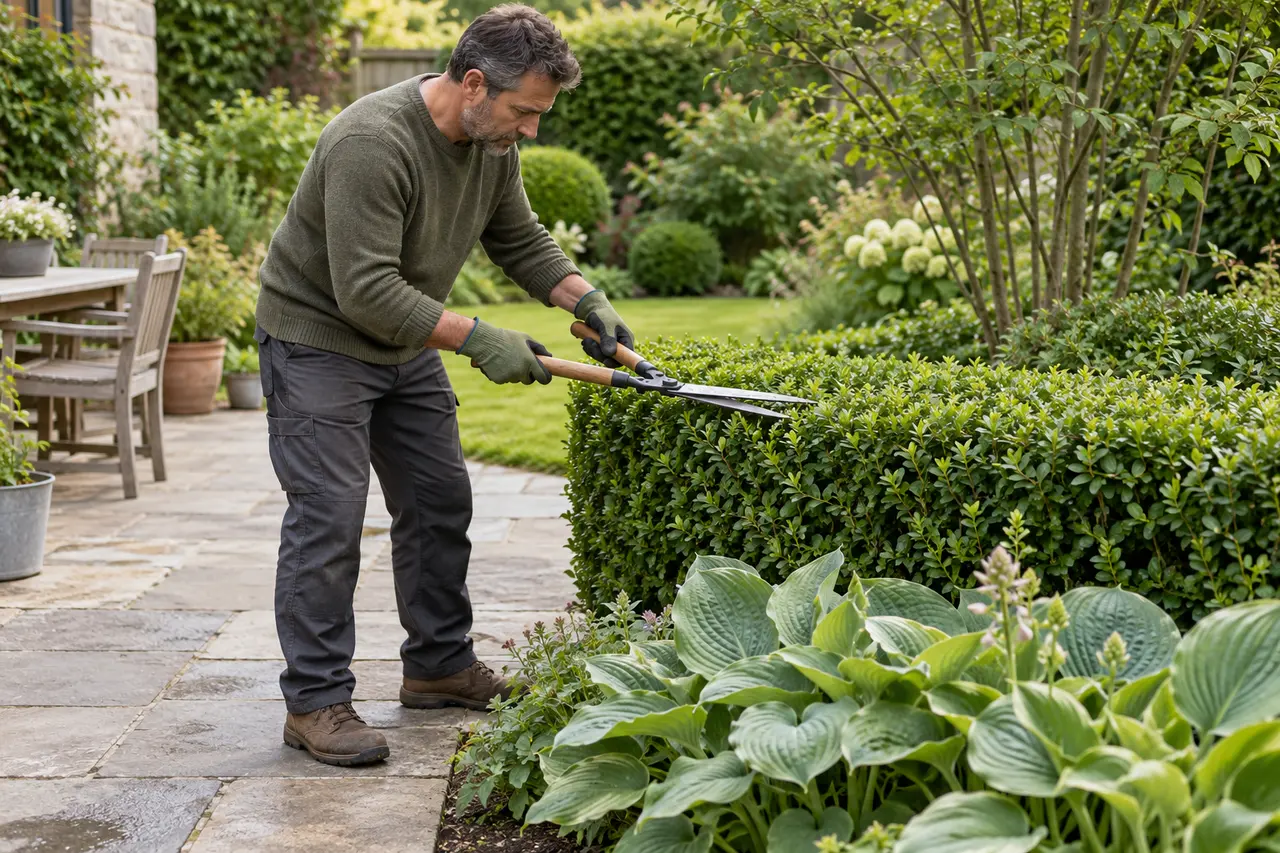
The working stance allows for foliage above ankle height
We select the hedge-working position with the hosta’s full spread in view. A gap at ankle height may still leave little room for elbows or shear handles above it. The reachable portion or approach is adjusted accordingly, keeping the clump out of the tool movement. Broad leaves are not bent down simply to make the foreground appear vacant while boundary work takes place behind them.
The hedge receives cutting appropriate to its species and growth. Affected vegetation is checked for nests being built or in use, with disturbing work postponed. Where the operations can share a visit, loose hedge fragments are collected from the accessible foreground after cutting. This finishes the boundary without adding an unrelated leaf-trimming pass across the hosta beneath it.
The loaded route for a sheet or tub is considered when collection is positioned. We move manageable batches from the open side, keeping broad leaves outside the carrying movement. Material gathered below the hedge is taken to its destination. This completes the boundary operation through withdrawal as well as placement, leaving the planting clear after the cutting face is finished.

Soil care during active growth
Watering directed to the root area
During seasonal garden care, we check the hosta’s soil and exposure before selecting watering at its root area. Its generally moist growing requirement is considered alongside recent weather and actual medium. Container plants receive attention for their restricted compost and drainage, while open-bed plants follow their own position. This gives each growing space appropriate care within the same maintenance visit.
In fertile border soil, an appropriate organic mulch can provide the feeding required. Our selection considers the plant and observed growing conditions, with drying or exposure distinguished from an assumed nutrient shortage. Any commissioned product and application follows that assessment. This keeps the hosta’s care specific while other plants and grass nearby receive the materials intended for their separate tasks.
Further services alongside foliage maintenance
Hosta selections consider leaf thickness and damage history
Our planting-design discussion can consider thicker, waxier-leaved hostas where slugs and snails repeatedly damage foliage. These cultivars are generally less readily eaten, but their growing requirements and intended appearance remain part of choosing the plant. The observed damage history informs that selection without turning it into a promise that no leaves will be affected. Colour in a catalogue is therefore one quality among the actual features considered.
Tree pruning selects the role of strong upright shoots
For an apple or pear, our tree-pruning proposal distinguishes upright watershoots worth developing from growth congesting the structure. Selected shoots may be shortened to an appropriate outward-facing side shoot in accordance with the tree’s requirements. The operation establishes where the next growth is intended to develop. It does not simply level every upright to one height, because the individual shoots can have different roles within the continuing framework.
Cleaning equipment receives its specified inlet supply
Water connected to pressure-cleaning equipment follows that unit’s instructions, including any inlet-temperature limit. A warmed tap is not used solely because water is available there if the machine requires another feed. The setup establishes the permitted supply before connection. This equipment requirement concerns water entering the unit and remains distinct from choosing the cleaning method that the paving itself can tolerate.
Gutter access excludes fragile glazing as a standing surface
For gutter cleaning above a conservatory or rooflight, the approach accounts for fragile glazing beneath the channel. Glass is not treated as a convenient weight-bearing platform, even where it offers a clear view of the gutter. The operation requires a safe working arrangement and appropriate precautions without stepping onto it. This keeps visual access separate from a route that can actually support the person and equipment.
Living seasonal trees monitored for warm-induced growth
Care information for a pot-grown Christmas tree identifies the effect of prolonged indoor warmth on dormancy. Bud opening and new growth are considered changes in the living plant’s condition alongside its older needles. The display period is kept appropriately brief for the selected tree. This gives the seasonal arrangement a practical account of its growth stage, supporting the next care decision after indoor use.
Gardening time for individual leaf and soil work
Our quotation identifies leaf selection, accessible weeding and the other commissioned tasks alongside the general gardening rates below. Supplied materials and any distinct plant operation remain clear parts of the arrangement, reflecting close hand work as well as the larger cutting jobs.
| Gardening time | Guide rate |
|---|---|
| First hour | £83 |
| Each subsequent hour | £65 |
GBP guide rates. The complete quotation sets out waste arrangements, VAT treatment and any applicable parking, congestion or access charges. The specified foliage care remains distinguishable from separately requested work elsewhere in the garden.
Hosta details that inform the finished work
Will a hole in a mature leaf fill in after a tidy?
The team selects damaged-leaf removal in the context of the whole plant. Collection does not replace missing tissue in an existing leaf, although useful foliage can continue contributing despite a hole. Our finish reflects that distinction instead of promising an undamaged outline from the same leaf after a tidy. The plant’s remaining growth guides what is left in place.
Must every faded hosta flower stalk come off immediately?
Flower stalks are distinguished from the hosta’s broad leaves. They can remain until autumn collection or receive appropriate removal after flowering where seed production is not wanted. We identify that particular operation before cutting, so attention to an upright spent stalk does not become a reason to lower the entire clump. This leaves its useful foliage working within the bed after the chosen flower task.
Is a small-leaved hosta always a young large variety?
Our planting record distinguishes a miniature cultivar from a small young division of a larger hosta. Both can appear modest when first planted but develop differently. The actual identity and expected mature spread stay associated with the position, guiding the space and subsequent care provided. Small leaves are not assumed to indicate an immature version of the same large plant found elsewhere in the border.
Is a blue-grey surface necessarily dirt on a hosta leaf?
Blue and grey hosta foliage can carry a natural waxy coating. Our ordinary bed care leaves that characteristic intact, with loose litter collected separately instead of polishing the leaves to one green surface. The observed colour is considered as part of the plant’s appearance before cleaning is proposed. This keeps a natural foliage feature separate from actual debris lodged on or between leaves.
A recognisable clump through its changing leaf stages
Our garden care in Hither Green carries the plant’s position and identity through emergence, the broad summer mound and autumn dieback. Each stage receives its own close operation, with loose material gathered and access to the growing area maintained. The finished work gives the next visit a known plant to care for, even when the visible space it occupies has changed substantially.