

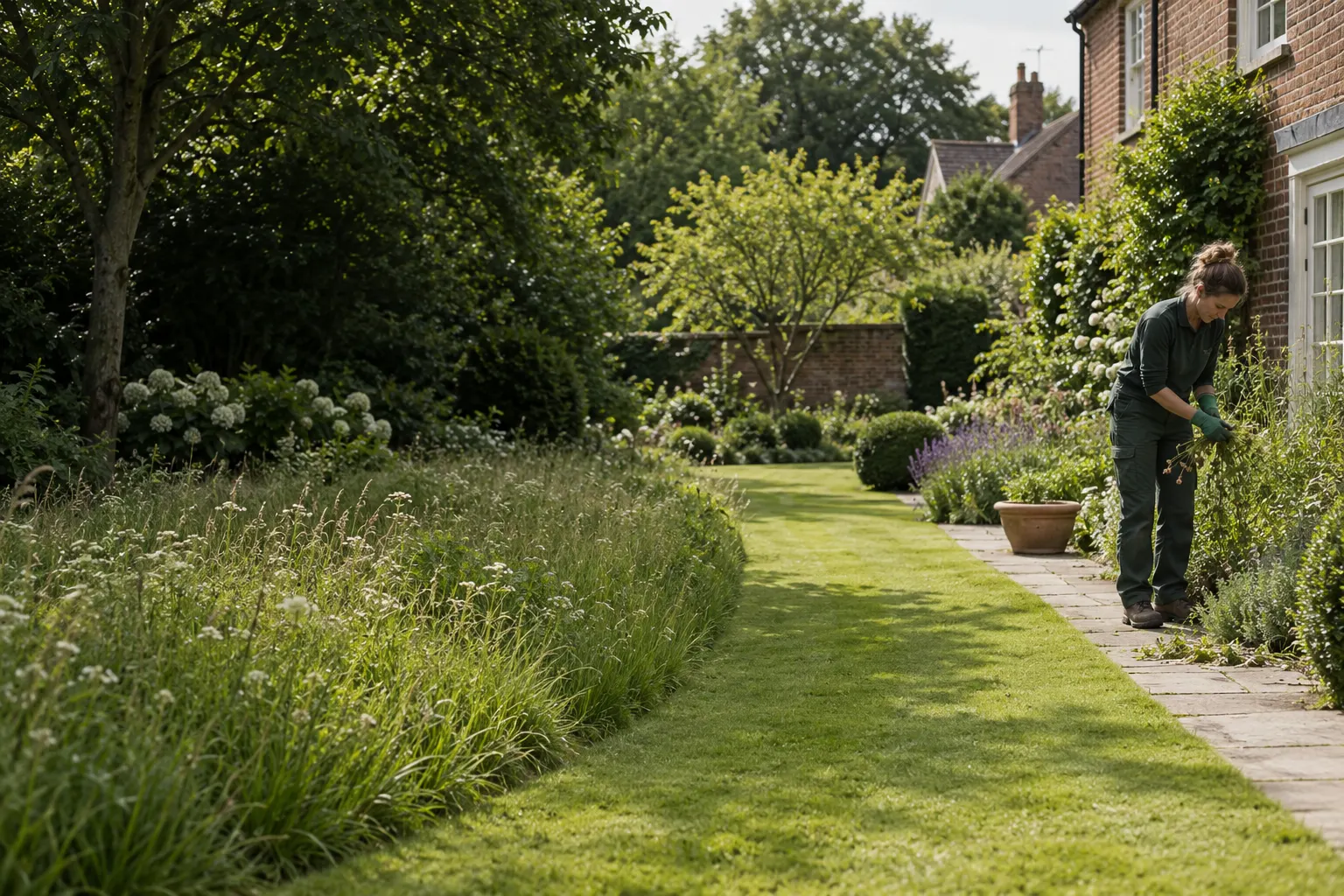
Hayes · Maintained routes alongside deliberately longer grass
Gardeners Hayes
We maintain defined mown routes and short lawn areas alongside selected longer grass. The work follows their intended pattern, with connections and planted-bed edges finished and loose material collected. Hedge trimming and seasonal attention are organised for the same arrangement, leaving each growing area with the care and cutting stage chosen for its purpose.
- How do you finish intersecting mown routes? We attend to the junction and inside corners as one connection, collecting the loose cuttings after both arms have been worked.
- How are hedge clippings collected beside retained grass? Our gardeners establish a suitable external working position and manageable collection method, keeping fresh hedge material out of the retained strip.
Mixed grass lengths maintained to a defined pattern
How do your gardeners maintain routes through longer grass?
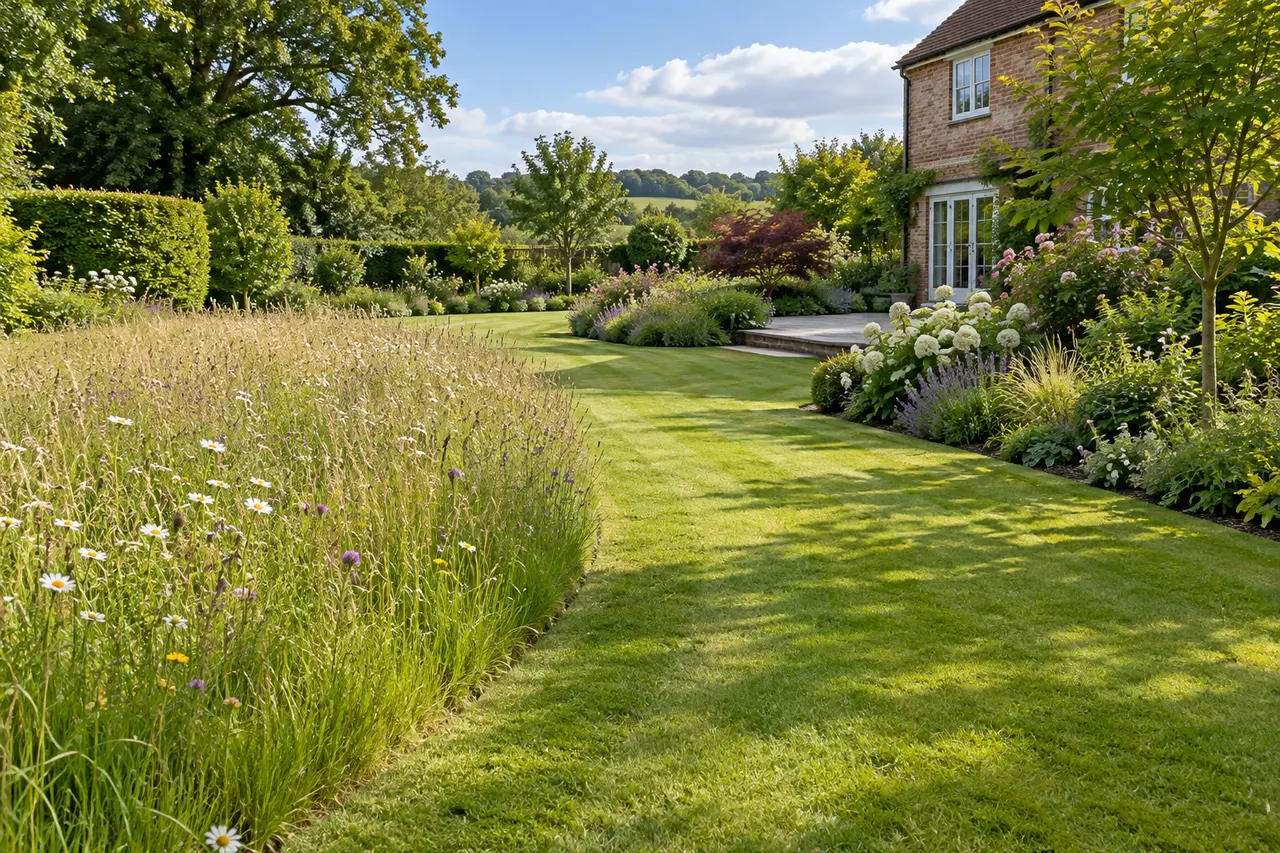
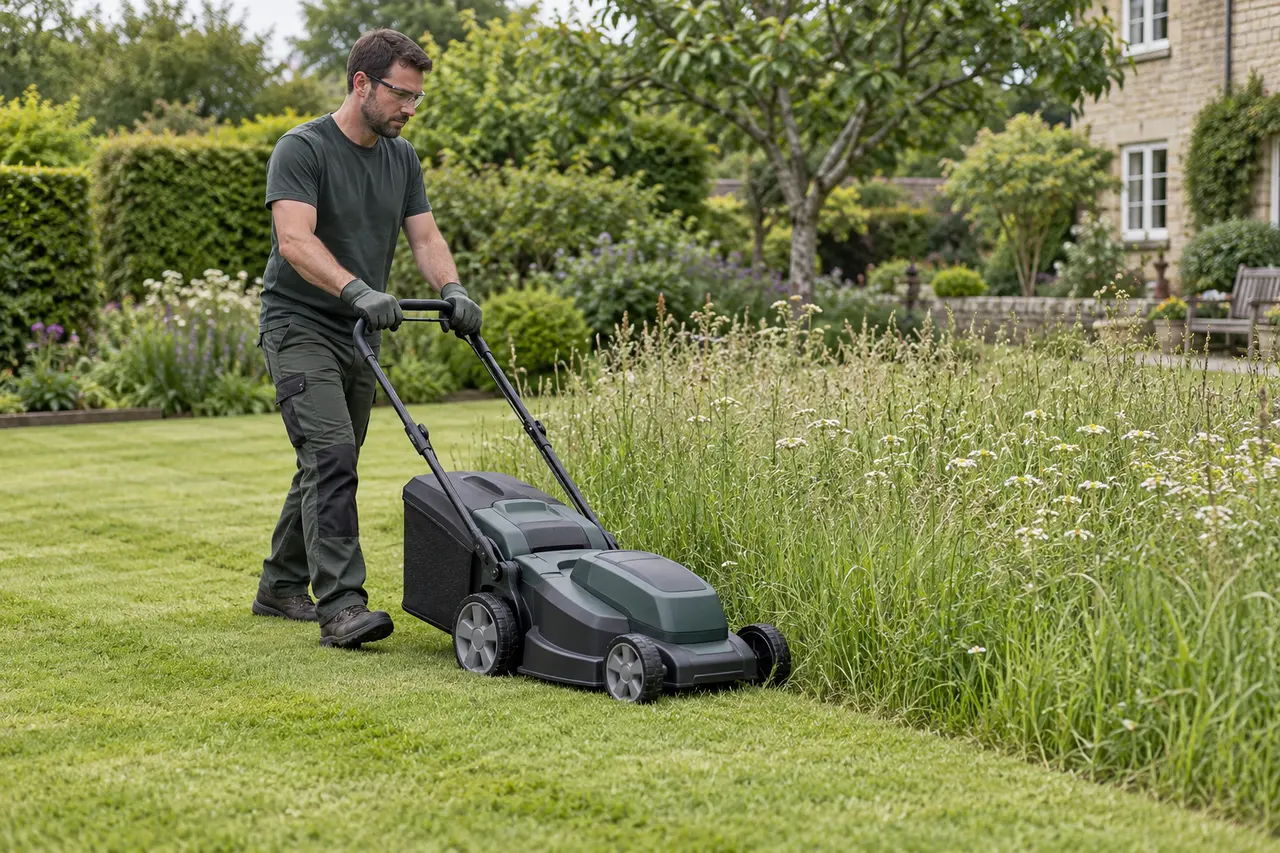
We identify the intended route and longer patches before mowing. The shorter grass provides usable access, with its connections and edges attended to during the cut. Areas being kept long remain identifiable through the work. This gives the visit a clear pattern to maintain, preserving the different finishes while the plants and everyday routes around them receive attention.
What attention does the retained area still receive?
The retained space remains part of the garden’s maintenance plan, including loose objects, access and material gathering at its edge. Leaving grass longer does not make it an uninspected storage area. Where a later cut is commissioned, the area and timing are identified as a distinct operation. That keeps continuing route care separate from a larger cut that is not automatically repeated on every ordinary lawn visit.
A legible mowing arrangement
Routes maintained for their actual purpose and use
Our gardeners maintain the transition between route and longer grass for its purpose on the ground. Access to a seat can require a different width from a decorative line seen from the house. The arrangement includes that usable connection and the space needed to work along it. This gives the pattern a practical function alongside the view it creates across the garden.
Where short routes meet, our garden maintenance includes the junction as part of the completed connection. The gardener checks available turning space and uses a suitable method at the inside corner, then collects loose material after both arms are worked. This leaves a continuous usable route between the finished areas. The meeting point is not treated as an incidental tuft between two separate strips, nor used as the final holding place for their clippings.
- We identify the complete route before the mowing pass.
- Retained long grass stays distinct from planted-bed growth.
- Loose objects are collected from the shorter cutting area.
- Cut material is gathered away from retained vegetation.
- Later cutting of the retained patch remains separately specified.
Finishing the shorter grass
Connections around paving receive their own attention
Where stepping stones cross the route, their levels and edges inform the finishing method. Hand work can attend to narrow gaps while the mower follows accessible grass. Loose clippings are gathered from stone tops afterwards. The completed route therefore includes the paved connections as well as the cut surface between them, leaving both available for ordinary use.
Our lawn care addresses the shorter area separately from retained growth. A worn route may need another proposal, while routine mowing does not automatically supply feeding, seed or reconstruction. The agreed finish covers a suitable cut, reachable edges and collection from adjoining usable surfaces. The deliberately uncut portion remains part of the intended pattern, not a defect to remove simply because it looks different from the freshly maintained route.
Hedge work beside the retained strip
The clipping load kept out of longer grass
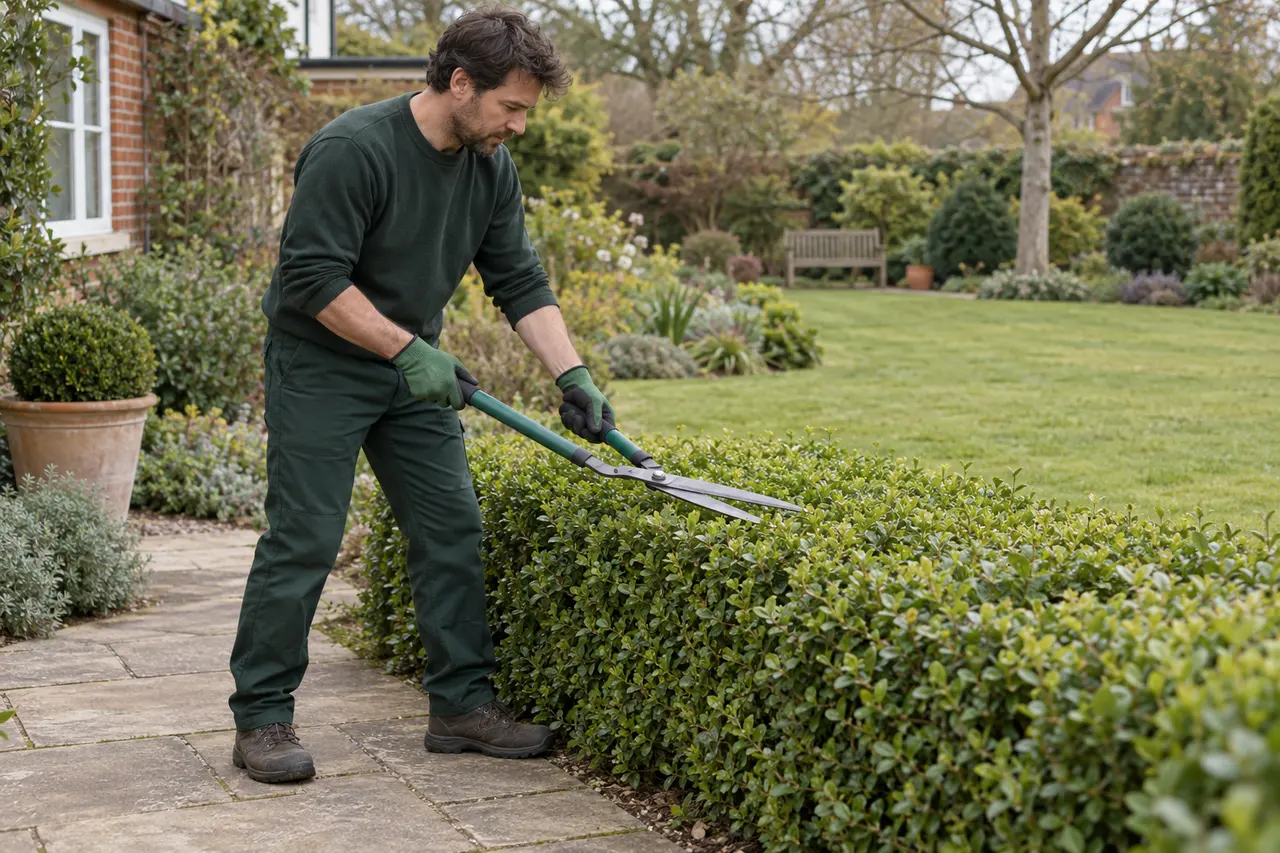
Long grass beneath a hedge can hold fragments less visibly than short turf. Before trimming, we establish a manageable collection method and suitable position outside the retained growth. Equipment, including manual shears where used, needs enough room for controlled movement. The longer strip is not used as a concealed place for tools, standing or the material falling from the boundary. Collection is arranged around the pattern already being maintained.
Reachable hedge extension is trimmed for the plant and intended screen. Checks for nests being built or in use precede cutting, with affected work postponed. After blades are closed, accessible fragments are gathered gently around the growth kept below. Larger woody work or unsuitable reach is separately considered. This keeps the boundary operation and lower planted layer distinct throughout the visit.
Selective collection within retained growth
Loose obstructions removed without widening the clearance
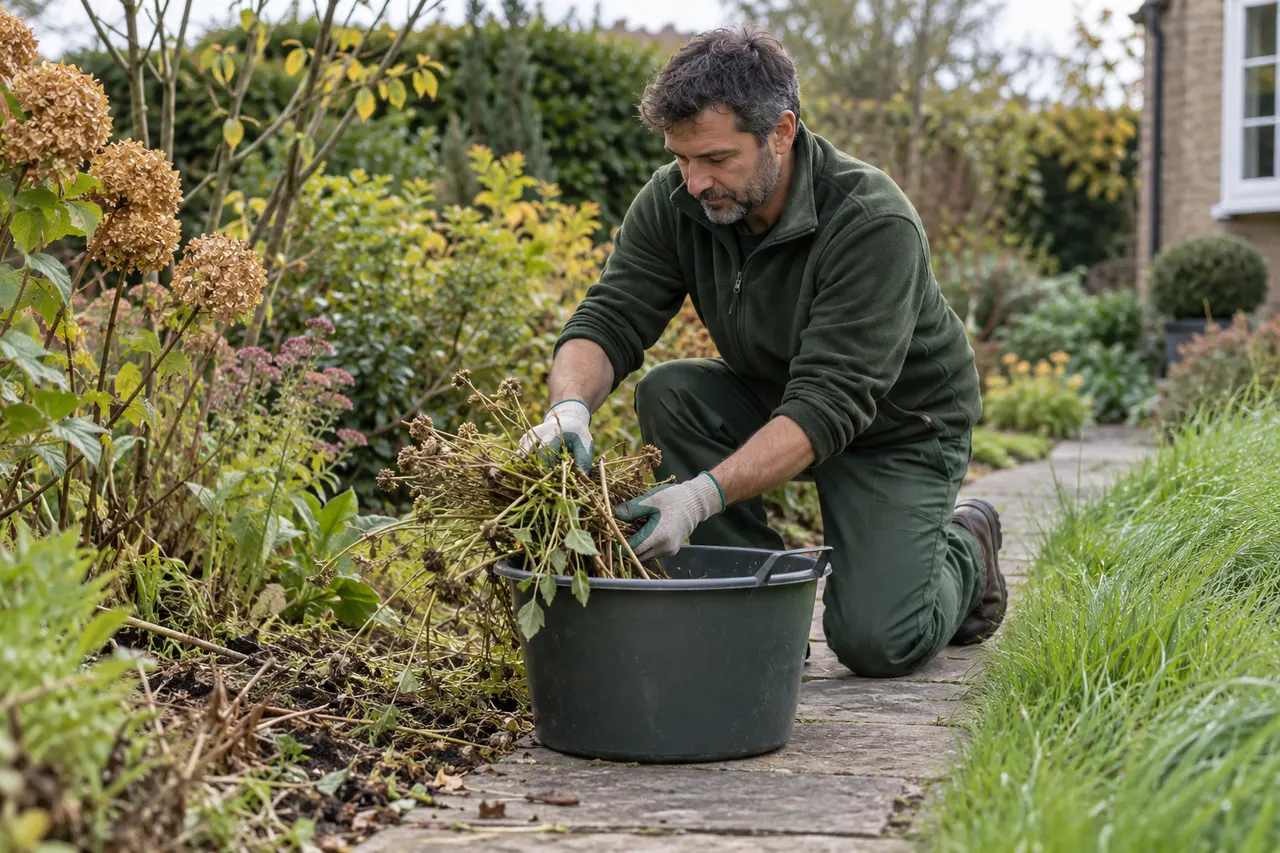
Our gardeners identify loose branches and detached tangles within the longer patch, then lift them in manageable portions. The surrounding growth is left in place while the obstruction is brought into the collection route. This provides surface attention within the area being kept, with its living stems still recognisable after the outgoing material has been gathered.
Our garden clean-up distinguishes recovery areas from intentionally retained patches, allowing different tasks to share a visit without losing their limits. The garden-waste guide separates green stems from old supports and unrelated rubbish in the collected load. Its receiving position remains outside the route needed for continuing work. A mixed pile is not hidden in the longer growth simply because that position is less conspicuous than the maintained path beside it.
The planted border beside the pattern
Selective bed work without extending the mowing area
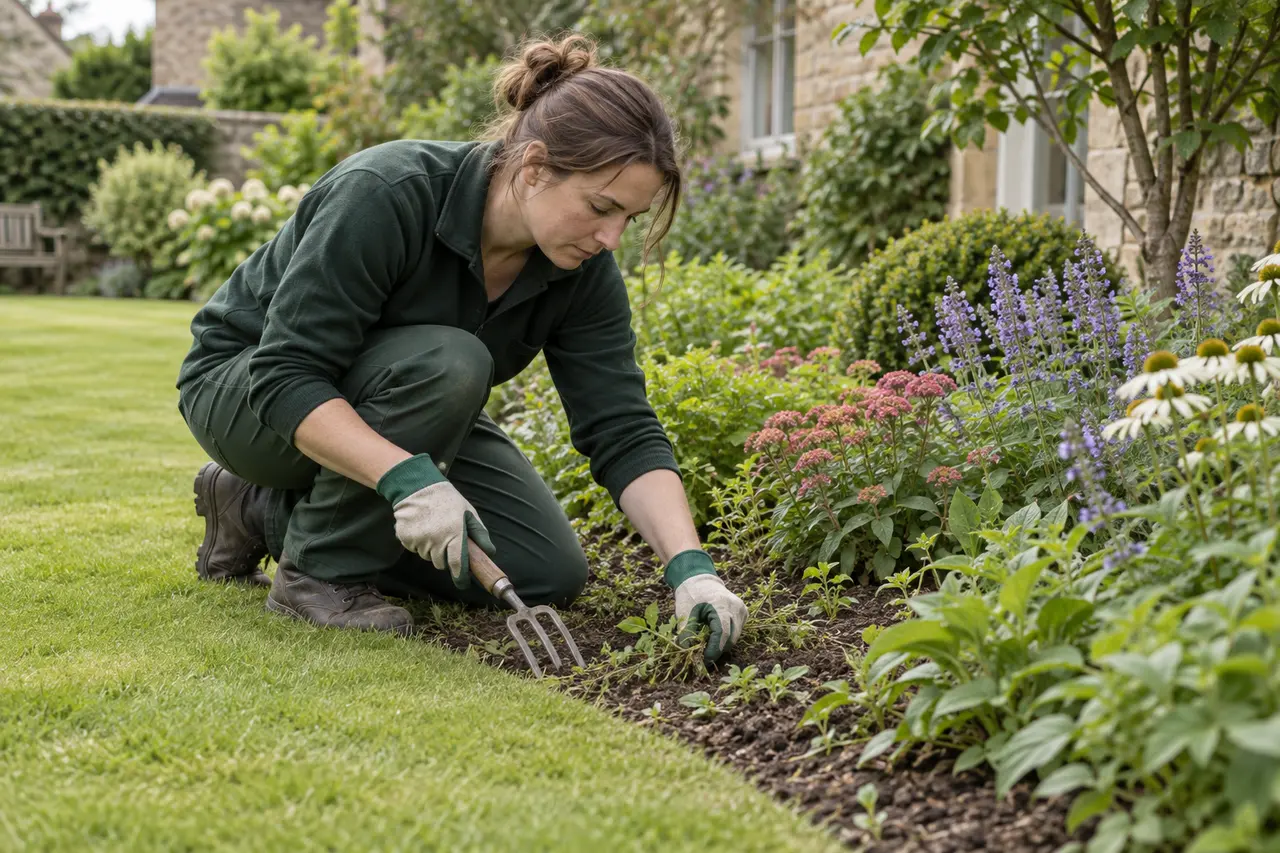
Grass entering a perennial clump is distinguished from the deliberately retained grass outside the bed. Our gardeners work selectively at that junction, loosening unwanted growth with attention to the plants being kept. The finish provides enough separation to recognise and reach the planting. It is not a bare strip created for appearance alone, and the mower is not extended through the bed simply because adjacent stems have a grass-like form.
Commissioned planting considers expected spread beside the mowing pattern. We set out the positions with access and watering in view, including how a developing plant may narrow the route. Supplies and substantial changes are described separately from routine mowing and weeding time. The completed arrangement then has a defined place for the new material alongside the grass finish already being maintained.
A separately commissioned later cut
Retained growth reviewed for its next cutting stage
When a later cut is selected, we review the patch again for the actual taller growth and ground conditions. The routine route setting is not automatically reused. Accumulated material may require a different initial operation, with a collection arrangement suited to what the cut produces. This allows the retained area to be managed through changing stages without presenting each one as the same small established-lawn pass.
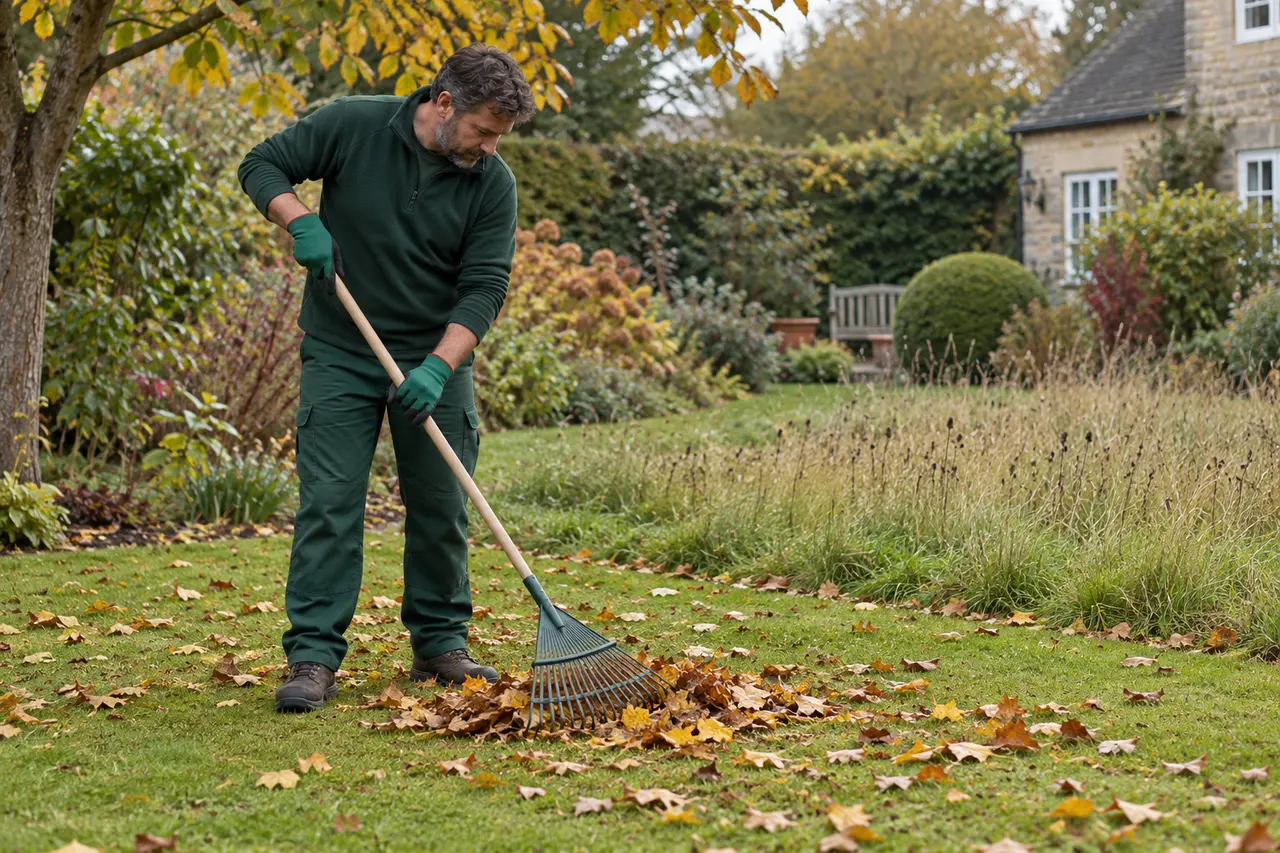
We collect accessible leaves from the short route before they hide its edge. This seasonal maintenance task keeps material moving to its agreed destination while the longer patch remains in place. The two areas retain their different finishes through the collection. The route stays usable and the adjacent growth remains outside the load, with its later cutting stage still separately identified.
Further services for different garden decisions
Design distinguishes a mown route from a hard path
Our Garden design can consider whether a maintained grass route provides the intended access or whether a permanent surface is needed. These choices create different arrangements and continuing maintenance requirements. The proposal considers ordinary use and the work involved in keeping each option usable. A preference for a crisp line alone is not treated as a reason to introduce construction when the mown connection may already fulfil the required purpose.
Tree proposals identify fungal growth at its actual position
Our tree-care assessment records a bracket attached to the trunk as a specific concern. Such fungi can involve decay in wood, while a photograph alone cannot establish its extent or operation. The growth informs appropriate consideration and stays distinct from lawn mushrooms. This preserves the observation needed for assessment instead of removing it during ordinary cosmetic tidying.
Paving washing follows appropriate pet-waste preparation
Where pet waste is present, its collection is arranged before the proposed jet washing. Pressure washing is not used as the pickup method, because it can spread the material across the working surface. This preparation remains distinct from collecting ordinary leaves and loose soil. The paving-cleaning proposal therefore addresses the suitable surface operation without presenting it as an included pet-waste collection or disinfection service.
Gutter maintenance with an identified continuing arrangement
The gutter-cleaning service can cover one-off or expressly arranged continuing attention. For ongoing work, the sections and proposed later operations remain identified in the arrangement. Completion of one clean does not itself create another appointment. This gives the household an understood service sequence and the next visit a defined rainwater run to attend to.
A living seasonal tree considered through future growth
A pot-grown Christmas tree intended for reuse remains a developing plant. Later displays and handling account for changes in height, spread and weight, with appropriate keeping space and continuing care considered. This gives reuse a practical basis over time. The selected product is not represented as an indefinitely portable size or a guarantee that annual displays will remain unchanged.
Gardening time for the chosen cutting pattern
Our quotation identifies the route, its turns and accessible edging together with the cut material gathered. The general rates below guide that gardening time. A later cut of the longer patch is described for its own growth and handling requirements. This keeps routine route maintenance and a different seasonal operation clear within the full proposed arrangement.
| Gardening time | Guide price |
|---|---|
| First hour | £83 |
| Each subsequent hour | £65 |
GBP guide rates. The complete quotation identifies the commissioned scope, waste handling, VAT treatment and any applicable access or parking charges. Routine route care and a different later cut remain distinguishable within that arrangement.
Maintaining different grass finishes within one garden
Can the mower turn within the retained long patch?
Our mowing plan provides a suitable turning position outside retained growth, or another appropriate method for a tight connection. The long patch is not assumed available for manoeuvring: its surface may be less visible and repeated turns can flatten the stems being kept. This leaves the route workable without using an apparently spare corner to undo the adjacent maintenance intention.
Should loose leaves on the short route be blown into the long grass?
Leaves from the short route are gathered to the agreed destination. Blowing them into neighbouring growth would merely move the collection task to a less visible position. Our finish keeps the two areas distinct, allowing the shorter route to remain usable while the retained patch keeps its intended character. The latter is not used to receive every unwanted accumulation produced by maintaining the former.
Does a retained grass patch need to reach a particular height?
The purpose, growth and conditions inform the height and later cutting of a retained area. Our maintenance follows that defined finish, preserving the distinction from a prescribed meadow scheme. No particular plant mixture is implied simply by leaving grass longer. The patch stays within its intended use while its actual development guides the next operation.
Can the route still be cut if the long patch is wet?
The gardener considers the working ground and access separately where part of the area is wet. Firm grass may remain available for cutting while another section waits, provided the route avoids damage. This gives the visit an appropriate division of tasks. The available method follows both the area ready for work and the ground required to reach it.
Is the border weeded even when neighbouring grass stays long?
Where bed care is included, our gardeners weed selectively among perennials beside the longer grass. Their intended boundaries remain clear, preserving planted clumps and their care space. The adjacent grass can stay long while the border receives its ordinary attention. This maintains the two growing areas for their different purposes without extending the mowing route through the planted bed.
A maintained route and a deliberately retained patch
Our garden-care services leave a defined maintained route beside the grass deliberately kept longer. Cut material follows its collection arrangement, with paths and carrying positions clear. Where the patch needs a later operation, that task is identified for its actual growth stage. The result is a usable garden pattern carried through the changing season with both finishes understood.