

Finchley · Lawn establishment and adjoining garden care
Gardeners Finchley
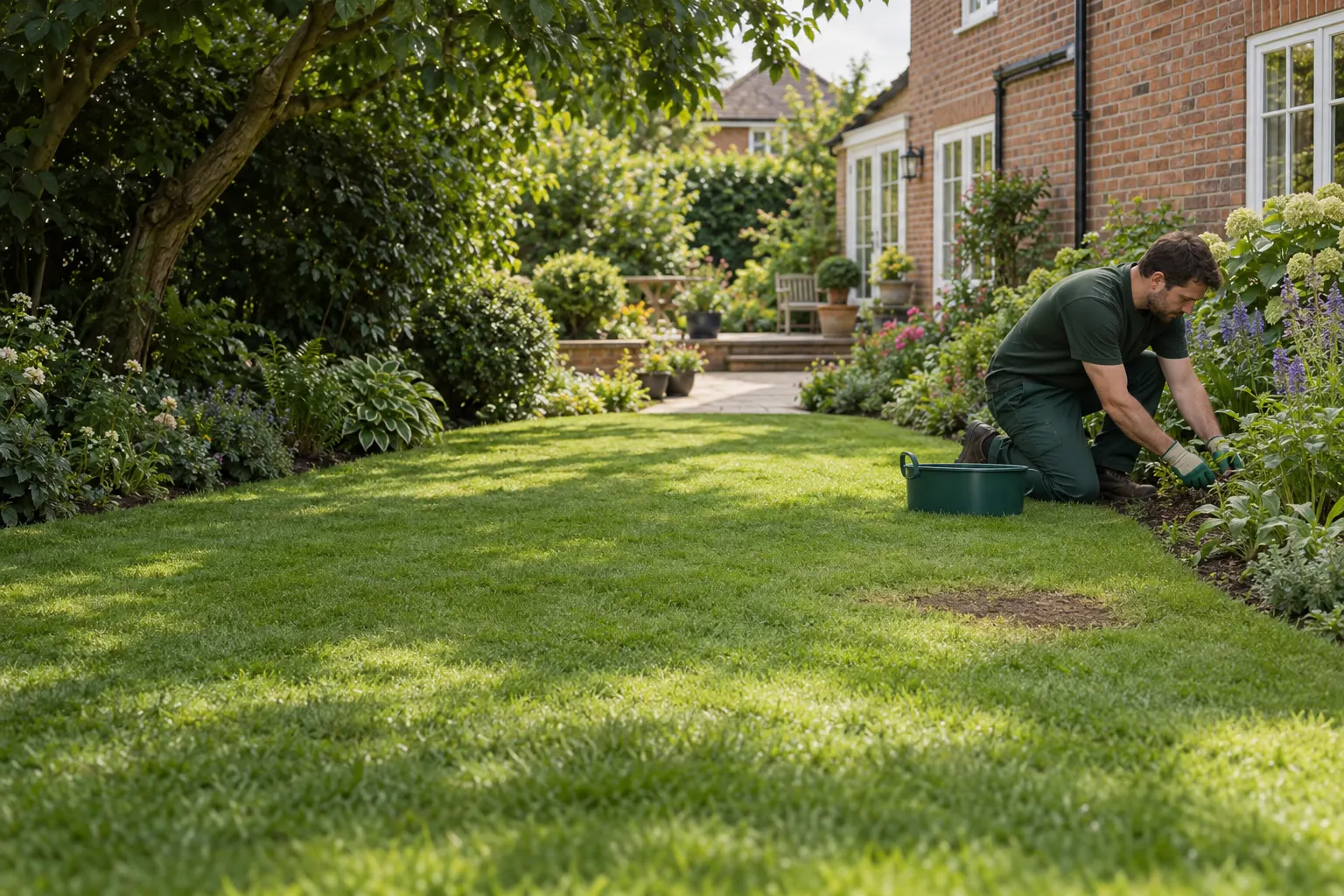
Our gardeners prepare existing lawns for commissioned overseeding and maintain the surrounding garden while new grass establishes. Seedbed preparation, mature-grass mowing and planted-border care are sequenced for their different surfaces, with the developing area kept clear of routine equipment movement and the adjoining plants receiving close attention.
- How do you prepare a lawn for overseeding? We collect loose litter and prepare the selected existing lawn for seed contact, using the agreed mixture and its care requirements.
- How is young grass handled during other work? Our mowing and material routes leave establishing areas outside routine traffic, with adjoining work approached from suitable firm ground.
Established lawns, new seed and coordinated gardening
Does a routine mowing visit also include overseeding?
Our routine mowing maintains existing grass. For commissioned overseeding, we identify the receiving area, preparation, seed supplies and subsequent care as a distinct lawn operation. The gardener prepares the surface for the chosen mixture and keeps ordinary cutting requirements clear elsewhere. The quotation describes the recovery work and materials alongside the time allocated to mowing.
How do your gardeners work beside a newly seeded area?
We organise suitable neighbouring tasks around the protected surface, using firm paths or established ground for standing and carrying materials. Hand weeding and reachable boundary work can proceed where that arrangement leaves the seedbed undisturbed. Equipment movements and collection positions are planned together, so the emerging lawn does not become a shortcut between otherwise separate jobs.
Preparing an existing lawn for new grass
Loose material collected before seedbed preparation
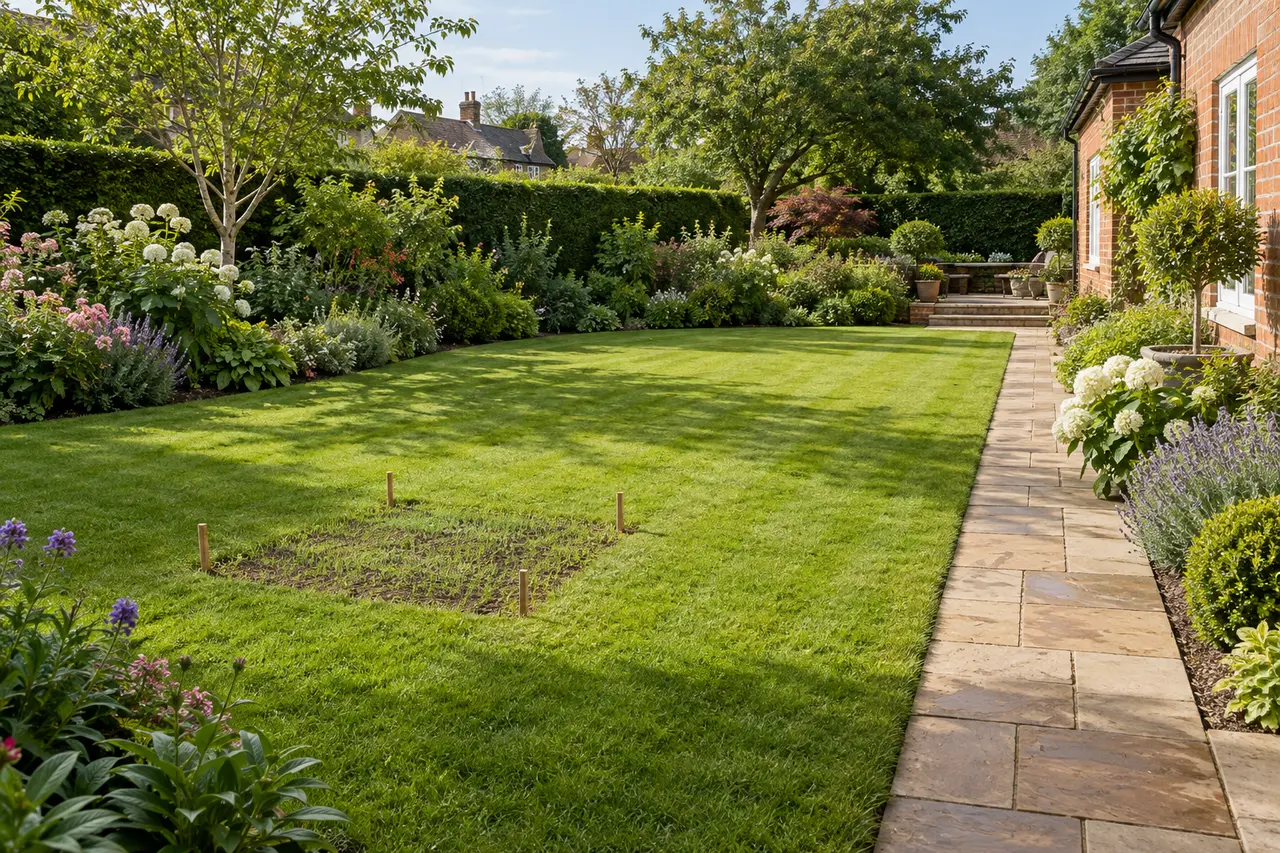
For an agreed overseeding operation, our gardeners distinguish the grass already growing from the seed being introduced. Loose leaves and mowing debris are collected before the chosen preparation, leaving the receiving surface available for appropriate seed contact. The seed mixture, worked area and required supplies form part of the operation. We do not use a final scatter over uncollected litter as a substitute for preparing the lawn. This sequence also leaves the household with a clear account of the surface that has actually received new seed.
Our lawn-care service covers mowing and specifically commissioned recovery, including overseeding. The quotation identifies the receiving lawn area, preparation and follow-up. Where feeding or soil work is required, its purpose and materials are described. The service provides an appropriate starting opportunity for new grass within the existing lawn, with progress considered against the seed, growing conditions and continuing care available there.
- We collect loose litter from the selected receiving area.
- Equipment turning is kept outside establishing grass.
- The chosen seed mixture remains identifiable with its instructions.
- Hedge clippings are collected away from the seeded surface.
- Routine cutting continues on grass ready for that operation.
Cutting appropriate to the stage of growth
Preparation mowing and later cuts have separate purposes
Where a suitable preparation cut is included, the team uses it to ready the existing grass for the chosen seeding work. Later mowing is a separate stage. We review the young growth and relevant establishment instructions before bringing that area back into a cutting routine. The familiar machine setting used on mature grass is not automatically carried across to the newly emerging patch. That distinction keeps the preparation operation from determining every later decision without reference to the lawn itself.
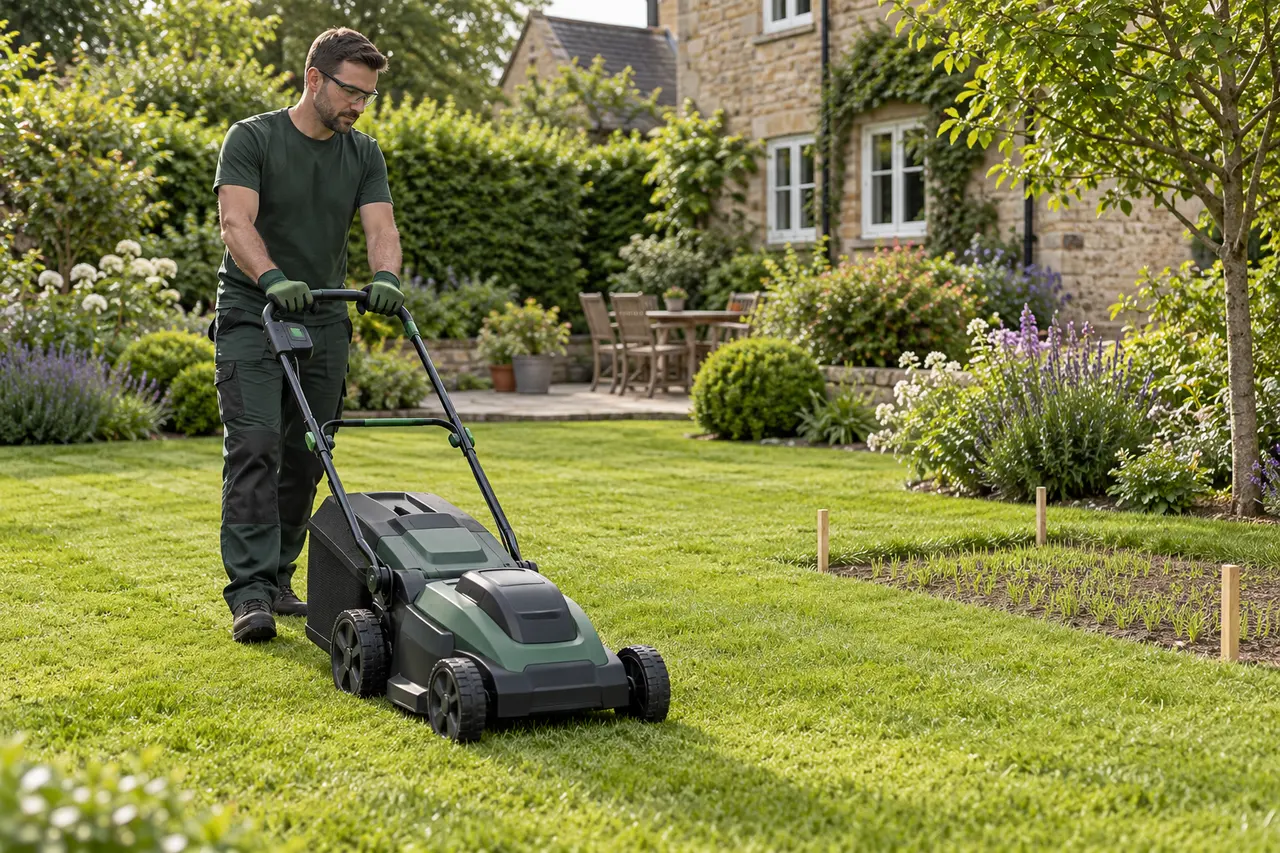
Established grass elsewhere on the property can still receive its normal attention while new seed is left to develop. Our gardeners use a suitable approach and turning position outside the establishing area, then collect the resulting clippings separately. The new patch is deliberately excluded from the mower route. It is not treated as an overlooked piece of the visit, nor used as the place to empty collected grass from an adjoining cut. Different stages of growth can therefore receive appropriate work within the same wider garden programme.
Clearance coordinated with the lawn operation
Bulky handling completed before the seed is applied
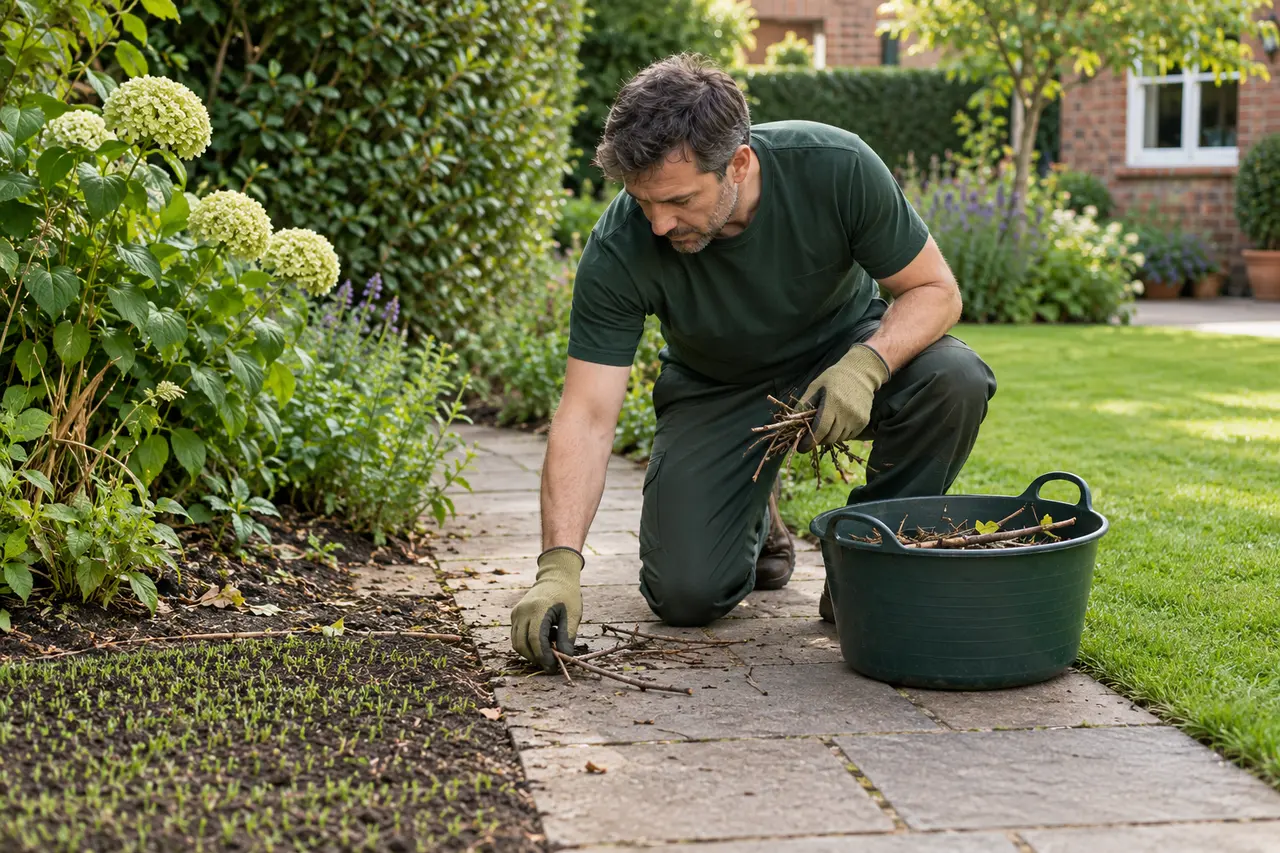
Before the seedbed is prepared, we collect the loose material included in the agreed clearance and move manageable loads to the selected collection position. Branch piles, old containers and other objects are identified while the proposed lawn surface is still available for the necessary handling. Vegetation is separated from unrelated objects. Finishing that movement first reduces the need to cross the newly worked area simply to retrieve something left behind, and leaves preparation focused on the ground that is intended to receive seed.
Where a substantial garden clean-up precedes the lawn work, we coordinate its clearance area, material and collection position first. The garden-waste guide distinguishes outgoing vegetation from supplies being kept. After sowing, the collection method changes for accessible later fragments, keeping the prepared surface and emerging growth in place. This gives the new lawn stage its own close handling after the earlier bulk clearance is complete.
Borders maintained beside establishing grass
Selective bed work from a suitable standing position
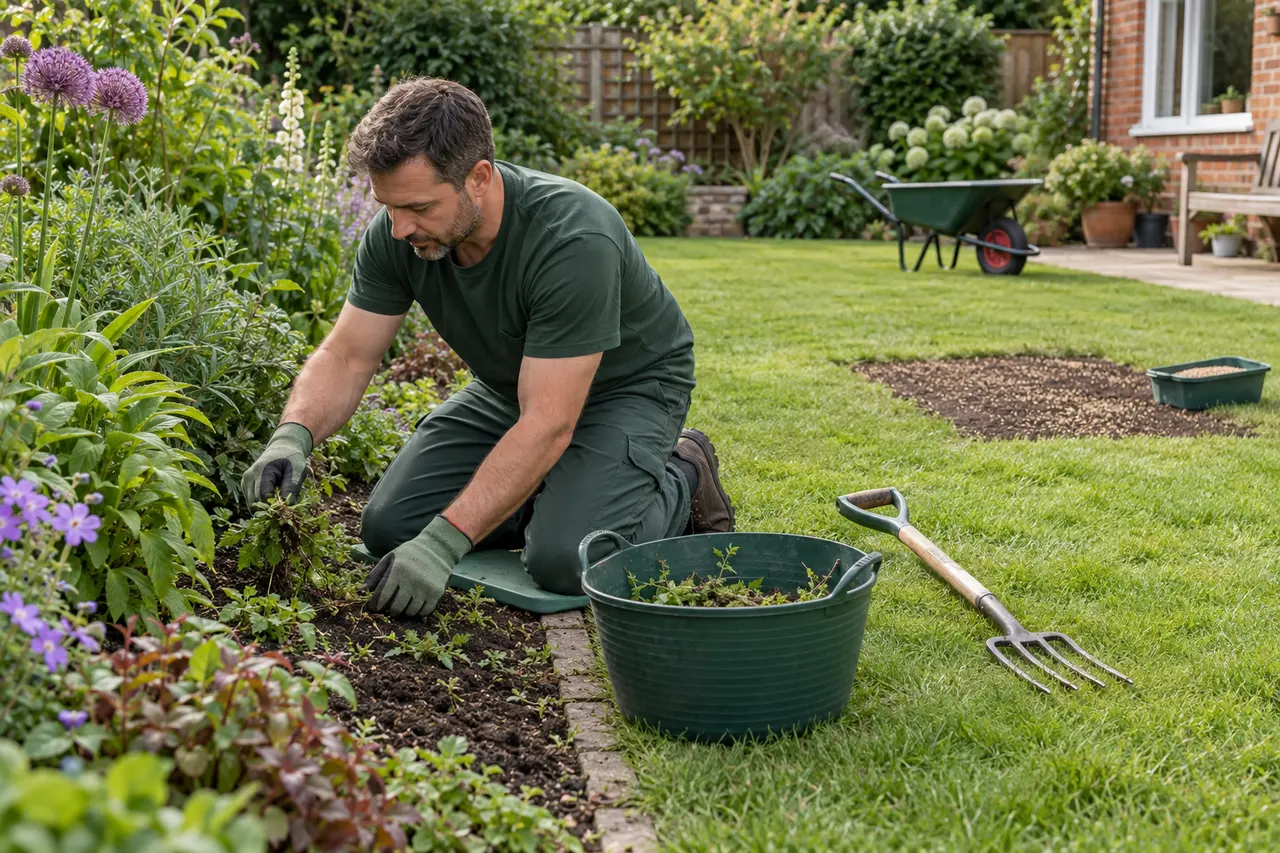
Our gardeners can continue selective weeding in an adjoining bed where a firm edge provides suitable reach. The team loosens weeds among retained plants and positions tubs and tools outside the establishing lawn. An open-looking seedbed remains part of the lawn operation, even before much green growth is visible. It is kept out of the kneeling and storage space used for the border task. This allows useful bed maintenance without treating an apparently empty surface as spare working ground.
Displaced soil stays within the bed operation, with planting pots and excavated material positioned outside new grass. Our Garden maintenance coordinates those tasks while preserving completed work. For commissioned additions, the plants and receiving positions are handled together, leaving the border attended to and its supplies gathered. The establishing lawn remains available for its own care beside the finished bed.
Boundary cutting alongside protected lawn areas
Hedge material collected without covering the seedbed
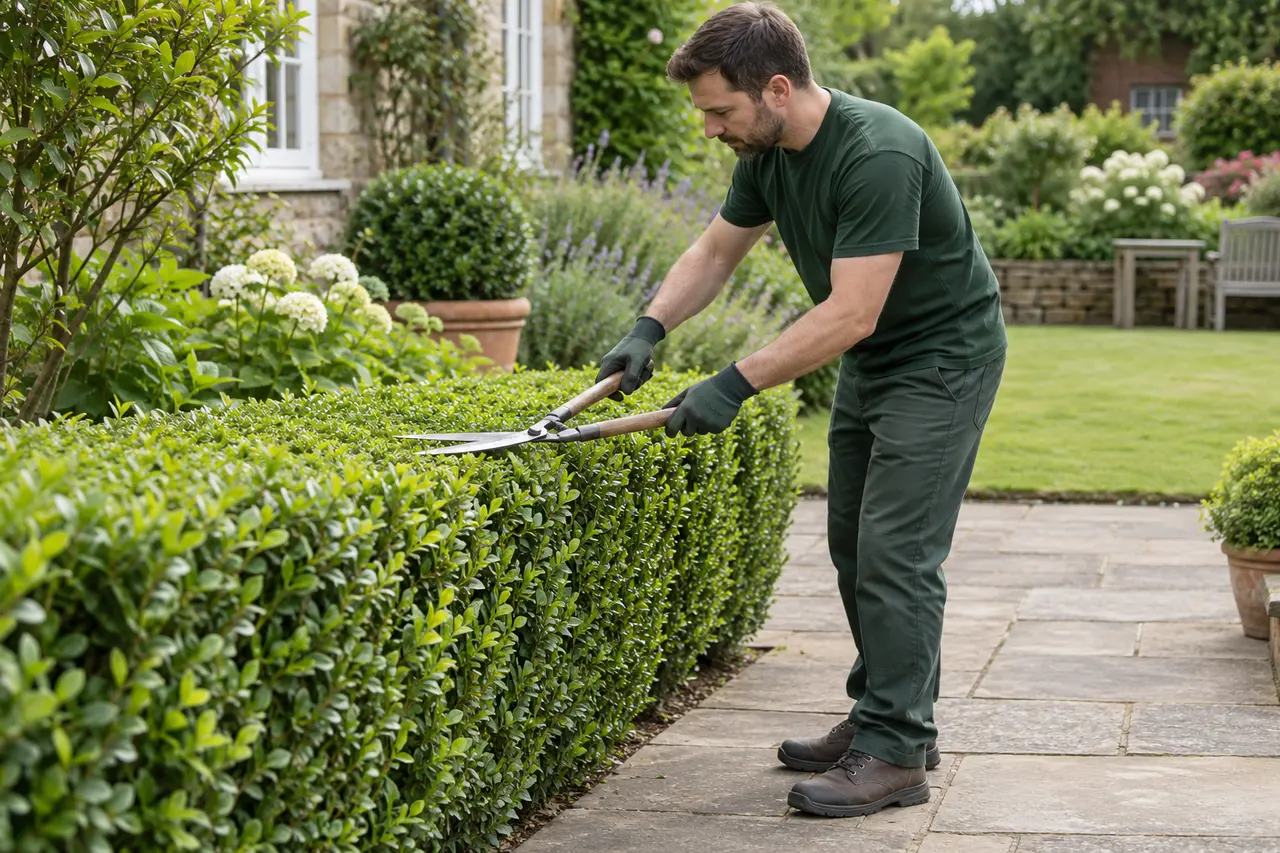
Hedge work includes the fall of clippings, collection position and loaded route out. Tubs or a sheet are set where they leave new grass uncovered. Our gardeners gather each accessible portion as the trim proceeds, keeping the seedbed clear and the boundary material within its collection route. The finish leaves the neighbouring lawn surface open for its continuing establishment attention.
The gardeners work on suitable reachable growth from firm ground and check for nests being built or in use, postponing affected cutting. Accessible clippings are gathered with the cutting tools closed. Where the available working position cannot protect the lawn operation, we adjust the sequence or timing of the tasks. The condition of the garden determines whether those jobs can sensibly be combined; a single visit does not require every planned operation to continue unchanged regardless of the surfaces around it.
Care following seed application
Subsequent work follows the lawn’s establishment stage
Where follow-up work is commissioned, we check the seeded area’s growth, receiving conditions and seed instructions before selecting its next operation. Watering and access arrangements remain clear. Early emergence is reviewed as one stage of establishment, while mature grass nearby continues on its own mowing programme. The two areas can therefore receive different attention during the same wider garden visit.
Accessible fallen leaves are lifted using a method suited to developing grass. Our seasonal collection work leaves the prepared surface and growth in place. We review the conditions where progress needs further consideration, then select the next care task for that area. Additional work follows that review, giving each stage an identified purpose and preserving the useful new growth already present.

Related services with distinct practical operations
Garden layouts that distinguish grass from other uses
Our garden-design discussion establishes which areas are intended to remain lawn and which would better serve another household use. The team considers the working layout and its maintenance implications before further lawn recovery is proposed for the same outline. Repeated seed application cannot resolve a decision to use a corner for something else. A revised layout is treated as its own project, while the seeding operation is directed to the grass area actually retained in that plan.
Tree work that preserves the established pollard framework
An established pollard carries selected regrowth on enlarged retained heads. Our tree-surgery proposal distinguishes work on those shoots from removal of the permanent heads supporting them. The actual tree and its condition inform the proposed operation, so an instruction for a flat finish does not decide the fate of the underlying framework. This is a distinct tree-work decision, separate from reducing hedge growth or simply gathering the loose branches already lying in the garden.
Surface cleaning that identifies an attached gum deposit
For surface cleaning, we identify raised gum deposits separately from flat discolouration and loose dirt. Their position within the booked paving informs the method alongside the surface beneath. Any specified heat, scraping or product treatment is described in the proposal. This gives the operator a concrete cleaning target and the household an account of the work included for that particular material.
Gutter-cleaning setup matched to the selected equipment
The power arrangement for selected gutter-cleaning equipment is established as part of the working setup where electricity is required. The contractor’s actual equipment requirements determine the suitable connection and cable route. A visible outdoor outlet is not accepted solely because it is convenient, and a household socket is not assumed necessary for every visit. This preparation supports the specific operation without promising a particular vacuum model or generator as a standard feature of all gutter-cleaning work.
Seasonal tree delivery to the actual receiving property
When a Christmas tree is bought for another household, our delivery arrangement identifies the receiving property and handover position separately from the purchaser’s details. The selected tree is directed to that destination, with the gift order and receiving household kept connected in the booking information. This gives the delivery a clear physical location even where payment and correspondence come from elsewhere.
Gardening time and separately specified recovery work
Our gardening time guide is set out below. A quotation for overseeding identifies preparation, seed and other specified materials, application and follow-up alongside ordinary garden maintenance. The household can distinguish those components and the work being provided at each stage, with the proposed lawn area linked to its supplies and continuing care.
| Gardening time | Guide price |
|---|---|
| First hour | £83 |
| Each subsequent hour | £65 |
GBP guide rates. The complete quotation sets out the commissioned work, supplies, waste arrangements, VAT treatment and any applicable access or parking charges, so routine gardening time and separately specified recovery operations remain distinguishable.
Lawn establishment within an ongoing gardening service
How is the seeded area identified during continuing maintenance?
Our work plan identifies the existing lawn receiving new seed and the mature grass remaining under routine maintenance. Preparation and later care refer to the same defined area. Subsequent gardeners can follow that account when selecting work, using the actual growth stage alongside its record. A full lawn replacement remains a separately identified operation where that is required.
How do your gardeners control the extent of seed application?
Seed is applied to areas selected for preparation and aftercare. The gardener assesses the receiving surface and the result intended there, with the chosen mixture allocated to that work. A thin-looking position can receive another proposal where its condition requires it. The completed application is therefore identifiable by area and purpose, leaving unprepared ground clear of an incidental scattering of spare stock.
How is mowing selected for a commissioned follow-up?
On a commissioned follow-up, the team reviews the stage of establishment before mowing or crossing the patch as part of ordinary work. Seed instructions and actual growth guide that decision. Mature grass elsewhere can still receive a suitable cut without treating the newly emerging surface as equally ready. The service therefore distinguishes early visible shoots from the later condition required for the next lawn operation.
How are retained seed supplies handled during the visit?
Unopened supplies remain identifiable in an agreed storage position outside cutting and carrying routes, following their product instructions. We separate stock being kept from clearance material and gather temporary items after use. The prepared lawn remains open for establishment, with later gardeners able to identify the supplies available and the care stage already completed within the worked area.
Existing grass maintained while new growth establishes
Our garden-service range brings the surrounding beds, accessible boundaries and established grass into a coordinated visit while the expressly agreed seeding operation receives its own preparation and care. The practical outcome is a garden that continues to receive useful maintenance without repeatedly disturbing the area being established. Later lawn work follows the condition of that new growth and the operation it is ready to receive.