

Selective hydrangea care in Whetstone
Gardeners Whetstone
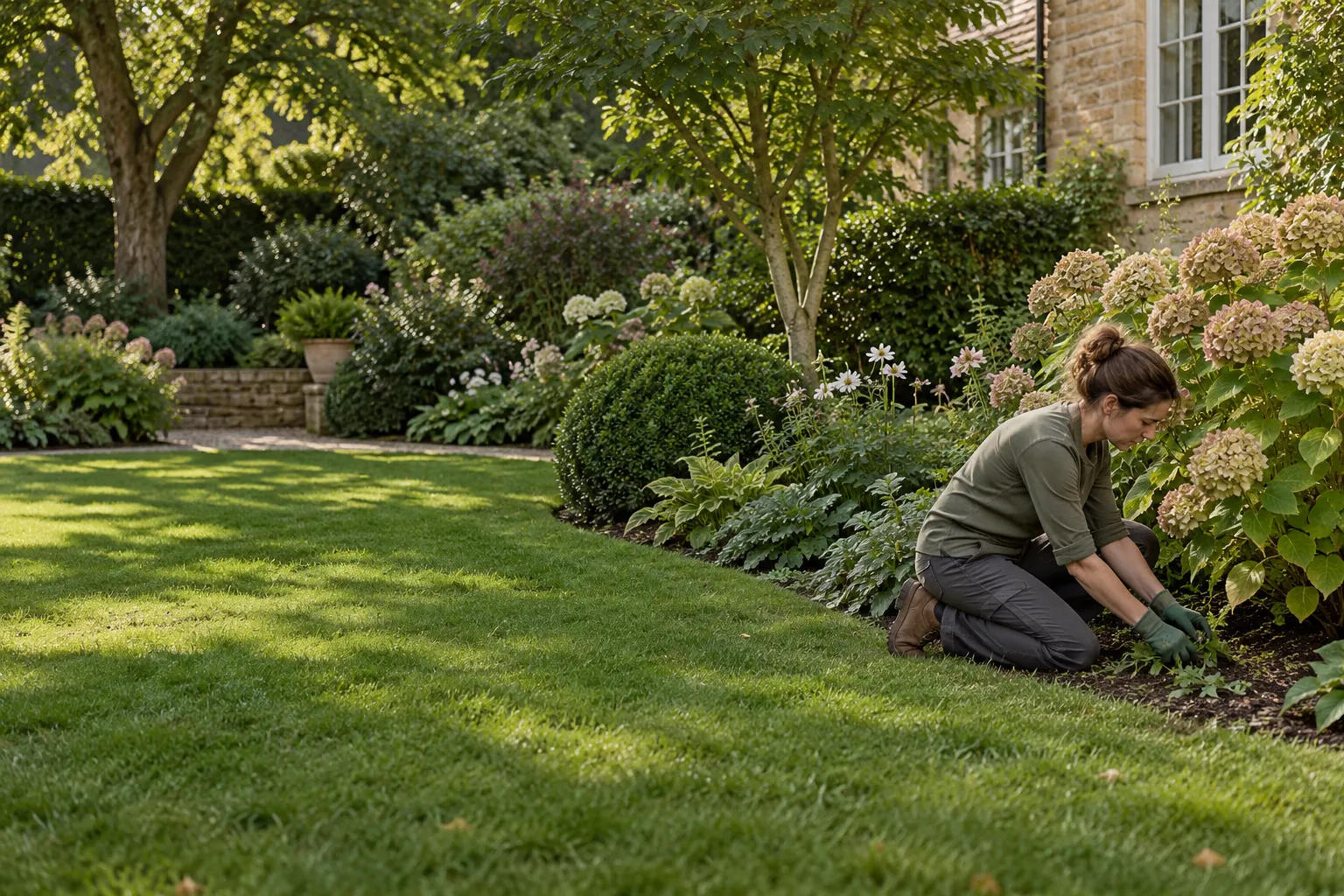
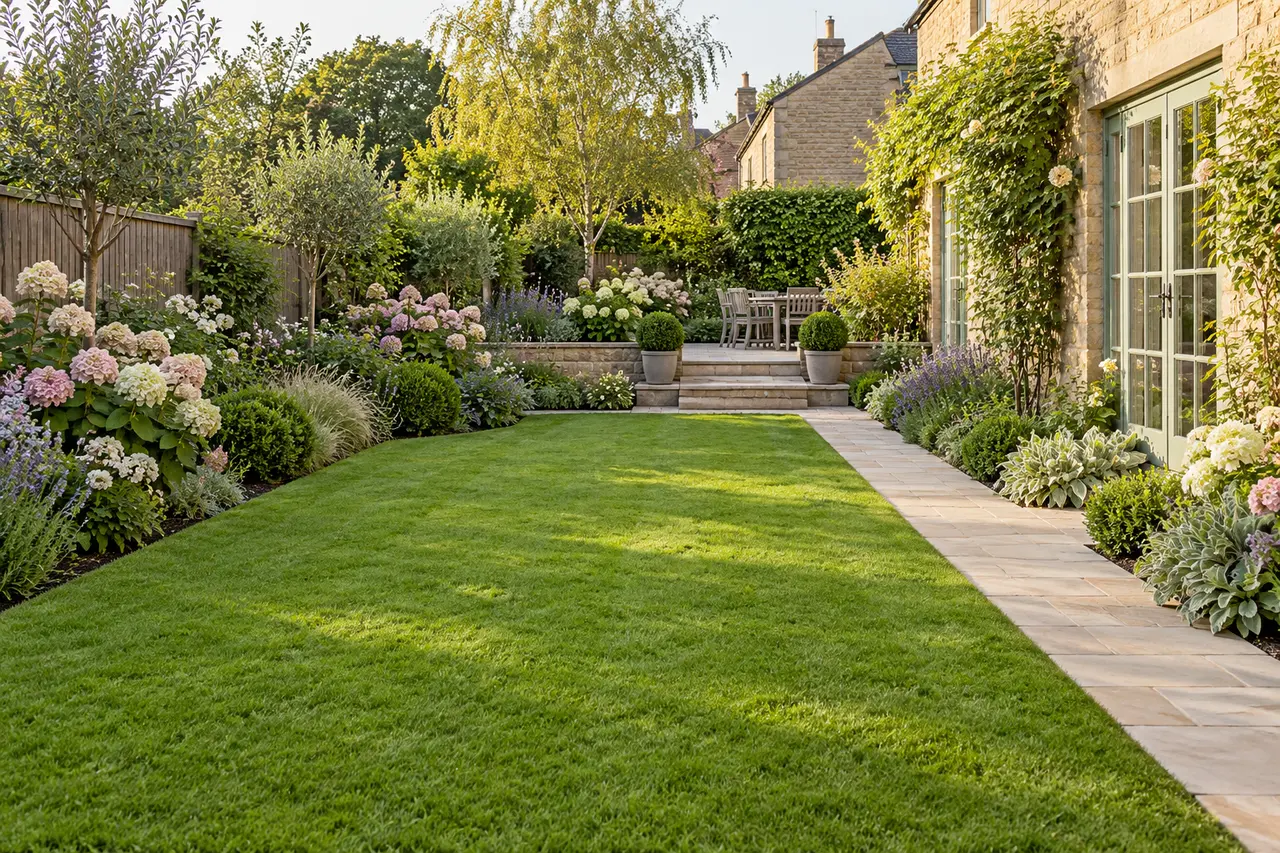
Our Whetstone gardeners work with the identified hydrangea, its buds and the framework being retained. Suitable spent-flower removal stays distinct from a more substantial reduction, with close weeding and careful collection around the plant. The adjoining lawn and hedge receive their own appropriate finish, keeping the flowering shrub recognisable within a maintained garden.
- How is hydrangea colour considered in your planting work? We identify the cultivar and its response to soil conditions, rather than offering one feed as a way to turn every hydrangea blue.
- Does gutter clearing resolve water missing the entrance? Our clearing removes the specified deposits; water overshooting the opening is a different observation, requiring consideration of the roof-to-gutter arrangement.
A cutting approach for the identified hydrangea
Does your annual service cut every hydrangea to the same level?
No. Our gardeners distinguish common mophead and lacecap hydrangeas from types such as paniculata and arborescens before selecting the operation. The plant's identity, condition and retained growth guide the depth and timing. This gives the customer a treatment suited to the actual shrub.
Can your spent-flower care retain the established shrub?
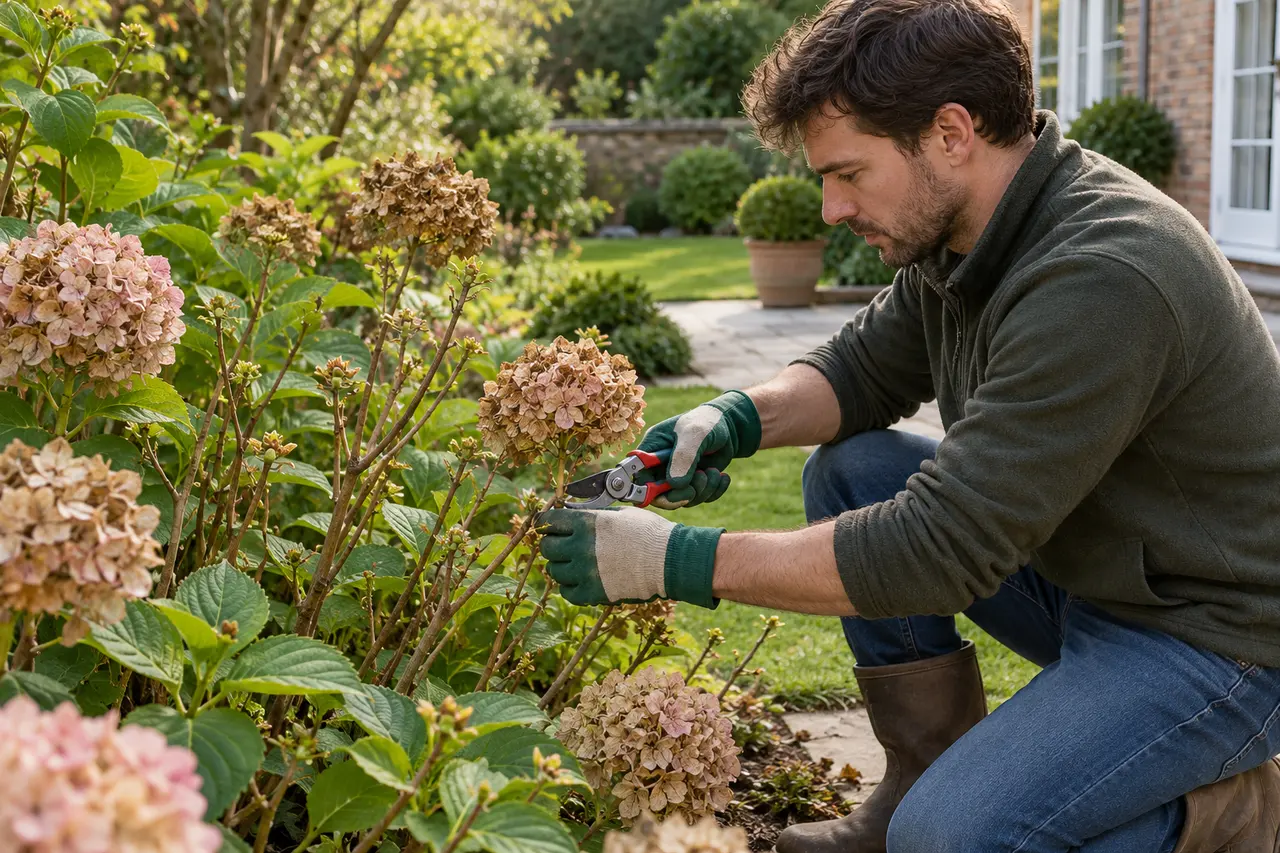
Suitable deadheading can leave much of the framework standing. Our gardener selects the individual cut with the appropriate buds and retained growth in view for that hydrangea. More extensive renovation is considered separately because it changes what remains and can affect the display. The requested removal of selected spent heads therefore stays a focused operation.
Plant identity before the hand tool
The relevant pruning group before the hand tool
The plant, reliable labels and existing planting information help establish which hydrangea the team is attending to. A rounded head can occur on plants with different requirements, so that outline alone does not settle the cutting treatment. Our approach retains the connection between the information and the specimen. This avoids transferring a method from a neighbouring shrub simply because its flowers appeared similar during the previous season.
Potential flowering growth on many common mophead and lacecap types can be lost in an indiscriminate low cut. Our work accounts for that retained framework, while paniculata and arborescens are managed differently. The operation follows the identified shrub and its condition. This makes the intended remaining growth part of the preparation instead of something judged only after cutting.
Our garden-maintenance service also completes useful smaller tasks where a larger pruning change is still being considered. Accessible weeds and loose material can be removed around the base without first shortening every main stem. The team keeps that established framework identifiable while working below it. This gives the customer practical progress on the bed and its immediate use without an overly broad tidy turning wanted woody growth into unnecessary waste.
- Plant information used to establish the suitable pruning group.
- Appropriate buds and retained stems identified beneath faded heads.
- Individual deadheading kept separate from substantial renovation.
- Loose flower fragments gathered without shaking attached heads free.
- Arching shrub growth kept outside the mower's working pass.
Controlled removal of selected heads
Selected heads and the retained growth beneath them
A dried head can sit above growth that remains useful to the plant. Before the suitable deadheading cut, our gardener identifies the relevant buds and the stem to stay. The cut follows that hydrangea's requirements. Work proceeds on growth that can be seen clearly, keeping separate stems distinguishable instead of gathering unrelated pieces into a single cutting handful.
Some old mophead heads can remain through winter as part of appropriate care, rather than being removed immediately in autumn. Our timing follows the actual plant and conditions, without treating that practice as a rule for every hydrangea. Brown petals alone therefore do not dictate a deep reduction below the head. The gardener can complete other suitable surrounding tasks while retaining the selected flower material for its appropriate stage.
Where the shrub has exceeded its intended size, a proposed renovation has a different purpose from this lighter work. Our assessment considers the flowering framework left by a larger cut and the response of the identified plant. The intended result is made clear without promising the same display immediately on a much smaller shrub. Selective spent-head removal can proceed as its own operation where suitable, without imposing that separate size change.
Work at the established woody base
Hand weeding around the established base
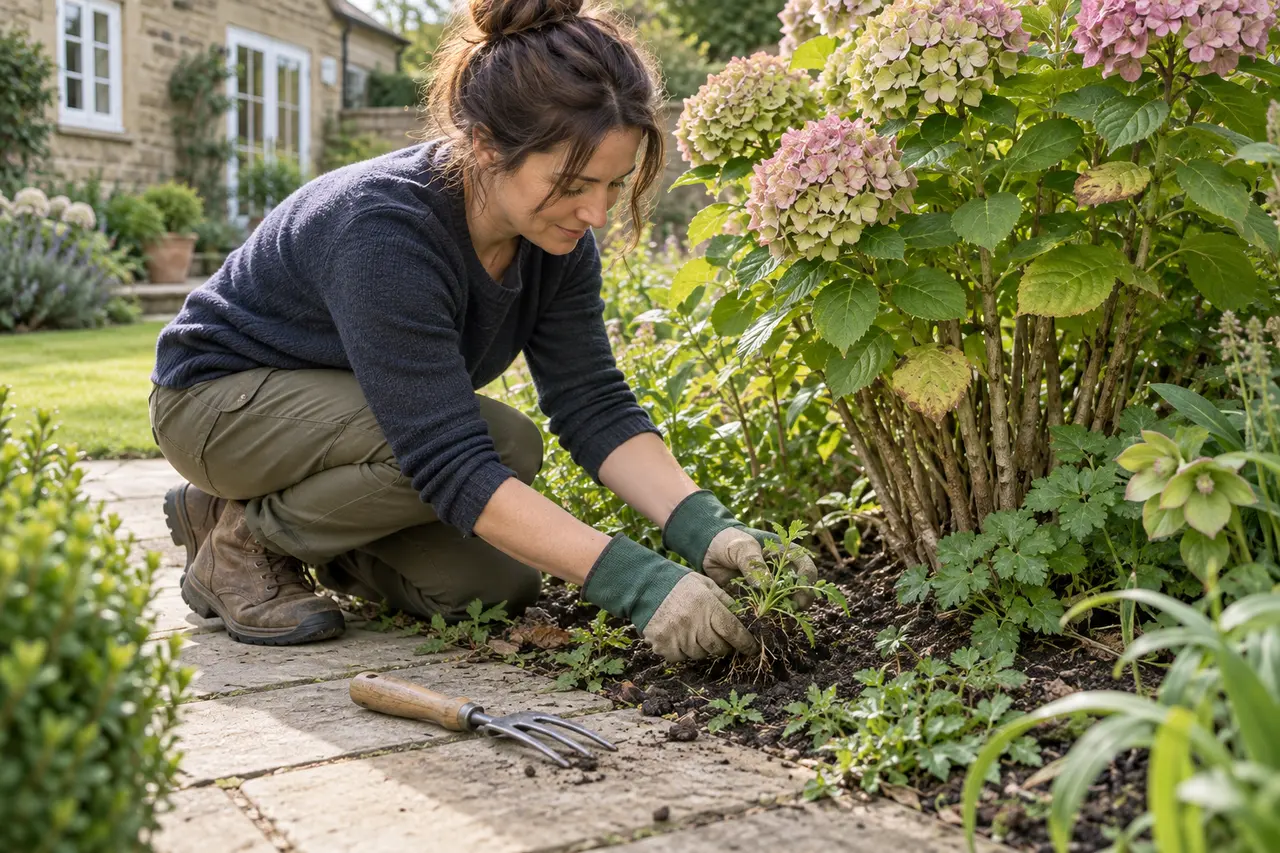
Broad leaves and multiple stems can conceal the immediate soil surface. From a firm accessible edge, our gardener identifies unwanted growth separately from the retained hydrangea. An outer weed that can be reached directly receives different handling from one threaded between woody stems. The accessible roots are loosened with a suitable tool while the established plant stays seated and its framework remains clear of the hand-work route.
The working view opens as removed weeds are gathered, with displaced soil and cut material kept away from the stem bases. Suitable existing ground levels remain in place alongside a practical position for the next task. Our finish can therefore make the bed less crowded through removal of the unwanted plants, without using a tidy appearance as a reason to cut hydrangea branches or disturb its established root space.
Where watering the hydrangea is included in the work, the gardener checks the planted soil and directs suitable water towards the root area. The actual condition guides that attention. This links the watering to the retained shrub while distinguishing it from the separate weeds and loose material just removed around the base.
Separate care at a shared plant junction
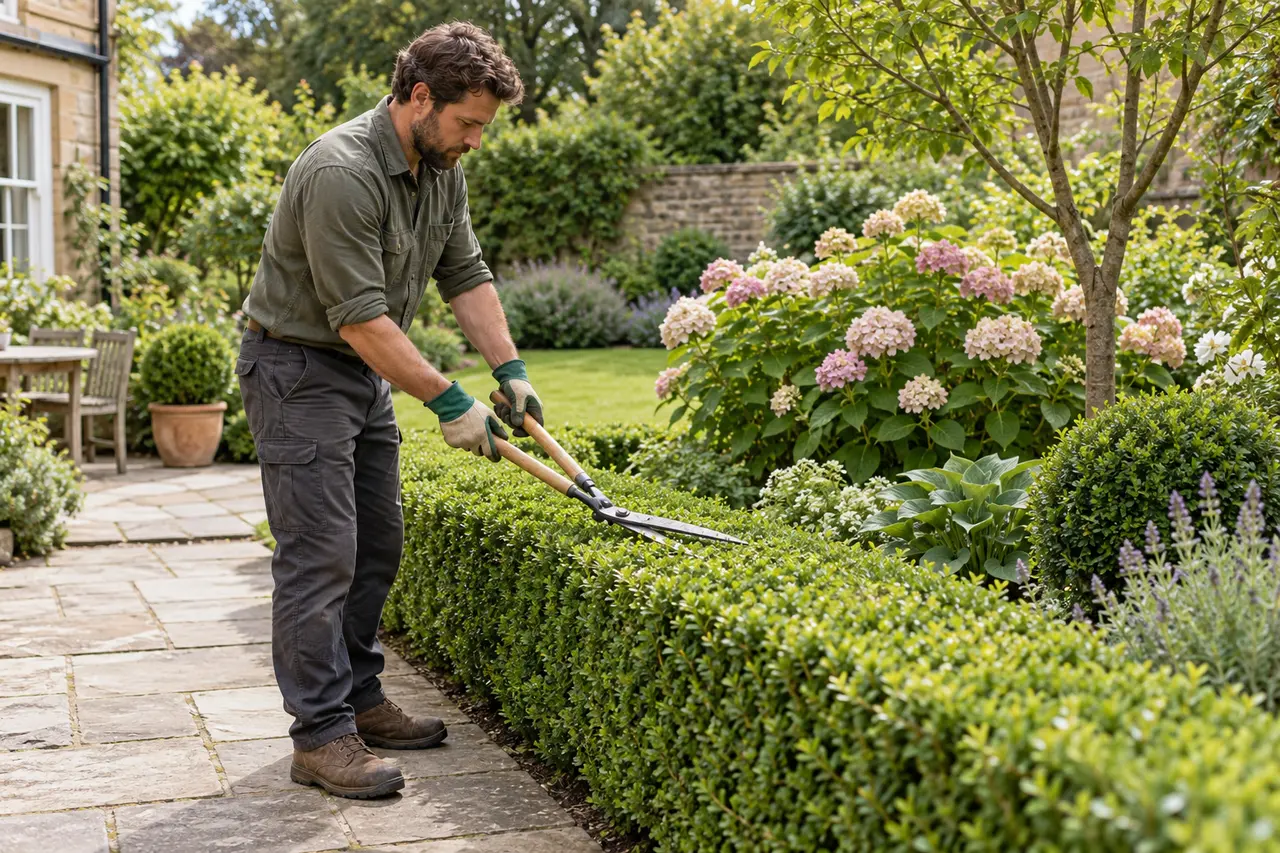
Separate cutting at the hedge and shrub junction
A formal boundary and flowering specimen can meet in one border while needing different handling. Our gardener identifies their separate stems before the hedge tool travels along the junction. The hydrangea's projecting growth does not become an extension of the hedge face merely through proximity. The controlled clipping route stays with the plant receiving that treatment, leaving the selected flower stems outside the blades and recognisable through the operation.
Suitable reachable trimming follows the hedge species and retained outline, with checks for nests being built or used and affected cutting postponed. The gardener works from a firm position. A portion beyond controlled access needs an appropriate alternative approach. This keeps the two plants separate during the work instead of using a hurried cut across both to complete the line.
After hedge cutting stops, the team gathers accessible fresh fragments that have settled among hydrangea leaves and heads. Retained growth is supported where necessary during collection, without repeatedly shaking the shrub to dislodge every piece. This prevents the clean-up becoming an unplanned deadheading operation. The completed boundary can retain its intended formal face while the hydrangea keeps the different buds and framework selected for its own treatment.
Collection of fallen material
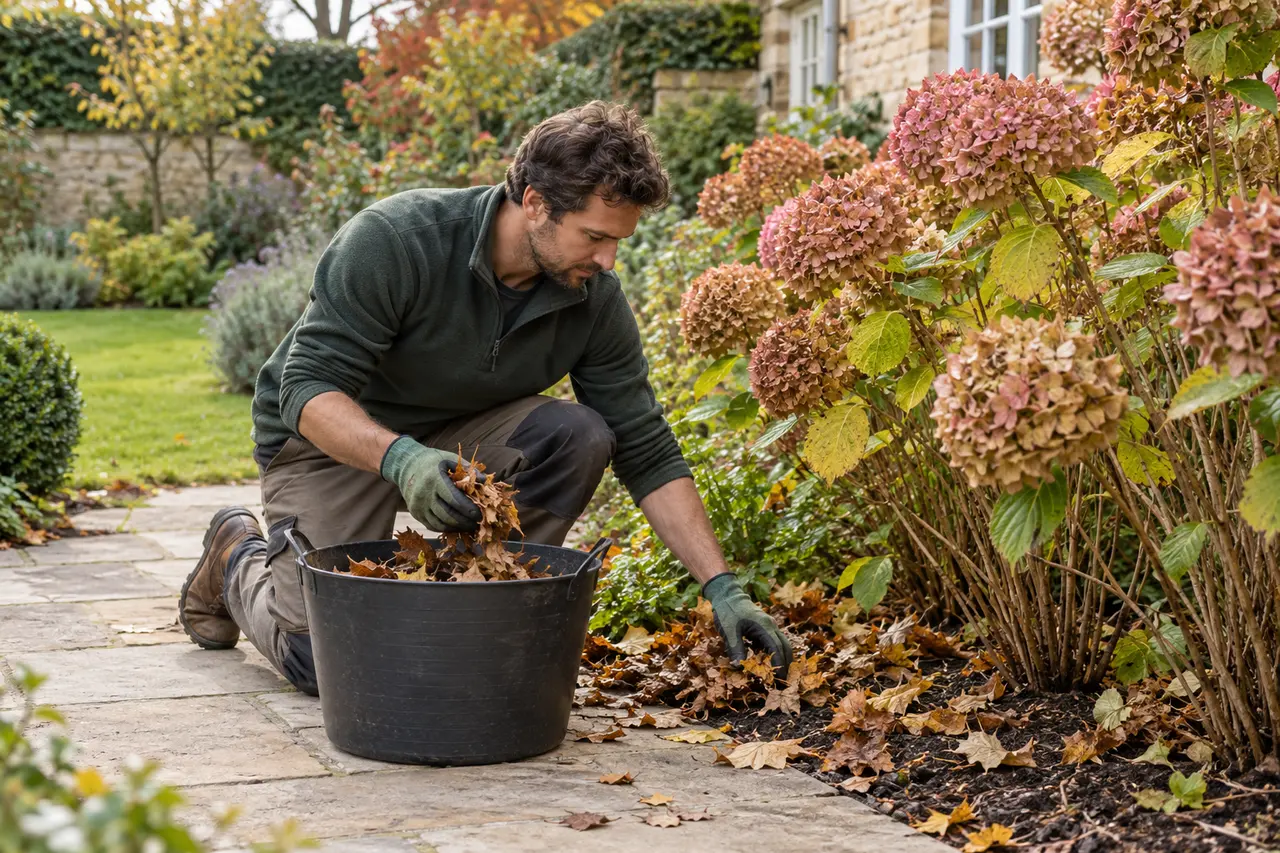
Loose fragments and retained attached heads
Old petals and dry flower pieces can accumulate with leaves from neighbouring plants. Our collection starts with accessible loose material on the path and at the base. An attached faded head remains within the selected shrub treatment. This keeps the clearance focused on the actual accumulation while the separate pruning operation retains its intended limits and suitable timing.
During a larger garden clean-up, the main stems and any supports remain visible as material is removed around them. The gardener handles manageable portions without using that retained framework to lever out a tangled load. Mixed rubbish is distinguished from the vegetation, and a sharp or unknown object changes handling in the affected area. This gives the customer useful clearance around the plant without disguising unexpected contents inside an ordinary green load.
Our garden-waste handling follows an identified receiving position. During seasonal collection, the path and accessible soil can be cleared while suitable heads and stems remain attached. Moving the gathered material to its intended destination keeps that framework readable for subsequent care. This completes the collection alongside the plant instead of reopening the same task by depositing another temporary accumulation beneath it.
Mowing along the retained shrub outline
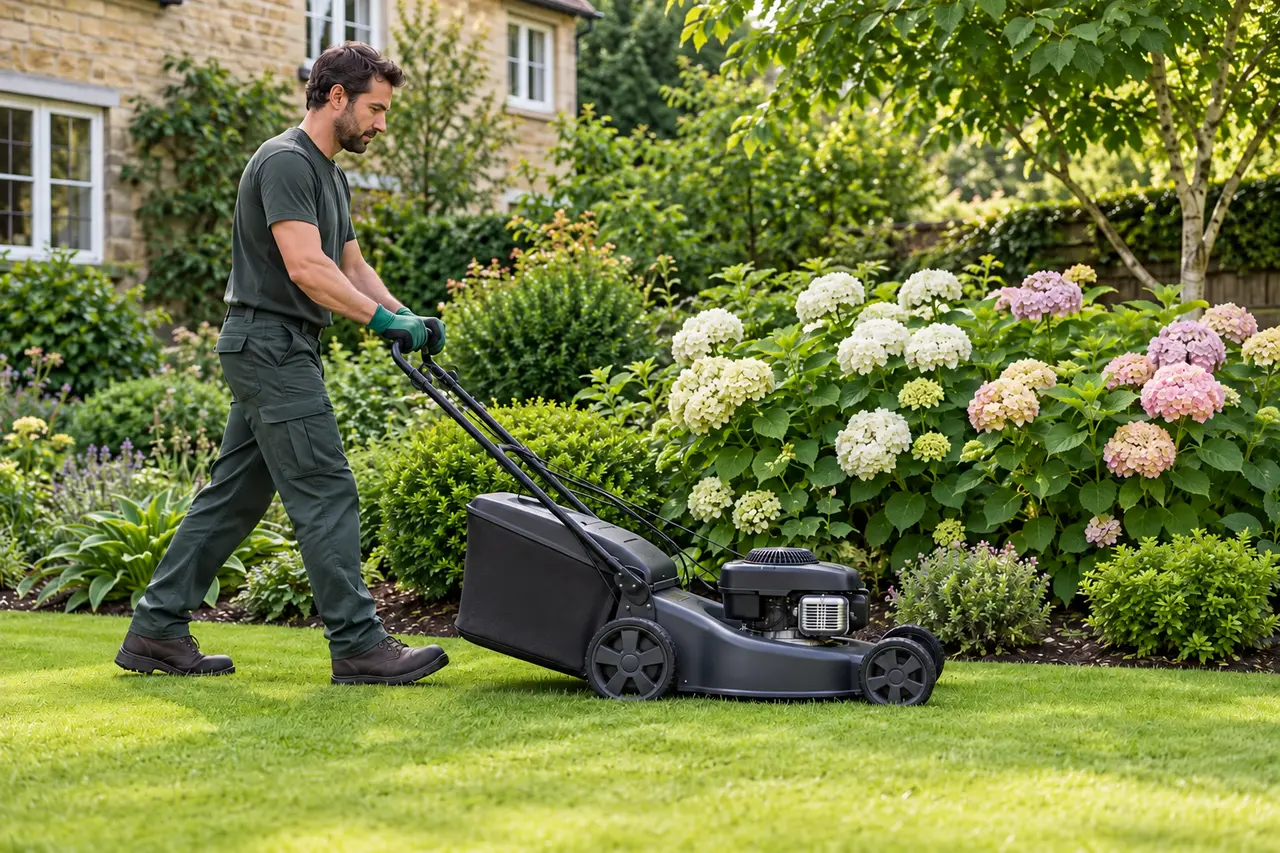
Mowing beside the developing arch of the shrub
Leaves and flower heads can draw the hydrangea's growth towards the turf as the season develops. Our preparation checks the available mowing route and the supported surface before the machine approaches. Deck clearance and turning space remain outside the shrub. Where a branch changes that relationship, its treatment is considered as plant care.
The selected mowing setting follows the grass, with a suitable separate finish at a confined margin. Loose objects and collected flower pieces remain clear of the working route. Accessible clippings are gathered from the adjoining finished surface instead of being thrown into the woody base. This maintains the turf alongside the chosen shrub outline, avoiding a gradual loss of retained flower stems each time the lawn receives attention.
Additional work with its own intended result
Hydrangea colour within a planting design
Our garden design distinguishes the selected cultivar from the colour shown in a reference photograph. Some hydrangeas respond between pink and blue to soil conditions, while other types do not have that response. The proposal follows those differences. Any intended soil or planting change has its own purpose, separate from the routine maintenance of the established shrub.
Tree reductions follow the retained conifer framework
Our tree surgery accounts for the limited regrowth of most conifers from bare old wood, with relevant exceptions such as yew. A proposed deep reduction therefore follows the actual species response and the green framework to remain. An exposed brown face is not assumed to refill like another plant. This gives the customer a considered intended result without a blanket promise that every conifer can be reduced by the same amount or method.
Patio cleaning with the furniture identified separately
Our jet washing covers the specified surface, with tables, chairs and other items distinguished from the ground they occupy. Those objects can have different finishes and material requirements. Where furniture cleaning is also requested, it is identified separately. Appropriate movement to reach the ground does not change the item into part of the washing operation, keeping the actual proposed work clear throughout the service.
Gutter clearing and water missing the opening
Our gutter clear-out removes the specified material from the channel while keeping water overshooting the entrance distinct from an internal blockage. The roof-to-gutter position can affect whether the flow enters the intended opening at all. The actual observed path therefore informs appropriate further consideration. Clearing loose material does not itself alter that geometry, so a repeated clear-out is not offered as the automatic resolution for every stream seen beyond the front edge.
Christmas-tree support without shaving away water-absorbing wood
Our Christmas-tree delivery arrangements relate the support to the actual cut trunk, preserving the outer wood efficient at taking up water. Whittling the sides to force a fit can remove that useful tissue. The appropriate support is therefore considered for the trunk. This distinguishes the water-uptake effect of shaving from a suitable fresh straight cut across the base and keeps the two operations clear.
Guide rates for focused shrub and surrounding maintenance
The general gardening guide rates relate to agreed time. Individual flower-head cuts, close weeding and collection can take focused work alongside the lawn or hedge operation.
| Gardening time | Guide rate |
|---|---|
| First hour | £83 |
| Each subsequent hour | £65 |
GBP guide rates. The full quotation identifies the work, supplies, collected material, VAT treatment and applicable access or parking charges.
Questions about our hydrangea service
How does your team use the flower shape when identifying treatment?
A broadly rounded head can occur on different hydrangeas, so our team does not use that outline alone to select the cut. Reliable identification and information about the actual shrub inform the depth and timing. This keeps the work tied to its pruning group and retained growth instead of applying a familiar reduction to every woody stem beneath a similar-looking flower head.
Does your autumn tidy always remove old hydrangea heads?
No. Appropriate old mophead heads can remain through winter, with the selected treatment following the type and conditions. Our gardeners distinguish the faded appearance from the suitable pruning stage. The autumn service can therefore attend to accessible weeds, paths and loose material while selected attached heads stay.
Does your team clip hydrangeas to an even top?
The suitable operation follows the shrub's buds, retained framework and pruning group. Our team selects the appropriate hand work for that result. A hedge tool already in use nearby does not determine the hydrangea's treatment. This preserves the relevant flowering growth where suitable instead of treating an even outer finish as proof that the right stems remain beneath it.
How does your service approach a climbing hydrangea?
Our assessment treats the climbing plant as its own framework with its own pruning requirements. Work trained against a wall or support is not given the same instruction as a mophead in a bed. Reachable attention and any larger cutting proposal follow that actual arrangement. This keeps the intended operation appropriate to the plant.
The retained buds and framework define our finish
Our gardening service keeps the completed shrub related to the growth selected to remain. Useful buds and main stems stay identifiable while loose flower pieces are gathered from the base. The finished result follows that hydrangea's appropriate treatment.