

Orpington · Renewal care for shrubs grown for winter stems
Gardeners Orpington
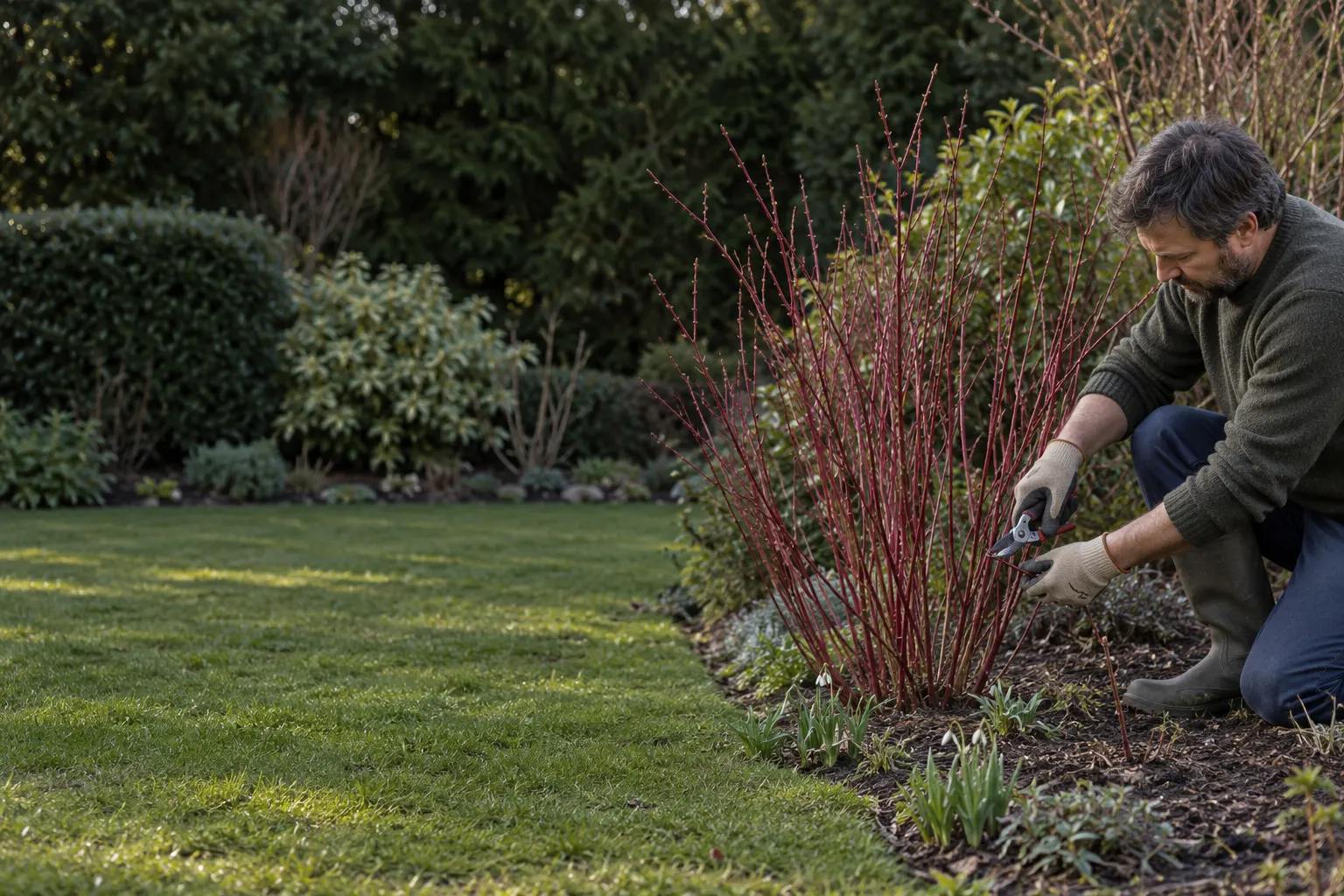
We maintain identified coloured-stem dogwoods with the renewal appropriate to their establishment and growth. Selected stems are cut and gathered around the low living framework, while the adjoining lawn and bed receive separate attention. The work supports the intended winter feature without turning every woody plant into the same clipped hedge.
- What guides your winter-stem shrub maintenance? We identify the plant, establishment and strength of regrowth before selecting renewal, leaving the low framework distinct from the stems being removed.
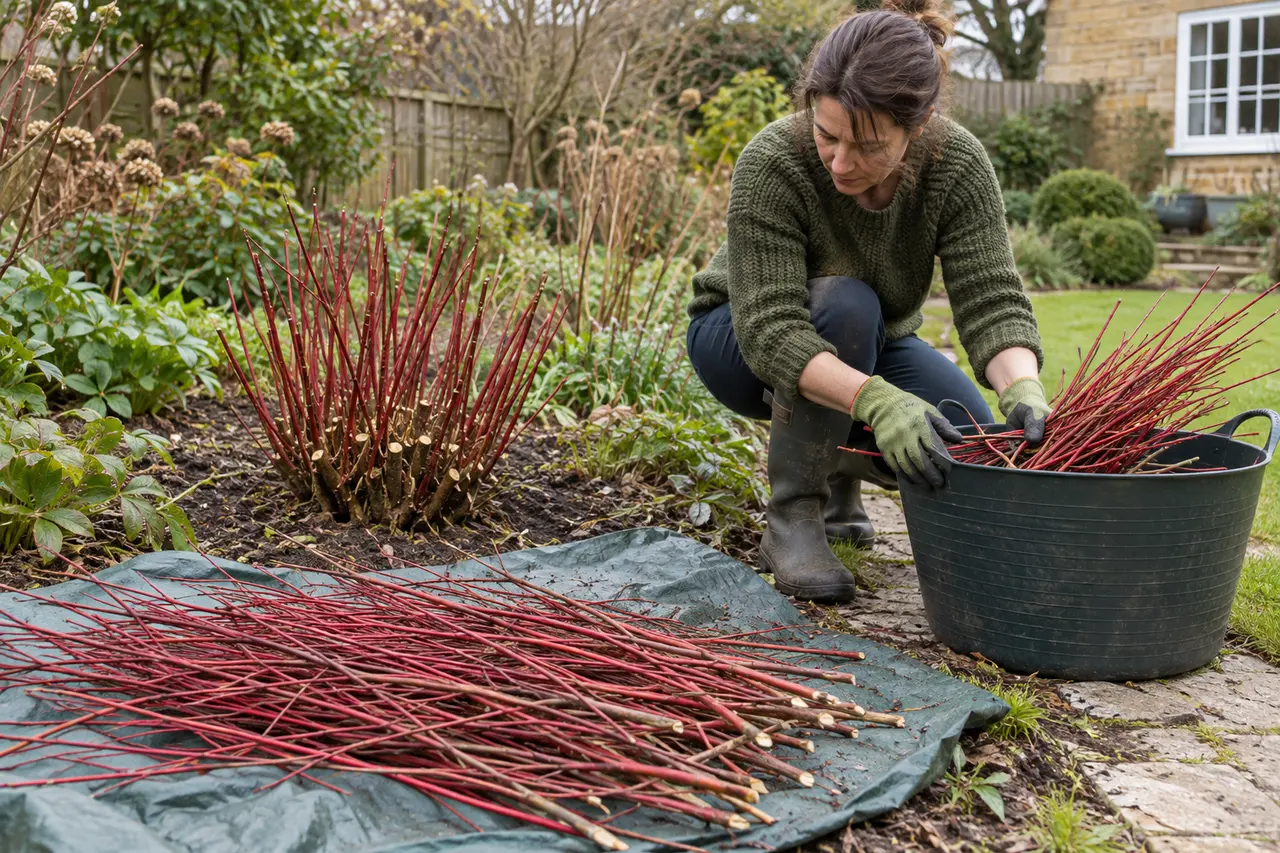
- How are long dogwood stems collected? Detached lengths are aligned in manageable batches, with their ends controlled and the route cleared before the next carrying trip.
Renewal selected for the identified coloured-stem shrub
How does your dogwood work differ from hedge trimming?
Young growth provides strong winter colour on appropriate dogwoods. Our proposal selects renewal cuts or an established coppicing regime for the identified plant and display. Its condition informs the extent and the continuing framework. This gives the maintenance a purpose through the growth cycle, with the young stems and older wood kept distinct during the work.
How is a recently planted dogwood considered before coppicing?
We consider establishment and vigour before hard renewal. RHS guidance gives stem-colour dogwoods at least two years to establish and requires strong growth. The gardener reviews those factors together when proposing coppicing. Young or weak plants retain their own care decision, keeping the selected cut connected to actual development and the framework intended to continue after the operation.
The winter feature within the bed
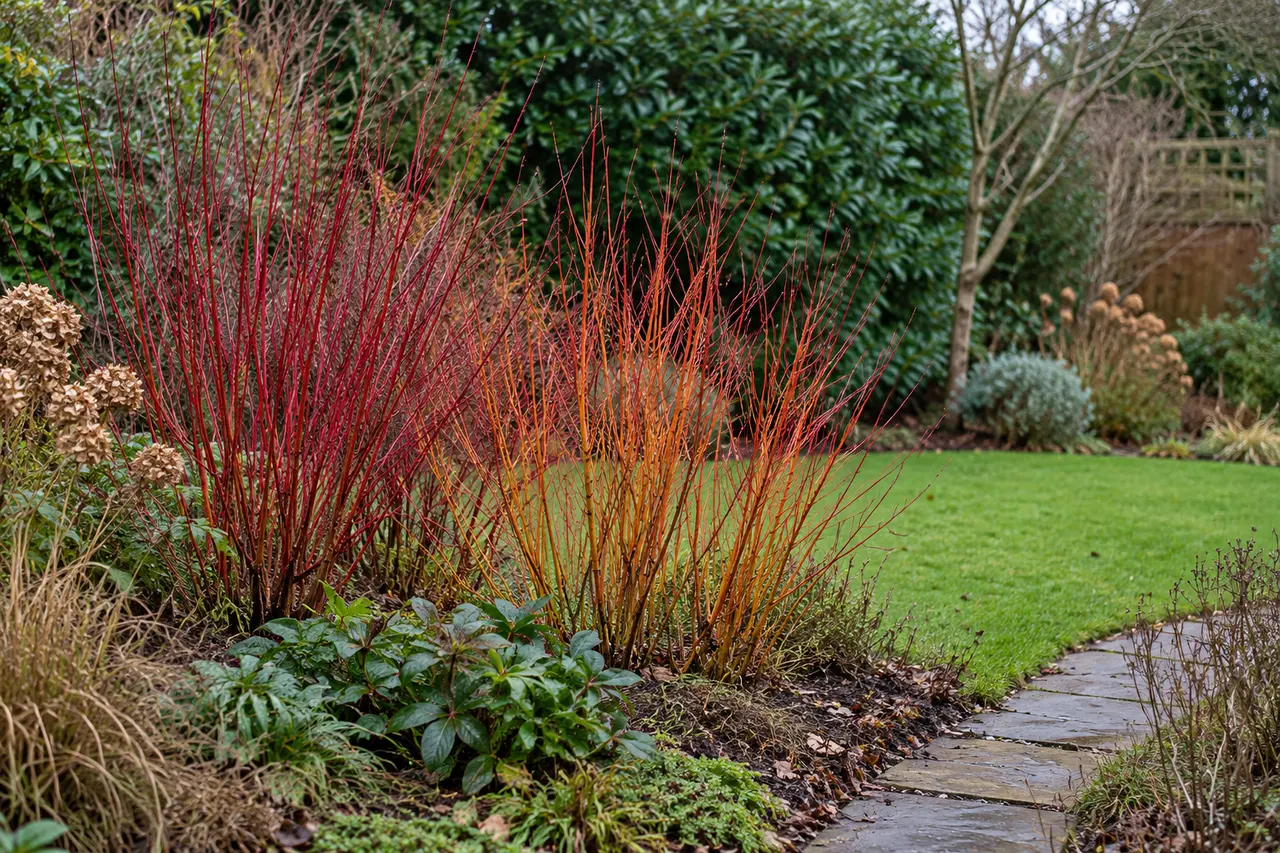
Young coloured growth distinguished from older wood
We identify the winter feature being maintained and distinguish younger coloured shoots from older growth within the same shrub. Its position among neighbouring plants stays clear during selection, including any flowering dogwoods requiring different care. This gives the gardener a defined group and purpose before cutting, with the work following the stems contributing to that display.
Our winter-stem dogwoods follows fresh coloured growth developing from a low continuing framework. The outline changes through the year, so the intended role is considered before renewal. A tall background plant and a shrub managed mainly for young winter stems can require different operations. The proposal records that purpose and the actual growth available, giving the plant its own care sequence.
The garden-maintenance plan identifies the group and extent of renewal, with labels and the low base visible as work begins. Weak or newly established specimens are considered separately. This provides a clear practical instruction for the plants involved instead of making the strongest cut the default way to fit every shrub into one visit. The continued framework remains part of the maintained plant throughout the operation.
- We identify the dogwood grown for young coloured stems.
- Establishment and vigour inform the extent of renewal.
- The low living framework stays visible during stem removal.
- Loose woody ends are gathered before the lawn is finished.
- New shoot strength informs the next renewal decision.
Work at the low framework
Cutting points visible before each stem is released
We collect loose material to expose the low base and the junction of each selected stem. The gardener then uses an appropriate hand tool from a position with the cut visible. Different attachments are followed beneath the taller coloured growth. This provides a controlled operation through the selected group, keeping the ongoing framework identifiable as each length is released.
On appropriate established plants, spring stem renewal can take selected growth back to the low framework. Timing and extent follow the dogwood and its response. Each long stem is controlled while it is released, with the flexible end kept clear of other working positions. This connects the cut to the handling needed immediately afterwards and keeps surrounding plants outside that movement.
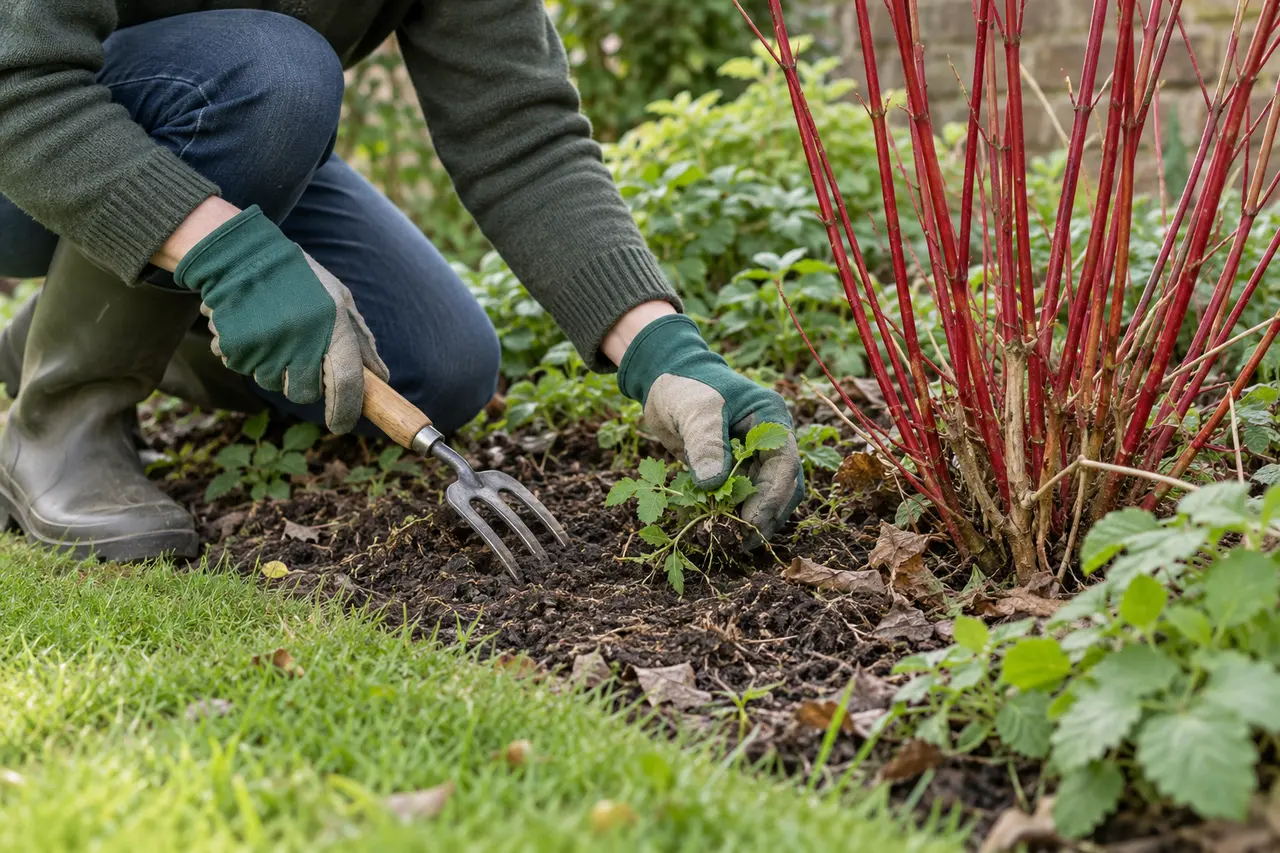
The woody base remains the plant’s renewal framework, even where its outline is irregular after the longer stems are gone. We do not level it as though it were leftover rubbish. Damage, dead sections or crowding receive their own informed selection. Ordinary weeding beside it stays separate from digging the framework out, leaving the source of the following growth recognisable within the bed.
Handling the released lengths
Stem batches aligned for collection and carrying
Our gardeners place released stems onto an appropriate sheet or collection arrangement with their ends away from the walking line. Manageable batches are aligned before any further shortening needed for the outgoing load. A pile can look neat at the shrub yet be awkward to move when its lengths point in every direction. The arrangement therefore follows the actual carrying route as well as the first place where cut stems are laid.
A piece already cut is distinguished from low growth still attached to the plant. Some dogwoods can spread where a stem meets the soil, so a loose-looking length does not prove both ends are free. We follow the visible connection before lifting. Partly attached material is not pulled through surrounding bulbs or perennials to find out whether it will release, keeping collection separate from another unselected plant operation.
Our garden clean-up can include the larger load created by substantial renewal. The green-waste arrangement identifies its actual material and destination. Short ends are gathered along with the conspicuous coloured lengths, leaving the surface ready for the next operation. The completed collection covers the low working area as well as the upper pile, preserving a clear approach for later bed or lawn attention.
The lawn beside the opened group
The grass boundary identified after tall stems are removed
Once renewal exposes the margin, we check the newly visible strip before bringing in the mower. Hidden woody ends and old fastenings are collected from the route. Improved visibility does not by itself make the ground beneath the shrub part of the lawn. The gardener distinguishes the actual grass from the planted base before choosing how the edge can be finished.
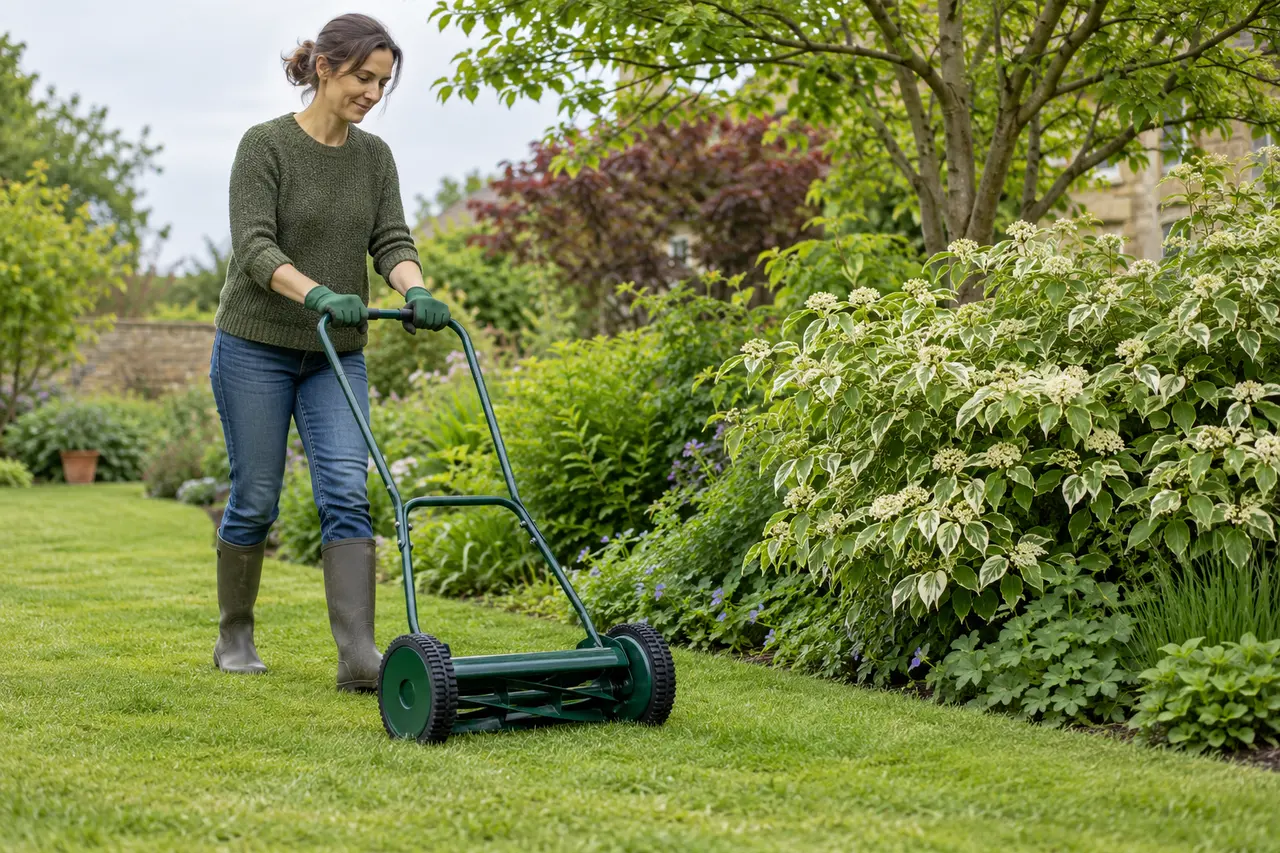
The machine stays on the lawn with the low framework outside its movement. That smaller outline can be less conspicuous after tall stems are removed, so the bed line remains part of the cutting route. Where grass grows tightly among woody stems, another appropriate finishing method is selected. The mower is not passed across the open-looking base simply because it is now easier to see.
Our lawn mowing addresses the accessible margin without changing the planting area. Collected grass follows its own arrangement instead of being heaped over the stool as convenient surface cover. The result leaves an understandable boundary between turf and living shrub, with the selected cuts visible. This supports subsequent maintenance without concealing the framework beneath material produced by the adjoining lawn task.
Separate forms in adjoining plants
Hedge trimming follows its own face
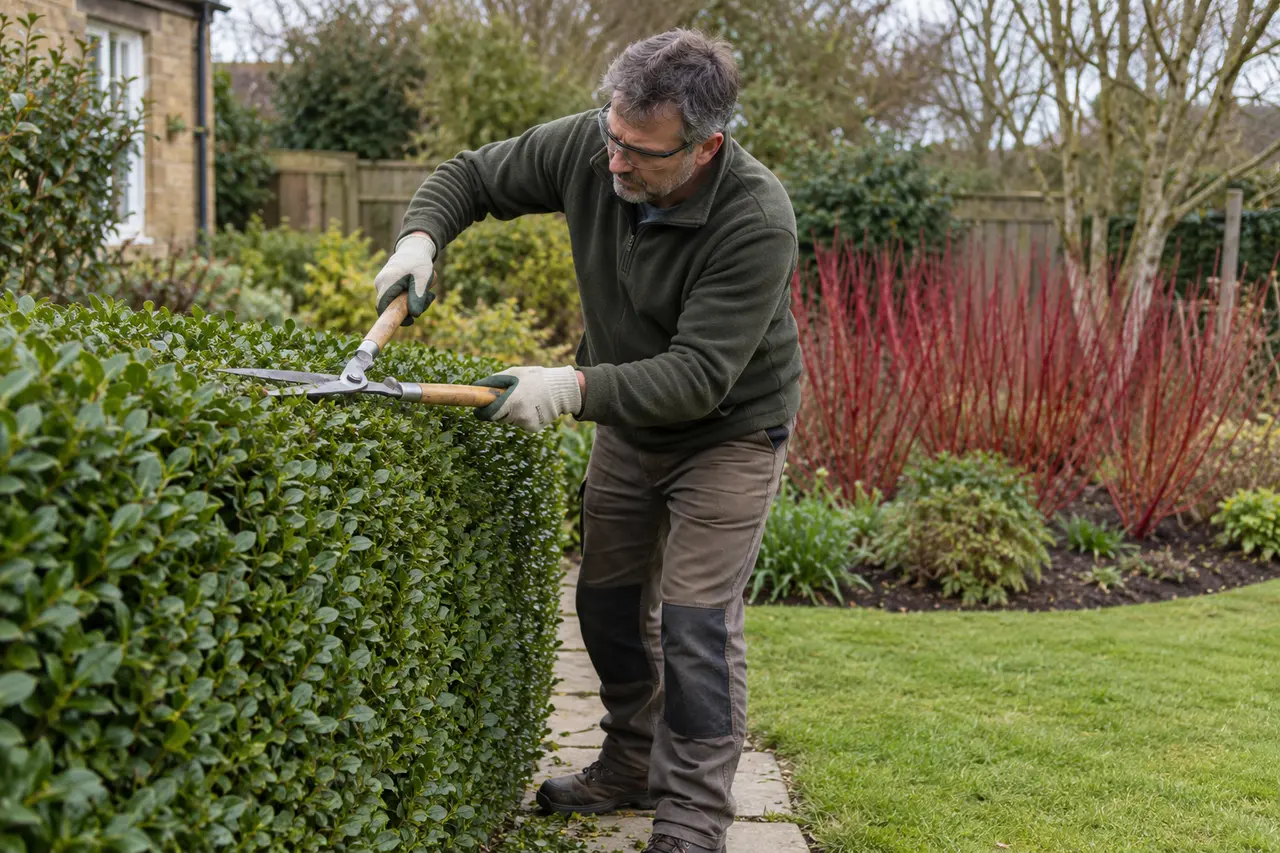
A darker evergreen hedge can provide a background for winter stems while remaining a different cutting operation. We identify each plant at overlapping points before trimming. Red lengths extending through green foliage are not removed indiscriminately to form one level plane. This preserves the distinction between the dogwood’s display and the maintained screen, even where both occupy the same view from the garden.
Affected shrubs and hedge growth are checked for nests being built or in use, with disturbing work postponed. The gardener uses a supported position within reach of the intended face. If the dogwood occupies that space before its own appropriate pruning stage, the hedge task or sequence is adjusted. Its stem display is not sacrificed merely to create a more convenient position for the tool.
Fresh hedge fragments are gathered from the opened group with the dogwood’s attachment points visible. The gardener distinguishes loose debris from short living stems before lifting. Collection is completed around the base as well as on the lawn. This preserves the low framework and leaves it accessible for its next care, with material from the neighbouring screen directed to its own load.
Growth following renewal
The new-shoot response informs continuing care
As shoots develop, our gardeners consider their strength and distribution and keep ordinary weeds from hiding that response. Watering attention follows the actual soil and plant. Stem-colour dogwoods generally favour moisture-retentive conditions; weak performance in a very dry position is not answered automatically with a stronger annual cut. The next task follows the growing conditions as well as the winter effect intended from the shrub.
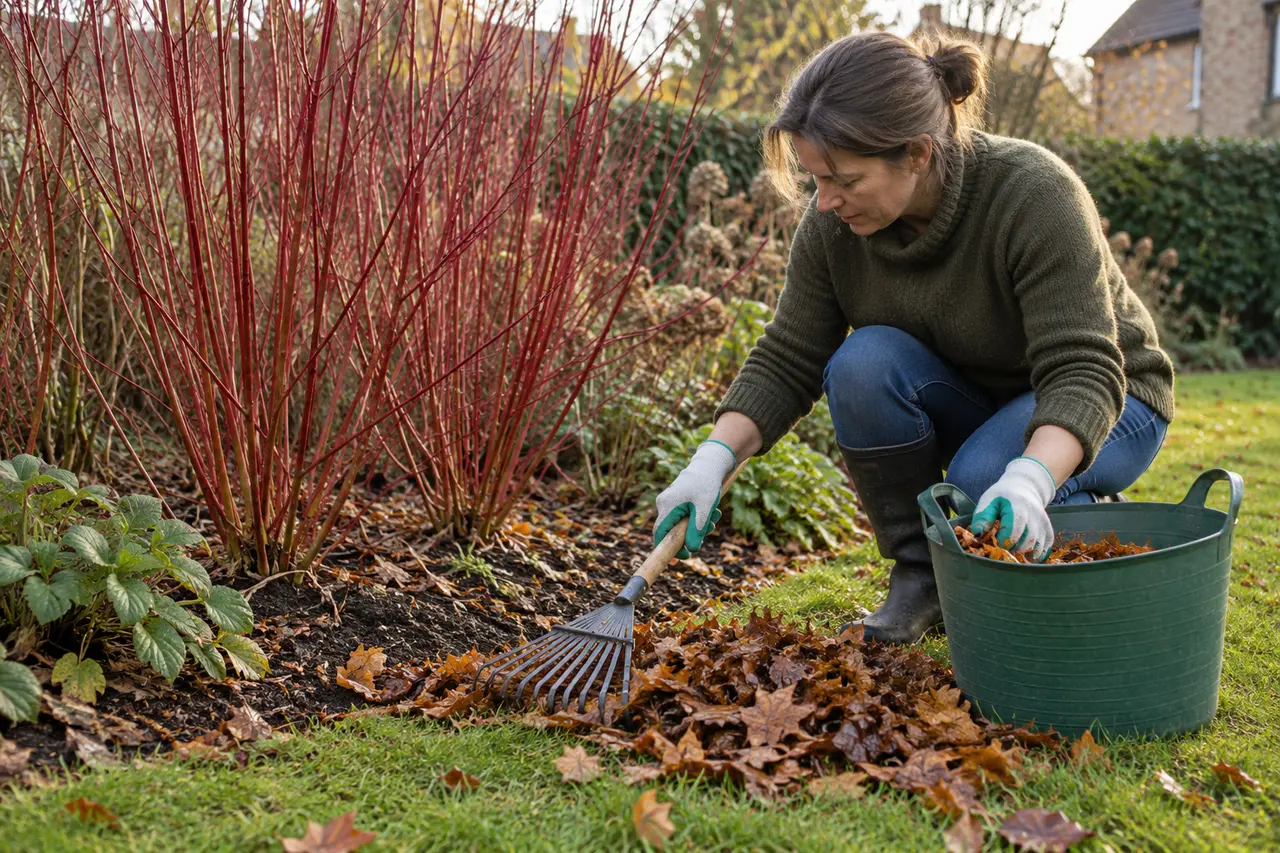
We gather accessible leaves from the path and working edge while identifying useful mulch in the bed. Those layers are kept distinct through collection. The emerging winter stems become visible above the appropriate soil covering, with the amount removed following the deposit and its position. This gives autumn maintenance a defined material and preserves the surface treatment serving the shrub’s root area.
Observations of new shoots stay within the seasonal work record. A less vigorous plant can call for a lighter or less frequent regime, while a strong established specimen is reviewed for its usual renewal. The next operation therefore begins with the growth produced since the previous cut. It is not booked as an identical annual action regardless of the response visible in the actual shrub.
Further services around the winter planting
Design considers the background behind coloured stems
Our garden design considers the winter view alongside the summer foliage. The background can change how clearly red or orange stems are seen. Viewing positions used in winter and the space for future renewal inform the arrangement together. The effect is considered at the actual site, giving the chosen group a practical position for display and its continuing maintenance.
Tree-root observations distinguished from a building diagnosis
For tree work, lifted lightweight paving is described as the actual surface movement observed. That does not alone establish foundation subsidence, and a building concern requires appropriate separate advice. Cutting a large root as an improvised path repair can also affect the tree remaining above it. Our proposal keeps these mechanisms distinct instead of turning one raised paving edge into an unsupported diagnosis or an automatic root-cutting instruction.
Pressure-cleaning equipment shut down before disconnection
After pressure cleaning, the operator follows the equipment’s proper shutdown before disconnection. Switching off alone does not establish that trapped pressure is released. The supply and connections are left in their agreed condition through the specified procedure. Final water handling stays clear of doors and belongings, completing the clean through packing and withdrawal as well as the visible surface work.
Gutter work accounts for water behind an obstruction
Our gutter cleaning accounts for water held behind an outlet obstruction as well as the deposit itself. Removing that blockage can release the stored water downstream. The method considers its receiving route, including lower openings or collection points. This gives the operator a clear account of the channel’s condition and the movement expected as the affected outlet is opened.
Seasonal displays include a workable light-lead route
The Christmas-tree position includes consideration of the intended lighting route. Leads stay outside closing doors and heavy furniture, with no concealed route beneath rugs. The display is arranged around an appropriate supply path alongside the tree’s position. This gives the seasonal setup a practical beginning, preserving access and keeping the final cable length clear of trapping or crushing points.
Gardening time for renewal and long-stem handling
Our quotation identifies the shrubs, their condition, the intended renewal and the material being collected alongside other garden tasks. The general rates below guide gardening time, while the actual stem work and handling define the extent of the operation.
| Gardening time | Guide rate |
|---|---|
| First hour | £83 |
| Each subsequent hour | £65 |
GBP guide figures. The complete quotation identifies materials, removal arrangements, VAT and relevant parking, access or congestion costs. Defined shrub renewal and any separately required changes remain clear within the proposal, giving the household an account of the actual plant work and the general gardening time applied to the visit.
Coloured-stem care and the shrub’s response
Can every plant called Cornus be coppiced for winter colour?
We identify the species or cultivar before selecting a stem-colour coppicing regime. These dogwoods form a particular group, while flowering dogwoods generally need little regular pruning. Plant structure and intended ornamental role inform the appropriate operation. This preserves the different care requirements within Cornus, keeping the selected renewal attached to the shrub actually being maintained.
Will managing for young stems also preserve every flower?
Our proposal identifies whether winter stems or another feature is the priority. Older unpruned growth can carry flowers, while regular hard renewal emphasises young coloured stems. Those aims can conflict, so one severe cut is not presented as preserving every flower at the same time. The arrangement follows the specific shrub and intended display, giving the gardener a clear basis for its renewal.
Is a low dogwood branch touching the soil always a seedling?
Low shoots are traced to their origin before weeding or separation. Some dogwoods root at ground contact and some produce suckers. The visible connection informs any choice to keep, remove or separate the growth, with the parent included in that decision. This leaves the gardener a defined plant operation at the edge of the stool, preserving its actual relationship to the shrub.
Does a poor year mean the next cut should be even harder?
We review weak regrowth and the growing conditions before selecting another hard cut. A lighter or less frequent regime can be appropriate. This uses the shrub’s response to guide the next operation and the care around it. The programme therefore develops from the plant’s actual performance, keeping renewal and moisture or soil considerations connected through subsequent visits.
Renewal guided by the stems the plant produces
Our next garden visit follows new-shoot strength and distribution against the intended winter feature. The low framework remains visible and the cut load is collected from the surrounding margin. This gives later renewal a clear starting record. The selected regime can continue or change as the actual plant develops, carrying its response forward into the following care decision.