

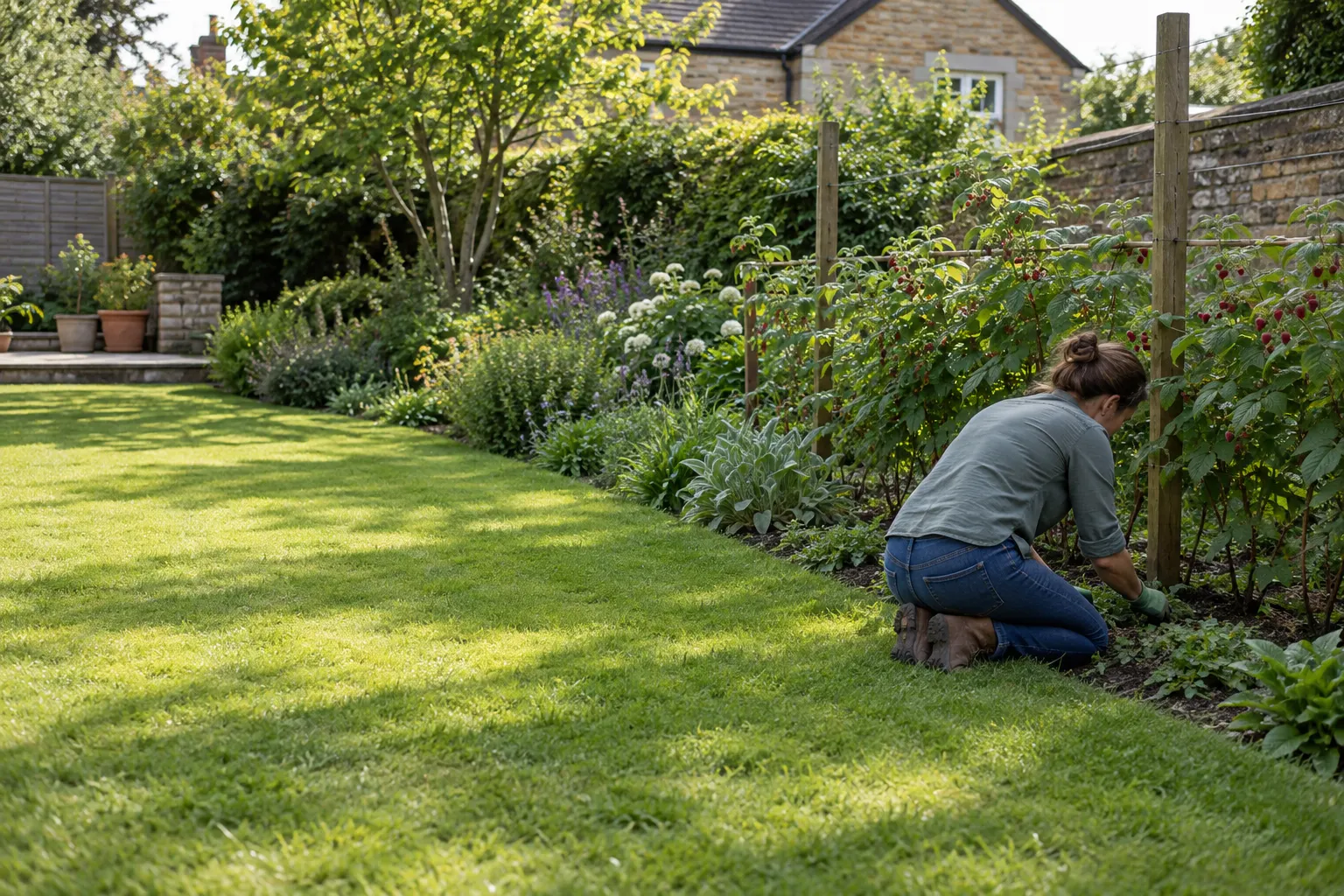
Raspberry cane care within a maintained garden
Gardeners Woodford Green
Our Woodford Green gardeners maintain existing raspberry rows through suitable cane selection, close weeding and controlled collection. The fruiting type and growth retained determine the pruning operation. Grass and neighbouring planting receive their own appropriate attention around that row, with the selected canes kept visible as the work progresses and the detached material gathered from the base.
- How does your team choose which raspberry canes stay? We identify the fruiting type and intended regime before selecting stems, preserving suitable growth needed for the row's next stage.
- How is tool hygiene addressed during affected tree work? Our method accounts for potentially infected material and relevant hygiene guidance, including the soil, sap and plant debris carried on equipment.
Our pruning selection follows the fruiting type
Why does your team establish the raspberry type first?
Summer-fruiting raspberries normally carry the crop on the previous year's canes, while autumn-fruiting types can fruit on current-year growth. Our gardener identifies that difference and the intended management before selecting the cut. Existing labels, useful cropping records and the retained cane arrangement inform the operation. This relates the service to the actual row and the growth required to remain through its next stage.
Can your pruning retain new canes during spent-cane removal?
For a suitable summer-fruiting row, our gardener retains the selected new canes for the following crop while removing those that have finished fruiting. Each target is traced down before cutting, with the nearby retained stem kept distinct. Detached material is then released and taken out under control. This completes the chosen removal while leaving the useful replacement growth identifiable within the existing row.
Identification across the existing planting
The established row informs our pruning regime
The team looks beyond the visible mixture of tall green growth and older branched stems to identify the plant and its earlier management. A surviving cultivar label or useful cropping record helps establish the appropriate operation. That information remains associated with the row throughout the work. The gardener can then separate stems by their role in the identified regime and keep the useful retained growth clear.
Our ordinary raspberry pruning follows the relevant fruiting pattern. Summer-fruiting types keep selected new canes to crop in the following year; autumn-fruiting types commonly receive the suitable dormant cut for a crop on the next season's new growth. An intentionally managed alternative regime is recognised during preparation. This gives the cutting a clear purpose connected to the actual plants and the result being maintained within that row.
Our garden-maintenance service carries that identity into the surrounding garden work. The cane task stays distinct from clipping ornamental growth nearby, with the selected fruit-row treatment clearly defined. Harvesting, replacement stock and construction of a new support arrangement are separate requirements where requested. The continuing service can therefore tend the existing space and its plants while keeping those additional operations accurately identified in the proposed work.
- The fruiting type kept identifiable within the row.
- Selected stems followed to their base before cutting.
- Suitable new canes retained for the identified regime.
- Detached pieces separated from the living shoots.
- Mowing equipment kept clear of wires and retained canes.
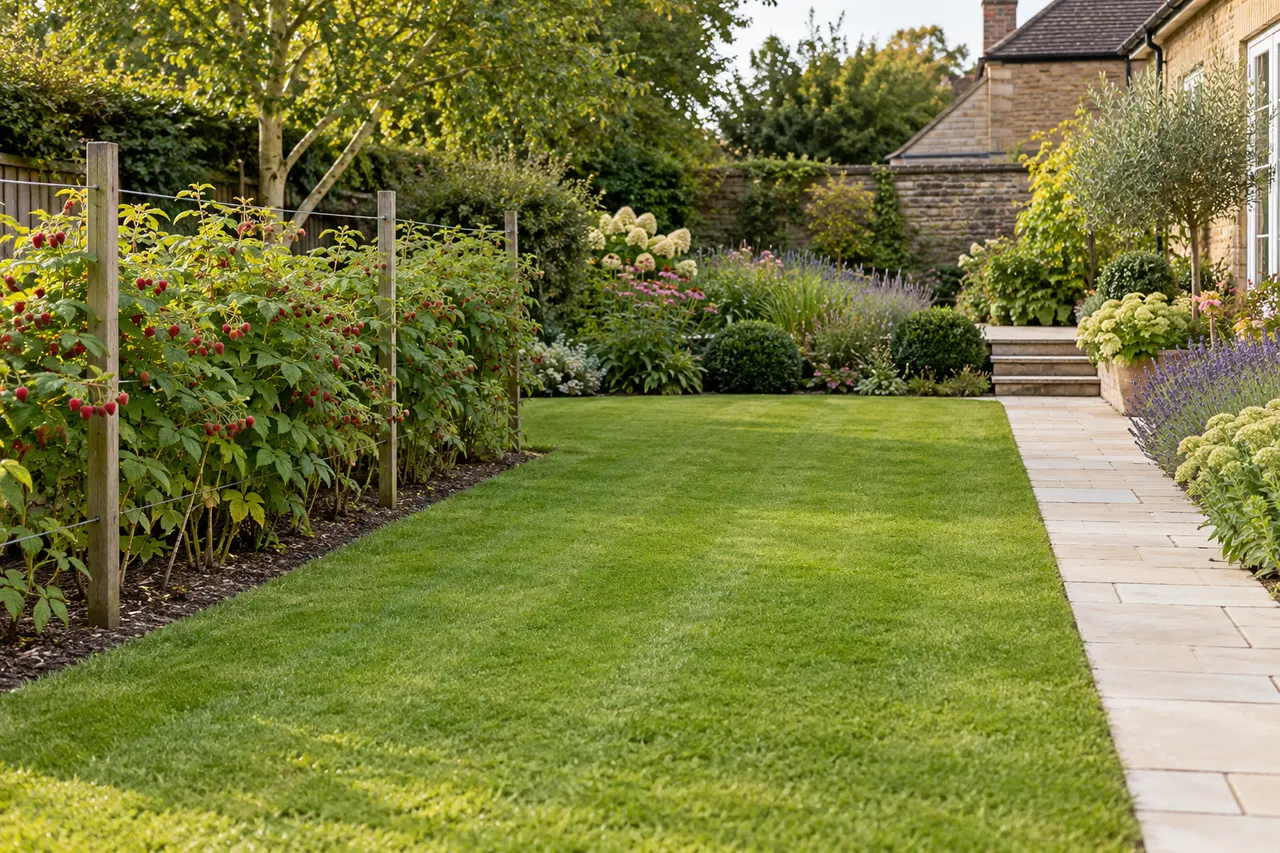
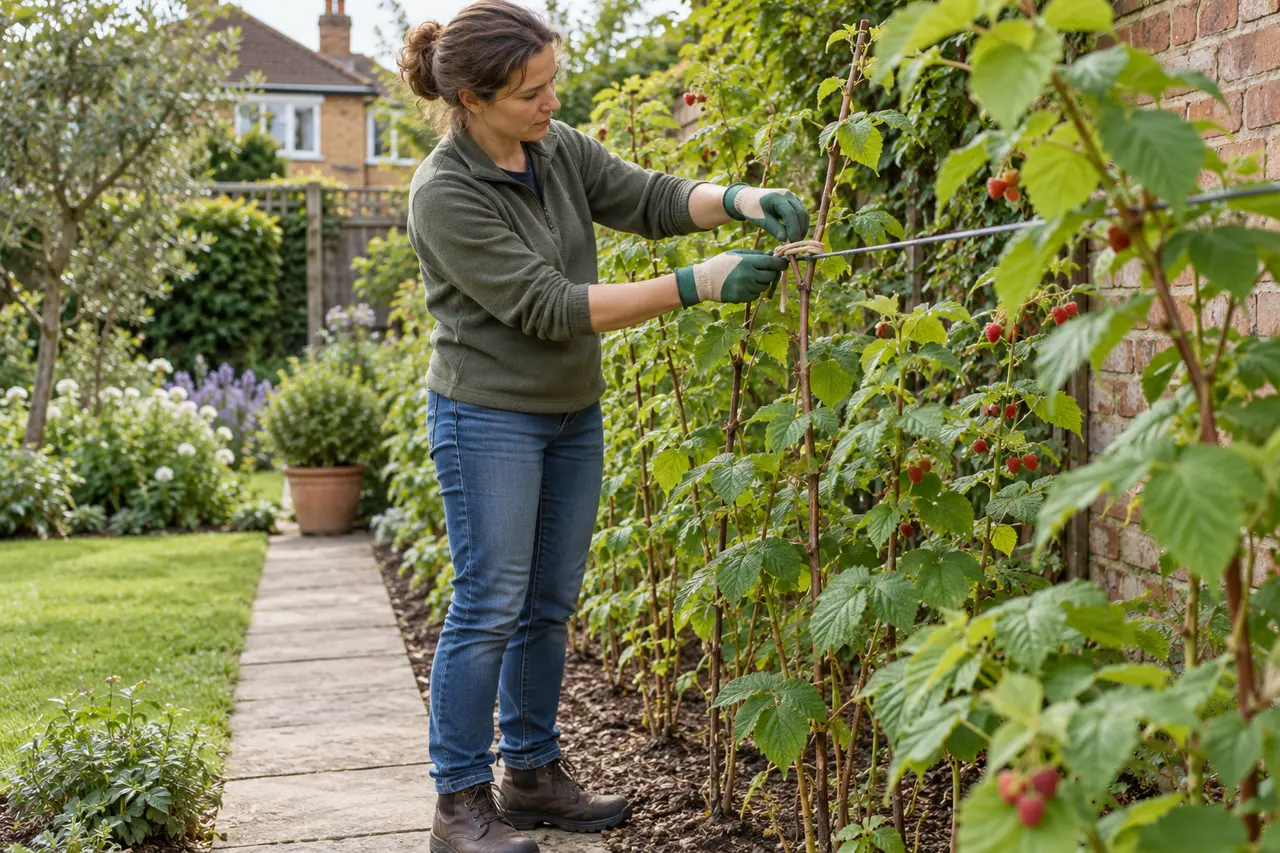
Individual cutting and controlled extraction
Our gardener separates the spent stem from its replacement
A summer-fruiting cane that has completed its role is identified through the row before removal. The gardener follows it to the appropriate base, including where it leans across a newer stem. This makes the cutting target clear at ground level as well as above. The selected stem is then approached with the retained new growth visible and outside the intended cutting movement.
A suitable clean tool and working position allow the identified cane to be cut with the adjacent growth retained. Any existing tie or tangle is released before the detached length is extracted. The gardener uses controlled movements through the row, keeping the replacement stems separate as the piece comes out. This completes the individual removal and leaves a clear view for selecting the following appropriate stem.
Within the existing suitable arrangement, retained canes can receive appropriate spacing and soft ties. The gardener checks earlier loops before adding or adjusting a tie so that the stem remains unconstricted. A damaged post or failed support is identified as its own condition. The completed cane positioning therefore relies on a suitable existing structure, with further repair or construction distinguished from the ordinary pruning and handling operation.
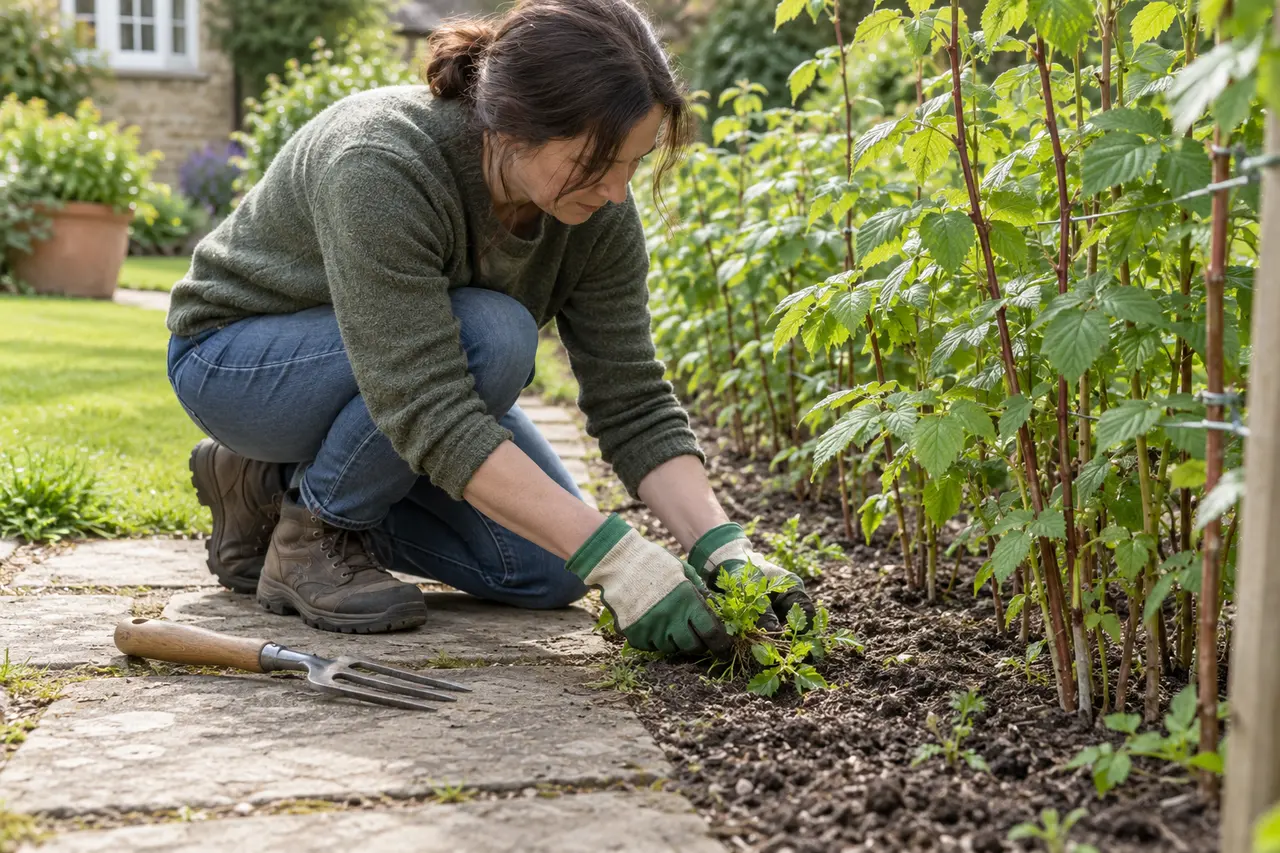
Shallow hand work beside the rooted plants
Accessible weeds removed around the raspberry bases
Raspberries have shallow roots, and our close weeding reflects the living row beneath the surface. The gardener distinguishes an unrelated weed from a fresh raspberry shoot before loosening accessible unwanted growth. A suitable shallow hand method keeps the effort directed at that target. This tends the planted strip while preserving the selected replacement shoots and keeping the established root area seated during the ground-level operation.
New shoots emerging outside the intended row are considered against its retained arrangement. Our selection distinguishes useful renewal from surplus growth at unwanted positions. That distinction keeps the working space and future cane arrangement understandable as the season develops. The team follows the identified type and management purpose through this task, leaving the chosen younger growth available within the row and the separately unwanted positions clear for appropriate treatment.
Suitable existing mulch remains distinguishable from loose rubbish and weeds gathered during hand work. The gardener keeps displaced soil clear of the cane bases and retains appropriate ground levels along the planted strip. Feeding, fresh mulch and replacement planting follow their own included purpose, materials and quantities. This finishes the immediate weed removal while keeping any additional treatment related to the actual row and its needs.
Collection of prickly cane material
Detached pieces gathered before the final bed finish
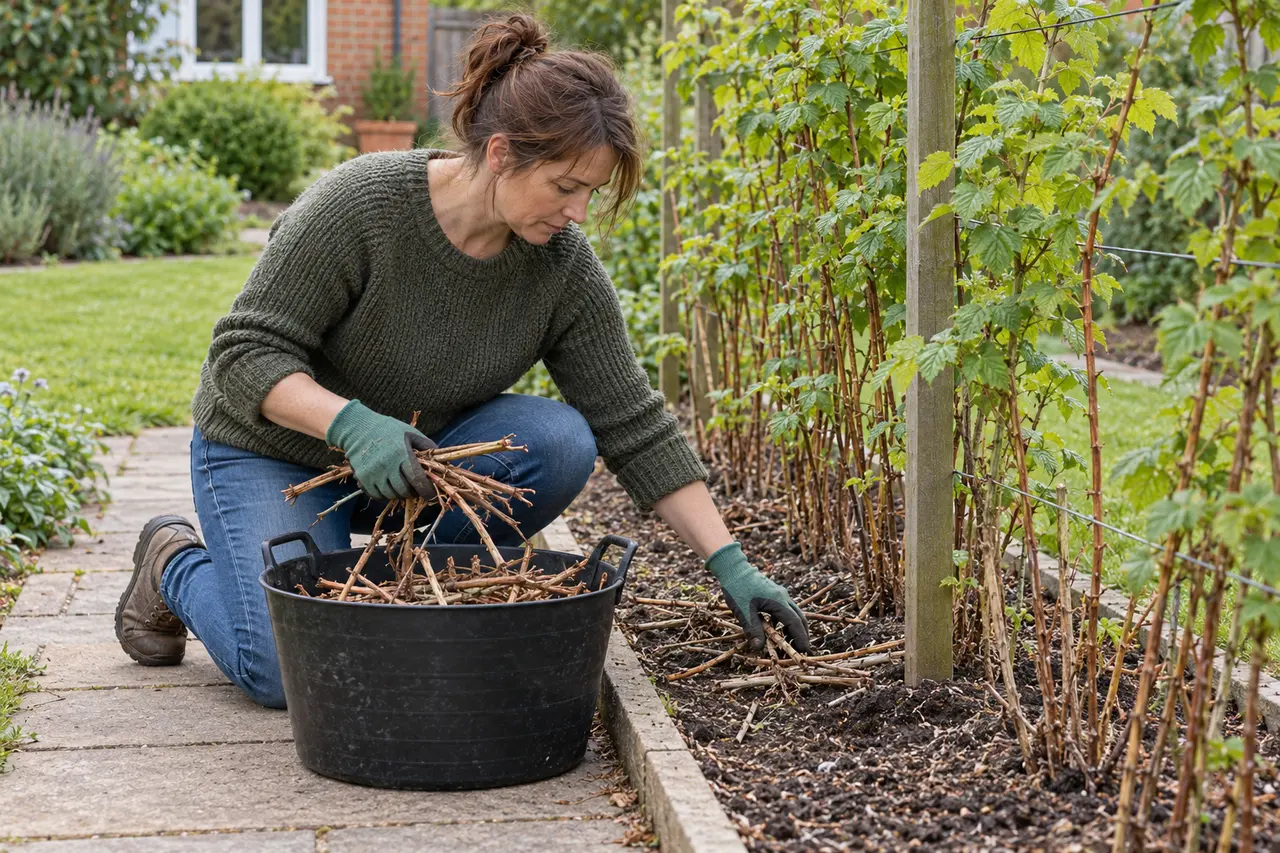
Cut raspberry canes can catch clothing and retained growth, so the collection uses suitable gloves and controlled handling. Detached pieces are brought into an appropriate receiving container as that section progresses. This keeps even small fragments identifiable before another operation begins nearby. The gardener completes the selected removal through its collection stage, leaving the living canes and ground surface easier to see at the next working position.
Our garden clean-up retrieves the detached sections at the row's base as well as the larger pile outside it. Ties, identification labels and broken fittings are separated as they appear in the load. This connects the clearance to the actual mixture being handled. The finished planted strip remains distinguishable from its outgoing material, with retained supports and living shoots left identifiable as the collection proceeds.
Our garden-waste handling follows the collected contents and their appropriate handling. Where disease is suspected or known, relevant advice informs the destination of that material before domestic compost retention is considered. The selective removal keeps the rooted plants and their support structure within the retained arrangement. This gives the customer a defined load and completed cane operation, with any broader clearance remaining a different proposal.
A prepared grass route outside the cane work
Mowing follows the collection of loose rigid pieces
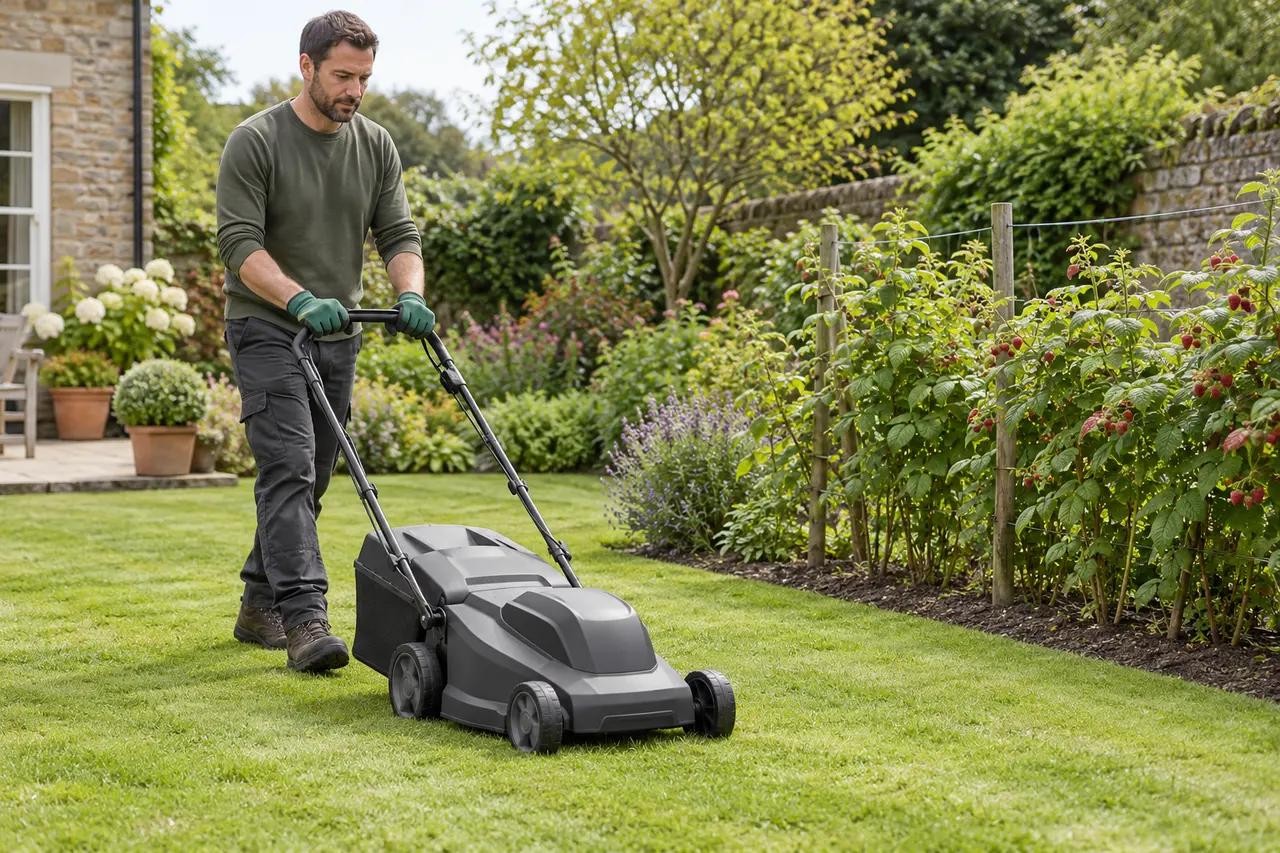
Before our lawn mowing, the team checks the edge for cane fragments, ties and wire ends. The position of any retained leaning cane is also established so the available pass remains clear. This makes the machine route appropriate to the current condition after pruning. The grass can then receive its own operation while the selected fruiting framework and existing support arrangement remain outside the cutting path.
The mower follows supported turf, with controlled suitable equipment finishing the reachable margin beside living canes and fixed posts. Wire positions and woody bases remain clear of the cutting movement. This gives the lawn an appropriate edge while preserving the plants occupying the adjacent bed. The team gathers accessible clippings from the worked surface and keeps the grass operation compatible with the retained fruit-row outline.
Grass affected by earlier access is checked before its finish is selected. Damp or vulnerable turf can change whether an immediate machine pass is suitable. Any proposed lawn recovery follows the actual surface condition and its own intended work. The service therefore keeps the current mowing result clear alongside the cane operation, with a separate response available where that grass needs attention beyond the ordinary cut.
Hedge and fruit-row operations kept clear
A separate maintained outline for the neighbouring hedge
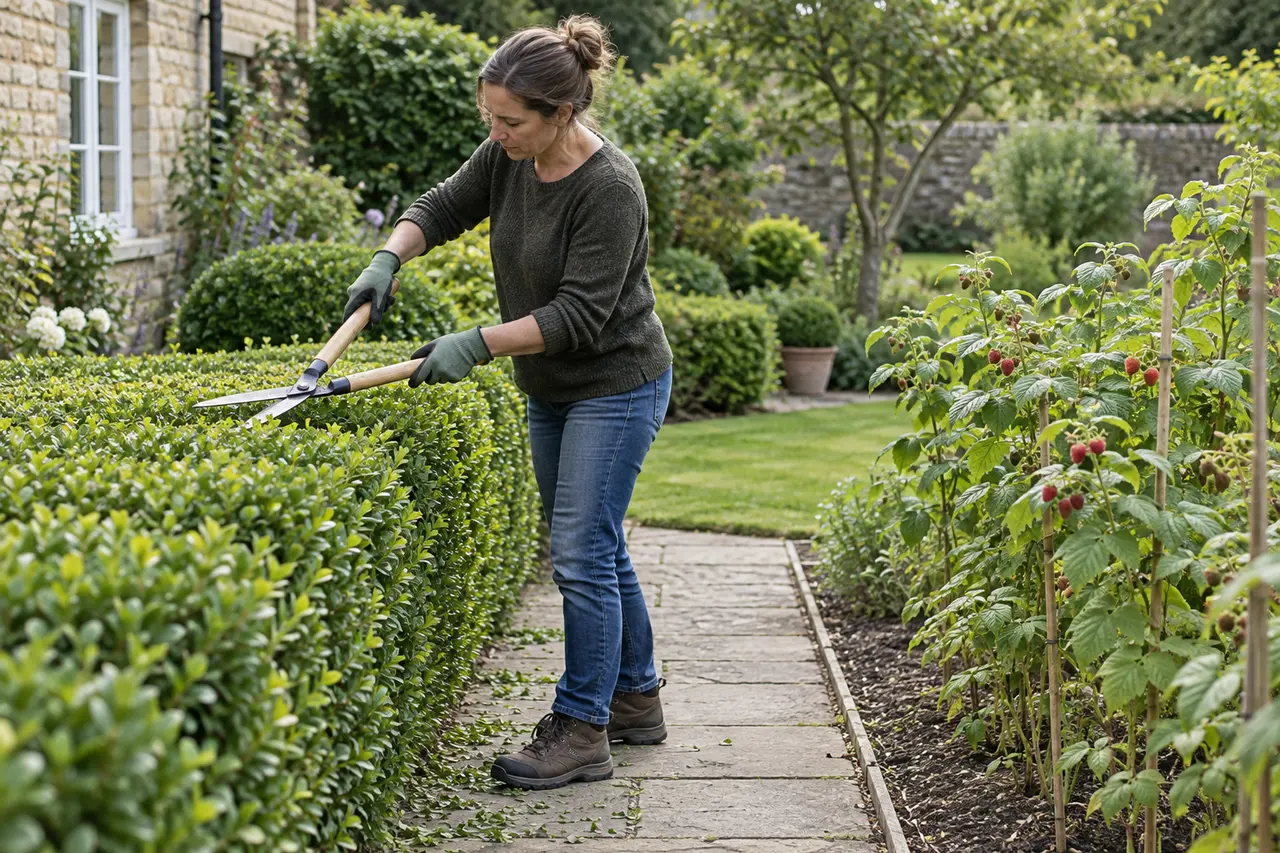
A hedge behind the row and raspberry canes in front can form a dense combined view. Our team identifies the separate plants and their intended treatment before cutting starts. Hedge work follows suitable species timing and its retained outline; cane selection follows the fruiting regime. This keeps the two operations understandable through their overlapping space, preserving the useful raspberry growth while the reachable boundary receives its appropriate finish.
The gardener establishes a controlled position for reachable hedge work that protects the fruit canes and supports. Restricted access through the row changes the method available for that face. Nest checks cover planting affected by the operation, with relevant cutting postponed where a nest is being built or used. The proposed approach follows those actual conditions before the team proceeds through the suitable accessible sections.
Loose hedge fragments are retrieved from beside and within reachable parts of the row, with the living raspberry shoots retained. Our later seasonal garden care follows changes in the cane cycle and ornamental growth. The useful record identifies the raspberry stems left for the next stage alongside the maintained hedge line. Returning work can then address the appropriate new task while preserving the distinct purpose of each plant.
Other work with a separate practical purpose
Design that keeps fruiting groups recognisable
Our garden design can arrange different raspberry types so their individual pruning regimes remain practical once growth develops. The positions and means of identification form part of the proposal, connecting the intended planting to its future care. The actual fruit-growing area and any separately included support or supply requirements are identified within the work. This gives the customer a coherent arrangement without a promise of a particular crop.
Tool hygiene within disease-related tree work
Our tree pruning method considers appropriate hygiene where potentially infected growth is involved. Equipment can carry soil, sap and plant material between operations, so cleaning and any relevant disinfection follow the task and guidance for that concern. The intended cut and retained tree remain part of the same assessment. This describes a suitable pruning approach while keeping diagnosis, further plant-health treatment and any wider disease response separately identifiable.
Composite surfaces cleaned within their heat limits
Our jet-washing service proposal identifies manufactured decking and its actual care requirements before any hot-water or steam approach is considered. The product can restrict heat even beside a surface suited to another method. This makes the selected operation appropriate to the particular boards and finish. The customer receives a surface-specific proposal, with the intended temperature and contact governed by the material's requirements.
Gutter collection includes the pocket around the turn
Our gutter-cleaning service method accounts for an angle that changes the position needed to retrieve material. The visible straight run and deposit beyond its turn are treated as actual collecting areas. Suitable access and tool handling protect the corner fitting as the pocket is attended to. This keeps the material's retrieval identifiable, completing the specified section with the removed debris brought out of the channel.
Christmas-tree condition and the location of needle loss
Our Christmas-tree delivery care information distinguishes some normal loss of older inner needles from ready shedding of green exterior needles, especially alongside other signs of drying. The location and extent inform the condition concern. Appropriate continuing care and a concerning change can then be addressed for the actual tree. This gives the household useful observation points while keeping the display's eventual duration outside a guaranteed-life promise.
Guide rates for selective cane and garden work
The general gardening guide rates apply to agreed time. Identifying the retained stems, selective cutting, hand weeding and controlled collection all need room in the maintenance plan.
| Gardening time | Guide rate |
|---|---|
| First hour | £83 |
| Each subsequent hour | £65 |
GBP guide prices. Establish the work, waste-removal scope, VAT treatment and any applicable access or parking charges before relying on a complete booking total.
Questions about our raspberry-row maintenance
How does your team handle a row with an unknown pruning history?
We preserve useful identification information while establishing the type and intended regime. A summer-fruiting row can need existing new canes for its next crop, so an uncertain history affects the next suitable step. The proposed treatment follows that assessment before any irreversible whole-row cut. This keeps the current appearance connected to the plant's continuing role and the actual work that is appropriate.
Does your gardener identify raspberry canes by prickles alone?
No. Varieties differ, including spine-free forms, so the actual plant and the cane's role inform the selection. Prickliness alone does not identify which stem has finished fruiting. Our handling remains appropriate to the material and neighbouring growth as the work progresses. This keeps both the selected removal and the canes retained for the following stage clearly connected to the identified row.
Does tying a cane include repairing its support?
Our suitable soft tie positions the retained stem within an appropriate existing arrangement. A broken post or failed wire remains a separate condition needing its own proposed repair or construction. The team identifies that issue before relying on it. This keeps the intended cane positioning clear and avoids treating an added tie as restoration of a structure that is no longer sound for that purpose.
How does your assessment distinguish a spent cane from a dead plant?
The raspberry is a perennial rooted plant capable of producing successive canes. An individual stem completing its life therefore has a different meaning from the whole plant dying. Our gardener considers the retained base and appropriate younger growth alongside the spent material. That wider view supports the next suitable operation while preserving useful renewal within the established planted row.
The next cane task follows the fruiting stage
Our garden-care service keeps the retained raspberry row linked to its actual cycle. The useful operation can be selected spent-cane removal after summer fruiting or the appropriate dormant cut for an autumn-fruiting arrangement. Following that stage gives the next visit a specific purpose and maintains a clear distinction between the growth being kept and the material ready to leave.