

Container care alongside the wider garden
Gardeners Fulham
Our gardeners maintain planted containers as growing spaces, attending to the compost, accessible roots and individual watering requirements. Specified repotting, selective weeding and seasonal collection can accompany the lawn, beds and hedge work around them, leaving both the planting and the space needed to care for it accessible.
- How is repotting different from a compost top-up? We distinguish refreshing the surface from handling the plant and settling its roots into the agreed growing space.
- How do you water a mixed collection of pots? Our gardeners check individual compost and drainage, applying water to the growing medium according to the plant and conditions in each container.
Planted containers maintained as individual growing spaces
Can your gardeners include specified repotting in a visit?
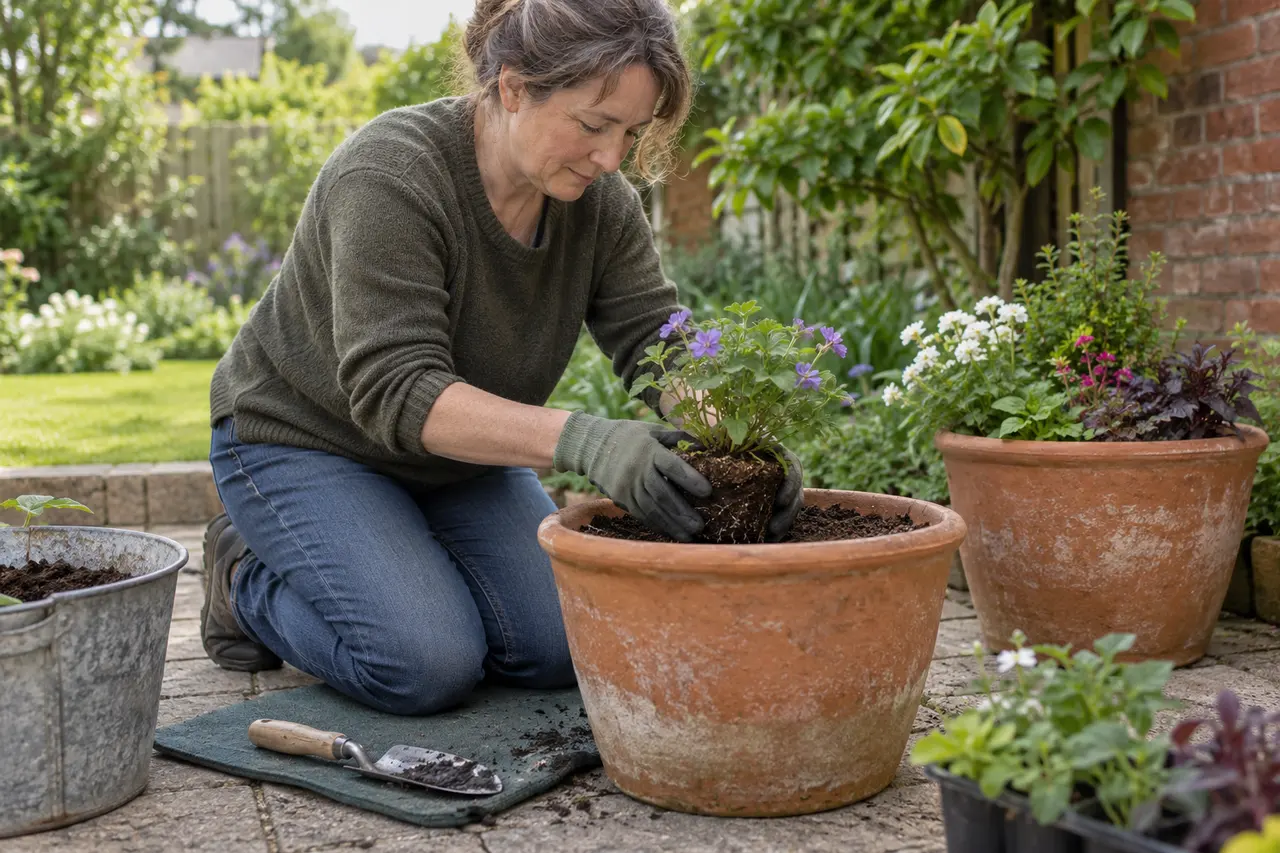
We can include repotting as an identified task, with the plant, existing container and intended change established alongside the other gardening work. Suitable compost, a suitable pot and an appropriate handling position are part of that proposal. This separates work on the plant’s growing space from ordinary weeding around the containers and makes any required supplies clear before the plant is lifted.
How is the receiving container selected?
The plant, roots and available growing space inform our receiving-container proposal. Refreshing compost within the existing pot may be appropriate, while another task can require a different container. We identify that operation before lifting, with suitable materials and a handling position prepared. This connects the plant’s root space with the practical work and supplies being commissioned.
The growing space within the container
Plant, compost and accessible roots considered together
Our container work starts with the plant and accessible growing medium. The gardener distinguishes surface weeds, established root crowding and the growing conditions before selecting attention. These separate requirements can exist within the same decorative pot. The task is then directed to what the plant needs, leaving a clear account of whether the work concerns surface care or a change to its root space.
For commissioned repotting, the receiving container and compost are prepared before the plant is lifted. Their choice reflects its needs and later handling. A clear working surface allows loose material to be gathered while roots are supported, with smaller neighbouring pots kept outside the operation. This gives the gardener room to settle the plant and finish its growing space without disturbance to the rest of the collection.
Our Garden maintenance includes specified container tasks within the agreed visit, with supplies and substantial changes described separately. The finishing work positions the plant appropriately in its growing space and leaves suitable access for subsequent attention. This distinguishes a completed container operation from a refreshed-looking surface that still leaves the roots or practical care arrangements unresolved.
Individual attention to watering
Compost checked before suitable water is applied
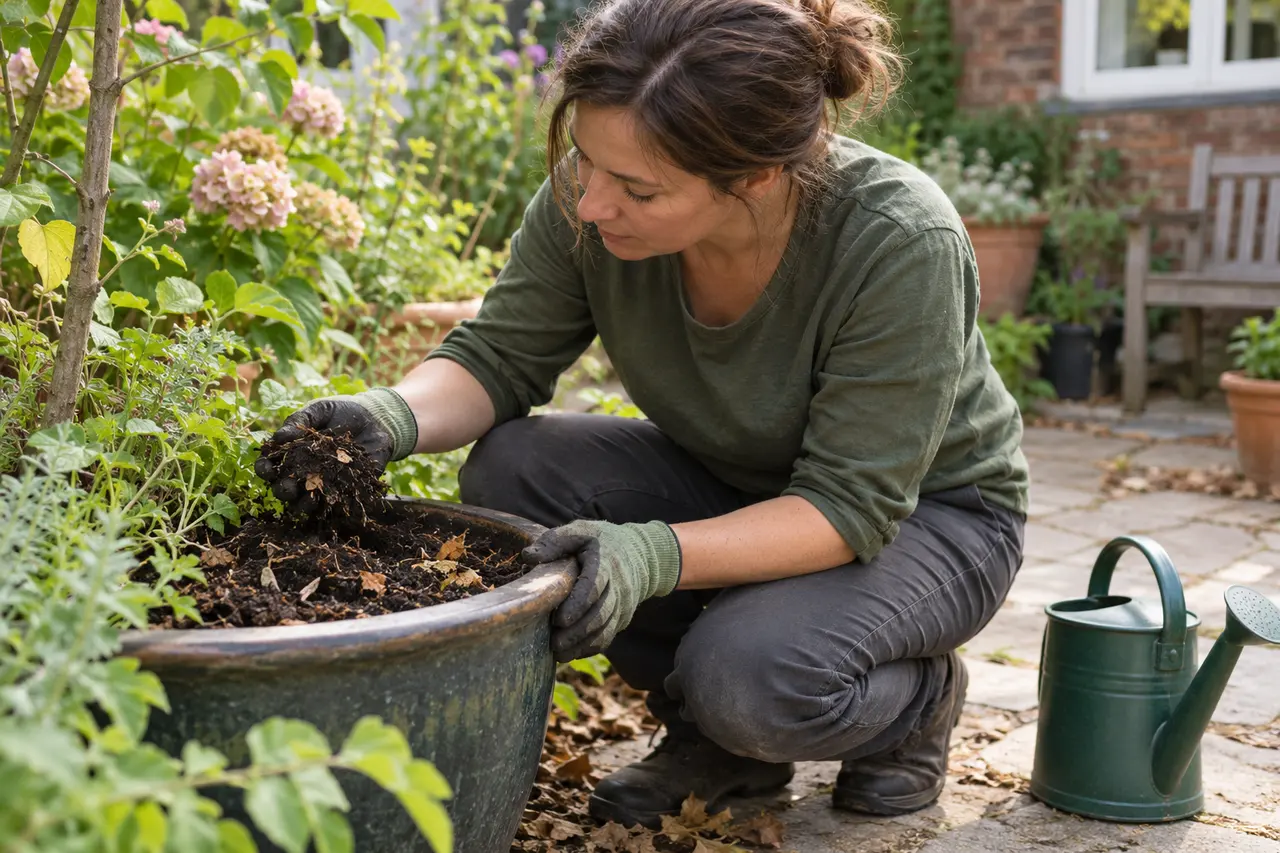
The plant, container size, exposure and compost condition guide our watering. Adjacent pots can require different amounts or timing, so each growing space is checked in turn. The gardener directs attention to the medium supplying the roots, with the available moisture considered before water is added. This gives a mixed collection individual care within the same visit.
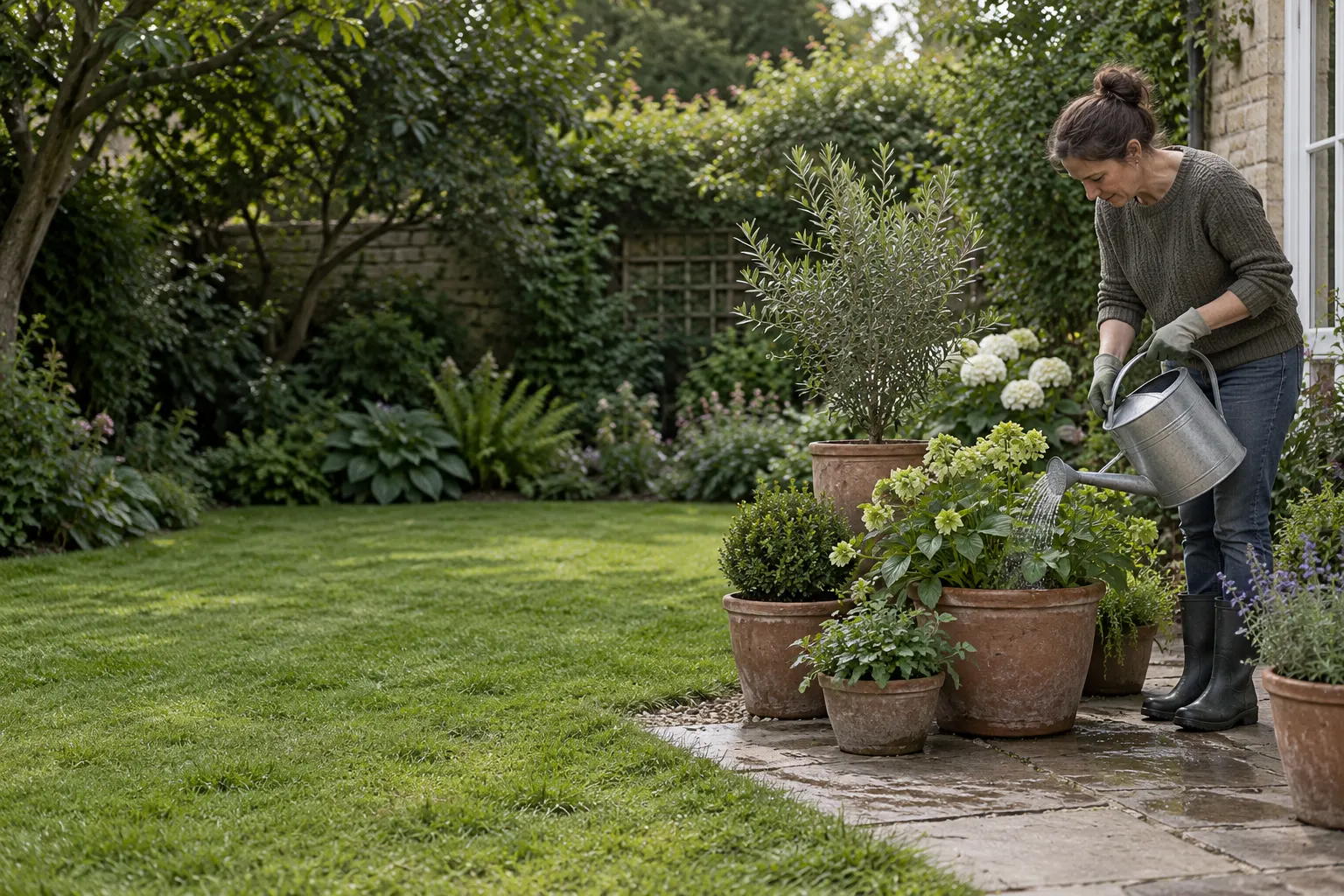
Suitable watering is directed towards the compost with control around crowded rims. A manageable can allows the gardener to work beside existing growth without washing loose growing medium over the edge. We observe how water enters the pot and the condition already present instead of repeatedly adding more to an already wet container. The task is carried through at the root-supplying medium, not judged solely by the appearance of freshly showered foliage.
Our compost checks follow RHS container-watering advice, including the distinction between recent rain and the actual moisture available within the container. A commissioned visit addresses the watering task on that occasion. Where new or recently repotted plants need continuing observation, the arrangement for care between visits remains explicit. This gives the household a clear boundary between the watering completed during the gardening work and the attention required after the team has left.
Selective recovery of neglected pots
Retained plants distinguished from unwanted growth
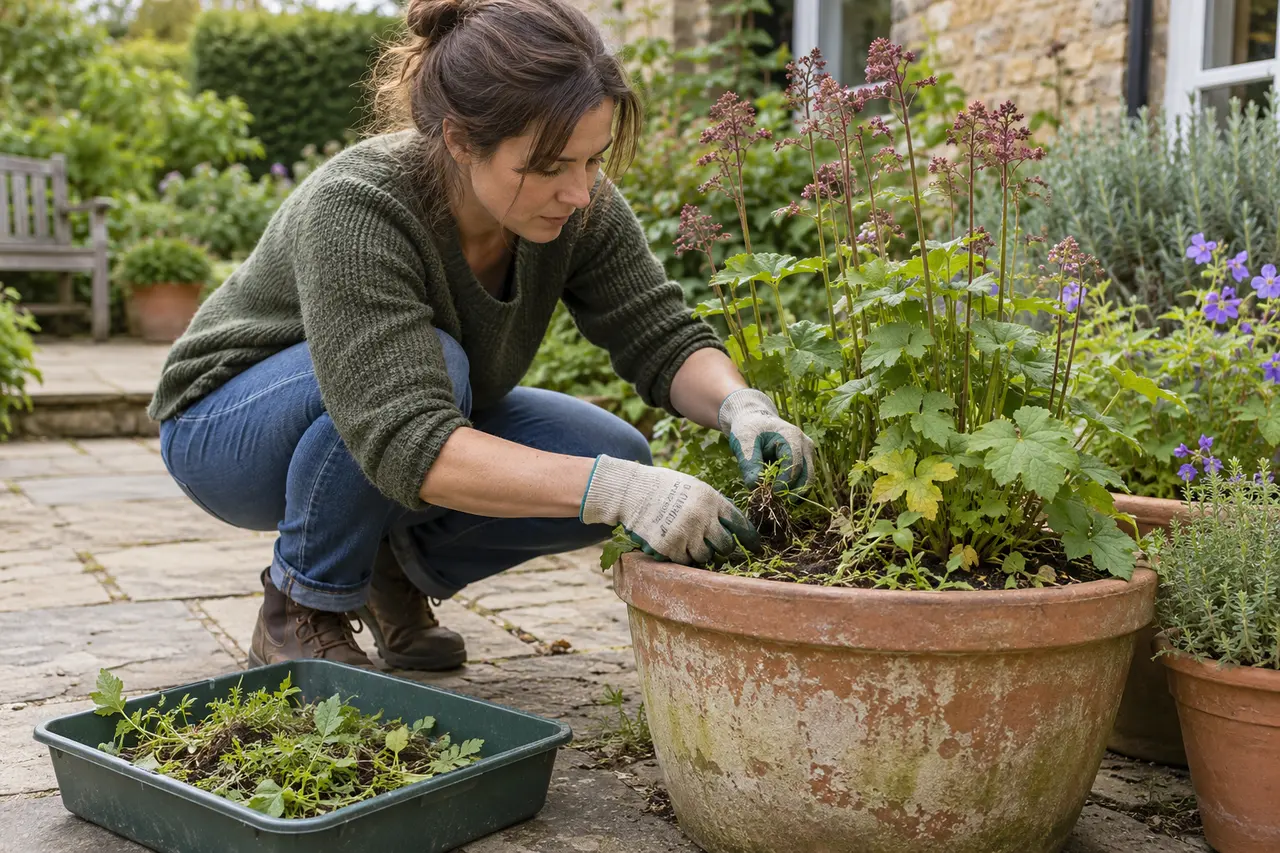
In an overgrown pot, our gardeners identify any valued plant beneath weeds and dead stems before selecting the clearance. Accessible small weeds can be worked out around retained growth, whereas a tightly occupied root ball may need a different operation. Emptying the container is not the routine finish for a surface-weeding task. The selected work follows what is being kept as well as what is unwanted, preserving the purpose of the planted container.
Where emptying a container is commissioned, plant material, old compost and broken pot pieces remain distinguishable during collection. A root ball presents a different handling load from loose leaves, and sharp terracotta is kept separate from soft cuttings. The outgoing material is positioned for suitable handling without repeated carrying through the planted pots still receiving care. This keeps the collection stage practical instead of leaving mixed debris around the remaining display.
Our garden clean-up can include specified container materials, separating items staying at the property from the outgoing load. The garden-waste disposal guide distinguishes vegetation from pots and unrelated objects. Broken containers, growing medium and green pieces remain identifiable through handling, with their collection arranged for the actual materials present. The emptied position is left available for its next plant task.
- We check individual compost before selecting the watering task.
- The intended root-ball position remains clear during repotting.
- Spilled compost is gathered before nearby lawn equipment returns.
- Broken terracotta is separated from soft plant cuttings.
- Finishing leaves a usable watering position beside the containers.
Containers and adjoining planted beds
Connected growth identified across the pot and border
Our gardeners trace growth overlapping pots and neighbouring beds before cutting. An in-ground shrub can shade the collection, while a trailing container plant extends over the border. Identifying its origin preserves the intended display and gives the selected cut a clear subject. The team can then maintain the planted junction with the separate plants and their continuing roles understood.
When containers are rearranged as part of the agreed work, useful labels stay associated with the plants they identify. We distinguish the plant from a description based only on its former position: the once-sunny pot may now stand in shade. Recording the plant and current location gives later care a usable reference, particularly in a mixed collection where one watering or pruning instruction would not suit every container.
Seasonal attention around the pots includes spent-growth removal, accessible leaf gathering and checks on new planting. Our year-round gardening guide follows those different stages. The gardeners organise close hand tasks through the collection, then complete the adjoining bed work with materials kept separate from the finished area. This gives small gaps and crowded containers an appropriate place within the whole visit.
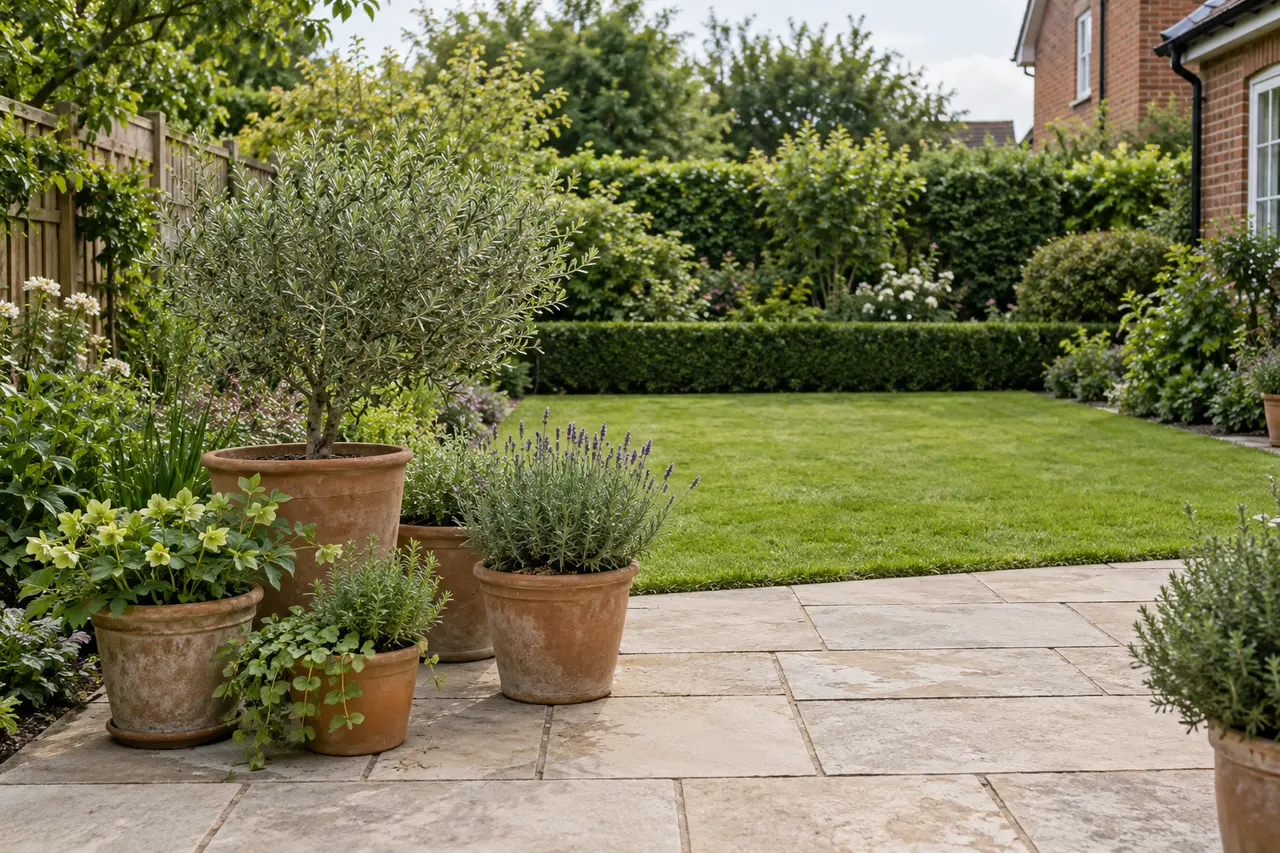
Lawn maintenance beside planted pots
Grass margins checked after container watering
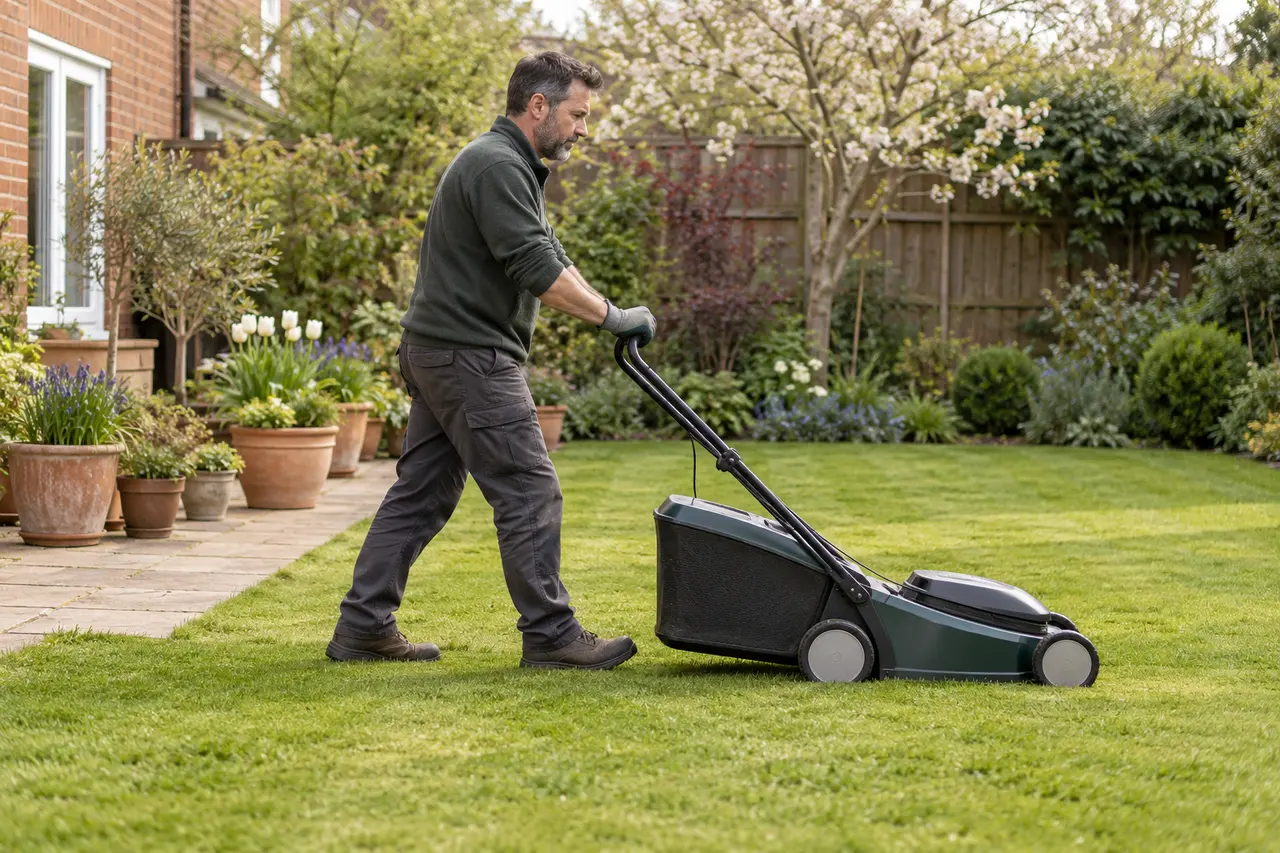
Before lawn work beside watered containers, we check the grass margin as well as its open centre. A wet strip can require a different route from firm turf nearby. The cut follows the usable surface, with any portion unable to take the equipment identified for later attention. The lawn operation can then be completed without repeated wheel movement through that limited margin.
The mower’s working line remains on its suitable lawn surface. We do not balance a wheel against a pot base to obtain an extra strip of cut grass. Where necessary, a separate appropriate method finishes beside the patio, with the grass condition still guiding the work. Container care and lawn mowing can therefore share the visit without the position of the pots becoming a reason for rushed cutting or an unsuitable low setting.
After cutting, loose grass is gathered from the worked patio. Tools and temporary materials are moved from the standing space beside the pots, leaving their next watering position accessible. This completes the two operations together: the grass receives its cut and collection, while the planted containers remain available for close attention without another equipment move or debris-clearing stage.
Boundary work beside the container collection
Watering equipment cleared from the hedge-working position
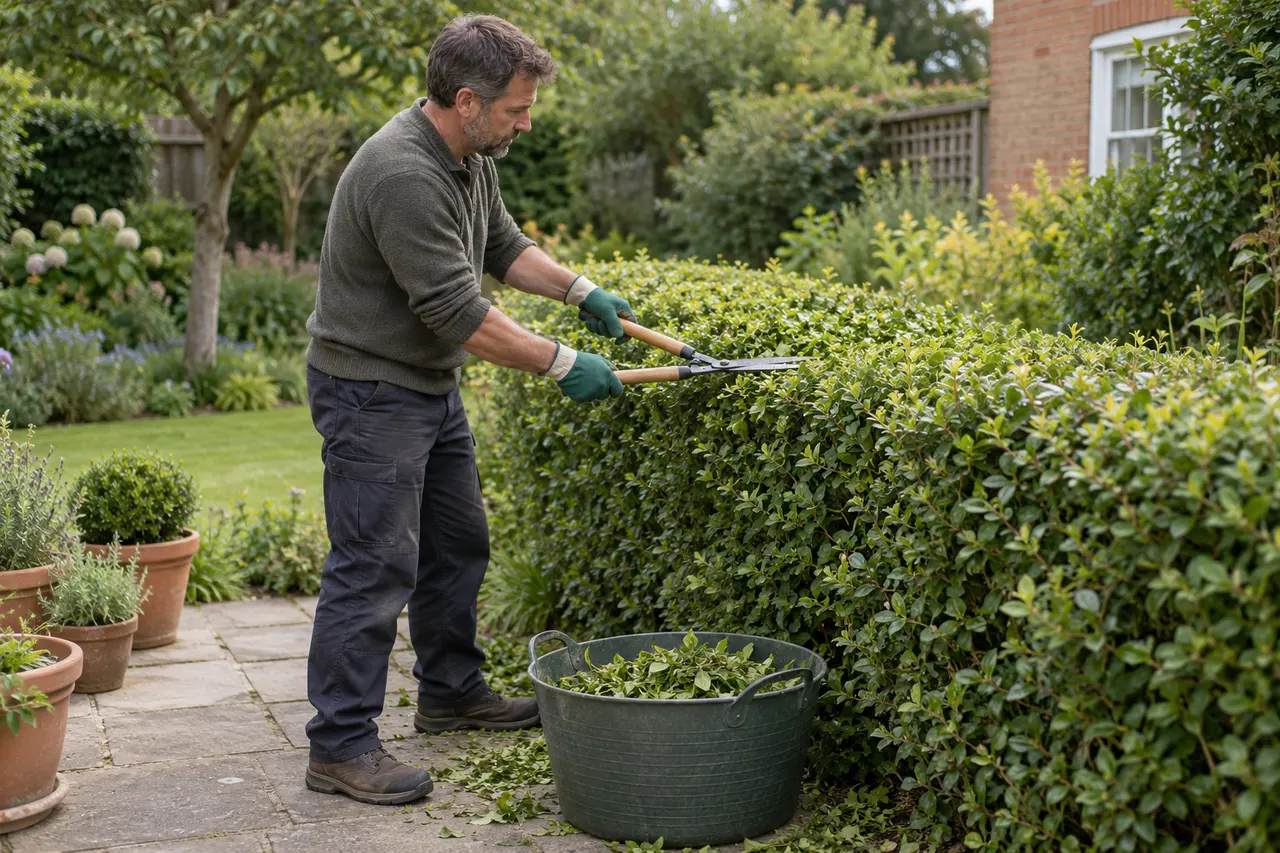
Before suitable hedge trimming beside a pot group, we gather loose watering equipment from the working space. Cans, hoses and temporarily lifted saucers can occupy the gardener’s footing even where the hedge face is readily reachable. The watering task is completed or deliberately paused, with its loose kit positioned away from cutting. This leaves a clear steady position for the hedge operation and keeps the two sets of equipment distinguishable.
Reachable hedge growth is trimmed from the prepared position, with clippings collected through the operation. The gardener checks pot rims and the spaces beside them for caught fragments. Material is lifted from those points so the growing medium and plant bases stay accessible. The finish therefore includes the debris beneath the cutting face as well as its visible outline.
Hedge work follows plant identity and condition, with nesting checks and affected cutting postponed where required. The team selects the appropriate extent from its controlled position. Tools and fragments are gathered afterwards and the watering access beside the pots restored. This leaves the boundary attended to while the earlier container-care arrangement remains usable for the plants it serves.
Further services around a planted outdoor space
Container layouts matched to the plants’ growing needs
Our garden-design plan considers the light, watering arrangement and access available to each pot. Plant needs inform the proposed grouping alongside its visual character. The arrangement includes space to reach the compost as growth fills out, connecting the display with its continuing maintenance. Compatible growing positions and practical care access are considered together before the collection is fixed in place.
Tree-work proposals retain applicable replacement conditions
Where written removal consent includes replacement planting, our tree-work proposal keeps that requirement with the operation. Numbers, species, position or timing in the decision inform the later planting arrangement. Removal and replacement supply or planting remain distinguishable in the quotation, with the applicable authority’s condition carried forward when the existing tree is taken out.
Surface cleaning accounts for small watering lines
For jet washing around planted pots, visible irrigation tubing crossing the cleaning area is identified before equipment is positioned. The paved surface and the small fittings supplying the plants remain separate parts of the working arrangement. Cleaning is planned around those lines without automatically including disconnection, alteration or repair. This allows the actual plant-watering setup to be considered instead of treating every fine tube on the patio as loose debris.
Gutter cleaning distinguishes displacement from deposited debris
A visibly sagging or loose-looking section is considered before a gutter cleaning method is selected. Clearing leaves does not demonstrate that its joints or brackets can carry the proposed operation. The affected position is reviewed from a suitable safe viewpoint, keeping cleaning suitability distinct from any necessary repair decision. A displaced channel is therefore not treated merely as another section containing more debris, and the cleaning proposal reflects that practical difference.
Seasonal delivery coordinated with the temporary holding position
Where a cut Christmas tree arrives before indoor setup, the arrangement identifies a cool sheltered upright holding position with the relevant water-care instructions. Arrival and display can then proceed in their intended sequence. The temporary space remains distinct from radiators and other inappropriate warm positions while the room is prepared, giving the selected tree an understood care arrangement between those stages.
Gardening time for close container work
The published general gardening rates below guide our quotation. Several planted containers can require individual checks and careful handling even where the patio occupies little ground, so the proposal reflects the actual plant tasks as well as the area around them.
| General gardening time | Guide rate |
|---|---|
| First hour | £83 |
| Each subsequent hour | £65 |
GBP guide rates. Our complete quotation identifies the commissioned work, any required pots or compost, outgoing waste arrangements, VAT treatment and applicable parking or access charges. Specified container changes remain distinguishable from ordinary surrounding upkeep.
Container maintenance and continuing plant care
Is adding fresh compost the same job as repotting?
Our quotation distinguishes a surface compost refresh from repotting. The former largely leaves existing root space unchanged; the latter involves handling the plant and settling it into the agreed growing space. This keeps the material and handling requirements connected to the intended result. A refreshed appearance alone is not presented as resolving root crowding or an unsuitable container where a different operation is actually required.
Does every watering also need plant food?
Feeding is identified separately from watering where it is included. Plant needs, season and compost condition inform the material and application, including nutrients already present in the growing medium. The team follows the product instructions for that particular task. This gives the feed a defined purpose while each container continues receiving the moisture attention appropriate to its roots.
Who waters the containers between gardening visits?
The commissioned visit covers its stated tasks, while the arrangement for checks between visits is made explicit. Our work can identify which plants need continued monitoring, the available water position and the relevant instructions for newly potted or repotted planting. This gives the household a clear account of continuing care instead of suggesting that an occasional maintenance booking automatically includes attendance on every intervening day.
Can a potted plant's label stay behind when it moves?
Useful plant labels and records follow containers moved within the agreed work. The gardener notes the plant and current position, including changed light or exposure. Later care can use that reference even when the collection has been rearranged. This gives different plants their own continuing information and preserves the connection between their identity and the growing space now available.
Should every pot have water standing in its saucer?
Our gardeners consider each plant’s drainage requirements, the container and its accessible outlet. Water is selected for that growing space, with any saucer assessed as part of the arrangement. Standing water is not used as the universal finish for the collection. The result reflects the different plants in neighbouring pots while keeping their individual moisture conditions part of the care provided.
Container care completed with usable access
Our wider gardening work connects the maintained lawn, beds and boundaries with the close attention given to planted pots. The completed work leaves checked growing spaces, collected loose material and accessible positions for subsequent watering. Where another potting or seasonal task is required, it remains identifiable as the next operation, allowing the container collection to receive considered care alongside the larger parts of the garden.