

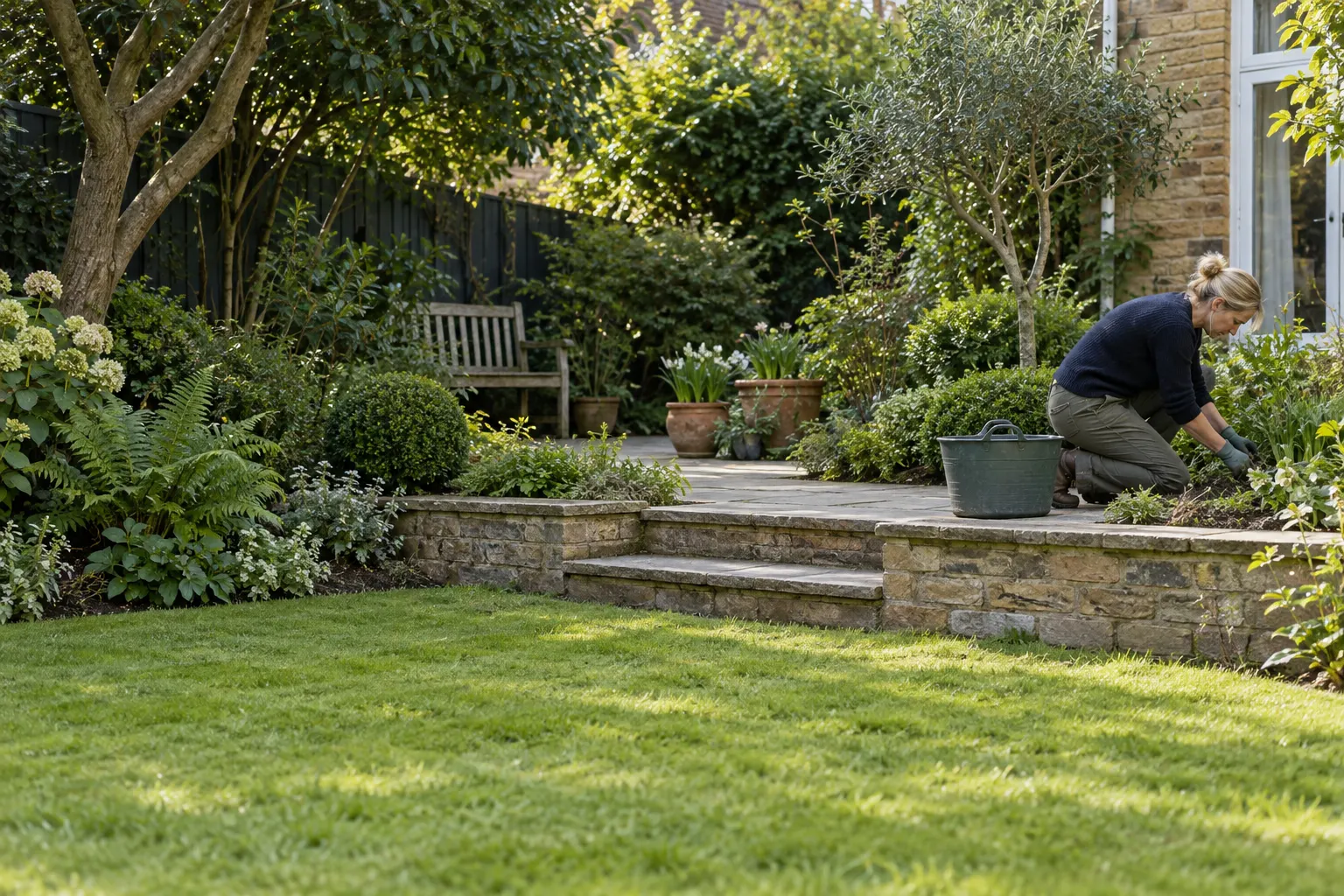
A considered finish on each level
Gardening Services Walthamstow
If your garden has planted areas at different levels, maintenance needs to work with that arrangement. Keep the lawn on its own firm surface, the upper beds in order and the steps clear of freshly collected material. Plan the actual tasks across those spaces with gardeners in Walthamstow.
Practical answers for a stepped garden
Can each level have a different maintenance task?
Yes. A level lawn, an upper planted bed and the steps between them do not need the same treatment. The work can separate mowing from hand weeding and collection. Each operation needs suitable equipment and a supported working position on the actual surface, with the connecting route kept available as material is moved.
Why does moving the cuttings matter to the plan?
Cut material can occupy the landing needed for the next task, or fall onto an area already finished below. Establish suitable collection points and manageable loads as the work progresses. That keeps the working surface available without turning the steps into temporary storage or assuming heavy equipment can be carried between every part of the garden.
Start with the actual surfaces
Give each level its own working space
A raised bed behind a low wall can look like a continuation of the lawn from the house, while requiring a completely different working position. Start by distinguishing the planted ground, the firm level surfaces and the steps joining them. A neat overall appearance comes from finishing those individual areas without using one as a dumping place for another.
In the upper bed, hand work can separate weeds from retained plants while the gardener stands on a suitable surface. Loose soil should stay within the planted area. Pulling it over the edge to make the top look clean simply creates another task on the paving below and may expose roots that were previously covered.
An agreed garden-maintenance visit can bring those jobs together while preserving their different methods. Work may move from selected plants to grass and then collection, or use another sequence where the property requires it. The important point is to leave a usable working area for the next operation instead of progressively filling every landing.
- Keep the step treads free of tubs and fresh cuttings.
- Use a suitable standing area beside each planted section.
- Collect loose soil before it spills onto the level below.
- Keep mower wheels on the level surface being cut.
- Move material in loads that suit the actual route.

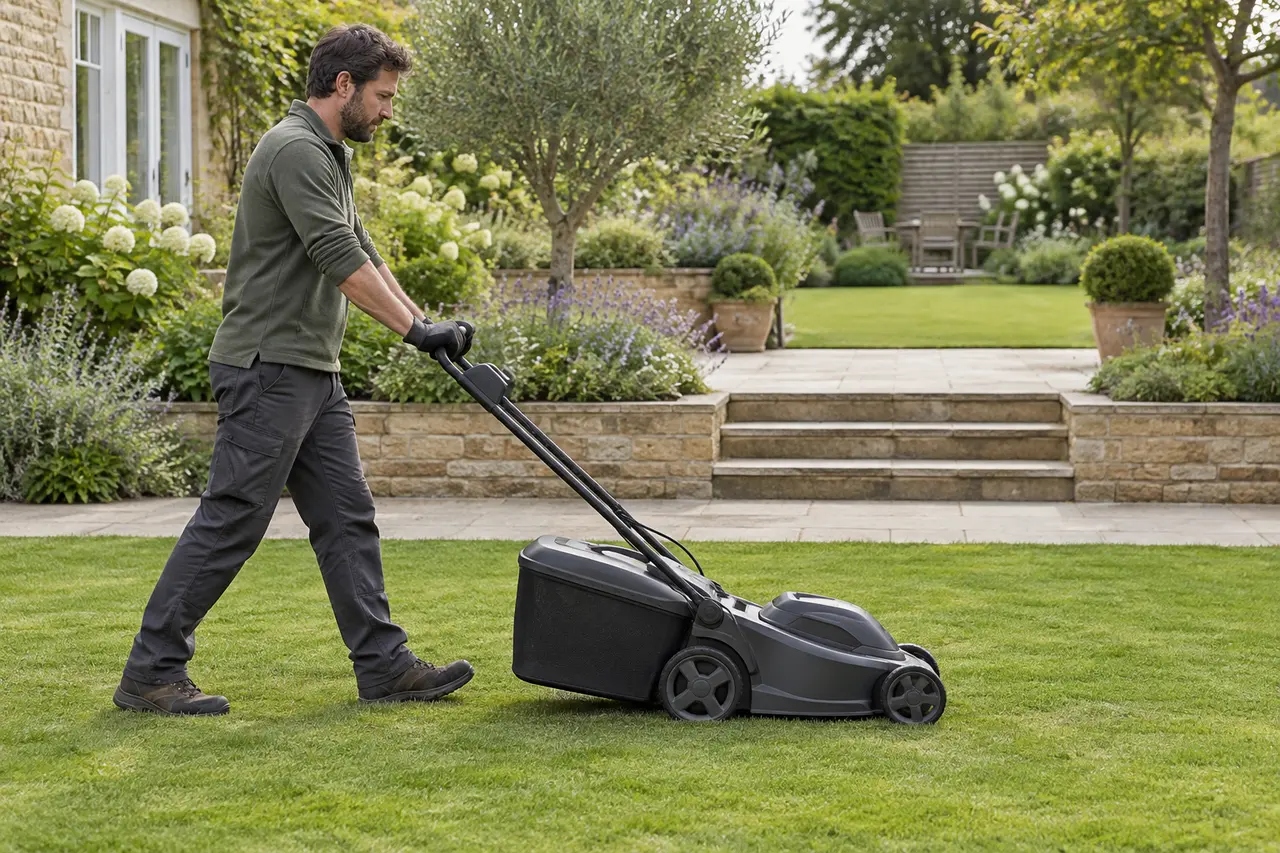
A contained mowing task
Cut the lawn from the surface that supports it
Where a lawn ends above paving or a retaining edge, the visible grass line and the limit for the equipment are separate considerations. Mower wheels need proper support throughout the pass. A protruding tuft beside a drop is not a reason to place a wheel beyond the supported lawn or lean the machine over the edge.
Remove small stones, detached sticks and other loose objects before cutting. Material can arrive from an adjacent raised bed even when the lawn was clear on the previous visit. Finish suitable margins with an appropriate controlled method, taking account of the edge itself and any retained plants hanging over it. There is no need to scrape the surrounding structure for a closer-looking line.
Lawn care can distinguish that ordinary cut from repair to a worn or failing patch. A damaged lawn beside a frequently used step may need a separately considered recovery task. Simply cutting it shorter does not restore the missing grass, and a maintenance booking should not silently become a proposal to rebuild the level or alter its retaining edge.
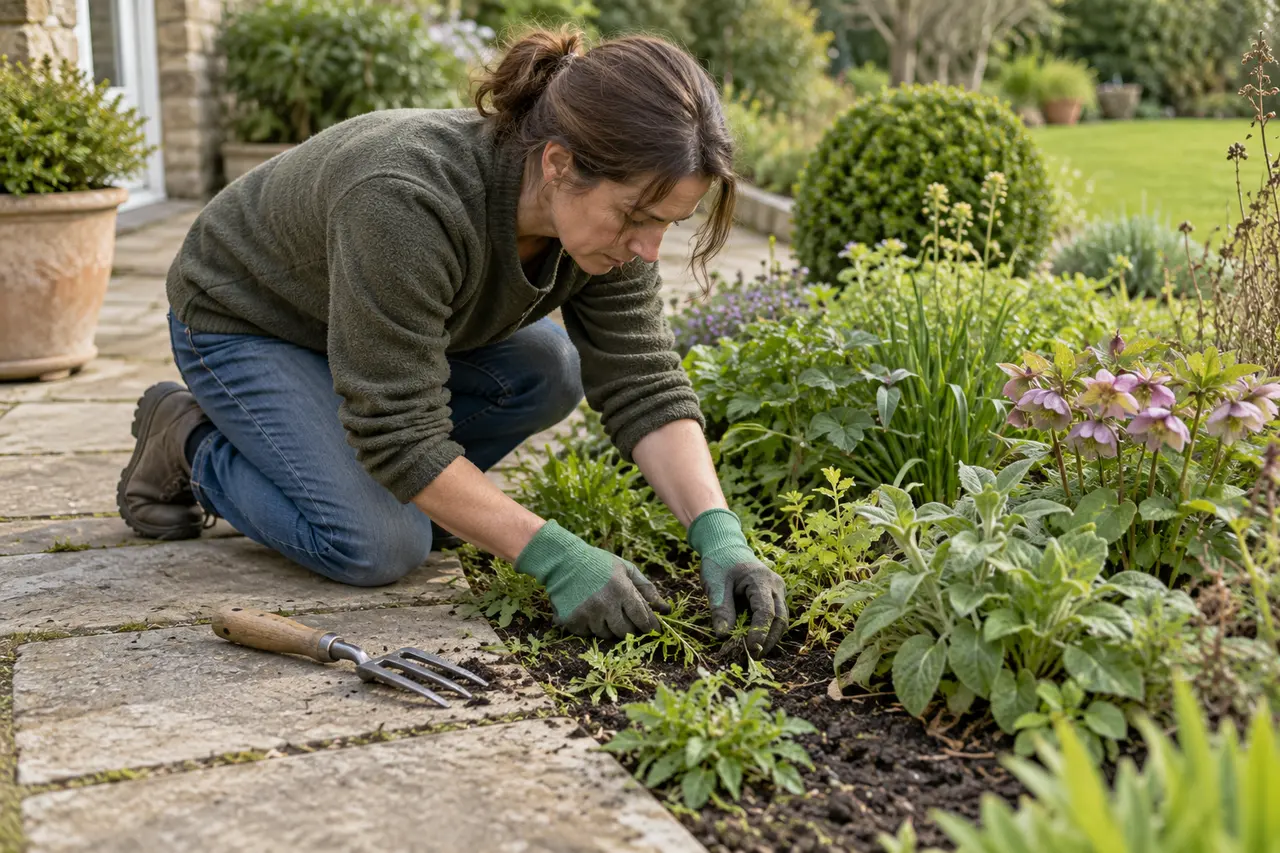
Keep soil in the bed
Weed the planted terrace without emptying it
A planted terrace may hold established shrubs, low perennials and weeds in the same narrow strip. Identify the wanted crowns before working through the surface. Lift accessible weeds with their roots where practicable, supporting the surrounding soil rather than dragging an interconnected mass over the edge of the bed. Retained plant labels should remain with their plants.
For a weed growing close to the front of a raised bed, the pulling direction matters. A sudden outward tug can dislodge soil and small plants together. Smaller controlled lifts allow the work to follow the available gap. Where roots are entangled with a wanted plant, the next action needs to protect that plant rather than chase a perfectly bare surface at any cost.
Place the removed material into a nearby suitable receptacle instead of letting it accumulate on the wall top. This separates what has been lifted from the soil that is staying. If new planting is requested, the available root space and the existing bed conditions need to suit the selected plants; an apparently empty corner is not proof of an unrestricted planting hole.
Collection between levels
Keep the route available while material comes out
A garden clean-up across separate levels needs a collection method that does not occupy the whole connection between them. Put the container on a suitable level position off the route where possible. Gather the material into it as the work proceeds, rather than building a long heap down the steps and trying to move everything at the end.
The weight and shape of each load matter as much as its apparent volume. Damp leaves can become heavy, while long flexible stems can trail beyond a small tub. Keep the load manageable and its contents controlled before movement begins. A large bag that hides the treads or drags across retained planting is not an improvement over several suitable smaller loads.
Separate ordinary green material from stones, broken pots and other rubbish found among it. The agreed garden-waste disposal arrangement should reflect what is actually being removed. Collection from the beds and removal from the property are related tasks, but leaving filled containers at an exit is not the same as an agreed off-site removal.
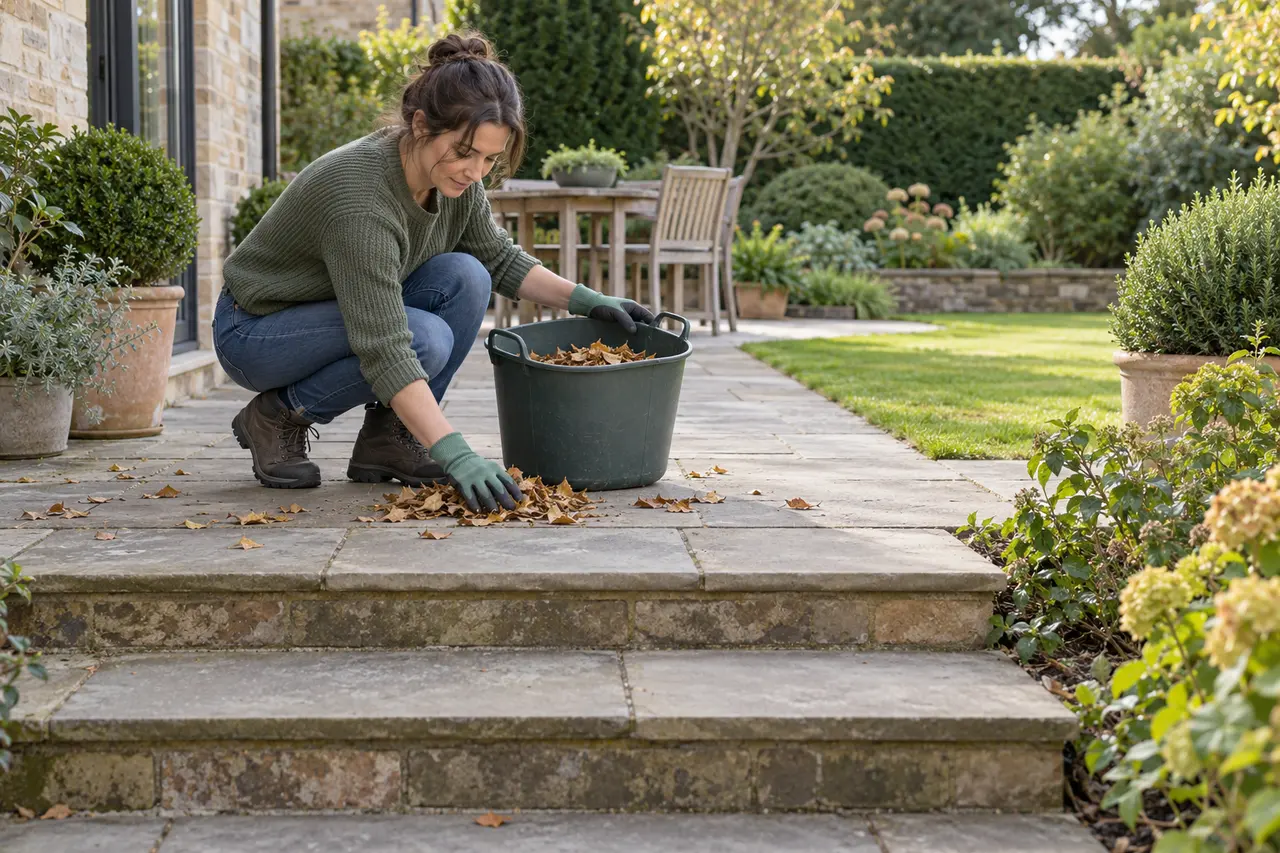
A sound position for the cut
Approach the hedge from a suitable level
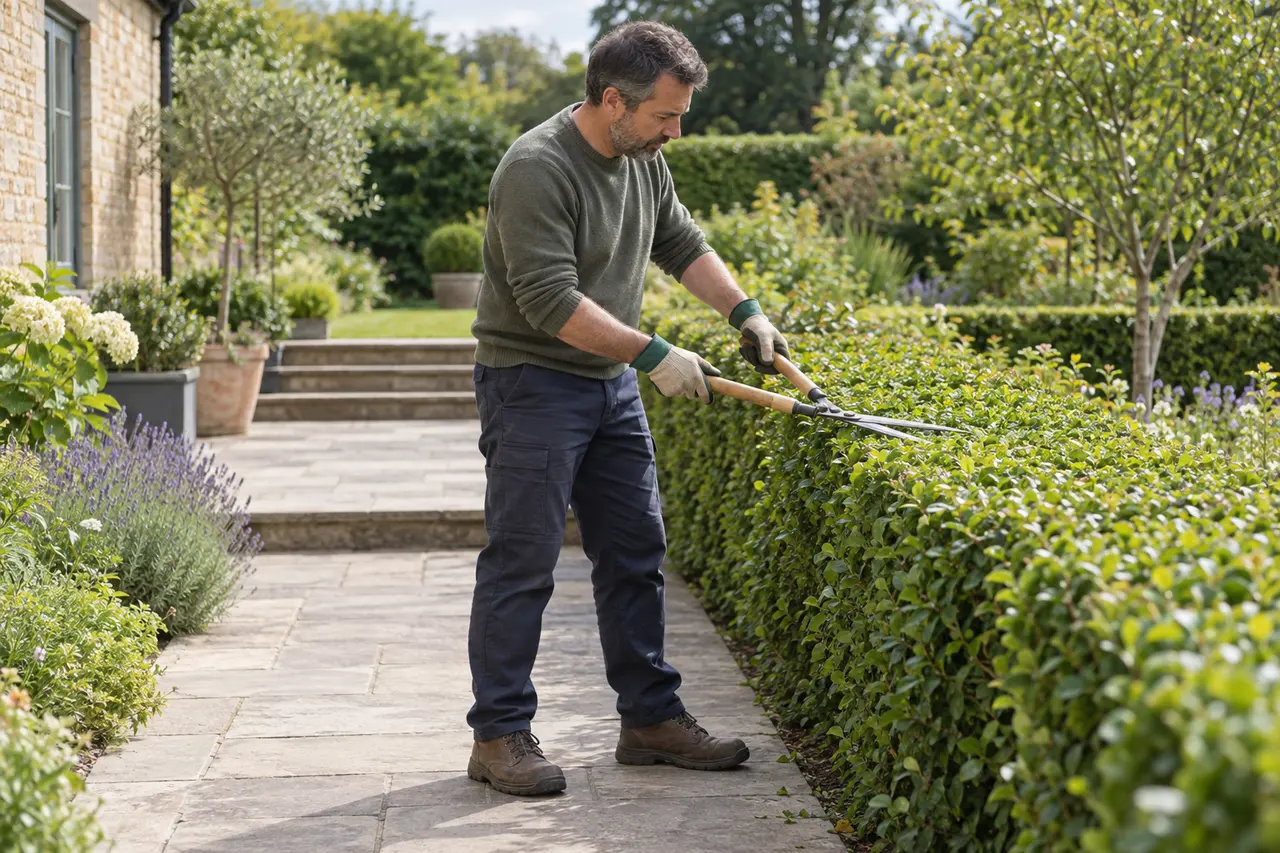
A hedge beside the lower terrace can have a reachable face from one side and a much less suitable position from the other. Judge the working stance for the actual face being cut. Standing on an isolated step to gain the last few centimetres changes the task; the intended outline should not depend on an improvised perch or unsupported reach.
Suitable routine trimming follows the hedge species and its retained leafy framework. A narrow view from the lower patio can make the top appear uneven even when the change is caused by the viewing angle. Establish the intended line from an appropriate viewpoint before removing extra growth to correct an impression seen only from one position.
Gather the fresh trimmings from the receiving area before they spread across the route or settle into lower plants. Check for active nesting before work; a nest being built or in use changes what can proceed, regardless of the preferred outline. More substantial reduction or work beyond a suitable reachable position needs its own appropriate method.
Keep returning deposits manageable
Follow where leaves settle after the first tidy
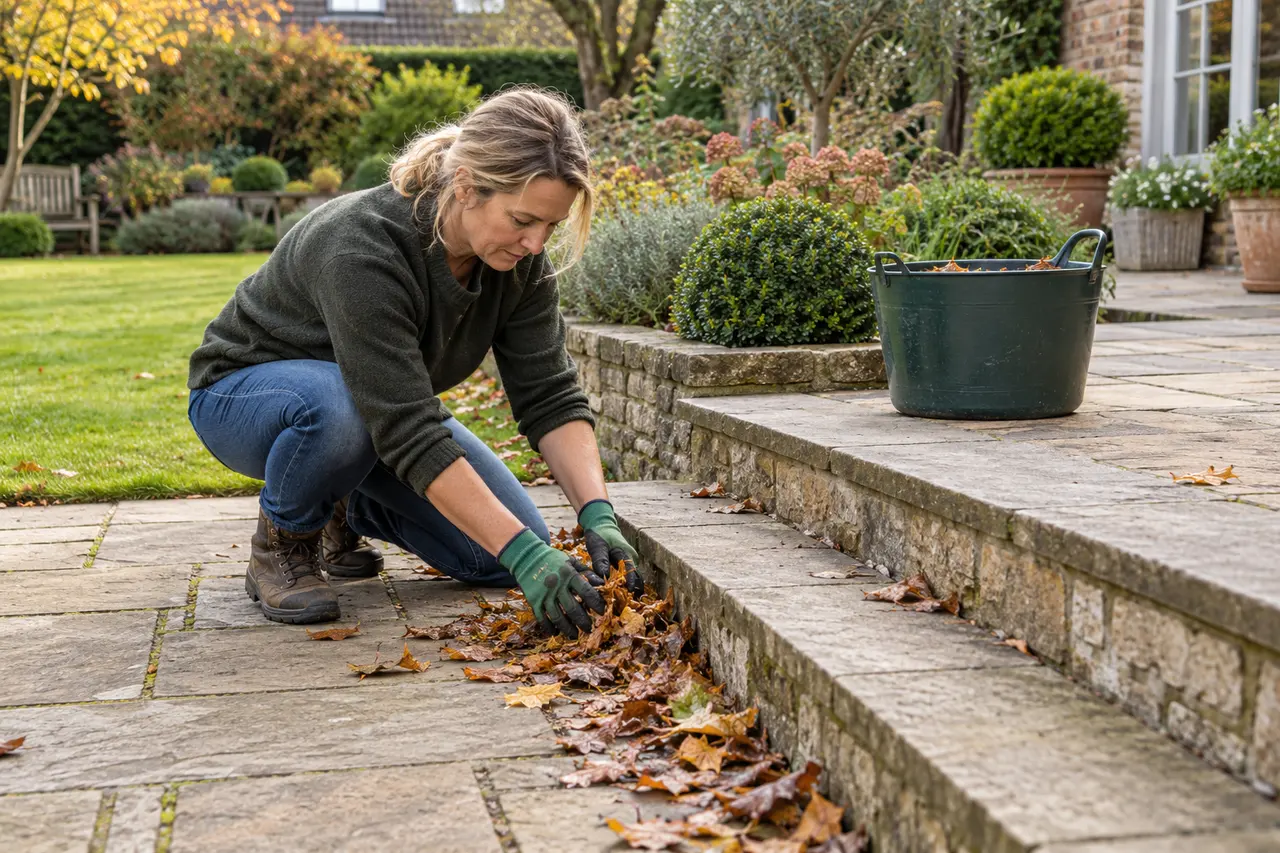
Wind and rain can move loose leaves from an upper bed onto a lower landing after the planting itself has been tidied. The next useful visit may therefore concentrate on collection rather than repeat the earlier pruning. Look at the places receiving fresh deposits, including the inside corners of steps, without assuming that every sheltered patch needs the same amount of work.
Lift the loose layer from the treads and collect the material at the base of the steps. Use a method that respects the surface and does not force dirt into joints or scrape retained plants at the edge. If the route needs a separate hard-surface clean, identify that task rather than repeatedly brushing an ingrained surface mark as though it were another loose leaf.
The seasonal maintenance cycle can shift towards those receiving areas while growth elsewhere slows. At the end of the work, the upper bed should still contain its wanted soil and plants, and the lower route should be free of material just produced above.
When the job extends beyond routine upkeep
Show the levels as well as the footprint
A garden-design brief for a stepped space needs to show how its levels relate, not only the flat outline of the plot. A plant seen at eye height from below may have a different visual role from the same plant beside the upper seat. Consider those viewpoints and the connections between them when choosing a revised layout. Structural design or construction should not be assumed from a planting-maintenance instruction.
Look at the growth produced by a severe cut
A dense flush of vigorous upright shoots after heavy pruning is not the same as a naturally compact, well-formed crown. In a tree-work proposal, the new growth needs to be considered as part of the tree's response, rather than proof that repeating a severe cut will keep it small with little future work. Suitable long-term management should account for that regrowth instead of judging success only by the outline immediately after cutting.
Sequence the clean across connected paving levels
During pressure cleaning, dirty water from an upper paved area can reach a lower one. Plan the suitable working sequence and collection so a final pass below is not followed by another discharge from above. That sequence still needs an appropriate route for the water and loosened material; the garden below is not automatically a disposal area. Identify the connected surfaces rather than treat every terrace as a separate wet task.
Distinguish a blocked vacuum from a clear gutter
Where vacuum equipment is selected for gutter cleaning, a pause in material arriving does not by itself establish that the channel is empty. A blockage in the working equipment can also interrupt collection. The operator needs functioning equipment and an appropriate check of the intended run before treating it as finished. This is a working-method consideration, not a promise that one vacuum arrangement can reach every roofline.
Keep water in contact with the cut base
Drilling a hole in a cut Christmas-tree base does not improve water uptake. The useful care is an appropriate water-holding arrangement with the cut base remaining in contact with water, following the supplied instructions. A reservoir can still contain water below the actual trunk end, so check that contact rather than the presence of water alone. Any preparation or installation required should be part of the selected order.
Time for the work and its movement
The general gardening guide rates cover agreed gardening time. Hand work in a planted terrace and moving collected material between levels both contribute to the work required.
| Gardening time | Guide rate |
|---|---|
| First hour | £83 |
| Each subsequent hour | £65 |
GBP guide rates. Establish the complete scope, waste-removal arrangement, VAT treatment and any applicable access or parking charges for the quotation.
Questions about terraces, steps and cuttings
Where should a filled collection tub stand between the levels?
Use a suitable level ground position where the tub can stand securely and leave the route clear. A narrow wall cap or step edge is not a substitute for that working area. Keep the container within controlled reach and move an appropriate load before its weight or projecting contents make handling awkward.
Can soil swept from the paving simply go back into the bed?
Keep suitable displaced soil separate from rubbish, stones and contaminated sweepings. A mixed pile from the route should not automatically be emptied over retained plants. Collection should preserve the bed's intended level and distinguish material that can appropriately remain from waste that needs another destination.
Does maintenance repair loose steps or retaining edges?
Routine garden maintenance does not establish a construction or structural-repair service. A loose tread or unstable edge affects the working arrangement and should be dealt with appropriately before relying on it. Cleaning around a feature does not demonstrate that the feature is sound or make repair part of a gardening booking.
Should every terrace be finished before moving to the next?
Not necessarily. Connected work may be better organised so material from above is collected before the final finish below. The sequence should also preserve a suitable route and avoid repeated handling. The practical test is whether the next operation can proceed without undoing the useful work already completed.
Leave the levels connected and in order
Make the planted terraces, level grass and connecting steps part of one workable visit. Our gardening services bring ordinary upkeep together with the collection it produces, so the final route remains available after the upper areas have been finished.