

Separate care for planted grasses and lawn
Gardeners Stanmore
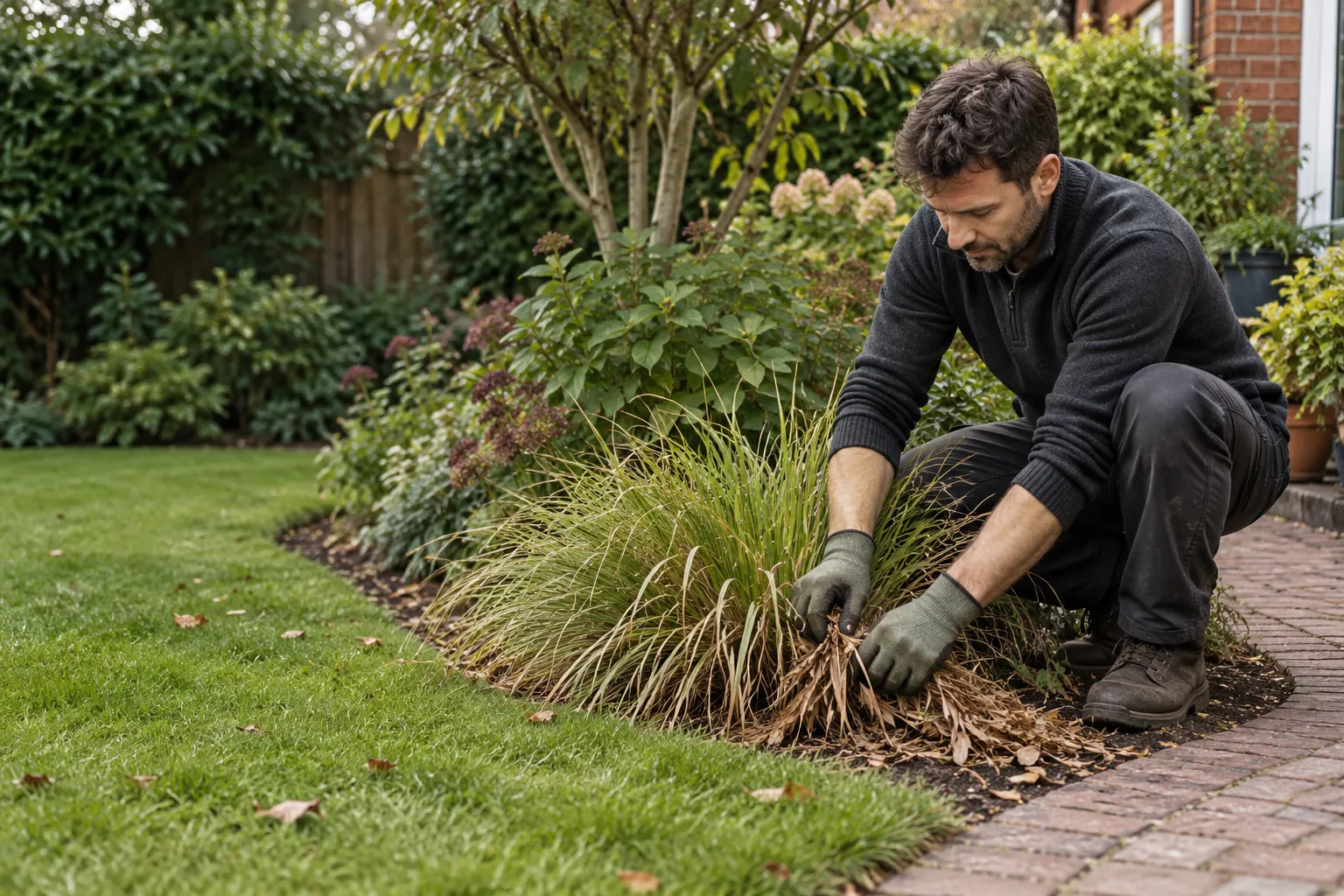
Our Stanmore gardeners maintain ornamental grass clumps as part of the planting, with the adjoining turf receiving its own suitable cut. We distinguish the living base, seasonal foliage and accessible weeds before selecting the work. The service combines that close border attention with mowing, collection and boundary maintenance, leaving the planted grasses recognisable within a tidier, more usable garden.
- How do you mow beside ornamental grass clumps? Our mowing follows the turf boundary while identified planted grasses receive their own selective treatment, with their crowns outside the machine's route.
- What does gutter moss collection include? Our channel clear-out addresses its assessed deposit; moss on the roof above remains a different surface and a separate proposed operation.
Lawn care alongside ornamental grasses
How are planted grass clumps treated during lawn work?
We identify the ornamental plant and its current growth before selecting the treatment, including whether it retains living winter foliage. Suitable surrounding turf can receive its mowing pass while the clump is cared for separately. This gives the grass surface an appropriate finish without extending the mower's operation into a plant that has a different role, growing pattern and maintenance stage within the border.
Does your weeding leave the ornamental clump planted?
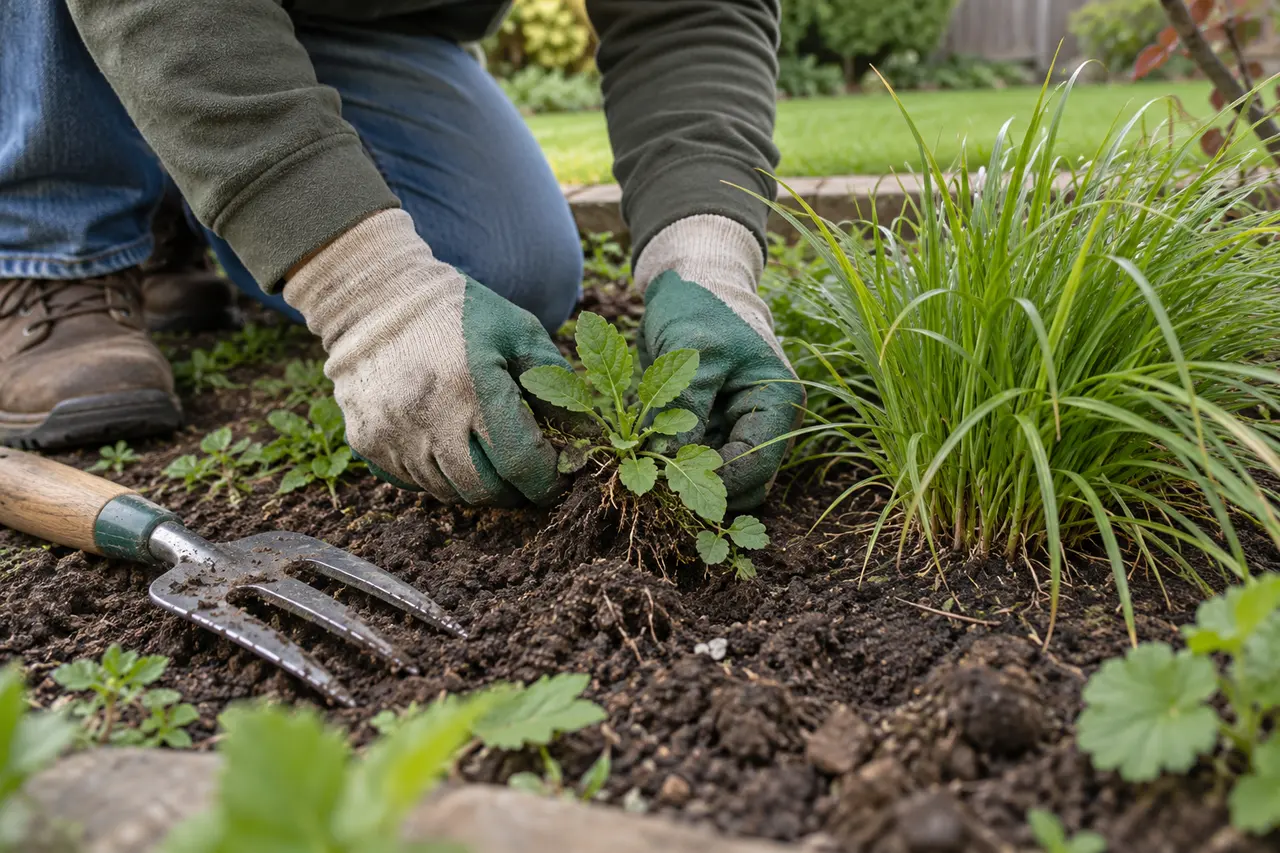
Our accessible hand work follows individual unwanted plants around the retained clump, loosening their roots while leaving its crown identifiable and seated. A weed embedded tightly within that crown can require a different approach. Lifting or dividing the whole established plant is therefore kept distinct from routine surface removal, with the larger operation based on the plant's identity, condition and intended aftercare.
Plant identification at the lawn margin
The planted base beneath the leaves
The gardener first establishes where the ornamental clump meets the soil and how its leaves cross the adjoining grass. A stem lying over the lawn can still belong to that retained plant, so its connection is identified before broad cutting begins. Working from the visible planting edge gives the team a clear distinction between the turf route and the decorative growth, including parts concealed by the plant's finer leaves.
Unwanted growth at the crown or among its outer leaves is followed to its own origin. Suitable hand tools loosen the accessible roots without pulling a mixed handful through the retained plant. Unfamiliar shoots remain distinguishable while their identity is established, since young growth can differ from the mature display. This keeps the weeding specific to the unwanted plants, with the decorative clump still settled in its growing position afterwards.
The garden-maintenance visit connects that detailed work with suitable larger cuts elsewhere in the garden. Roots and fragments are gathered as each accessible patch is finished, and displaced soil is returned appropriately around the retained planting without burying the crown. The service leaves the bed's living structure clear, with useful positions for subsequent watering and weeding still available. This gives the finer work a practical finish alongside the more open mowing areas.
- Ornamental clumps identified separately from the grass surface.
- Living foliage retained during suitable dead-material collection.
- Accessible weeds followed to their own growing points.
- Mower turns kept outside the retained planted crowns.
- Long cut stems gathered before they disappear into the turf.
Species-appropriate foliage work
Seasonal treatment for evergreen and deciduous growth
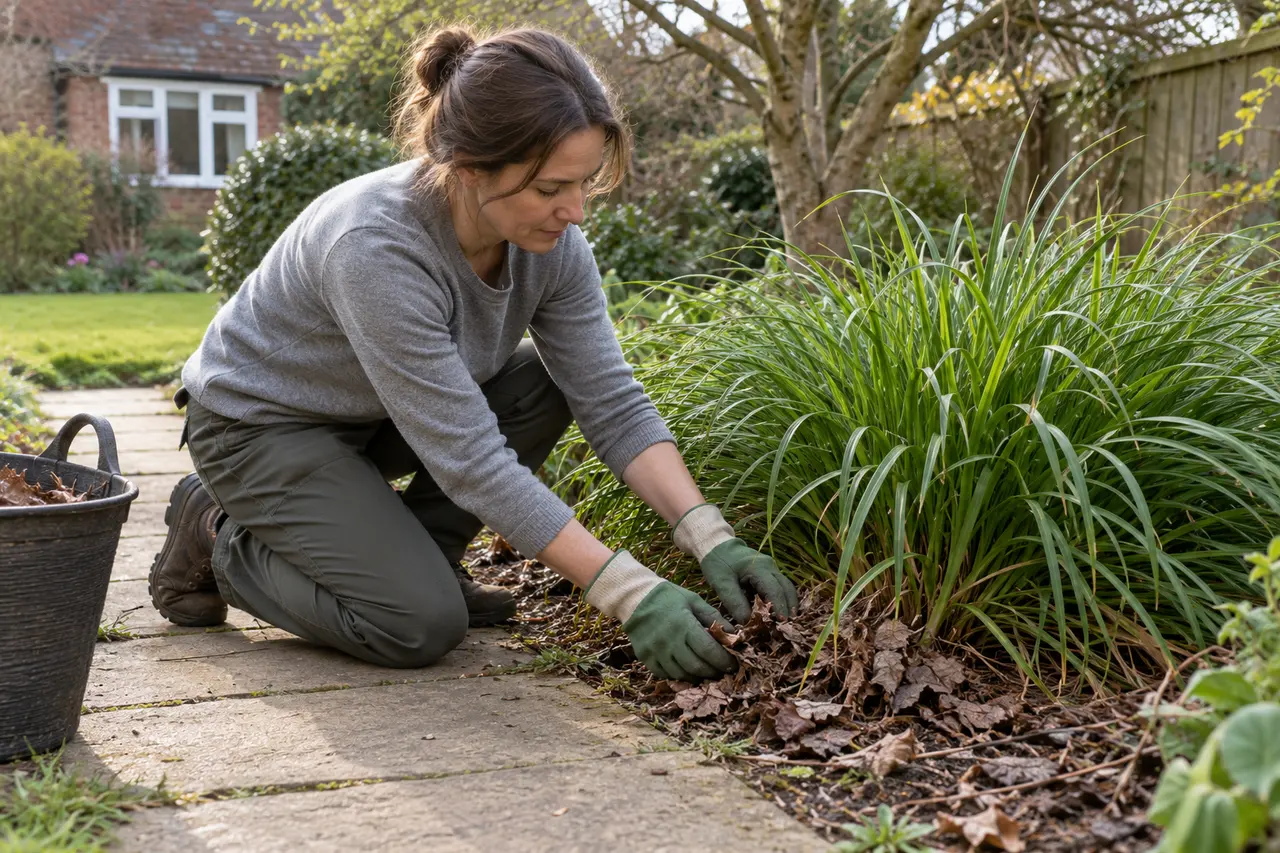
Our gardeners distinguish grasses that lose their foliage seasonally from types retaining living leaves. Appropriate evergreen work can remove selected dead material while healthy growth remains; a deciduous clump receives its own suitable cutting stage. The emerging shoots are part of that assessment. The completed treatment therefore follows the plant.
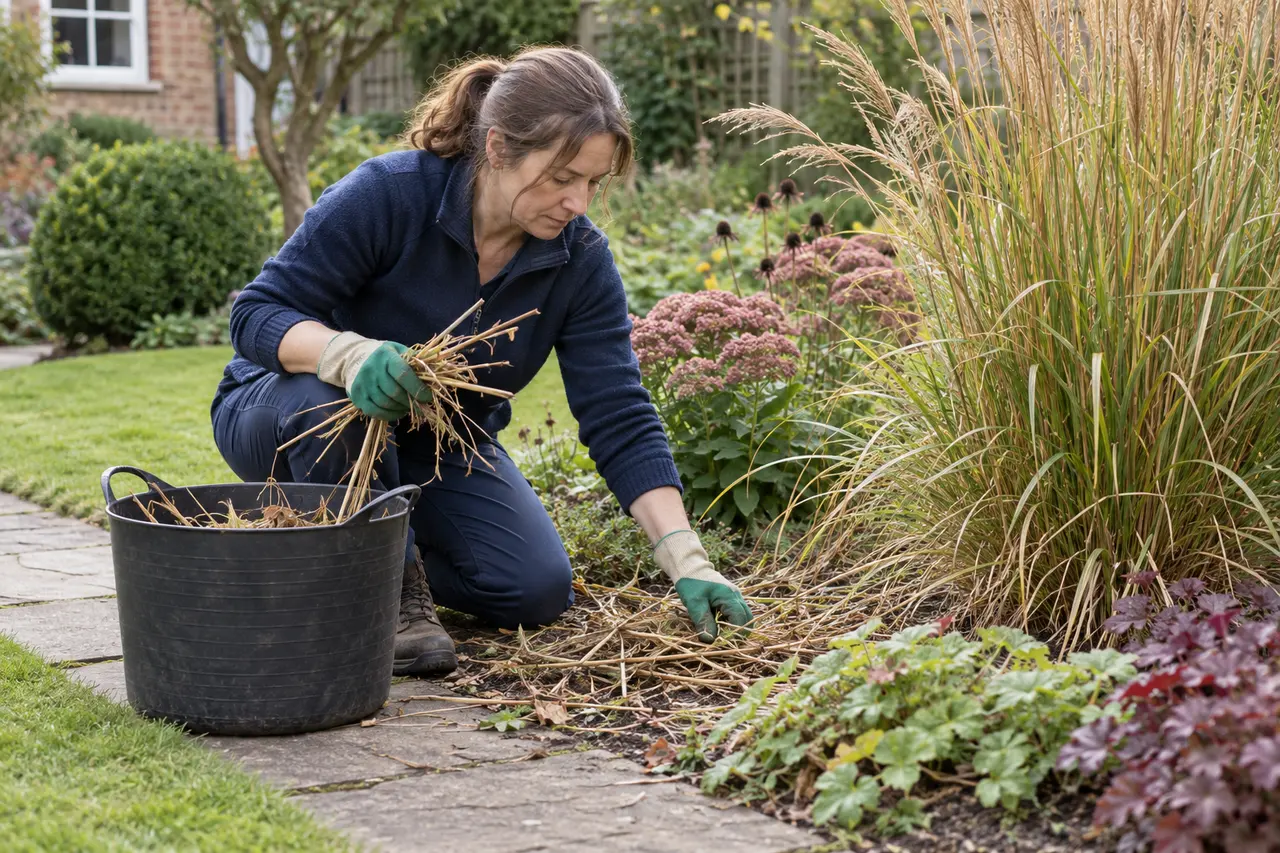
Sharp-edged leaves receive handling suited to their character, with appropriate gloves and clothing and amounts that remain visible and controlled. The gardener separates loose material from growth still attached before it is gathered. Where wildlife occupies an old clump or collected heap, disturbance of the affected area stops while the work is reviewed. The service can retain standing material where needed instead of making total removal the condition of a completed tidy.
The seasonal collection tasks also addresses the space beside the clumps and loose fragments resting on lower neighbouring plants. Deliberately retained seedheads stay recognisable while that surrounding work is finished. This produces clear access alongside a planted outline that can remain varied in height. The team distinguishes the completed collecting area from the stems left for their continuing display.
Mowing with a controlled planted edge
The machine follows the supported lawn surface
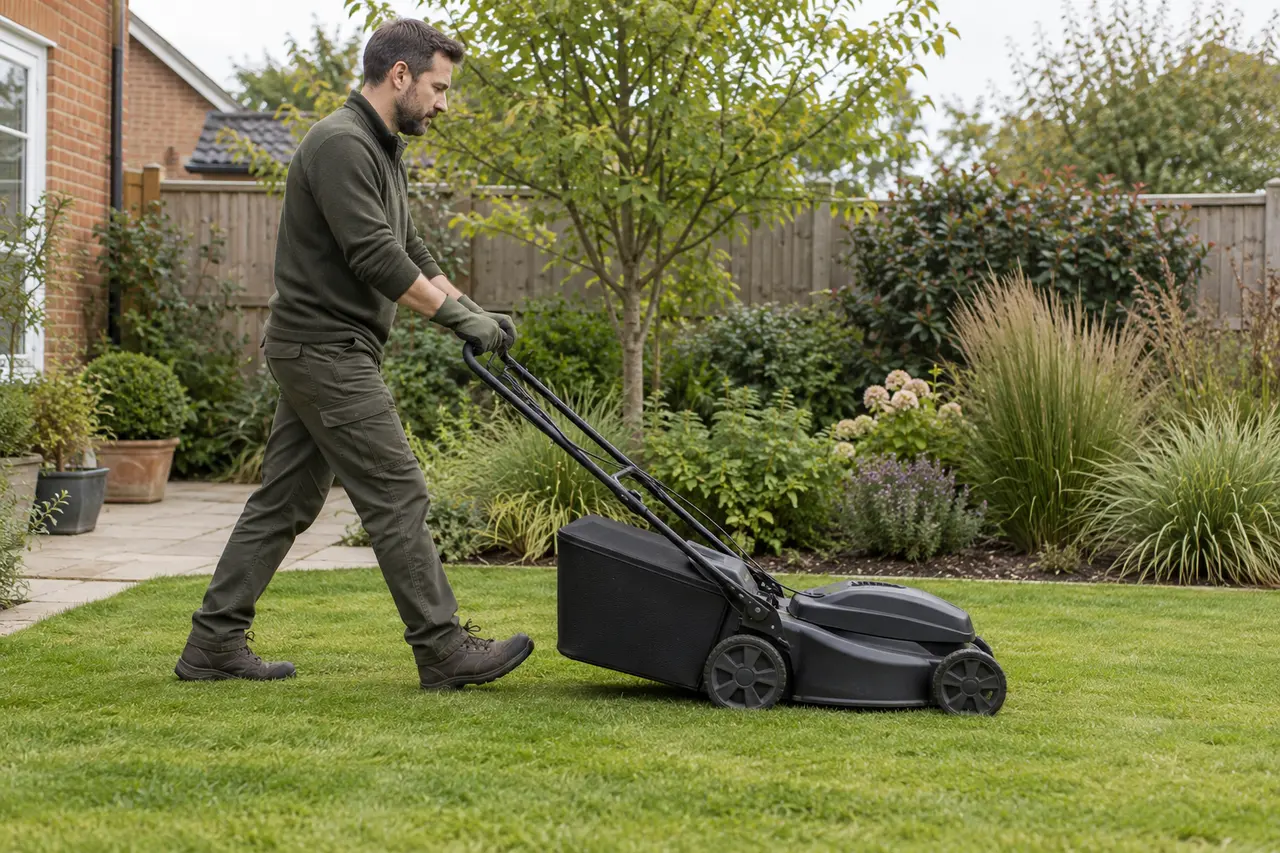
Arching leaves can hide the margin needed for the mower and its turns. Our preparation reveals the usable grass beneath that outline, removing hard objects and fallen stems before the pass. The route remains on supported turf, with the planted crown outside the wheel movement. This allows the team to judge where the machine can work appropriately and where the narrower finish needs a different controlled method.
Our lawn-care service uses a suitable setting for the turf's growth and condition. The ornamental planting remains outside that operation while awkward margins receive separate attention where appropriate. The finish can therefore combine a defined grass edge with a looser decorative outline, instead of forcing the mower through everything green to complete one broad pass. This gives each surface its intended treatment while preserving the way they meet along the border.
After cutting, loose grass is gathered from the adjoining worked path and accessible fragments are checked beneath overhanging foliage. Long fibrous or woody cut stems stay in their own identified load. Where turf is too soft or frosty for suitable cutting, reachable bed work can proceed from a firm position instead, keeping the day's useful work related to the actual surfaces available.
Clearance around the planted groups
Collection around retained living crowns
The wider garden clean-up works through the surrounding backlog while retaining the planted grass groups. An accessible section is opened and its receiving position kept outside the living crowns. Ties, discarded pots and broken supports remain separate from the vegetation as they are found, and an unknown or sharp object changes the handling before work continues there. This produces a controlled clearance around the plants.
The garden-waste guide supports the distinction between material retained on the property and the outgoing load. Our handling takes account of the quantity and character of the cut growth, including how it is carried out after cutting. A completed corner is kept usable while the next area is worked, instead of becoming another temporary pile across the recovered route. The final collection follows the progress of the job through the actual garden.
A formal background and a looser foreground
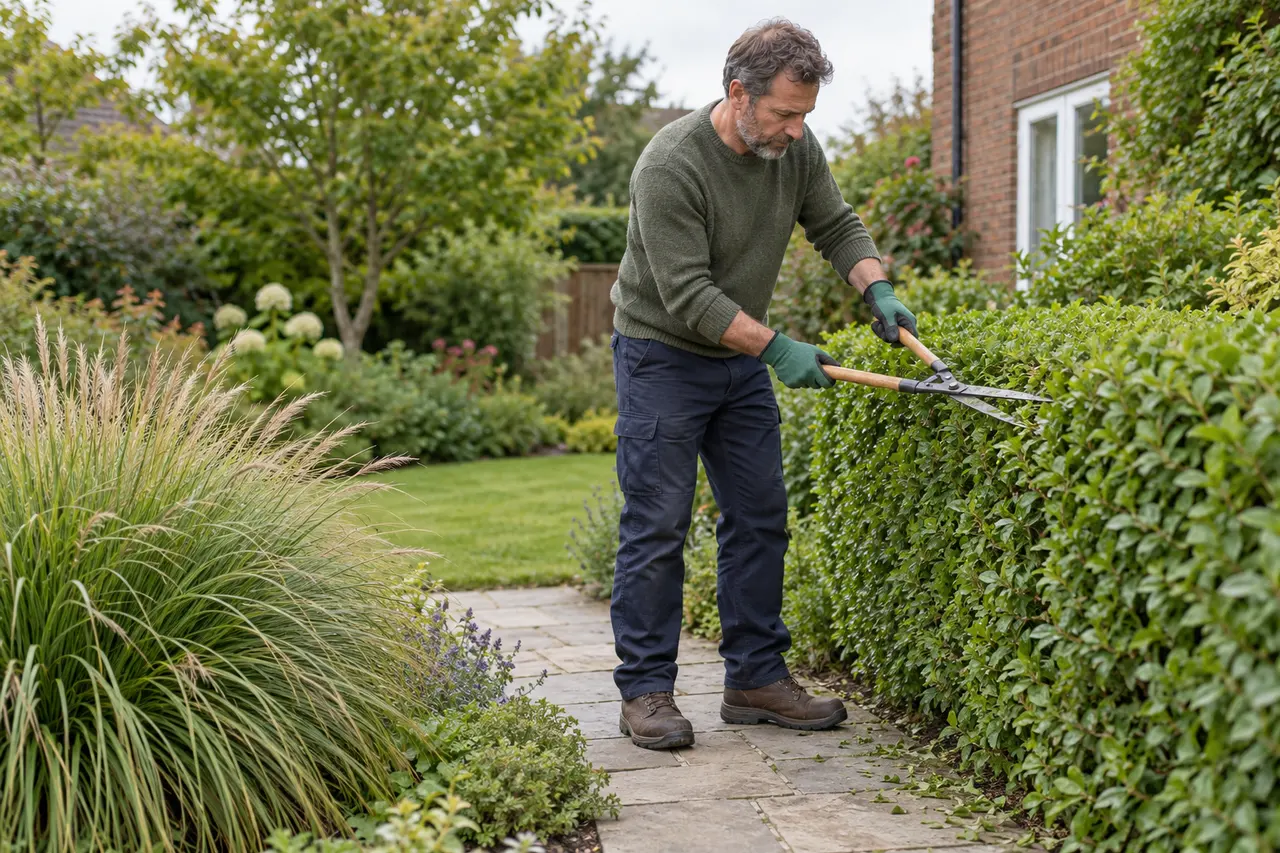
Hedge trimming preserves the ornamental grass arrangement
A clipped hedge can frame planted grasses while retaining its own clear face. Our gardener establishes that face and the foreground plants before managing suitable new growth, keeping the clumps outside the hedge's cutting line. The species and condition determine the appropriate depth of the trim. This leaves a considered relationship between the two outlines.
An opening revealed by a suitable deciduous-grass cut can improve visibility without establishing the hedge's own timing or working position. Our boundary operation follows its separate condition and treatment, from stable footing, while living grasses remain in place. Nest checks apply before the affected cutting proceeds, and work is postponed where a nest is being built or used. The available view and the permitted operation remain distinct.
Care as the planted volume changes
Returning maintenance keeps the original lawn boundary understood
Our continuing visits follow the space occupied by developing leaves and stems, particularly where they arch across a route. Suitable support or selective seasonal work can address that growth without repeatedly taking more turf out of the mowing area. A larger change to the plant's position remains a different task. The original boundary therefore provides a useful reference, preventing the planted bed from expanding incidentally through successive decisions made during lawn cutting.
An older crowded clump can be assessed for suitable renewal or division according to the identified plant. That work has a different purpose from gathering dead fragments or removing accessible weeds at its outside. Our routine service can keep the surrounding bed usable while the larger treatment, retained sections and establishment care are determined. This avoids disturbing the whole root mass simply to complete a small immediate removal at the edge.
Related services for the wider garden
A screening design that reflects seasonal height
Our garden design relates proposed ornamental grasses to the months when screening is needed. Young plants and clumps after seasonal cutting can provide less top growth than the peak summer display, so the arrangement also accounts for the structure remaining at those stages. This gives the customer a realistic planting proposal. The design follows the wanted use of the space throughout the relevant growing cycle.
Pruning that respects the retained branch attachment
Our tree pruning approach respects the branch attachment and collar instead of removing them to create a cosmetically flush trunk. A smooth-looking surface is not used as the sole measure of the cut's quality. Wound paint is not a routine finishing requirement; RHS guidance generally advises against it. The work focuses on the appropriate professional cut and the tree that remains.
Pressure cleaning completed across the specified surface
Our pressure-cleaning job progresses through adjoining sections so the completed coverage and remaining area stay clear. Changes of direction and reachable corners form part of that progress. The result is related to the booked surface as a whole. Natural colour variation can remain after suitable cleaning, with the service distinguished by its completed operation.
Gutter collection distinguished from the roof surface
Our assessment of the gutter channel includes the moss deposited there and the appropriate method of collection. That channel operation remains distinct from moss still attached to the roof above. Clearing the gutter is therefore described as the actual removal completed, not as a treatment of the tiles. Any later material entering the run is assessed in its own right, keeping the continuing rainwater concern separate from an unsupported promise of permanent roof-surface clearance.
Christmas-tree removal after the display
Our Christmas-tree collection provides an appropriate removal arrangement for the identified festive tree after use. The booked item remains distinguishable as outgoing material. Fire-service advice warns against using the branches and needles in an indoor fireplace or wood-burning stove because of unpredictable burning and resin deposits. Collection gives that material a different destination, with the actual item and handling kept clear.
Guide rates for close clump and lawn care
The published general gardening rates apply as a guide to the agreed work. Selective hand tasks, suitable cutting and gathering long material all contribute to the time needed.
| Gardening time | General guide rate |
|---|---|
| First hour | £83 |
| Each subsequent hour | £65 |
GBP guide prices. The complete quotation identifies the work, supplies, waste arrangements, VAT treatment and applicable access or parking charges.
Questions about our ornamental-grass maintenance
How do you distinguish planted grasses from lawn growth?
Our gardeners follow the leaf to the growing plant before cutting or pulling at the margin. Ornamental grasses, grass-like perennials and unwanted plants can occupy the same area, so appearance alone does not define the mowing task. This identification keeps the intended clump separate from the turf and avoids treating a retained plant as grass left behind by the main machine pass.
Can your service retain healthy evergreen foliage?
Yes. For appropriate evergreen types, selected loose or dead material can be removed while useful living leaves remain. The treatment follows the plant and condition of its foliage, with suitable handling around new growth and sharp edges. This gives the customer a tended clump without turning a collecting operation into a general instruction to shear every planted grass to one level.
Does your routine clear-up include dividing an old plant?
Our ordinary collection and weeding address accessible material around the retained group. Division disturbs the root mass and therefore requires its own suitable timing, method and establishment care. The identified plant and desired renewal determine that operation. This leaves the customer with a defined maintenance service and a separate considered option for larger plant renewal.
How are mower turns handled beside arching leaves?
The working line is established before cutting. Suitable growth can be held clear or treated through appropriate plant care, while a narrow margin can receive a separate finish. Our machine stays on firm usable grass, with the planted crown outside its pivot. The result is a maintained mowing route that respects the border.
What result follows a suitable deciduous-grass cut?
Removing the old top growth can leave a noticeably open crown while the new shoots develop. Our finish keeps that plant position identifiable and available to its next growth. Full seasonal height and screening take time to return, so the service describes the completed cut and retained plant without presenting immediate summer cover as its result.
A clear distinction between lawn and planted grasses
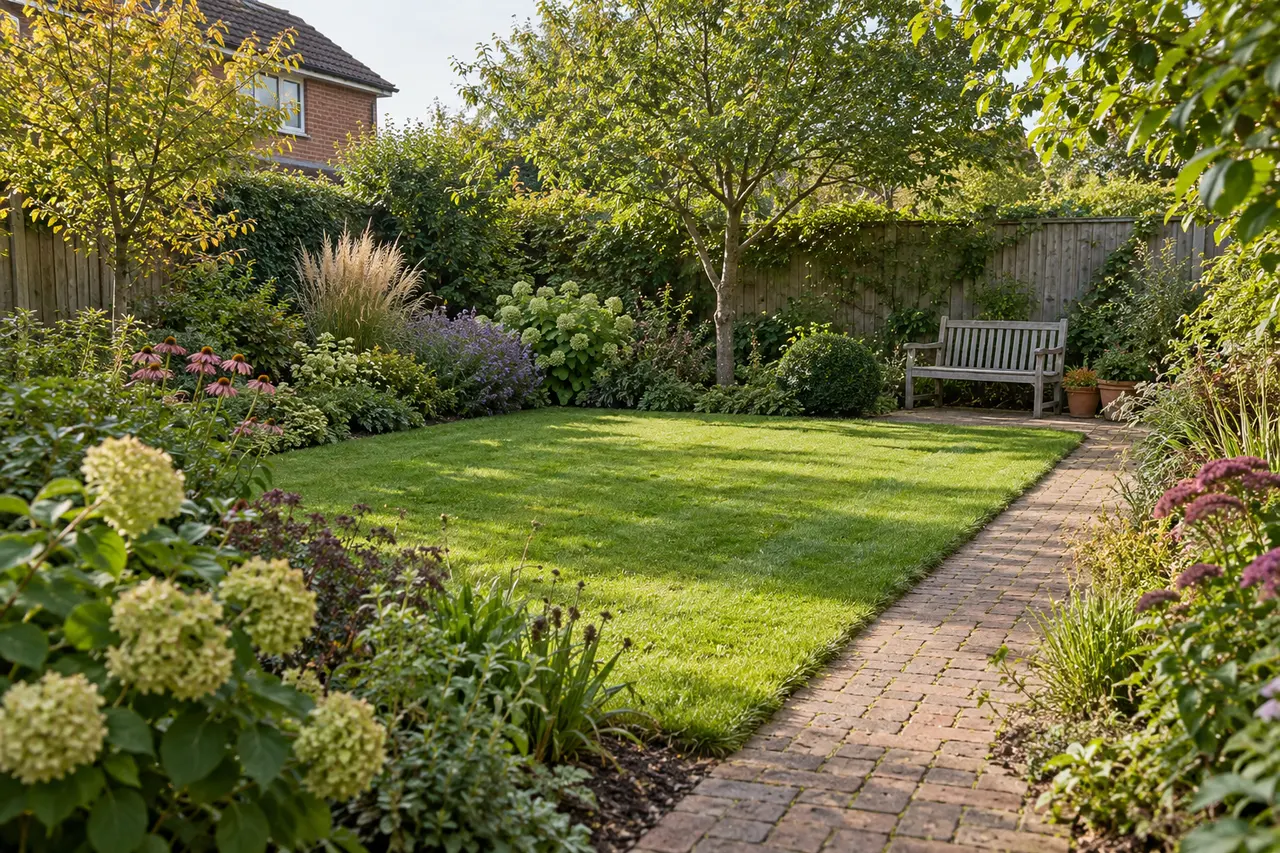
Our gardening service overview brings the appropriate clump treatment and a defined mowing route into the same maintained garden. Each planted group remains recognisable while the neighbouring grass, paths and boundary receive their own work. The continuing service follows those different growing surfaces, providing an orderly finish without losing the ornamental planting that gives the border its changing outline.