

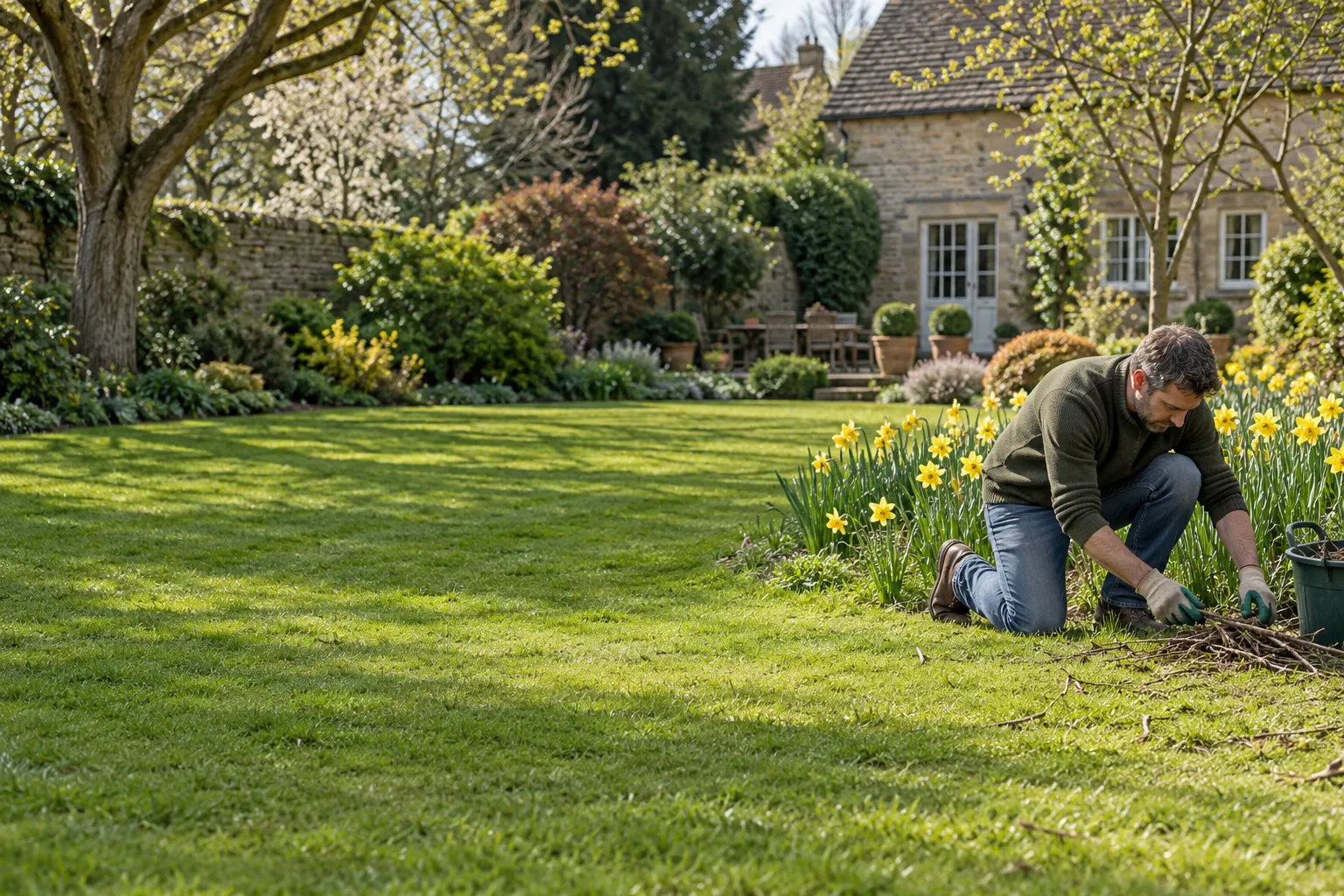
Romford · Lawn maintenance around established spring bulbs
Gardeners Romford
We mow suitable surrounding turf while identified spring-bulb foliage completes its growing stage. The patch, machine route and later cutting decision are kept distinct, with close collection around living leaves. Paths, beds and reachable hedge growth continue to receive their own maintenance as the bulb display changes through the season.
- How is mowing organised around living bulb foliage? Our gardeners identify the patch’s full spread and turning space, maintaining accessible turf outside it while the leaves continue growing.
- How do you plan the patch’s later cut? We review the identified bulbs and dying-down stage, then select the operation for the grass and material actually present.
Bulb foliage and turf maintained through different stages
How can your gardeners maintain grass around a flowering patch?
We establish the bulb area and mower route before cutting, including the space used for turns. Suitable surrounding grass can receive its own maintenance while living foliage stays outside the machine movement. The patch then follows its identified growth stage. This keeps the lawn usable around the display without treating the end of flowering as the signal to remove all its green leaves.
How does your care handle leaves after the flowers finish?
Our maintenance preserves useful bulb leaves for their appropriate growing period and natural dieback. They continue supporting the bulb after flowering, so premature removal can weaken the next display. The gardener distinguishes that foliage from the spent flower stalk. This gives the two parts their own care decision, with the lawn operation around them continuing on a route suited to the actual patch.
The bulb patch within the grass
Its full extent identified before the mower approaches
We locate the planted spread while the flowers and foliage make it visible, including smaller bulbs at the edges. That extent remains part of the work after the blooms fade. The cutting line is defined from the gardener’s position so the whole patch stays understandable when only leaves are present. This gives the machine a consistent boundary through different stages of the display instead of following only its tallest central flower.
Our Lawn care maintains open turf around the identified group. The available width and turning space determine the route, with close finishing selected where a strip between the bulbs and border needs another method. The leaves remain outside the machine’s movement. The grass can therefore receive a completed maintenance operation while the adjacent bulb patch continues its own growing period within the same lawn.
A discreet marker or position record can preserve the chosen outline as visibility changes. Any physical marker remains controlled outside the cutting hazard and loose-object route. The resulting arrangement gives subsequent work an understood bulb area and accessible grass around it. This continuity keeps a later gardener from having to rediscover the boundary after the most obvious flowering landmarks have gone.
- We identify small bulbs around the patch’s outer extent.
- Mower wheels and turns remain outside living bulb leaves.
- Spent flower stalks are distinguished from useful foliage.
- Loose material is lifted without dragging through rooted plants.
- The foliage stage informs the patch’s later mowing.
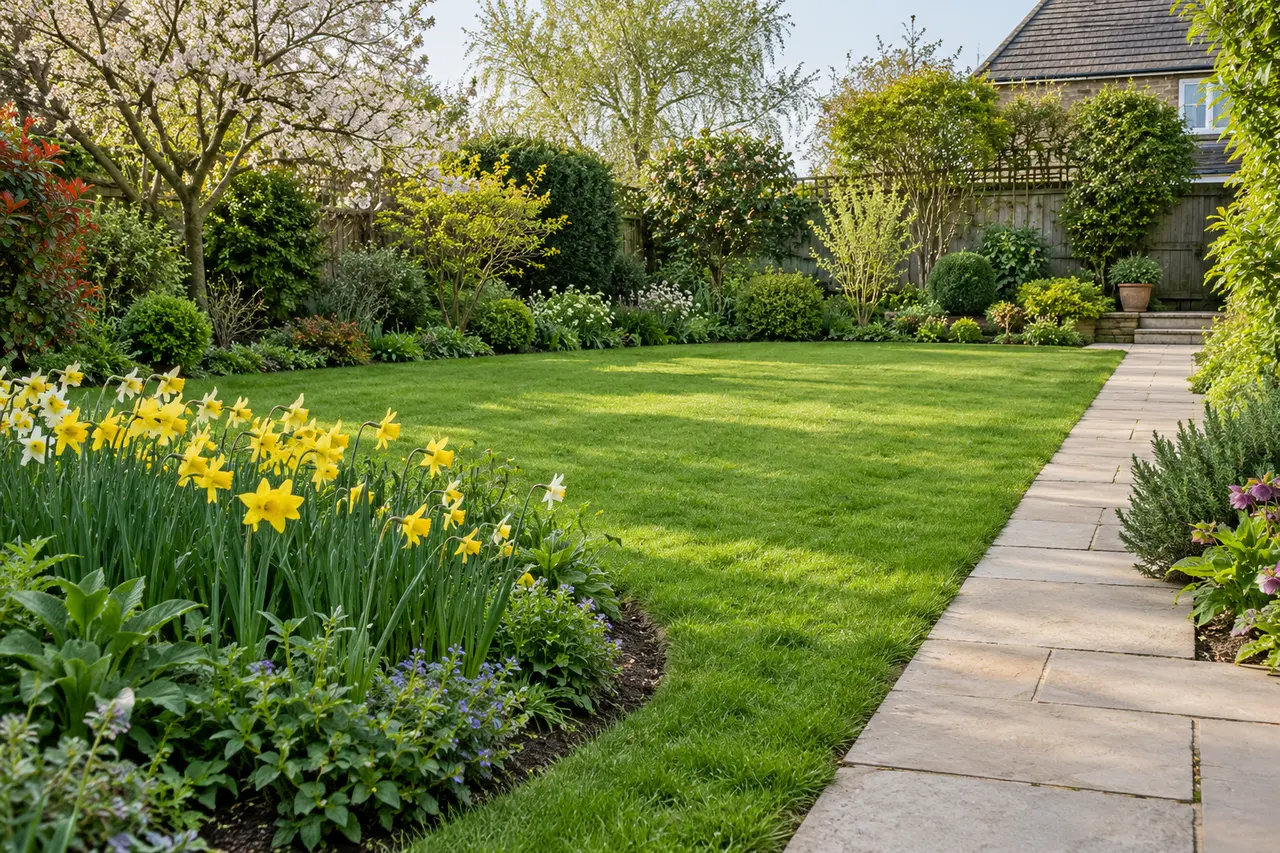

Foliage after the display
The living leaves allowed to complete their role
Our care follows the bulb’s growing season beyond the flowers. Green leaves continue supplying the plant and remain through the appropriate period for the identified bulbs and their progress. The gardener reviews that growth instead of applying a date from another patch. This makes the later mowing decision plant-specific, with continuing leaf function accounted for even while surrounding turf has already received several ordinary cuts.
Leaves remain able to function in their natural position. Knotting or braiding them for a smaller outline is not part of our bulb maintenance. Where appropriate, spent-flower attention can be selected separately according to the species and whether seed is wanted. The operation then removes the intended flowering material while keeping useful leaves available to the bulb, with the two stages distinguished during the same close inspection.
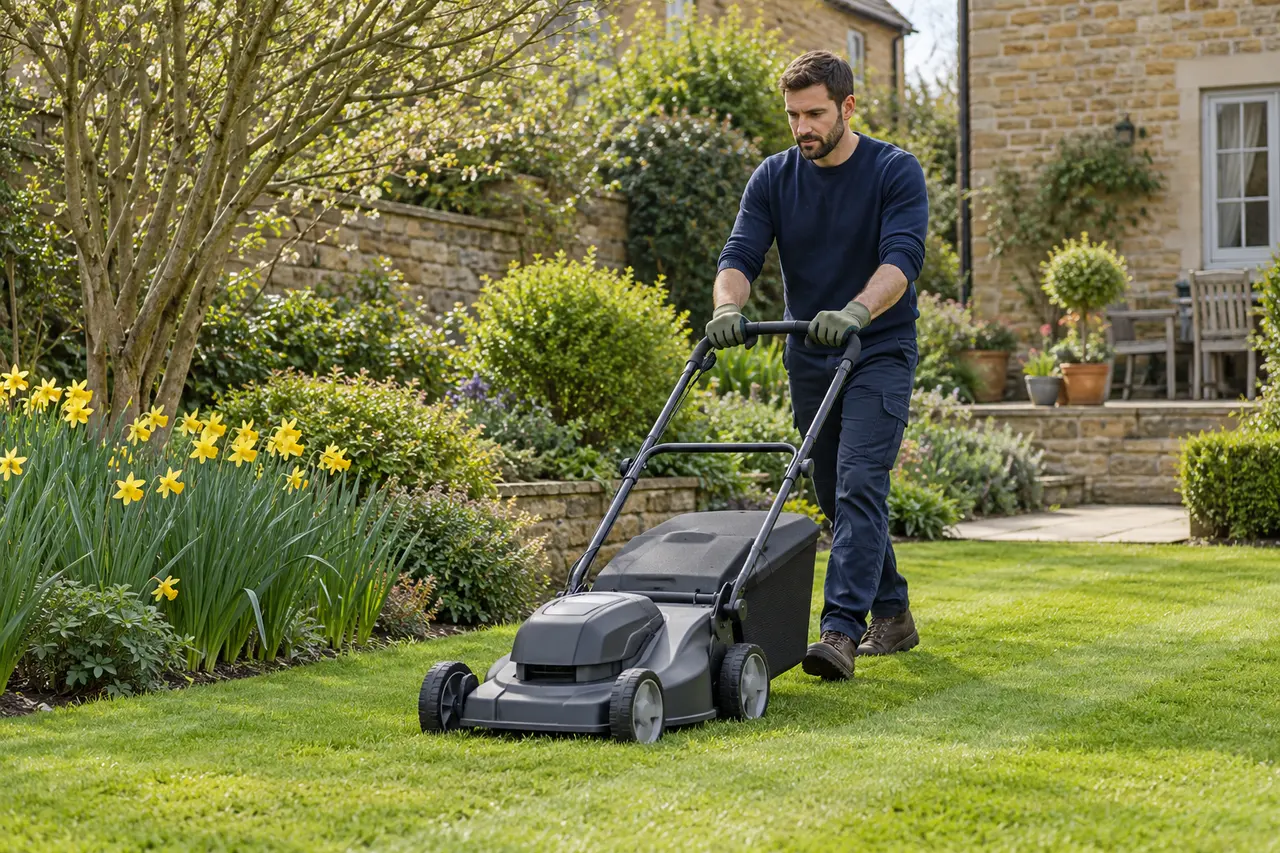
Cutting the available grass
Mowing routes prepared outside the planted area
Our garden-maintenance visit prepares the cutting route by gathering loose objects and checking the ground. The bulb boundary is visible from the working position, with room for the actual mower and wheels. Leaning leaves stay clear of the deck. This gives the operation a defined surface and avoids relying on an upstairs view of the display to establish where the machine can move at ground level.
The cut follows the grass growth and surface condition. Turns take place on firm available turf, leaving the planted patch outside repeated wheel pressure. At a narrow pinch point, the broad pass ends where control requires it and an appropriate finish can leave a deliberate uncut margin. This completes the accessible lawn while preserving the useful foliage within the agreed planting area.
Loose clippings are gathered from worked adjoining surfaces, with tubs and loaded material positioned outside the patch. Its boundary stays recognisable when the grass work is complete. That finishing preserves the careful route throughout collection as well as mowing, since a container placed among leaves could undo the separation already maintained by the machine. The next operation can then follow the same understood outline.
Collection among the leaves
Loose pieces gathered without moving the growing plants
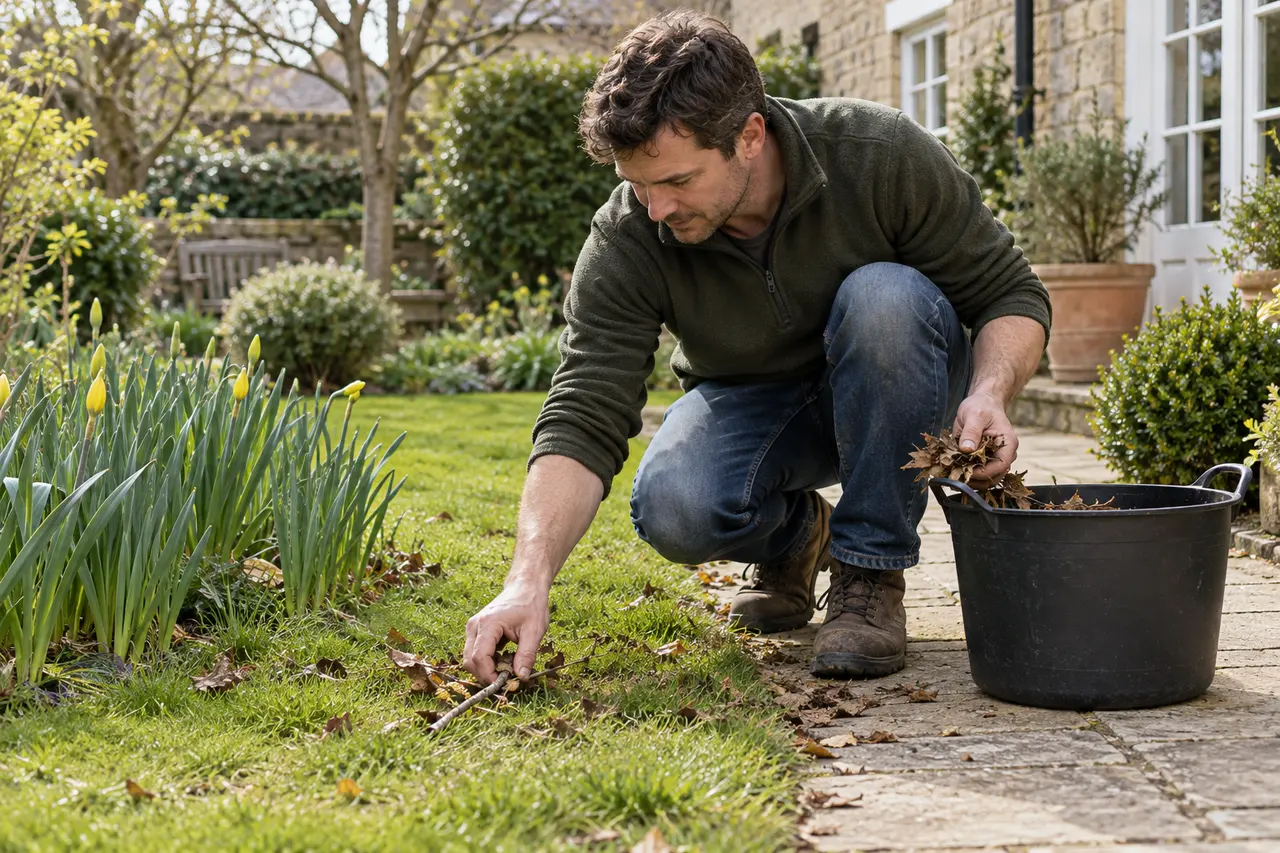
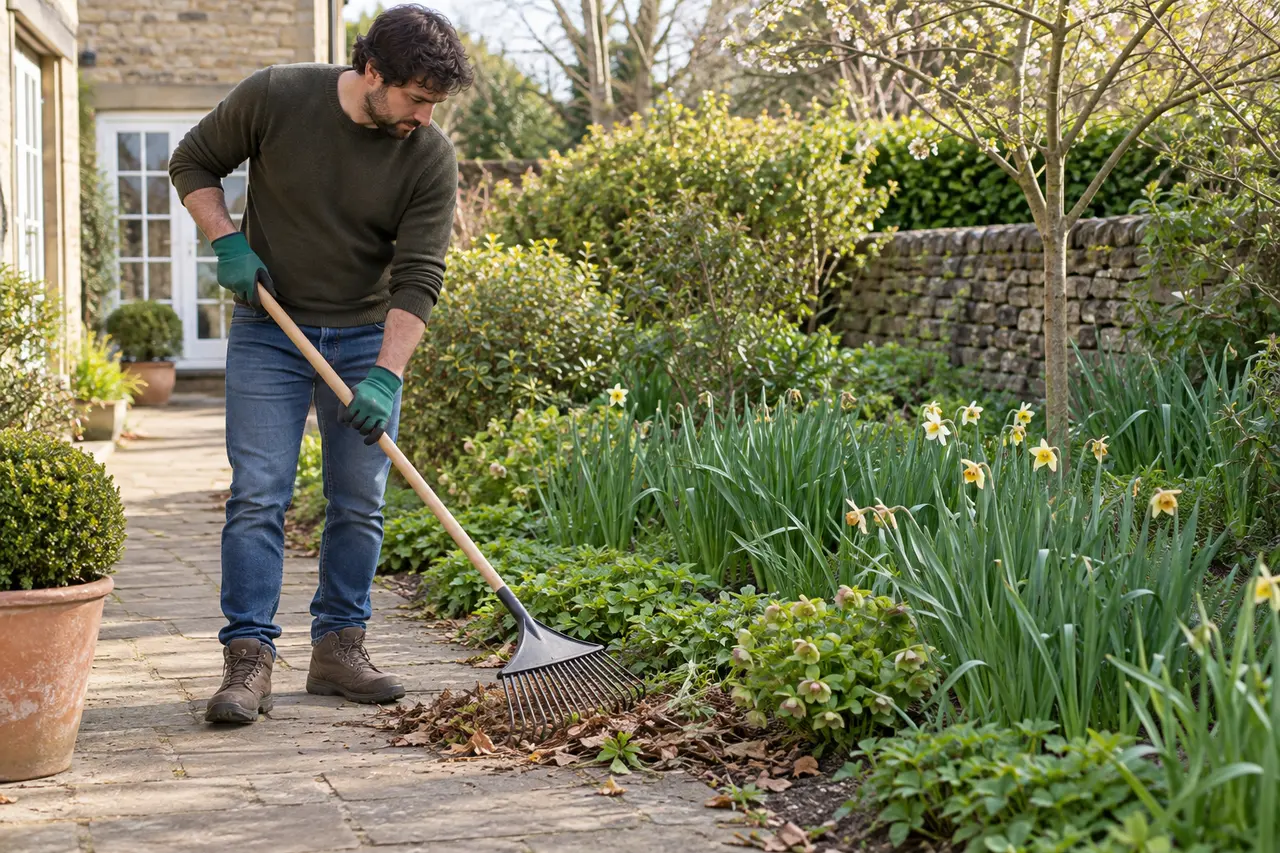
Our gardeners lift accessible fallen twigs and leaf pockets from reachable points around the bulb foliage. Hand collection can provide control where a broad grass rake would catch several living leaves at once. The method follows the close planting and the actual loose piece. Collection therefore opens the surface around the plants without drawing the whole patch towards one pile or treating attached foliage as part of the load.
Our garden clean-up identifies the bulb area before larger accumulated growth is selected for removal. It remains outside dragging, loading and temporary storage. Working portions stay manageable enough to distinguish attachments from loose material, while sharp or uncertain objects receive appropriate handling separately. This preserves the established planting through a wider recovery instead of letting the greater load conceal the smaller living plants beneath it.
The garden-waste guide separates collected vegetation from broken pots, supports and other objects. Each identified load has an appropriate destination outside the bulb patch. The foliage stays free through carrying and final withdrawal as well as the earlier hand work. This completes collection with the planted boundary intact, leaving the area available to continue its growing stage while the surrounding surfaces are cleared.
Hedge work beside the bulbs
The cutting position kept outside the living patch
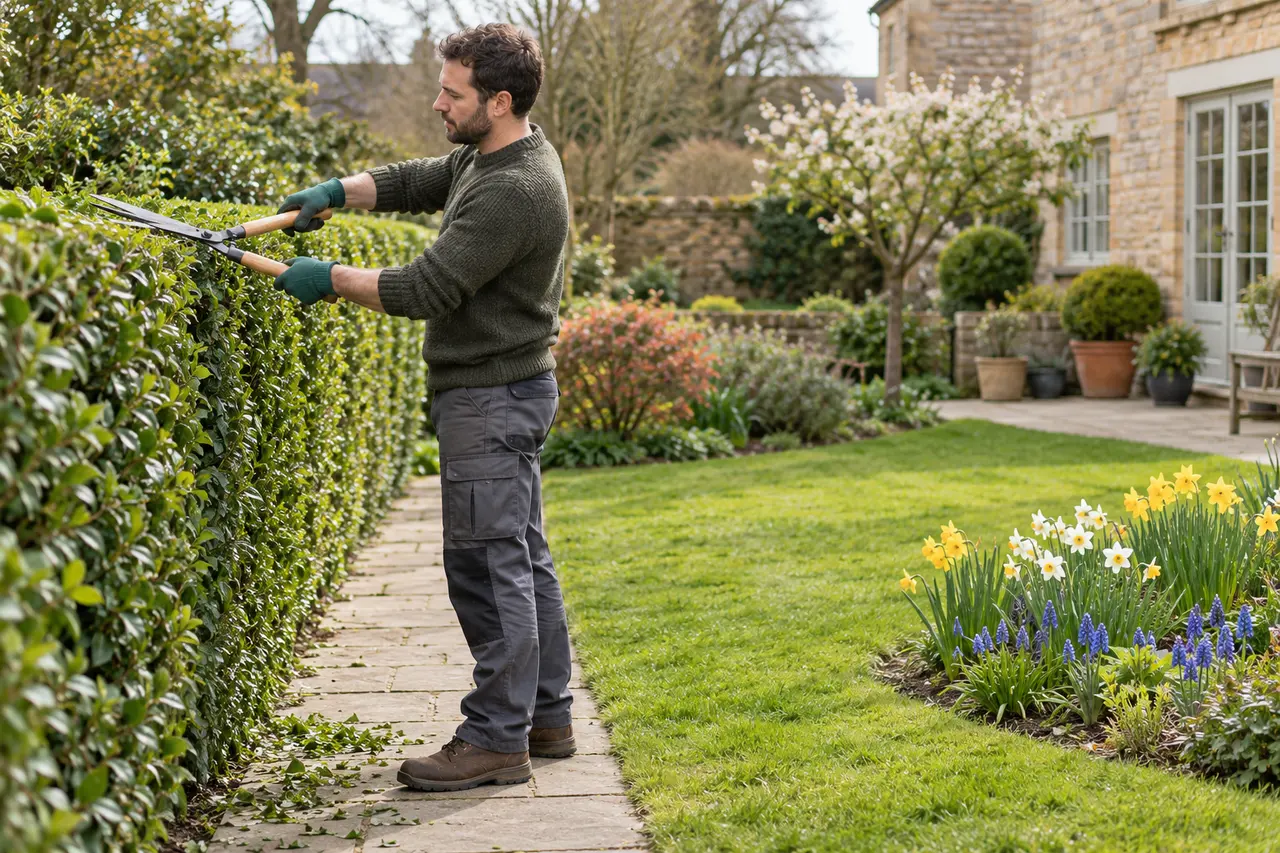
We establish firm ground and tool space before hedge work beside bulbs. The planted patch remains outside that standing area after flowering. A difficult face receives its appropriate access arrangement before trimming proceeds. This keeps the cutting controlled and the living leaves clear, with the available upper operation identified separately from the growing surface occupied by the bulbs below.
The hedge cut follows its species and condition. Checks for nests being built or in use cover affected shrubs and hedges, with disturbing cutting postponed. The fading bulb display does not itself change the appropriate hedge operation. This maintains the separate decisions for the upper boundary and lower planting, even where both occupy one view across the garden.
Fresh clippings have a suitable collection position outside the patch, with any covering kept clear of its living leaves. Once cutting stops, accessible fragments caught among them are lifted carefully. The completed operation distinguishes the hedge growth removed from foliage still needed by the bulbs. This leaves the lower planting clear of a new layer of loose material after the boundary has been attended to.
Bringing the patch back into mowing
The next operation selected after foliage review
At the appropriate dying-down stage, we check remaining leaves, the surrounding grass and concealed objects before selecting a cut within the patch. The earlier route around it does not settle that new operation. The gardener works with the material and growth present, including any accumulation requiring another approach. This moves the area into its next stage without forcing a routine short setting through vegetation that has developed separately from the open lawn.
The planted position remains in the seasonal garden care even after foliage is no longer obvious. It can inform proposed edging, a new bed or other later ground work. Bulbs may continue below a surface now resembling ordinary grass. The record gives those operations a known occupant to consider, preserving the established planting through its less visible season instead of treating a green lawn surface as empty soil.
Further services with their own purpose
Design matches the bulb season to lawn use
Our garden-design brief considers the length of time bulb foliage shares the grass alongside colour, species and position. An everyday play or walking area differs from a quieter edge where the growing patch can remain out of traffic. Those uses inform the arrangement and its maintenance. The display is therefore planned with its later leafy stage in view, giving the lawn a realistic pattern of use through the bulb’s annual cycle.
Tree reductions specified against clear dimensions
Our tree-work specification identifies the reference behind a reduction figure: overall height, crown spread or outer branch length. Intended remaining dimensions and the particular growth being changed make the proposed result understandable. The appropriate extent still follows the tree itself. This gives a percentage a defined role within the operation, preventing one apparently precise figure from carrying several incompatible meanings across different parts of the crown.
Cold-weather surface cleaning considers the added water
For pressure cleaning, the surface temperature and what happens to the water are considered alongside the working time. The ground can differ from an air-temperature report, and water can freeze on sufficiently cold paving. The cleaning arrangement therefore includes the area’s actual conditions and return to use. This makes the wet route part of selecting the operation, not an assumption settled by a familiar appointment hour.
Connected roofline areas cleared in an appropriate sequence
Our gutter cleaning identifies upper channels and pipes feeding a lower roofline. Material is collected out of the system and the booked sections are sequenced to keep fresh deposits away from work already completed. The lower run retains its own cleaning task. This accounts for the actual connection and the receiving channel, giving each included part its appropriate operation through the roofline sequence.
Living seasonal trees kept for an appropriate planting opportunity
Where a living Christmas tree is intended for later planting, the care arrangement accounts for the actual ground conditions. Appropriate outdoor container care can continue while frozen or waterlogged ground waits for a better opportunity. Any planting task is separately identified. This keeps the rooted product and later installation distinct, without treating the end of the indoor display as an automatic planting date or a guarantee of establishment.
Gardening time for the separate routes and close collection
Our quotation accounts for the mowing route outside living bulb leaves, close hand collection and the later review at the patch margin. The general rates below guide gardening time. The work description follows that planted area and the accessible turf around it, giving each stage an allowance within the visit while the bulbs complete their season.
| Gardening time | Guide price |
|---|---|
| First hour | £83 |
| Each subsequent hour | £65 |
GBP guide rates. The complete quotation identifies work, supplies, material collection, VAT treatment and any applicable access or parking costs. Other planting or specialist operations remain separately identifiable within the full arrangement.
The bulb season and its later grass cut
Can daffodil leaves be tied up to make mowing easier?
Our maintenance leaves useful bulb foliage open to complete its function. The machine remains outside the patch while that growth is needed. Leaves are not tied or braided into a compact target for a closer cut. This keeps the planting’s growing period separate from the desire for a shorter visible outline, with the eventual mowing selected at the appropriate stage for the identified bulbs.
Does removing a spent flower mean the leaves can also be cut?
The gardener distinguishes flower stalks from green leaves after the display. Where spent-flower removal is appropriate, it follows the bulb and any intention to retain seed. The useful foliage continues through its own period. This makes the close work selective at the actual stem instead of extending the removal of one faded head into a blanket reduction of the plant below it.
Should bulbs be assumed absent once the lawn looks green again?
The planted record stays available before later cultivation or edging even when the leaves have died away. The bulbs may still occupy the soil beneath apparently ordinary grass. Our maintenance therefore carries their position across that change in appearance. The next ground operation can then consider them as existing planting, preserving the information that would otherwise disappear with the visible display.
Must every bulb patch return to mowing on the same date?
Different bulb groups can return to mowing at different stages. We follow the identified plants and foliage in each patch while suitable surrounding grass continues under normal care. A date used elsewhere does not automatically determine this area’s readiness. The next cut follows the actual growth remaining, keeping the planted group and lawn operation connected through an appropriate seasonal sequence.
A usable lawn around an identified planted season
Our gardening services maintain the surrounding turf while bulb foliage completes its useful stage, then select the later operation for the patch’s actual growth. Its position remains in the record through the less visible season. This gives continuing lawn care a known planted area to work around, preserving the bulbs while the available route and cutting tasks change during the year.