

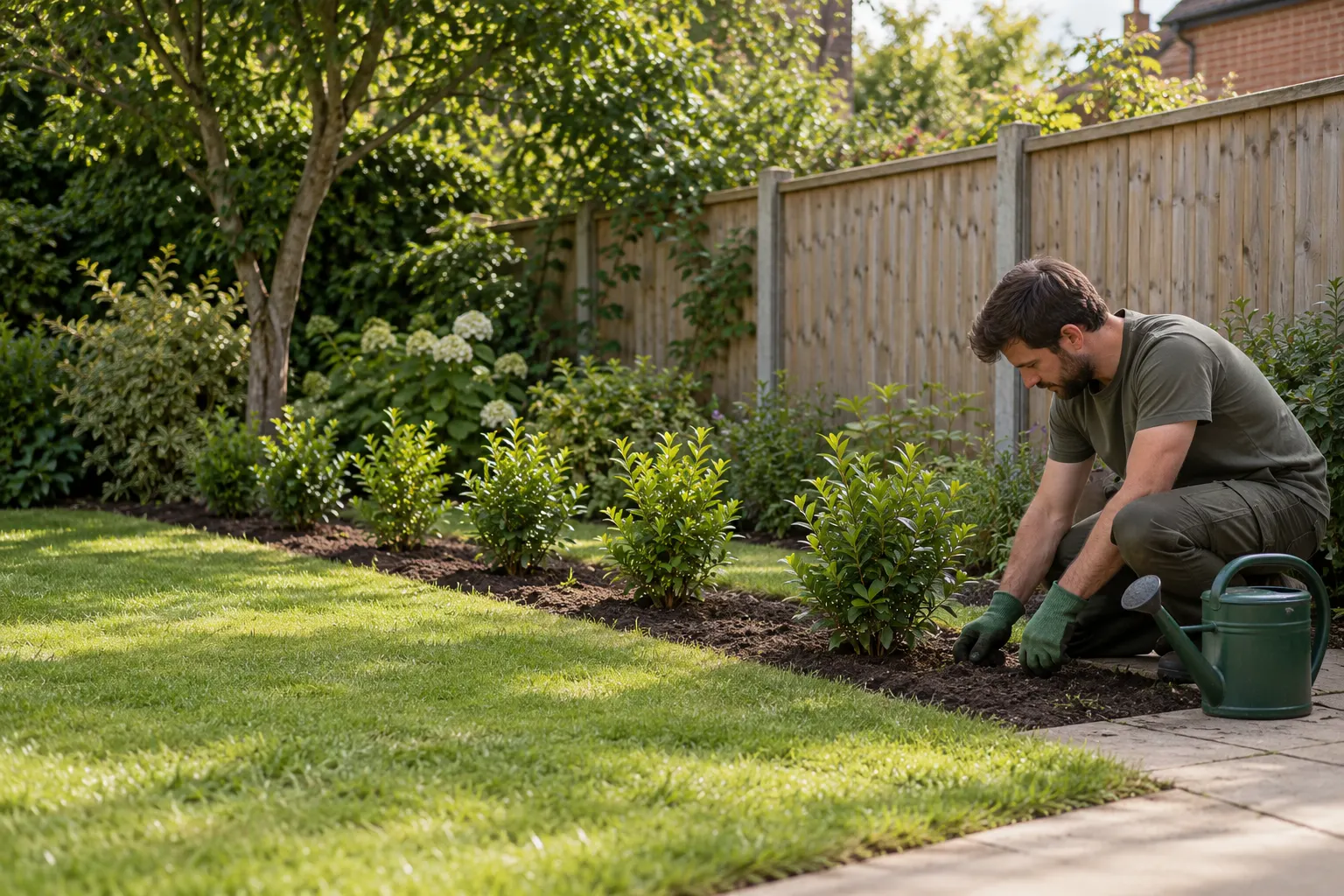
Young-hedge care from individual plants to a developing screen
Gardeners Pinner Green
We maintain young hedge lines with selective weeding, root-area attention and formative work for the plants that were actually installed. Each position remains identifiable while the row develops. Adjoining mowing and collection follow that planting strip, with any replacement handled as a distinct task within the growing boundary.
- How do you approach formative hedge work? Our gardeners identify the species and developing framework, selecting leading and side growth treatment for those plants and their intended form.
- How are replacements cared for within an older row? The new position stays recorded with its own establishment needs, even where surrounding hedge foliage already forms a continuous screen.
Early hedge maintenance with each plant identified
How does young-hedge work differ from an established trim?
Our formative work develops the young framework while established clipping maintains a completed outline. Species identification guides the treatment of leading and side growth. Each plant can therefore receive the approach appropriate to its role within the hedge. This gives the row a clear path towards its intended form, with early care distinct from the later cut of a mature screen.
How do you distinguish a planting space from a failed position?
We review the species, row arrangement and intended width before proposing additional plants. Open space can be part of the original planting distance while the hedge develops. A missing or failed specimen is considered as a specific position, with the required receiving preparation identified. This keeps replacement work attached to a genuine requirement while preserving the density and arrangement intended for the row.
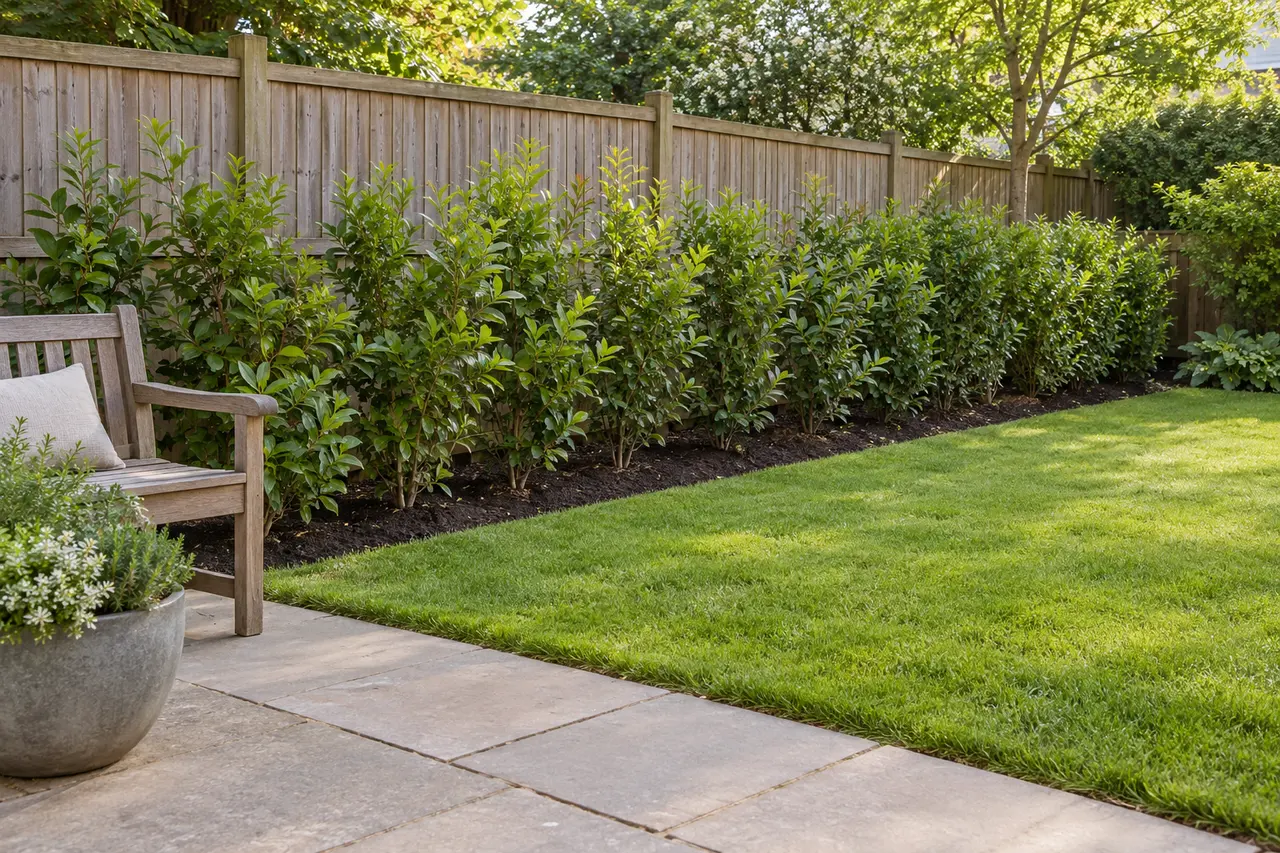
The whole young planting line
Bases and individual positions reviewed along the row
Our gardeners walk the line closely enough to identify each plant and the soil between its neighbours. An absence, break or specimen sitting differently can be apparent at the base before it changes the upper leafy view. The row is assessed as individual growing plants through this stage. That gives the maintenance a practical account of its condition beyond whether the top already resembles one continuous hedge.
Available planting information stays with the row, including species and whether material arrived bare-root or container-grown. This supports consideration of establishment and any different requirements along a mixed line. Variations in foliage or growth are understood in that context. The working record therefore identifies what was installed before cutting or replacement is proposed, preserving the useful information behind a young hedge that may still look uneven.
Our Garden maintenance identifies weeding, root-area checks, formative cuts and specifically required replacements. Supply and substantial planting are described for their actual positions. The work keeps the existing young line attended to through establishment, with its plants and next care recognisable. This gives the developing boundary a defined maintenance task and preserves the distinction between that work and an instant change of size or density.
Hand work within the planted strip
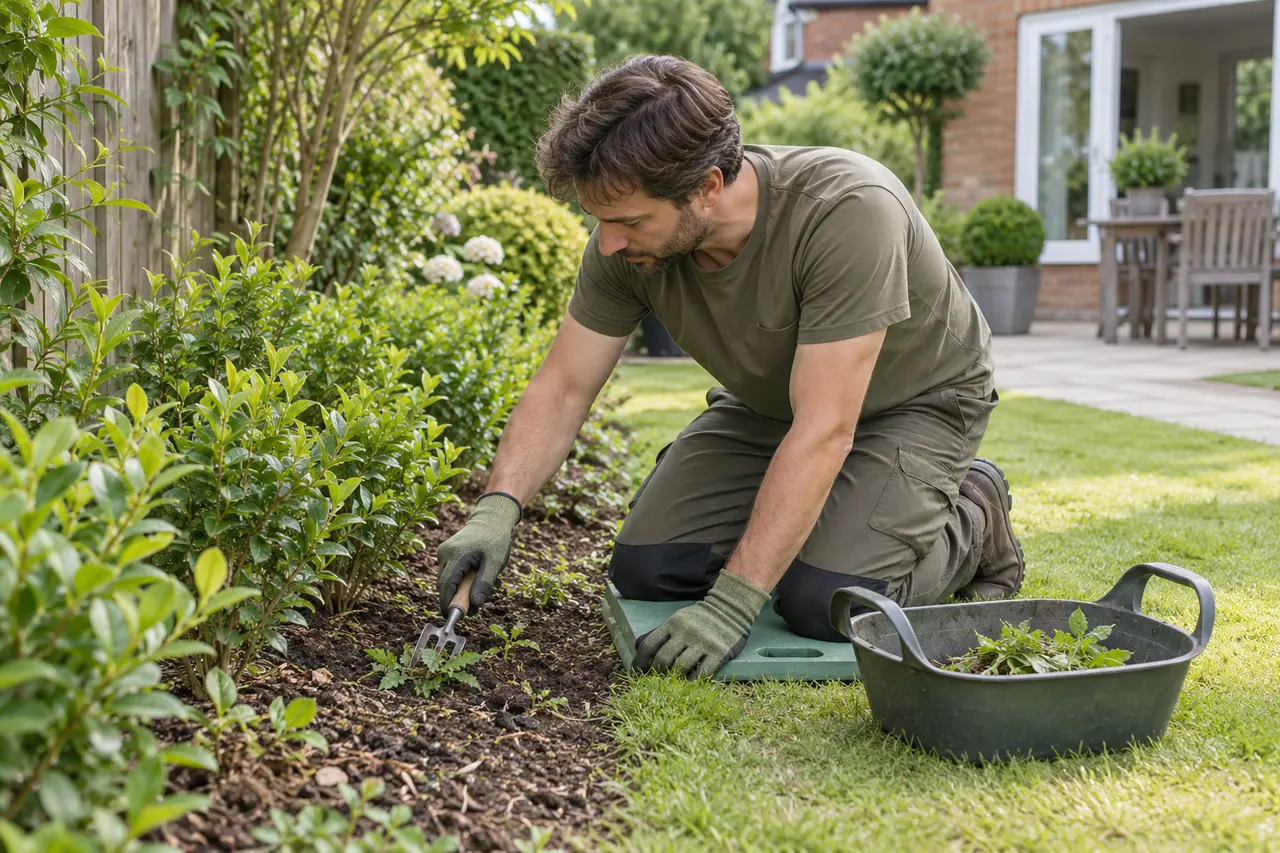
Grass and weeds separated from young hedge stems
The gardener begins with accessible unwanted growth between known planting positions. Young shoots remain visible while weeds and grass are loosened, keeping the hedge itself distinguishable within the green strip. This close work exposes the care space around each plant. It allows the approach to be recovered without treating all small growth beneath the visible upper leaves as one quantity of material for removal.
Tools work with attention to the young root area, while a deeply rooted unwanted plant receives a different decision from a small seedling. Useful soil stays in the strip and collected loads are placed outside the shrubs. A continuous working approach keeps the same stems from repeatedly being stepped over. This organises both the hand operation and its material handling around the developing plants along the line.
Our garden clean-up can recover a row concealed by a wider accumulation. Plant information still needed is kept, and unrelated litter separated as it appears. The garden-waste guide identifies outgoing material while the opening remains available for continued care. The finish reveals the young hedge and its individual positions, with the gathered pile located elsewhere so the newly accessible stems remain upright and visible.
- We identify the ends of the planted row before nearby mowing.
- Planned spaces are distinguished from missing or failed plants.
- Moisture attention follows the root areas along the line.
- Young stems stay visible during hand weeding.
- Formative cuts follow the identified hedge species.
The developing framework
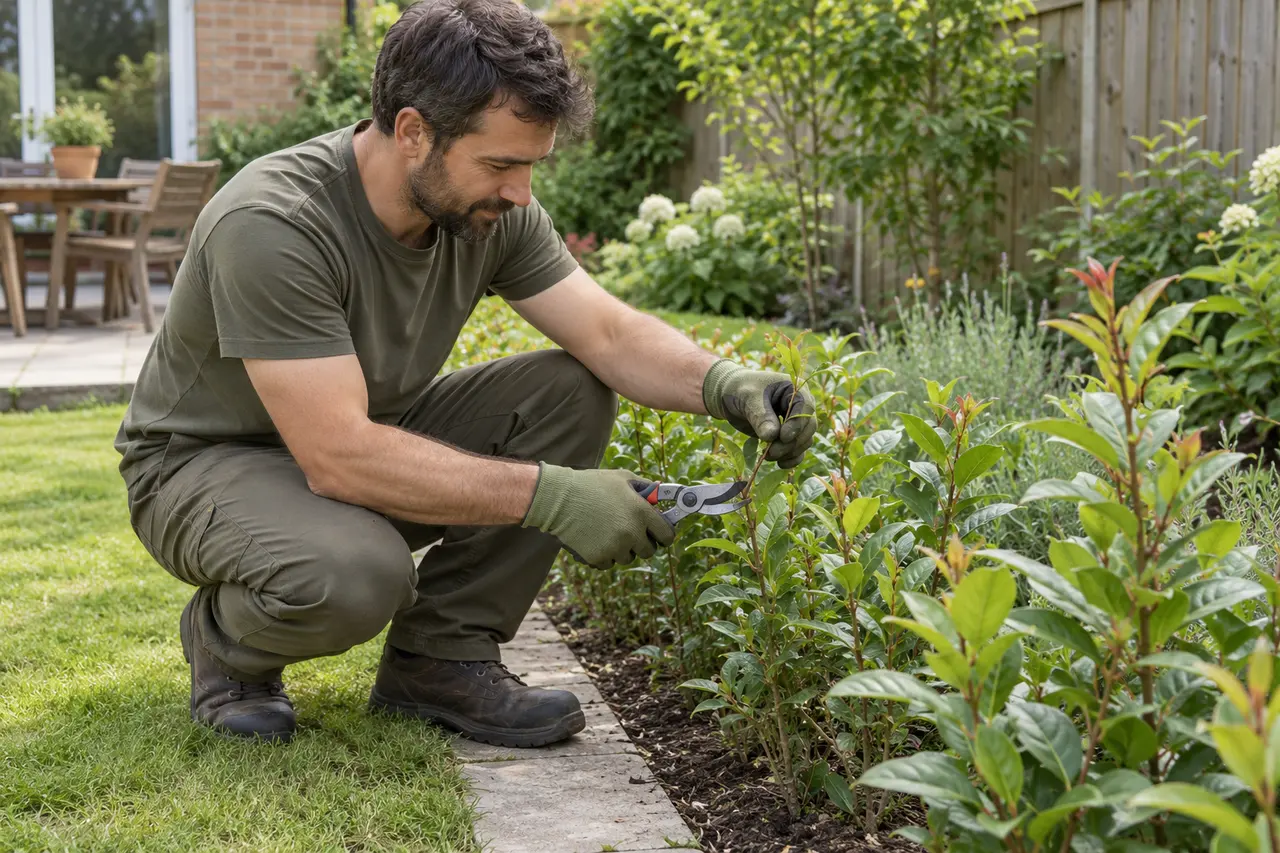
Leading and side growth selected for the intended hedge
Our formative attention follows the particular plants and the way the hedge is intended to develop. Leading and side growth have roles within that framework, so the treatment is chosen before a common height is considered. This gives the early work a different objective from later clipping of a mature screen. The row can develop towards its intended form while the actual requirements of its individual species remain part of the operation.
The RHS hedge-pruning guide informs formative work for the identified species and stage. Deciduous and evergreen plants can need different approaches, including around leading growth. Timing and extent therefore follow the actual row. This keeps the mixed boundary’s contents within the cutting plan and gives the gardener a clear account of what is being developed before later outline maintenance begins.
Nest checks cover affected shrubs and hedge growth, with disturbing cutting postponed where nests are being built or used. Where work proceeds, selective cuts are made and small fragments gathered between the plants. The line may remain open during establishment. Its care is judged by the appropriate work completed and growth preserved, not by forcing young foliage to resemble an established dense screen at the end of the visit.
Watering along the actual positions
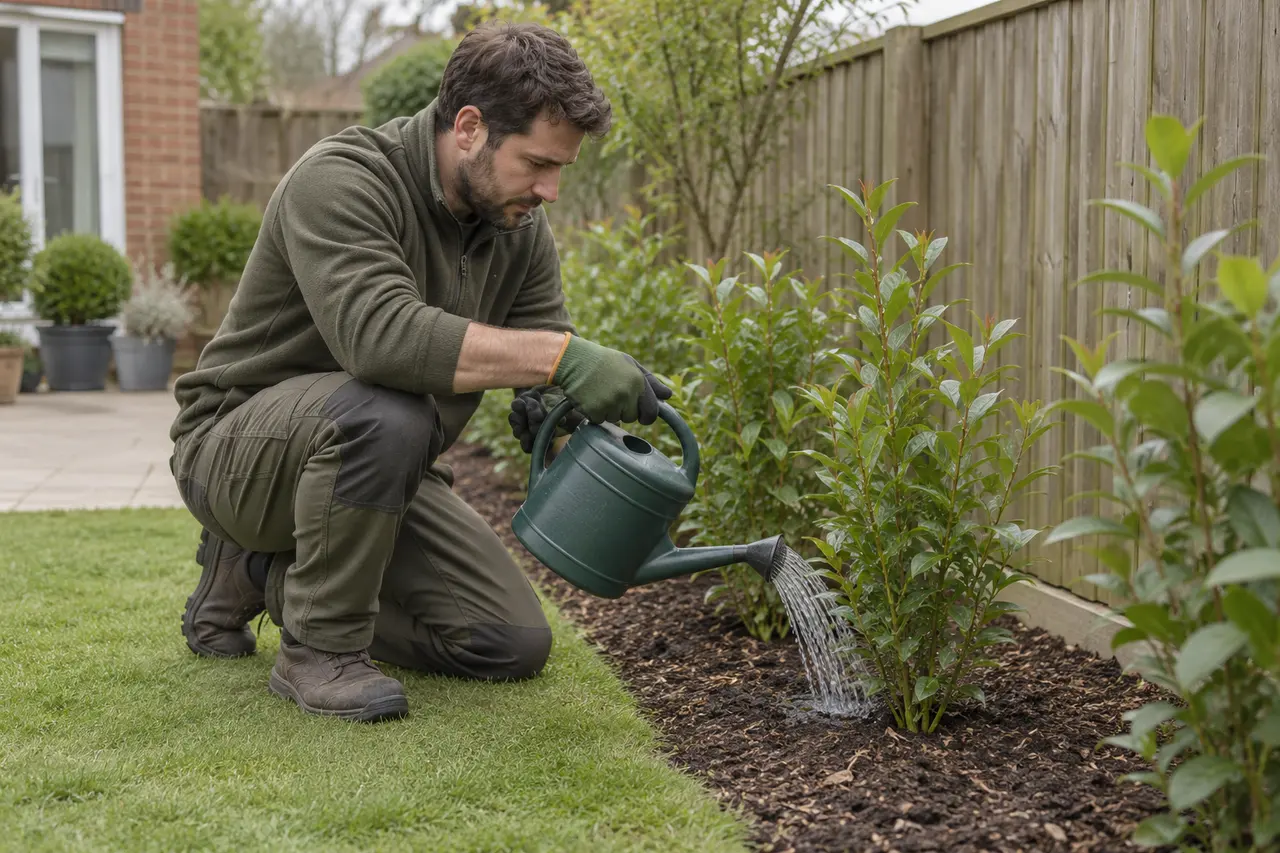
Root areas attended to throughout the hedge line
Our watering follows each planted position with soil checks along the line. Appropriate water is allowed to enter around the roots, with changing ground conditions considered as the task progresses. The gardener can account for the positions actually attended to from one end to the other. This gives the root areas a continuous care sequence, keeping the leafy upper view separate from assessment of moisture below.
Changes within the row receive closer attention. A newly inserted container-grown replacement has its own original root ball and receiving soil to consider, even beside settled plants. The gardener reviews that particular position instead of inferring its moisture from a healthy neighbour. This allows a mixed stage of establishment within one hedge to receive different immediate care while remaining part of the same maintained line.
Our establishment attention follows RHS hedge-planting advice, with any care between visits identified for the household. The booked operation addresses the particular plants on that occasion and leaves their positions and instructions clear. Continuing attention can then follow the young root systems as they expand, accounting for different stages within the line even where the foliage has begun to join into a more continuous view.
The adjoining mowing area
The planted pattern kept outside machinery movement
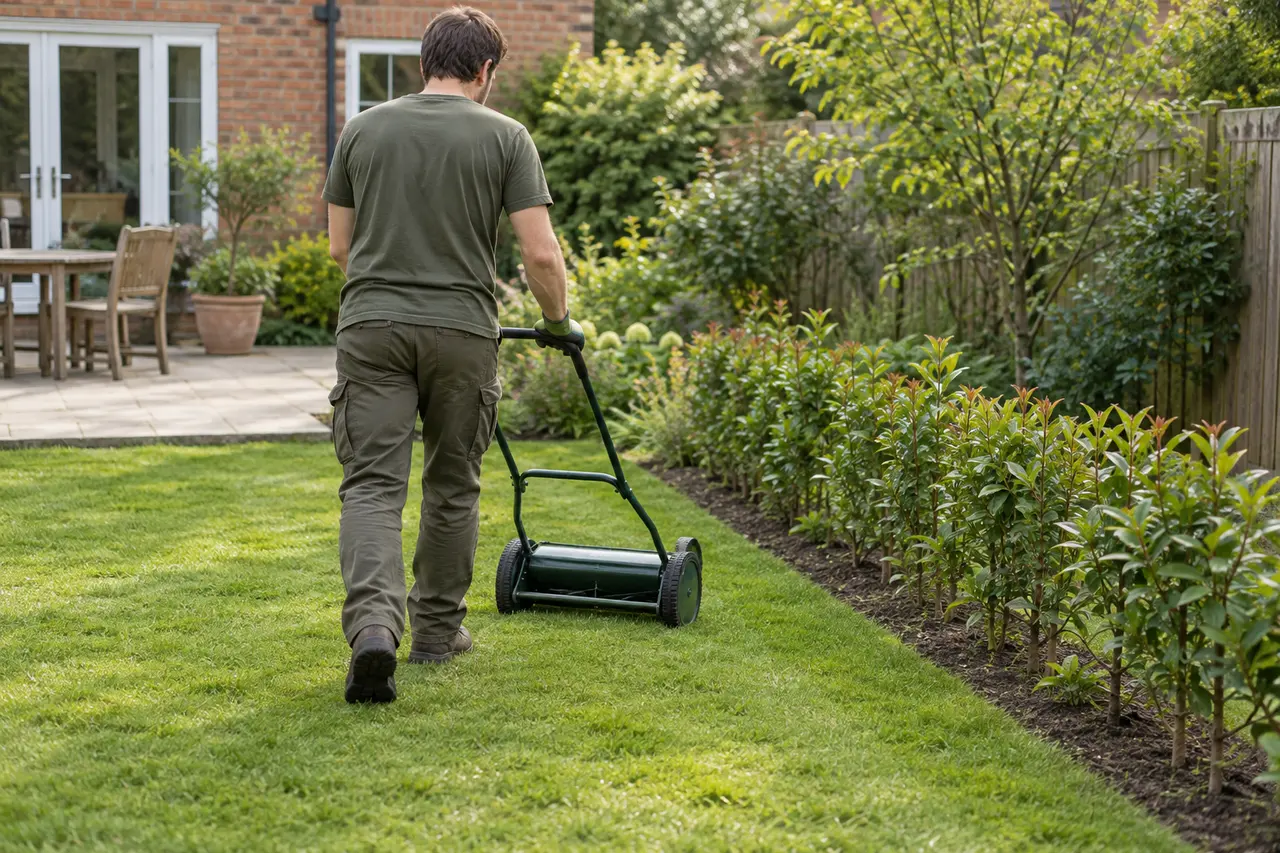
We identify whether the hedge occupies a single or staggered row before setting the mowing route. Grass can obscure plants standing farther towards the lawn than the most obvious straight line. Those positions are exposed carefully where necessary. The machine then follows the grass outside the whole strip, keeping its movement separate from the gaps between individual shrubs.
Our lawn-care work maintains the adjoining turf while the planting strip receives close hand work. The mower remains clear of young stems, including low plants newly revealed beneath longer grass. Their position is established before equipment approaches. This lets the garden’s two growing areas receive appropriate methods through establishment, without requiring the hedge to become tall enough to survive accidental contact before it is recognised.
Loose grass is collected without sweeping it against hedge bases. Tools and containers stay outside the actual planted positions, including the wider footprint of a staggered row. The finish leaves usable lawn beside an identifiable establishment strip. Any proposed width change is treated as a planting decision, preserving the intended arrangement through subsequent cuts instead of letting repeated mowing gradually redefine it.
An identified replacement position
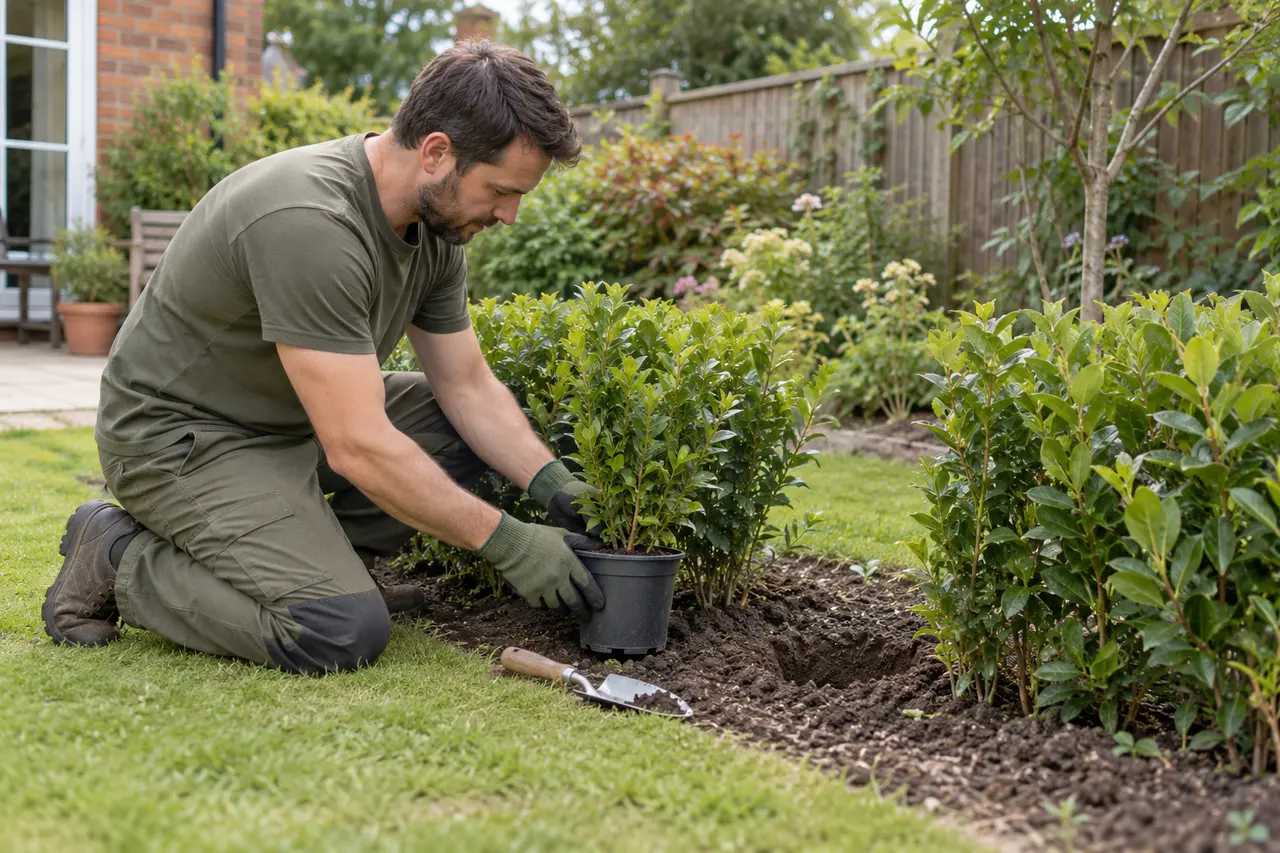
The receiving space reviewed before another plant is supplied
Where a position has failed, we consider its known history and ground condition before proposing replacement. That review remains specific to the location and available information, without assigning a diagnosis from a distant photograph. The new plant is selected for a prepared receiving position. This gives replacement a practical purpose beyond inserting the largest available shrub into an unexplained break in the line.
A replacement proposal identifies the hedge species, plant size and receiving room before supply and installation. Larger root balls need an appropriate space among their neighbours. Planned gaps remain distinguishable from failed positions through that selection. This gives additional planting a defined purpose within the intended arrangement, with the actual preparation and establishment attention described for the new material.
The replaced position stays recorded through seasonal care. Its new root ball can require closer attention while surrounding growth appears established. Later watering and trimming use that information, giving the addition appropriate care for its stage. The work can then change as the plant actually develops, preserving a practical distinction between visual continuity above the ground and establishment within it.
Related services with a defined intended result
Design identifies the purpose of the future boundary
Our garden-design plan can distinguish a tightly maintained outline from a looser flowering hedge. That purpose informs plant selection, mature width and future cutting. A mixture chosen for its flowers is considered for those features as well as its top line. The proposed arrangement connects the plants and available space with the boundary the household intends to use, giving later maintenance a clear direction as the row develops.
Tree pruning keeps the grafted variety in view
For tree surgery, a grafted named variety is distinguished from the rootstock supporting it. The intended remaining tree informs the cut. A severe height reduction removing all of that variety would not retain it at a lower level simply because rootstock growth later appears. The proposal therefore follows the actual grafted structure and desired result, keeping that identity part of the operation alongside crown size.
Permeable paving joints treated as part of the water route
Before jet washing, permeable block construction and its specified joint aggregate are identified with the manufacturer’s care requirements. The material forms part of the drainage route through the surface. The cleaning method respects that construction, with any necessary replacement aggregate stated specifically. Ordinary jointing sand is not treated as interchangeable. This gives the surface operation an appropriate finish without introducing an improvised material that changes the intended joint function.
Gutter assessment includes a changed roof catchment
Our Gutter cleaning clears appropriate deposits and recovers the channel space already available. Where an added roof now drains into the run, that changed water load is identified within the request. Clearing debris does not enlarge the existing dimensions or redesign outlets. Any resulting capacity question is considered separately, keeping the effect of the roof change distinct from an assumption that another identical clear-out must resolve it.
Seasonal product information identifies the tree’s root history
The selected living Christmas tree is identified as grown in its container or lifted and placed into a pot. The container alone does not describe that history. This product distinction informs the seasonal choice and continuing care, with the current specification associated with the actual tree. Long-term establishment is not promised solely because it is sold in a pot; the format and resulting root condition remain part of understanding the living product.
Gardening time for the existing hedge and its neighbours
Our quotation identifies care of the young line alongside adjoining garden tasks. The general rates below guide gardening time, with replacement plants, supplies and substantial recovery described individually. This gives the household an account of the specific formative and establishment operations being provided, including the movement and collection needed to complete them within the existing row.
| Maintenance time | Guide price |
|---|---|
| First hour | £83 |
| Each subsequent hour | £65 |
GBP guide prices. The complete quotation sets out VAT treatment, plant and material supplies, waste handling and applicable access, parking or congestion costs. The actual formative and establishment work remains clear within the full proposed visit.
Young-hedge maintenance within the growing garden
Should the same height be imposed on a mixed young hedge?
We identify a mixed row before selecting cuts, including the different leading growth and flowering roles. The intended result guides that formative work for each species. This leaves the young hedge developing through an appropriate framework, with its care assessed from the plants actually present. An even top can be considered later alongside the established outline it is intended to maintain.
Can a staggered hedge row be treated as one narrow line for mowing?
Mowing follows the whole planted width of a staggered row. The team identifies shrubs on both sides of its apparent line and keeps equipment outside that strip. Grass between them receives another appropriate approach where it is included in the work. This maintains the lawn beside the actual arrangement, leaving young plants visible even before their foliage has filled the space that the row will eventually occupy.
Does a replacement shrub follow the older hedge's watering routine immediately?
A replacement is reviewed as a newly planted specimen within the hedge. Its root ball and receiving ground remain relevant even where older neighbours need less immediate attention. The establishment care follows that stage. Joined foliage above ground does not automatically place its roots on the same routine, so the identified position stays available for its own checks during subsequent maintenance.
Can mulch hide the bases of all the young hedge stems?
For a commissioned mulch application, accessible weeds are removed first and the covering placed around the planting strip. Bases and stems remain identifiable, clear of piled material. The finished surface supports the specified care while preserving the positions the gardener needs to reach. This gives later attention a usable growing area and keeps the new covering distinct from unwanted roots that require their own removal.
What if the original hedge species is unknown?
Reliable purchase information or appropriate identification informs formative work and replacement selection where the species is unclear. A general label for hedge plants does not specify the treatment of each leading shoot. We establish the useful plant information before a uniform hard cut is proposed. The resulting task can then follow the row’s actual contents and intended form, with uncertainty resolved at the appropriate stage.
Individual young plants maintained as the screen develops
Our gardening services leave the hedge line identifiable at soil level, with its formative work, root-area care and collection recorded for the plants involved. The row can then continue developing alongside a maintained lawn and accessible beds. Any replacement remains visible as its own establishment task, giving later attention a clear basis as separate plants gradually become a continuous boundary.