

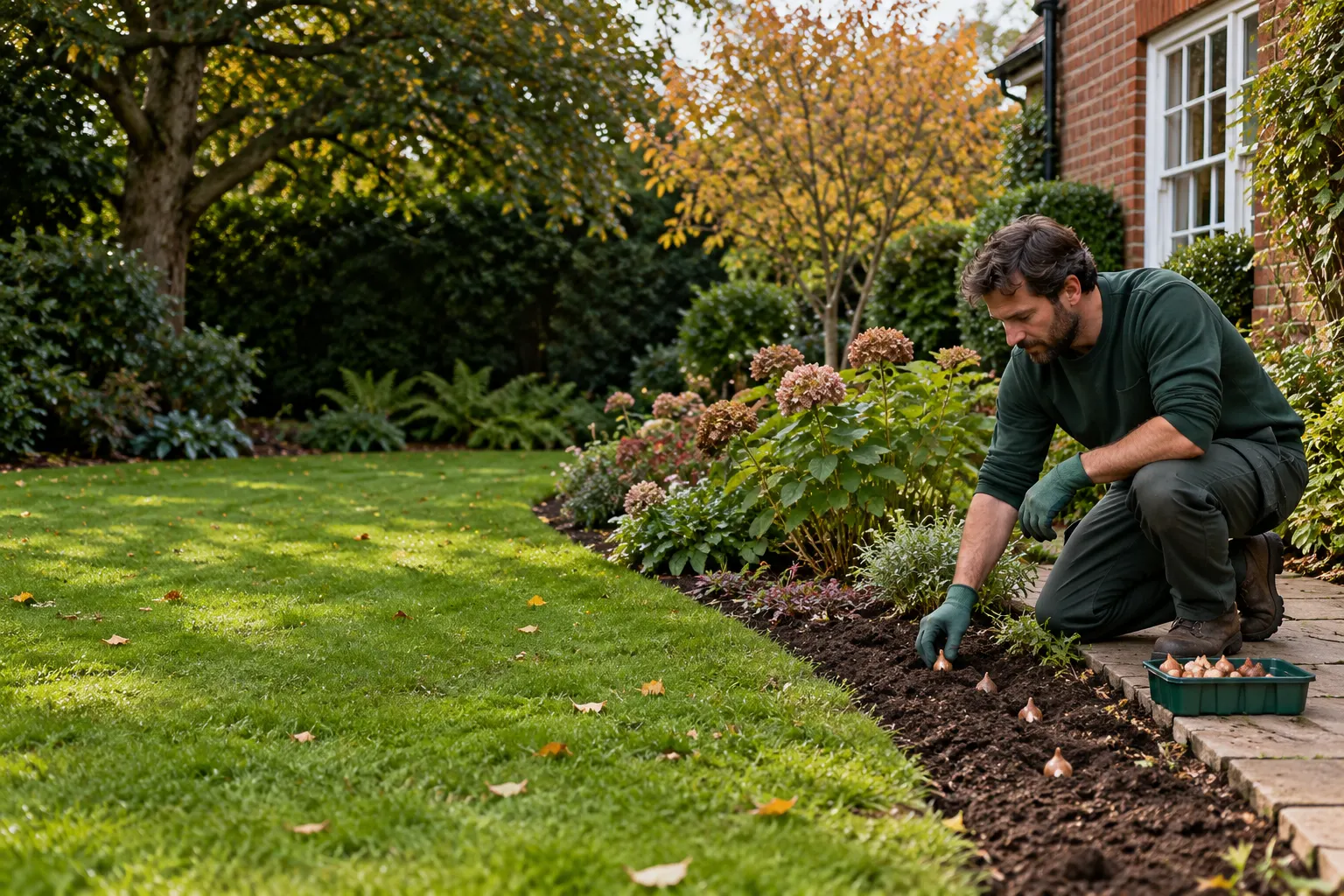
Palmers Green · Bulb planting with preparation and a clear arrangement
Gardeners Palmers Green
We prepare the receiving bed, organise identified bulb groups and plant them to their individual depth and spacing requirements. Supplies stay labelled through the work, with existing plants accounted for before digging. The surrounding lawn and boundaries continue to receive their own care while the new planting is established and recorded.
- How do you position each bulb during planting? Our gardeners follow its identified requirements, setting a recognisable root base and growing point at the appropriate orientation and depth.
- How do you keep mixed planting batches organised? Named varieties remain in separate working groups, with positions and planted quantities recorded before their packets and trays leave the area.
An identified planting task from supplies to receiving ground
What does your bulb-planting proposal cover?
We identify the bulbs, receiving beds or containers, intended quantities and preparation within the proposed work. Planting and supply arrangements are stated separately. The team establishes whether the ground is ready or contains unwanted growth, with existing plants and dormant bulbs included in the receiving-space assessment. This gives the operation a clear starting condition alongside the other gardening tasks being commissioned.
How do your gardeners select planting depth and spacing?
Depth, spacing and orientation follow the identified plant and its supplied guidance. The prepared position must also provide its appropriate growing conditions. We apply those requirements to each group as planting proceeds, giving different bulbs their own treatment. A tool’s length is not used as the universal measure for the entire order, so the completed work remains tied to the material actually being planted.
The supplied planting material
Named groups maintained from the packet to the bed
We keep varieties together while the bed is prepared, bringing out the amount needed for the next section. Similar-looking bulbs can have different heights, flowering periods and planting requirements, so identification stays with the remaining stock. This controlled batch sequence preserves the intended arrangement as material moves between preparation and planting. The gardener can identify what has been used and which named group still needs its receiving positions.
The material is checked during handling, distinguishing firm bulbs from those with visible softness or decay. Questionable items are set aside for an appropriate supply or plant-health decision before sound stock goes underground. The planting quantity then follows usable material and the agreed arrangement. Any concern remains identifiable while the batch is still accessible, giving the household a clear account of the material used in the work.
Our garden-maintenance visit identifies who supplies the bulbs and additional materials. Their storage and planting instructions stay associated with the named groups. Material intended for later planting can require different handling from stock supplied for prompt installation, so the gardener keeps the order recognisable through preparation. This connects the supplies to the actual visit and preserves the information needed as each working batch is opened.
Preparing the receiving space
Existing occupants accounted for before planting holes are made
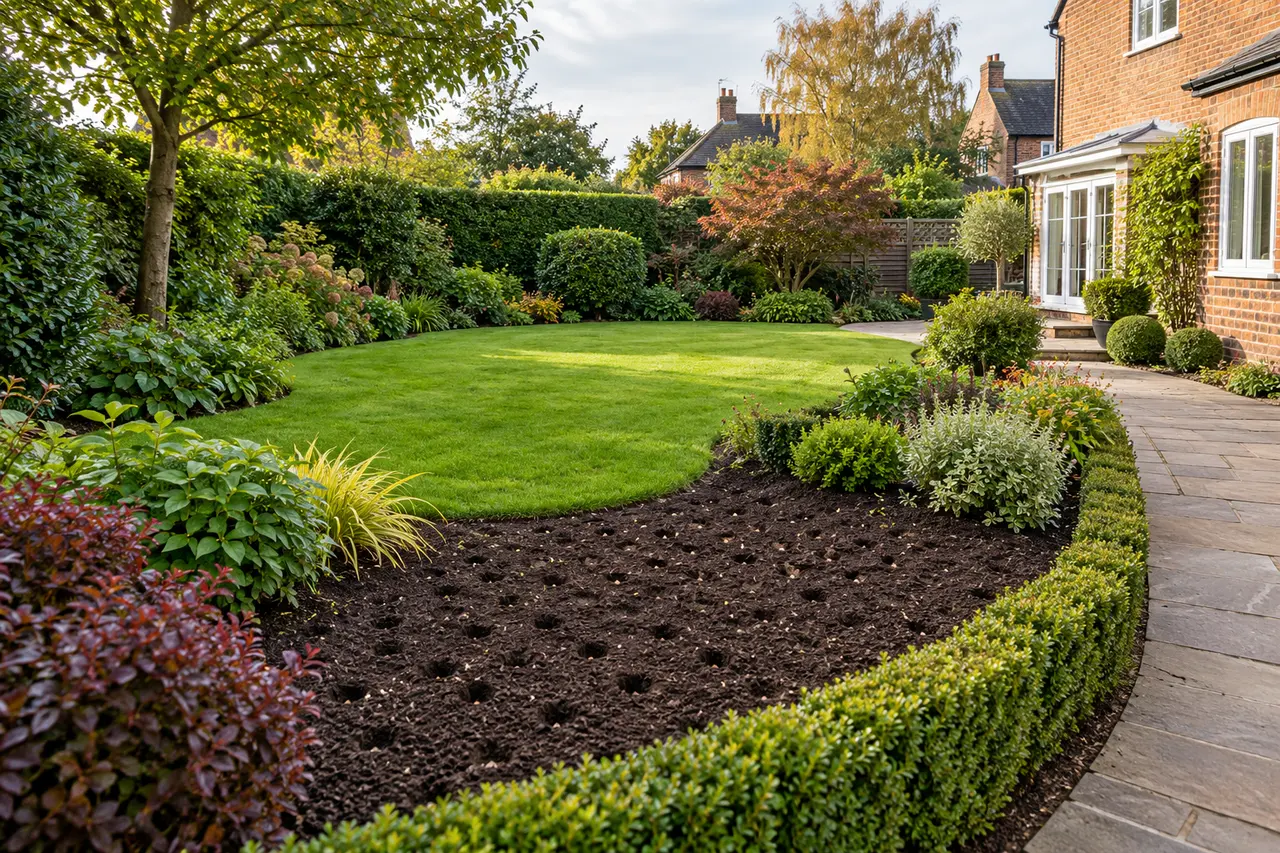
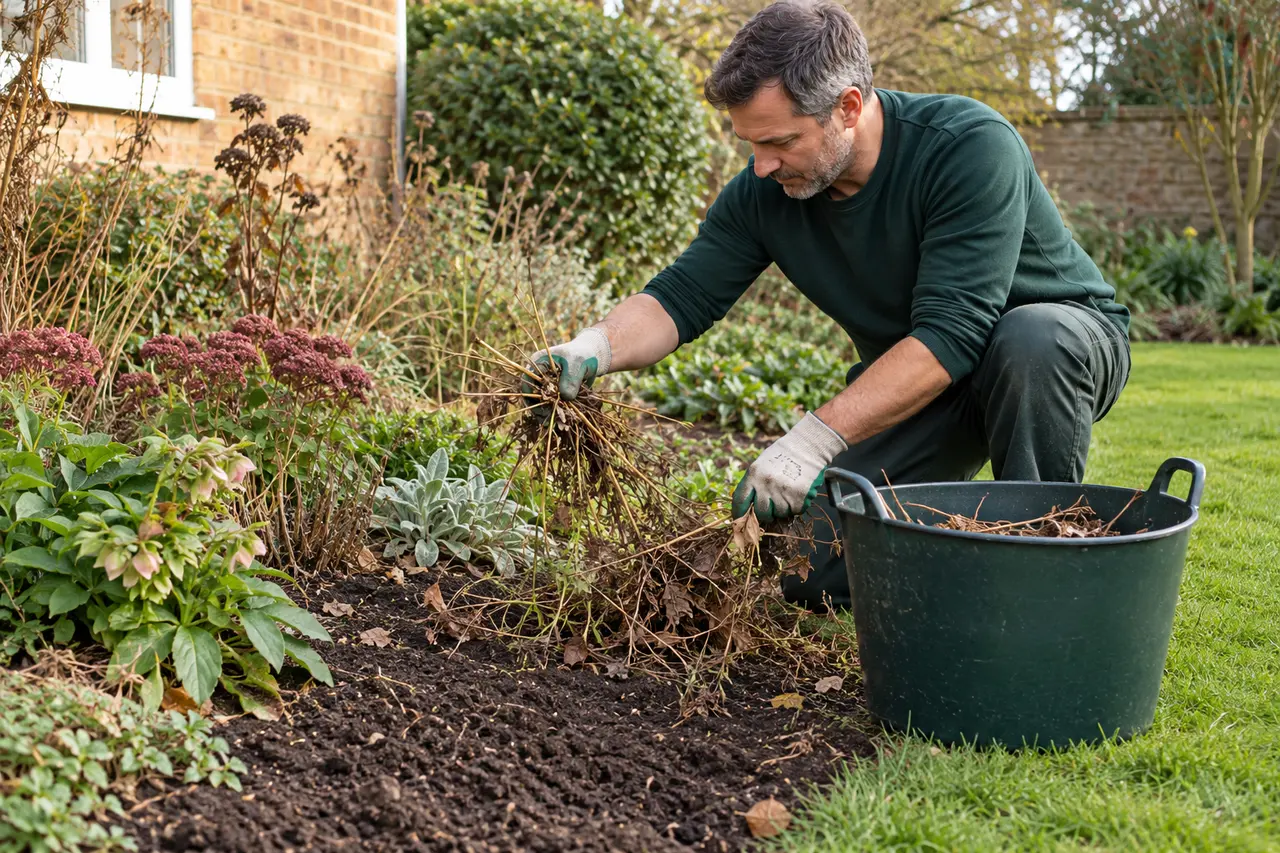
The gardener collects commissioned unwanted growth and loose cover from the receiving position before setting out the bulbs. Existing perennials, their roots and earlier bulb groups are identified as the surface becomes visible. Dormant planting may already occupy apparently open ground. Preparation therefore works around known occupants, leaving the actual receiving space ready for the proposed groups without disturbing the bed indiscriminately.
Where a garden clean-up forms part of the visit, relevant clearance in the receiving area is completed first. Outgoing stems and weeds are held apart from newly supplied stock. Bulb containers remain distinguishable along the carrying route, even where both tasks use the same path. The sequence keeps planting materials available for their next operation and leaves the prepared bed clear of the clearance load.
We assess soil workability before opening the planting positions. Preparation provides an appropriate receiving surface, with wetter ground or dry clods considered for the actual task. More substantial preparation is identified where needed before bulbs are covered. The garden-waste guide supports the outgoing material arrangement, keeping waste collection connected to clearance while the planting ground stays available for the stock intended to enter it.
Setting out the planting group
Spacing and quantity checked through small working batches
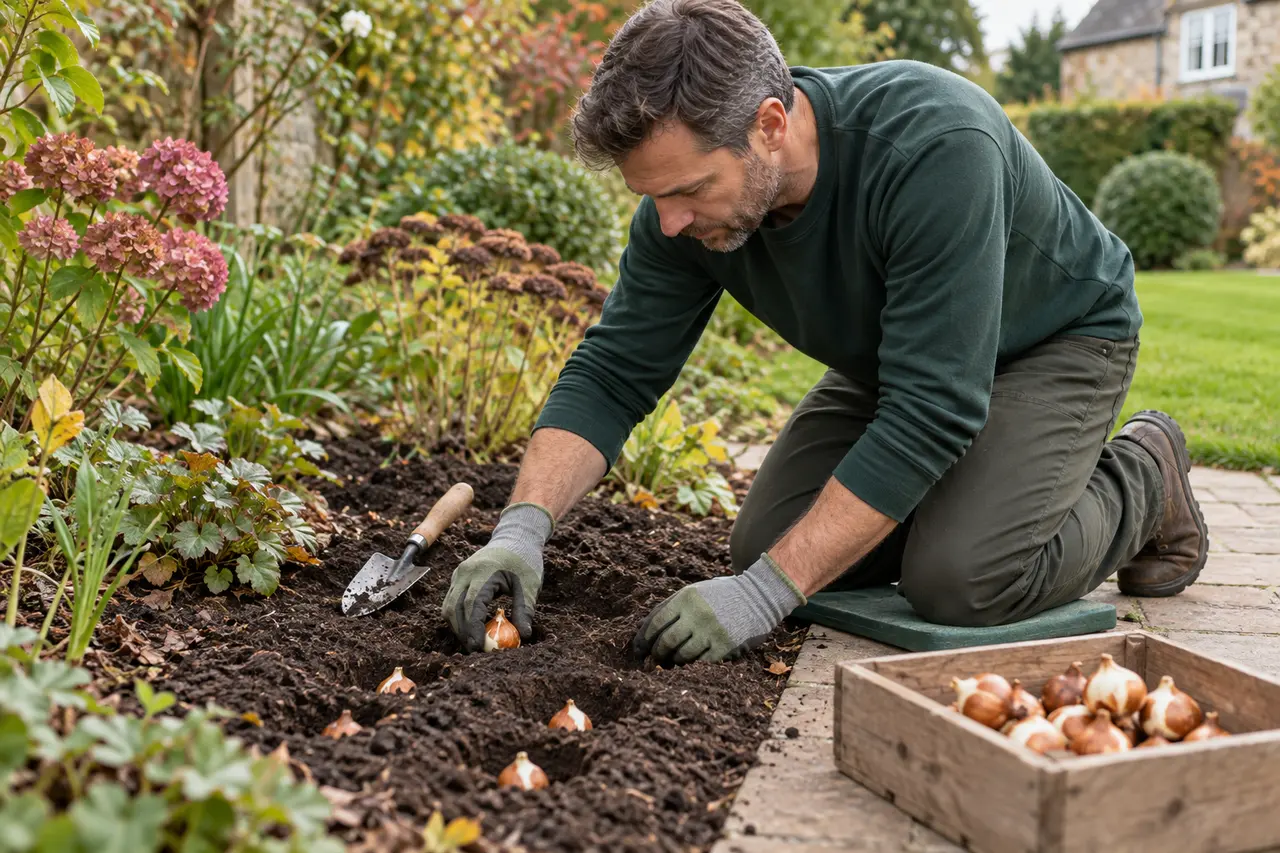
The intended group is set out to check its spacing beside existing plants before the work expands across the bed. Small batches let the gardener adjust the arrangement while material remains contained. Positions near a path include room for eventual foliage as well as the dormant bulb itself. This connects the planting-day layout with the space occupied by the display as it grows, including access along the adjoining route.
We prepare each hole for the identified bulb’s depth and orientation, placing a recognisable root base and growing point deliberately. Soil is returned carefully to complete support around it. The material then occupies the appropriate receiving position with contact below and around it. This makes placement a controlled part of the planting operation alongside group spacing and the growing conditions selected for that bed.
Our gardeners plant each identified bulb group through its intended positions and record the material actually installed. The account distinguishes a portion still awaiting planting from a gap deliberately left between groups. Remaining stock and identification stay together until that variety’s work is complete. This gives the completed surface an accompanying record of what lies beneath it, even when the positions are no longer obvious from above.
- We keep named varieties identifiable through each planting batch.
- Existing dormant plants are accounted for before digging.
- Depth and orientation follow the identified bulb’s requirements.
- Group spacing is checked before work extends across the bed.
- Completed positions are recorded before the surface changes.
Planting stock beside the lawn
Trays and loose packets kept outside the mowing route
Bulbs, small labels and opened packets have a defined holding position during planting. The team keeps these items out of nearby grass cutting, with partly used trays remaining associated with their intended bed. This maintains the batch arrangement while other gardening proceeds. A clear lawn route is prepared through organised material handling, so a loose bulb does not become an unidentified item beside the mower after the planting has moved on.
Our independent lawn-care work is sequenced around the planting position. The contained batch can be moved to an agreed firm space, or the grass cut completed while the route remains clear. Packaging is gathered and the working edge checked before equipment restarts. This includes deliberate attention to the small items around the planting operation as well as the broad lawn area ready for its ordinary cut.
The planted count remains with its named group throughout nearby mowing. A bulb found outside its tray is identified as unfinished stock, a questionable item set apart or an accidental spill before further use. This preserves the arrangement through the movement of the two operations. The final record describes the material installed and the supplies remaining, giving subsequent care an understood group to follow.
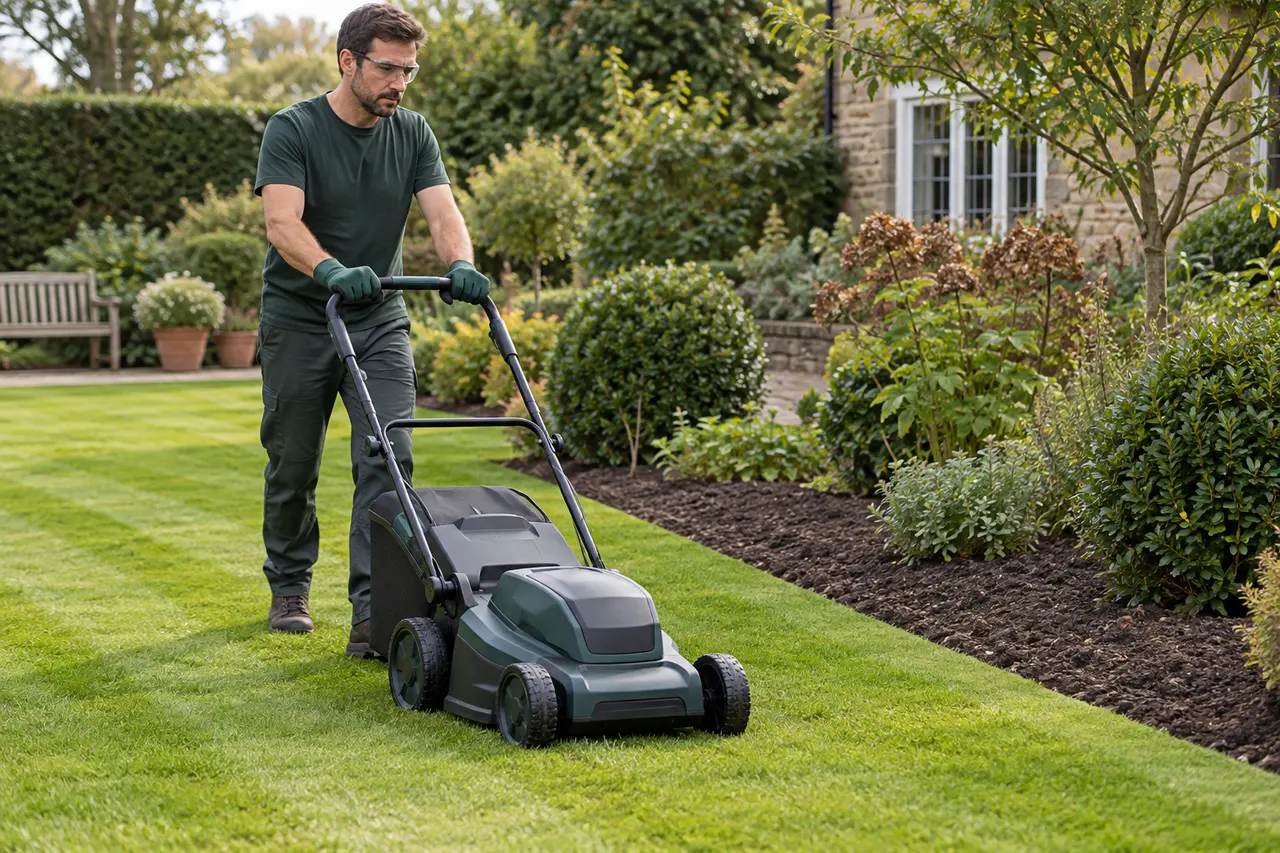
Planting beside a maintained boundary
The bulb layout includes the hedge-working space
Before a narrow hedge-side strip is planted, we consider the standing and collection positions used to maintain that boundary. The proposal includes the future bulb foliage, not only the bare surface available during planting. This leaves the display positioned with its continuing care in view. A group placed directly in the working route could otherwise create a conflict that was hidden while the supplied bulbs still occupied a tray.
Nearby accessible hedge work is completed with tools and cuttings outside the receiving area. Where trimming and planting share a visit, bulb groups stay contained until the cutting material is gathered. The completed new surface then remains available for its own establishment. This coordinated sequence keeps fresh hedge fragments from becoming the next collection task across a bed that has just been prepared and planted.
The hedge cut follows species and condition, with shrubs and hedges checked for nests being built or in use and disturbing work postponed. Where the proposed bulb group conflicts with the working space, its position is considered as part of the arrangement. The maintenance sequence preserves the distinction between an appropriate hedge operation and the planting choice beside it, without taking a harder boundary cut simply to manufacture a gap.


The group beneath the finished surface
Planting information carried into subsequent bed care
Varieties and areas actually planted are recorded once the group is complete. A reliable marking or simple plan helps later maintenance recognise the dormant stock before shoots emerge. The account stays with the property’s gardening information, beyond the removal of temporary trays and empty packets. This gives future soil work a usable reference for the new occupants beneath an apparently undisturbed surface.
Aftercare follows the bulbs and receiving conditions, with attention between visits identified within the arrangement. The planted record then supports subsequent border care, when emerging shoots can be distinguished from unwanted newcomers. Repeated exploratory digging is not part of checking an otherwise quiet group. The team can maintain surrounding weeds and surfaces while allowing the named planting to progress through its own development.
The actual emergence and flowering inform later decisions. Different varieties may develop at different times, so the planting record is reviewed alongside the expected stage before replacement is proposed for a quiet position. This keeps the group’s progress connected to its identity. It also avoids disturbing recently installed material solely because another variety elsewhere in the order has already appeared above ground.
Related services coordinated with the planting work
Design turns an intended display into planting quantities
Our planting-design brief considers the available dimensions, intended spacing and existing occupants when developing a flower group. This connects quantities with an arrangement that can be set out on the actual bed. The desired effect is interpreted alongside the receiving space, giving the proposed order a practical basis beyond the perspective of an inspiration photograph. Plants already in the ground remain part of that calculation.
Tree reduction follows a continuing lateral branch
Our tree-surgery quotation identifies the intended reduction and the tree’s actual branching. An appropriate lateral provides continuing growth beyond the selected cut. The resulting structure is considered for the individual tree, with that branch selection carrying the proposed outcome. This gives the professional operation a defined continuation within the crown, keeping its purpose clear through the work completed and growth remaining.
Paving washing preserves flexible movement joints
Before jet washing, flexible joints are identified as components of the surface, separate from ordinary grooves holding dirt. The method respects that material while cleaning the adjoining paving. Emptying or damaging the joint is not the objective. Any replacement or repair remains a distinct operation, so the surface clean retains the designed component instead of treating every visible line as a space to direct the jet into.
Gutter access considers pole angle and standing distance
For gutter cleaning, we assess the horizontal distance from the standing position to the channel as part of the working geometry. A pole’s nominal length alone does not describe its vertical reach from every location. The method is selected for the actual building and available footing, with controlled movement through the intended section. This gives access a practical basis without relying on additional leaning to reach a final short length.
Seasonal collection identifies material still attached to branches
Our Christmas-tree collection arrangement considers artificial snow or other sprayed display material remaining after loose ornaments are removed. The actual coating information and condition are identified for handling, because products differ. A real tree can still carry attached display material on its needles and branches. That condition stays distinguishable within the collection proposal, instead of assuming removal of the ornaments has returned every branch to an untreated state.
Gardening time across preparation and planting
Our quotation identifies receiving-bed preparation, bulb supplies and planting quantities alongside surrounding upkeep. The general rates below guide gardening time, with the actual work set out from the material and ground being prepared through to the completed planting group.
| Gardening time | Guide rate |
|---|---|
| First hour | £83 |
| Each subsequent hour | £65 |
GBP guide rates. The complete quotation identifies work and supplies, outgoing material, VAT treatment and any applicable parking, congestion or access charges. Separately specified planting requirements remain clear within the full arrangement.
Bulb groups and their receiving conditions
Can several similar-looking bulb varieties be emptied into one container?
Named groups stay separate where positions or requirements differ. The gardener keeps identification with each working batch until its planting and location are recorded. A total bulb count alone would not reproduce a mixed planting arrangement after similar-looking stock had been combined. This makes the material organisation part of the completed task, preserving the intended group as well as the number of holes planted.
Should soft or visibly decayed bulbs be buried with the sound ones?
Questionable soft or visibly decayed bulbs are set aside before usable stock is planted. The material remains identifiable for an appropriate supply or plant-health decision. The gardener completes the named group with the actual stock available, recording its installed quantity and any concern kept separate. This gives the planting a clear account while the original material can still be reviewed outside the receiving ground.
Should planting proceed if the hole keeps filling with water?
Where a hole keeps receiving water, the gardener considers the suitability of that position and preparation for the identified bulbs. A handful of dry compost does not itself change drainage through the surrounding ground. The receiving location or required preparation is resolved before the stock is covered. This keeps the planting decision connected to the ground that will supply it after the visit.
Must every bulb in a mixed order emerge together?
The named record and expected development guide our review of a mixed group. Different plants may emerge or flower at different stages, leaving some positions quiet while others are visible. Those differences do not automatically call for replacements. The work can continue around the group without repeated disturbance to check every bulb simply because another variety has already begun its display.
An identified display planted into prepared ground
Our gardening services leave each bulb group connected to its receiving position, planting record and next care requirements. The stock used, work completed and any portion still outstanding remain distinguishable after trays and packaging leave. This gives subsequent border maintenance a clear beginning for the developing display, while preserving the bed’s existing plants and the working space around the new groups.