

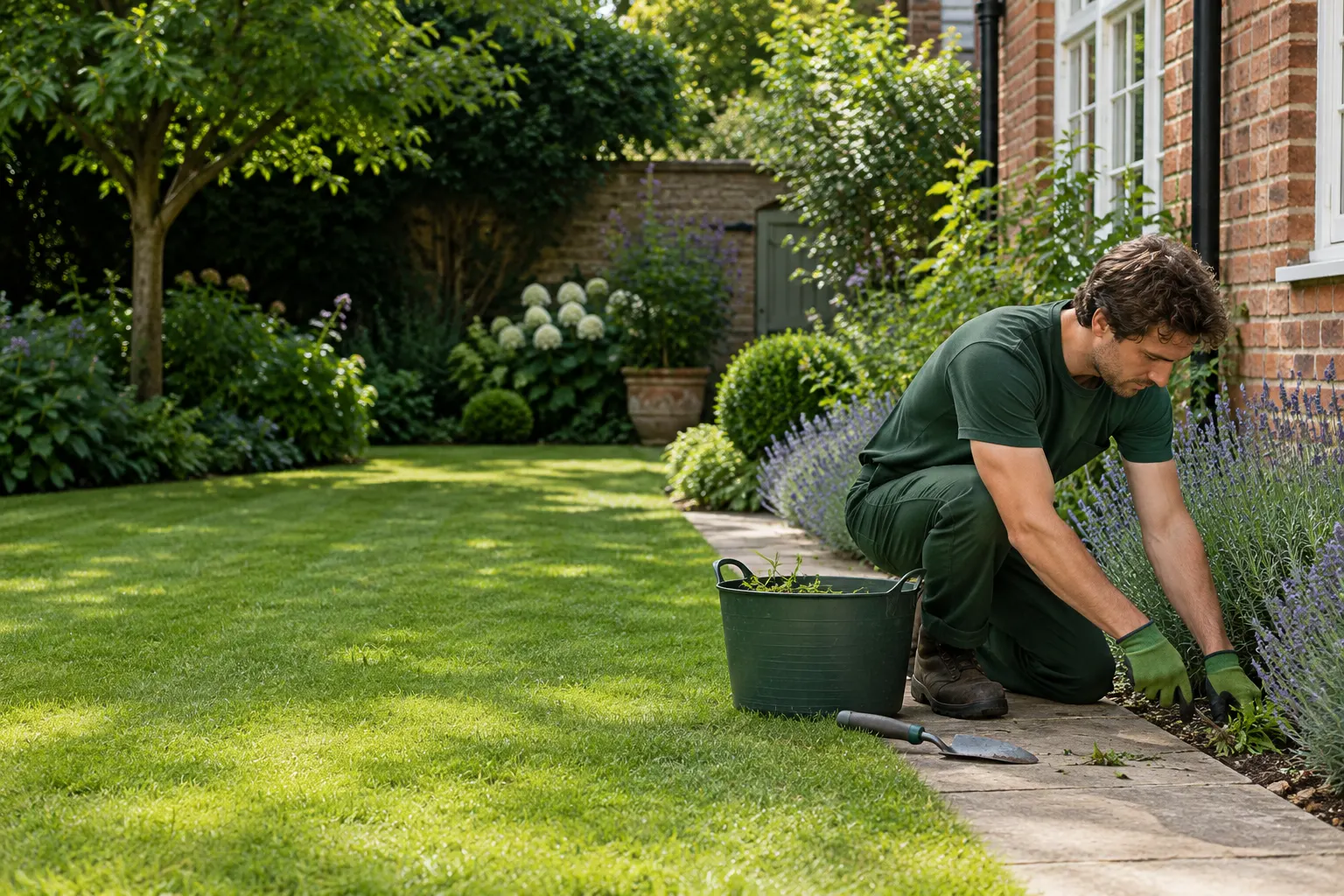
Kingsbury · Lavender and low-border maintenance
Gardeners Kingsbury
We maintain low flowering borders through close weeding, plant-specific trimming and collection. Lavender care distinguishes the flower stems and leafy mound from the older bare framework. The surrounding lawn and hedge receive their own methods, with finished surfaces cleared of loose material. This keeps the living outline of each plant clear as the garden is brought into order.
- How do your gardeners select a lavender trim? We locate the living foliage, shortening the appropriate flower growth without extending that cut indiscriminately into older bare stems.
- How are lavender stems retained for household use? Intact stems wanted for drying are identified before trimming and set apart from weeds and the mixed outgoing clippings.
Lavender care follows the living growth
What lavender work can form part of your maintenance?
Our plant care can include faded-flower removal and an appropriate light trim for lavender’s condition. The gardener identifies the living foliage and the work intended before cutting. The low border is then maintained alongside neighbouring grass and boundaries, with its own plant-specific finish. Framework changes or replacement remain separately considered where an older specimen needs another response.
How do you approach an older leggy lavender?
We consider its living foliage and bare framework before proposing the extent of cutting. Lavender generally does not readily produce new growth from old woody stems, so a hard reduction below the leaves is not presented as guaranteed renewal. A limited tidy, continued observation or separately planned replacement may be appropriate. The decision follows the actual plant instead of promising that every old specimen can become a compact mound through trimming alone.
The leafy mound and flower stems
Different growth layers identified before cutting
The gardener identifies long flower stems above the leafy mound and older bare wood below. The selected trim follows where living growth remains, keeping each layer clear during the operation. Flower shortening and any additional shaping therefore have defined cutting positions. The result preserves a growing outline within the existing framework while gathering the material chosen for removal.
Our garden maintenance coordinates lavender attention with weeding, mowing and collection. Its task list identifies the plant operation and the condition of each specimen. Variation can remain where an imposed straight line would enter bare old wood. A failing or badly shaped plant receives its own proposal, keeping ordinary trimming useful while larger changes are understood separately within the border.
- We locate leafy growth before selecting the lavender cut.
- The mower deck stays outside spreading flower stems.
- Cut stems are gathered from neighbouring low planting.
- Plant bases remain visible without scraping roots bare.
- Replacement positions are set out before holes are opened.
Weeding among low clumps
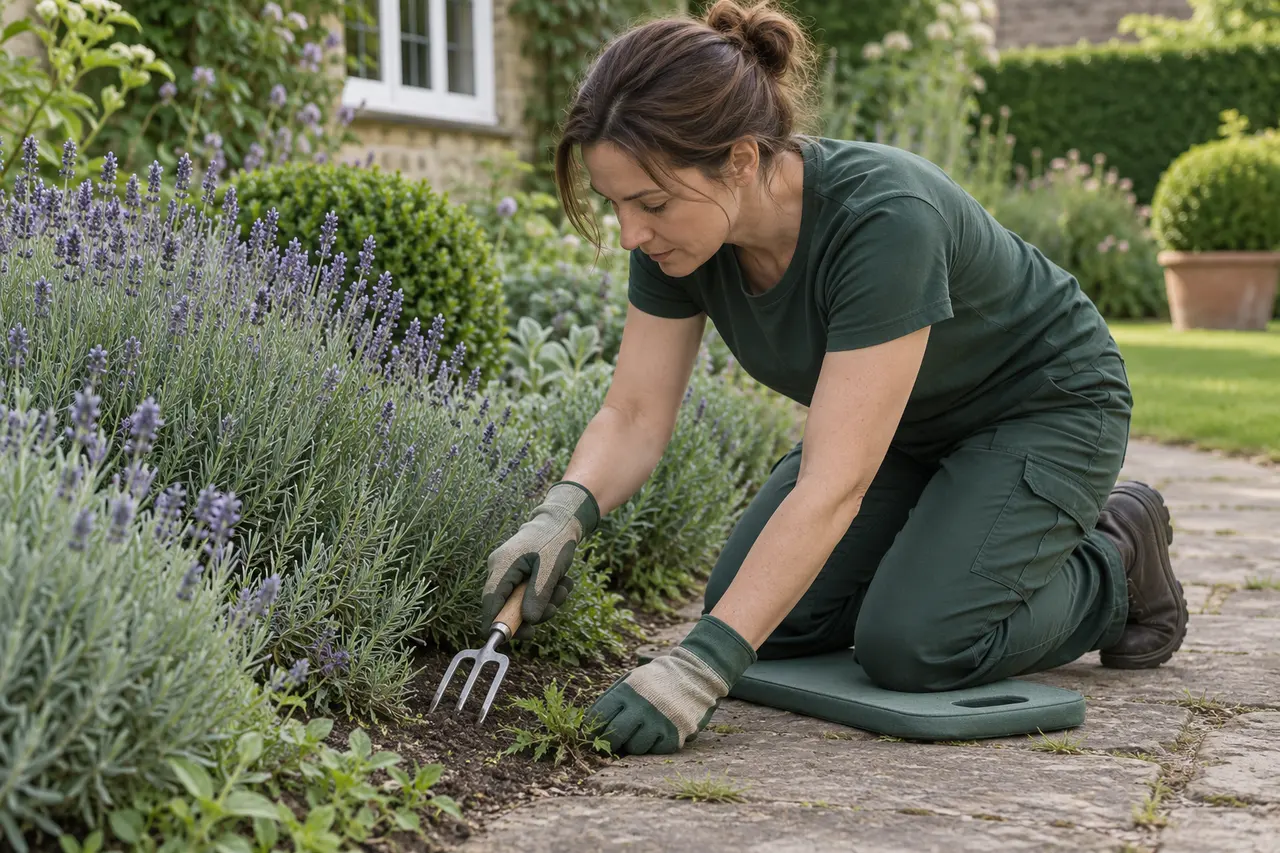
Unwanted growth loosened without levering on the shrub
We approach base weeds from a controlled position and loosen their roots with attention to the surrounding soil. The older lavender stays outside the tool’s levering support. Each removed piece is gathered from the work area while the wanted plant remains firm. This gives close weeding an appropriate method at the woody base and keeps its collection clear as the next patch is approached.
Narrow gaps between clumps can contain established roots even where foliage leaves the soil visible. Our hand work stays controlled in those spaces, with weeds collected before they cover the bed again. Where a replacement is commissioned, the receiving position is considered for light, actual room and future spread. A patch of exposed soil alone does not establish that another plant can be inserted there without crowding the existing border.
Our replacement spacing follows cultivar and purpose, distinguishing a low hedge from individual mounds. The arrangement includes future growth and access at the ends for trimming. The proposed positions therefore have a continuing role beyond the size of supplied pots. This leaves the border room to develop in the form selected for it, with maintenance access included in the planting decision.
Grass adjoining the flowering edge
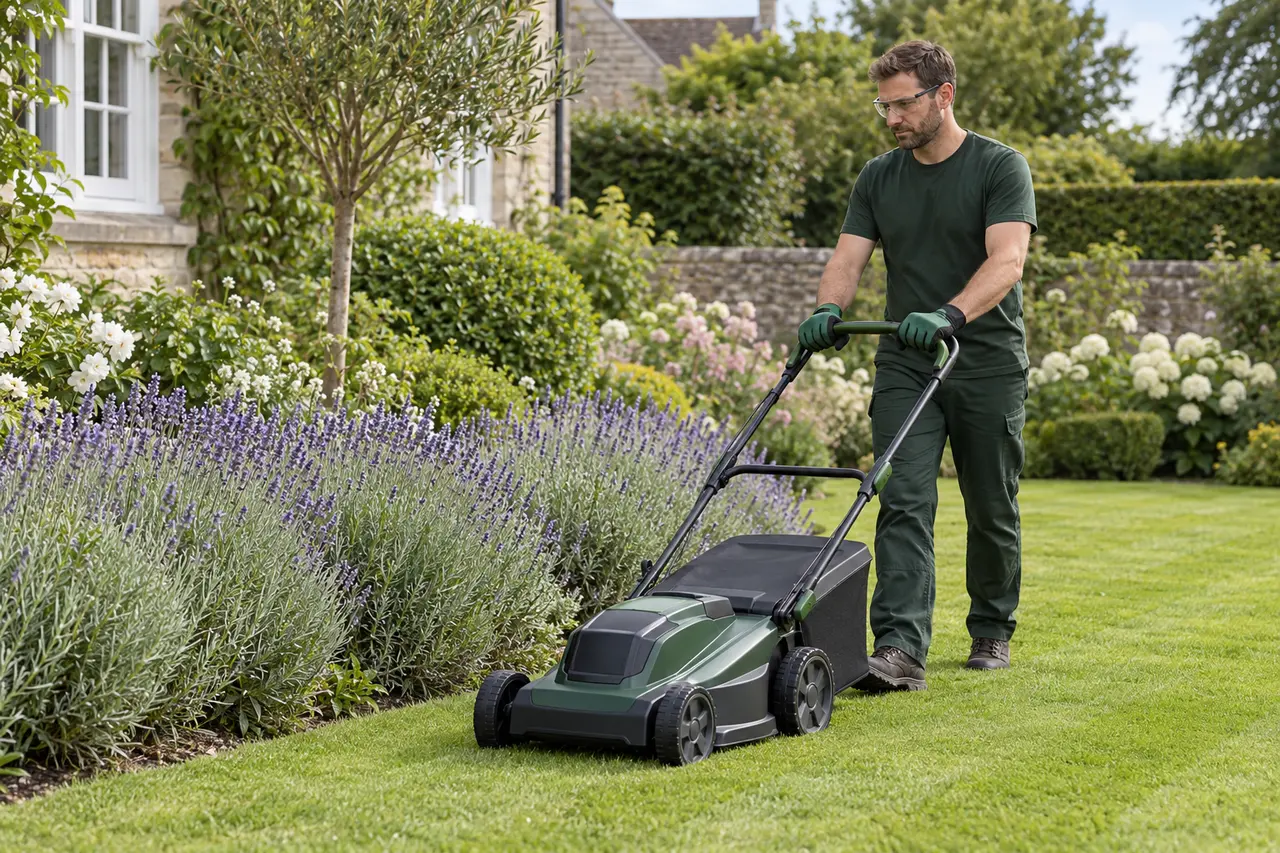
The lawn finished outside lavender growth
Before mowing, we identify the grass edge beneath overhanging flower stems. The machine remains on turf, with the planting clear of its deck. A narrow fringe can receive another finishing method as needed. This gives the lawn a defined route and the lavender its own growing space, preserving the junction through cutting and gathering of the loose material afterwards.
Our lawn care addresses the specified grass task, with any necessary recovery considered separately. A thin patch is not assumed resolved by repeated shorter mowing. After the cut, loose grass is gathered from the path and the route stays outside the low planting. The team does not drive over the bed to shorten a turn, keeping the completed lawn operation from introducing damage into the border beside it.
Hedges and flowering shrubs
Separate plant forms maintained during one visit
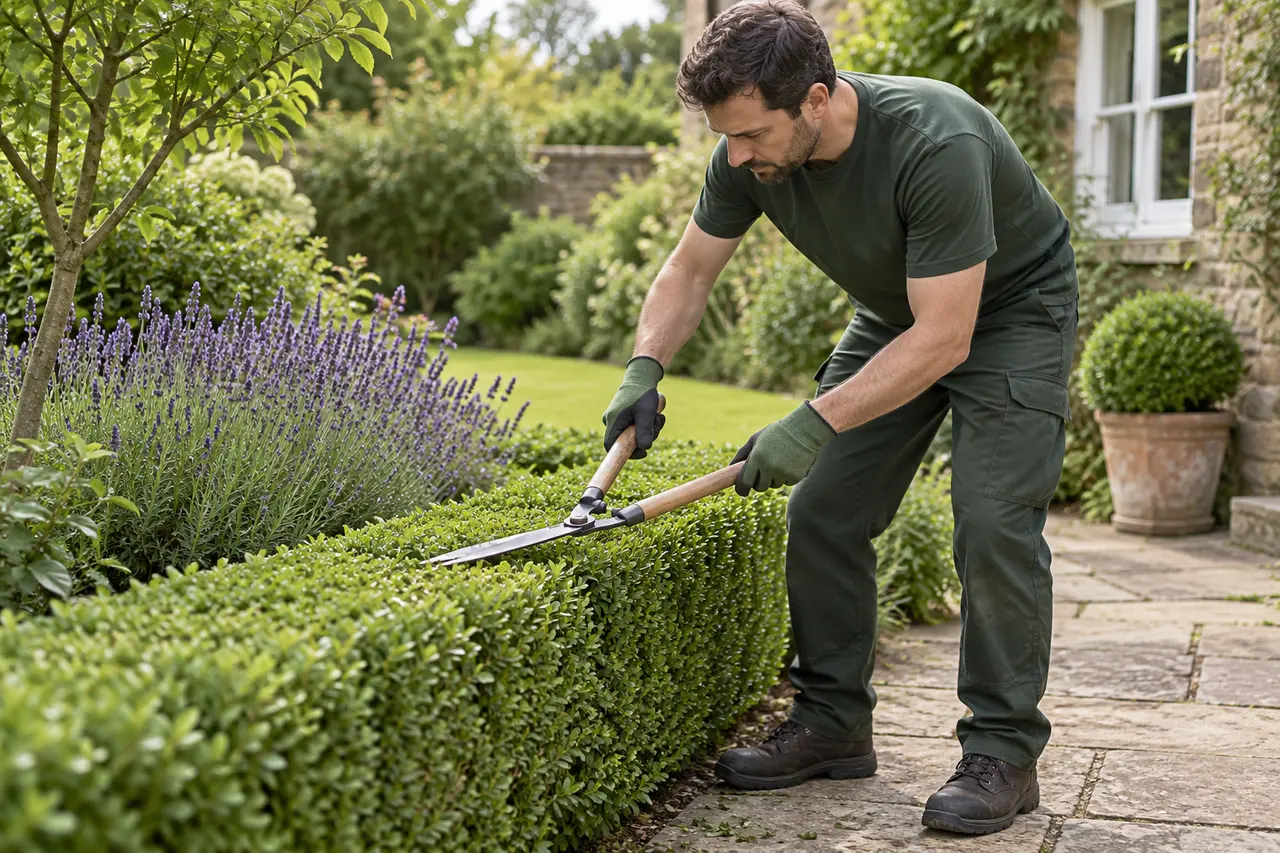
A clipped screen may require a continuous outline while lavender nearby remains a series of mounds. We identify the plant and the growth to remove at each working point. A hedge level is not automatically continued across the flowering shrubs because the shears are already in use. The visit can coordinate both tasks while leaving each plant with the cutting method appropriate to its form.
Reachable hedge growth is trimmed from steady ground with room for controlled tool movement. Nest checks precede the operation and affected work is postponed. Once cutting ends, the gardener gathers fragments from the plants below. Larger reductions and inaccessible portions are separately identified, giving the boundary a clear maintenance extent while low planting keeps its own appropriate care.
Collection through the low border
Useful flower stems separated before mixed clippings are gathered
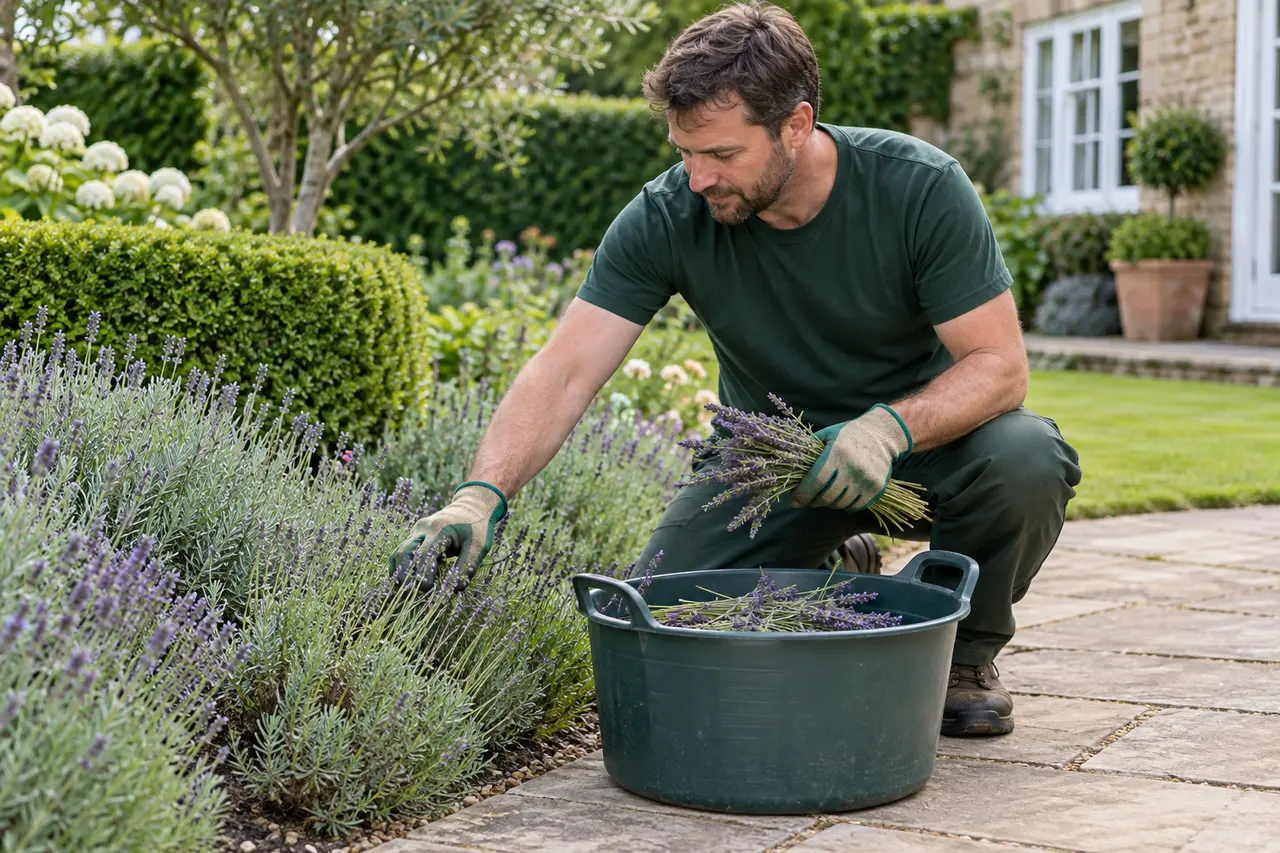
Where lavender flowers are wanted for household drying, intact stems are identified before the general trim. They occupy a distinct clean holding position while the rest of the bed work proceeds. The unwanted clippings follow their own collection route. This preserves the selected household material without mixing it into wet weeds or describing its retention as a commercial drying service.
Our garden clean-up can address accumulated unrelated growth and objects around the border. The garden-waste handling guide distinguishes green cuttings from containers, labels and broken supports. An older lavender is not removed as clearance material simply because it has woody stems. That plant decision remains separate from gathering loose debris, so the garden can be cleared around the low border without losing a continuing shrub through one final sweep.
Care following the flowering display
Seasonal litter gathered from the existing framework
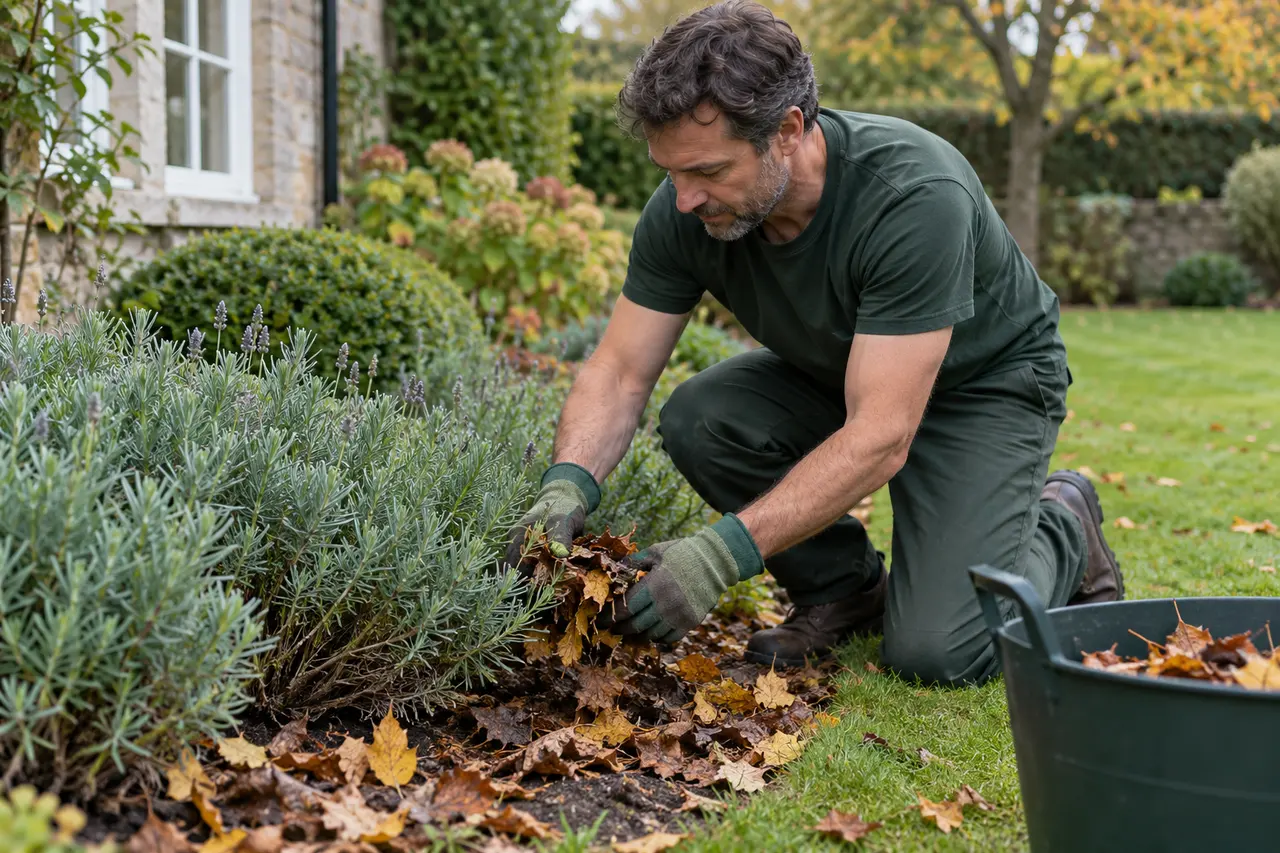
We lift accessible leaves gently from low planting, with attached branches kept in view. The seasonal collection task leaves the bed readable and its structure in place. A trapped leaf is eased away as a loose item, allowing its supporting stem to remain. This completes close collection while keeping the plant’s growing form available for later attention.
Towards the end of flowering, selected spent heads can stay attached as seed-bearing material. The RHS lavender guidance identifies their use by seed-eating birds. We distinguish those heads from the stems being cut and from broken material already on the ground before final collection. The resulting choice is carried through the work, so an intended later feature is not gathered simply from habit as the rest of the border is finished.
Further services for the low-border setting
Planting design matches the border to its position
Our garden-design proposal assesses lavender’s light and drainage needs against the actual border position and desired outline. Plant choice follows those conditions, including whether another species would better serve a shaded gap. The arrangement considers continued growth alongside colour and shape, giving installation a practical basis beyond the appearance of the pots when they first arrive.
Tree care distinguishes lichens from decay-associated growth
Within tree care, lichens are distinguished from observations such as decay-associated brackets. Lichens involve a fungus with an alga or cyanobacterium and do not feed parasitically on the tree carrying them. Their appearance is not used as a reason to strip bark or remove a live branch. A separate concern about the tree is identified on its own evidence, keeping a normal surface growth distinct from a diagnosis about the supporting wood.
Paving cleaning considers the origin of a rust mark
Our jet-washing assessment considers the metal object as well as the affected paving where rust-coloured material appears below furniture or fittings. Transfer from that source differs from ordinary surface dirt. The proposed treatment must suit the paving, while the condition of the metal remains a separate matter. Cleaning the visible mark does not alter the object producing it, so the two practical decisions are not presented as one outcome.
Gutter deposits removed with the channel finish preserved
For gutter cleaning, the channel’s factory or protective finish is identified before deposits are removed. The method follows manufacturer care requirements for that surface, with abrasive tools or products considered accordingly. Clearing accumulation and repainting or recoating remain different operations. The completed task therefore preserves the rainwater component while addressing its actual loose material.
Seasonal lighting information follows the display position
Where lights accompany a Christmas-tree display, their own indoor or outdoor-use instructions determine the location they can serve. An indoor-only set is not moved outdoors merely because the tree can stand there. Care information refers to the complete product, including supply components. Delivery or installation of the tree does not establish that existing household decorative electrical items are appropriate for a changed position.
Gardening time for the low planting and surrounding lawn
Our quotation includes close weeding at woody bases, selected flower-stem work and collection from low foliage alongside the lawn cut. The general rates below guide gardening time. These individual operations give the border its own work allowance, accounting for the access and handling involved as well as the open grass area nearby.
| Gardening time | Guide price |
|---|---|
| First hour | £83 |
| Each subsequent hour | £65 |
GBP guide prices. The complete quotation sets out the commissioned work, waste arrangements, VAT treatment and any applicable access or parking charges. Replacement plants or other separately specified changes remain identifiable within that full arrangement.
Lavender care through planting and seasonal changes
Should every lavender be fed like summer bedding?
Lavender’s care follows its preference for relatively low-nutrient conditions and its actual growing position. Routine feeding is not automatic. Where attention is proposed, the gardener considers the plant’s growth and requirements separately from a summer bedding display. This gives the shrub its own maintenance basis, with any product identified for a particular purpose within the bed.
Is a shaded gap behind the hedge a suitable lavender position?
Our planting consideration checks full sun and free-draining conditions at the actual position. A shaded gap can call for a different plant choice. Changes to a neighbouring hedge are considered separately from supplying the low border. This connects the selected planting to the available growing space while keeping its proposed operation clear within the existing garden.
Does newly planted lavender need water despite its drought tolerance?
New lavender receives appropriate establishment attention, especially through its first summer. The gardener checks the root ball and conditions, with watering suited to that stage. The drought tolerance of established growth is distinguished from the needs of a recent addition. This keeps care responsive to the plant while its roots move beyond the original pot into the receiving ground.
Do potted lavenders need a different winter position from bed plants?
Container-grown roots have less insulation than those in the ground. Our seasonal consideration therefore includes an appropriate sheltered position and the risk of excessive winter rain for the actual plant. Prolonged wet compost is not treated as harmless because established lavender tolerates summer drought. This distinguishes care for the potted growing space from a rule copied from the same shrub established in an open bed.
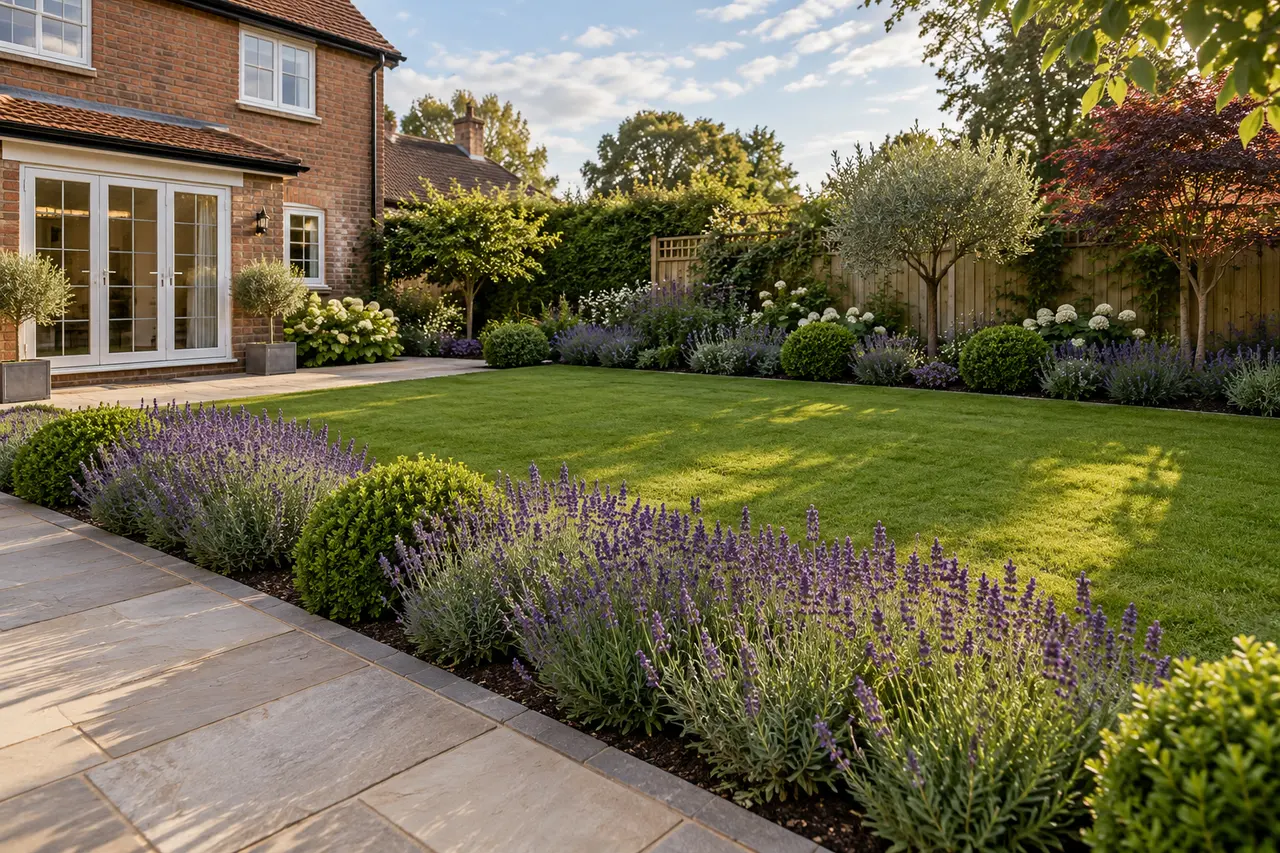
A maintained low border with its leafy structure intact
Our gardening services leave the lavender’s living outline recognisable, with selected flower material gathered and the surrounding grass and bed attended to. An older framework needing another decision remains distinct from the ordinary trim. This gives the next plant task a clear basis without presenting a severe cut into bare wood as the routine finish for every low flowering border.