

EXTERIOR CLEANING ACROSS LONDON & THE M25
Jet washing in London
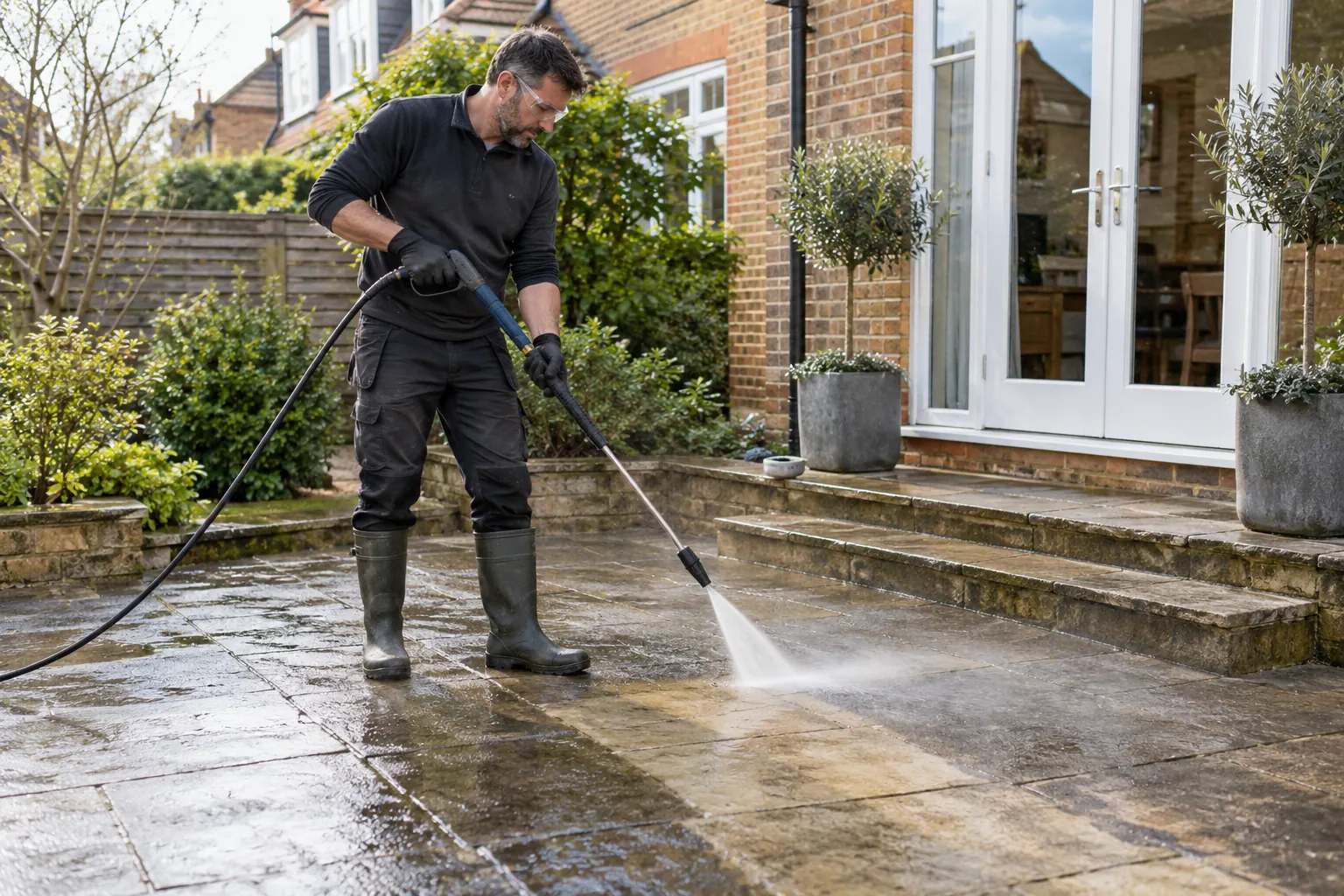
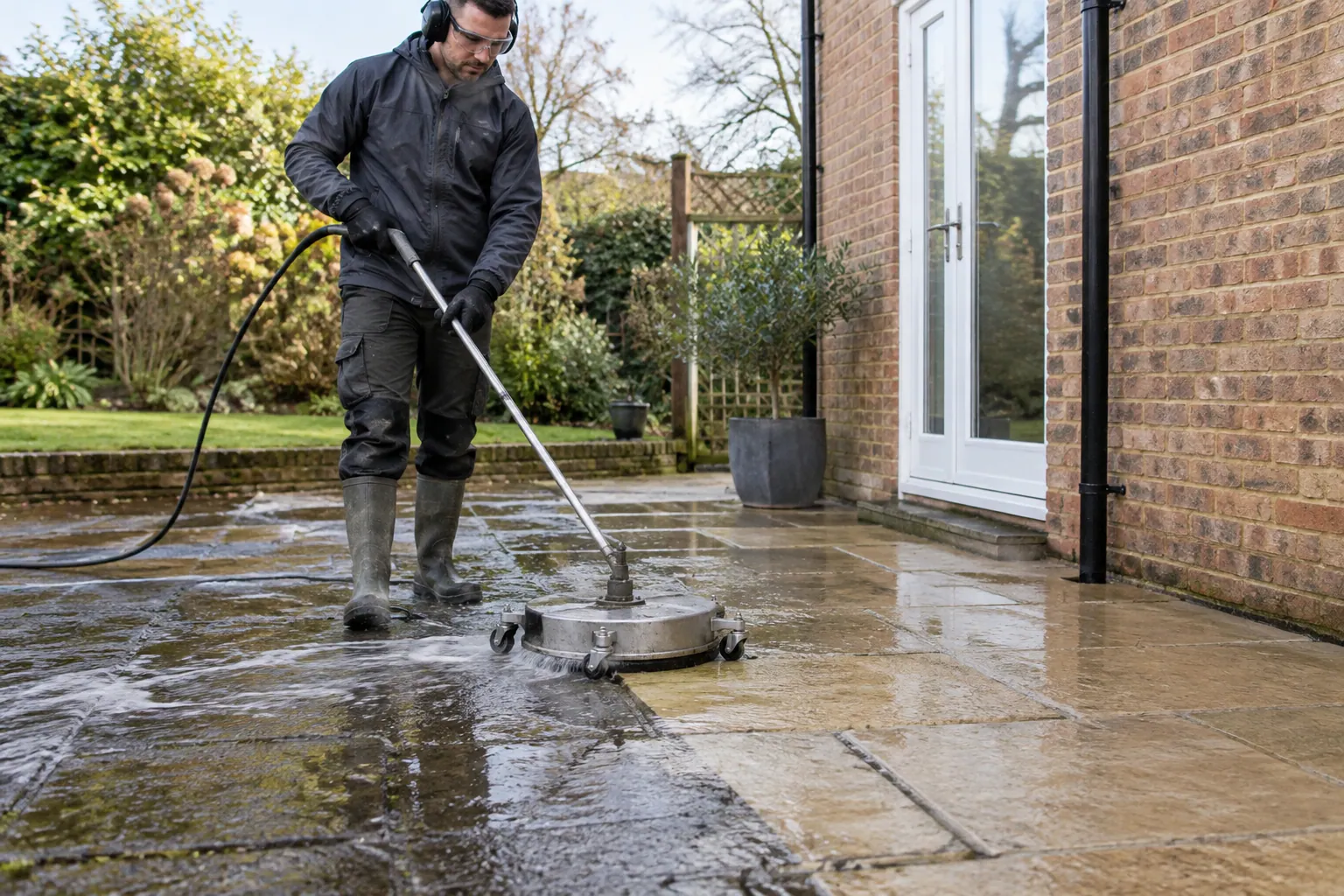
Our jet-washing service cleans suitable patios, paths and exterior surfaces according to their material and actual condition. The operation identifies the area to be treated, surrounding features, equipment route and appropriate water arrangement before cleaning begins. The selected method then follows the surface and its joints, with the resulting material and worked finish addressed within the defined request.
Surfaces considered by our cleaning service
Our range includes suitable paving, patios, driveways and other exterior areas. Natural stone, concrete, timber and manufactured or coated finishes can have different requirements. The proposed method follows the assessed material, current condition and intended result. This gives the customer a surface-specific operation with suitable access and handling for the actual area involved.
Our area rate and minimum booking charge
The guide rate is £4 per square metre, with an £83 minimum booking charge. Our complete proposal identifies the included surface, suitable method and practical access alongside that rate. This relates the measured area and minimum to the actual cleaning operation being arranged for the property.
Material and condition before the equipment starts
Preparation identifies the surface beneath the accumulated dirt and its previous finish. Natural stone, concrete slabs and blocks can present a similar dirty appearance while requiring different cleaning approaches. Known paint, sealer or other treatments inform that selection as well. Our assessment relates the proposed contact to the particular material and its care requirements, keeping the intended result clear before the wider section is treated.
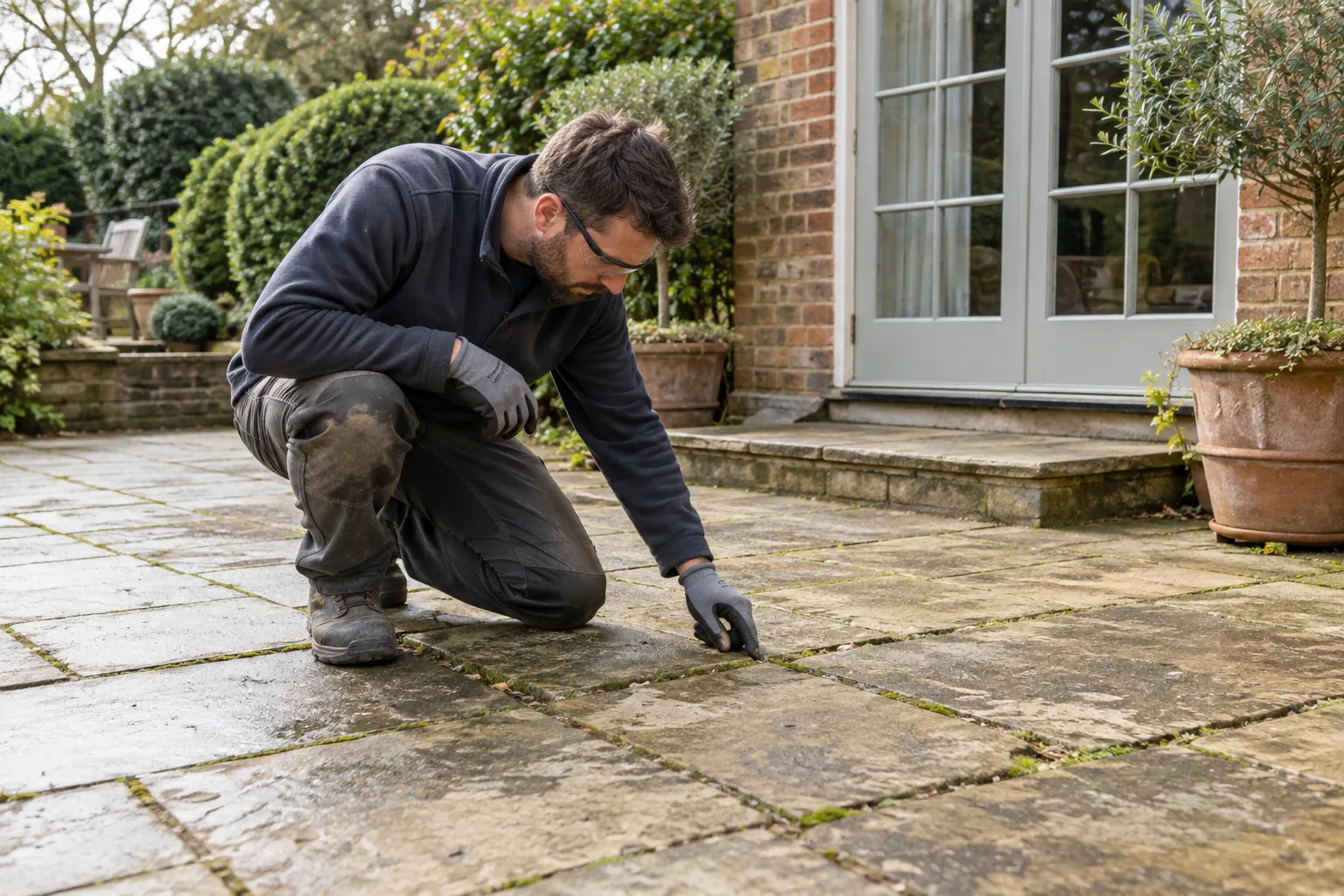
Loose slabs, cracked edges and worn joints remain identifiable within the proposal. Removing soil can reveal old damage more clearly, so those existing conditions affect the suitable method and extent. Sections needing repair or another approach are distinguished from the area available for washing. This keeps the selected operation connected to the surface actually present and gives the customer a clear view of any excluded or separately proposed work.
The specified area and practical working route
Our quotation identifies the actual sections included, such as the main patio, a separate path or steps. An overall view and suitable approximate measurements show their connections and extent. This distinguishes the intended washing from neighbouring surfaces outside the request. The team can then sequence the work through a defined area, with its corners and separate sections clear before equipment is positioned for cleaning.
The hose and equipment route is considered with gates, stairs and shared passages. An approach through the property also affects handling and the space available to work. Our preparation establishes that route alongside the surface, allowing the operation to progress through its accessible sections. Items and structures along the approach remain separately identified, keeping the washing scope related to the actual surfaces included in the job.
Preparation around movable and fixed features
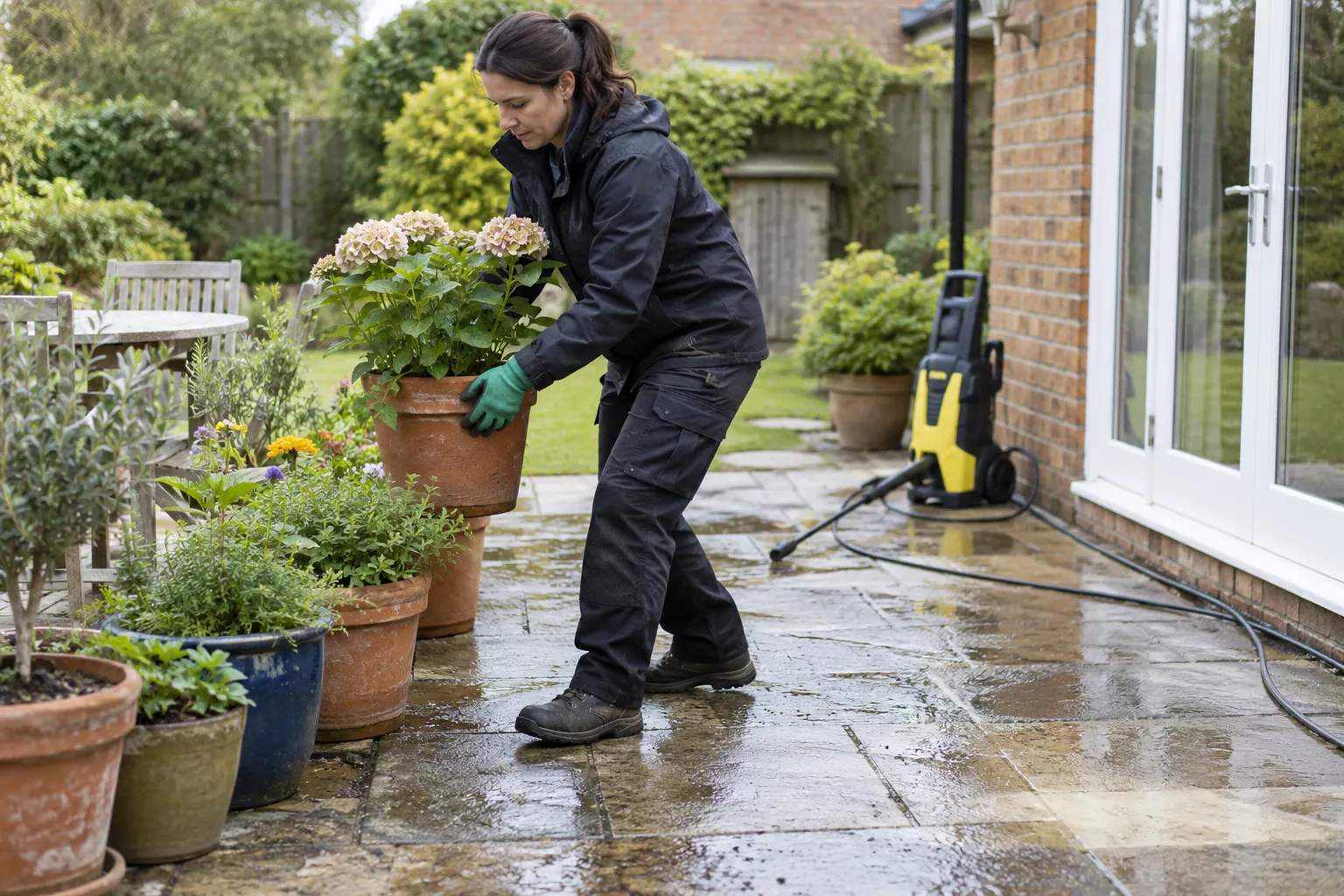
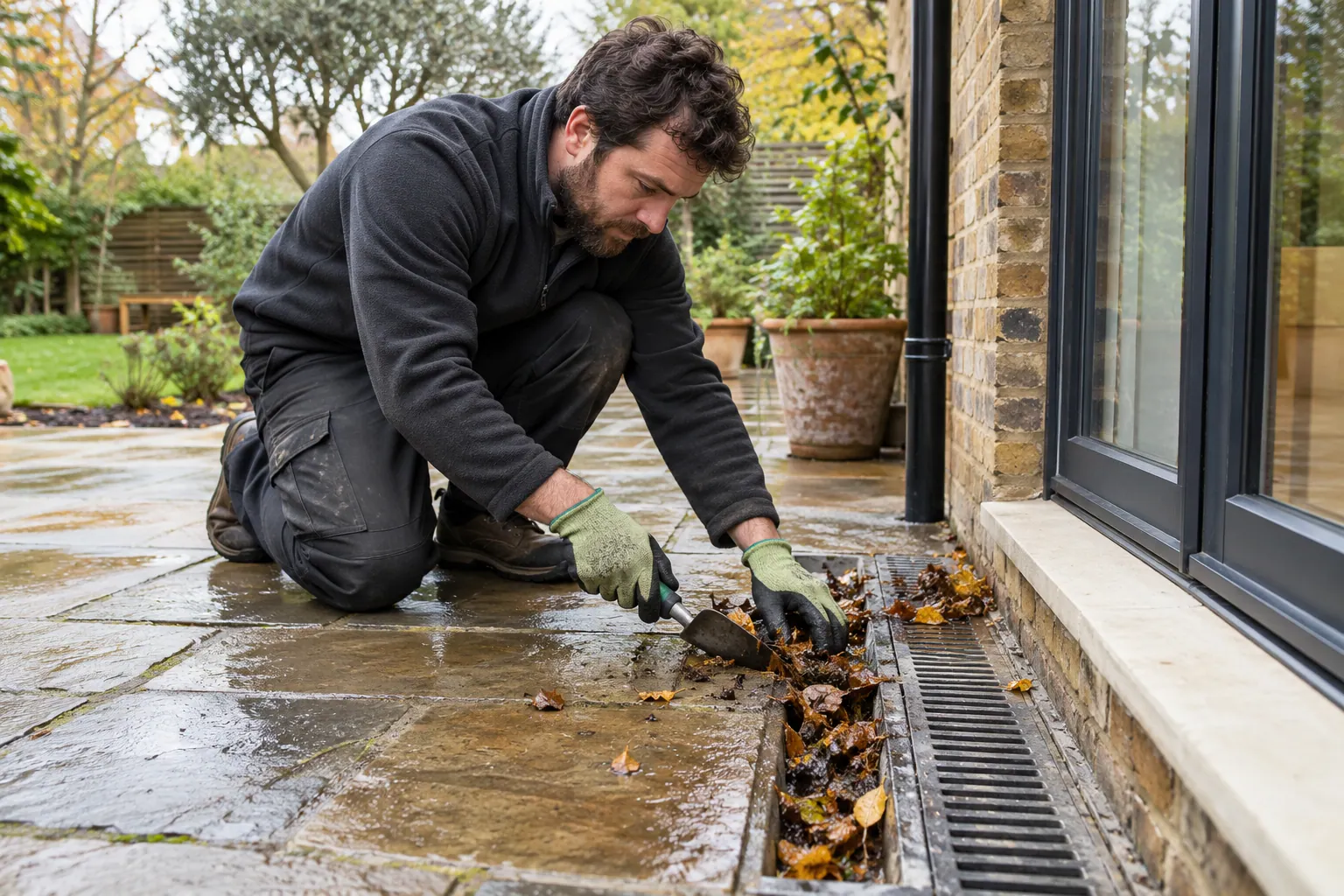
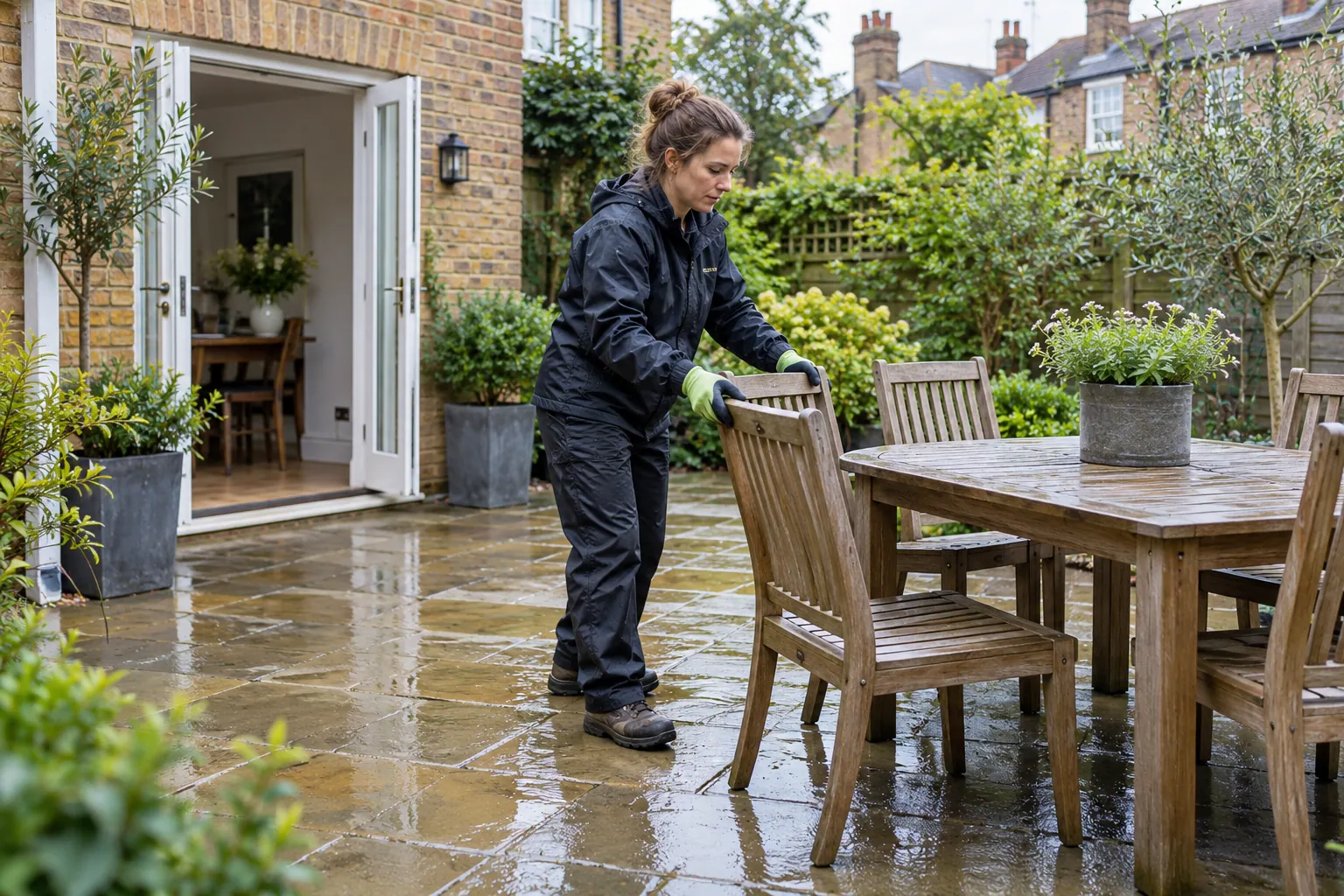
Suitable loose leaves and debris are collected from the working area before washing. Movable furniture and light objects receive an appropriate position clear of that operation. Heavy or fixed planters can define an accessible edge unless another handling arrangement is included. The proposal accounts for those actual features, distinguishing the surface available for cleaning from any separate movement required to expose further ground.
Nearby openings, electrical items, ornaments and delicate plants are identified before water and tools approach them. The method and working direction reflect those features and the intended cleaning boundary. Children and pets remain outside the active area while the work proceeds. This gives the operation a defined place at the property, with retained items and surroundings considered alongside the surface receiving attention.
A suitable supply and destination for the water
The equipment's water requirements inform the supply preparation. Its position, connection and hose route are established for the actual proposed method before work starts. The arrangement accounts for the property's access and working sections so the supply can support the intended operation. Any particular equipment requirement remains part of that preparation, connecting the practical setup to the cleaning task identified in the quotation.
The operation also considers where used water and lifted material can travel appropriately. Existing pooling and drainage concerns matter, especially beside doors or within an enclosed patio. Accessible outlets and the surface contents inform the approach. Underground drainage assessment and repairs have their own purpose beyond washing, keeping the intended water handling clear while any different concern receives its appropriate separate attention.
The cleaning method for the actual finish
Our approach follows the material, degree of soiling and joint condition. Pressure and working position are considered together in selecting suitable contact. Where an appropriate test area helps establish the likely response, it informs the wider operation. The method remains related to the surface and desired cleaning result throughout the job, keeping any limitation visible before further sections receive the selected treatment.
An open section and a confined corner or step can require different equipment handling. The tools and any included products follow the assessed cleaning method for those positions. Their use remains connected to the material and current conditions. A proposed sealer has separate suitability and preparation requirements, with that further treatment clearly distinguished from the ordinary washing of the defined area.
Progress across the included sections
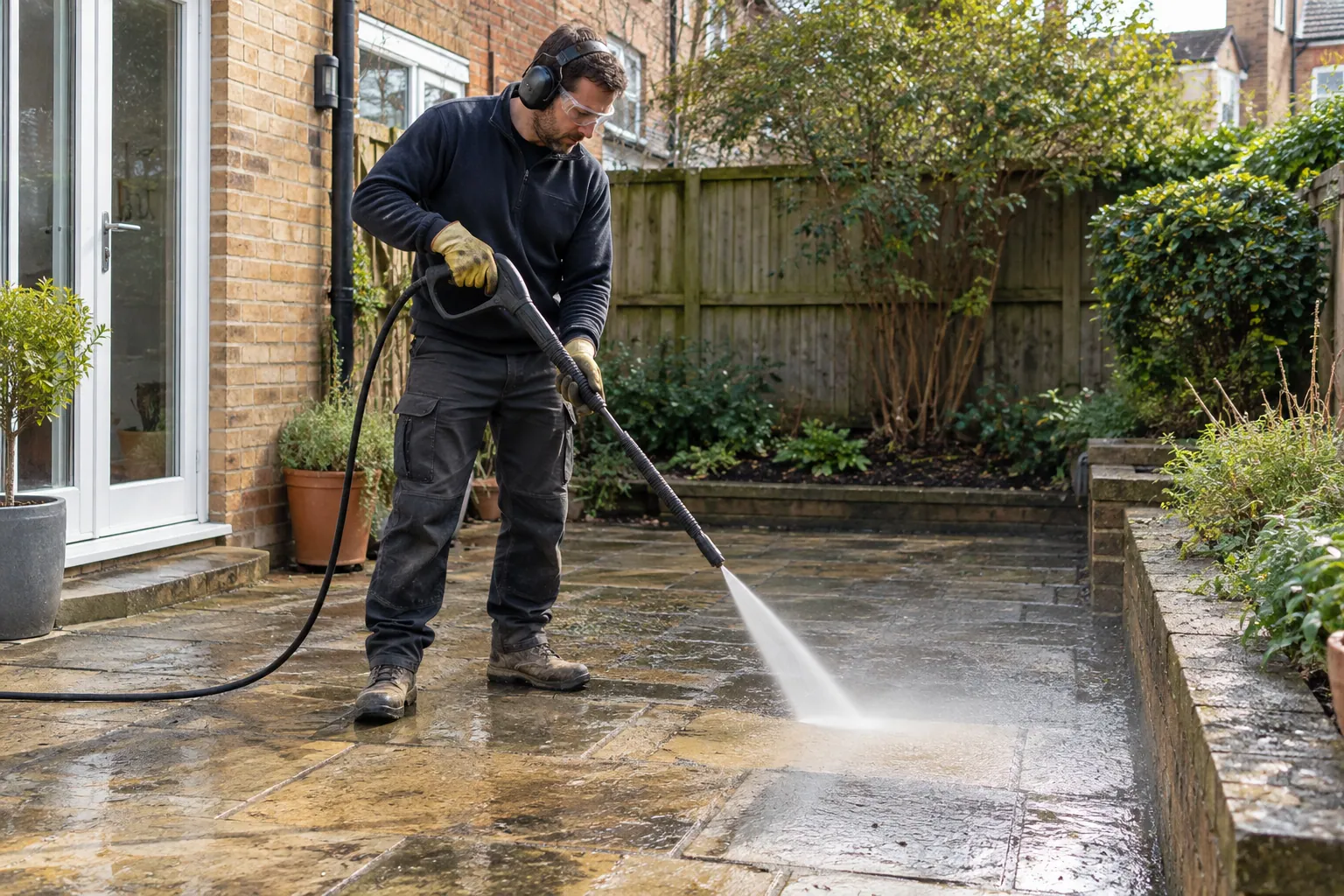
The team works through the specified area in a controlled sequence, accounting for the water route and neighbouring features. Reachable edges and corners receive attention according to the scope and their condition. The method keeps sensitive finishes, openings and joints clear of unsuitable contact. This connects the completed coverage to the remaining work and leaves the customer with a coherent cleaning operation across the included surface.
Individual marks can respond differently within that area. Ordinary surface dirt may lift while an ingrained stain, earlier repair or worn section remains visible. The assessment relates those features to the intended finish before the result is judged. The customer receives a cleaned existing surface, with natural colour differences and material wear distinguished from the soiling that the operation is suited to remove.
Cleaning and separately proposed repairs compared
| Surface condition | Cleaning purpose | Separate operation |
|---|---|---|
| Sound slabs with accumulated dirt | Remove suitable surface soiling | Replacement of damaged slabs |
| Loose or missing joint material | Work within the assessed limits | Repointing or rebuilding joints |
| Dirty block paving | Clean the suitable booked area | Resanding or sealing if required |
| Worn timber or coating | Establish whether cleaning is appropriate | Repair or a new finish |
| Persistent staining | Assess a suitable cleaning approach | No automatic guarantee of removal |
The existing joints and planted margins
The condition of joint material forms part of preparation, including loose or deteriorating sections that can become more apparent as dirt is removed. Our cleaning result follows that existing construction and its suitable treatment. Repointing or replacing joints has a different purpose and remains separately specified where proposed. This keeps the completed wash clear alongside any subsequent work required to the paving itself.
Where dense growth conceals a paving margin, our garden clean-up can recover access before suitable washing proceeds on the exposed surface. That vegetation operation has its own cutting and material handling, followed by the cleaning method for the actual paving. The sequence gives both stages a defined purpose and price, leaving retained planting and the hard surface clearly distinguished through the work.
Collection and the immediate worked finish
The final stage follows the included debris handling and tidy around the cleaned area. Lifted material is dealt with according to that arrangement so it does not create a fresh obstruction elsewhere. Particular requirements beside the surface remain identified in the job. Unrelated rubbish and vegetation outside the washing operation retain their own collection scope, keeping the finished result connected to the actual request.
Ageing, repaired portions and some stains can remain visible after appropriate cleaning. The team relates the finished appearance to the material assessed and the work commissioned, including any area intentionally excluded. This gives the customer a clear account of the suitable operation completed and the underlying condition remaining, with further repairs or a change of surface identifiable as separate possible work.
Return to use after the cleaning
The surface remains wet after the operation, with weather and material affecting its drying. Appropriate return of furniture follows the work carried out and any separately applied treatment. The immediate conditions also inform practical use of the area. Our finish is therefore considered with that actual setting, without an unconditional claim that every cleaned material provides the same grip or drying time.
Shade, moisture, use and leaf fall affect how dirt or growth can return. Our garden maintenance can attend to surrounding vegetation and loose deposits as part of defined ongoing care. Water escaping at the roof edge can be considered through gutter cleaning as its own issue. This connects further useful attention to the actual cause and location while keeping the completed paving operation clear.
The complete quotation beyond the measured area
Our estimate considers the measured surface alongside corners, steps, separate sections and restrictions on the working route. Fixed features affect accessible coverage and the handling needed around them. The complete proposal identifies those conditions with the area rate and minimum charge. This gives the customer a price related to the actual operation available at the property and the appropriate finish intended for that surface.
Extra treatments and repairs are identified separately from the cleaning work. The table below shows the area basis and minimum, with sealing or joint reconstruction retaining their own requirements where requested. Overall views, approximate measurements and known defects provide a useful starting point for assessment. Our preparation selects the suitable method from the actual material and conditions, keeping that technical choice within the proposed service.
MEASURED SURFACES AND A DEFINED CLEANING METHOD
Our jet-washing guide rate and minimum charge
The area rate is applied to the surfaces identified for the proposed wash. Their material, condition and access inform the complete quotation alongside the minimum booking charge and intended appointment arrangement.
| Charge | Price | Unit |
|---|---|---|
| Surface cleaning | £4 | Per square metre |
| Minimum charge | £83 | Per booking |
Scroll the table sideways to see every column.
The complete quotation identifies the total and applicable VAT treatment before booking.
Questions about our exterior cleaning
How does your assessment approach an elevated balcony?
The proposal considers the drainage, relevant building rules and effects on properties below. Those relationships inform whether an appropriate method is available for the actual space. The operation is assessed for its elevated position, keeping the water route and intended surface clear before cleaning proceeds at the property.
How are painted markings treated during assessment?
An identified finish intended to remain is considered separately from dirt. Its condition and compatibility affect the suitable method, with the proposed extent of cleaning reflecting that requirement. This keeps the customer’s retained marking clear within the preparation and relates the actual washing to the material and finish selected to stay.
How does your clean approach a gravel boundary?
The loose aggregate remains distinct from adjoining solid paving. Our method accounts for the join and nearby planting when establishing the accessible cleaning area. This gives the hard surface a defined treatment at its existing edge, with any separate gravel handling or boundary change remaining identifiable outside that washing operation.