

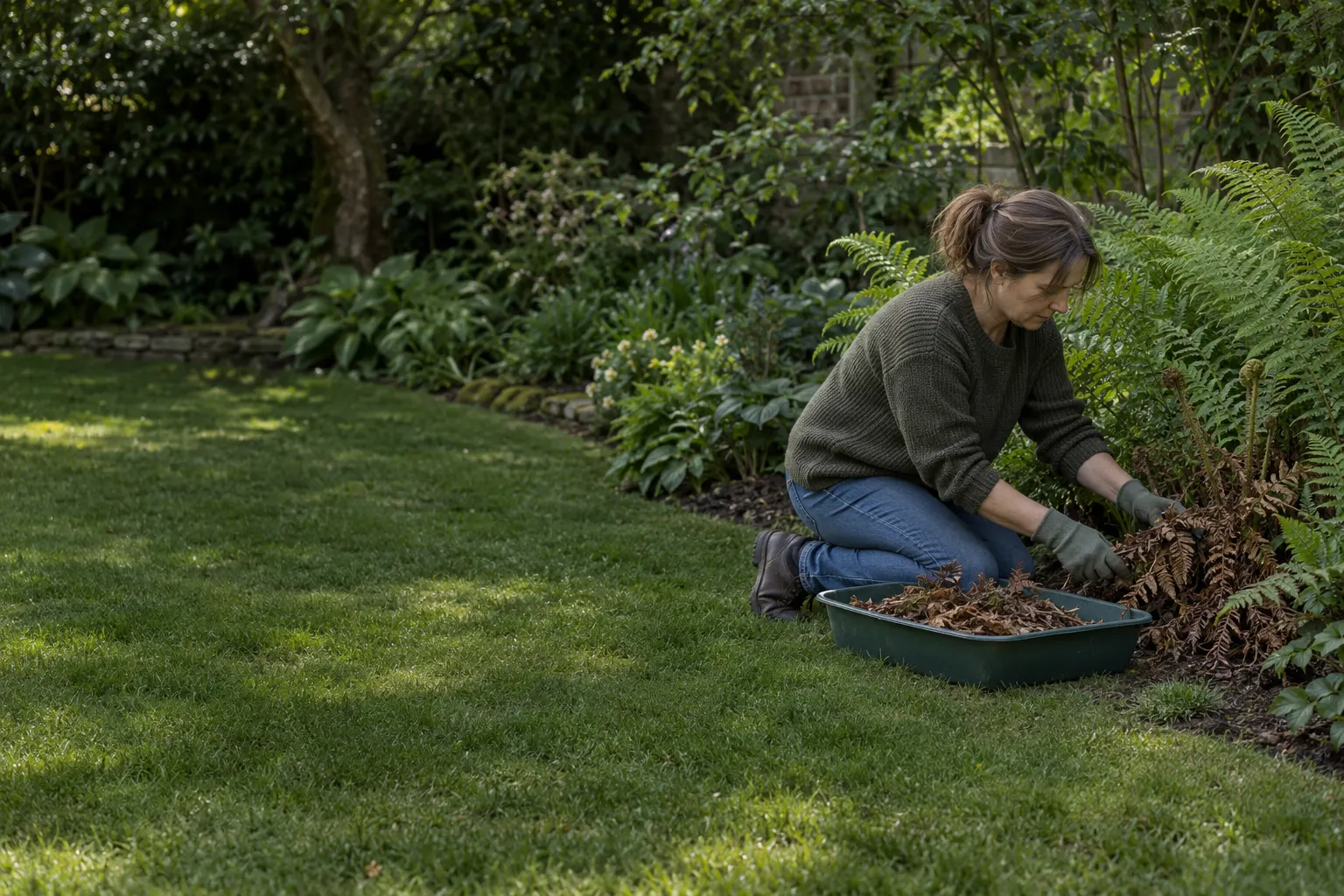
Highams Park · Fern care from the crown to the lawn margin
Gardeners Highams Park
Our gardeners clear appropriate old fern material, weed around the clump and leave emerging fronds room to unfurl. Close hand work protects the growing centre while lawn mowing, hedge trimming and collection keep the surrounding garden maintained. Each operation follows the fern’s foliage habit and the growth present on the day.
- How do you work around emerging fern fronds? We locate curled new growth before separating old stems and loose litter, keeping collection and tools outside the growing centre.
- What does your fern tidy leave in place? Useful attached fronds and natural leaf structures remain, with the crown visible and accessible for the plant’s next stage of growth.
Close fern maintenance with the growing centre visible
How do your gardeners protect new growth during collection?
We work from an accessible edge, locating the tightly coiled new fronds before gathering across the clump. Loose litter is separated from attached growth, with hands and tools kept outside the developing crown. Old-frond cuts are made with a view of what remains. This gives the plant’s new growth controlled space during weeding and collection instead of drawing a rake through the whole fern.
How does maintenance differ between evergreen and deciduous ferns?
Our gardeners identify the plant’s foliage habit before choosing the old-frond treatment. Deciduous ferns lose their fronds seasonally, while evergreen plants can carry useful foliage through winter. The current growth informs what is removed and what stays. One brown piece is not treated as a general instruction for a ground-level cut across an otherwise leafy clump, keeping its useful foliage within the maintenance decision.
New growth within the existing clump
The growing centre identified before old material is moved
We look through the accessible part of the fern and locate its central growing area before collection begins. Curled growth can sit low among last season’s fronds, where a broad sweep is difficult to control. The gardener chooses a working position from which old and new material can be distinguished. This makes the first removal selective, with the plant understood beyond whichever piece happens to lie nearest the hand.
Where old fronds are ready to come away, their stems are identified separately from the emerging growth. An appropriate hand tool removes the chosen piece while the gardener controls its movement. Partly attached material is not dragged through the middle with loose leaves. The fern can keep an irregular outline during this work, allowing useful new fronds to develop without an artificial demand for an evenly cleared surface.
We include appropriate old-frond care within the garden-maintenance work, recording the plant’s habit and current growth at the clump. Removed pieces are gathered alongside the operation in manageable portions. The crown stays visible as work progresses, giving subsequent hand work a clear starting point and preventing the collection pile from covering the centre that has just been identified.
- We locate curled new fronds before gathering across the clump.
- Old stems are separated from developing growth before cutting.
- Accessible weeds are worked from the outside soil edge.
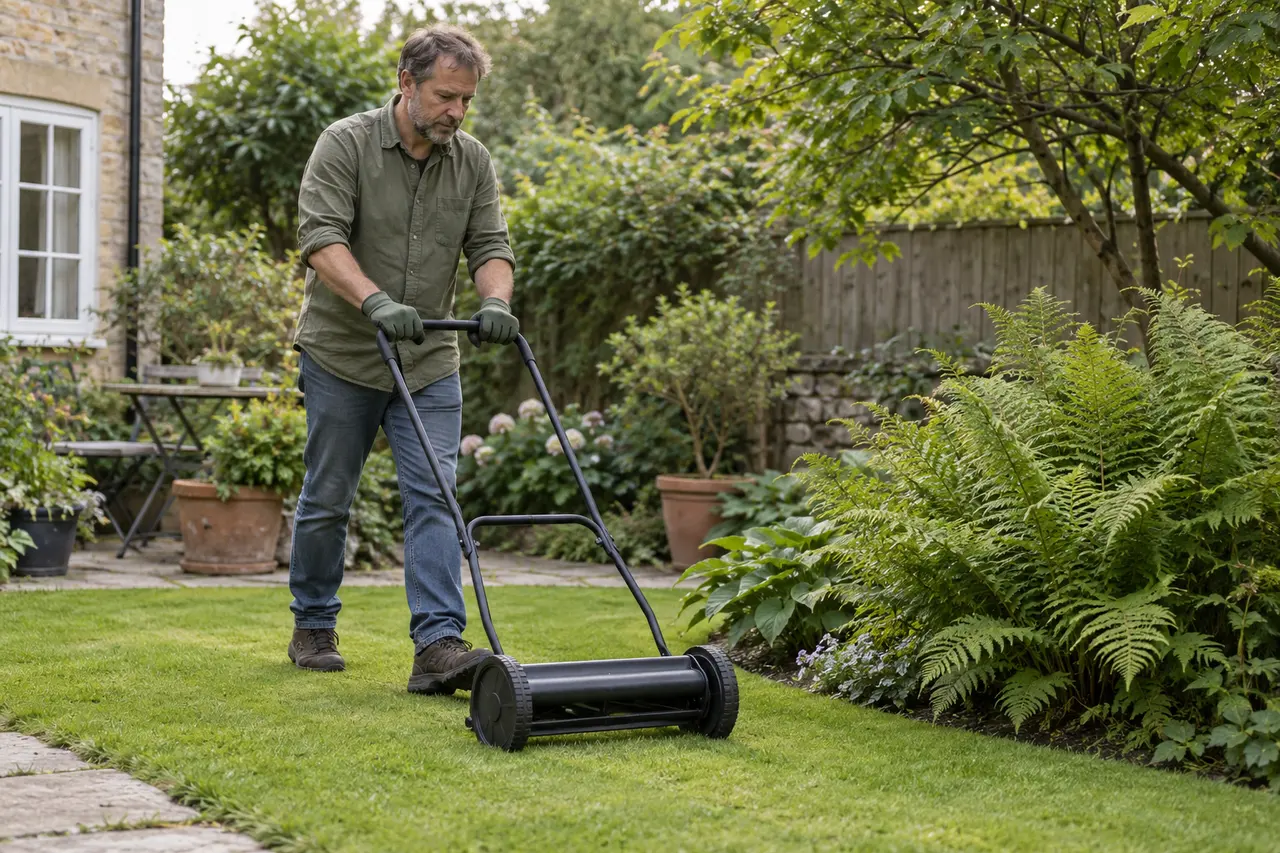
- Arching fronds remain outside the mower’s wheel route.
- Caught pieces are identified before removal from divided foliage.
Weeding around the fern
Unwanted roots loosened from an accessible outer edge
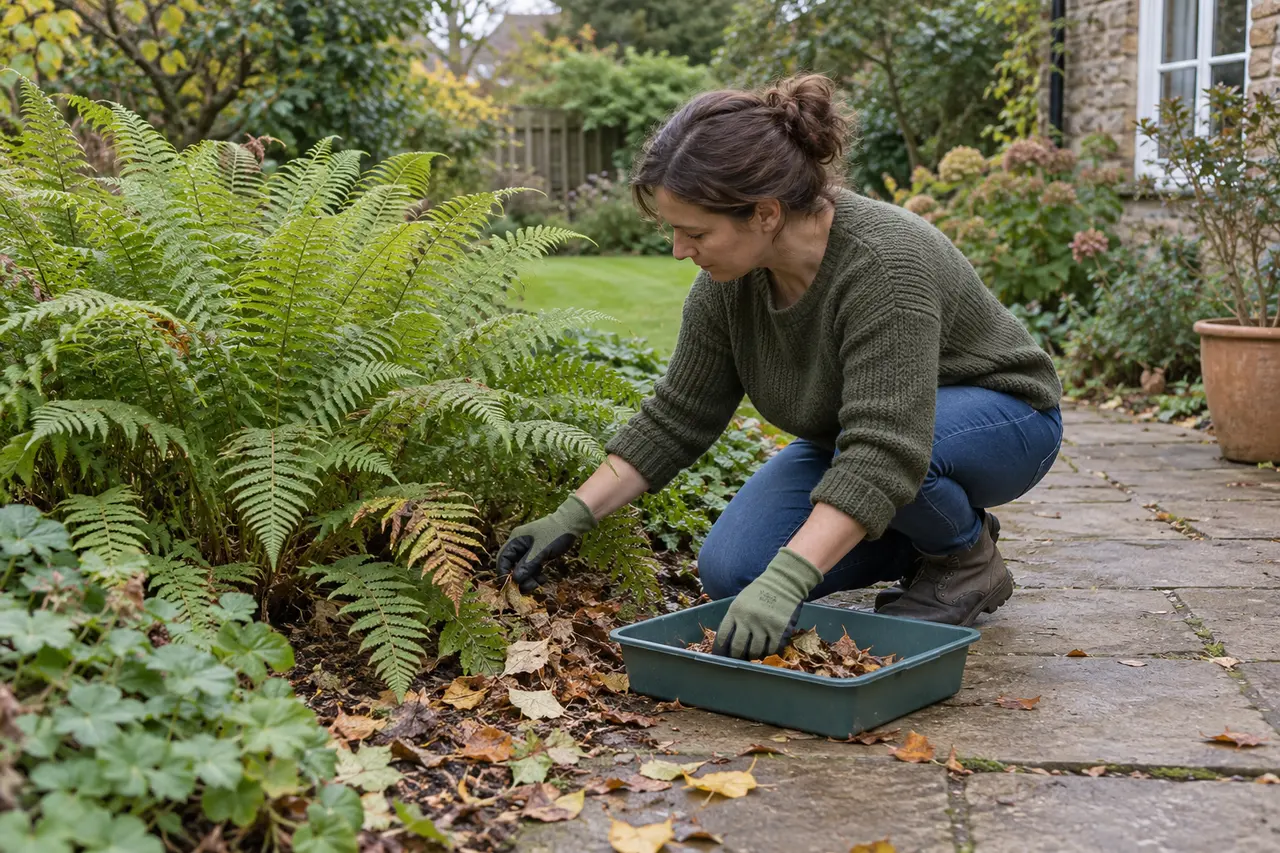
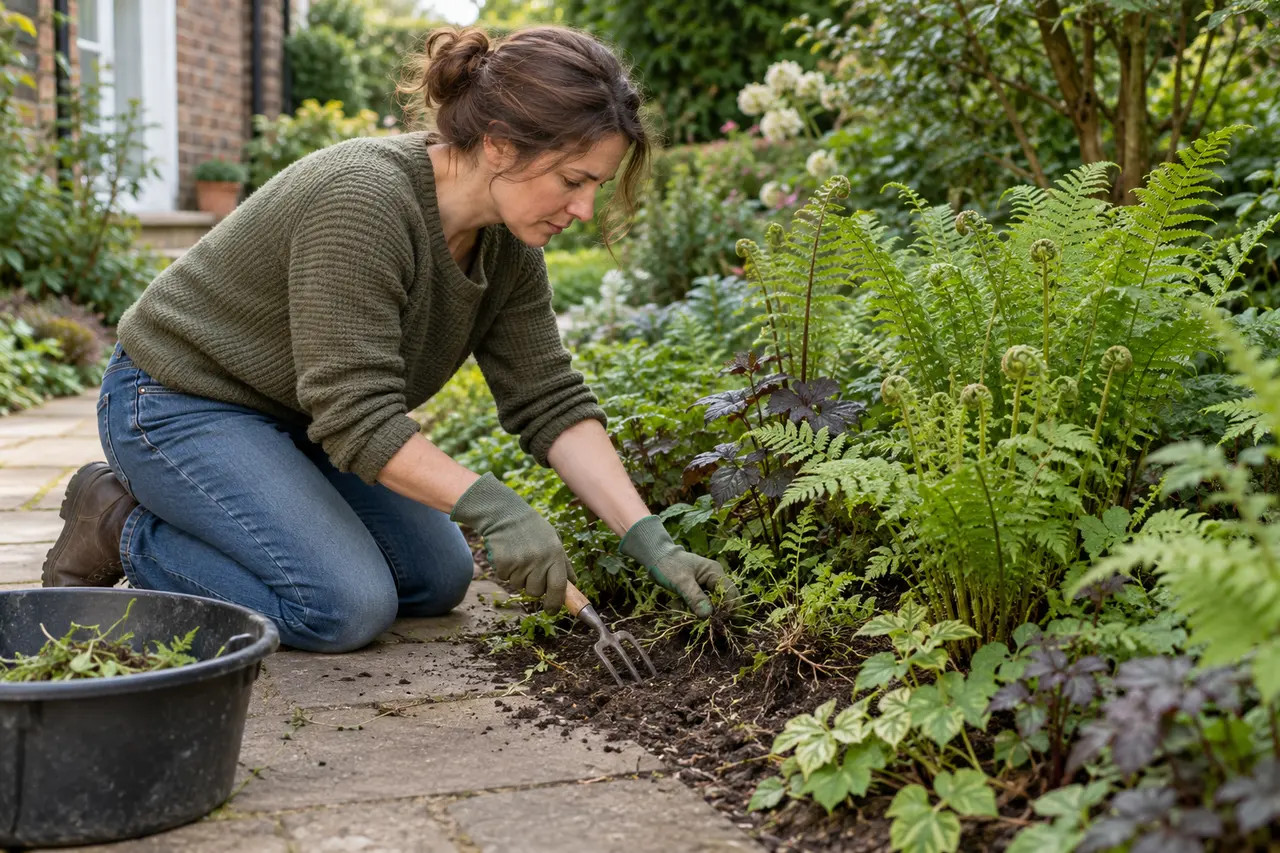
The gardener approaches visible weeds from the outer soil edge, keeping stiff tools away from rolled fronds at the centre. Only the outer foliage needed to see the weed base is moved gently. Unwanted roots are loosened while the fern stays seated. This close operation opens a controlled view of the soil without turning the crown into a resting place for tools or pulling across its new growth.
Removed material goes into a nearby container instead of back among the fronds, where even a small pile can hide the next weed and growing centre. Where a rooted plant is too entangled for straightforward separation, we identify that part for a considered next operation. The method follows the connection between the plants; it does not increase the pulling force simply because the unwanted leaves are easy to see.
Planting or replenishment around a fern follows its existing crown level. Hardy ferns generally need the crown just above the soil, with material placed around the receiving positions and clear of the centre. Our finish preserves that level as the surrounding bed is attended to, leaving the plant recognisable and the new material appropriately positioned for its growing area.
Loose material from bed and route
Detached pieces eased clear of attached foliage
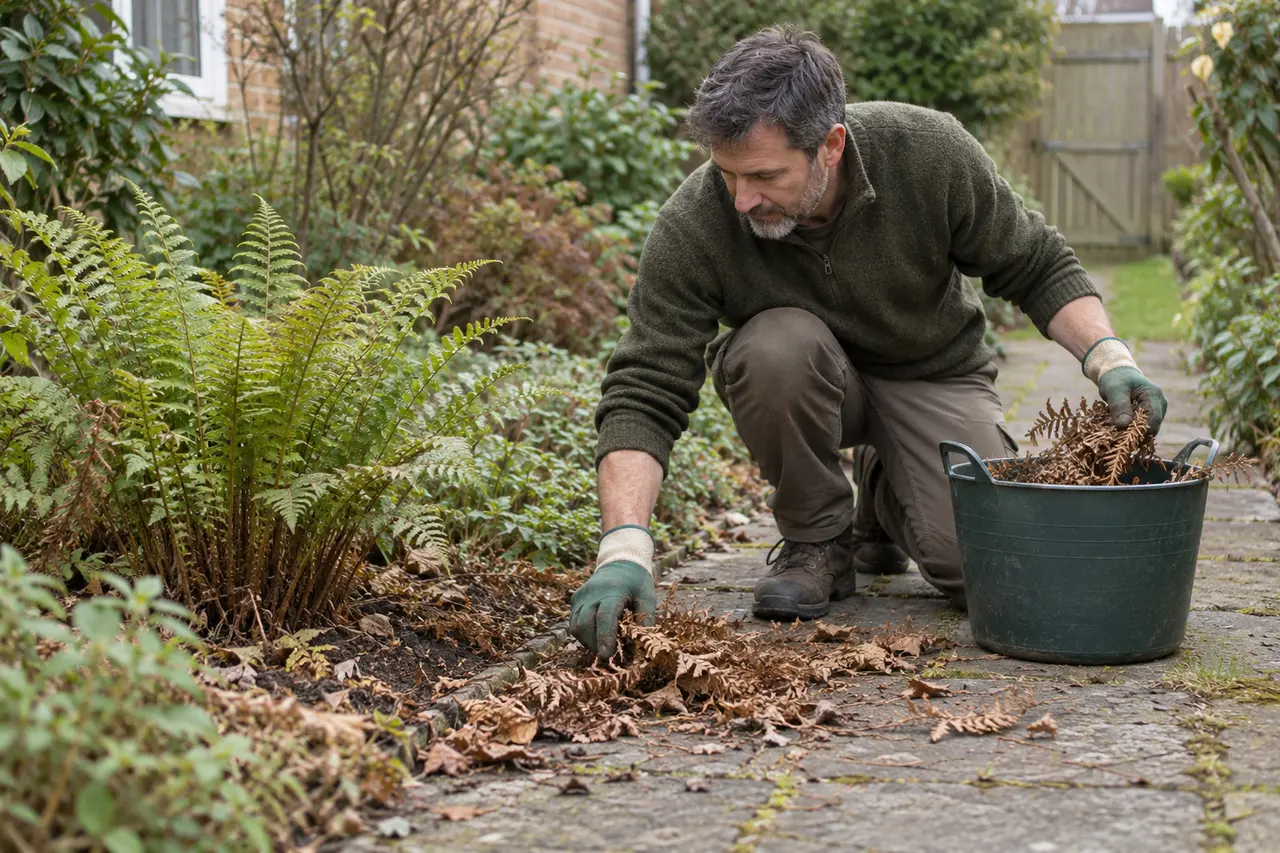
Our garden clean-up gathers loose material from the path and accessible border edge. Old fern pieces can catch on the divisions of live fronds, so the gardener eases a caught length free in short movements, supporting useful growth where needed. The tangled layer is not lifted as one bundle. This separates the outgoing material from the plant intended to remain and makes collection a controlled part of its maintenance.
The garden-waste arrangements follows the actual outgoing load, with material being kept placed separately. During seasonal leaf collection, the route is cleared without pushing fresh leaves into the fern. Collection leaves the planting visible and its next reachable work area available. This finishes the surface around the clump while maintaining the distinction between a loose leaf to gather and a living frond that happens to cross the route.
The grass beside the fern
Mowing follows the space outside developing fronds
Before mowing, we check the width available beside arching fronds and the firm turf for wheels and turns. Developing foliage can change that space through the season. Confined margins receive an appropriate separate finish, with the plant’s form left within the bed. The cut follows the actual lawn boundary, giving grass and fern their own controlled working areas.
We remove visible objects and loose debris before selecting the grass cut. The equipment route stays clear of the fern, with accessible clippings gathered from worked surfaces afterwards. The resulting lawn finish leaves the plant-care area visible and the fronds free of a fresh mowing layer. This completes both the broad pass and the close collection beside its margin.
Hedge work above fern planting
Clipping collection organised for the lower foliage
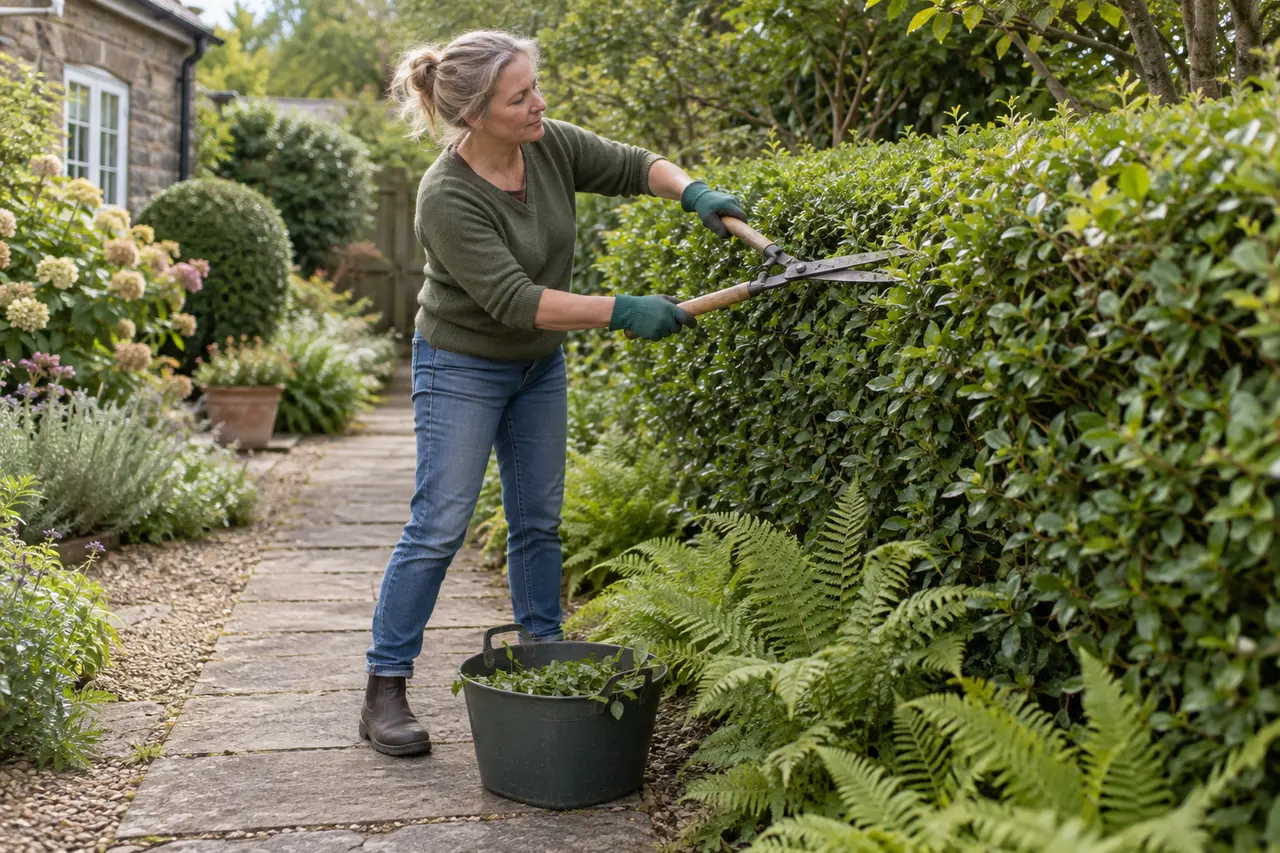
Fine hedge pieces can lodge in divided fronds even when they would be simple to collect from paving. We consider their fall before beginning an accessible trim. Tubs or collection coverings stay outside fern crowns, with firm room for the cutting tool. Working through a short hedge portion and gathering its material can keep the lower layer clearer than allowing fragments to accumulate across the whole bed first.
The hedge receives its own appropriate outline, with affected shrubs and hedges checked for nests being built or in use and disturbing work postponed. Once cutting stops, accessible caught pieces are lifted individually. A brown piece is identified before removal because it may still belong to the fern. This keeps hedge trimming distinct from old-frond care even where their resulting materials occupy the same small foreground.
Natural features of fern foliage
Leaf structures distinguished from caught debris
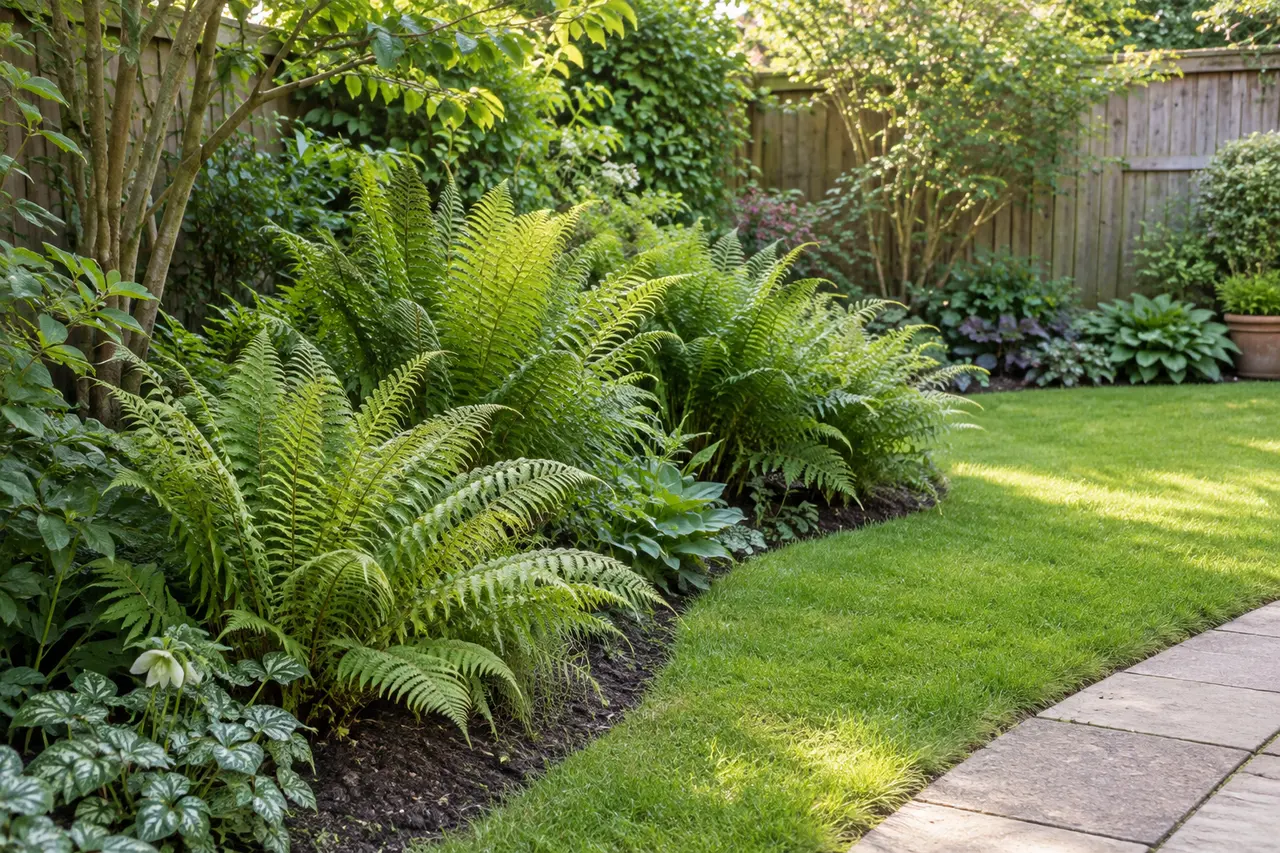
Many ferns carry natural patterned spore cases beneath their fronds. Our gardeners distinguish these attached structures from loose hedge fragments during collection. The leaves retain their characteristic appearance while debris is lifted from among them. This gives the tidy a clear subject and keeps the foliage intact, including features that look different from the green surface visible from above.
An unfamiliar mark is considered on its own evidence; recognising natural spore patterns does not diagnose every change. Plant-health questions remain specific to the observed plant, while routine work continues with accessible weeds and loose debris. The team does not strip every frond because one feature needs identification. This keeps the ordinary maintenance operation useful without adding an unrelated treatment or claiming a conclusion unsupported by the visible structure.
Useful fronds retain space above the cleared ground, with the growing centre visible for later attention. Plant identity and any particular care requirement stay associated with the clump’s position. The next operation can then follow its developing form and the actual collection needed there. This preserves a recognisable fern within the bed through seasonal changes in its surrounding planting.
Further work around the planted garden
Planting compositions use contrasting foliage structures
Our planting-design brief can combine broad strap-like fronds with finely divided leaves to create interest beyond flowering alone. Textures are considered from the actual viewing positions, with compatible growing requirements and room for mature forms. A contrast visible in small pots can alter as the planting fills out. The design therefore considers the developed composition as well as the supplied plants at the moment of installation.
Branch removal includes control of the load
A tree-work operation accounts for the weight of a larger branch before its final finishing cut. Uncontrolled removal can tear bark from the tree left standing, so load handling is part of the professional method for the actual position and branch. A neat visible cutting line alone does not complete that preparation. The proposal distinguishes removal of weight from the final cut, without assuming one unsupported cut suits every branch.
Paving cleaning sequenced with a separately planned finish
Where sealing or coating is separately planned after paving cleaning, the sequence follows that product’s preparation and moisture requirements. Its drying stage is allowed for and the actual surface conditions considered. Our cleaning quotation identifies the wash itself, while later finishing retains its own specification and supplies. This coordinates the two operations without treating immediate cleanliness as proof of readiness for every coating.
Roofline care recognises an identified overflow opening
For a gutter-cleaning assessment, a known overflow opening is distinguished from the normal outlet. Water using that relief route can indicate attention is needed at the primary one. The operation follows the actual drainage arrangement, preserving the intended opening while the reported behaviour is considered. This keeps an overflow, accidental gap and leaking joint identifiable as different features of the roofline.
Seasonal tree information separates growing origin from delivery
For a Christmas tree, confirmed cultivation origin is kept separate from delivery coverage and the cut or pot-grown format. A London delivery address describes the service destination, not where the stock grew. Where origin forms part of the purchasing choice, the product information must relate to the tree actually selected. Our seasonal arrangement uses what can be confirmed for that product without turning a delivery area into an unsupported local-growing claim.
Gardening time for close work among fern foliage
Our quotation accounts for tracing selected old-frond stalks, working accessible weeds beside emerging coils and lifting fragments from divided foliage. These close operations require controlled hand attention around the fern. The general rates below guide gardening time, with adjoining open mowing identified separately within the visit’s actual workload.
| Gardening time | Guide charge |
|---|---|
| First hour | £83 |
| Each subsequent hour | £65 |
GBP guide rates. The full quotation identifies the work, supplies, material handling, VAT treatment and applicable access, parking or congestion charges. The close planting operation remains distinguishable from wider mowing or a separately considered exterior task.
Fern maintenance through different growth stages
Are regular brown structures beneath a fern frond always damage?
The team distinguishes regular spore-case patterns beneath fronds from loose fragments being collected. Many ferns carry these natural structures, so their appearance is considered before removal is proposed. An unfamiliar brown mark still receives its own appropriate consideration. Recognising a normal feature does not mean treating every change as harmless, nor using routine collection to scrape the underside of the leaf.
Does a fern have spent flowers that need deadheading?
Our fern maintenance concerns the fronds, growing centre and surrounding soil. Ferns reproduce through spores, so their routine seasonal attention has no flower-head removal stage. The gardener selects appropriate old material and identifies what continues growing. This keeps the task accurately described and the plant’s natural structures recognisable while weeding and loose-debris collection proceed around it.
Should a hardy fern's crown be buried during a soil top-up?
During a commissioned top-up, material is placed around the fern while its established level remains visible. The hardy fern’s crown generally stays just above the soil, clear of a new covering in the growing centre. This leaves the surrounding surface attended to with the plant still seated appropriately, giving subsequent frond development and hand work a clear position to follow.
Does evergreen foliage prove that a fern is winter-hardy outdoors?
Our planting decisions consider leaf retention and cold tolerance as different characteristics. Some tender ferns keep foliage, so the actual plant and its protection needs inform the growing position. An indoor display therefore receives its own decision before permanent garden planting is proposed. This keeps the care connected to the identified fern and the conditions it will experience outside.
Fern growth and grass finishing coordinated over time
Our gardening services follow the space available as fronds unfurl and the lawn margin changes. The growing centre remains outside collection routes, while subsequent mowing uses the actual width beside the planting. The maintained result combines a clear surrounding surface with the fern’s continuing natural form, carrying that changing relationship into the next appropriate plant and grass tasks.