

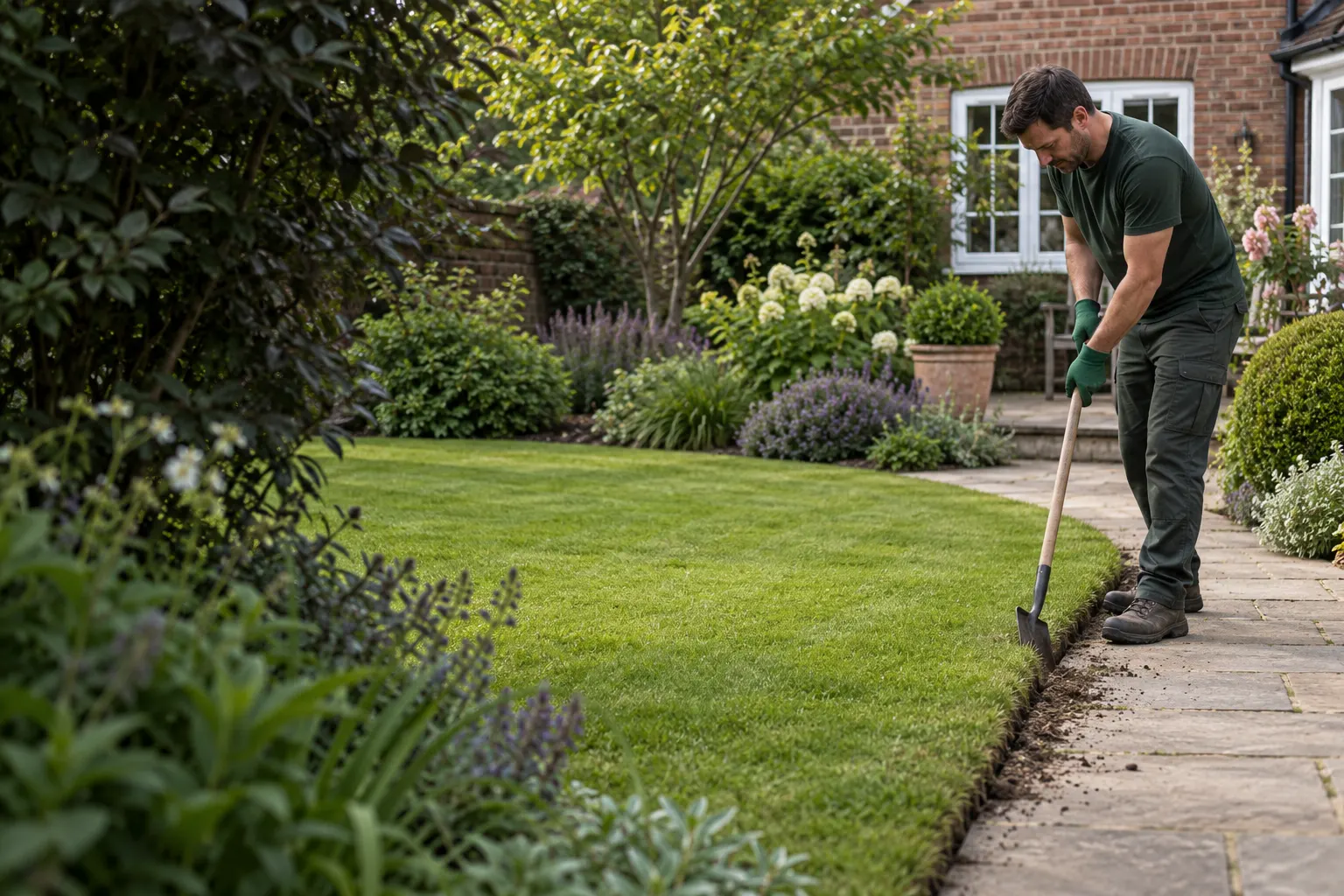
Recovery of a lawn’s existing boundary with the bed
Gardeners Enfield
Our gardeners can recover an identified lawn edge where rooted grass has crossed its intended line. We expose the receiving surface, work through suitable manageable sections and collect the soil-bearing pieces separately from light clippings. The following mowing and ordinary margin care then use that recovered boundary as their practical reference.
- What does your edge-recovery operation remove? We identify rooted turf beyond the selected existing line and its associated soil, keeping that load separate from an ordinary leaf trim.
- How is mowing supported beside the exposed bed? Our route keeps the wheels on suitable ground, with a separate margin finish where a drop could tilt the cutting deck.
The recovery line and the suitable following lawn work
How do you distinguish recovery from ordinary trimming?
We identify whether the task concerns fresh leaf extension along a visible edge or rooted turf that has spread beyond the intended boundary. Recovery includes the appropriate cutting and handling of those soil-bearing pieces. The operation and its receiving arrangement remain clear within the work, giving later ordinary trimming its separate role once the line is available.
How is the existing outline established for recovery?
We follow the known lawn-to-bed arrangement, accounting for retained planting, fixed edging and the receiving ground. Where the intended line is established, the operation can preserve that layout through its suitable accessible extent. Any different shape or allocation of lawn and bed remains a separate design choice alongside the recovery work.
The intended line through encroaching turf
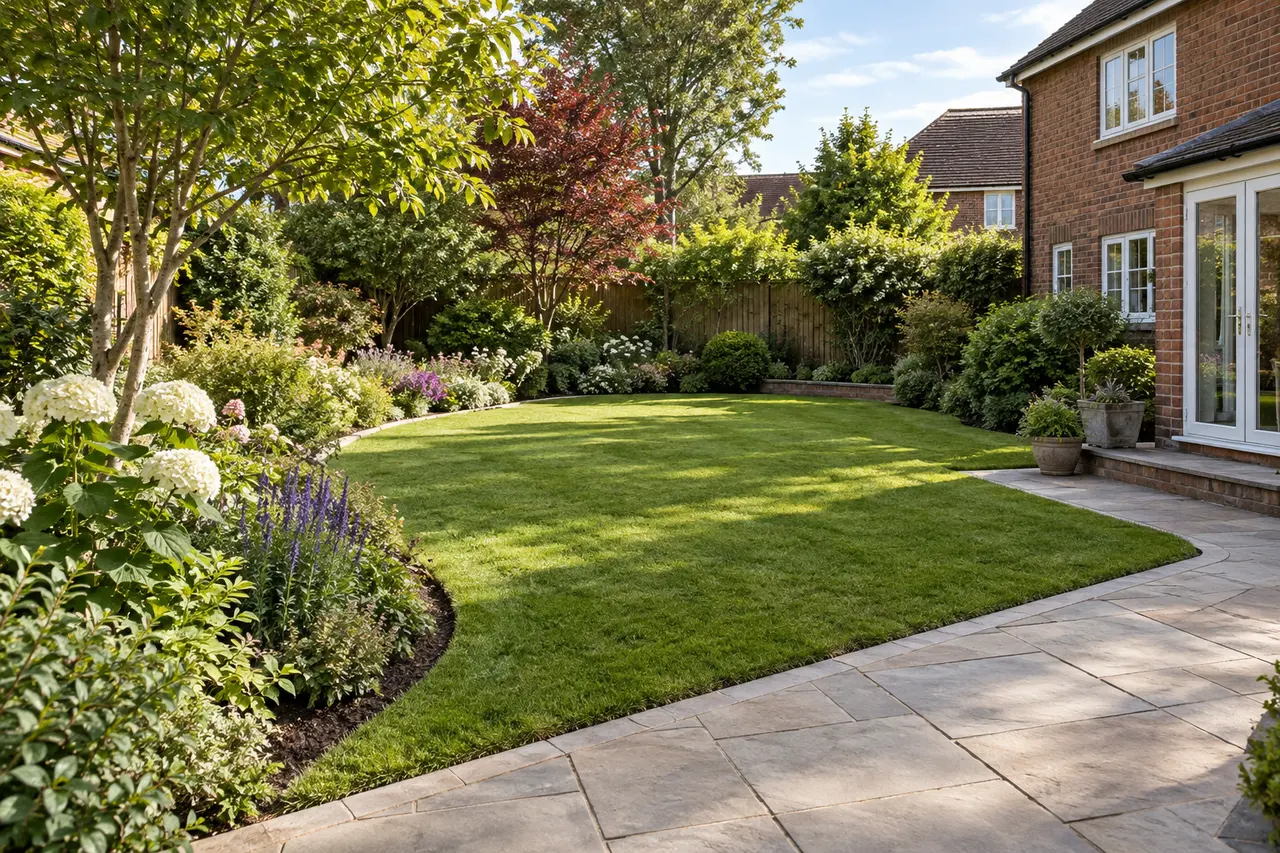
An existing boundary identified before its recovery cut
We begin from a clear part of the lawn-to-bed relationship and trace its intended continuation through the obscured section. Existing edging or a reliable previous arrangement provides useful reference. Our assessment follows those features and the retained plants, giving the selected recovery a defined line while the actual extent of the rooted grass crossing it becomes visible.
The agreed line is related to a suitable route around the planting. If its earlier course is uncertain, that position is established before the wider turf operation. A small accessible portion can reveal the existing edge and material involved, helping define the intended result. This keeps the area opened for inspection identifiable alongside the chosen boundary followed through the remaining work.
Our garden maintenance arrangement identifies the initial recovery and its subsequent ordinary trimming separately. The first operation can produce turf and earth with their own gathering and carrying requirement. We include that actual material handling alongside the selected cut, leaving the completed line clear as the practical reference for later grass attention at the same established border.
- Our recovery line follows the identified existing lawn-and-bed arrangement.
- Fixed edging remains visible as the surrounding overgrowth is exposed.
- Rooted turf pieces retain separate handling from shortened grass leaves.
- The following mowing route keeps equipment supported on suitable turf.
- Returning care follows the appropriate extension trim along the recovered line.
The material crossing the former outline
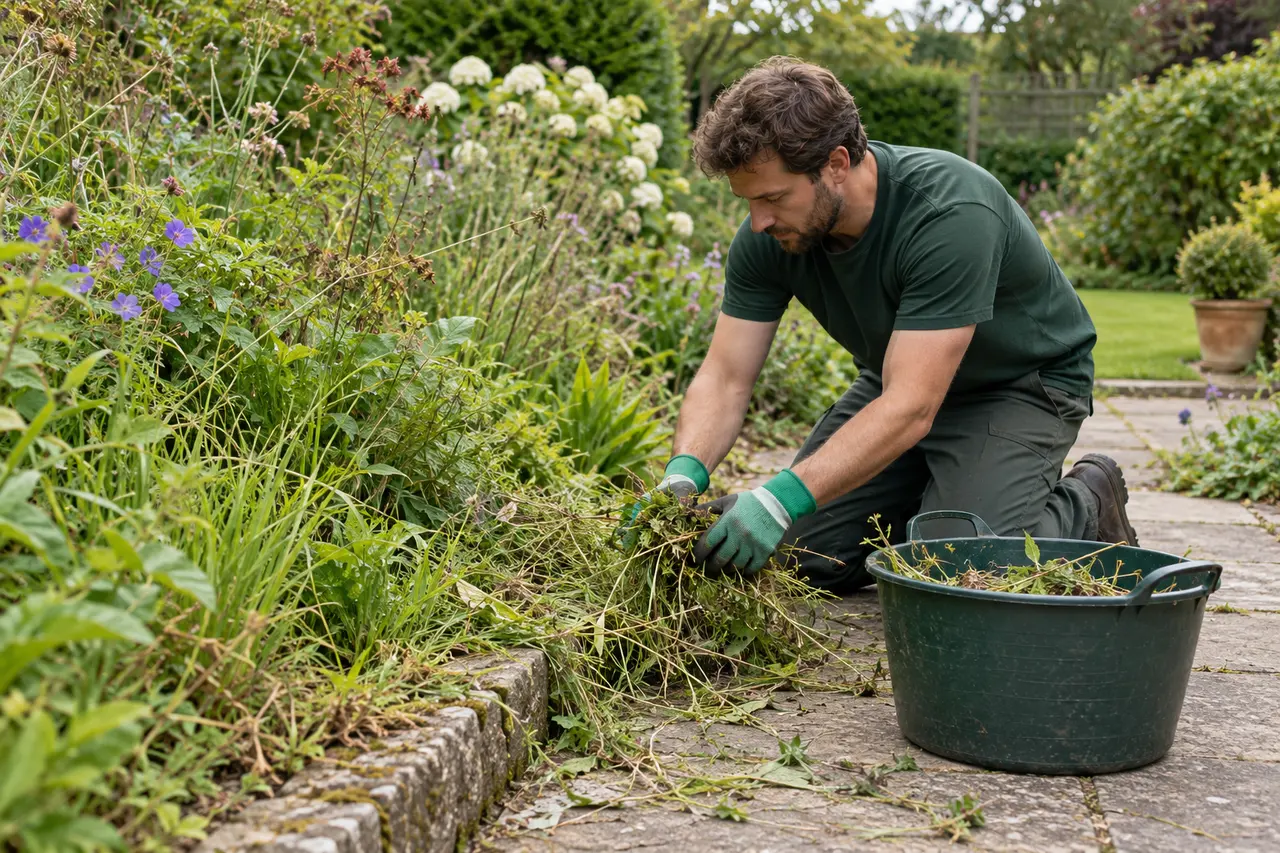
Loose cover gathered to reveal the rooted portion
We lift leaves and detached growth to expose the actual grass and its base. Material resting over the join is distinguished from turf rooted into the bed, giving the operation its appropriate extent. That close view establishes which pieces belong in the recovery load and which only require gathering, keeping the receiving plant and ground conditions clear before the edging tool is selected.
A wider garden clean-up can address the surrounding backlog while the plants defining the bed remain identifiable. Rooted strips are handled in controllable portions, with their connections visible before movement through retained stems. We gather each suitable section as it is released, giving the developing edge a clear reference and keeping the living border stable through the collecting stage.
The turf pieces can carry considerable earth, so our arrangement follows the actual weight and contents alongside the light clippings load. Suitable soil remains available for its appropriate return within the task, while the outgoing material retains its own destination. The garden-waste guide provides further context for that sorting, keeping the collecting route and receiving surfaces understandable as the edge opens.

The defined edging operation
Short controlled sections along the selected line
On suitable ground, we use an appropriate lawn-edging tool to define the recovery along its identified course. Manageable sections allow the encroaching turf to be lifted and the developing profile reviewed before the next portion proceeds. The cut follows the selected lawn-and-bed separation, with resistance and the actual material at the tool line assessed as part of the controlled progression.
Existing edging, known shallow fittings and substantial roots are identified before the operation reaches them. A concealed strip remains part of the retained arrangement, while woody growth receives its appropriate separate consideration. This keeps the recovery connected to the grass selected for removal and the components or established plants staying in place, with any affected portion requiring another approach clearly visible.
We Complete the recovered edge by returning and settling suitable loose soil on the bed side at the appropriate profile. The ground found and the retained arrangement guide that finish, leaving the lawn lip readable beside the planted soil. Structural repair, a new retaining component or a changed ground level has its own specified work, giving the completed recovery a clear extent and result.
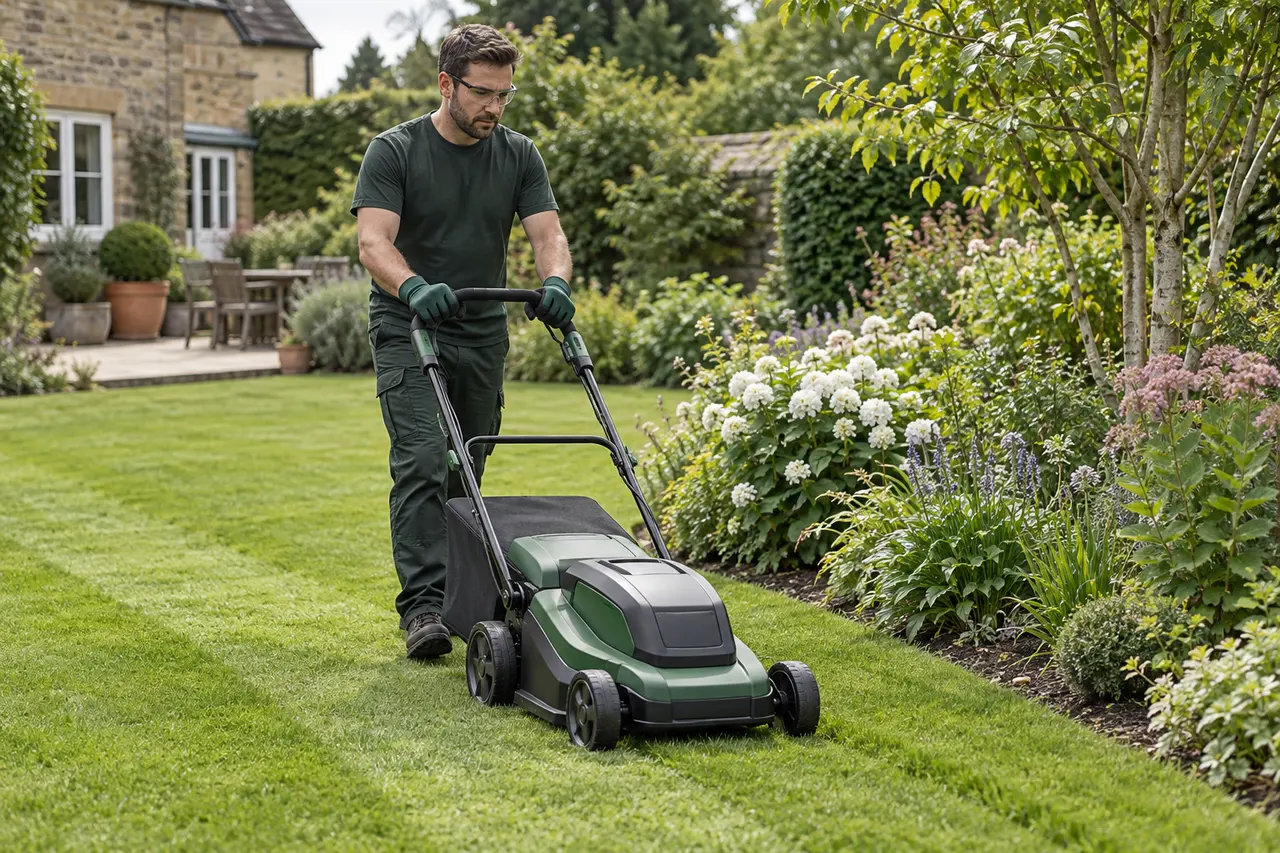
The mower beside the newly visible lip
Supported equipment movement and a separate edge finish
After exposure, we review the wheel route beside lower or softer bed soil. Keeping the equipment supported maintains the suitable relationship between deck and grass, with an appropriate separate tool where the main machine has limited room. The finished border therefore informs the next pass while the actual receiving surface and available space continue to govern the accessible cut.
Before the lawn-care task, lifted turf and loose tools are collected clear of its working line. Soil-bearing pieces keep their own handling destination while the grass route receives an inspection for material and surface conditions exposed during recovery. This gives the mower a suitable prepared area, connecting the preceding earth-and-turf operation with the separate cut of the growing lawn.
The grass setting follows its current condition, with any further soft or uneven area identified for the appropriate attention. The recovered outline remains a clear boundary reference alongside that surface assessment. We complete the suitable accessible mowing within its actual extent, leaving any separately required levelling or repair task understandable against the ground revealed by the earlier edge work.
The hedge above the working margin
A visible tool approach beneath retained boundary growth
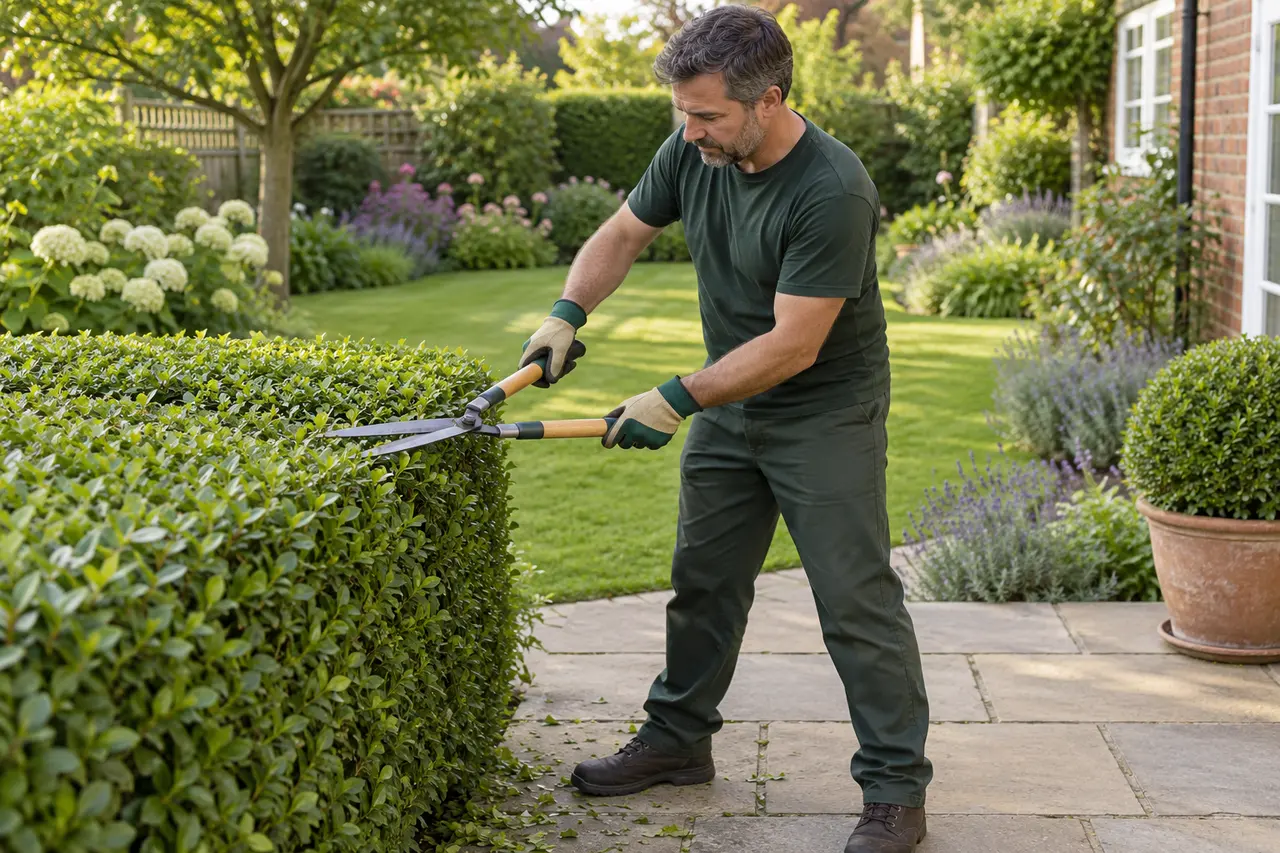
Where hedge stems overhang the edge, we establish a clear view of the selected ground before using the tool below them. Included suitable trimming can improve that accessible position while the retained base stays recognisable. The receiving soil, grass and woody growth remain distinguishable together, giving the actual edging movement a controlled approach through the area defined for recovery.
We gather hedge fragments clear of the exposed lawn lip so the finish remains visible for the following cut. Checks cover nests being built or used, with disturbing work postponed where necessary. A firm controlled standing position serves the reachable hedge operation, keeping its equipment and collection clear of the newly opened softer bed edge beside the completed turf line.

The recovered boundary in later care
Ordinary extension work following the established finish
After recovery, our returning task can attend to suitable fresh extension along the established line. Any proposal to move that boundary farther has its own intentional purpose and changes the allocation of bed and lawn. We retain that distinction in the ongoing arrangement, giving ordinary trimming a clear reference while the original recovery remains identifiable within the garden’s maintenance history.
Our seasonal margin tidy gathers leaves and loose cuttings where they obscure the visible join. The clearer surface allows inspection of the actual grass extension and the line retained beneath it. That identifies the suitable current task, leaving the previous soil profile readable while any newly rooted growth crossing the boundary receives its appropriate separate attention within the accessible margin.
Where one portion repeatedly loses its form, we record the actual recurrence and the use around it. Traffic, an unsupported edge or a settling component can inform a different practical decision. The remainder stays in suitable routine care, with that local observation available for a targeted proposal alongside the established outline maintained through the rest of the lawn-and-bed boundary.
Further services around the recovered garden outline
Design of a different allocation between lawn and bed
Our garden design can show the area transferred by a proposed new course along the complete boundary. A small shift repeated over a long edge can create a substantial planted strip with its own care requirements. We relate that result to the intended curve and use of the garden, giving a changed layout its own considered proposal alongside recovery of the existing line.
A recent change in a tree’s lean identified for assessment
Our tree-work assessment distinguishes an observed recent change from an established leaning form, including movement around the rooting surface. The potentially affected area stays outside ordinary use while appropriate advice is obtained. We retain that actual condition before a suitable operation is selected, keeping the tree and its anchorage concern connected to the assessment beyond the limits of a photograph.
Cleaning contact suited to the selected attachment
During jet washing, the receiving material guides the appropriate contact pattern. A concentrated rotating point and a broader fan distribute water differently, so the actual attachment remains part of the method selection alongside the equipment setting. This keeps the force and its receiving area related to the paving being cleaned, with the suitable working movement retained through the operation.
Known overhead wires included in the equipment approach
Our gutter cleaning planning accounts for known overhead wires along the proposed working route and the appropriate electrical precautions. A channel’s nominal height is only part of that receiving arrangement. The method follows the actual space between equipment, building and surrounding services, with an unsuitable approach identified before the operation and its reachable extent is established for the booked run.
A former seasonal tree now growing as a rooted plant
Where a previous display tree has been planted in the garden, its current rooted condition defines the work. A detached-tree Christmas-tree collection has a different handling state from suitable cutting or lifting specified through an appropriate tree-work proposal. We identify the actual living conifer and intended operation, connecting its present form with the practical task required at the property.
Initial edge recovery and subsequent maintenance
General gardening time is shown below. Identify any agreed recovery cut and soil-bearing material in the proposed work, rather than use a routine grass-trimming allowance for an undefined border reset.
| Gardening time | Guide charge |
|---|---|
| First hour | £83 |
| Each subsequent hour | £65 |
GBP guide rates. Confirm the defined work, material handling, VAT treatment and any applicable access, parking or congestion charges in the complete quotation.
Questions about our lawn-edge recovery
How is deck support maintained beside a lower bed?
We review where wheels can remain on suitable grass after the outline is exposed. A drop into lower or softer soil can tilt the deck, so a confined margin can receive a suitable separate finishing method. The main machine follows the supported route while the newly recovered edge retains its appropriate profile.
How is recovery distinguished from lawn levelling?
The operation defines the selected boundary and handles the material crossing it. Hollows or other surface issues have their own identified task where relevant. We keep the clearer outline and receiving ground condition visible together, giving any further preparation or levelling proposal a specific basis beside the grass-and-bed line already recovered.
What does the next maintenance visit follow?
Our ordinary care can trim fresh extension along the established course, keeping the selected allocation of grass and bed in view. A further rooted strip is only removed as part of an identified change or recovery need. This carries the initial result into suitable ongoing work while the lawn retains its intended shape.
How is fixed edging handled when it appears?
We identify the component and its condition as part of the existing arrangement, keeping the selected cutting movement clear of it. Suitable cleaning around an intact strip can form part of the accessible finish. Any required repair or replacement remains separately stated, with the revealed condition available to guide its appropriate next operation.
A recovered line available to inspect and maintain
Our Enfield garden visit leaves the suitable completed boundary identifiable from its starting point through the sections attended. Any excluded or unfinished portion stays clear while the edge is visible, giving the customer a concrete result and the next maintenance stage a practical reference for the remaining lawn and bed.