

Selective care for an established gooseberry framework
Gardeners Eltham
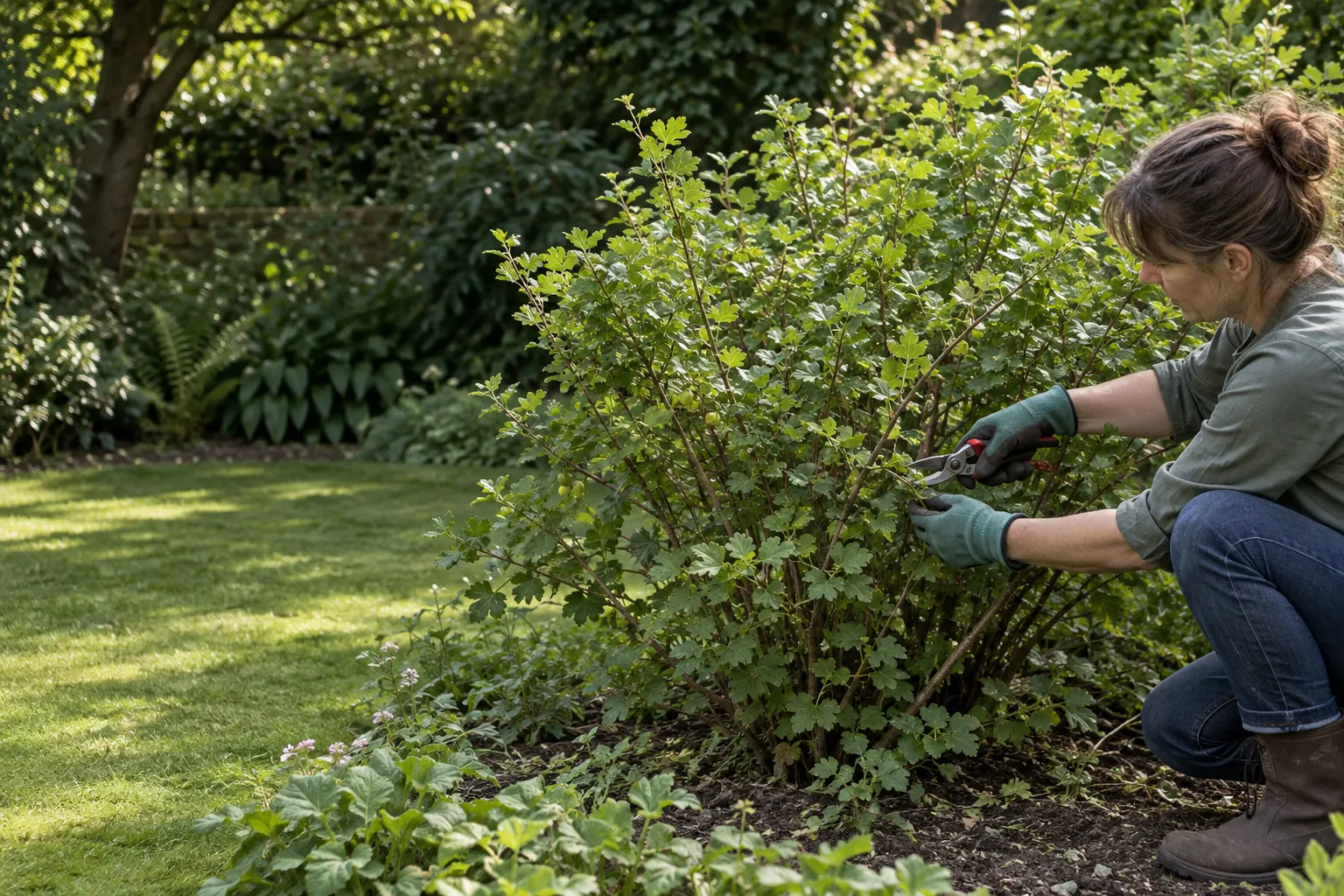
Our gardeners can attend to suitable reachable gooseberry growth while retaining the plant’s trained form. We identify the main branches and selected renewal work, collect thorny prunings in controlled portions and maintain the grass and bed around the bush. Its later attention follows the actual form and growing stage.
- How is gooseberry pollination considered in planting? Gooseberries are self-fertile; our planting assessment keeps that fact distinct from the receiving conditions and performance of the existing bush.
- How do you treat a trained cordon? We identify its main stem and side-growth arrangement before selection, giving that trained form its own suitable method alongside any free-standing bush.
The retained branch structure and the work selected for it
How is an established gooseberry renewed selectively?
We identify the trained form and select suitable older or less useful branches while keeping a well-spaced retained framework. That gives the particular plant its appropriate renewal extent. Our work preserves the main structure and useful growth through each selected cut, with the collection positioned for the thorny material actually being removed.
What does suitable open-centre selection address?
We assess congested inward-growing branches and the reachable structure within the actual bush. Suitable selection can improve access and air movement and reduce conditions favouring mildew. A known plant-health issue retains its own appropriate attention, while the practical branch operation follows the framework intended to remain and the space between its retained parts.
The form already established in the bed
Main stems identified before branch selection
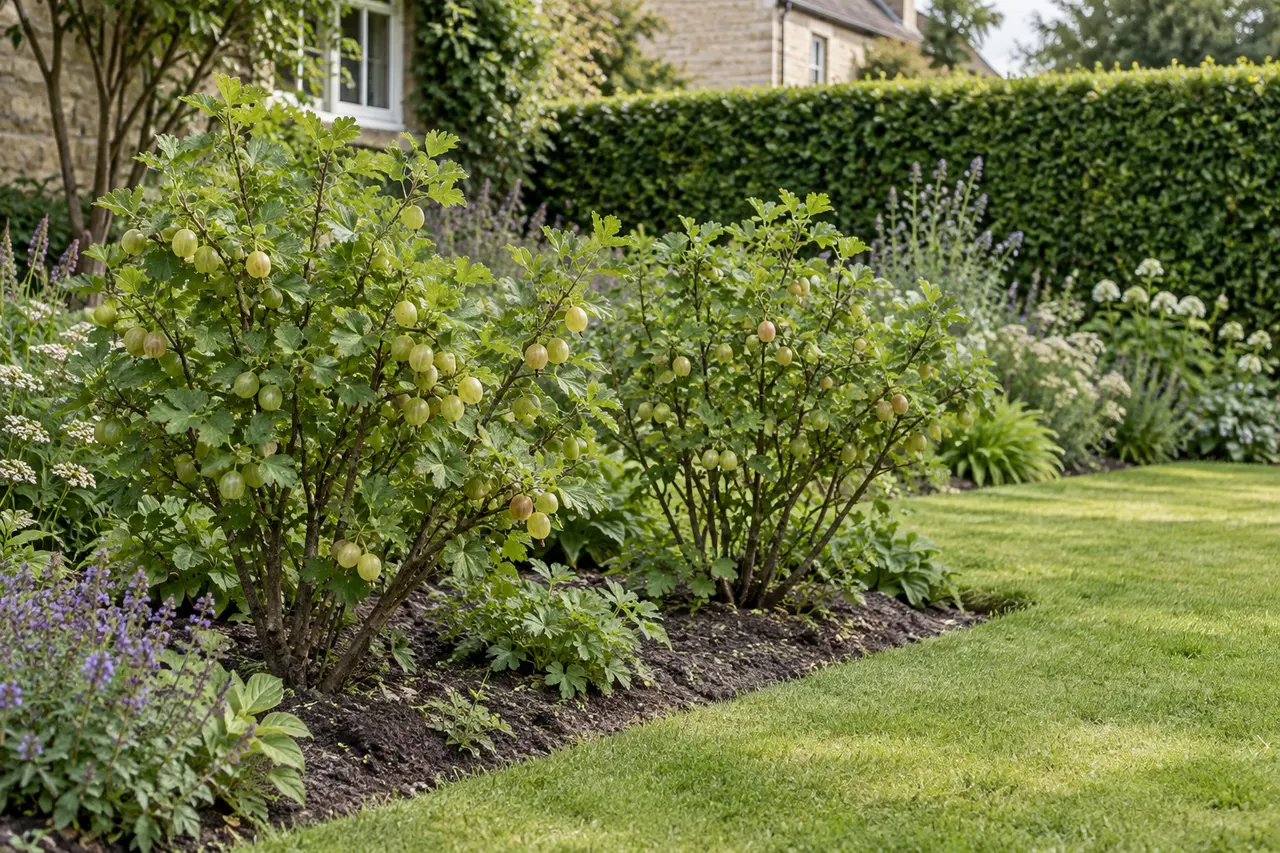
We look below the foliage to follow the plant’s existing arrangement. A free-standing bush can carry well-spaced branches from a short clear stem, while a cordon, fan or standard retains a different trained structure. That form guides the selected operation, with the branch origins and useful main growth kept visible before attention moves to the lengths projecting beyond the current outline.
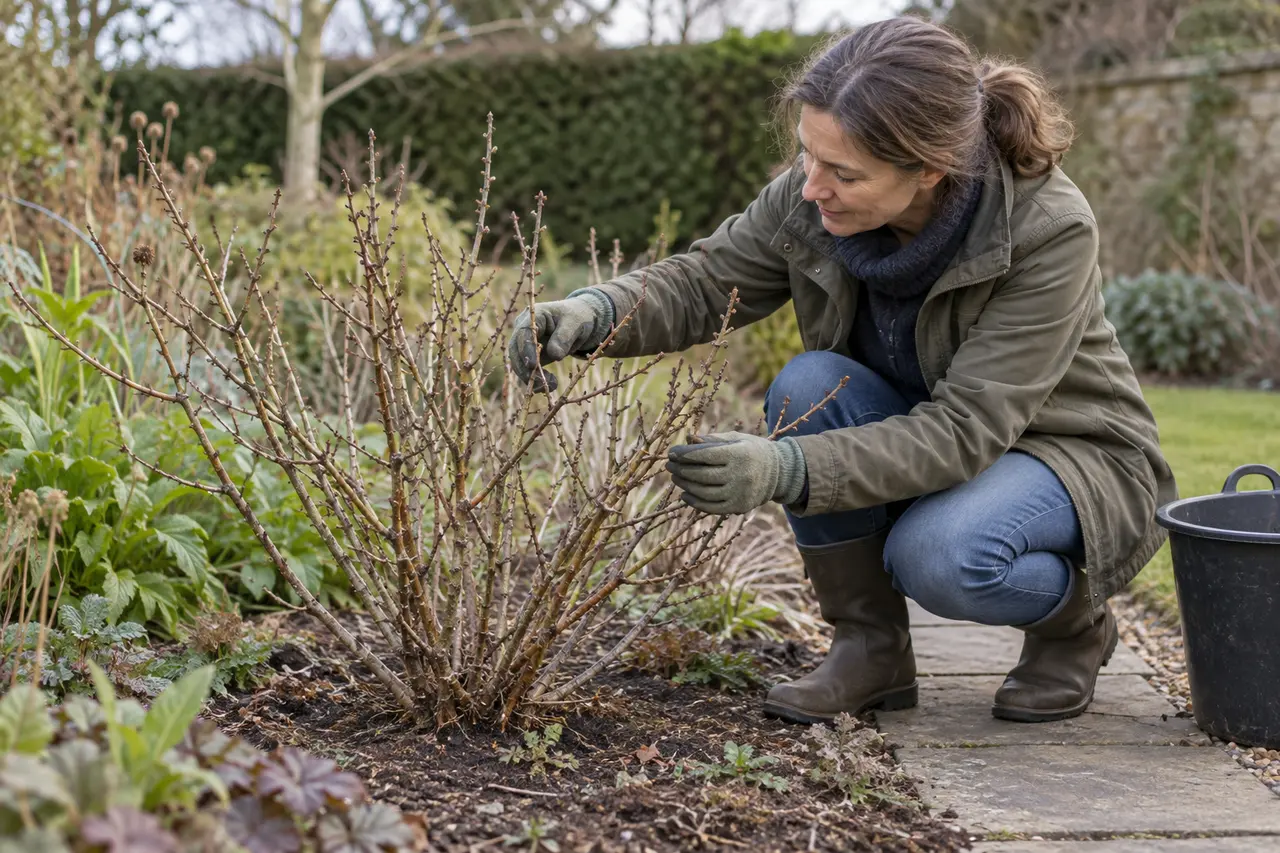
For an established open-centred gooseberry, we select the older or poorly placed branches appropriate for attention. The remaining framework and space between its parts stay identifiable through the work. This gives the open centre a practical role in the retained plant, with each cut related to its position and the growth left behind as the suitable renewal progresses across the reachable structure.
Within the garden maintenance work, we allow for seeing the attachments before cutting and establish a suitable receiving place for the removed load. The operation can remain small and selective where that suits the bush. Our completed result follows the actual branch choices and accessible framework, with the collected material clearly separated from the growth retained for its subsequent development.
- Our preparation identifies whether the plant is a bush, cordon, fan or standard.
- Retained main branches stay visible with the suitable space between them.
- Selected older growth receives attention within the intended remaining framework.
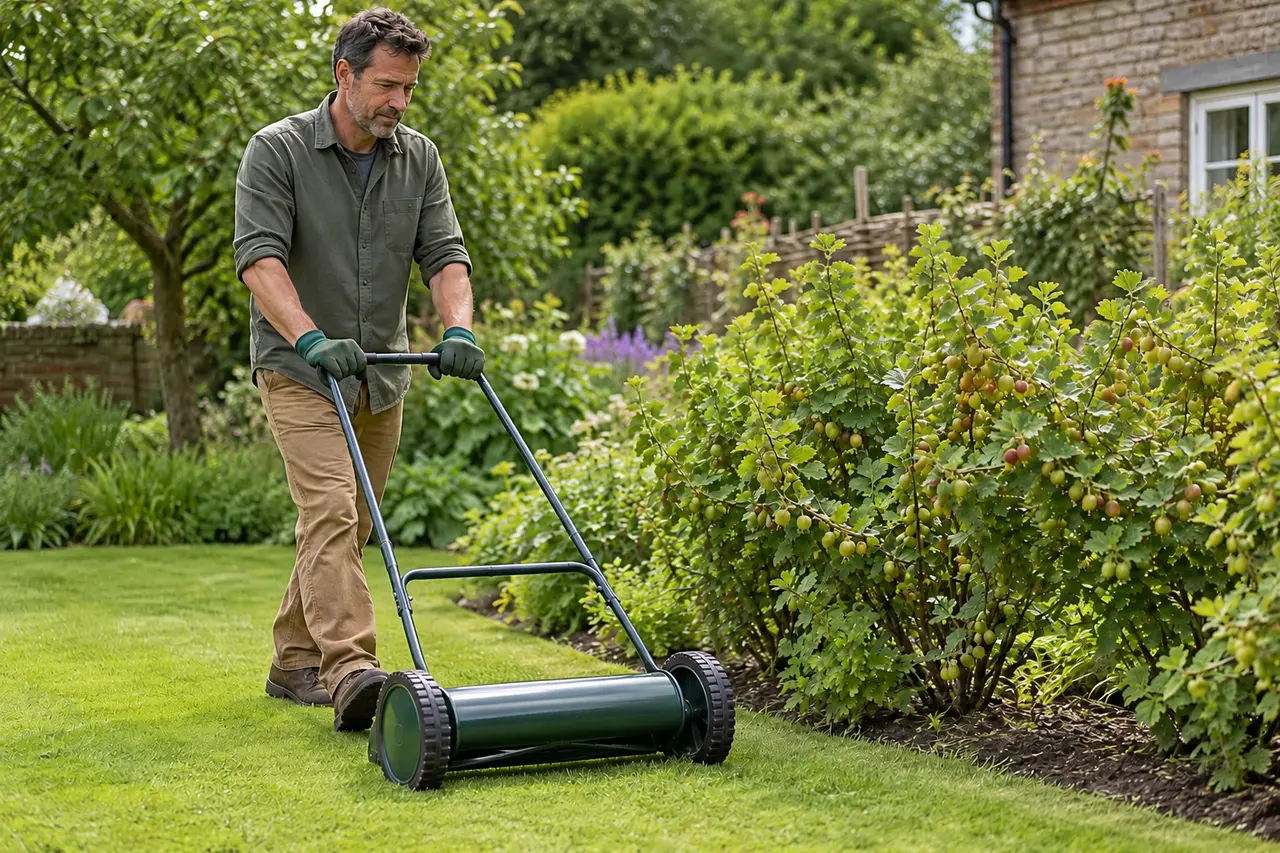
- Thorny offcuts are gathered before the neighbouring lawn is mown.
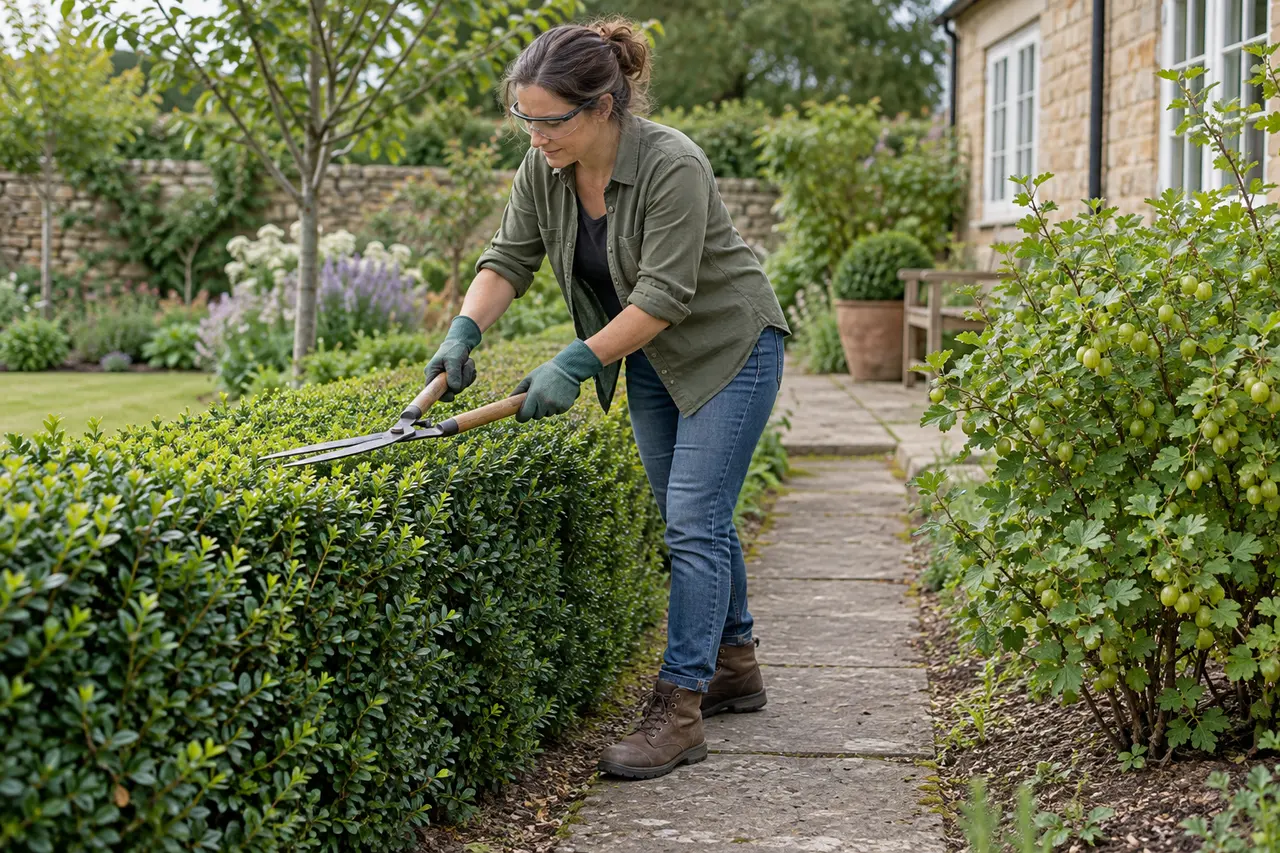
- The fruit bush keeps its own suitable treatment beside separate hedge work.
The branch and its actual growing direction
A selected cut followed into the framework
Our hand view traces an inward branch through the bush before its selected cutting point is established. The origin can lie beyond several retained stems, so we identify those connections with the relevant wood visible. The resulting operation addresses the actual internal position, while the branches staying in the plant remain clear of closing and pulling movements during both the cut and its collection.
Branch and bud selection follow the particular trained form. Suitable outward growth can contribute to an open bush, with a low-angled branch receiving its own appropriate finish. We relate each choice to the remaining framework and intended plant shape, keeping the separate hedge beside it identifiable as another operation with its own maintained line.
We remove each fully detached portion from the immediate view before reaching farther into the bush. Thorny ends are controlled to keep sleeves, gloves and retained branches clear during that movement. Where necessary, the gardener repositions outside the plant for a suitable angle. Any portion beyond controlled reach remains identified for a different practical arrangement alongside the completed accessible work.
The thorny material removed from the bush
Prunings aligned for controlled carrying and collection
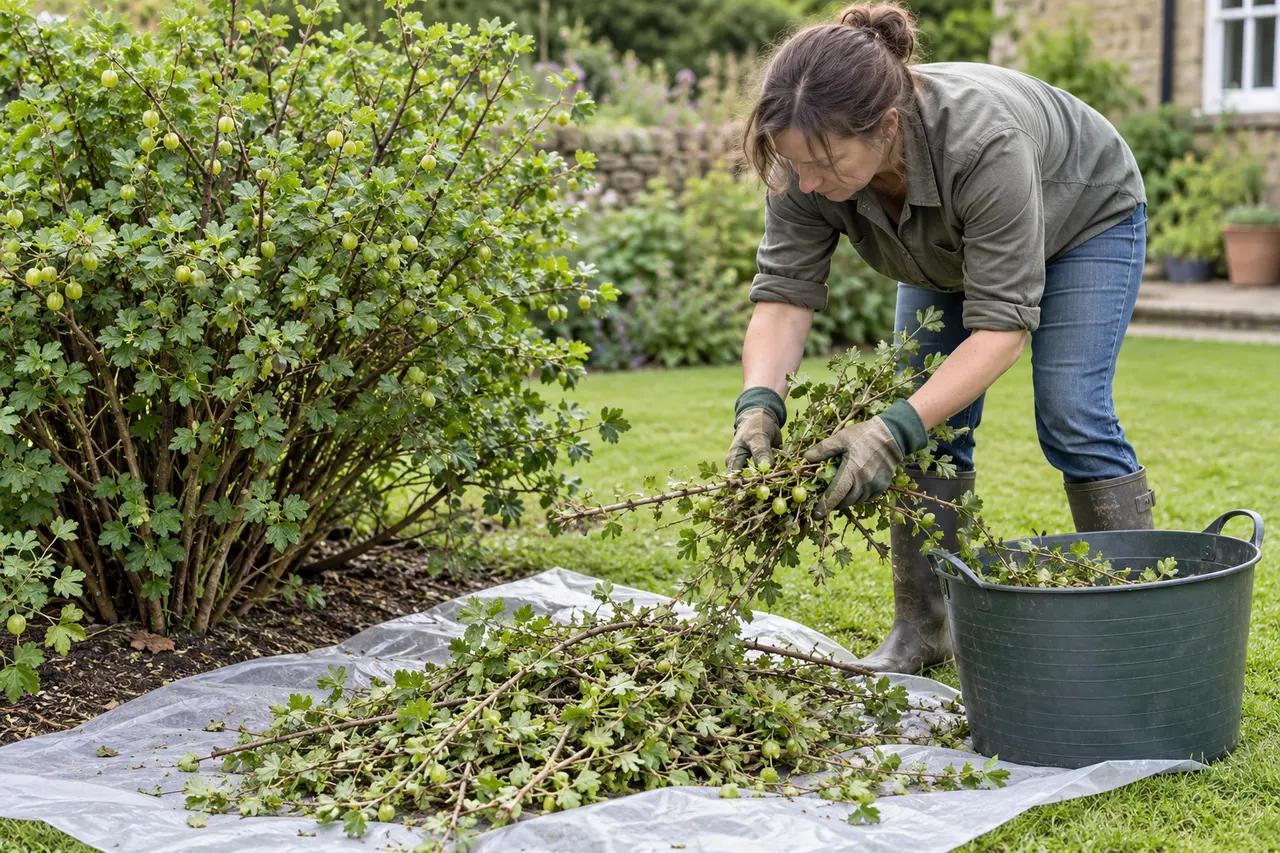
We place detached branches on a suitable sheet or into an appropriate container with their long ends controlled. Manageable amounts keep thorny projections clear of the walking route, clothing and living plants near the receiving position. The collection arrangement follows the full length of the offcuts, giving their practical movement as much attention as the cutting point at which they were released.
For a wider garden clean-up, removed branches remain distinguishable from low growth still connected to the bush. We free the selected portion before it moves through the framework, then handle any appropriate length reduction outside the retained plant. This keeps the collected load and the existing structure visible as separate parts of the job through the final gathering sequence.
The outgoing green-material arrangement accounts for the prickly contents and the routes used afterwards for grass cutting or close hand work. We gather the small ends produced during handling as well as the larger branches, keeping them within the appropriate load. The resulting surface remains available for its next use with the obvious cuttings and smaller thorny fragments included in the collection.
Turf beside low fruiting growth
A prepared grass route outside the retained bush
We inspect the grass margin after branch work, including areas below the low overhang where a flat thorny piece can be difficult to see. Detached material is lifted before the mower approaches. Any growth still connected to the bush retains its own plant decision, keeping the grass preparation and the suitable branch treatment clearly related to what is actually present along that edge.
Our lawn-care pass follows suitable supported turf with wheels, handles and collection movement clear of the retained bush. The practical route accounts for the branch opening and the occupied soil beneath it. Where the main machine has limited room, an appropriate separate method can finish the accessible narrow portion, leaving the planted base stable alongside the suitable grass surface being cut.
Grass clippings have an identified emptying position separate from the thorny load. We keep those contents clear through carrying and gathering, with the lawn edge readable beside the short stem. The finish follows the turf and its actual boundary while the fruit plant retains its suitable root level and visible base for continued care around the established framework.
The nearby hedge and any retained fruit protection
Separate cutting movement beside netting and branchwork
Where existing protective netting reaches towards the hedge, we establish its edges and connections before the tool passes nearby. Mesh can be difficult to see through foliage and may connect back to the fruit-bed area. We keep the actual material identifiable and outside blade and handle movement, giving the boundary task a suitable clear line beside the retained arrangement.
The hedge receives its own cut from firm supported footing, with checks for nests being built or used and postponement of disturbing work where needed. If netting or retained fruit branches restrict the available position, the reachable extent or sequence is adjusted. This leaves the two plants and their appropriate working areas clear throughout the accessible boundary attention.
After cutting, accessible hedge fragments are gathered separately from the thorny gooseberry load. Any specifically arranged temporary movement of protection follows its intended use and final position. The practical finish leaves mesh clear of routes and collected material, with both the suitable trimmed face and the fruit bush’s retained arrangement recognisable after the higher boundary operation is complete.
The plant through later growing stages
Renewal and appropriate seasonal side-growth care
Our main selection for bush gooseberries is generally considered during dormancy in late winter or early spring. Suitable summer attention can have a different purpose, especially on cordons and fans. We retain the actual form and growing stage in the arrangement, so the later operation follows the relevant task for that plant and the branch structure preserved through its earlier renewal.
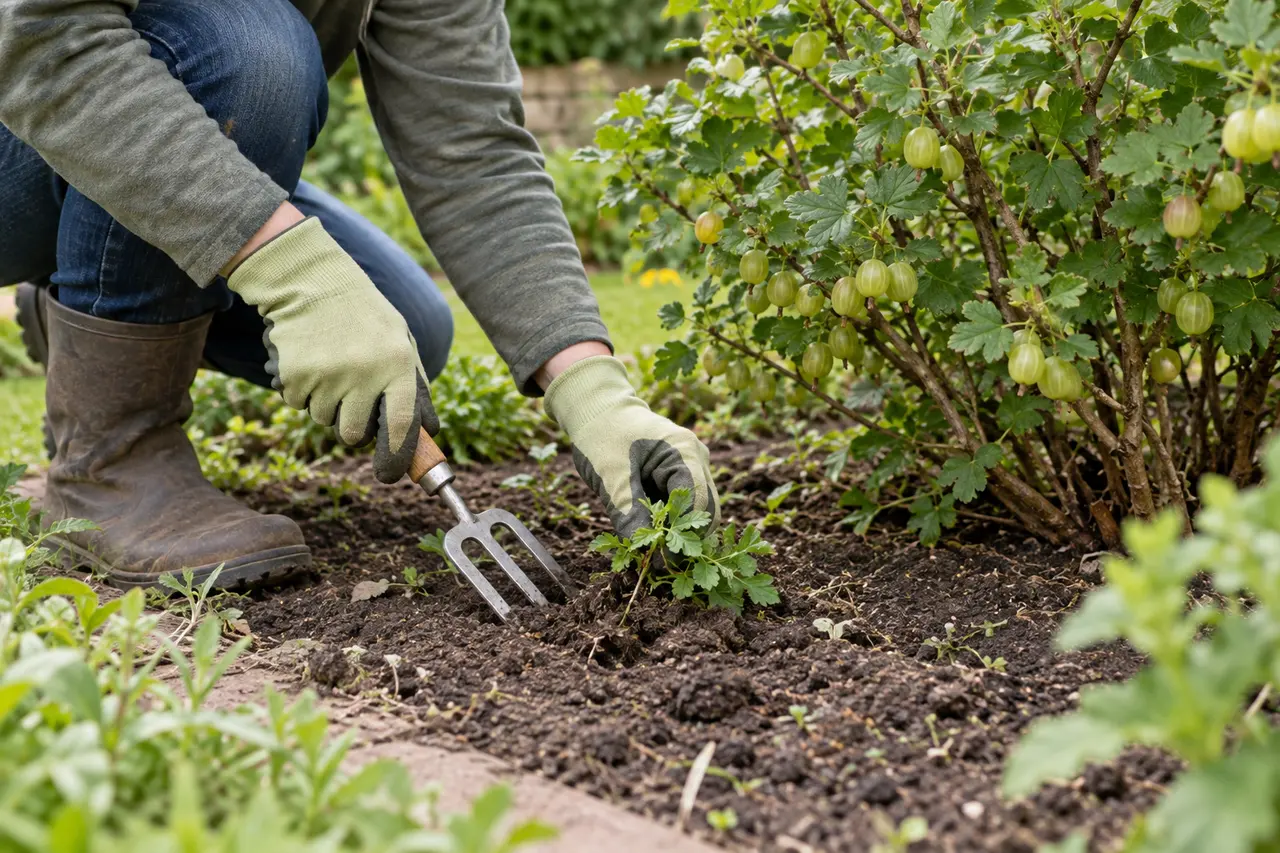
The bed around the plant continues to receive suitable hand attention as the retained framework develops. We remove accessible weeds, collect loose material through the season and relate any included water or feeding to the plants and actual conditions. The opened centre remains available to the bush as leaves return, with tools and receiving loads positioned clear of its living branch arrangement.
Further services around the established fruit planting
Design for suitable access beside thorny growth
Our planting design can include the space needed by the household to tend or pick from a fruit bush. The approach side and mature branch arrangement inform that proposal, alongside the plant’s supplied size. We relate the intended access to the surrounding layout, giving a confined corner an appropriate practical arrangement for reaching the actual thorny growth as it develops.
Groundwork considered against the actual tree-root area
Our tree-care assessment can identify a proposed ground position where retained roots may extend beyond the leafy crown. The branch outline remains one feature of the tree while the receiving soil has its own occupied conditions. We account for the actual intended excavation area in that consideration, keeping the ground proposal and retained root structure connected before suitable work is specified.
Cleaning products prepared at their specified strength
Where suitable products form part of paving cleaning, our preparation identifies whether the supplied material is ready to use or concentrated. Actual dilution and application instructions guide that operation and remain available through the work. The receiving surface and selected product then have a defined method, with the prepared material kept identifiable as each suitable section is attended.
Sharp contents contained within a gutter-deposit load
Where a gutter clean includes deposits containing known roofing fixings or metal points, our collection accounts for those contents and an appropriate receiving arrangement. Concealed sharp pieces can puncture unsuitable soft sacks, so the actual material informs containment and later handling. This keeps the removed channel load identifiable through its movement from the roofline to the arranged destination.
The light set’s actual electrical requirements retained
A Christmas-tree display using LED decorations retains the supplied equipment’s rated requirements and instructions alongside its lamp type. Different sets can use different power arrangements, so their intended supply remains part of the actual display setup. That identification gives the reused or selected lighting a clear basis for appropriate use with the seasonal tree and the position prepared for it.
Selective branchwork and controlled collection
The general gardening time covers the selected tasks. Identify fruit-bush care, surrounding upkeep and any material or removal requirement in the quotation.
| Gardening time | Guide rate |
|---|---|
| First hour | £83 |
| Each subsequent hour | £65 |
GBP guide rates. Confirm supplied materials, collected waste, VAT and any applicable access, parking or congestion charges in the complete proposal.
Questions about our gooseberry framework care
How does a cordon’s operation differ from an open bush?
We identify its main stem and retained side growth before choosing suitable work. An open bush carries a different main-branch arrangement, so the actual form remains part of the method. That gives each plant its appropriate selection and preserves the trained structure as surrounding work and collection progress beside the support.
How is different thorniness reflected in your handling?
We identify the actual branches and their projections when arranging cutting and collection. Varieties differ, including some less-thorny forms, while the receiving route still follows the material being handled. Manageable detached portions and controlled ends keep the working arrangement practical for the particular bush and the neighbouring plants around it.
How is a pollination partner considered for more planting?
Gooseberries are self-fertile, and a single suitable bush can bear fruit independently of another variety. Our planting assessment keeps that fact alongside the existing plant’s conditions and performance. Any additional position is then selected for its actual purpose, with the receiving space and appropriate care related to the plants intended to grow there.
How do you distinguish gooseberry care from blackcurrant pruning?
Our selection follows the actual fruit bush and its productive structure. Gooseberries retain a useful framework with suitable renewal and side-growth attention, while blackcurrants place greater emphasis on younger replacement wood. Identifying that difference keeps the proposed operation and its retained branches connected to the plant present in the bed.
A retained bush with room for continued household care
Our Eltham garden care can leave selected gooseberry branches appropriately spaced and the thorny load gathered from their surroundings. The resulting framework stays recognisable through its growing cycle, with the bed, grass and nearby hedge given their suitable separate attention around the fruit plant being kept.