

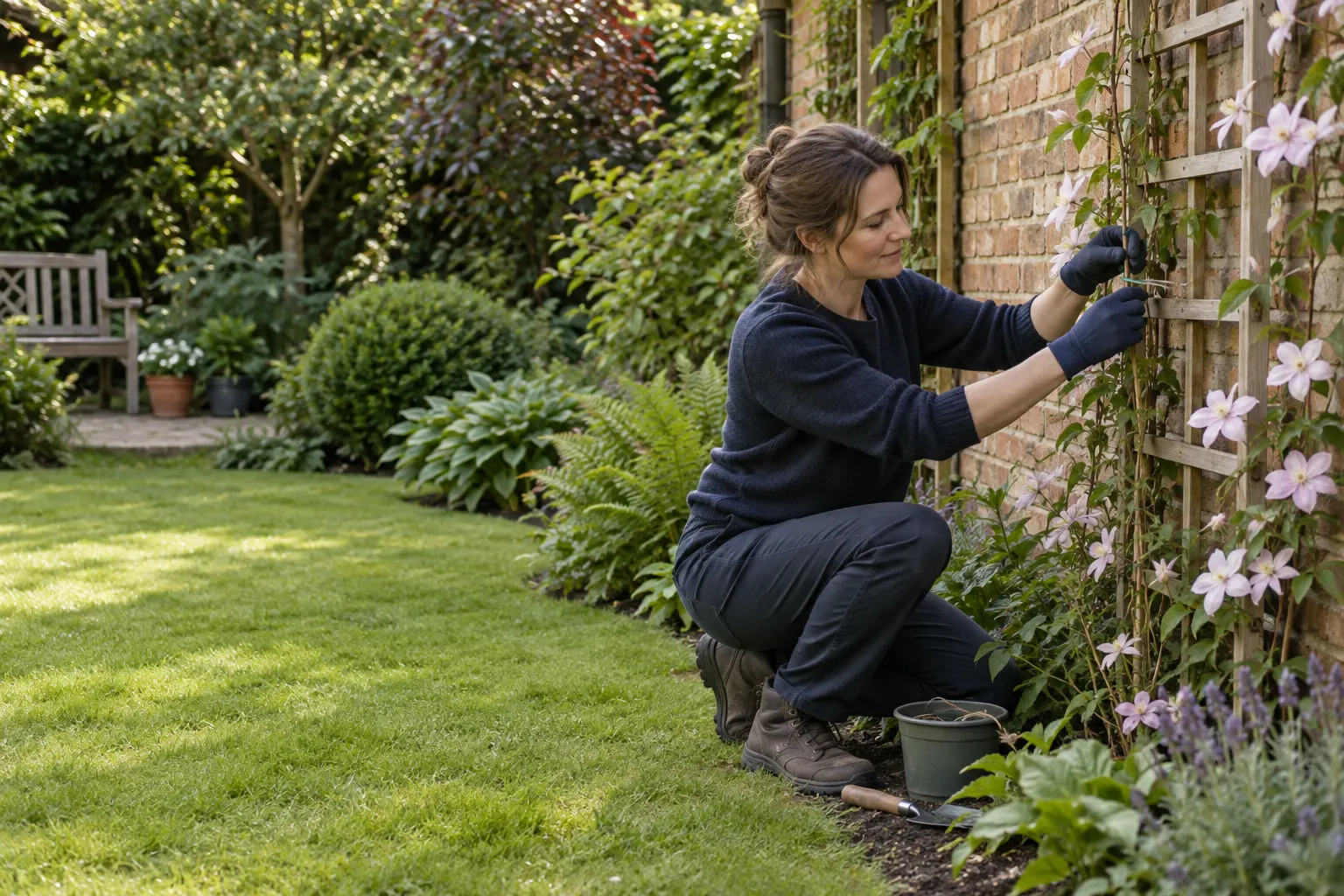
The retained climber framework and its reachable new extension
Gardeners Edgware
Our gardeners can maintain established trained climbers through suitable pruning, guidance and close care at the base. We identify the main framework before attending to new shoots, keep useful attachments visible and gather detached material from the support. The surrounding mowing and hedge work follows that retained structure throughout the visit.
- How do you assess an older trained branch? We distinguish its rigid framework from flexible new shoots, relating any suitable movement or cut to the plant’s actual attachment and intended form.
- What does crown thinning change within a tree? Our proposal identifies suitable internal branch selection separately from an alteration to the crown’s outer dimensions and the result intended for its spread.
Reachable care within an established trained arrangement
What can your maintenance include for an established climber?
We can identify suitable reachable pruning, training and base care within the task. The existing plant, framework and allotted space give that work its practical extent, with flowering habit and condition guiding the selected treatment. Any substantial renovation or permanent support repair is identified separately alongside the accessible attention included for the living plant.
How do you select useful new climber growth?
We follow each reachable shoot back to its plant and assess its role within the intended framework. Some extension can fill available training space, while other growth needs suitable pruning where it obstructs a route or exceeds the allotted position. The chosen response keeps that individual connection visible through guidance, cutting and collection.
The main structure and extending shoots
Framework identified before individual growth is selected
We trace the connections between older main branches, recent side shoots and loose lengths beyond the support. Their different roles guide the operation: a branch filling the wall remains part of the framework, while suitable extension can receive its own attention at the path. Our working view keeps that intended structure identifiable as selected growth is attended and detached material is gathered.
Plant identity informs the pruning stage and suitable extent. Different climbers carry flowers on different growth and have their own responses to reduction. We establish the appropriate treatment for the selected plant, with accessible base care and collection available where a larger cutting decision needs another stage. The intended arrangement remains clear while the relevant growth is identified for its own suitable operation.
Our Garden maintenance can carry that information into returning work. Main branches retained and shoots deliberately left for a later stage remain recorded, giving subsequent attention a useful reference. The next hand movement follows the same living plant through its available framework, keeping its developing extension and ongoing care connected to the decisions already made for the occupied wall or fence position.
- Our shoot selection follows the connection back to the trained plant.
- The retained main framework stays distinct from extension being shortened.
- Suitable fastenings leave room for stems to develop and thicken.
- Discarded ties and wire pieces retain their own collection destination.
- The climber’s base keeps usable access from the appropriate nearby route.
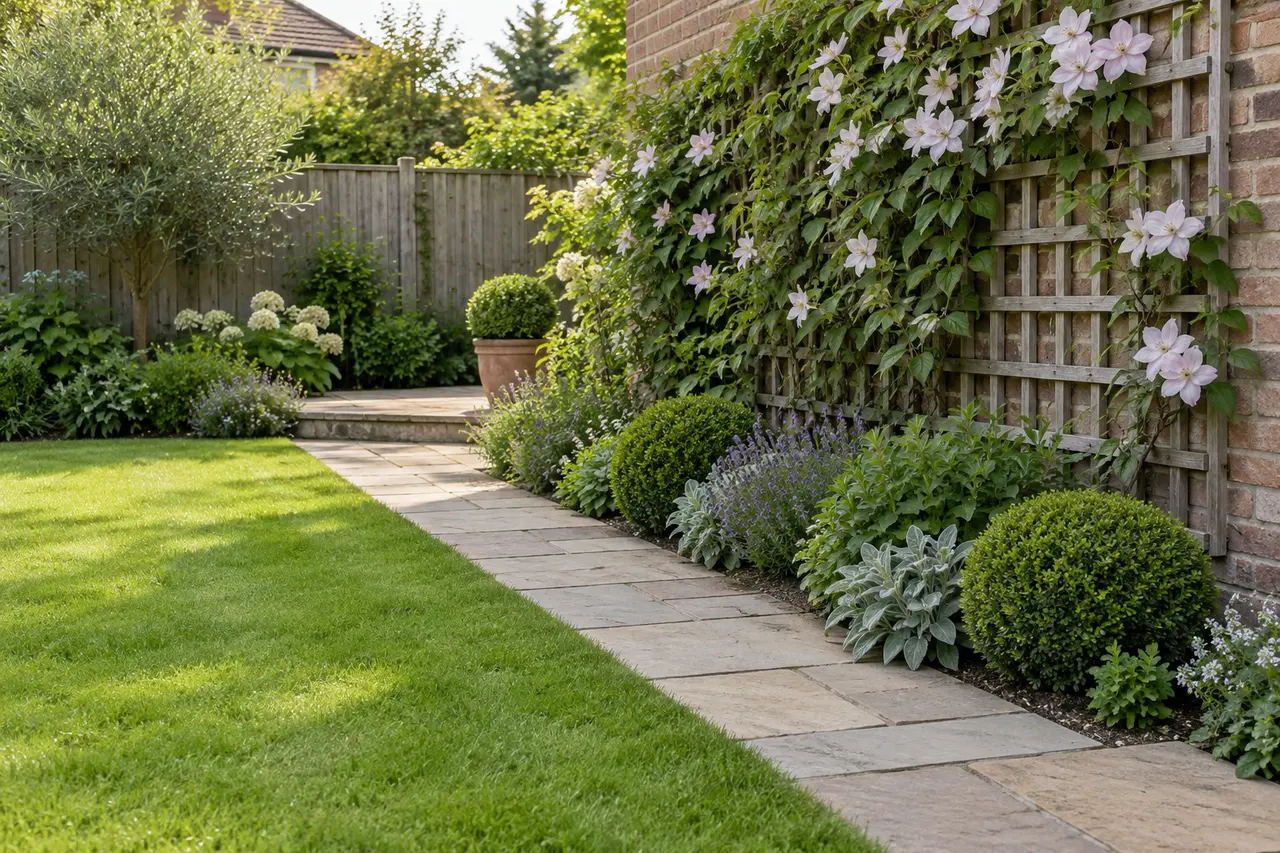
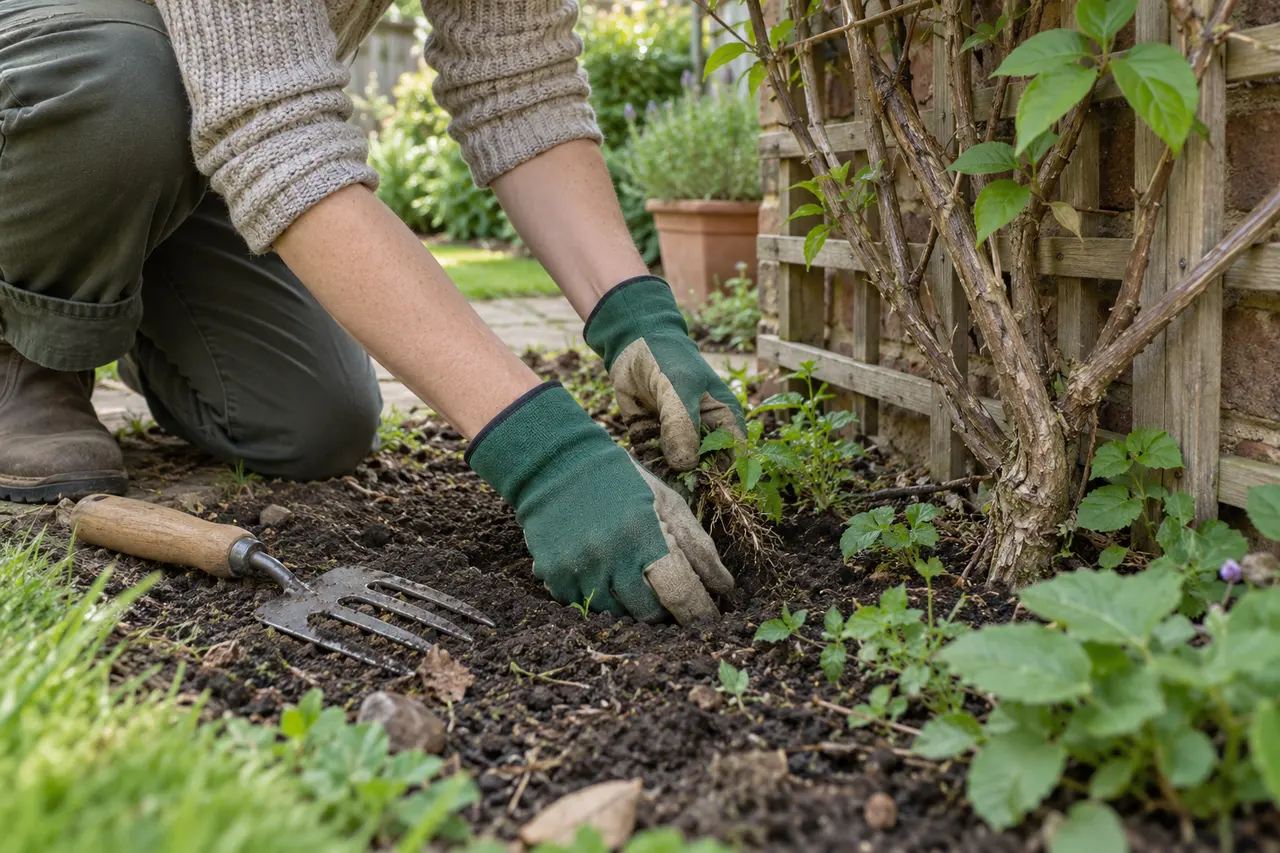
Guidance for flexible young extension
Suitable shoot placement on the existing support
We assess the direction, attachment and flexibility of new growth before guiding it into an available position. A suitable young shoot can be supported along a gentle route within the retained arrangement. Rigid older wood receives a different assessment of its form and connections. This keeps each proposed movement related to the material actually being handled and the position intended for its continued growth.
Tie adjustment follows the actual stem-contact point, including fastenings hidden by leaves. We provide suitable room for development and keep unrelated growth outside the loop. The chosen branch remains individually identifiable after the adjustment, with the contact visible for later checks. This preserves both its intended direction and the practical access needed to review the fit as the stem thickens.
Any additional materials have an identified role in the work. Existing fixings, panels and supporting structure are assessed for the intended reachable guidance, with concerns recorded for their appropriate separate attention. We relate the selected plant movement to the suitable receiving framework, keeping the living care and any required permanent repair distinguishable while the trained arrangement continues to develop.
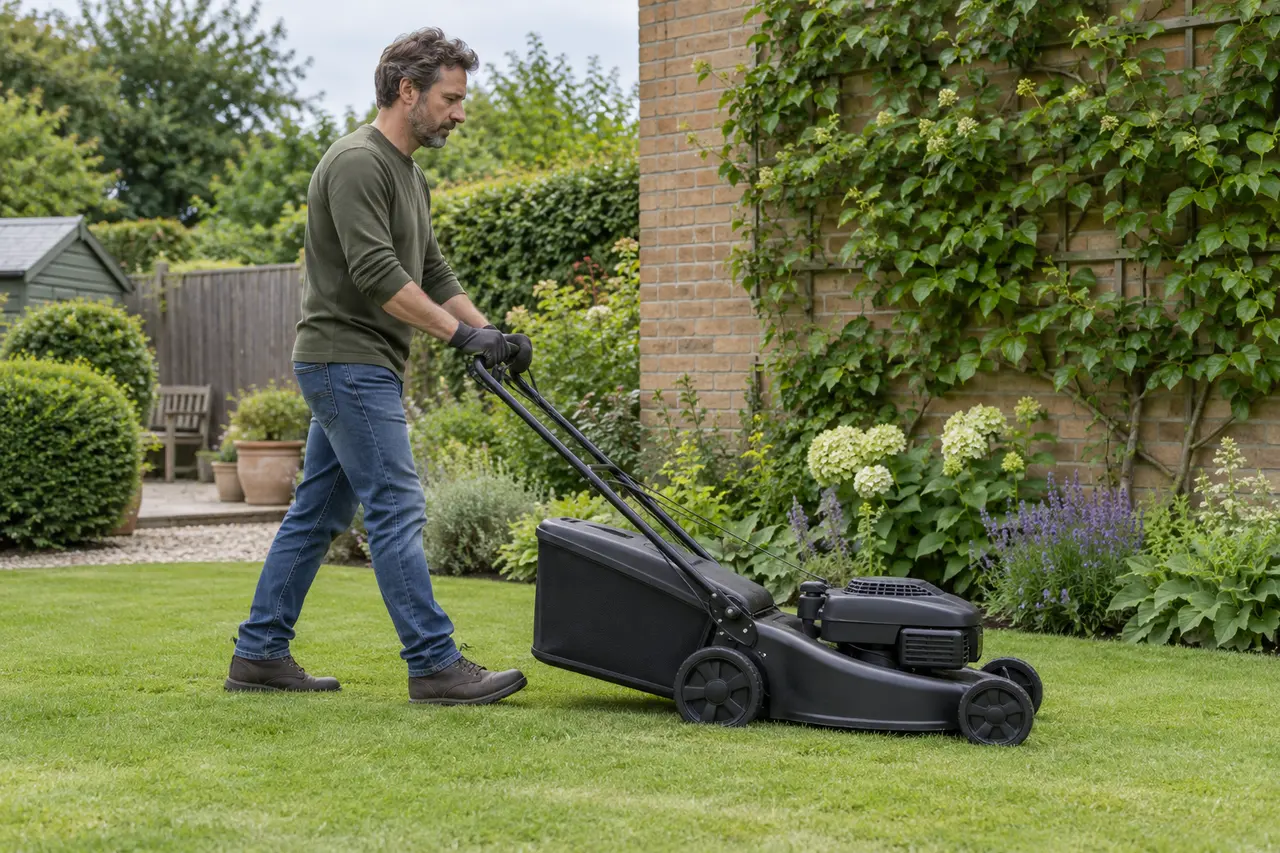
Grass beside the trained growth
A mowing surface cleared after the plant operation
We gather or secure the selected growth before mowing, including any shoot temporarily laid across the turf during hand work. Loose ties, pots and tools are cleared from the route, and the grass receives its own inspection. This connects the two operations while giving the machine a suitable surface after the nearby plant task has finished at the wall.
Our pass follows suitable turf with a controlled route and usable turning position. Attached growth remains outside the deck and the operator’s movement. A difficult margin can receive a different appropriate finish where needed, leaving the supported plant’s position intact as the accessible grass is completed. The practical cut remains related to the available space around the retained training structure.
We gather loose grass from the worked path and accessible low foliage according to the included finish. Suitable separate tools can attend to a confined strip while the main machine stays supported clear of wall fittings. The receiving ground continues to guide whether mowing can proceed, so a soft area retains its suitable timing even when the adjoining plant is ready for hand attention.
The material caught among retained stems
Detached growth released through a visible collection route
Our collection identifies fully loose pieces among the living branches and between plant and support. Attached lengths remain distinguishable for their appropriate plant decision before movement. We open a sufficient view to follow the receiving route, then gather released material through manageable portions. This keeps the actual framework and its attachments visible while the selected load is lifted away.
A larger garden clean-up identifies both the plant remaining and the growth chosen for removal. Connections to support or masonry are assessed as part of the practical method, with substantial changes to main branches having their own defined operation. The reachable detached material can then receive collection while the retained structure and any further intended plant work stay clearly separated within the recovered area.
The waste-handling guide gives context when ties, wire or pots emerge with the cut stems. We sort reusable components and non-green contents as they are gathered, and position the receiving load clear of trained branches. The final movement follows that identified route, leaving the useful structure accessible and the discarded material carried away without catching the living connections preserved during the hand work.
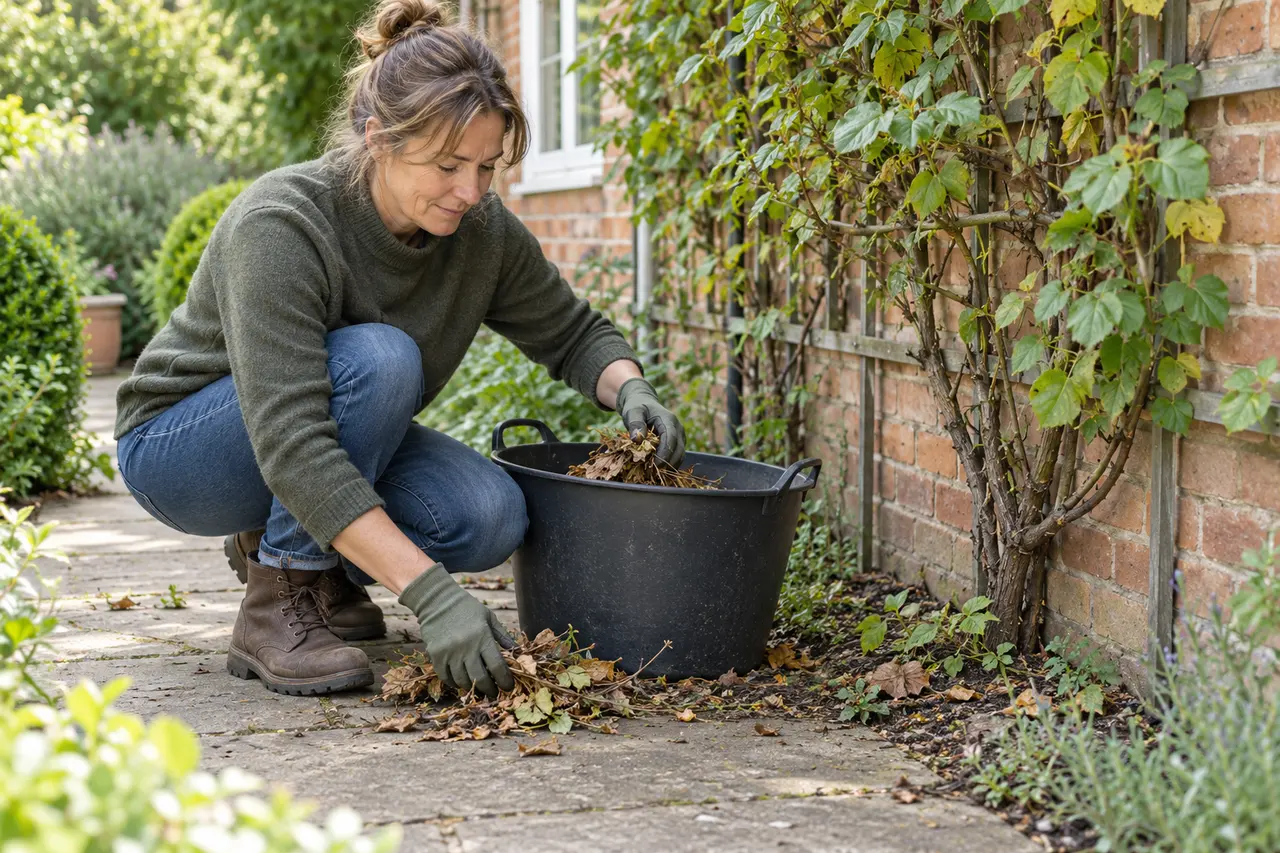
The hedge ending beside the climber
A suitable boundary face clear of the trained plant
We approach the accessible hedge from its own suitable side, with the trained plant outside the tool movement. The intended return is followed where the available footing gives control and the relevant stems remain visible. This connects the face to its practical working position while the plant behind retains its identified framework along the wall.
The hedge species and condition determine the suitable trim. We check for nests being built or used and postpone disturbing work where necessary. Nearby main climber branches stay identifiable throughout the pass, and any heavy or inaccessible growth has its own appropriate approach. The resulting cutting extent remains clear alongside the structure retained immediately behind the clipped boundary.
After the blades stop, we retrieve fragments caught on reachable horizontal trellis pieces as well as the ground. Individual collection leaves stems and fastenings in their intended positions while the receiving points are cleared. That completes the lower detail of the hedge task, with the actual catch points attended and the plant’s useful support available for its next care stage.
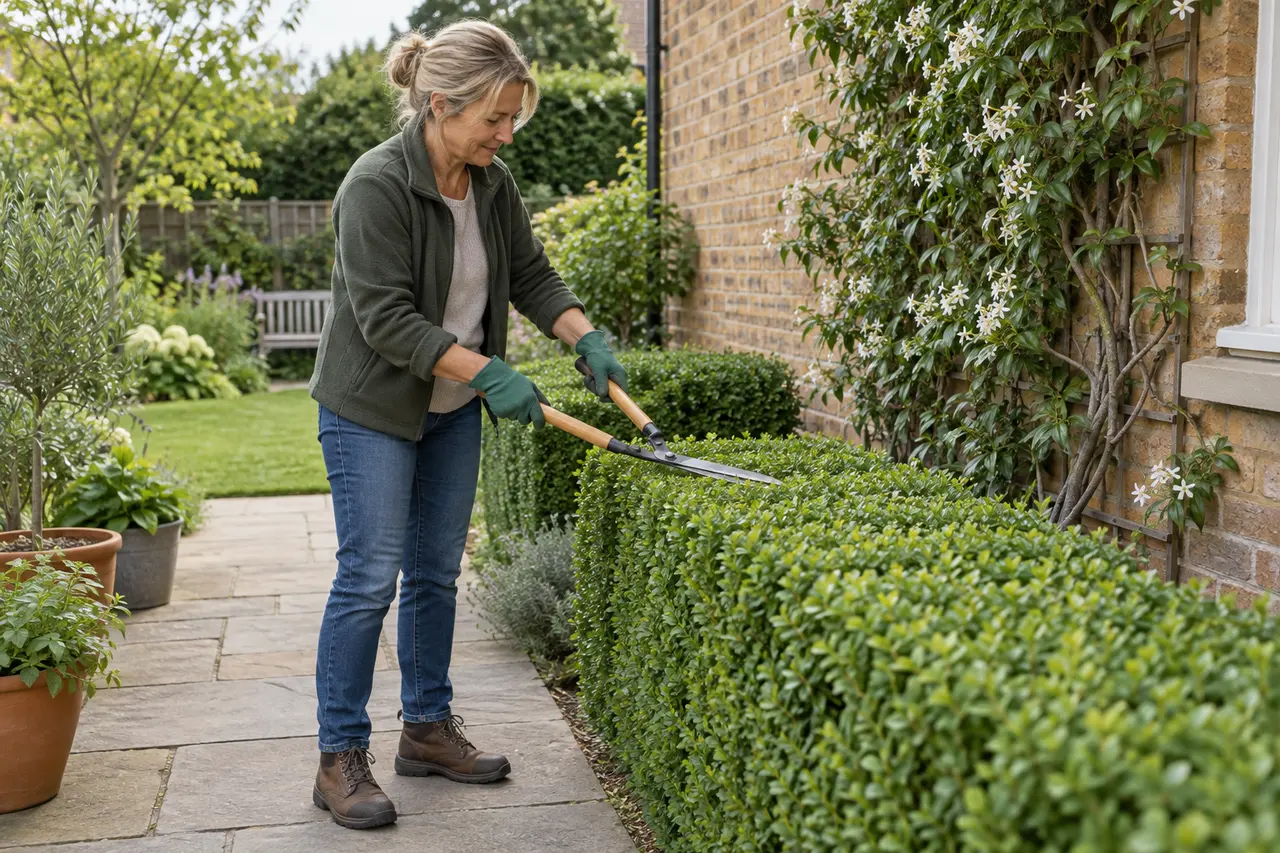
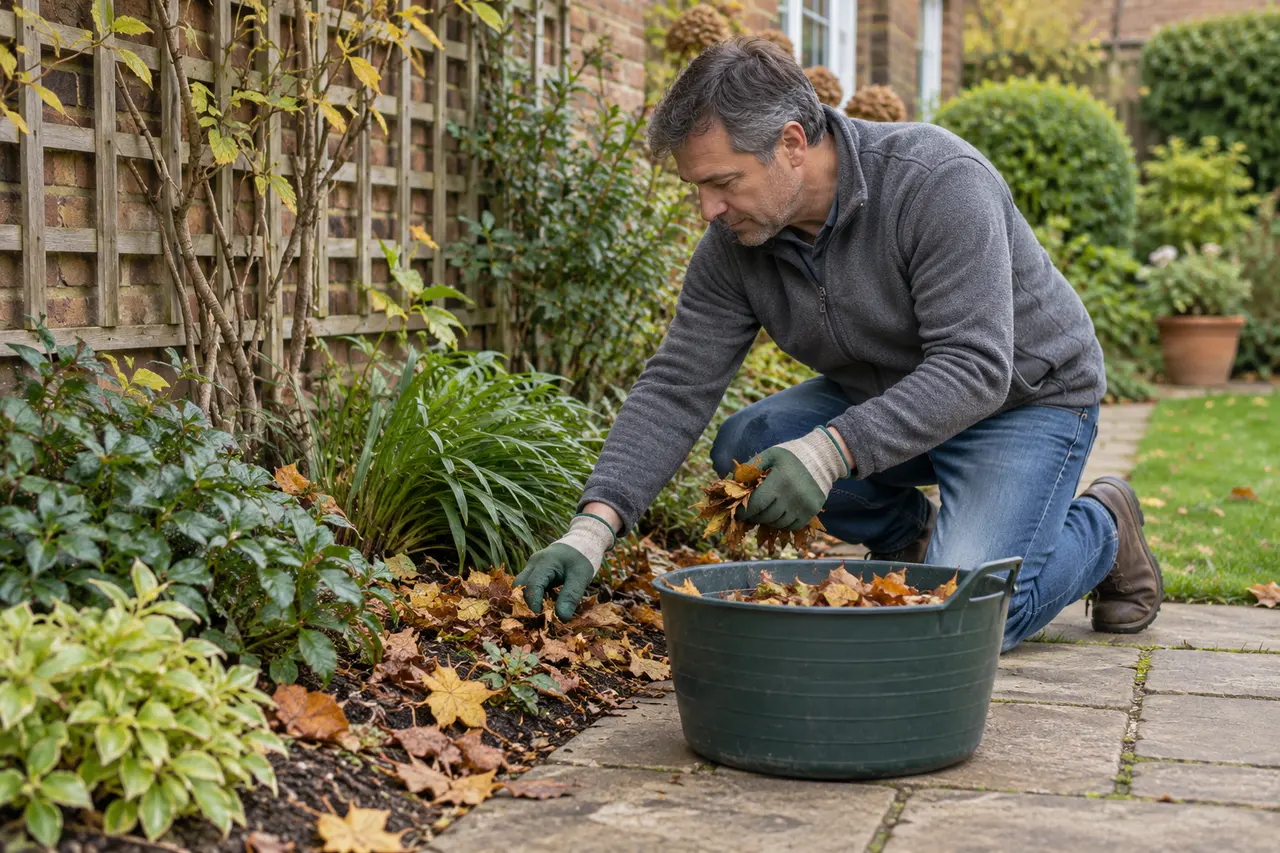
The framework as seasonal foliage changes
Connections kept identifiable during loose-leaf gathering
Fallen foliage can expose fastenings and woody branches previously hidden by leaves. We use that view to identify each retained part’s role before gathering the loose material around it. The plant’s actual habit and condition guide any cutting decision, while the seasonal surface task leaves the occupied framework understandable as the bed and nearby grass receive their suitable attention.
Our closer view distinguishes twining stems, tendrils and self-clinging growth by their actual attachments. Each reachable connection is followed before an old fastening is removed. During seasonal leaf collection, we lift suitable loose material from the base with those retained structures clear, keeping the plant’s support and the detached leaf load recognisable throughout the collection and its final movement from the working area.
Further services around a trained planted boundary
Design of the climber’s mature support relationship
Our garden-design proposal can relate a chosen climber’s habit to the surface and framework it will occupy as it matures. Reachable space for later care remains part of that arrangement. New structural fixings or trellis rebuilding have their own project components, leaving the plant selection, supporting work and continuing maintenance positions clearly identified within the proposed planted boundary.
Tree thinning with its intended result specified
Our tree-surgery proposal identifies whether suitable internal branch selection or a change to outer spread is the intended outcome. Crown thinning can retain a broadly similar silhouette, while alteration of overall dimensions has its own suitable specification. We keep that actual result clear, with any light-related aim related to the particular tree and the receiving planting below as part of its assessment.
Product information retained before another paving treatment
Where a product has already been applied, our jet washing preparation identifies it and any remaining residue before another material is proposed. Label and safety information guide compatible suitable use alongside the actual job requirements. Any chemical component remains explicit in the selected operation, leaving the receiving surface and its previous treatment connected to the next appropriate cleaning method.
A continuing water observation after channel clearance
If water remains standing after the specified gutter clear-out, we retain that observation separately from the completed deposit removal. Fall or alignment may need appropriate further consideration alongside the actual run and symptom. This keeps the current channel result clear while any required assessment, re-levelling or repair has its own defined follow-up for the condition that continues to be visible.
The seasonal tree identified among retained plants
Our Christmas collection arrangement identifies the actual outgoing tree before handling begins, including where similar potted conifers remain nearby. Living plants intended for continued care stay distinguishable from the item booked to leave. The crew therefore has a clear practical basis for the collected material and receiving route, preserving the retained containers and their planting through the seasonal removal task.
Include the reachable hand work in the allowance
These are general gardening guide rates. Following stems, adjusting agreed ties and gathering small pieces can take focused time alongside the larger cuts.
| Gardening time | Guide rate |
|---|---|
| First hour | £83 |
| Each subsequent hour | £65 |
GBP guide prices. The complete quotation identifies the work, supplies, waste arrangements, VAT treatment and any applicable access or parking charges.
Questions about our established-climber maintenance
How do you assess a rigid older trained branch?
We relate its existing attachment and intended form to any proposed movement. Flexible new growth and established wood present different handling conditions, so the suitable response follows that actual material. A required change to the older framework remains separately considered while appropriate young shoots can receive their own guidance within the retained support.
How is a leafless trained stem treated during collection?
We identify its role and the plant’s seasonal habit before selecting a cutting operation. Suitable loose-leaf gathering can continue around the retained framework while those decisions remain attached to the individual climber. The completed seasonal task therefore leaves the living arrangement recognisable alongside the material removed from the base.
Can your task focus on the existing fastenings?
The identified work can inspect reachable ties and their contact with the plant, assessing the fit and useful role of each. Any needed new materials or permanent repairs remain separately stated. That gives the current arrangement its suitable close attention while the extent of additional support work stays clear for the particular plant and framework involved.
How is a climber behind the hedge kept identifiable?
We trace reachable stems and their connections before the boundary cut, keeping the two plants distinct through the working view. Uncertain attachments remain for suitable identification, and the approach follows the controlled position available. This preserves the trained plant’s main structure while the accessible hedge receives its appropriate separate finish.
How does foliage clearance relate to a proposed renovation?
Our gathering opens a clearer view of the plant and receiving ground. A substantial reduction then has its own assessment of identity, growth, condition and timing. The collection and that larger operation remain connected but distinguishable stages, giving any subsequent renovation a practical basis in the actual framework revealed during the earlier surface work.
The retained framework carried through its next growth stage
Our Edgware garden-care services can connect focused climber attention with suitable grass, bed and boundary work around it. Main branches, new guidance and useful attachments stay identifiable through collection, leaving the established plant manageable within its available structure and later care connected to the growth intended to remain.