

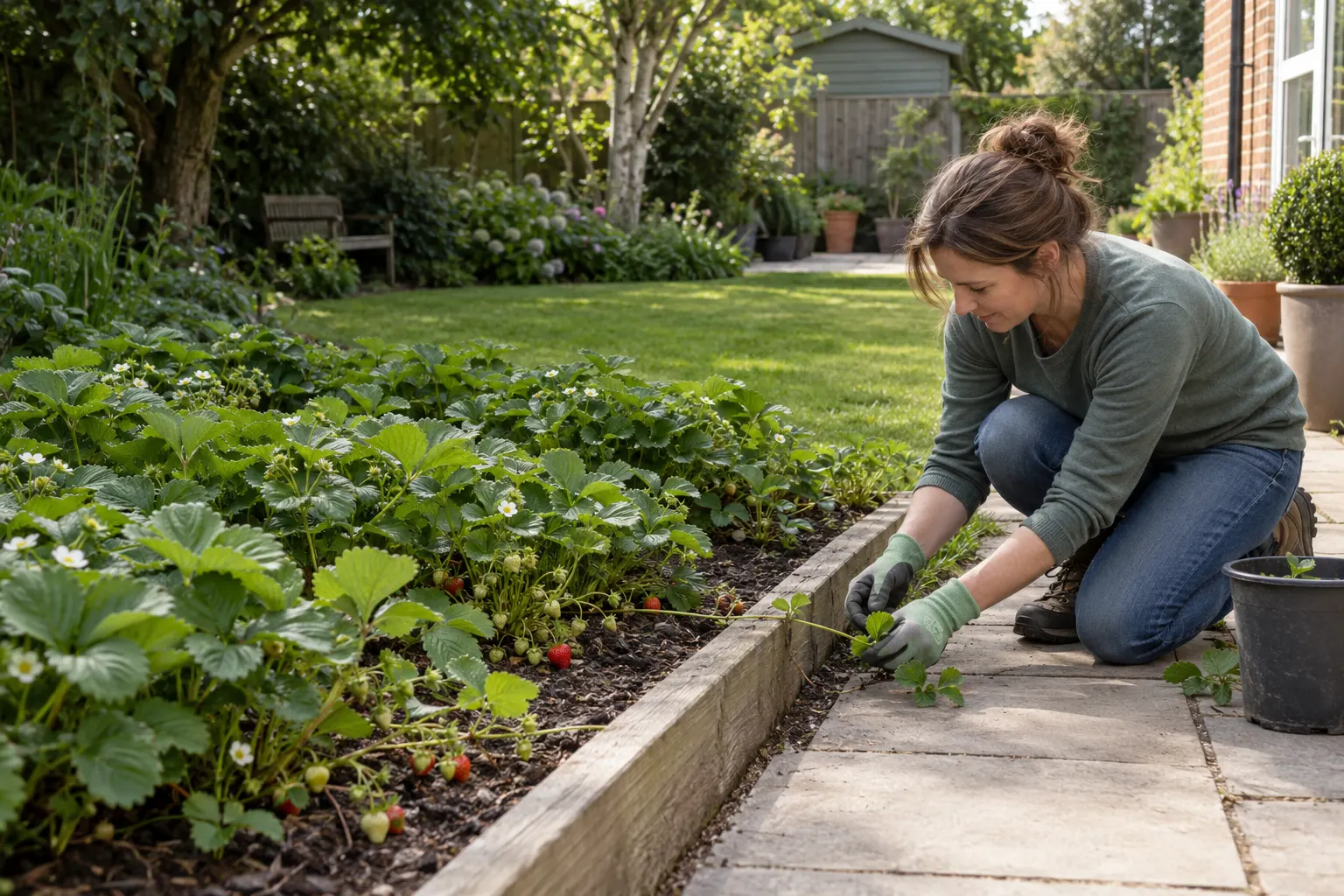
Selected strawberry runners kept connected to their intended role
Gardeners Dulwich
We can include specifically identified strawberry runner care within the planted-bed work, separating surplus spread from young plants retained for renewal. Our gardeners trace each connection, work around seated crowns and keep selected rooting positions clear of mowing and collection. Subsequent separation follows adequate root development, with the actual plantlet and parent connection assessed at the appropriate growing stage.
- How is a selected plantlet separated? We retain its parent connection until adequate roots develop, keeping the young plant’s position stable through the agreed rooting stage.
- How do you position a runner for rooting? Our method follows the plantlet’s own position; the connecting runner is a stem and does not need burying along its whole length.
The parent, the runner and the young plant
How do you distinguish runner care from weeding?
We trace trailing growth to its parent and any young plant before selecting removal. A runner can belong to an intended replacement or to unwanted spread outside the bed. Where removal is appropriate, a controlled cut releases the chosen connection while the retained parent crown remains seated in its soil.
What governs the separation of a retained plantlet?
Our selected rooting task keeps the young plant supported in a suitable position while its own roots develop. The connecting stem is severed after suitable root establishment, keeping the plantlet’s actual readiness clear alongside its newly developed foliage. Materials and continuing care remain part of that arrangement, connecting the initial positioning with the later decision to separate it from the parent.
The slender connections through the foliage
Runner identification before selected growth is removed
We follow the connections extending from established strawberries to locate the young plant at each intended runner. A leaf stalk ending at a leaf, a stem reaching another plant and a separate weed have different roles. Our hand view distinguishes them before gathering from the edge, where an apparently simple handful could include all three. Our selection begins with the actual connection to the parent and the role chosen for the young growth within the retained row.
A plantlet can already be rooting into suitable ground or still rest loosely above it. We preserve its selected position while that difference is established, tracing through only the foliage necessary for a usable view. The runner is not drawn tight to discover the parent. This keeps the young plant and older crown from receiving the pulling load that would result from dragging the whole tangle towards the path.
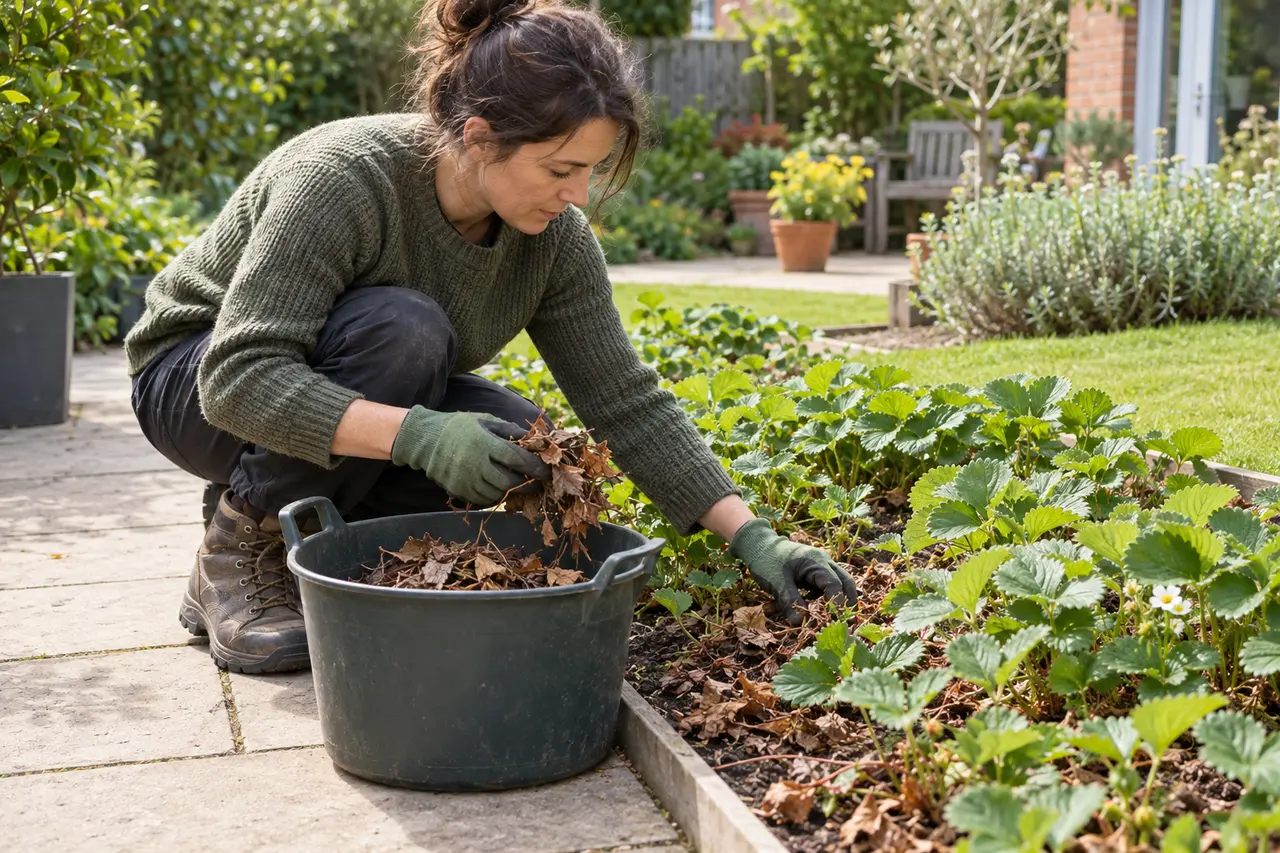
The garden-maintenance work identifies the parent plants, retained young growth and surplus connections being addressed. Removing unwanted runners is therefore kept separate from clearing the strawberry bed itself. Our surrounding weeding follows that visible selection, allowing a useful daughter plant to remain even where its connection extends farther than the older crowns and might otherwise be caught by a broad edge-clearing movement.
- Our stem tracing connects each selected runner with its parent and plantlet.
- Young plants retained for renewal are identified before surplus connections are cut.
- Close weeding keeps the established parent crown seated in its soil.
- A selected plantlet has a suitable defined position for its rooting stage.
- Loose runner pieces leave the grass before the neighbouring mowing operation.
An expressly included young-plant operation
A stable receiving position while the plantlet roots
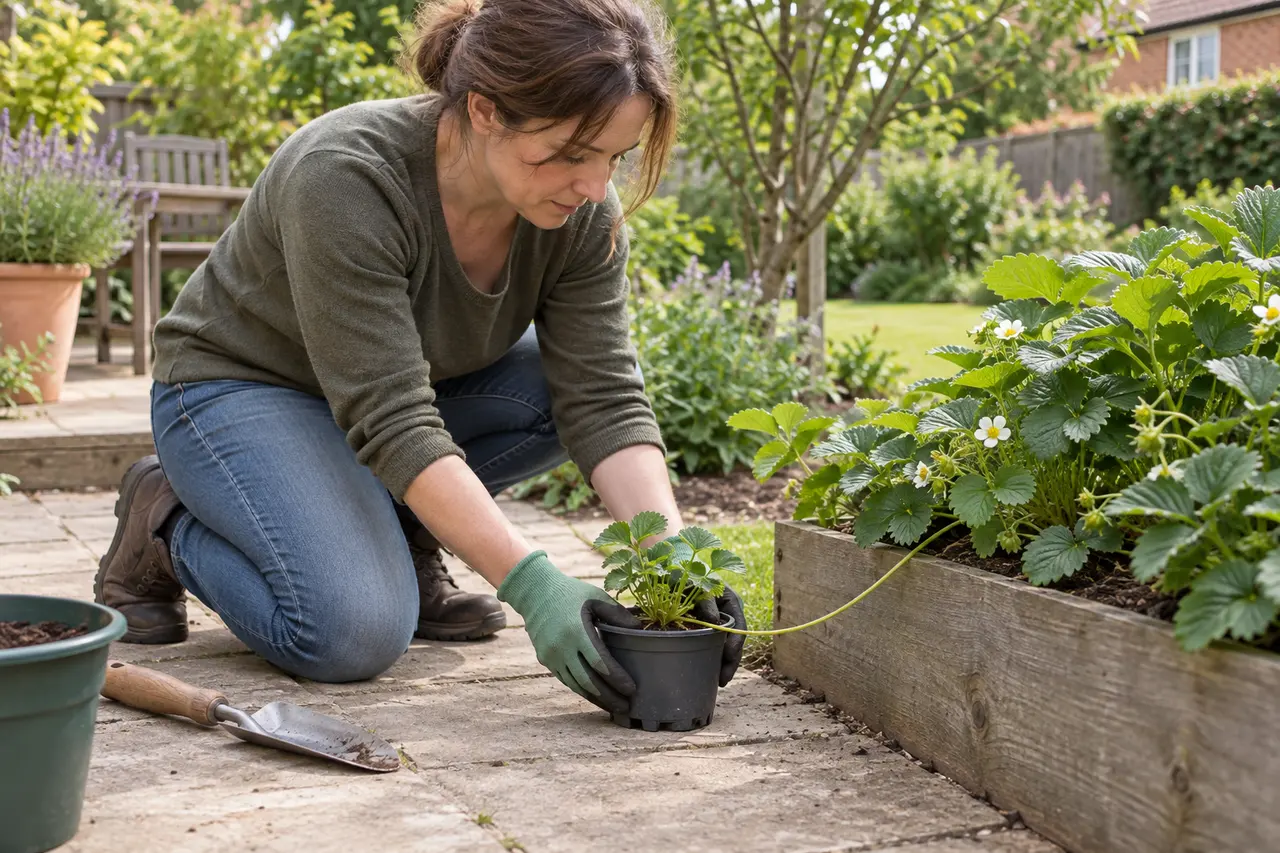
Where a selected runner is retained for a new plant, we prepare its appropriate rooting position while it remains connected to the parent. Suitable ground or a small pot beside the established row can provide that receiving space. The crown stays at its proper surface level; a mound is not used to hold the connection down by burying the young plant’s centre.
Our positioning follows the appropriate runner-rooting method, with any small pot close enough to avoid strain along the runner. It stands securely outside the route needed for other work. Moving that pot can load both the developing roots and the parent, so the arrangement remains understandable while establishment proceeds. That arrangement keeps the temporary container connected to the parent record and the plantlet’s actual rooted position while establishment continues.
The selected material also needs appropriate moisture and continuing attention while roots develop. Our arrangement identifies responsibility between visits and retains suitable supplies, pots and compost with that task. We assess separation from the actual rooted stage and retain the young plant’s suitable continuing care through that developing connection. The operation therefore keeps initial placement, ongoing care and the later severing decision as successive parts of a specifically included plant task.
The retained crown in its soil
Selective weeding around the strawberry’s growing centre
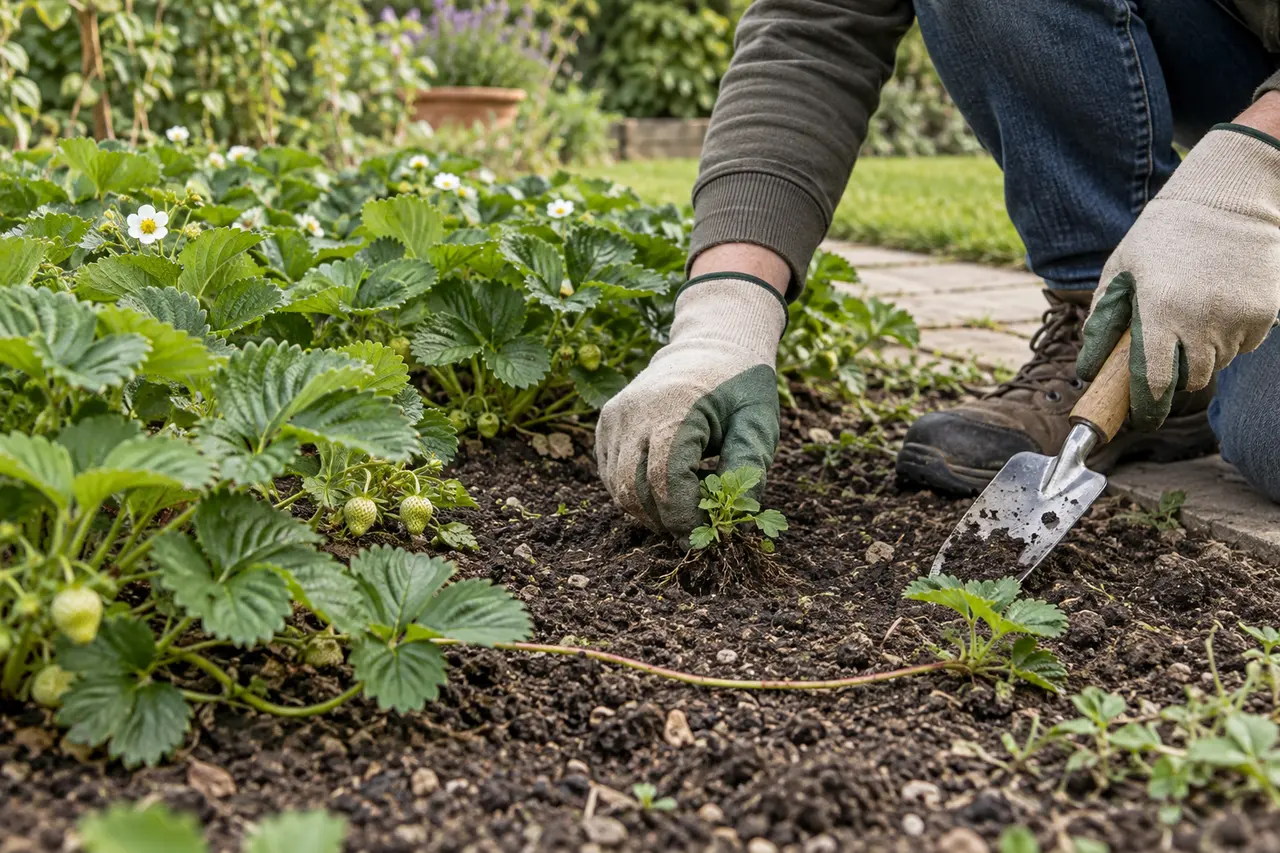
We locate the crown between the leaves and roots before loosening an accessible neighbouring weed. Our tool works in the visible soil around the identified unwanted plant, with the strawberry crown and roots retained in their known position. We keep the strawberry’s growing centre seated while accessible competing roots are loosened and gathered from the suitable neighbouring soil.
Where a runner crosses the selected weed, we release the two before moving the removal load. A caught connection could strain the parent or shift a plantlet that has been positioned for rooting. We work in smaller portions where necessary and keep wanted stems visible. A persistent entangled root is identified for its appropriate next decision while the living runner, plantlet and parent remain stable.
Appropriate displaced soil returns around the roots without covering the crown’s growing centre. The finished soil follows each retained plant’s appropriate level, with the crown’s growing centre visible beside the collected weed load. Any included mulch, feed or wider planting operation remains related to the strawberries’ actual requirements and stage, with its materials distinguishable from the weed load removed during the close work around their bases.
The grass beyond the trailing stems
Runner positions established before the lawn cut
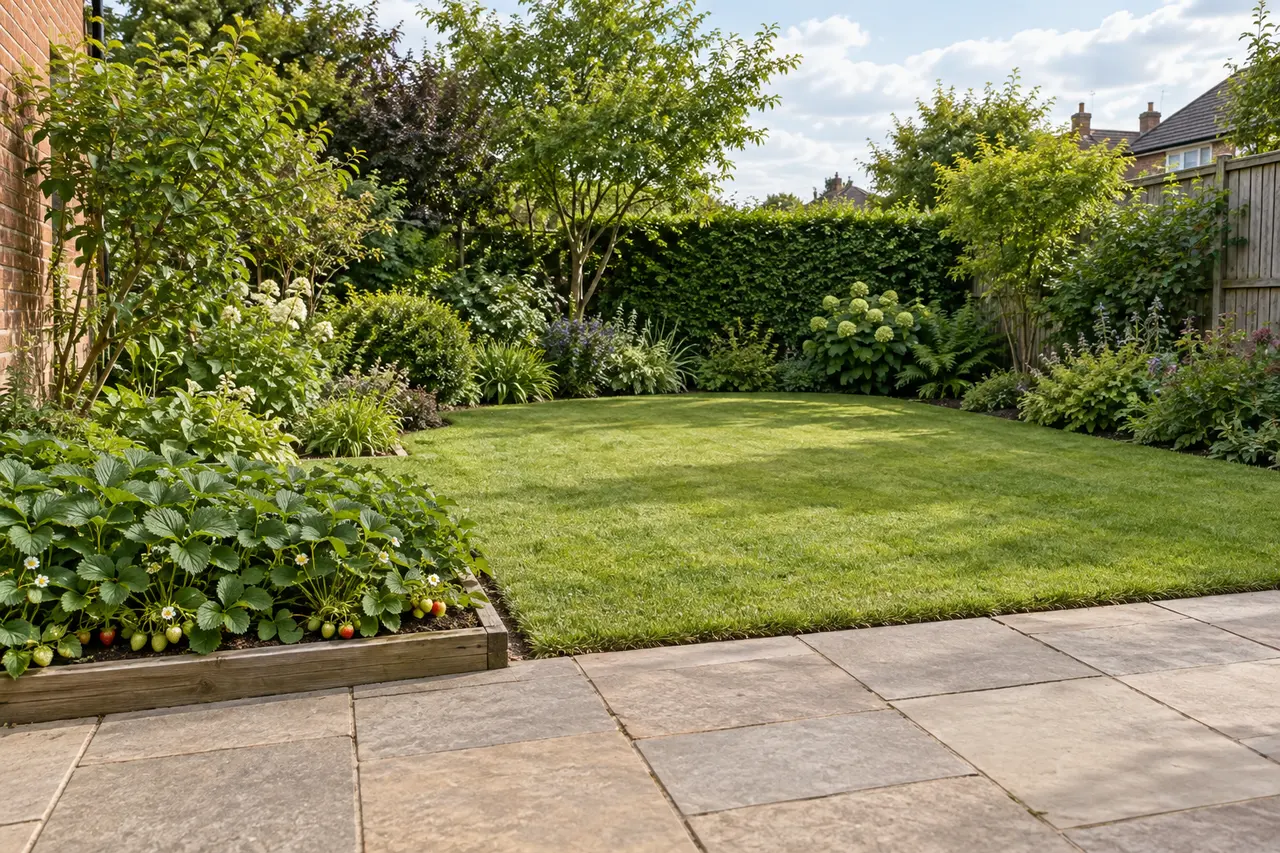
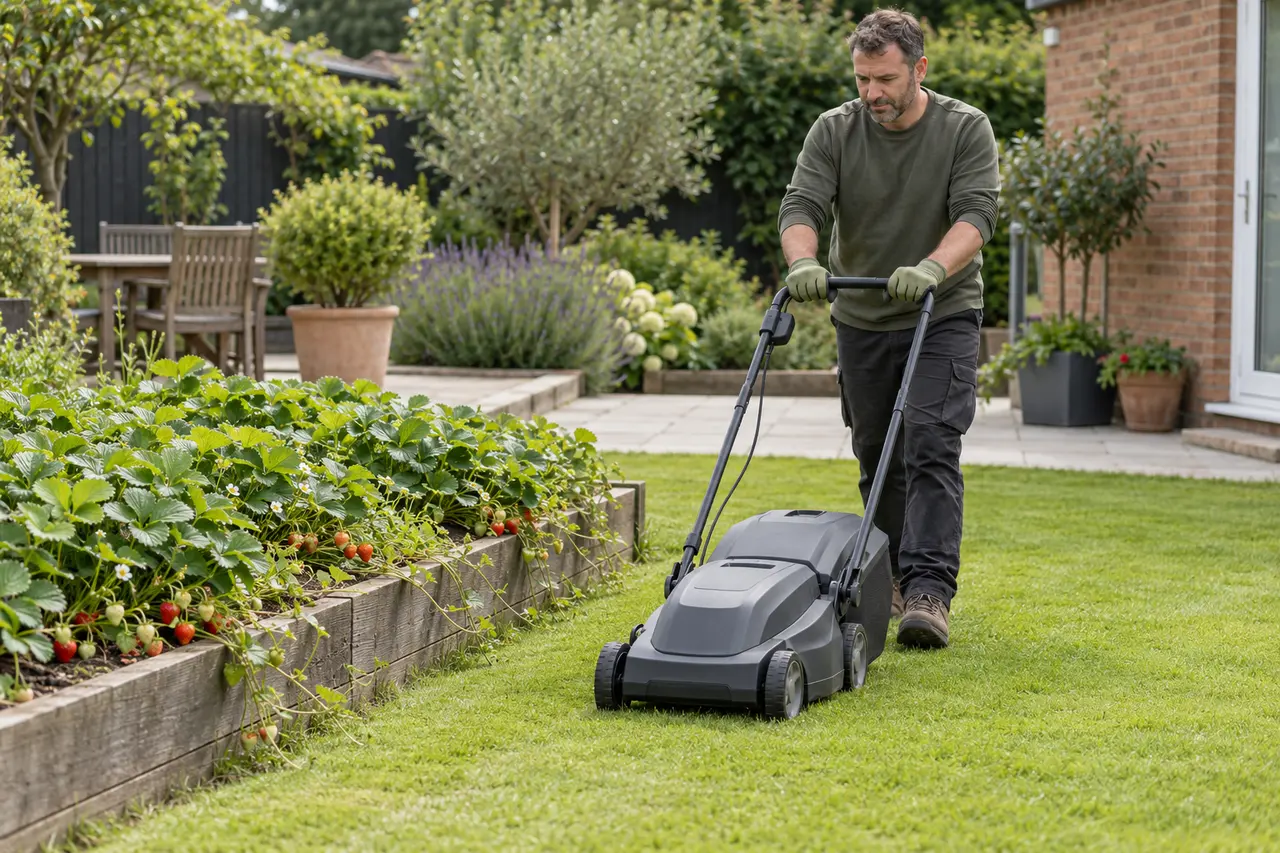
We determine the intended treatment of growth reaching the lawn before bringing the mower alongside it. A retained plantlet receives a suitable position outside the cut, while surplus stems are handled and collected appropriately. The machine is not used to make that selection by drawing a connected runner into its working area. Our preparation therefore retains the bed’s living links independently from the ordinary grass operation beside it.
Loose pieces, small rooting pots and tools are gathered or positioned clear before the mowing task. The route follows suitable supported turf and an appropriate finish at its established edge. Our mower route keeps retained leaf stalks and crowns clear of the deck, with a suitable separate finish for the accessible planted margin.
Afterwards, our clipping collection preserves the positions of young plants rooting near the boundary. The soil beside each plantlet remains its growing area, with grass collection directed to the separate identified receiving position. We keep that material on its arranged route and retain any separate lawn application within its actual selected area, so the finishing stage does not undo the runner care that made the planting positions clear.
The foliage operation for the actual strawberry type
Leaf treatment kept distinct from runner selection
Our assessment identifies the plants before choosing post-fruiting leaf work. Suitable summer-fruiting strawberries can receive old-foliage cutback after cropping, while perpetual types generally retain a more selective removal of dead, damaged or diseased leaves. Those different treatments are not combined with runner management into one low pass. The plant’s actual fruiting type and purpose remain the basis for the material selected.
A wider garden clean-up gathers what has already been identified and detached. A caught piece is checked before a whole leaf layer is lifted, because a living runner can still cross through the loose load. Our collection keeps parent crowns and selected daughters in their established positions, opening the receiving surface without treating every connection exposed by that progress as another item to remove.
Old ties, labels and unrelated objects remain distinct within the waste-handling arrangement. Any plant-health concern stays associated with its parent or young source material through collection, movement and any specifically included potting stage. Our handling does not present a fresh pot as evidence that an underlying issue has been removed, keeping the material’s known condition relevant before it is used for renewal.
Hedge fragments above connected young plants
Collection that preserves the runner’s retained links
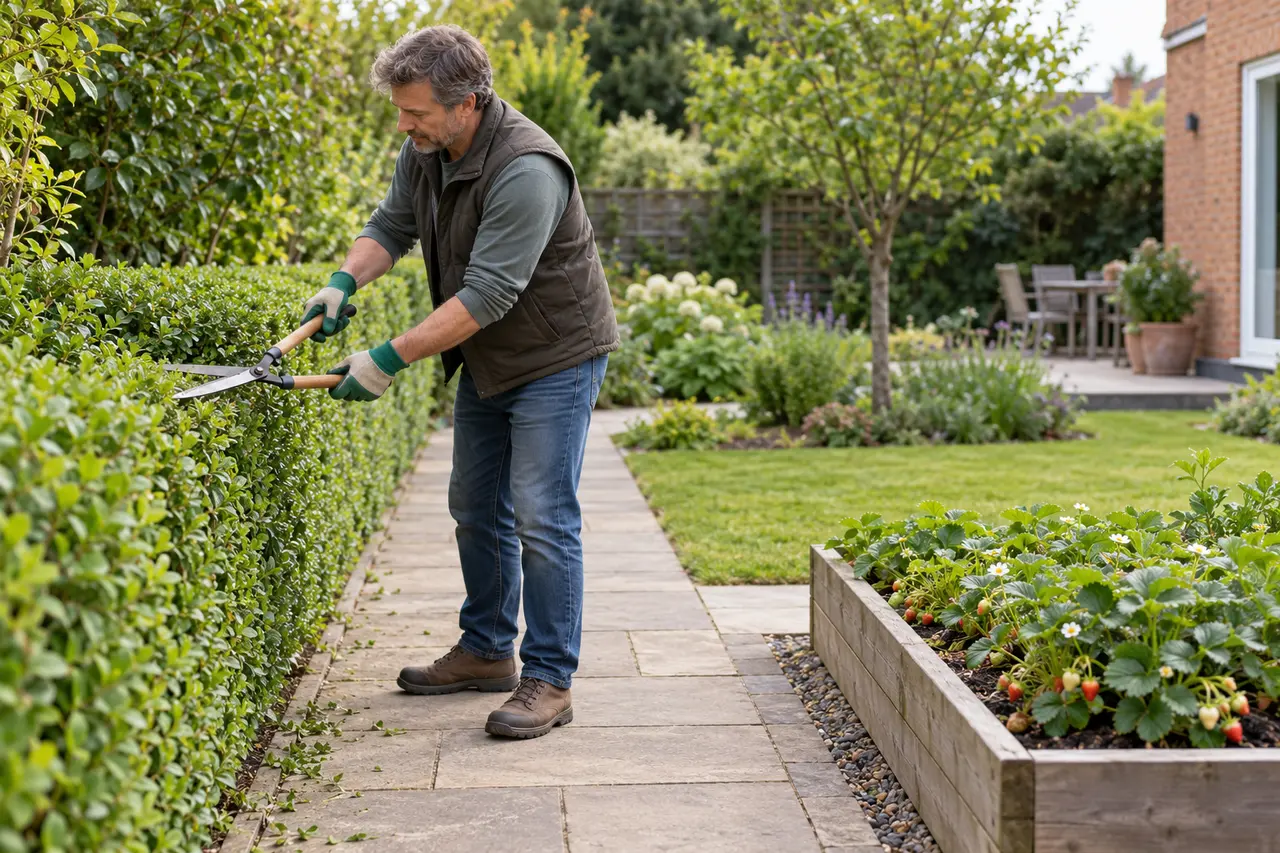
Our hedge arrangement includes the low strawberry receiving surface before trimming starts. Fine fragments can lodge across runners attached at both ends, so the collection position remains outside selected plants and rooting pots. A tight sheet over those positions could move them when lifted later. We account for that withdrawal as well as where fragments initially fall, preserving the connected arrangement throughout the higher cutting task.
Reachable hedge work follows a firm controlled position and checks for nests being built or used, with disturbing cuts postponed where necessary. After the tool stops, we lift accessible fragments from the receiving area individually. We release a caught runner from the clippings before the gathering movement, preserving its selected living connections as the load leaves the sheet.
During subsequent seasonal garden care, the retained young plants may need different attention from the established row. Continued rooting, separation when ready and later suitable planting follow their actual stages. We keep those decisions independent from the boundary tools and collecting load, so convenience during a hedge visit does not determine the moment a living parent connection is cut.
Further services around a retained fruit bed
Design for future replacement of established strawberries
Our garden design can identify a suitable receiving group as older strawberry planting becomes less productive. Available space and previous growing history both inform that proposal. Healthy replacement material has a suitable receiving position within the renewal plan, with its source and the bed’s growing history retained in that assessment. The plan therefore connects renewal to the receiving conditions, not only to how many young plants the existing row produces.
Ivy’s own roots distinguished from a feeding parasite
Our tree work assessment can retain the distinction between ivy using a tree for support and a parasite drawing sap through its attachment. Ivy roots in the ground; its clinging rootlets do not feed from the host in that way. Its extent and relationship to the actual tree can still need attention, without treating its presence alone as a diagnosis requiring routine bark stripping.
Washing-equipment movement outside newly seeded turf
Our paving cleaning route accounts for prepared seeded grass before new shoots become visible. Boots, wheels and hoses can disturb its surface and seed contact, so we keep a suitable approach outside that establishment area. Bare-looking ground is not treated as an available staging space merely because the wash needs somewhere to stand equipment, retaining the grass task’s prepared finish alongside the hard-surface operation.
A rain-chain outlet retained within the drainage arrangement
For gutter cleaning, we identify an intentional exposed chain or cup connection separately from a conventional closed downpipe. Water visible along that route is not automatically a leak. Our clearance preserves the intended discharge while addressing the booked channel deposit, with installation, conversion or repair of the chain remaining separate from the cleaning work specified for the existing arrangement.
Tree handling with resin contact accounted for
Where resin is present on a Christmas tree, our booked movement can use a suitable receiving position or protection to keep the sticky area off a delicate floor. Loose needle gathering would not remove an adhered resin mark, so controlled carrying remains part of the practical arrangement. The tree is not dragged over a finished surface merely because its next position is only a short distance away.
Time for selection as well as surface tidying
General gardening guide rates relate to agreed time. Tracing runners, selected hand work and controlled collection contribute to the visit; any requested rooting materials or further planting need their own understood scope.
| Gardening time | Guide rate |
|---|---|
| First hour | £83 |
| Each subsequent hour | £65 |
GBP guide rates. Establish tasks, supplies, waste handling, VAT treatment and applicable access or parking charges as part of the complete quotation.
Questions about our strawberry runner care
How is the runner distinguished from a root?
We follow it as a slender stem carrying plantlets, with selected young plants rooting at suitable individual positions. That method does not require burial of the entire connection. Parent and daughter crowns retain their appropriate levels while the identified plant receives the actual rooting operation included for it.
How is the parent’s condition retained in the renewal decision?
Our selection uses suitable healthy material and keeps known concerns visible before a connected plant is retained for propagation. Rooting a daughter does not automatically remove an issue from its parent. The source remains relevant to the young plant’s suitability, with known health information retained alongside the actual material held in its new pot.
How does the variety affect your runner expectations?
We identify the actual strawberry and its expected growth before selecting the appropriate renewal method for that particular variety. Some are runnerless or commonly raised from seed, so the suitable renewal method follows its expected growth. The work distinguishes runner-grown daughters from seed-raised planting, with the relevant material and stage clear in the actual task arrangement.
How are temporary rooting pots moved when necessary?
We account for the still-attached runner before repositioning its container. Suitable slack and controlled support preserve both ends of that connection and the young root position. The pot’s route remains clear of other active work while its position and parent connection are controlled together through any suitable movement.
Selected plantlets supported through their actual rooting stage
Our Dulwich garden care can keep runners intended for renewal separate from surplus growth while the chosen young plants develop. Their receiving positions and eventual destinations remain connected to the parent record, giving later separation and continuing bed care a clear basis in the selected plants.