

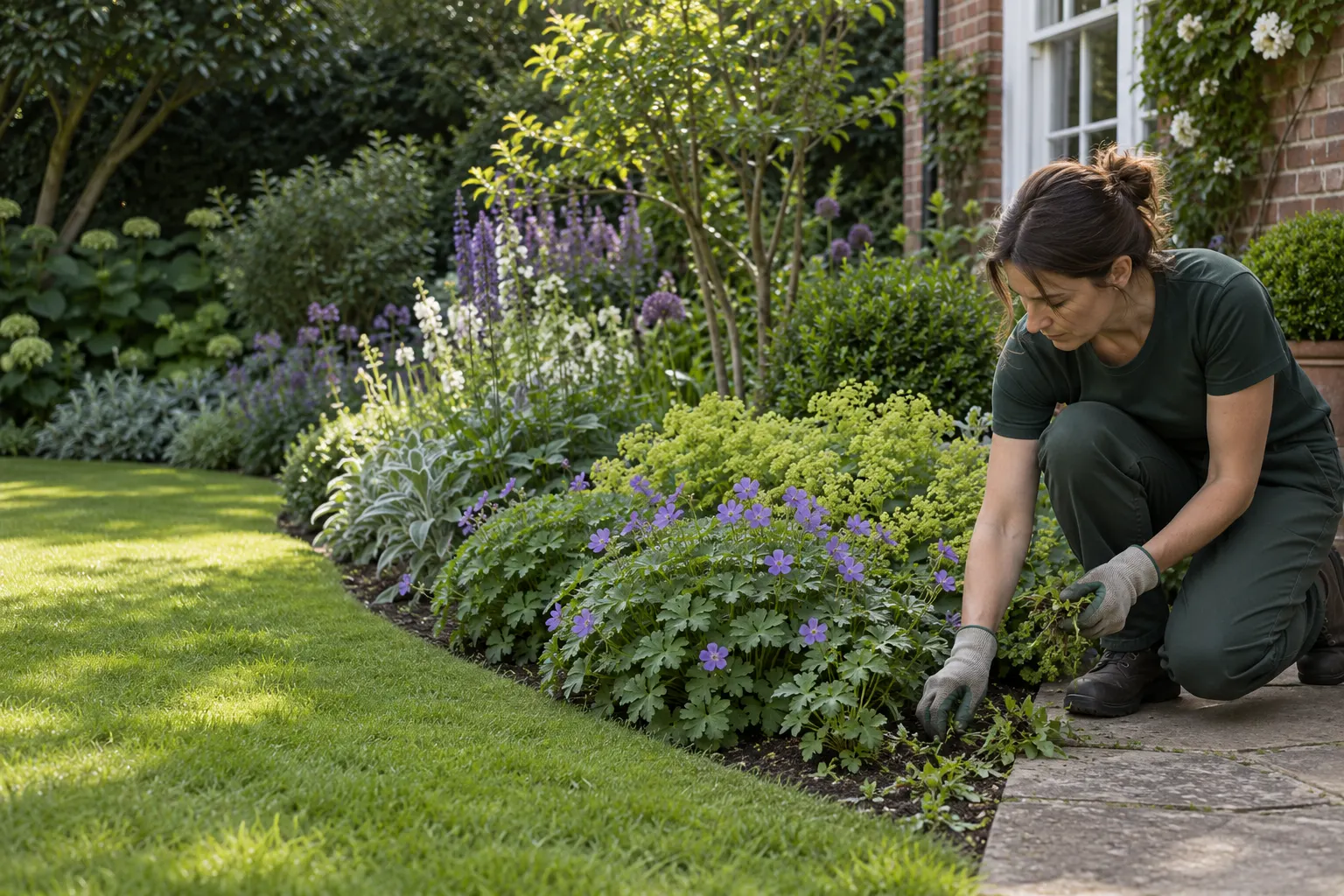
Selected hardy-geranium renewal within the retained border
Gardeners Dagenham
We can renew suitable early-flowering hardy geranium foliage after its flowering stems finish, keeping the established crown in place. Our gardeners select the clump, collect the soft material and attend to accessible weeds revealed around it. Neighbouring planting, the lawn margin and later fresh leaves remain distinct throughout the work.
- Which geraniums does this renewal concern? Our selected work concerns hardy cranesbills; bedding plants sold as geraniums can be Pelargonium and require a different treatment.
- What remains after the foliage cutback? We leave the established crown seated for its next growth stage, with any lifting, division or relocation identified as a separate suitable operation.
The plant and growth stage receiving the renewal
What does your post-flowering hardy-geranium work involve?
We identify a suitable early-flowering clump whose flower stems have finished, then select an appropriate cutback to encourage fresh foliage. That is a different operation from individual deadheading. We follow the particular plant and its finished flowering stems, keeping the useful ongoing growth of neighbouring perennials outside the selected renewal extent.
How is the established crown retained?
Our top-growth operation leaves the perennial base seated in its intended position. We distinguish that renewal from lifting, dividing or moving the plant, which require their own purpose and suitable handling. This keeps the result clear: selected older foliage is removed while the established clump remains available to produce its next growth in the same border.
The clump after its early display
Foliage renewal selected for the actual hardy perennial
Our assessment identifies the hardy cranesbill whose earlier flowering stems and older foliage have formed a sprawling layer. Where suitable, selected cutback can encourage a fresh leaf mound while neighbouring plants remain at their useful stages. We define the material being removed around that particular clump, not a uniform height across the whole border. The intended result moves the selected perennial into a suitable renewed leaf stage while its established position and neighbouring planting remain identifiable in the bed.
The name remains important to that selection. Hardy Geranium plants are different from the tender bedding pelargoniums often called geraniums, and our garden-maintenance visit does not exchange their treatments because the common wording overlaps. We keep the actual plant identifiable before cutting, with the purpose understood as suitable foliage renewal. The operation is not presented as replacement planting or a guaranteed second flower display. It provides the appropriate selected attention to the clump present, while ordinary bed and grass work can continue around its retained base.
- Our selected cutback follows an identified suitable hardy-perennial clump.
- The established crown remains seated in its intended border position.
- Long-flowering neighbours stay outside the completed-flower renewal treatment.
- Soft detached material is gathered before the adjoining lawn cut.
- Emerging leaves remain visible during subsequent hand care around the base.
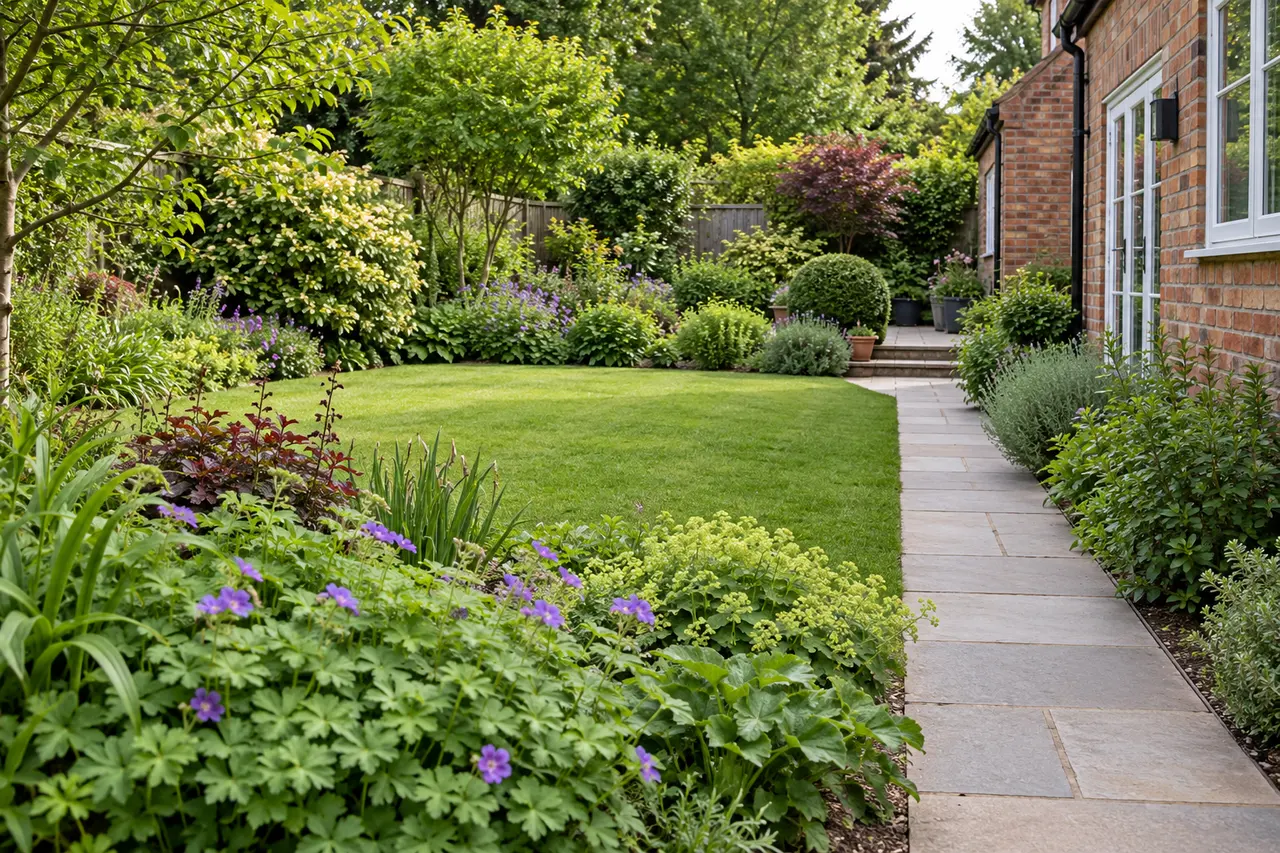
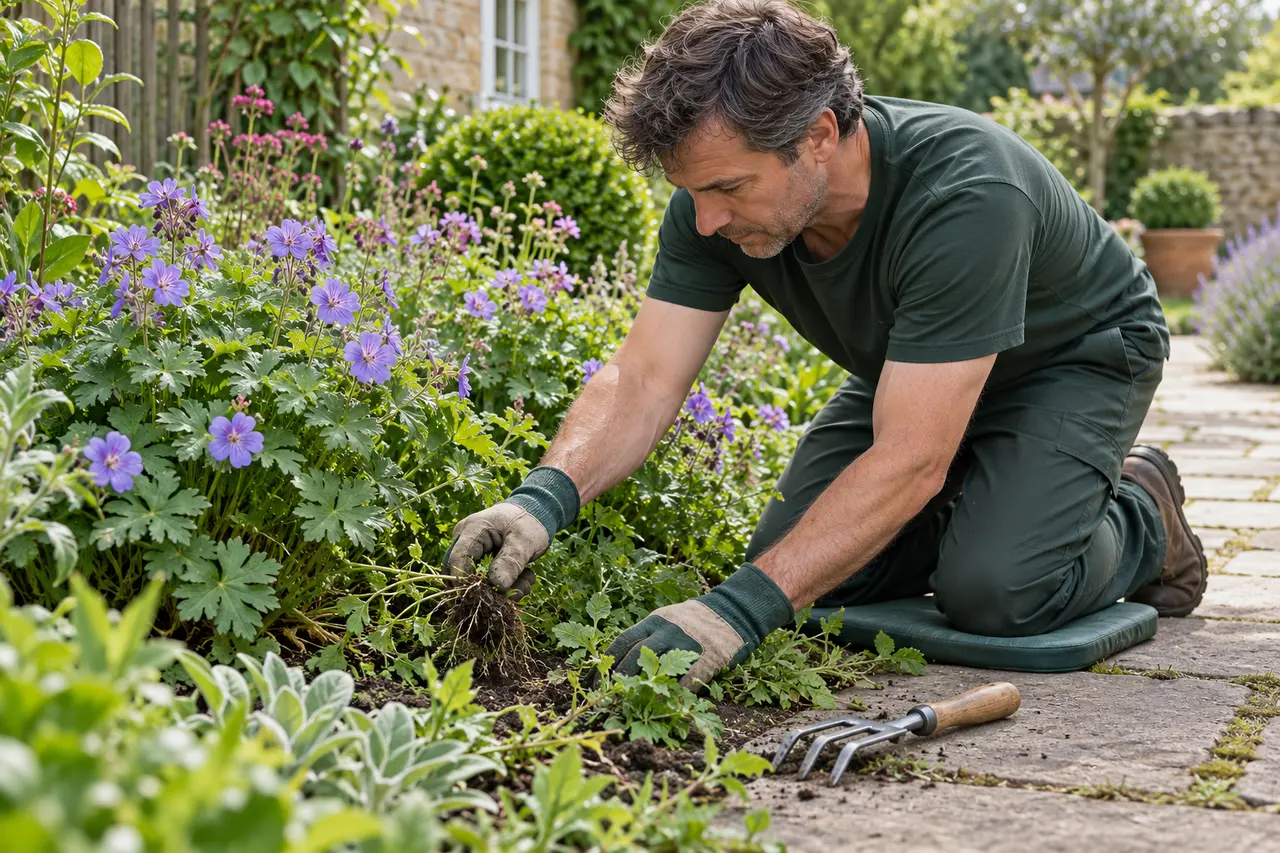
The base revealed after shortening
Close weeding around a crown that remains occupied
After the older top growth is removed, our gardeners use the clearer view for selective attention around the plant base. Accessible weeds are distinguished from the retained crown before their roots are loosened. The apparent opening is still occupied by a perennial intended to grow there again, so we avoid cultivating indiscriminately through it. This makes the newly visible surface useful for controlled hand work without changing the operation into disturbance of the established plant or an assumption that the ground is available for another rootball.
Our hand tools remain controlled around that base and suitable displaced soil returns to its intended place. The finished hand work leaves the crown recognisable at its appropriate level, with displaced soil returned around the retained planting. Appropriate moisture or another included care task follows the actual plant and conditions after cutting. Larger division or fresh planting remains separately planned where required, keeping an ordinary renewal from becoming an unpriced rearrangement of the bed and leaving the existing clump with a workable position for its subsequent care.
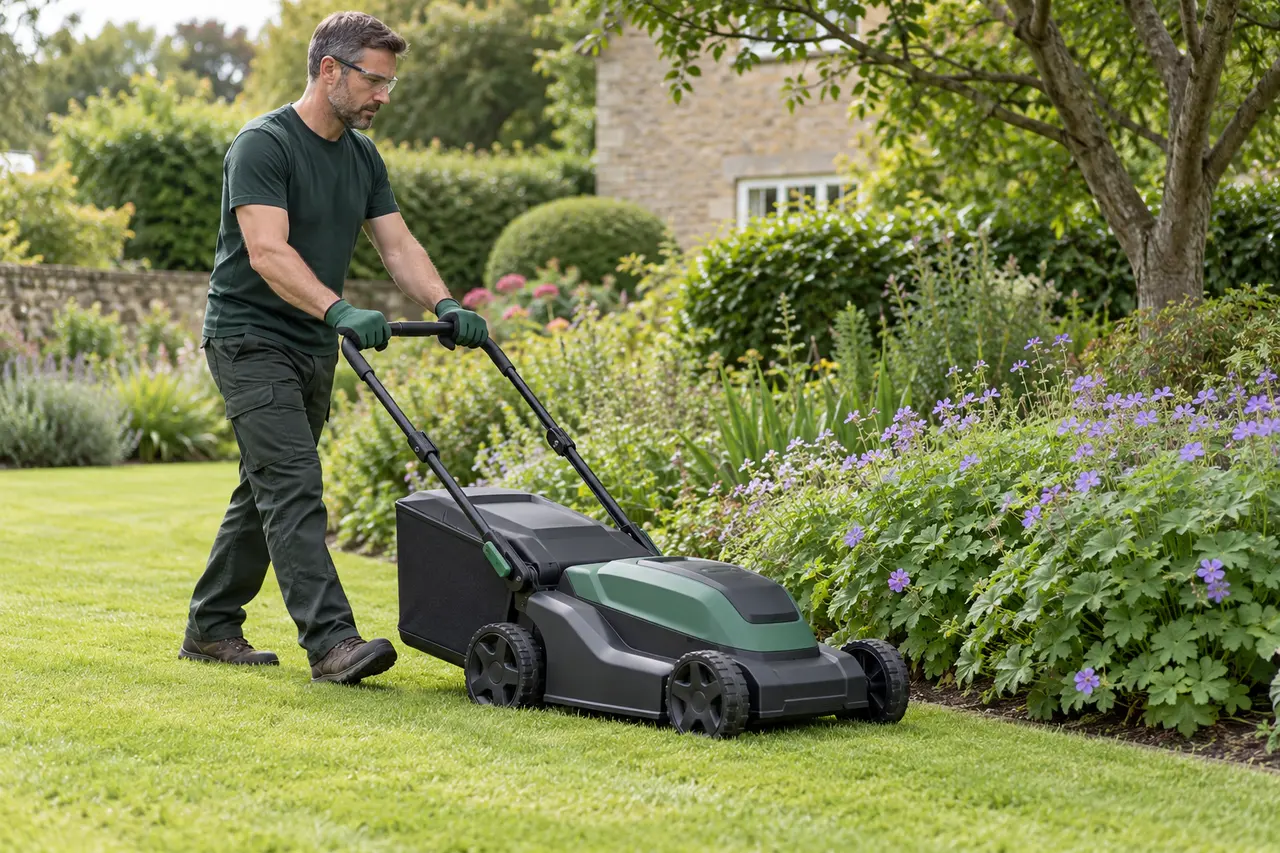
The lawn after the selected plant work
Soft cuttings collected before the separate grass operation
We gather the perennial stems that have fallen onto adjoining turf before mowing begins. The lawnmower is not used to process whatever material the cutback leaves behind. Our sequence completes the selected plant operation, retrieves its loose load and then approaches the grass as its own receiving surface. Our gathering clears the cutting route of loose border material while the crown and planted edge remain identifiable beside the separate lawn surface.
The lawn-care work continues to follow the turf and its condition. A lower-looking border does not provide additional lawn or another place to turn equipment. We retain the intended grass boundary and use an appropriate method for its accessible margin, keeping any recovery work distinct. As the perennial returns, its low new leaves remain part of the planted clump, not stray grass beside a recently finished mowing line. The two areas can therefore keep their separate finishes through the border’s temporary open appearance.
The boundary newly visible behind the clump
Hedge work independent of the foreground’s changed height
An opened view can reveal more of the hedge base without changing the hedge operation intended for it. Our gardeners retain its suitable screen and trimming purpose as a separate decision. The recently cut perennial position does not become a standing or reaching place for previously inaccessible work above it. This keeps the new view of the boundary from generating an additional reduction merely because the foreground now looks clearer, and preserves the living bed beneath the route needed for any appropriate hedge attention.
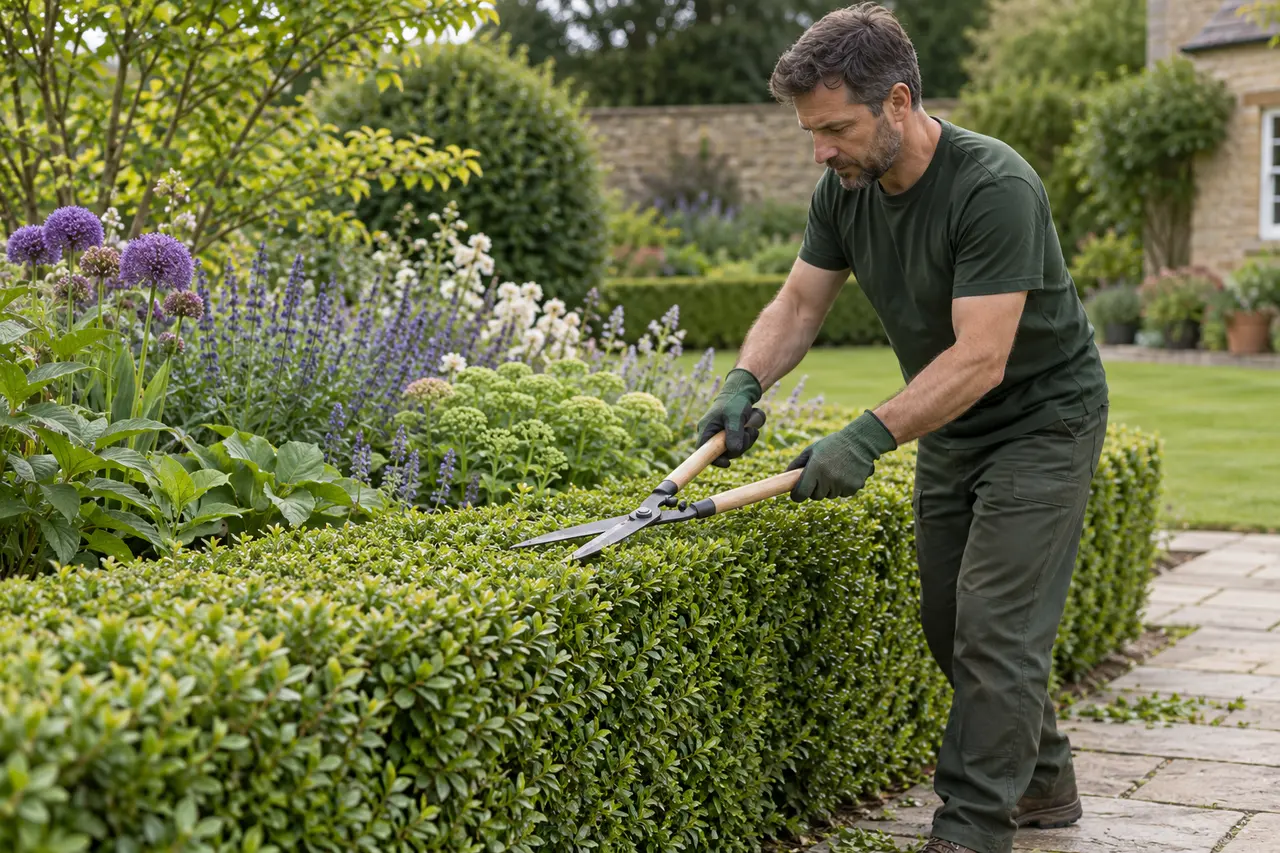
Suitable reachable hedge work follows a firm position, room for shear-handle movement and checks for nests being built or used. Disturbing cutting is postponed where needed. Once the blades stop, accessible fragments are collected with particular care around emerging perennial leaves. The hedge and renewed clump can receive attention during one visit while retaining their separate heights, footing and collection boundaries. Completing one task does not make a different cutting face or occupied soil surface automatically available for the next.
The detached mat around the plant
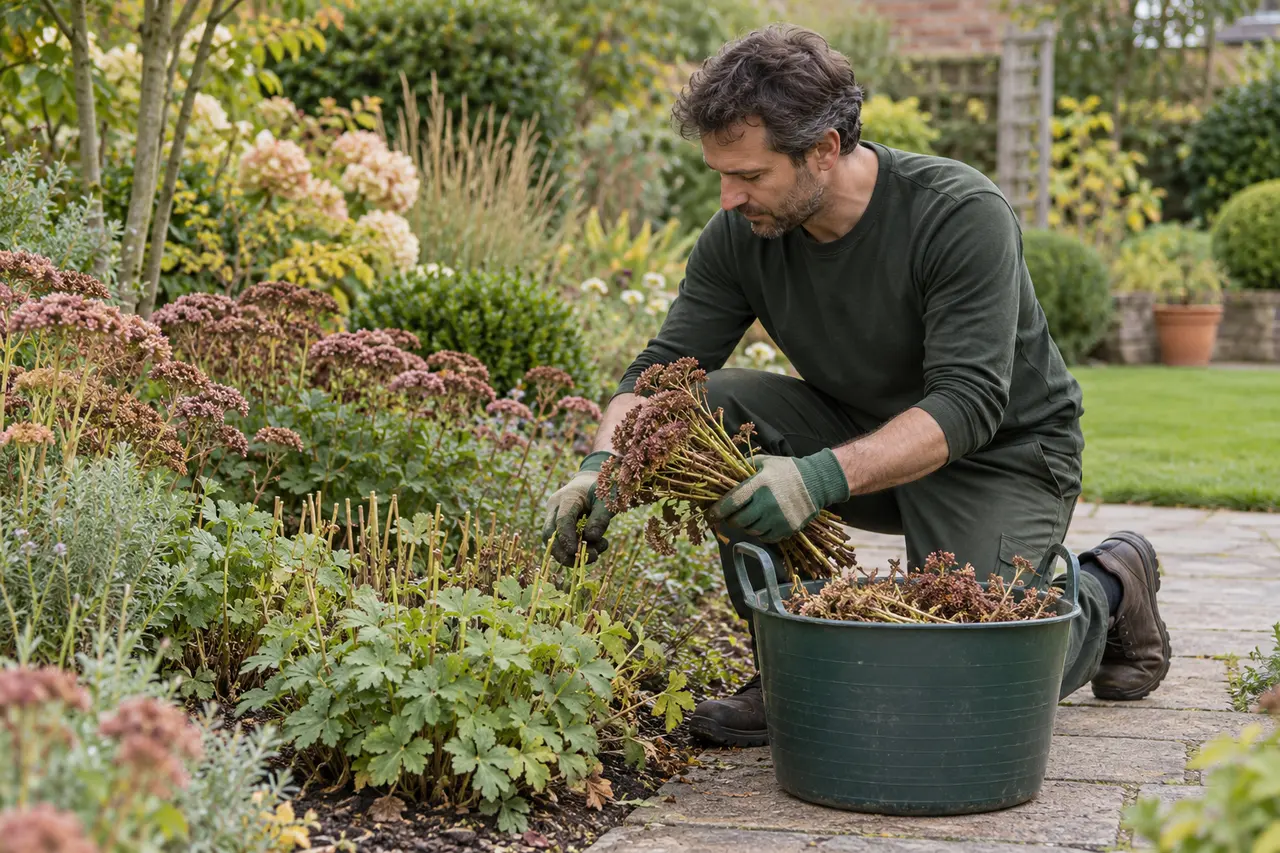
Soft material lifted with the established base left stable
Our collection checks that stems have actually been released before a gathered portion is moved. A mat can remain caught around the crown or connected to living growth, so a stronger pull is not used as the default way to free it. We lift accessible pieces in controlled portions and leave the established base seated. Where another low plant appears as the old foliage is collected, we preserve its actual stems and position as the detached load is lifted clear.
Within a heavier garden clean-up, plants receiving selected top-growth work remain separate from those included for complete removal. We gather green material from hidden supports and other objects while retained crowns stay out of that outgoing load. Our handling preserves that distinction through the last collection movement, leaving the renewed clump recognisable within the broader recovery operation.
The following mound of fresh leaves
Continued care with new growth left room to develop
Fresh foliage begins close to the retained crown, and our next weeding or litter collection keeps that low growth visible. Tools and receiving tubs have suitable places clear of the developing leaf mound and its intended footprint in the bed. Where a route passes nearby, the usable line stays separate from the footprint the plant is intended to refill. Those positions preserve the transition from completed cutback to fresh growth, keeping the occupied perennial area clear through the next care stage.
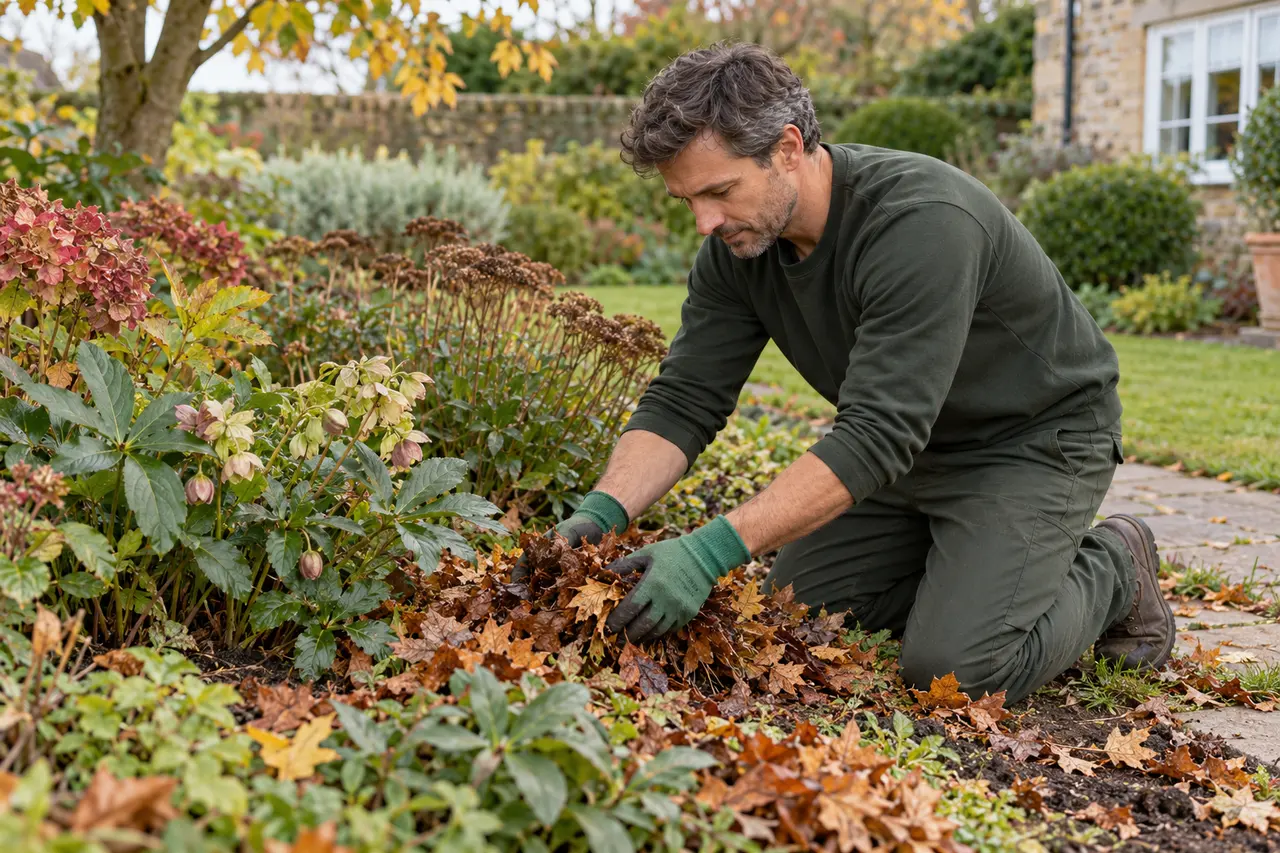
Our seasonal bed-care task lifts accessible fallen leaves without drawing a heavy grass rake over the small shoots. Suitable watering and observation follow the actual conditions, while any further flowering is assessed from what develops. The renewal’s useful result can be fresh foliage even where additional flowers are limited or differ from the first display. This gives subsequent work a realistic purpose without promising another identical flowering cycle merely because the selected earlier stems have been removed.
Further work around the retained perennial bed
Planting chosen for accessible flower food
Our garden design can include access to pollen and nectar where supporting pollinators forms part of the purpose. The RHS planting guidance recommends simple open flowers with a single petal layer. We relate suitable open flower forms and flowering periods to the receiving position, connecting the intended pollen and nectar access with the actual planting and care arrangement.
Tree-health information retained in wood handling
Our tree work material plan accounts for a known health concern before logs or bark are assigned another destination. Cut material can carry pests or disease-causing organisms to a new position, so the resulting load is not automatically designated as firewood for another garden. Handling follows the actual concern and relevant guidance, keeping a cutting proposal distinct from pest treatment or an unrestricted permission to transport every piece.
A clean withdrawal route from the paving job
Our jet-washing job plan includes the movement of boots, wheels and hoses out of the finished area as well as their route in. We position the last working section around that withdrawal so muddy equipment does not simply cross completed paving again. Any included residue finish follows the equipment movement, leaving the final inspection until the material and tools have actually left their active route.
Rigid gutter obstructions retrieved from the water route
A gutter-cleaning operation identifies an appropriate way to retrieve a lodged ball or other rigid item from its actual outlet position. The material and reachable position determine the handling, which differs from a loose-leaf load. The proposed result and collecting method keep that object identifiable through removal from the water route, alongside the separate loose-deposit load.
The specified replacement for a retained light set
A Christmas tree using existing lights retains the manufacturer’s instructions for any permitted bulb replacement. The type and rating matter as well as whether a bulb appears to fit the socket. Switching off and unplugging precedes that task where the set allows it; some decorative products are not designed for replacement.
Selected renewal with its collection time
These general gardening guide rates relate to time. Selecting the appropriate clumps, gathering their material and working carefully around retained plants all contribute alongside mowing or hedge trimming.
| Gardening time | Guide price |
|---|---|
| First hour | £83 |
| Each subsequent hour | £65 |
GBP guide rates. The complete quotation establishes the work, waste arrangements, VAT treatment and any applicable access or parking charges.
Questions about our hardy-geranium renewal
How do you distinguish this from bedding-geranium care?
We identify the hardy cranesbill and its actual growth stage before selecting the suitable renewal operation for that retained perennial. Bedding specimens are often Pelargonium, a different genus. Our operation therefore follows the actual retained plant and its appropriate growth stage, keeping similar wording on a label from becoming the basis for an unsuitable shared treatment.
What is the realistic result after suitable renewal?
We specify the cut for its suitable foliage response, with any further flowering assessed according to the actual geranium and subsequent conditions. Some geraniums may bloom again, but the plant and conditions affect what develops. Fresh useful leaves can therefore represent the intended renewal even where later flowers appear differently or in smaller numbers than during the first display.
How are neighbours at different flowering stages handled?
Our gardeners keep a still-useful long-flowering clump outside the treatment selected for an earlier-flowering plant now finished. The actual flowering stems and retained growth guide that separate selection through the bed while neighbouring plants continue at their appropriate stages. This allows selective work across the bed with retained flowers and new growth kept distinguishable from the older material chosen for removal.
Does mowing provide the cutback for this border?
Our turf operation remains separate from controlled care of the identified herbaceous clump. We use an appropriate plant-working method with the crown and neighbours visible, while the mower follows its suitable grass surface. A low intended result alone does not make pushing the machine into occupied soil an appropriate way to achieve it.
The retained crown carried into its next leaf stage
Our Dagenham gardening options can coordinate suitable renewal of a finished early display with the lawn and boundary attention around it. The clump remains recognisable through cutting and collection, with its established crown and the growing room for new foliage retained in the intended bed position.