

Camellia care through flowers, foliage and summer bud development
Gardeners Cockfosters
We tend identified camellias as established plants with their own flowering stage and root-area requirements. Our gardeners combine accessible hand weeding and fallen-bloom collection with suitable surrounding mowing and hedge work. Summer attention can continue after the flowers finish, keeping moisture care and later growth connected to the actual shrub.
- What does your camellia deadheading achieve? We remove suitable faded flowers for the intended appearance, keeping the shrub’s continuing moisture and growth care connected to its wider display cycle.
- How is a potted camellia’s compost selected? The planned container work uses a suitable acidic growing medium, commonly ericaceous compost, identified for the actual plant.
Root-area work alongside the changing display
What does your summer camellia care address?
Many camellias develop the following display’s buds during summer growth. Our suitable plant attention therefore continues beyond fallen-flower collection, with moisture requirements assessed at the actual root area. Suitable watering and related care follow that actual stage and receiving condition, keeping the root-area work relevant during the plant’s flowerless summer development.
How do you work near a camellia’s feeding roots?
Our hand approach follows individual accessible weeds with controlled local loosening. Established camellias can have feeding roots close to the surface as well as deeper roots, so apparently bare soil beside the stems is not treated as an empty hoeing area. Any more disruptive operation retains the shrub’s occupied root space as part of its assessment.
A visible approach at the bed edge
Local hand weeding around the retained root area
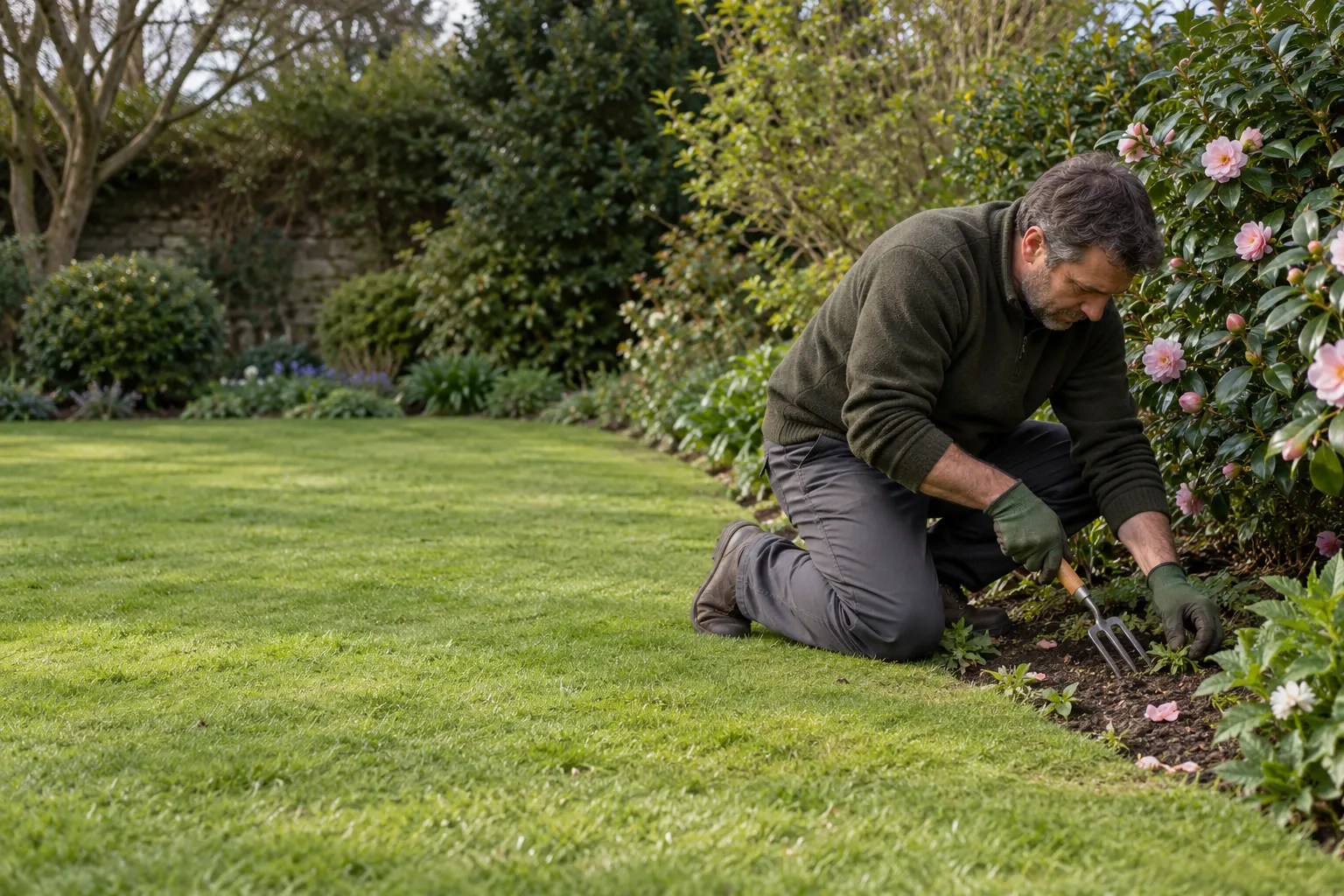
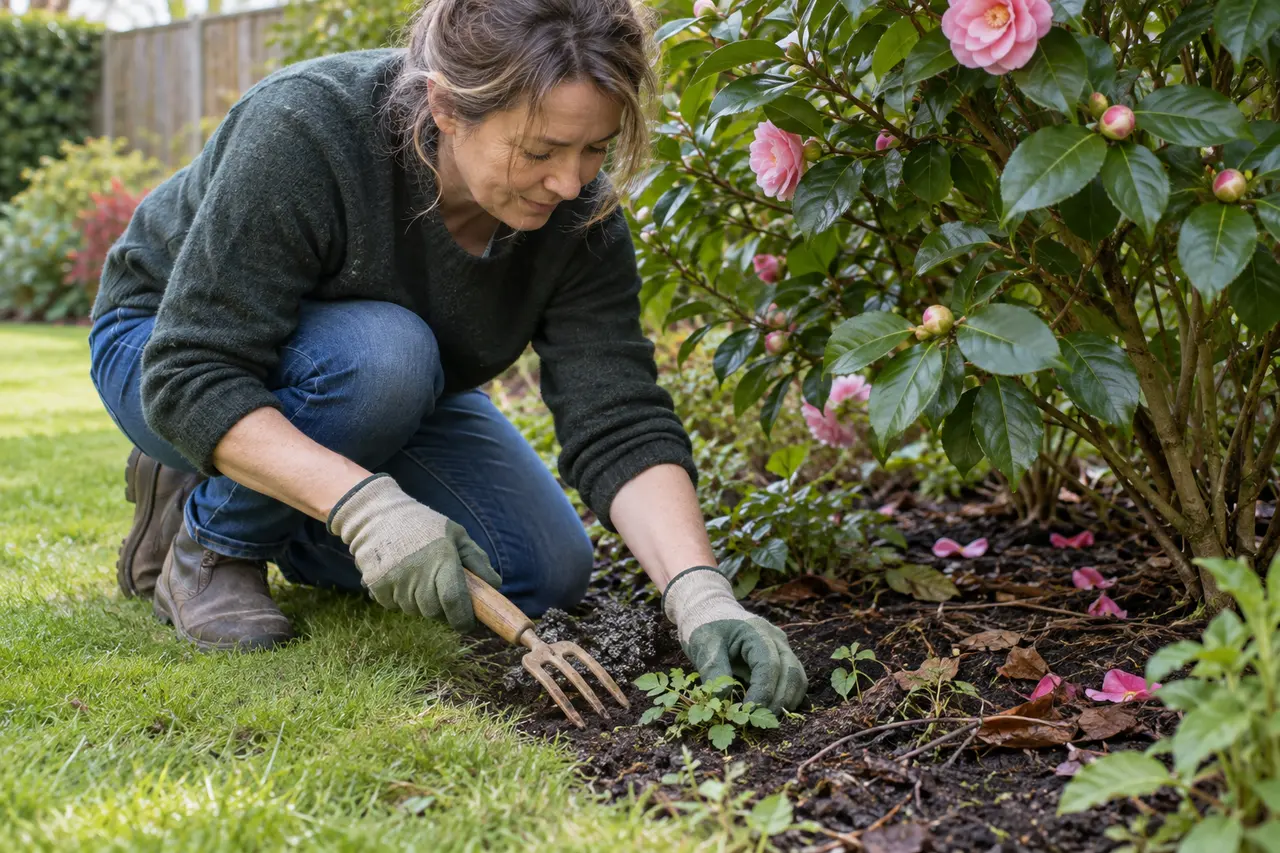
We begin at a suitable outside edge with the unwanted stem and adjacent soil visible. Loose litter is lifted from that immediate position, then an appropriate hand tool loosens accessible roots. The working patch can remain small while the next connection is followed. We complete reachable portions with the actual weed roots and camellia base visible, retaining a controlled tool position as the hand work proceeds below the branches.
The camellia stays seated while the weed is eased from the soil. We avoid using a woody stem as a lever or drawing the extracting hand through low branches. Where unwanted roots are firmly entangled, the affected extraction is assessed before continuing. This keeps a stronger pulling movement from turning a weed-removal task into disturbance of both plants sharing the same small root area.
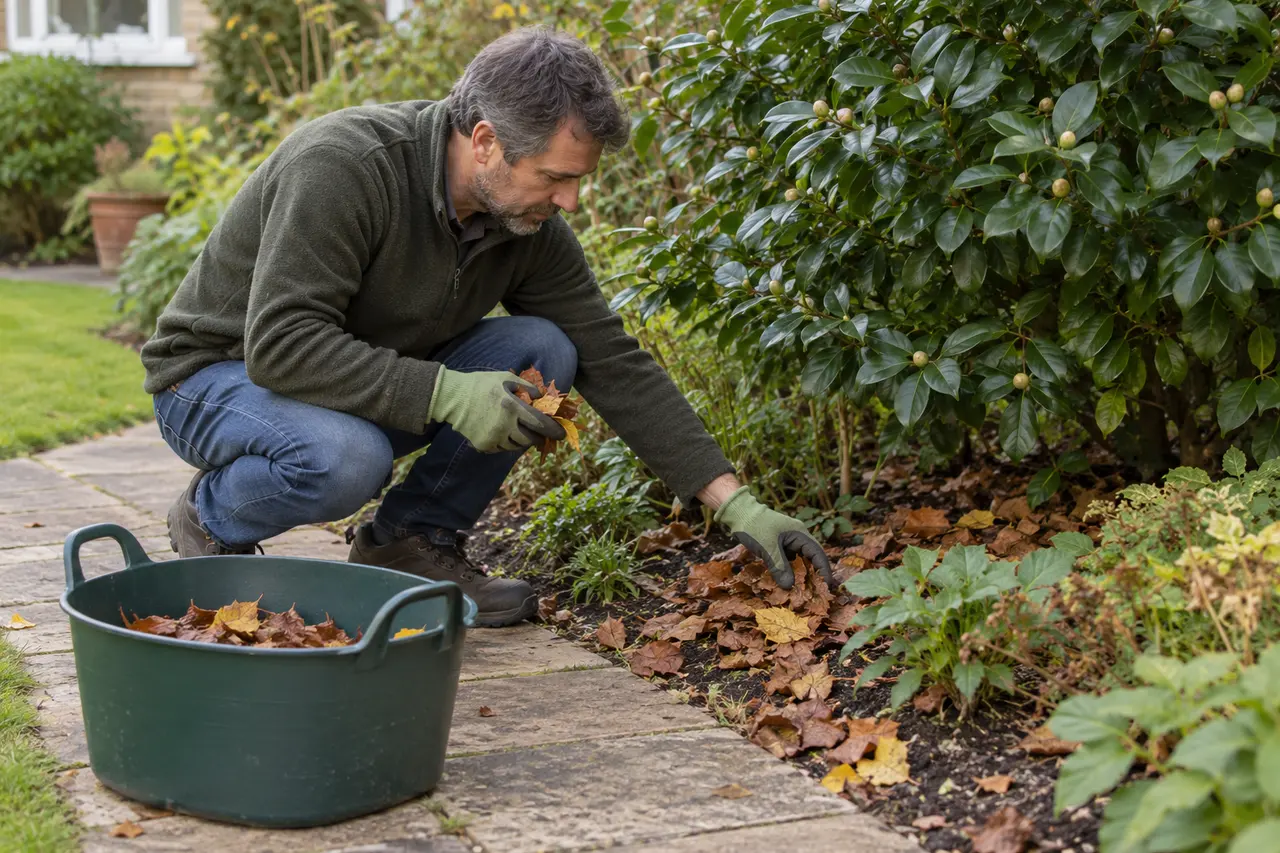
The garden maintenance service can include that close work with a receiving position on a suitable adjoining surface. We gather weeds as the view opens and keep the tub clear of the soil just attended to. This gives collection a useful place without repeatedly loading the bare-looking area beneath the shrub or undoing the controlled approach taken around its accessible roots.
- Our soil-level approach starts at a visible outside edge of the bed.
- Unwanted roots are loosened without leverage against the camellia’s woody stems.
- Loose blooms are collected from the path before the adjoining mowing stage.
- Hedge fragments are gathered clear of the flowering shrub’s branches.
- Suitable summer moisture attention remains part of the specified plant care.
The flowers that have fallen
Bloom collection across paths and low planting
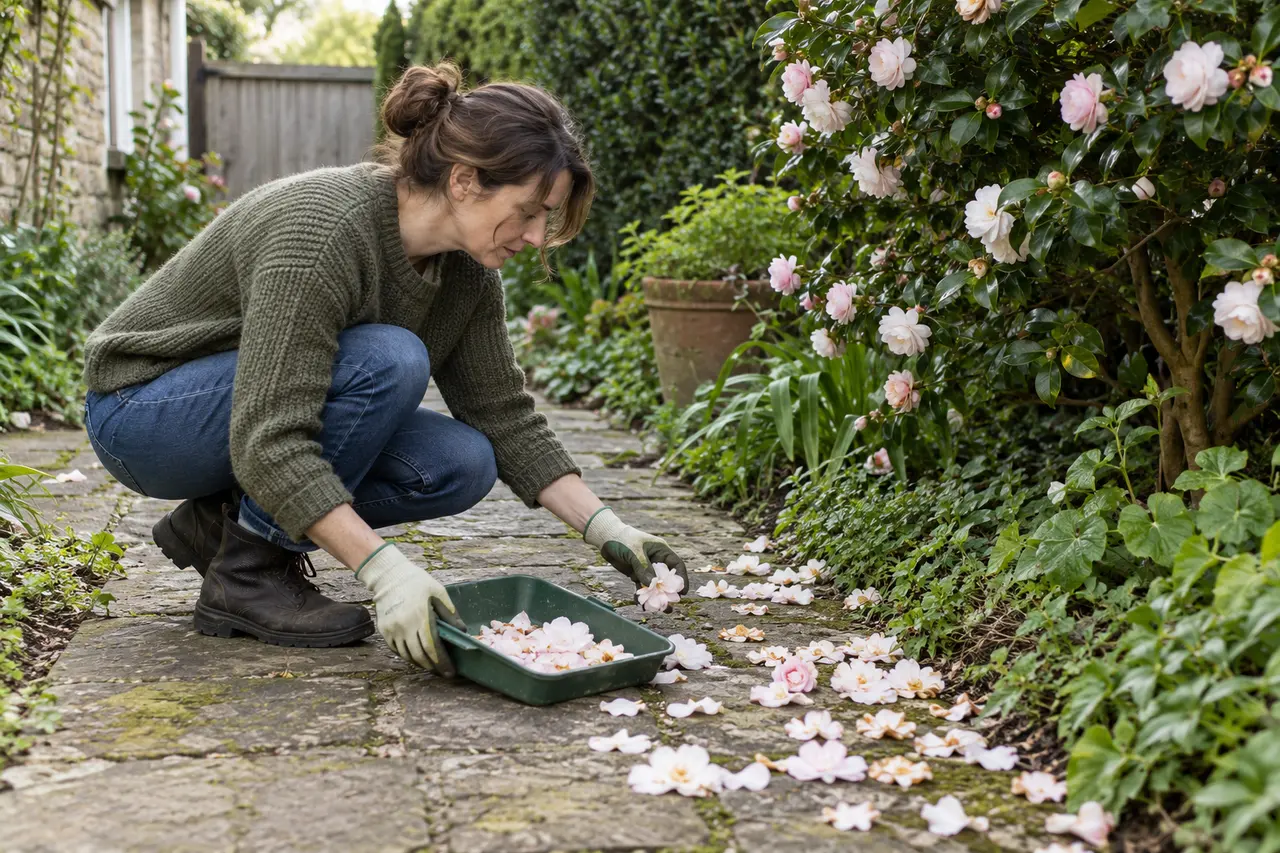
We collect fully loose blooms and petals from their accessible receiving places, moving the container with the working portion. Larger camellia flowers can settle on paving while smaller pieces remain among low stems. Any caught cluster is checked before it is drawn through the branches. Attached growth stays part of a separate plant treatment, even when its faded appearance resembles the flowers already lying below it.
Our paving collection precedes further carrying over the same section where practical. Damp blooms can be pressed into a layer by wheels or a moving tub, making the receiving surface harder to finish. Suitable gentle gathering remains distinct from a separate wash. Removing that layer also exposes small loose objects near the lawn margin before the next grass operation brings equipment alongside the shrub.
A wider garden clean-up can retrieve a defined accumulation around the bed with the garden-waste arrangements following its actual contents. Pots or other discarded items remain separate from plant material. The finish leaves the intended base and working positions visible, with received loads placed in their appropriate areas clear of the soil just attended.
The grass beside the shrub
A prepared mowing margin after bloom and weed work
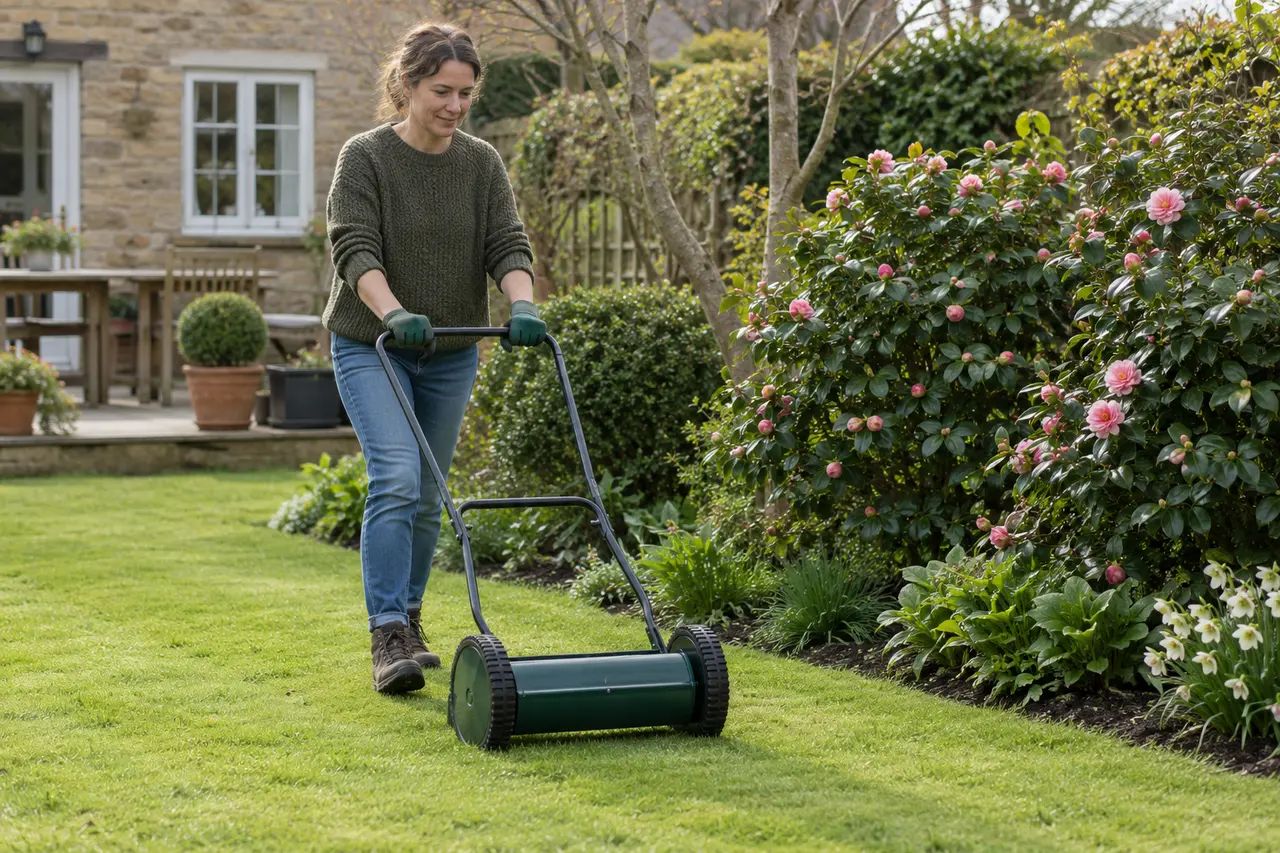
Before the grass cut, we review the margin where previous flower gathering and hand work have taken place. Loose labels, small tools or material dropped from a container can otherwise be overlooked beside the bed. We inspect the turning position as well as the longer grass run, giving the mower and operator their suitable complete route beside the retained shrub.
Our machine remains on suitable turf with room for its deck and wheels beyond the retained planting. A low branch across the margin keeps its appropriate separate plant decision while the grass receives a suitable accessible finishing approach beside it. Where suitable, a limited hand finish can address the grass below it, while the lawn setting continues to follow the grass condition independently of the shrub’s outline.
The lawn-care work leaves the suitable open area cut and accessible edges attended to, with loose clippings gathered from worked paths. We keep those fragments out of the camellia bed that has just been cleared. Preparation at the interface and collection afterwards remain useful parts of the operation, even where the total open grass area is relatively small compared with the planted boundary.
The screen beside the flowering plant
Hedge trimming kept distinct from camellia treatment
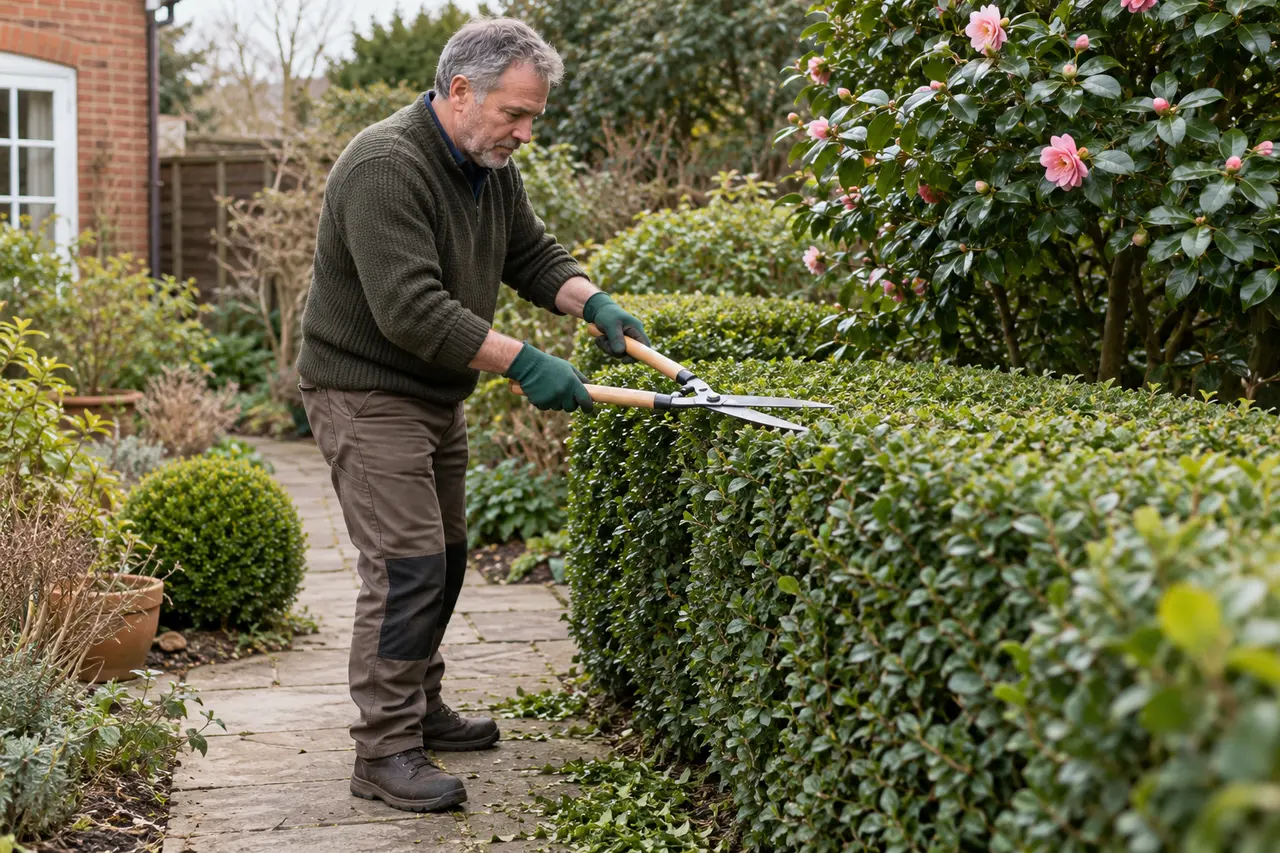
We identify which stems belong to the hedge before carrying its cutting face alongside the camellia. Evergreen habit does not make the two plants share one pruning requirement. Camellia growth entering that plane remains distinguishable, with any suitable shaping following the shrub’s own flowering stage and intended outline. The hedge’s straight surface therefore does not determine a cut through everything growing beside it.
Reachable hedge work follows a controlled position and checks for nests being built or used, with disturbing cutting postponed where necessary. After the blades stop, we lift accessible fragments from broad camellia leaves individually. Larger or inaccessible growth retains its own appropriate cutting arrangement.
Summer development around the root zone
Moisture attention while the next buds are forming
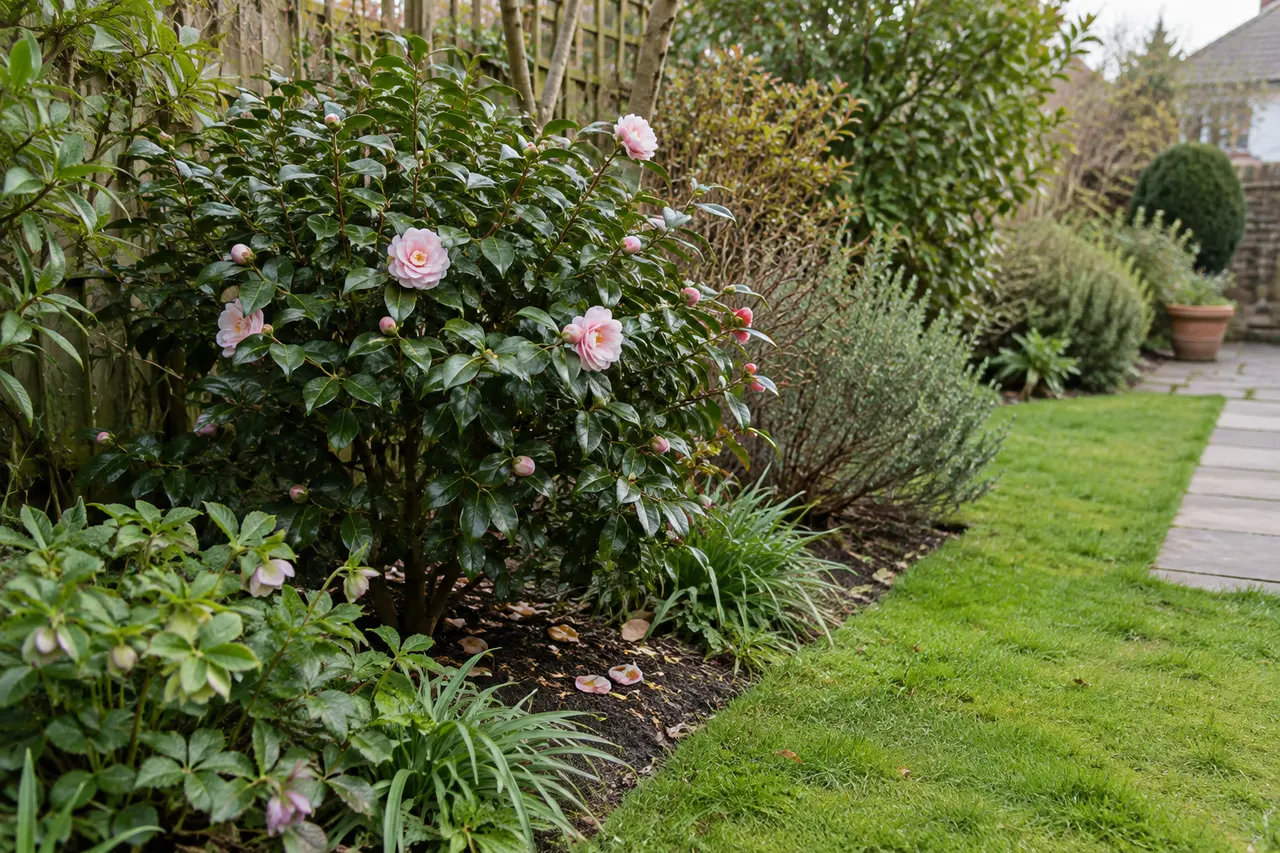
Our summer work begins with the plant and receiving soil, not only the absence of a current flower display. Buds for a later showing can develop during this phase, making suitable moisture attention relevant through the quieter-looking months. We lift relevant loose litter to retain a usable view of the accessible root area while the plant’s actual moisture requirements are assessed.
Where watering is included, its suitable application reaches the intended receiving soil around the actual camellia root area. The amount and frequency follow the actual plant and conditions. Equipment is collected clear of subsequent mowing routes, and the continuing checks between visits remain allocated. This connects the water applied during our attendance with the separate care needed afterwards.
Existing covering over the camellia’s root area is assessed before another layer is introduced. Suitable specified mulch can contribute to the intended surface care with stems kept clear, while supplies and any substantial change to the bed remain identified as part of the work. We relate material placement to the actual existing covering and retained stems, leaving the suitable new layer distributed within its identified receiving position.
Evergreen structure beyond the flower season
Surface care around retained leaves, buds and extension
Our seasonal surface collection follows accessible loose material around the evergreen without stripping attached leaves to create an empty-looking base. Individual leaf shedding remains different from a removal instruction for the living foliage. Small tools can gather at a reachable outer edge while a more intricate inner portion retains its separate hand approach, keeping the receiving surface and low branches distinct through the collection.
Developing buds and extension remain visible as adjoining tasks proceed. We position tools, gathered leaves and loaded sheeting clear of those branches, then retain the useful plant identification after the surface work is complete. A name or record continues to refer to the shrub actually in that place, providing continuity for a later specifically identified pruning or planting operation.
An established healthy camellia may need no annual shortening. Where suitable modest shaping forms part of the task, we work after that particular plant’s flowering and retain its leafy outline through selected clean hand cuts. This keeps fresh flowers, developing buds and the neighbouring hedge’s clipping plane from being combined into one repeated cutting instruction simply because all are visible from the same lawn position.
Further services related to the camellia’s setting
Design of shelter alongside suitable light
Our garden-design proposal can relate wind shelter to the light required by the receiving plants. A suitably permeable windbreak filters moving air, with the shelter arrangement assessed for the exposure and light available to the planting behind it. We relate the windbreak’s position and planting to the actual site and intended growing conditions, giving the proposed shelter a practical role within that bed.
Mistletoe growth distinguished from its host connection
A tree-work proposal for identified mistletoe distinguishes visible clumps from the specialised attachment connecting the plant into its host. Removing decorative sprigs does not describe removal of that whole connection. The proposed treatment therefore follows the intended result and actual attachment, without presenting ordinary visible pruning as an eradication operation merely because the outer green growth has been shortened.
Surface-compatible cleaning for limestone or marble
Our paving clean preparation identifies acid-sensitive material where present, including limestone and marble. An acid-based product can attack the stone itself as well as affect a mark lying on it. The selected method follows the actual surface’s care requirements, so a persistent stain is not used as a reason to apply an incompatible cleaner or assume that every pressure-cleaning area tolerates the same preparation product.
The rainwater connection identified independently from other pipes
Our gutter-cleaning work identifies the relevant rainwater downpipe and the roof channel feeding it within the actual building arrangement. A soil vent serves the foul-drainage arrangement and is not another receiving opening for a leaf clear-out. The known drainage connection guides the collecting method, with the selected component and its receiving route clear through the channel operation.
Display lighting related to the extension equipment’s capacity
A Christmas-tree display using retained lights needs its arrangement to follow the extension equipment’s stated maximum load and the connected items. Spare socket holes alone do not establish available capacity. The equipment instructions and appropriate electrical advice remain relevant, including avoiding linked extension leads. The practical display position can therefore be planned without relying on an improvised chain once the tree has been put in place.
Close camellia attention alongside lawn work
Accessible weeding, fallen-flower collection and the surrounding garden tasks contribute to the agreed time. Plant supplies, feeds and any larger alteration remain separately identified.
| Gardening time | Guide rate |
|---|---|
| First hour | £83 |
| Each subsequent hour | £65 |
GBP guide rates. Confirm the booked tasks, supplies, waste arrangements, VAT treatment and applicable access, parking or congestion charges in the complete quotation.
Questions about our camellia maintenance
What result does camellia deadheading provide?
We treat suitable removal of faded blooms as an appearance task as flowers turn brown. It is not presented as a substantial improvement to the following spring’s display. Moisture and other appropriate ongoing care remain part of the plant’s attention, giving the flowerless months a purpose beyond another cosmetic pass over the same shrub.
How do different camellia groups affect the work sequence?
Our attention follows the actual flowering stage. Sasanqua camellias commonly flower through autumn and winter, while japonica and williamsii groups flower later towards spring. A neighbouring camellia finishing its display therefore does not set the treatment date for every plant bearing the same general name elsewhere in the garden.
How is feeding kept separate from missed earlier care?
We identify the suitable feeding requirement and product instructions alongside the actual moisture and growing conditions before a selected application is arranged. Excessive or late feeding can contribute to bud drop, so the receiving plant’s moisture and growing conditions remain relevant. More material is not treated as a substitute for understanding the need or a guarantee that an earlier gap in care has been corrected.
What growing medium is used for specified container work?
Our material choice follows the camellia’s need for an appropriate acidic medium, commonly an ericaceous compost in containers. The actual acidic growing medium is identified within the specified container task, keeping its supply and receiving plant clear through preparation and placement. That connects the supplied material with the camellia’s relevant rooting conditions and suitable continuing care within its particular container position.
Attention carried through the camellia’s quieter-looking months
Our Cockfosters gardening services can connect the fallen-bloom work with suitable summer root-area attention, maintaining that continuity after flowering has eased. The retained evergreen remains an individual plant through the changing task sequence, with its own developing buds and the surrounding lawn and hedge treated separately.