

Practical garden preparation before outdoor use
Gardeners Chessington
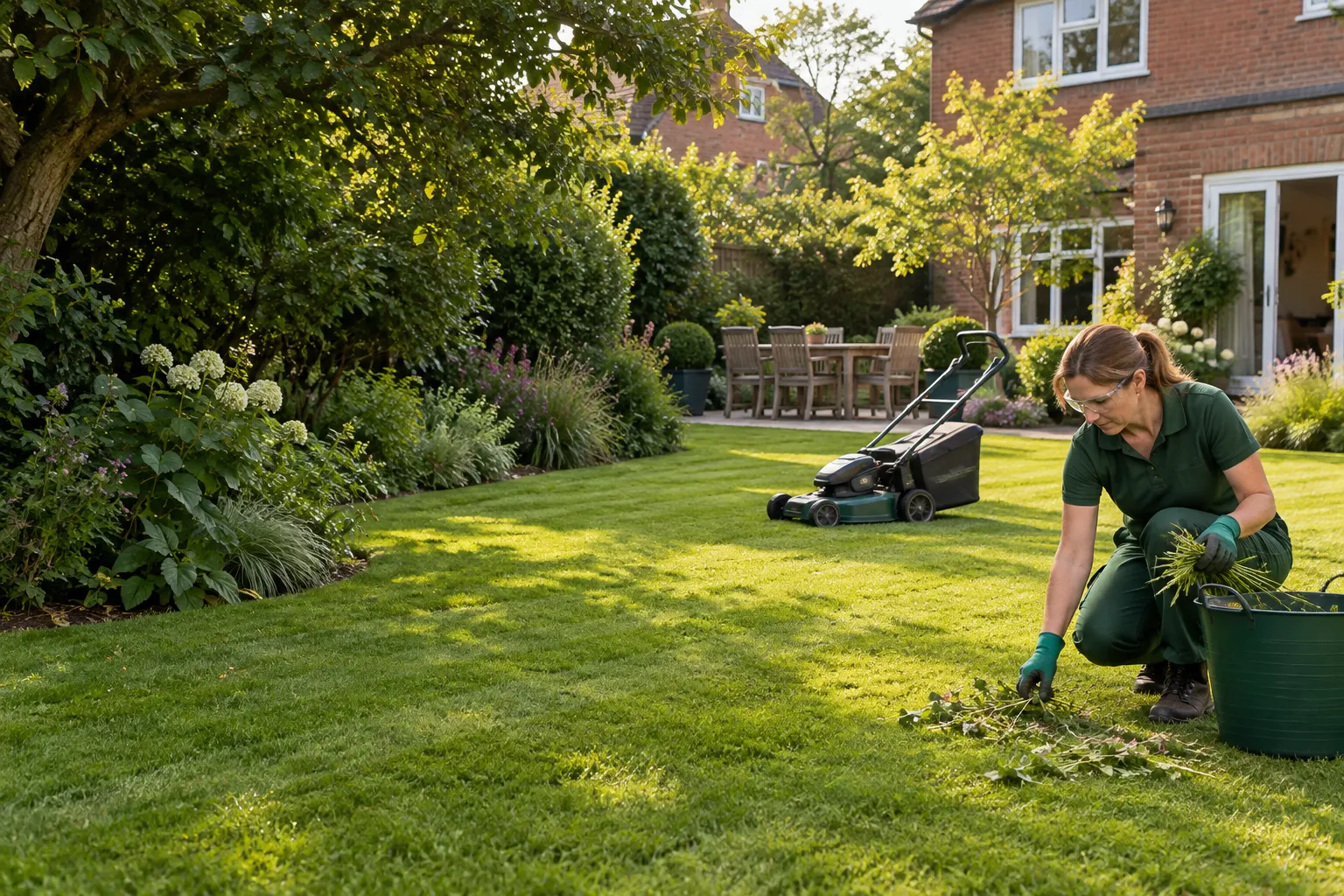
Our preparation work concentrates on the garden areas people will use: the route to seating, suitable grass, reachable planting and the surfaces needing a final collection. We coordinate cutting and material movement before the light finish, retaining the garden’s longer-term structure within the practical arrangement for its intended use.
- When is extra furniture placed in the garden? Our cutting and carrying sequence retains working space first, leaving the final furniture arrangement until the relevant material handling is complete.
- What happens if fresh leaves fall afterwards? The visit removes the included accumulation; a later light collection can address new material without treating an outdoor finish as permanent.
The preparation sequence and the finish being provided
How can your work relate to an outdoor gathering?
We organise the requested jobs around the areas intended for use, subject to availability and suitable working conditions. Cutting, removal and wet cleaning may occupy separate stages. Our plan includes the cutting stages, their material handling and relevant finishing, with timing related to availability and suitable garden conditions.
How do you retain shrubs during preparation?
Our immediate work can use suitable light trimming, selective plant attention and collection without reducing every shrub. A short-term furnishing aim is kept separate from long-term changes to the planting. We preserve healthy growth where a heavier cut is unsuitable, allowing a useful cared-for setting without treating the approach of one particular day as a pruning instruction.
The areas intended for use
A practical finish around seating, routes and retained planting
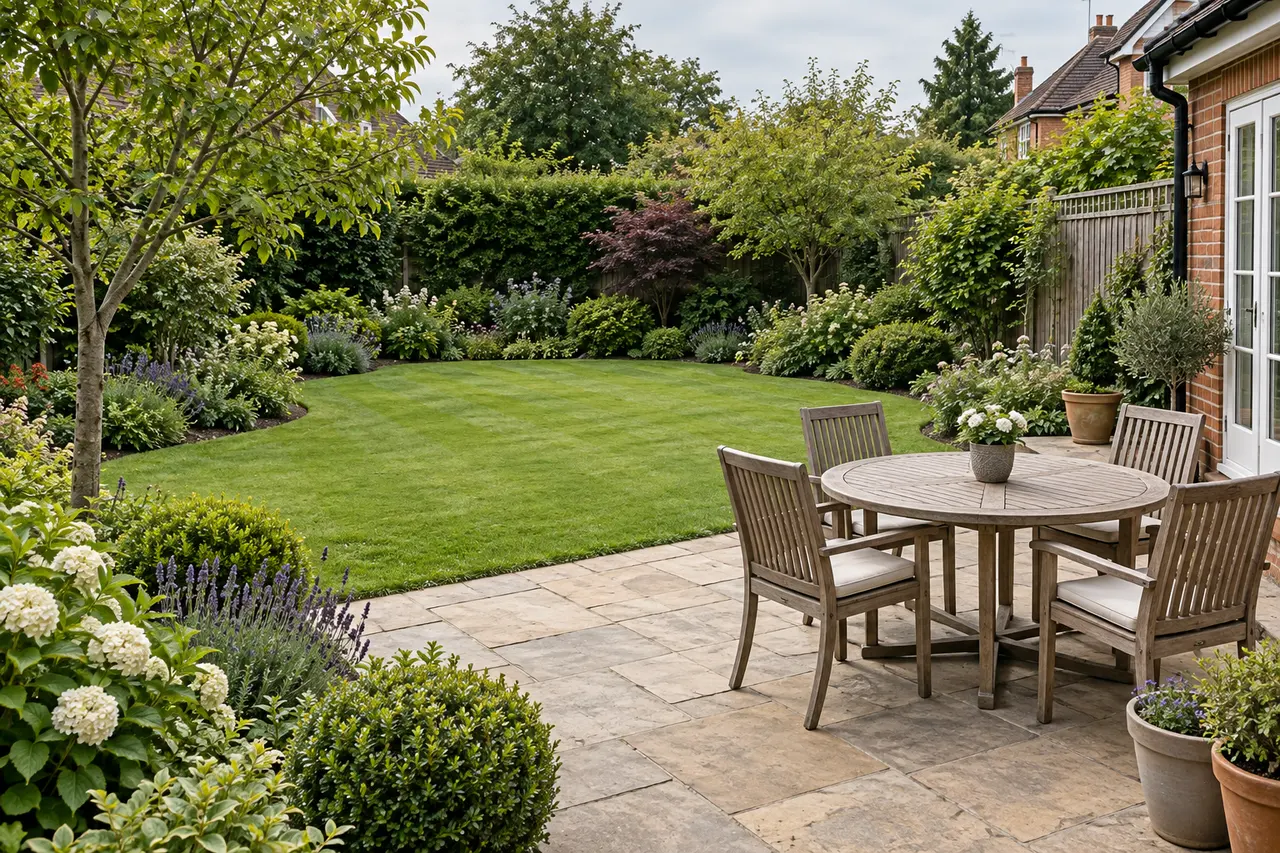
Our preparation begins with the outdoor arrangement the work needs to support. A clear route to the table, grass free of loose sticks and an identifiable step edge can matter more than an evenly bare distant bed. We allocate the appropriate tasks to those practical details, retaining useful flowering plants and the identified informal areas alongside the surfaces receiving closer preparation.
Where a chair conflicts with established growth, our assessment separates furniture placement from a permanent plant reduction. A temporary arrangement can often change without removing structure that contributes to the garden through the year. We relate any suitable small cut to the actual plant and purpose, keeping larger changes distinct from the immediate work needed to make the current seating position practical.
A defined garden-maintenance visit can bring those results together with their final collection. Completed and deliberately deferred areas remain understandable, so an untouched plant is not confused with an omission. Our sequence includes the gathering and carrying after each growing task, leaving its completed surface available for the intended furniture and household use.
- Our clearance sequence precedes loose decoration and final furniture placement.
- The route to the table stays separate from temporary cuttings storage.
- Loose sticks are collected from the grass before the suitable final cut.
- Flowering growth remains unless an appropriate cutting operation is included.
- The seating surface receives its included loose-leaf collection after heavier handling.
Carrying before the space is furnished
Clearance completed with a usable withdrawal route
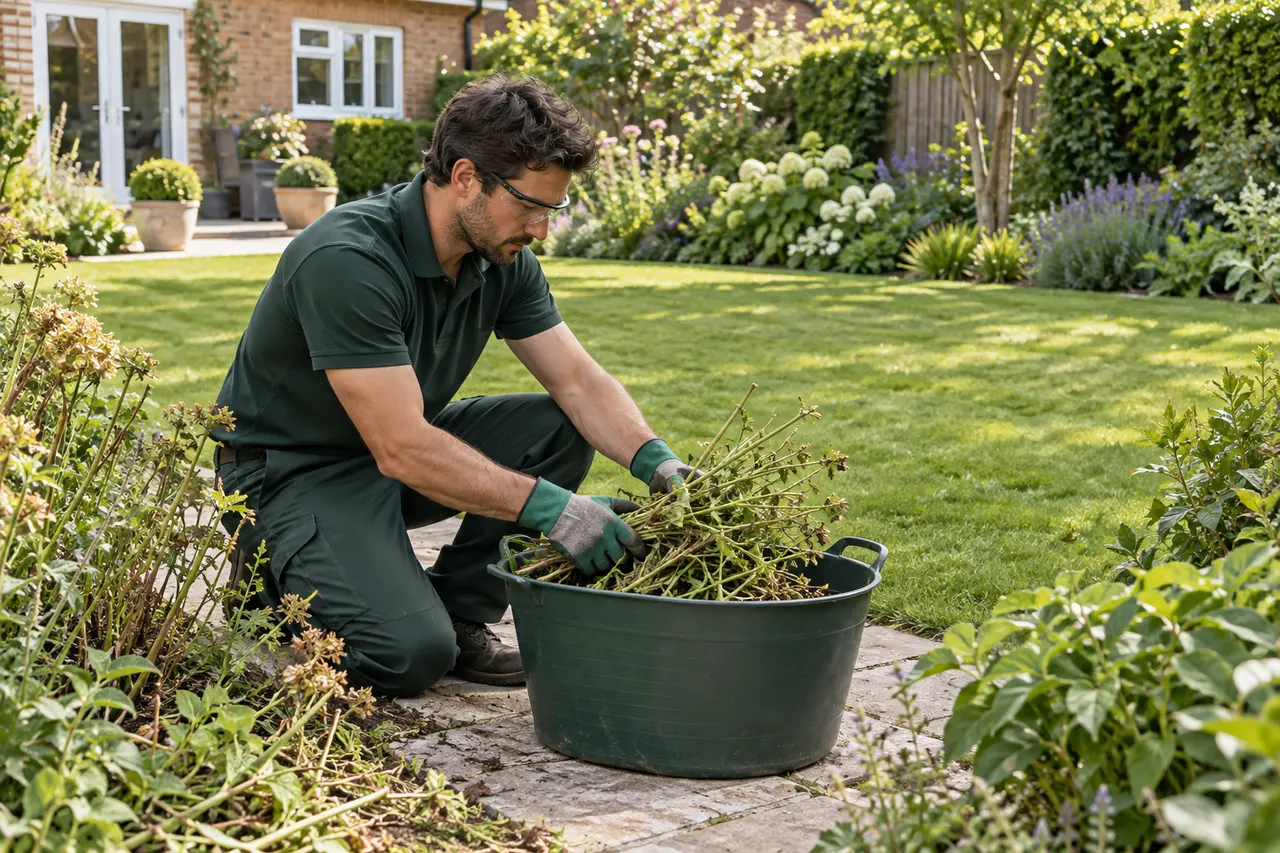
We complete the included material movement while the garden still provides working room. Tables and additional chairs can occupy the route needed for carrying and collection, so our progression accounts for the last load as well as the first cut. A pile in the intended seating position remains part of the unfinished task until its agreed handling has been completed.
Our initial sorting distinguishes household items retained for later use from material that belongs in the outgoing load. A temporary stack beside the shed can be intentional storage, whereas broken objects need their own decision. We keep green cuttings separate from those possessions and from unrelated mixed waste uncovered during the job, allowing clearance to progress without repeatedly reclassifying one combined pile.
A heavier backlog can receive a defined garden clean-up before the final cosmetic work. Our sorting follows the material differences explained in the garden-waste guide, keeping the actual contents and their appropriate destinations clear throughout the wider backlog work. The larger growth and carrying are completed before the concluding light surface collection, giving the final tidy a prepared accessible area to finish.
The lawn’s appropriate cut and aftermath
Grass prepared without an unnecessary close reduction
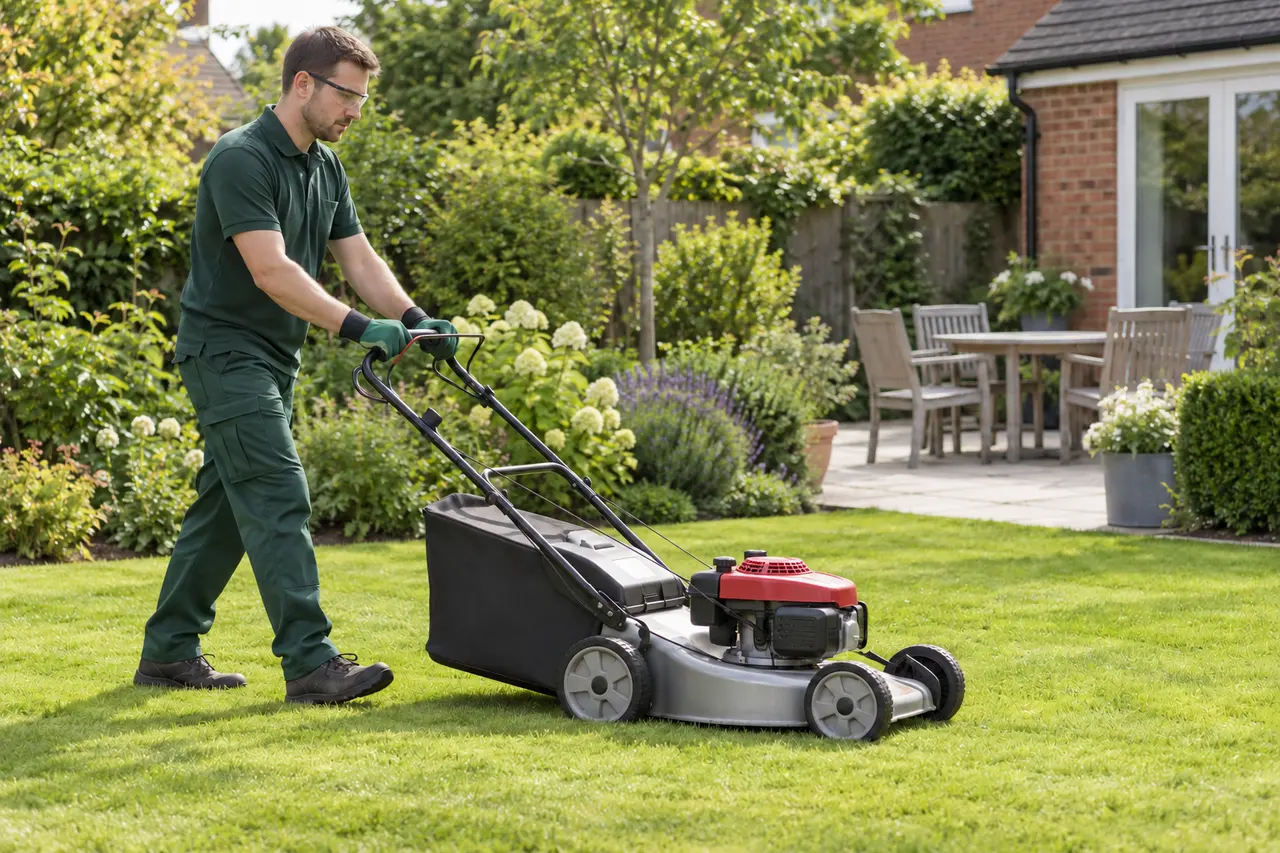
Our mowing height follows the growth and condition of the grass, independently of the approaching use of the garden. We clear objects and inspect the route even where the lawn is familiar from earlier visits. The operation does not rely on an unusually short reduction to create a ready-looking surface; it provides a suitable cut for the turf actually present and the ground available to support it.
The finish includes loose grass produced around adjoining usable surfaces. We gather appropriate fragments from paving before the furniture occupies it, reducing material that would otherwise travel on shoes and settle around chair legs. Accessible edges receive their suitable finishing method, with rough or excluded sections identified clearly alongside the completed grass and paving interface.
Where the turf is soft or weak, planned use remains relevant alongside the Lawn care. A routine cut cannot establish that worn growth will tolerate any volume of traffic. Our practical preparation can leave a vulnerable portion clear while suitable grass receives attention. The practical layout can leave vulnerable turf clear while suitable established surfaces provide the available positions for furniture and ordinary use.
Suitable extension work at the boundary
The retained screen and a clearer seating edge
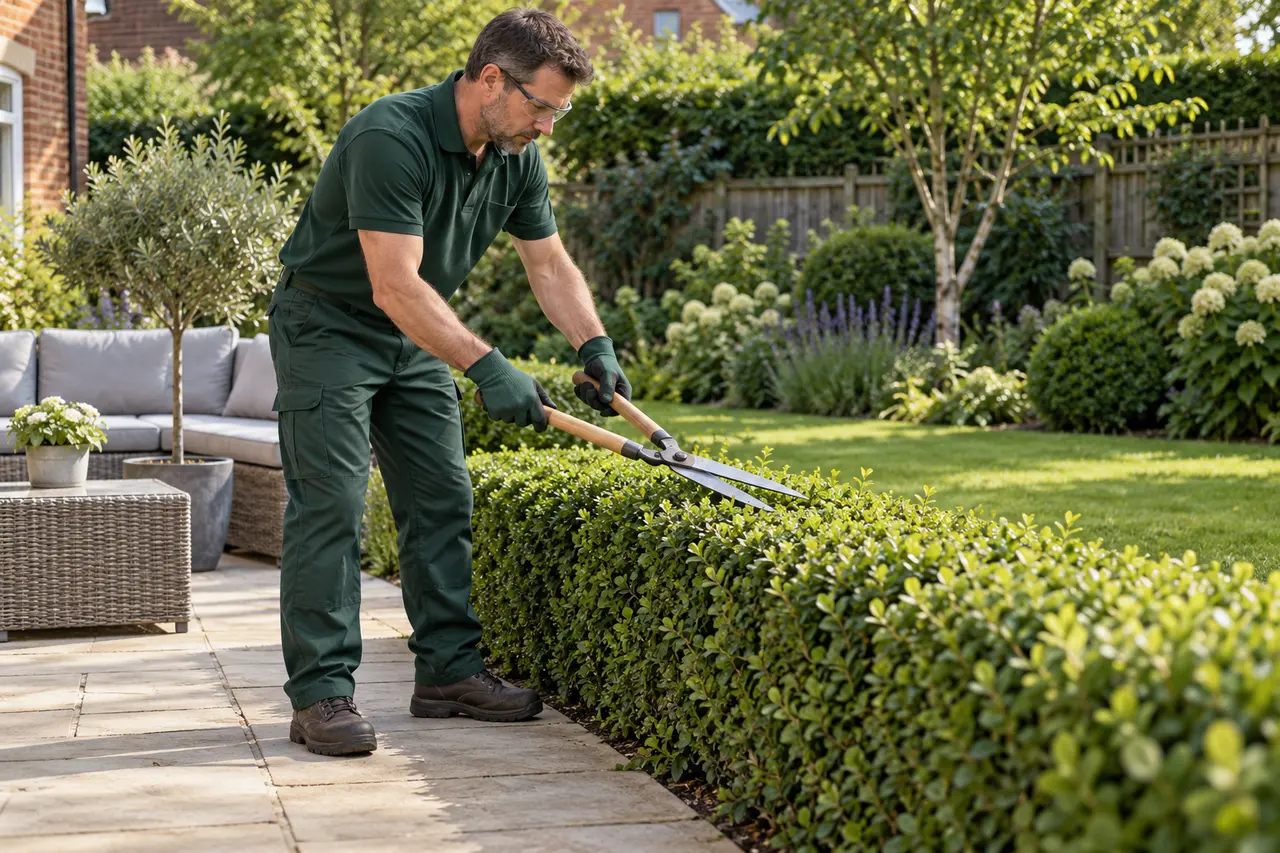
Our reachable hedge trim can address fresh extension that crowds the seating area while preserving the boundary’s screen. The plant’s species and growth govern the suitable cut, not a desire to create a much smaller hedge for one afternoon. We define that maintenance result around the existing structure, retaining the distinction between attending to recent shoots and undertaking a more substantial change.
The working arrangement allows room for the shear handles and collection below the face before furniture is placed close to it. People remain outside the active cutting area, and fragments are gathered before the space returns to ordinary use. This coordinates the physical sequence with the intended result, so a neatly trimmed face is not left above a seat still filled with the material removed from it.
We check for nests being built or used and postpone disturbing work where necessary. Heavy limbs, inaccessible tops or a major height change require their own appropriate operation. Where the immediate cut is unsuitable, the plant remains intact and the short-term arrangement can be adapted. The requested use date does not turn an otherwise unsuitable boundary operation into routine preparation work.
The planting seen from the seating area
Detailed bed care with established growth retained
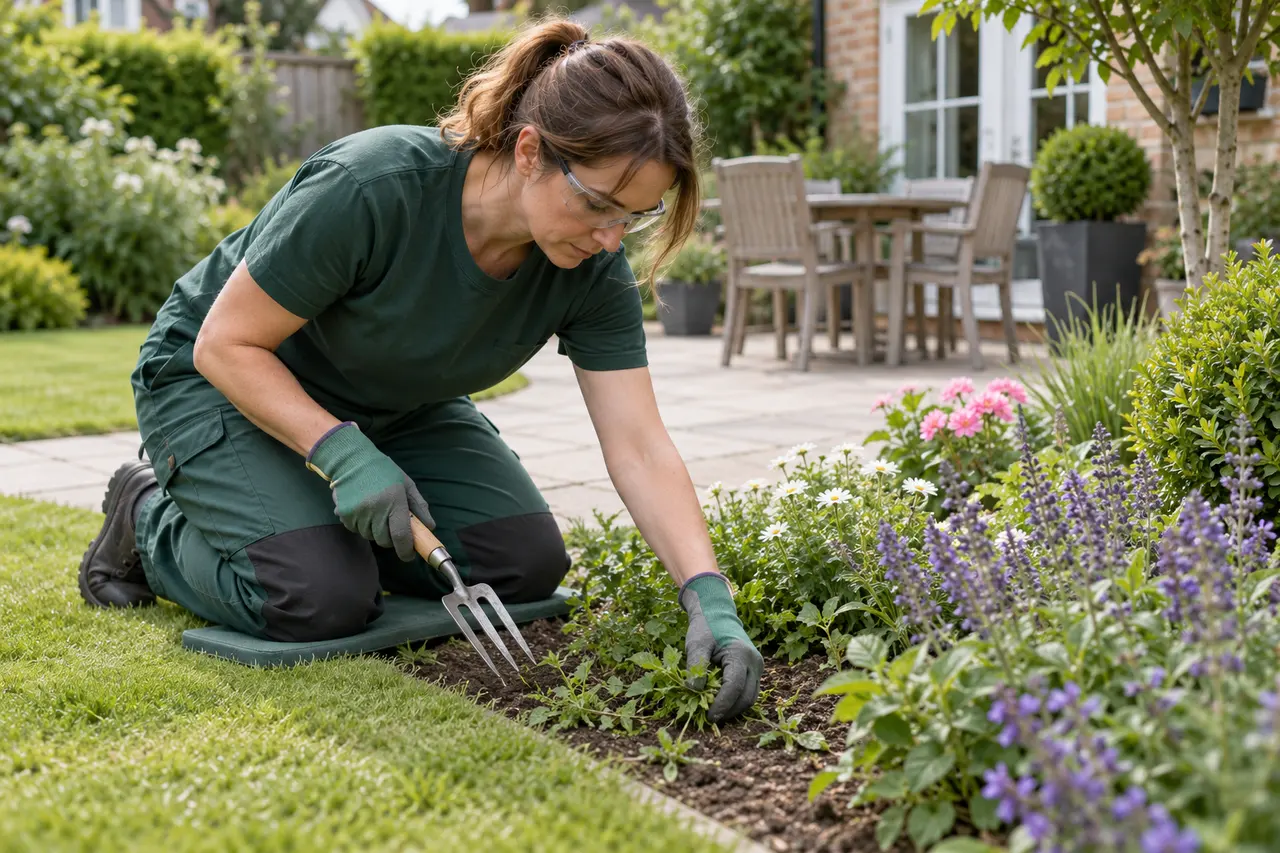
Our close bed work can improve the view from a chair through individual useful operations: visible weeds removed, collapsed stems lifted and loose material collected around low plants. We retain suitable crowns and roots while loosening unwanted growth. Plants between flowering stages remain part of the retained setting as accessible weeds, collapsed material and loose fragments receive their selected attention.
Where fresh planting forms part of the work, we set out suitable positions against the existing occupants and provide for practical watering access. The plant’s eventual spread remains relevant after the day of the visit. A gap visible from the table is therefore assessed as growing space, not automatically filled where the new addition would soon obstruct the route or compete with established neighbours.
Our working position uses an available suitable firm surface to protect the bed while those close details are attended to. A remaining inaccessible shoot is identified for a different suitable approach, with the nearby foreground planting left seated through the completed hand work. The completed setting keeps its retained plants recognisable, with the accessible surface and suitable bed care connected to the area intended for use.
The final light collection
Surface gathering after the heavier movements are complete
Our sequence places the last relevant sweep after material has finished moving through the route. Leaves and small fragments can arrive again on a path during nearby work, so an early polish would be undone by the later carrying. We finish the included surfaces after their heavier movement is over, gathering the loose accumulation at the end of the actual carrying sequence.
The seasonal gardening guide gives broader context for the tasks useful at different stages of the year. Within this preparation, autumn leaf gathering may provide the immediate improvement to patio and path, while a dry spell can make suitable attention to included new planting more important. Our allocation follows those seasonal conditions and the selected planting, giving the next useful task its appropriate place within the preparation.
Conditions can still limit the operation. Wet or soft ground retains its own timing decision alongside suitable firm-surface tasks that can receive their appropriate collection and finish. The finished result reflects the tasks that could appropriately be carried out and the material present at the visit. Outdoor surfaces can change afterwards; their condition is not promised to remain fixed until the household next uses them.

Other services within an outdoor preparation plan
Garden design beyond the occasional gathering
Our garden design can distinguish extra seating needed occasionally from the space required for everyday use and continuing plant care. An event arrangement provides useful evidence of what worked and what was temporarily squeezed into place. We relate a lasting proposal to the space needed for everyday use, continuing plant care and the occasional extra capacity shown by the temporary arrangement.
Defined clearance beneath a tree canopy
Where lower branches affect ordinary garden use, our tree-surgery proposal can assess that specific clearance purpose. Suitable lower-branch pruning, sometimes called crown lifting, differs from reducing the crown’s overall dimensions. The particular tree and intended result guide the proposed operation, without an instruction to remove every lower limb or a promise of a prescribed clearance height simply to fit one temporary gathering.
Wet paving work before the concluding finish
A preparation sequence including jet washing places that wet operation before the relevant final gathering and furniture arrangement. Our coordination accounts for the material released by washing so it does not undo the neighbouring garden finish. Each operation retains its defined receiving surface and practical result, with their order connecting the wash, material movement and final garden collection.
Routine gutter work separate from active building water entry
Our gutter-cleaning appointment remains a planned channel-clearance operation. Water actively entering a building needs appropriate attention to its current cause; a future booking is not assurance that the situation can wait or that accumulated leaves explain it. We keep the actual symptom distinct from the routine task, without presenting channel clearing as emergency building repair or as a guaranteed diagnosis of indoor water entry.
Installation packages and separately quoted variations
The listed Christmas-tree installation options include the stand shown within the selected package. Where an alternative arrangement uses existing equipment, its actual offered combination and total are established separately. The support’s compatibility and any change to the package remain clear within that proposal, giving the customer an identified arrangement and confirmed price for the specific tree installation requested.
Price the preparation as well as the final tidy
General gardening guide rates are shown here. Gathering material, moving through the work sequence and finishing the usable surfaces contribute to the allowance as well as the cutting itself.
| Gardening time | Guide price |
|---|---|
| First hour | £83 |
| Each subsequent hour | £65 |
GBP guides. Agree the full work, waste arrangements, VAT treatment and applicable parking or access charges before booking.
Questions about our garden preparation work
How is the lawn cut before outdoor furniture is used?
We choose a suitable height for the actual grass and its condition before the surface is returned to the intended household use. Weak or soft portions remain relevant to the practical furniture arrangement. After the cut, our included collection attends to loose material on adjoining surfaces, leaving the suitable accessible area finished without treating blade height as the measure of readiness.
Can a flowering shrub remain while nearby work proceeds?
We retain a plant deliberately where its appropriate treatment does not call for cutting at that stage. Suitable surrounding tasks can improve the setting without imposing one operation across every bed. The immediate seating arrangement can work around deliberately retained growth while its suitable later treatment remains clear in the maintenance sequence.
How does furniture affect the preparation sequence?
Our working area remains available while cutting, collection and carrying take place. Extra items can restrict the only route or receiving position, so the final arrangement follows completion of those relevant operations. That progression leaves the cut material gathered and the surface available before extra furniture occupies its final position within the garden.
Can the prepared area sit beside an informal corner?
Our task boundary can retain that corner while attention focuses on the places intended for use. Any access through it remains understood, and it is not used as a hidden destination for material cleared from the more visible garden. The different finishes can coexist without moving the collection problem into an area deliberately left less formal.
What happens if leaves arrive after the visit?
The preparation removes the included accumulation present while the work is carried out. Later leaf fall or windblown material can create another light gathering task without indicating that the earlier cut was unfinished. Our result identifies the actual operation completed and material collected, with any fresh later leaf fall available for its appropriate further light attention.
A practical sequence before furniture and people take their places
Our Chessington gardening options can connect the useful growing work with the carrying and final collection that leave its result accessible. The preparation retains the garden’s long-term planting while attending to the particular route, grass and seating surfaces needed for the intended use, with each completed or deferred task understandable at the finish.