

Smart Ways to Protect Your Garden with Maintenance and Pest Control
Identify what is causing plant damage before choosing a response. Not every insect is a pest, and regular garden upkeep is different from a specialist treatment for an identified problem.
Identify the change before choosing a response
A damaged leaf or struggling plant is a starting observation, not a diagnosis. Note which plants are affected, what has changed and whether the problem is confined to one area. A general photograph and a closer view can help show the pattern without immediately attributing it to a pest.
Watering conditions, growing space and ordinary seasonal change can also affect appearance. Applying the same response to every symptom can miss the actual issue.
Do not treat every insect as a problem
A garden contains many forms of wildlife, and the presence of an insect does not by itself establish that a treatment is needed. Identification should come before selecting a product or commissioning specialist work. The RHS guidance on managing pests without chemicals provides a useful framework for understanding that distinction.
Where a problem requires specialist advice, use a relevant qualified professional. Specialist treatment is separate from general maintenance and needs an identified purpose and suitable method.
Keep routine care useful
Weeding, suitable pruning and the collection of accumulated material make the planted areas easier to inspect and maintain. They do not provide a substitute diagnosis. A clear route and visible plant labels can help focus attention on the affected specimen rather than treating the whole garden indiscriminately.
Garden maintenance covers the booked care tasks. Additional treatments should have an identified purpose, suitable method and clear scope rather than appear as an automatic part of every visit.
Separate plant concerns from surface cleaning
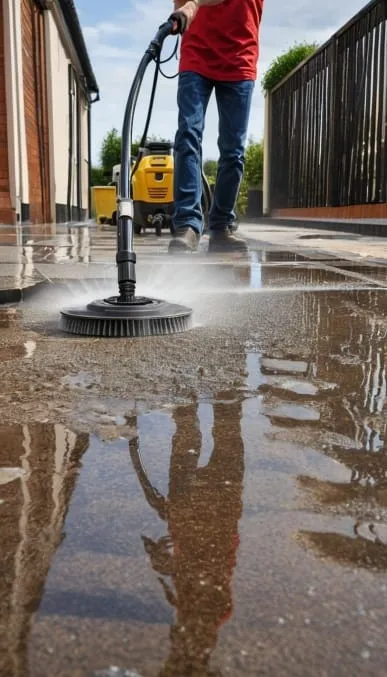
An untidy patio and a damaged plant may exist at the same property without having the same cause. Jet washing addresses suitable exterior surfaces, not the diagnosis of a plant problem. Keeping these jobs distinct makes the next step clearer and avoids a vague promise that a general clean will protect everything growing in the garden.
Revisit the affected area after the appropriate action and keep observations of any further change. The useful result is a response linked to evidence, rather than a longer list of products or services applied just in case.