

Simple Ways to Keep Your London Garden Safe and Spotless
Walk through the garden from a safe position and note blocked routes, loose surfaces and visible tree damage. Cleaning, repairs and tree assessment address different concerns; one does not replace the others.
Inspect from a safe position
Use the route through the garden to identify visible obstructions, loose surfaces and changes around trees. Keep the observation factual: a broken slab, a branch in the path or water pooling beside the door. There is no need to climb or enter an unstable area to investigate it yourself.
An inspection helps identify the right next job. It is not proof that everything not immediately visible is sound.
Separate a dirty surface from a damaged one
Patios and paths can accumulate dirt and surface growth, while cracks and movement are different issues. Jet washing can address suitable cleaning work after assessment. It does not replace damaged paving, rebuild joints or make every material appropriate for the same pressure setting.
A clean finish should not be described as a guarantee of grip in every condition. The surface, moisture and use still matter afterwards.
Give tree concerns their own assessment
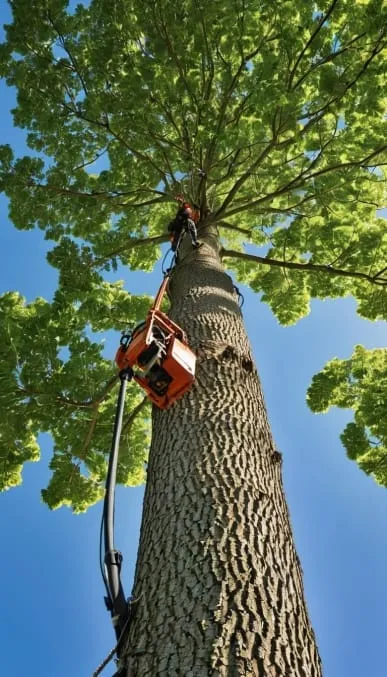
Visible damage or a branch over an important route needs a tree-work enquiry rather than an assumption that ordinary gardening includes the operation. Photographs of the whole tree and its surroundings are more useful than a close view alone.
The tree-surgery page explains the distinction between pruning, removal and stump work. Keep people away from an apparent immediate hazard and use the appropriate emergency or utility response where the situation requires it.
Keep everyday obstructions under control
Tools, hoses and stored items should have a destination away from the route people use. Growth around a gate or step can be addressed through suitable maintenance; a damaged feature still needs its own repair. Avoid treating all outdoor problems as though one general clean will resolve them.
Garden maintenance can support the recurring mowing, weeding and pruning. The useful outcome is a more manageable space with specific concerns identified, not an unsupported claim of a permanently hazard-free garden.