

Becontree · Check the plant at soil level
Becontree gardening and heuchera care
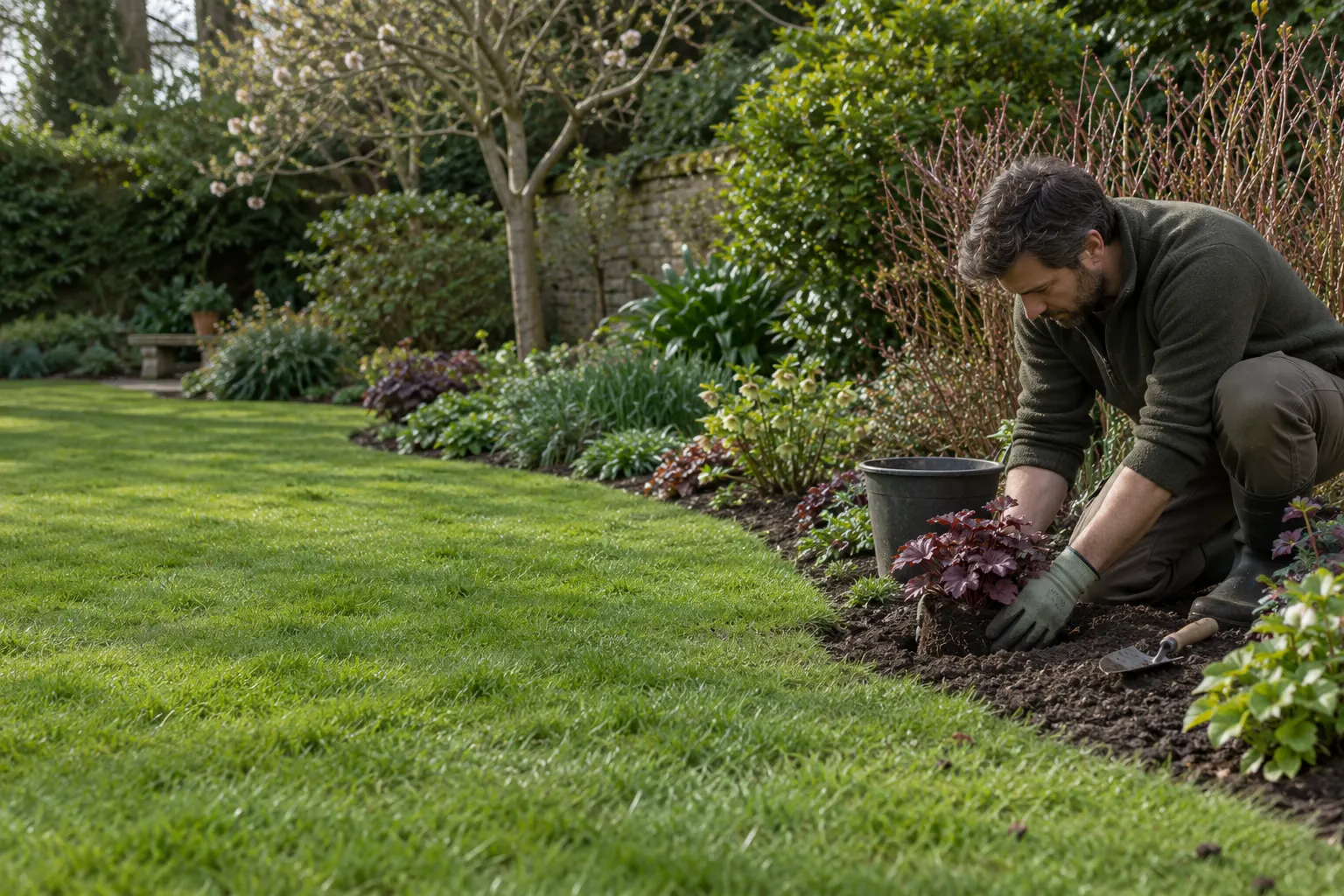
A heuchera standing higher out of the soil needs a closer look at its base. Where suitable, careful spring reseating can restore its position without burying the leafy crown. Keep that work distinct from the mowing, hedge trimming and collection around it.
The leaves do not show the whole planting position
Can a heuchera need reseating after winter?
Yes. Heucheras are shallow rooted and can lift slightly from the ground over winter. Check the actual plant in spring and replant where needed with its crown at the surface. The task should restore an appropriate root position, not hide the whole raised plant beneath an extra mound of soil or automatically lift every neighbouring clump.
Will pressing a loose plant back solve missing-root damage?
Not necessarily. A loose heuchera may have damaged or reduced roots, including damage from root-feeding pests such as vine-weevil grubs. Reseating does not create an intact root system immediately. Check what remains before selecting the work, keeping a concerning plant identifiable for appropriate attention rather than declaring the cause resolved because its leaves stand upright again.
Before another layer of soil
See the crown and root position before deciding the response
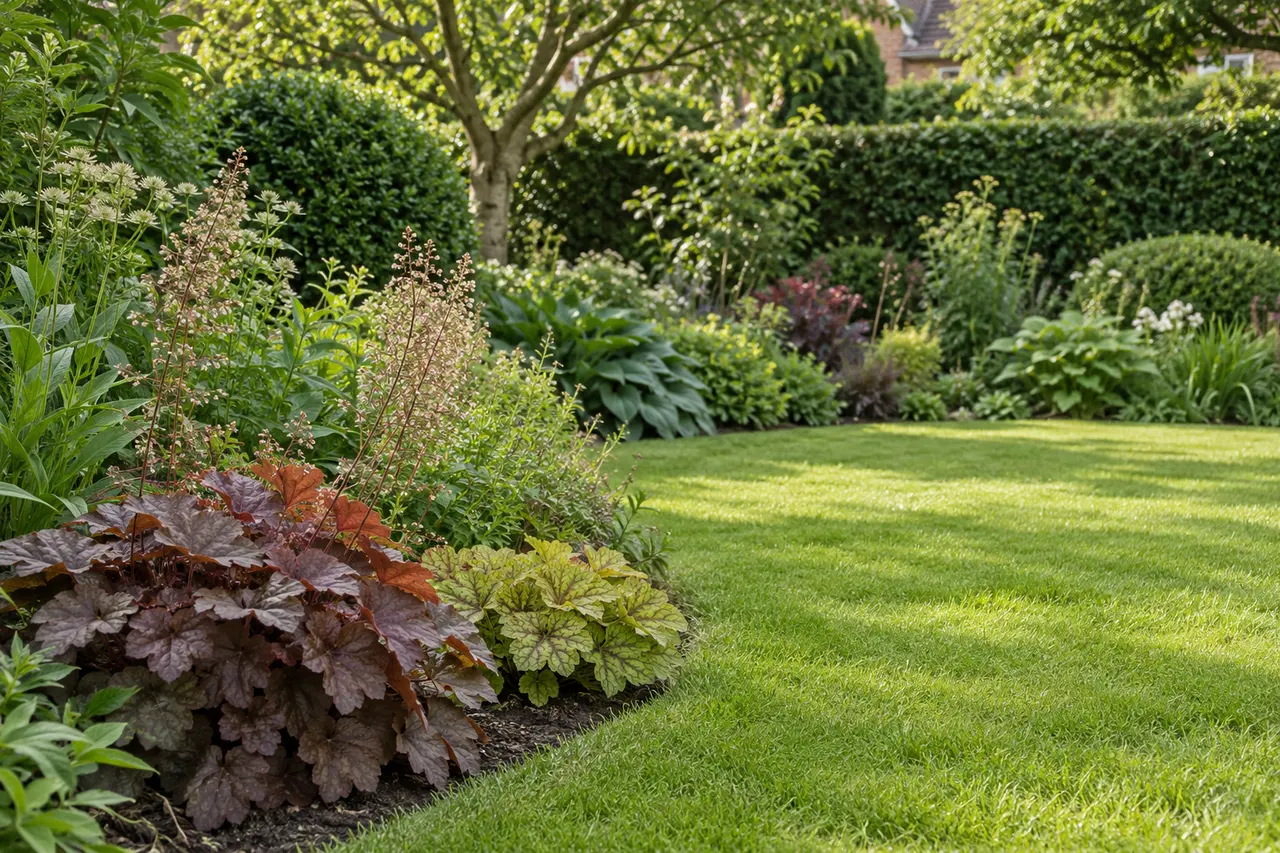
Move only enough outer foliage to see how the clump sits in the bed. Its rounded leaves can conceal a raised base, a gap beneath the plant or an older length of woody growth. Those are not identical observations. Locate the soil line and the roots that can be seen without tearing into the plant, keeping the existing position understood while the next task is chosen.
Suitable spring heuchera care can include replanting where the shallow-rooted plant has lifted. An ageing woody specimen may instead need a considered renewal decision. Avoid using extra surface material to disguise both situations. A low leafy outline is useful only if the plant itself is appropriately supported and its crown has not been buried.
Include the selected work within garden maintenance, identifying which clumps actually need attention. Keep the others seated. Opening every plant merely because one has become loose adds disturbance without answering that individual problem. Use the visible base and actual condition to determine the working area, rather than make the whole border a repeated lifting exercise.
- Look beneath the outer leaves for the actual soil line.
- Check the retained roots before choosing reseating.
- Support a small rootball rather than lift by its leaves.
- Settle soil around the roots while keeping the crown at the surface.
- Keep newly worked positions outside mower and collection movements.
A suitable small planting operation
Support the rootball while its receiving position is prepared
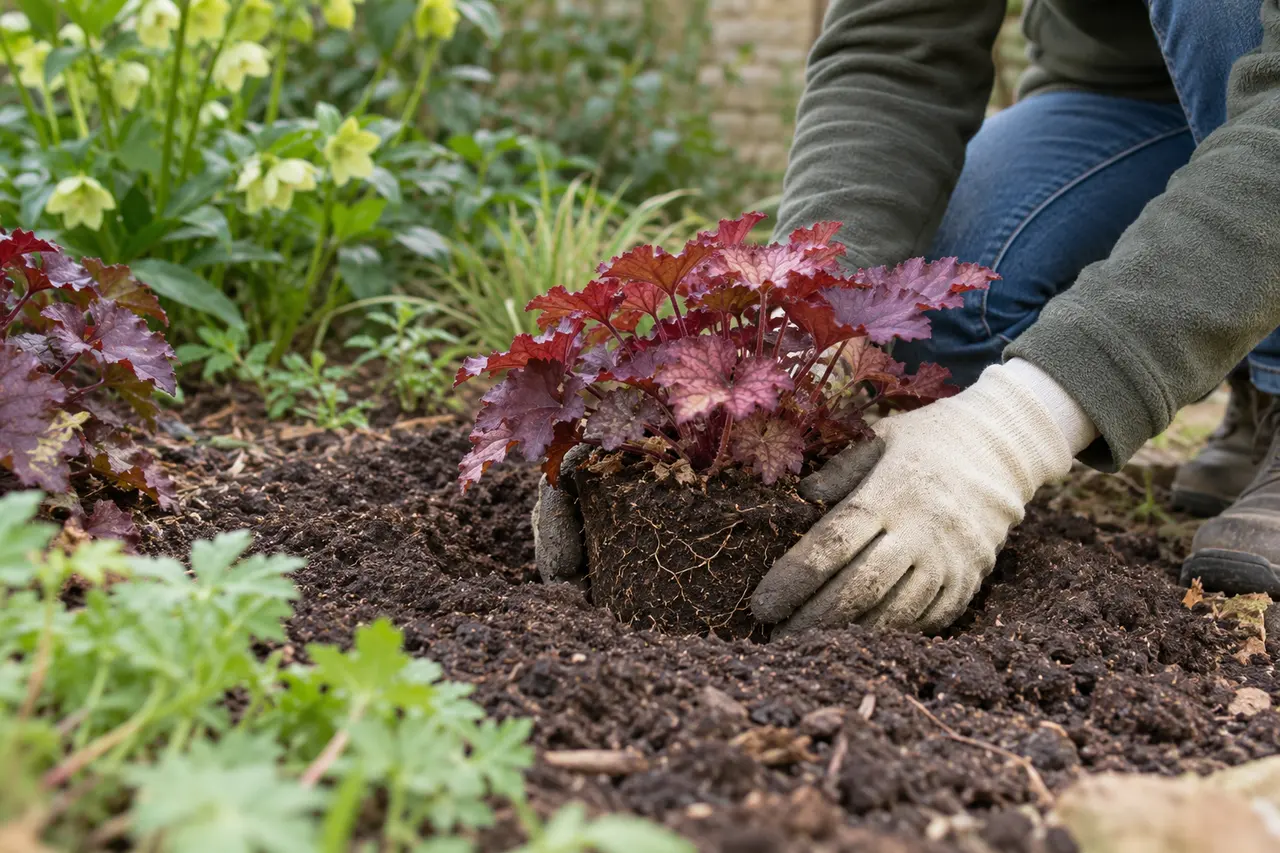
Where replanting is appropriate, loosen the immediate area carefully and support the manageable rootball as it is raised. Do not use the foliage as a lifting handle. Keep the plant’s identity and original position clear, placing the supported material on a suitable clean surface while the receiving space is made ready. A small rootball still needs its remaining roots kept together.
Prepare room for those roots rather than press them into a narrow hole that folds or crushes them. Return the plant to an appropriate level, with the crown sitting at the surface. Work soil around the rootball so it is seated, avoiding a collar of material over the growing centre. The purpose is contact around the roots, not a higher mound over the leaves.
Use suitable follow-up watering for the actual plant and conditions, allowing the soil to settle without washing it out onto the path. Check the finished position after that settling. A plant that has sunk too far or is perched over a new void needs attention to its placement; the water alone should not be treated as having completed every part of the replanting.
Loose material around a low plant
Collect from the open surface without reopening the planting
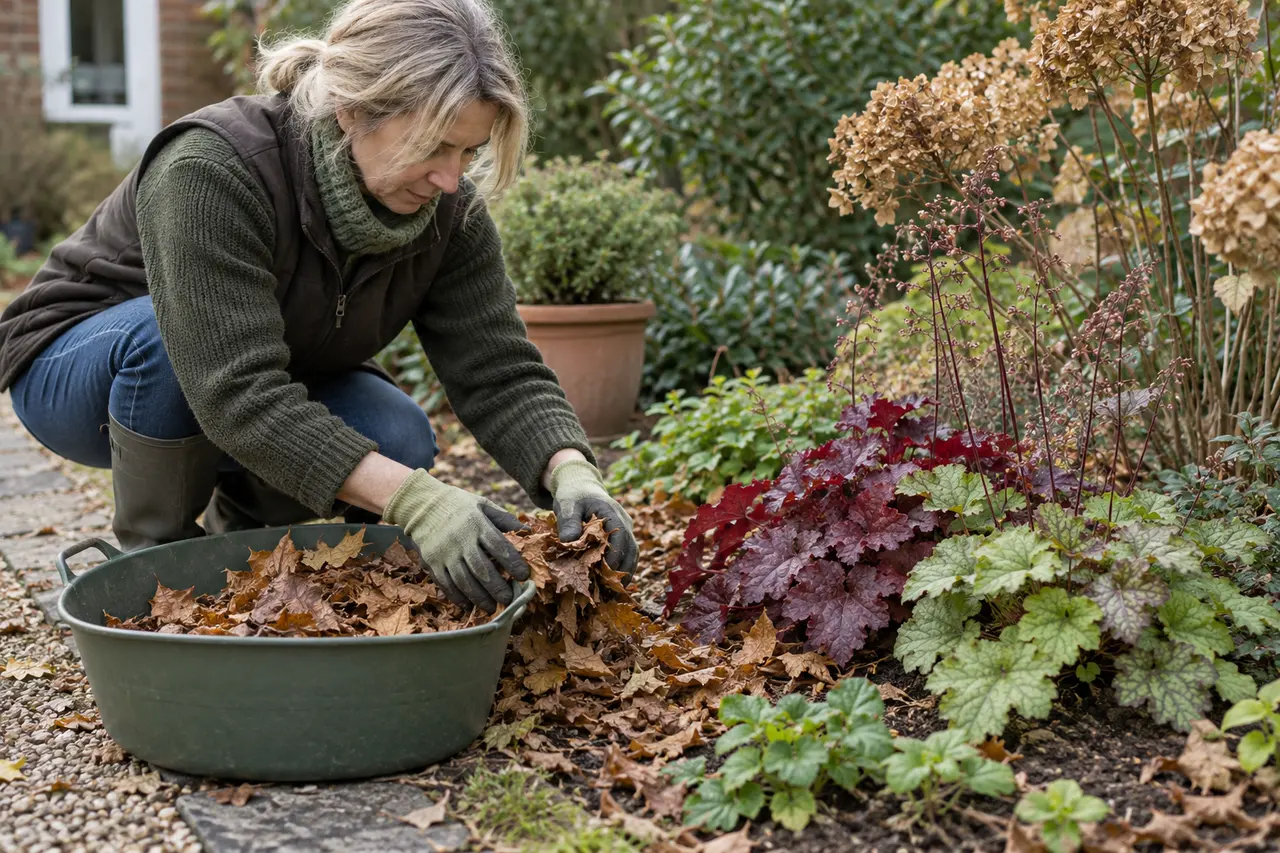
Gather fully loose fallen leaves from the accessible surrounding surface before they hide the finished soil line. Pick pieces between the low leaf stems carefully rather than drag a stiff rake through the entire clump. Keep the newly seated plant stable while the last fragments are retrieved, moving the hand’s approach instead of pulling the plant towards an awkward piece.
For a connected garden clean-up, gather loose soil from the working surface and path separately from material selected to leave. Appropriate bed soil should return to its intended place rather than disappear into a mixed outgoing load. Do not tip an unexamined remainder back over the crown simply to empty a tray at the end of the job.
The removed-material arrangement can account for detached old foliage and other waste as identified. Leave any plant-health concern distinguishable from ordinary loose litter. The final collection should reveal the reseated base, not cover it with a fresh layer of fragments or undo its position while a container is lifted away.
Keep the new position quiet
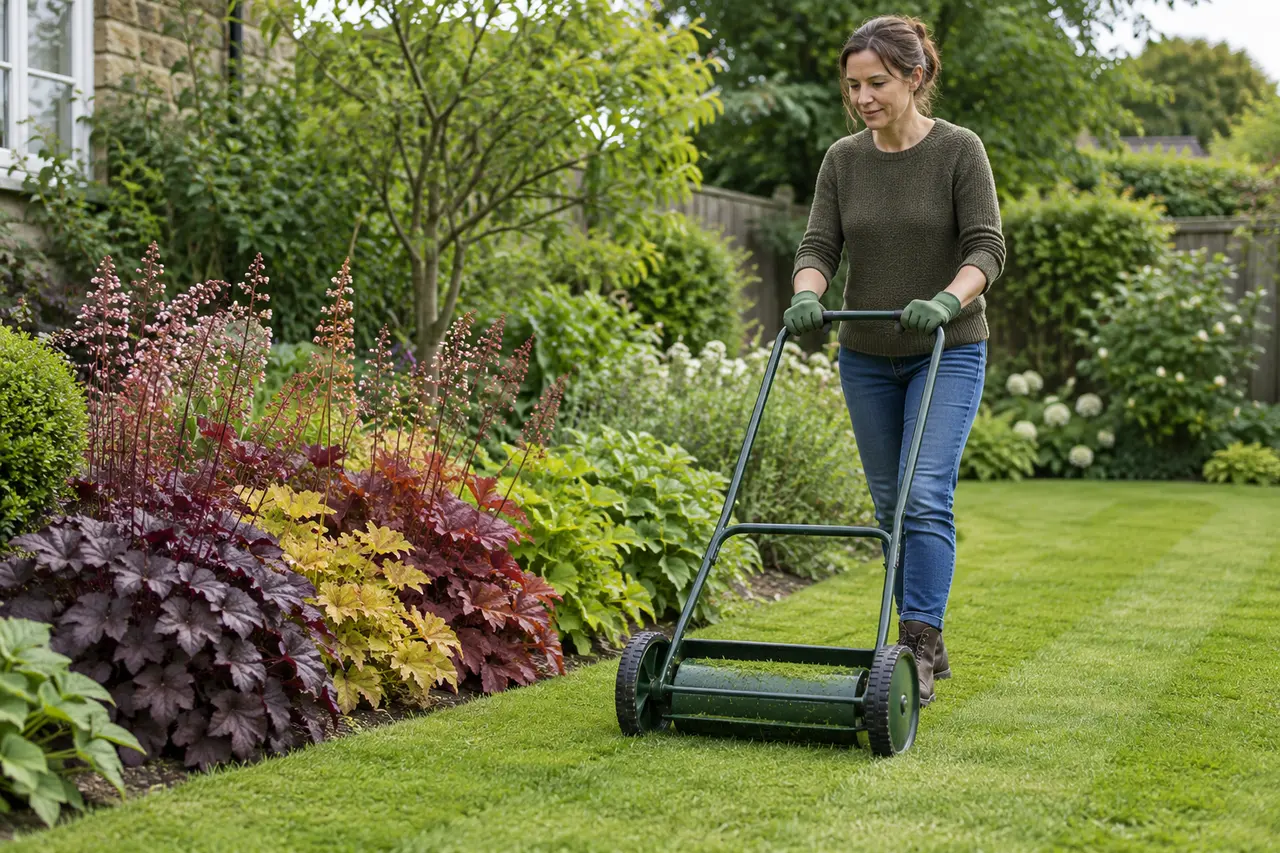
Finish the grass without making the border a turning space
Mark the extent of the recently worked soil while the adjoining lawn is attended. The heuchera’s shallow roots have just been repositioned; the apparent gap beside its leaves is not spare ground for a wheel or a boot. Keep the mower and operator on suitable established turf, with enough room for the machine’s whole movement around the bed edge.
Book the grass cutting for the surface actually ready for it. Keep bags, collectors and loose hand tools out of the new planting position during emptying and finishing. An accessible small margin can receive an appropriate separate method without pushing the main machine farther into the border to gain one extra strip.
Collect loose grass from the open margin where needed, leaving the heuchera’s crown visible at the intended level. A thick incidental layer of fresh clippings should not become the new surface around it. The lawn finish can remain neat while the adjoining soil is left undisturbed for the plant to settle and root.
The higher cutting task
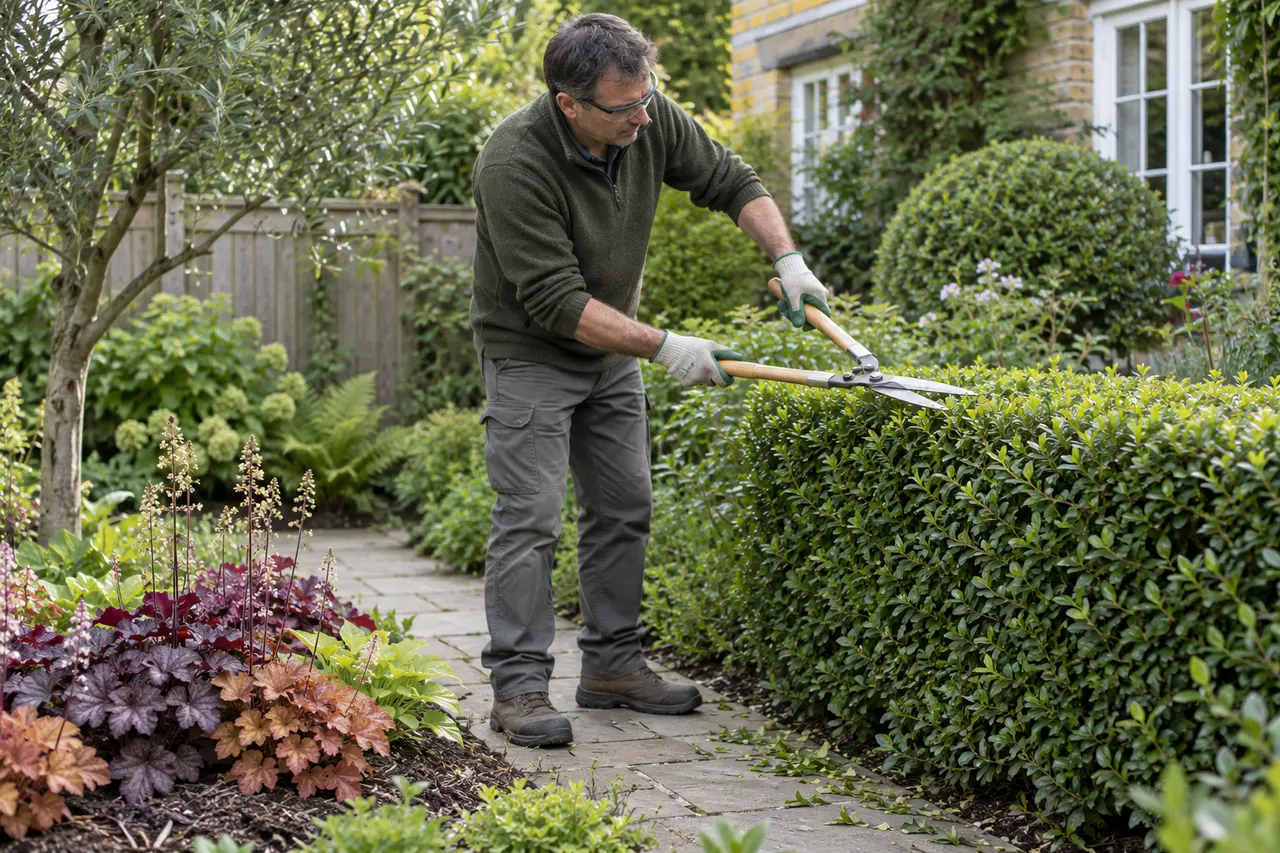
Give hedge cuttings a collection place outside the clumps
Before an appropriate reachable hedge trim, choose where its load will be received. Keep a loaded sheet or tub from resting over the low heuchera foliage, particularly where its base has recently been worked. There may be a clear route beside the bed that avoids turning those newly settled positions into temporary storage.
Use firm supported footing and keep the intended cutting face within controlled reach. Check hedges and shrubs for nests being built or in use and postpone affected cutting. Stop the blades before moving collection material and keep the shears’ handles clear of the low foreground.
Retrieve fragments from the accessible area once the hedge pass is complete. Leave the heuchera clumps in the positions just established, rather than pull a loaded covering through them to reach a convenient corner. Any remaining difficult portion should be identified for an appropriate approach, with the collection arrangement cleared from the planted surface.

The following growth
Check the seating without repeatedly lifting a healthy clump
During later seasonal care, look at the soil line and any fresh movement around the base. A shallow-rooted plant can need attention after settling, but an intact seated clump should not be pulled up merely to prove that roots are growing. Keep observations proportionate, with suitable moisture care and accessible weeding around the existing position.
The foliage can develop while the new root contact is still becoming established. Protect that period from repeated handling, passing equipment and piles of collected material. If the plant becomes loose again or shows a concerning change, identify the actual condition rather than add another mound over it. The earlier reseating is useful information, not a guarantee that every cause has disappeared.
Separate services and the details that matter to them
Compare mature leaf colour with the actual exposure
A planting-design discussion can consider how a heuchera’s foliage will sit beside its neighbours while also checking the selected cultivar’s growing requirements. A pale or golden leaf is not an instruction to put every specimen in the strongest sun. Choose the actual plant for that position, keeping colour preference and exposure together in the proposal.
Agree what happens to boundary cuttings
For authorised tree work involving a neighbour’s overhanging branches, the cut material should be offered back to its owner; they need not accept it. Agree the resulting handling and destination instead of throwing it over the fence. Offering the material and arranging responsible disposal when it is declined are different decisions, neither settled merely by which side the branch crossed.
Keep the supply hose open at the gateway
A gate closed onto a supply hose can restrict water reaching pressure-cleaning equipment. During jet washing, the hose route needs to remain usable while people move through the opening. Keep it from being pinched or sharply kinked rather than try to compensate at the machine for an interrupted feed. The working connection and the passage must function together.
Return an agreed removable guard to its intended fit
If an existing gutter guard is specifically removed for access, identify its intended refitting arrangement within the gutter-cleaning work. A displaced cover can become an obstruction rather than protection. Return retained sections and fixings as their design requires, without leaving a loose strip in the channel or forcing the wrong piece into a different profile.
Keep identification for a retained light set
Before reusing lights on a Christmas tree, retain the product’s model and identification so current manufacturer or official safety-recall information can be checked. A working bulb and tidy-looking cable do not establish recall status. Follow any applicable recall instructions for the actual set, rather than rely only on the fact that it lit successfully last season.
Allow for the actual plants that need reseating
General gardening time follows the selected clumps and surrounding tasks. Confirm any growing material, supplies and removal arrangements separately in the work proposal.
| Gardening time | Guide rate |
|---|---|
| First hour | £83 |
| Each subsequent hour | £65 |
GBP guide figures. Confirm the complete work, materials, outgoing waste, VAT and relevant parking, congestion or access costs.
Heuchera care beyond the first soil-level check
Does an old woody heuchera always need its whole stem buried?
No. Ageing straggly growth can call for suitable renewal or division rather than simply covering the extended woody portion. Check the living growth and roots, and choose the appropriate task. Keep that decision distinct from reseating a healthy small clump that has lifted slightly.
What makes a possible rust symptom different from leaf marbling?
Heuchera rust can produce raised orange-brown pustules, particularly on the leaf underside. These differ from the flat colour patterning of many cultivars. Look at both leaf surfaces and the actual condition when the plant is checked; colour alone is not a diagnosis.
Are the fine flower stems unwanted growth above the leaf mound?
Heucheras also produce small flowers on slender stems; their foliage is not the only part of the display. Decide whether those flowering stems remain before making a general height cut around the clump. Their later treatment is a separate choice from positioning the crown and roots.
Must every heuchera stay fully leafy throughout winter?
Some cultivars can lose foliage in colder conditions. Where that happens, the old leaves can protect the crown and shelter overwintering insects, so appropriate spring tidying can be preferable to stripping the plant during cold weather. Identify the actual plant and condition before clearing all its cover.
Give reseating and renewal separate instructions
Keep the raised clump and the ageing woody plant as two different entries in the gardening instruction. One may need its root position restored; the other may need a planned renewal. That distinction helps choose the next operation rather than treating extra height as a single problem with one remedy.