

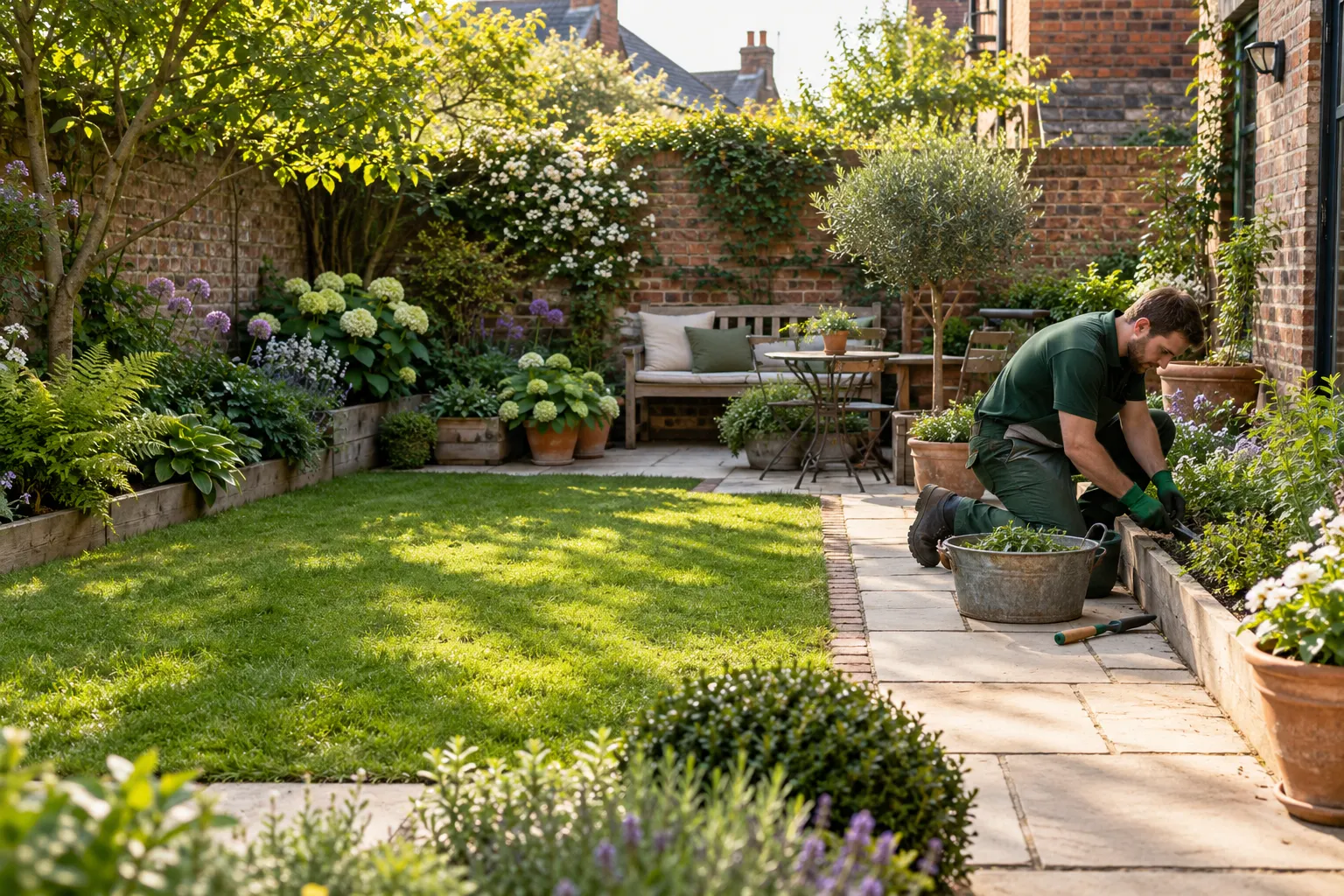
Detailed gardening within the room available
Gardeners Battersea
We maintain compact planted spaces by working through their usable edges, pot groups and narrow grass margins. Our gardeners remove accessible weeds, tidy suitable growth and gather the material without filling the only standing area. The work follows the containers, furniture and planting that are actually present, with heavier movement considered separately.
- How do you account for a large planted pot? We assess its position and condition before including movement; suitable care can follow a reachable edge while the container remains in place.
- What is involved in a small lawn’s finish? Our mowing plan includes interrupted runs around pots and stones, with suitable separate attention to corners and narrow margins.
Care organised around the courtyard’s working space
What does your compact-garden maintenance include?
Our work can combine selective pruning, hand weeding and container attention with collection around planted edges. Suitable grass cutting joins those tasks where lawn is present. We organise the sequence around the surfaces, retained plants and available standing positions, giving the close hand work and its material handling appropriate room within the garden’s actual arrangement.
How do you combine containers and permanent beds?
We treat containers and permanent beds as connected parts of a visit with different receiving conditions. Pot roots occupy a defined compost volume, while bed plants share soil with surrounding roots. Our replanting and hand-care assessment follows those differences, relating suitable materials, growth selection and access to each position so both areas receive their appropriate attention.
Plants within a usable outdoor room
Close work around the space used every day
Our starting point includes the furniture, pots and stored items within the garden’s everyday arrangement. Growth beside a chair or door can affect use before it appears extensive. We assess reachable tasks in relation to those features, giving the work a route and practical standing place while preserving the plants and objects intended to remain in the outdoor space.
Through Garden maintenance, we connect small operations that restore useful room: accessible weeds lifted at the edge, suitable stems attended to and projecting growth managed around the route. The detached material is gathered as that work progresses. At the finish, the relationships between the retained plants, seats and usable surfaces remain clear, with the collection taken from the space opened by the gardening.
Returning care can focus on the portions that develop quickly or require more detailed hand work. Furniture legs, fragile leaves and narrow strips can make a small job quite intricate. Our attention follows that detail and the available position for working, not an assumption that a compact garden must need only a very short visit. The practical finish remains connected to how the space is used.
- Our pot work retains a suitable clear position for the person carrying it out.
- Accessible weeds are separated from the roots and stems of container plants.
- Loose material is lifted carefully beside low foliage, chairs and benches.
- Suitable projecting shoots are attended to where they catch on doors or gates.
- Broken containers stay separate from compost and the green-cutting load.
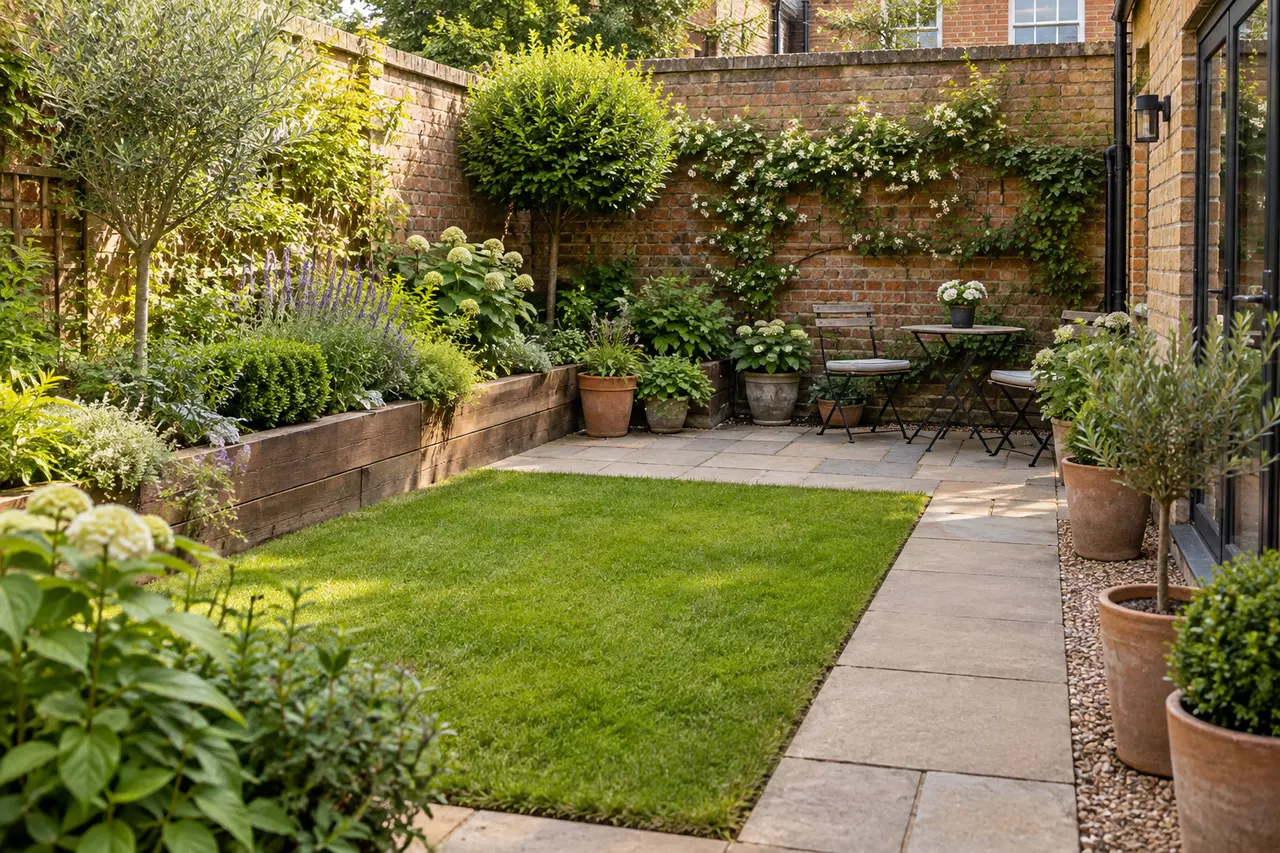
The pot and the planting within it
Container attention based on roots, compost and position
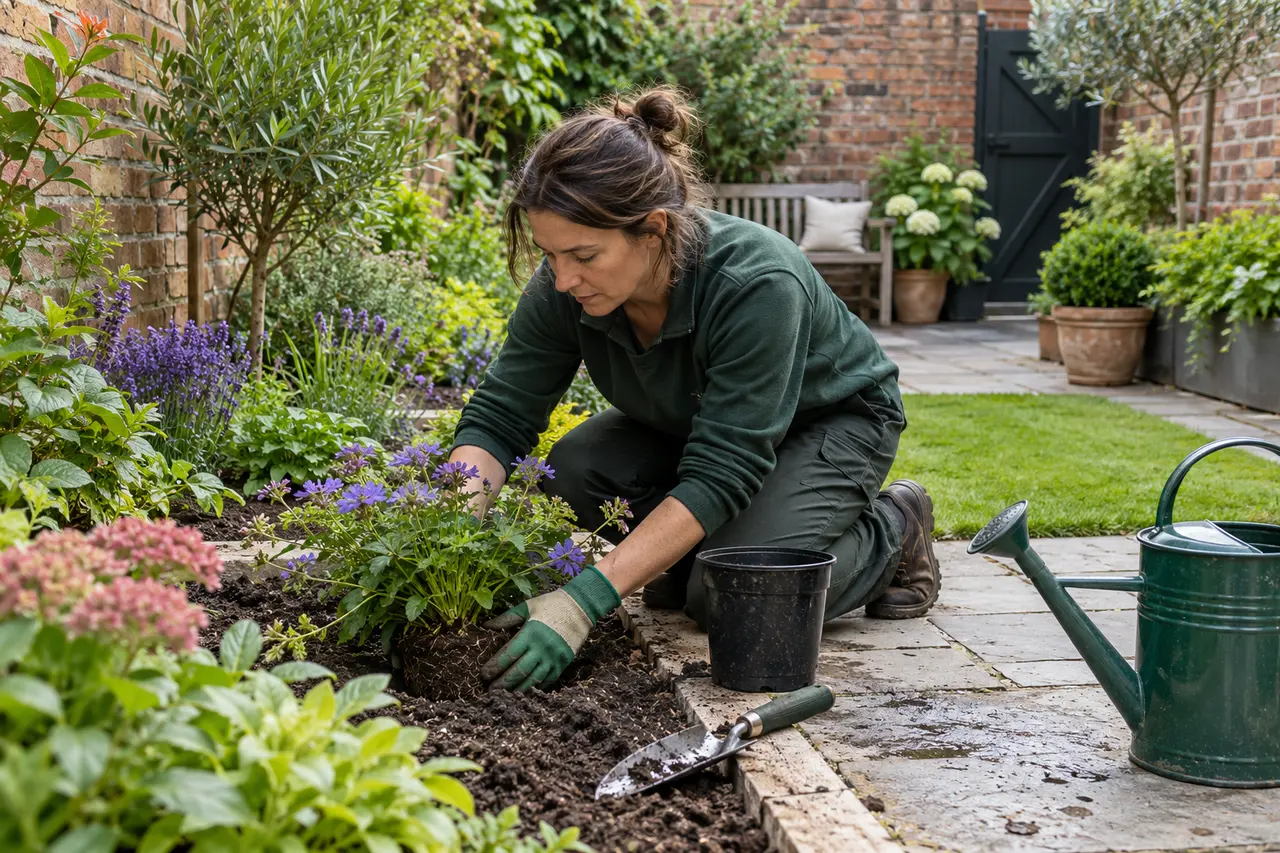
We assess an existing container’s planting, rooting room, compost and position when its appearance suggests attention is needed. Those findings guide the suitable next operation, including any specifically included change to the planting. Where growth is congested, the receiving space and retained root mass are considered together, keeping the resulting care related to the plant already occupying the pot.
Routine attention can remove accessible surface weeds and spent material, with suitable tidying of the retained growth. Replanting or a change of container requires appropriate materials and a workable handling arrangement of its own. We account for the actual weight and condition of large planted pots, so an object obstructing another task is not automatically included for lifting simply because it would be convenient to move.
Our bed work beside the containers follows the wanted roots in the soil. Hand tools allow accessible weeds to be loosened individually, and loose material can be lifted without drawing it through delicate stems. Where new planting is included, we relate its position to light, watering access and eventual spread. The arrangement is intended to remain workable after the initial young growth has filled out.
Interrupted grass runs and narrow margins
Small lawns with their own detailed finishing work
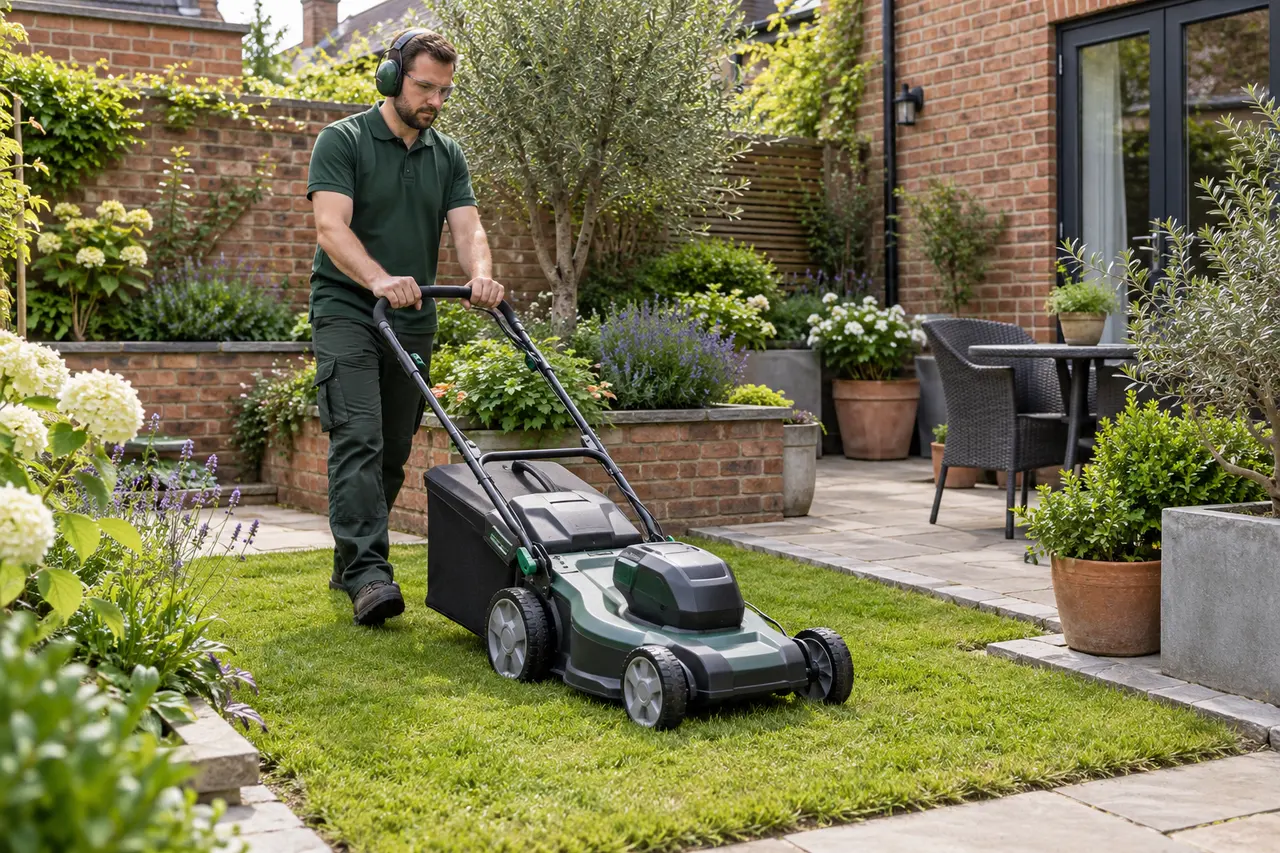
We plan lawn mowing around its actual perimeter as well as the open green surface. Pots, stepping stones and tight corners interrupt the runs, while bed foliage may overhang the intended line. Those details guide equipment and route selection. The suitable margin finish follows the established planted edge, preserving the relationship between turf and retained leaves as the accessible grass is cut.
The preparation includes locating loose objects in the grass. Suitable movable furniture can be set aside where handling and a receiving position allow, while fixed obstacles remain part of the route. Around long grass and edging, we establish the visible surface and hidden obstructions before cutting proceeds. This keeps a small, awkward margin from being approached as though it were a clear open lawn.
Our finishing attends to grass beside paving, around an island or beyond the mower’s useful reach. Clippings follow their arranged handling, and loose fragments are gathered from adjoining surfaces. A persistent weak or bare portion is recorded for its own condition assessment, leaving the ordinary cut complete while any separate recovery is identified against the actual patch and its requirements.
Screening in a restricted footprint
Suitable hedge care around pots and seating
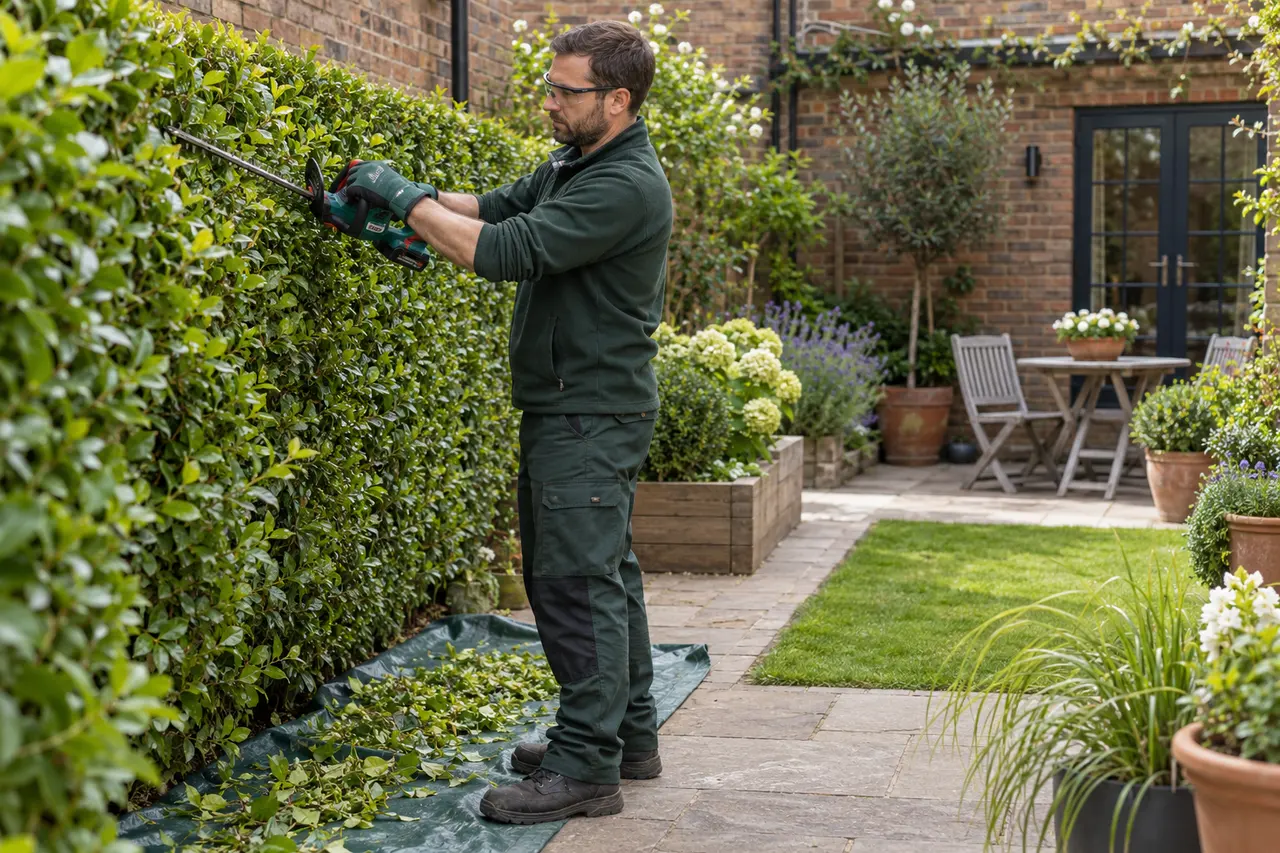
Our hedge work recognises the screen’s value alongside the space needed for walking and sitting. We establish its intended outline from the plant species and reachable growth, then carry out the suitable extension work within that extent. The resulting maintained face relates the boundary to the occupied area while retaining the plant’s appropriate structure and the practical role it provides.
In limited room, light trimming can place fragments in pots or behind a bench. We use a suitable receiving arrangement and manageable sections to keep that material available for collection. Individual cuts can suit broad leaves or stems near retained neighbours. Gathering then follows those close receiving places, leaving the low planting and accessible surface clear after the boundary work is complete.
The suitable cut follows flowering and the plant’s likely response. We check the affected vegetation for nests being built or used and postpone disturbing work where necessary. A substantial woody reduction or uncertain limb beyond ordinary reach receives a separate tree-work enquiry. This leaves the routine screen attention with a clear practical extent and any larger required operation appropriately identified.
Clearance where there is no spare corner
Material removed through a usable working sequence
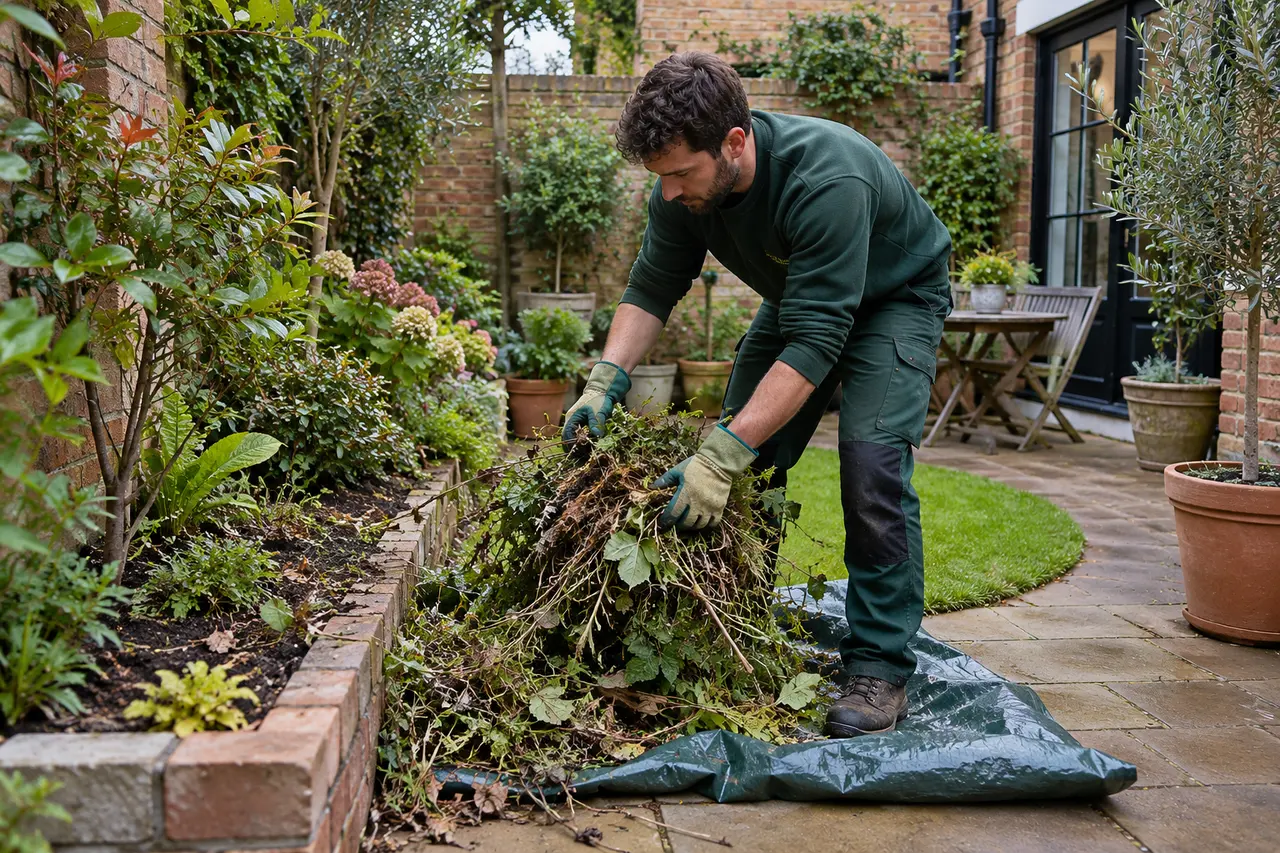
We organise a clear-up around the remaining standing position and the route out. Old stems, unwanted containers and weeds can fill important working space, so the progression includes a suitable temporary collection place. Material is gathered and moved through manageable portions, leaving access for the next task while the recovered planted edges become available for their closer attention.
Initial sorting separates retained items from the vegetation being gathered. A living plant in a weathered pot is not the same load as a broken empty container, and a stored support can still have a purpose. Once those items are distinguishable, our gardeners release unwanted growth through workable portions. This avoids repeatedly shifting one mixed pile whose contents were never properly separated at the start.
The Garden clearance can recover usable room and reveal planting needing later care. Our handling distinguishes soft cuttings, woody material and mixed rubbish by their contents and intended destinations. The garden-waste article gives further context for that sorting. This keeps the recovered surface readable through collection, with retained objects and living plants separate from the actual material included to leave the garden.
Seasonal collection in close spaces
Leaf and stem work around the gaps that matter
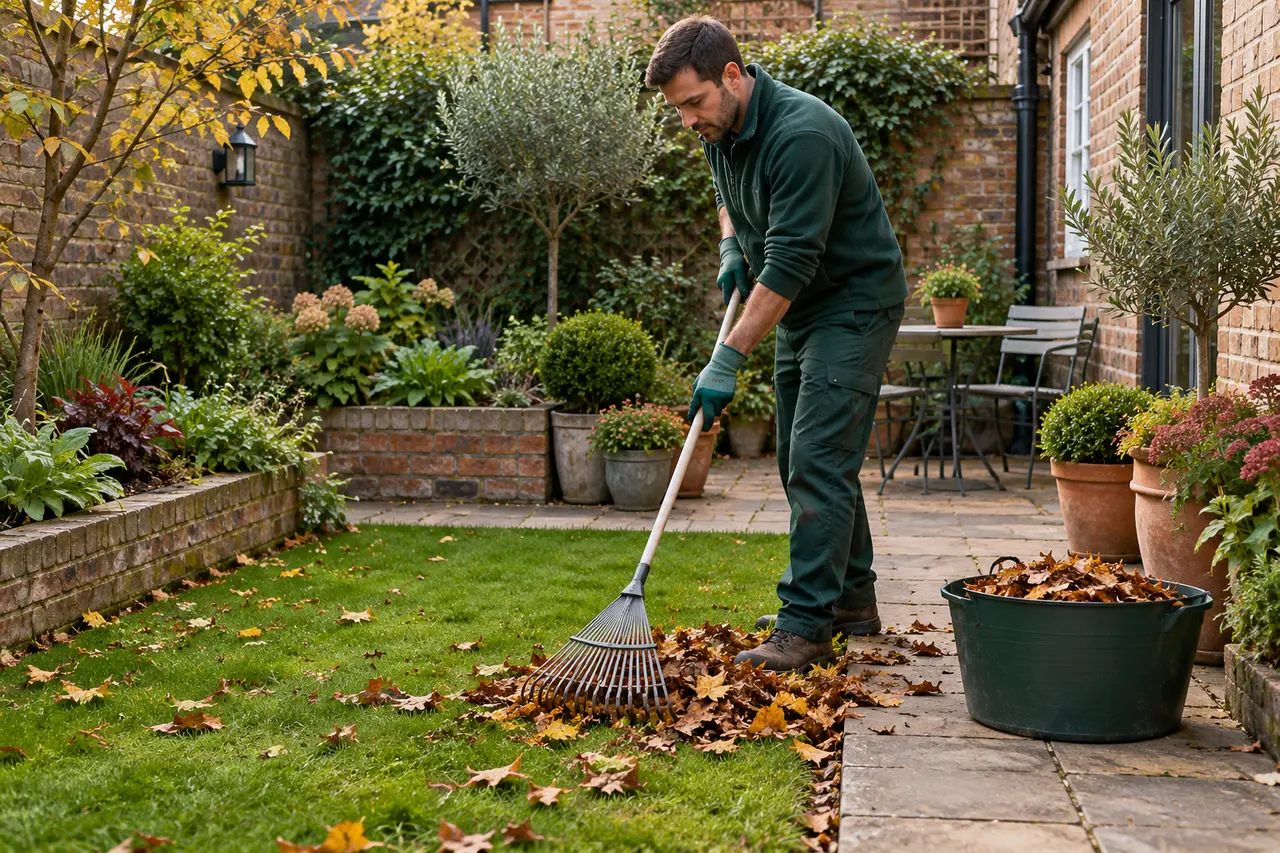
Our seasonal attention reaches the small gaps that support everyday use. Leaves around a pot base, collapsed foliage on paving or a stem across a seating edge receive suitable gathering and plant care. We follow the affected route and accessible surface as each portion is attended, leaving the available room clear and its planted surroundings recognisable through those ordinary changes.
The collection method follows where material has settled. A light sweep can suit paving, while pieces among stems receive controlled hand lifting. Labels and low growth remain identifiable around pots, and retained useful material goes to its arranged destination. The completed area then has its loose accumulation gathered while the access and care positions around the containers remain available.
Later work follows the growth developing in each part of the space. Actively growing grass can need more routine attention, while new planting can bring suitable watering and close weeding into focus. Our guide to care through the year provides wider seasonal context. The visit’s actual sequence remains connected to the receiving surfaces, pot conditions and plants present, carrying the useful observations from earlier care into the next operation.
Further services around compact planted spaces
A layout distinguishing fixed and movable planting
Our Garden design can distinguish permanent bed planting from container pieces intended to remain flexible. A pot’s filled and planted weight is related to its position and future handling. We also account for reaching the soil, watering and suitable pruning, giving the choice of bed or container a practical basis that continues through later plant development and the garden’s everyday use.
Tree handling above fragile structures
For tree surgery above glass, a rooflight or another fragile surface, our proposal addresses the material-handling arrangement as well as the selected branch. The structure below forms part of that assessment and the receiving space available for the operation. This keeps the method connected to the actual overhead position, with the proposed cut and controlled handling described together for that particular tree work.
Paving access behind established containers
Our jet washing assessment identifies narrow strips behind large pots alongside the more open paving. The available gap governs controlled cleaning movement, and any needed heavy-container handling has its own suitable arrangement. We define the receiving surfaces from those actual positions so the readily accessible floor and strips requiring further preparation remain clear within the practical cleaning plan.
Gutter sections above a lower roof
A gutter-cleaning assessment considers the lean-to or conservatory beneath the channel as well as the gutter visible from the garden. That lower roof can change where equipment may be positioned and therefore the method available for the particular section. We establish the relevant access before defining the operation, without turning visibility of the channel into an assumption that the receiving area below is suitable to use.
Indoor room for a pot-grown seasonal tree
The seasonal tree choices include pot-grown trees whose indoor arrangement accounts for the container and branches together. Our position planning can retain usable access to the compost surface, with suitable protection where the pot meets the floor. This gives the display a practical full footprint, leaving the relevant care point accessible while the actual tree stands in its chosen position indoors.
Close work still needs a realistic time allowance
The gardening rates below are the site's general guide. A small plot may involve several detailed tasks, and handling materials through restricted access can affect the total time.
| Gardening time | Guide price |
|---|---|
| First hour | £83 |
| Each subsequent hour | £65 |
A complete GBP quotation should include the chosen work, any materials or waste arrangements, VAT treatment and applicable charges. No special Battersea tariff is implied.
Questions about our close-space garden work
Can the visit focus on containers and one small bed?
We can develop a visit around specified pots and a small bed, using the retained plants to define the close hand attention and suitable materials involved. Our sequence includes the standing position, access between containers and collection from the receiving edges. This gives the compact planted area a clear working arrangement through which the selected care can be completed.
How is heavy-container movement handled?
We assess a large container’s size, condition and position before including movement. That establishes the suitable handling of the planted object and any effect on the task behind it. Where the pot remains in place, our method follows accessible edges; where movement is specifically included, it retains its own appropriate preparation and receiving position within the work.
How do you work beside containers staying in position?
We follow an accessible working edge around containers staying in position, lifting selected weeds and loose material with controlled reach. Their remaining planting stays seated while the reachable portion is attended. A completely blocked section retains a clear access requirement, giving any later movement or different approach a defined purpose alongside the hand work completed from the available position.
How are weeds separated from the container plant?
Our hand work follows accessible unwanted stems and roots around the container’s retained plant. The pot and compost condition remain part of that close assessment, identifying any separate replanting need. Collection retrieves the weeds actually released while the established root mass stays seated, leaving the suitable surface care complete and any further planting operation clearly related to the condition found.
How is space retained when fresh planting is included?
Our additional planting positions relate future spread to doors, seating and watering access. A recurring layout conflict can receive a separate design or planting proposal, while suitable smaller additions form part of the identified current work. The arrangement keeps practical room for reaching and using the courtyard alongside the plants that will develop into its available space.
Useful room retained around the planted edges
Our Battersea attention connects pot care with the space needed to reach and use the garden: a workable door swing, an accessible planted edge or a grass margin finished without crowding its neighbours. Our gardening services bring those focused operations together with the further tasks appropriate to the space.