

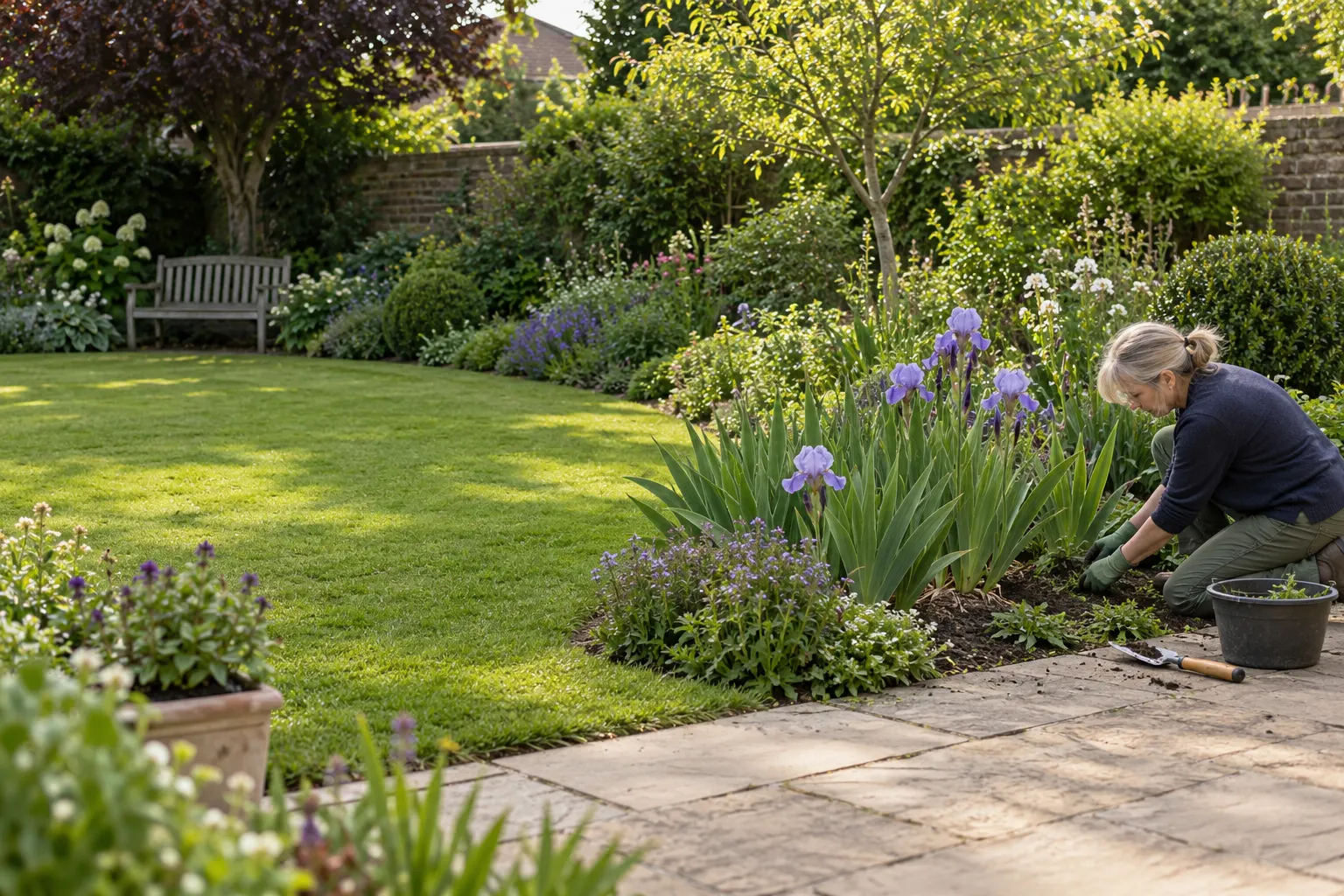
Detailed maintenance around established irises
Gardeners Shirley
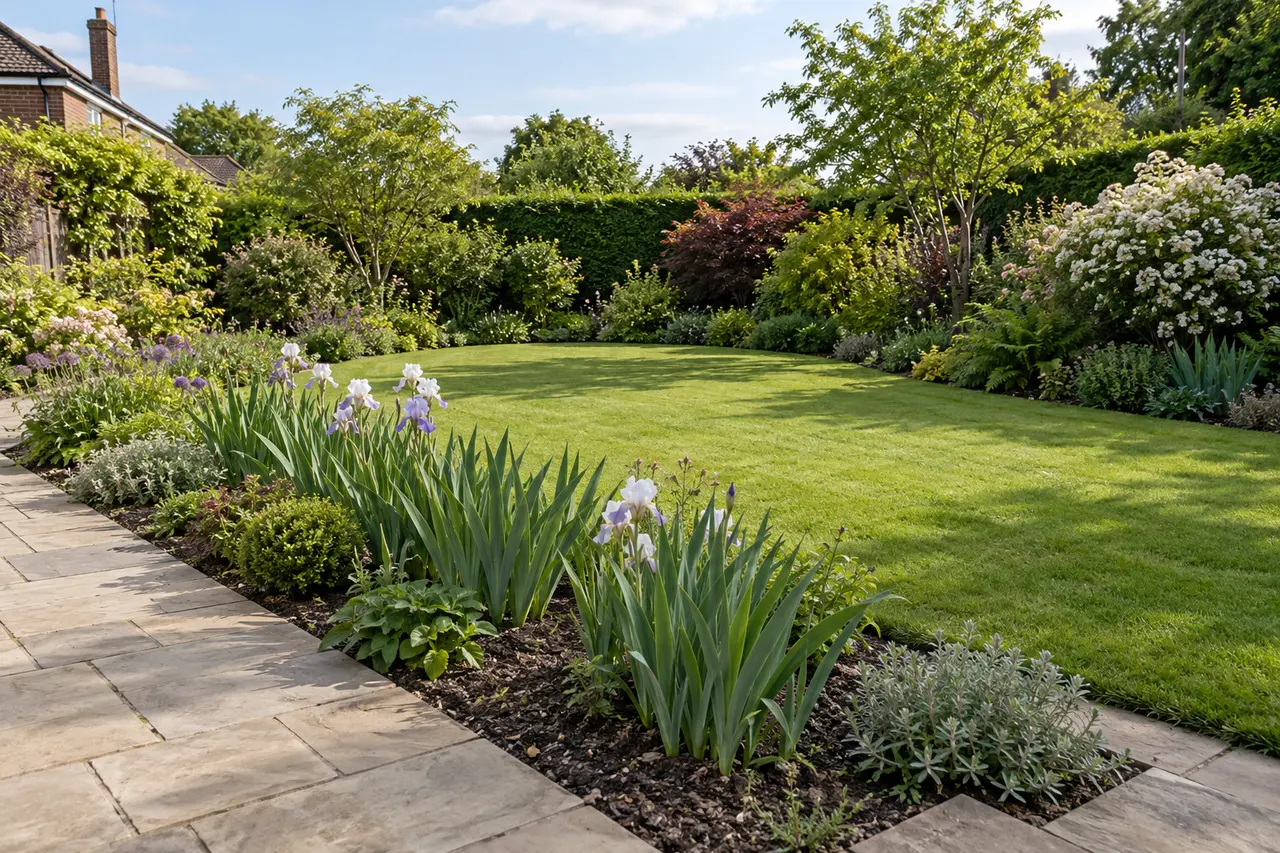
Our gardeners care for established borders in Shirley with the plant's growing structure kept intact. In a bed containing bearded irises, that means working around the surface rhizomes, tending the leaf fans and removing selected finished flower stems. Lawn mowing, hedge trimming and collection are carried out around that retained planting, producing a maintained garden.
- How do you protect the iris during clearance? We retain the living surface rhizomes and attached fans, collecting loose material around them without burying the established plant.
- How are pin-style tree stands accommodated? Tree-installation preparation follows the identified support; its locating hole serves the fitting rather than improving the tree's water uptake.
Selective work for the iris bed
How does your border service protect surface rhizomes?
We remove loose covering and accessible weeds while keeping the established bearded-iris rhizomes in their appropriate surface position. Soil remains around the roots, but fresh material is not spread as a blanket across the rhizome tops. This gives the customer a tidier bed while preserving the exposed growing structure, instead of creating a neat-looking covering that changes the plant's conditions.
Can your gardeners remove flower stems without cutting the fans?
Yes. Our work separates selected finished flower stems from the healthy leaves that remain with the plant. Each stem is followed through the fan before a controlled cut is made. The detached piece is then withdrawn from the surrounding foliage. The result is removal of the spent display with the retained leaf growth still contributing to the established clump.
Maintenance with the growing structure retained
The first pass through an established iris bed
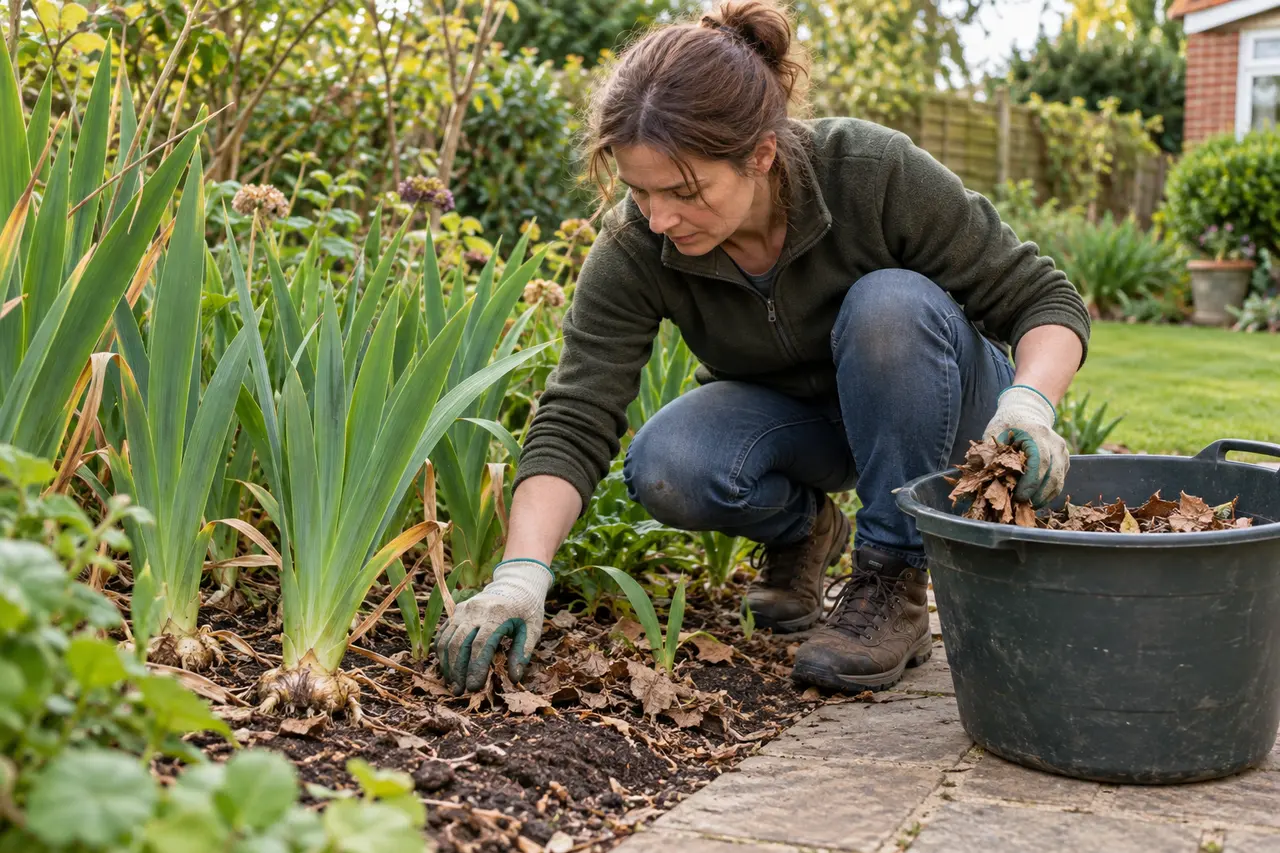
The first border pass concentrates on distinguishing loose material from the living plant. Our gardeners recognise the thick horizontal rhizome and the leaf fans attached to it before gathering debris at ground level. A visible rhizome can resemble a short dry piece of woody material, but its position and connections determine how we work around it. That distinction keeps the existing iris within the maintained planting.
Accumulated leaves are lifted in controlled portions so the working surface opens without the rhizome being levered out of its seat. The team collects detached material as it becomes accessible. This initial collection improves visibility for the finer work and leaves the established group stable in the bed as the surrounding area becomes clearer.
Our garden maintenance brings this close work into the wider visit alongside the other plants needing attention. The treatment follows the identified plant: an exposed-rhizome finish appropriate to a bearded iris is not applied indiscriminately to every narrow-leaved clump. Where several iris types or other perennials share the border, each retained group remains recognisable, with its growing position respected during the service.
- Recognition of the attached leaf fan and surface rhizome.
- Controlled removal of loose leaves around the seated plant.
- Placement of suitable surrounding material clear of the rhizome tops.
- Selective cutting of finished stems with healthy foliage retained.
- Collection of detached pieces before the neighbouring lawn is mown.
Hand work between the fans
Local weeding that leaves the retained iris seated
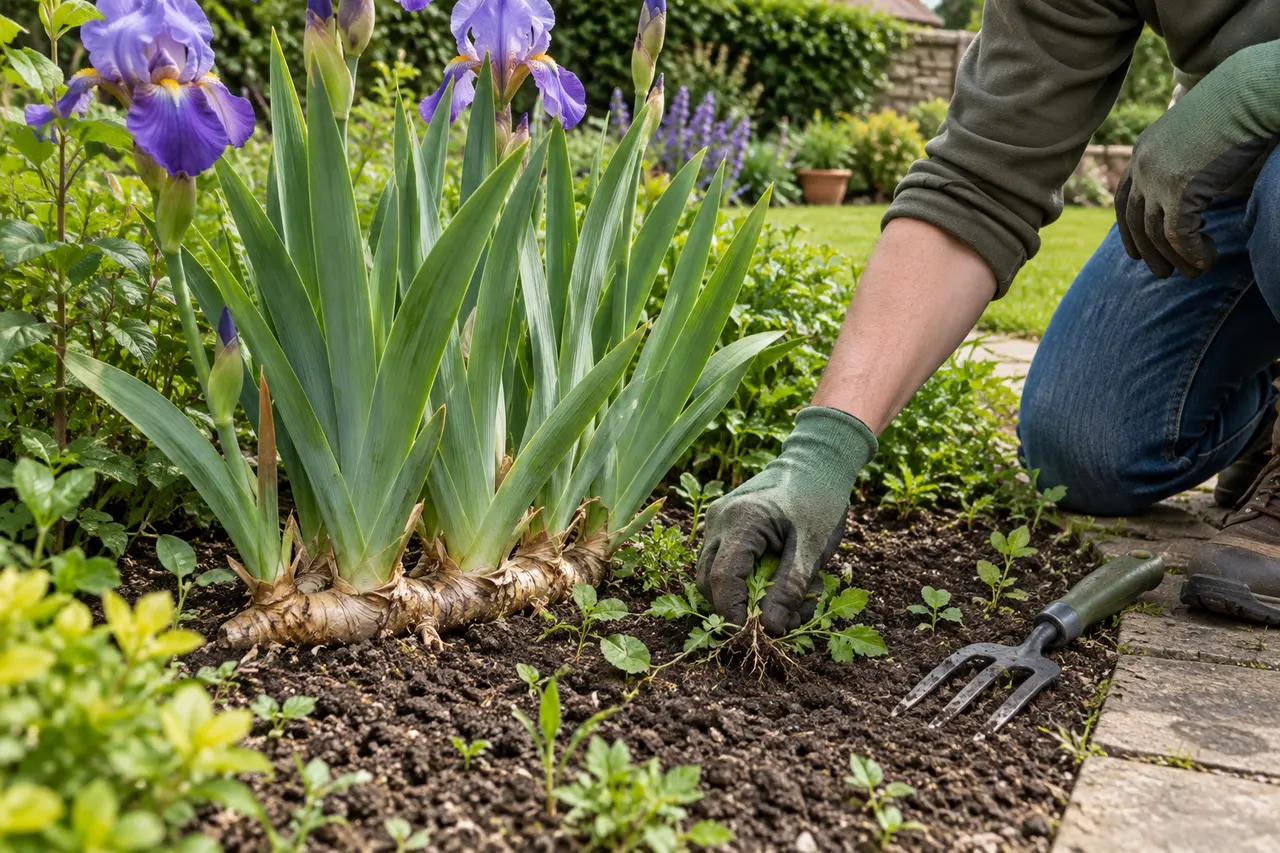
Our hand-weeding work starts at the unwanted plant's own base in the visible soil between the fans. A suitable hand tool loosens its accessible roots locally while the retained iris leaves remain outside the pulling movement. The whole group of foliage is not gripped to extract one tangled weed. Working within a small, visible patch gives the gardener control over what comes out and what remains planted.
Surface rhizomes stay visible while that close removal progresses. Where an unwanted root runs beneath an established iris, we adapt the immediate weeding. The service therefore produces an accessible, tended surface without turning routine border work into unplanned lifting. A larger division or replanting operation remains a different task, selected for the plant's condition and the appropriate stage.
When the job includes suitable material for the surrounding planting, its placement follows the different plants in that bed. Our gardeners keep it clear of the bearded-iris rhizomes while providing the appropriate finish around neighbouring growth. There is no need to strip every other plant's surface covering to maintain this one exposed structure. Careful placement preserves that distinction and avoids redistributing material across the entire mixed border merely for a uniform appearance.
Selective work after flowering
Controlled removal of the selected flower stems
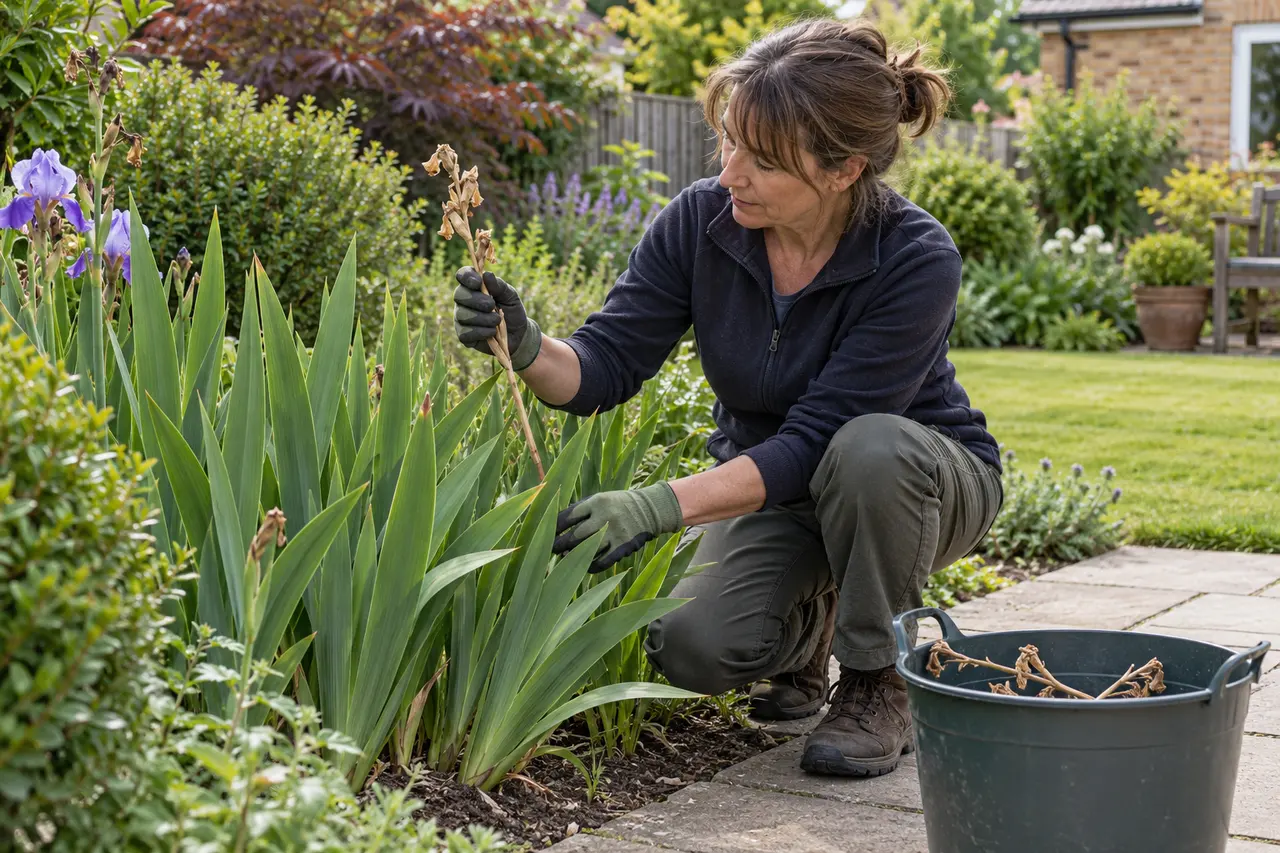
After the iris display, our gardeners trace each selected finished stem through the surrounding fans. Only the foliage needed to reveal its position is moved, with the leaves supported. This creates a controlled approach for the tool and identifies the part being removed before cutting begins. Several stems may stand at a similar height, but their height alone does not determine the treatment.
The chosen flower stem is cut appropriately where it meets the foliage, then lowered and withdrawn without its top being dragged through another plant. Healthy green fans remain with the iris. Their treatment is independent of the shortened flower stem, so the bed does not receive a uniform low cut as a finishing shortcut. Any yellowing or damaged leaves are assessed individually during that detailed pass through the group.
Where the retained display includes selected seed-bearing stems, our removal follows that purpose. Those stems remain distinguishable from the finished pieces being collected, allowing the chosen parts to continue developing. The work can leave a deliberately mixed outline. This is a considered maintenance result: the agreed spent material is removed while the continuing growth and selected seed structures remain part of the planting.
Collection within the planted bed
Detached material collected from between the fans
The garden clean-up includes accessible detached stems and loose leaf pieces left within the worked bed. After the main load is gathered, the gardener retrieves fragments lodged between the fans by hand where appropriate. Resistance is checked before a piece is pulled, keeping an attached leaf distinct from loose material. This finishing pass clears the products of the work without using a rough movement across the living plant to empty every gap.
Our garden-waste handling follows the actual material collected and the destination included in the job. A soft or apparently rotten part remains identifiable for an appropriate plant-health decision. Collection is therefore more than moving a visible pile: it maintains the distinction between detached dead leaves and a concern affecting the retained plant, while keeping the outgoing material together for handling.
Mowing beside the retained border
Lawn cutting with a controlled iris-bed margin
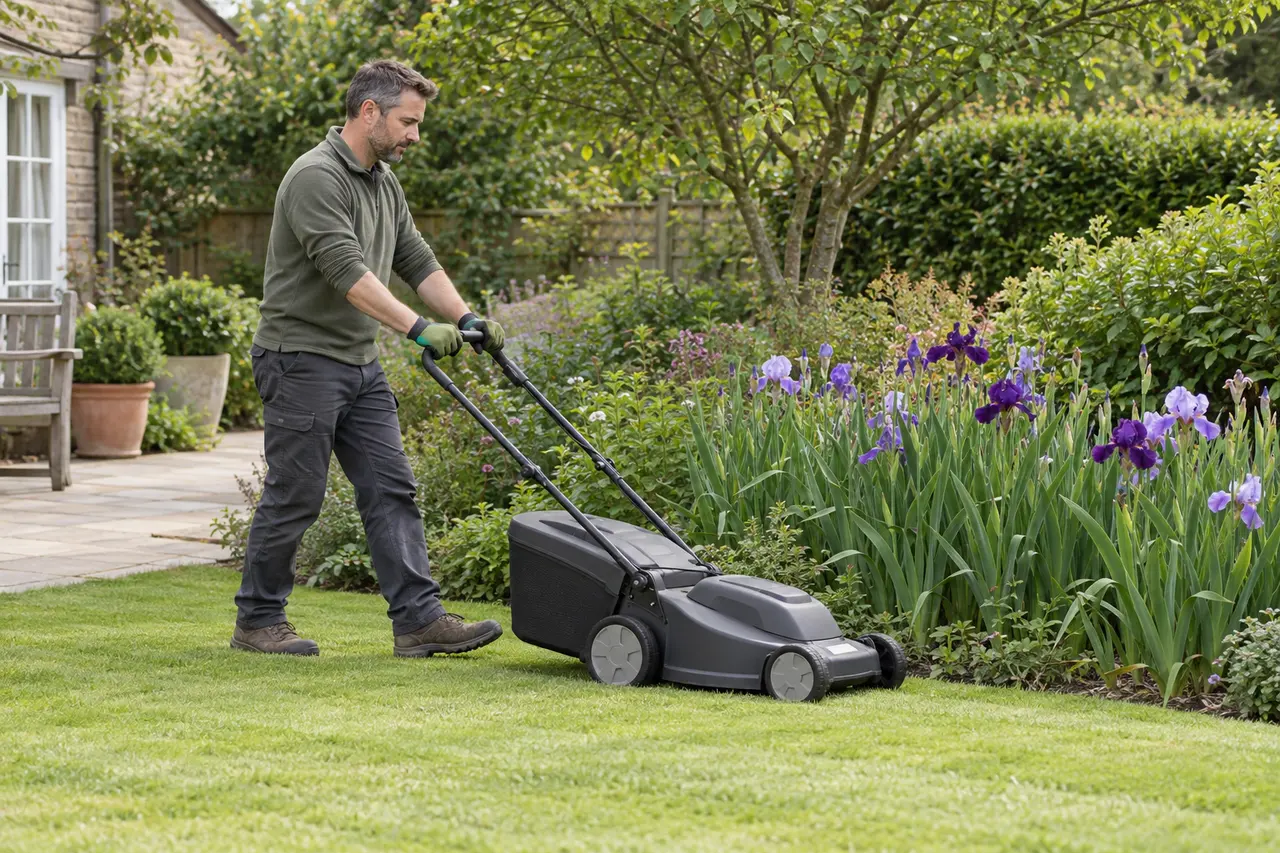
Before the lawn pass, we establish where the iris fans and surface rhizomes meet the grass. The team removes detached flower stems and hand tools from the machine's route, leaving the intended cutting surface clear. An arching fan or a rhizome extending towards the edge is treated as retained planting. Our mowing route works around that outline instead of relying on the machine to reveal where the border plant begins.
During the lawn-care task, wheels remain supported on suitable turf and the deck is kept clear of the retained foliage. A reachable awkward margin receives an appropriate separate finish where the mower cannot complete it cleanly. This produces a maintained grass edge without scraping the rhizome or slicing through a fan to create a shorter-looking line. The lawn and the planted border are both part of the finish, with neither sacrificed to the other.
Lawn feeding or recovery, when included, is applied to the identified grass area. Our working pattern keeps its materials from being spread across the iris bed as an incidental part of treating the turf. Shared edges still contain plants with different requirements, so the application and collection leave a clear division between them. The customer receives the specified lawn work alongside the retained border.
Hedge trimming beside the iris
A boundary finish with the fragments collected
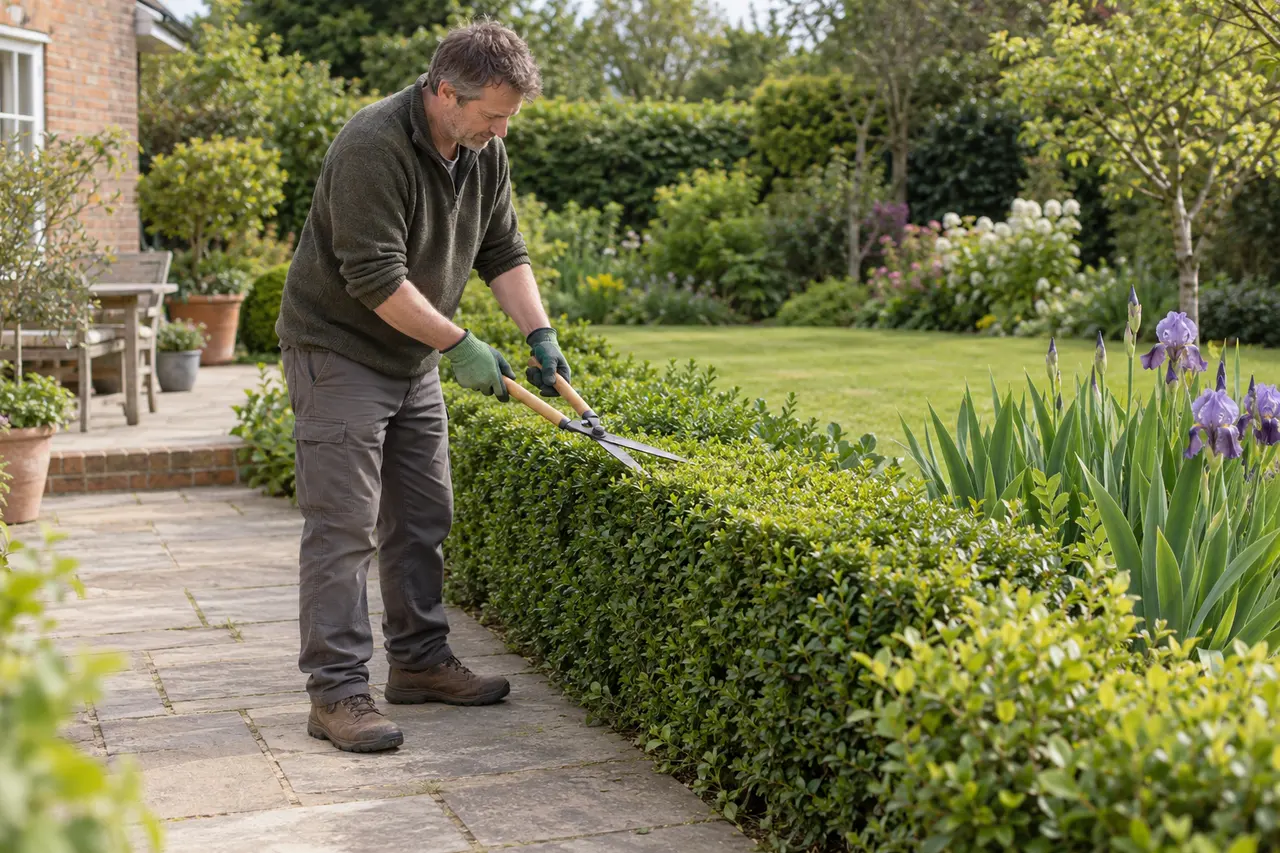
A hedge close to an iris bed needs a collection arrangement that protects the planting below. Our team establishes suitable standing and receiving positions for the reachable trim, using manageable cutting portions where they improve control. Any covering is positioned without flattening fans or loading the surface rhizomes. This preparation supports accurate work on the hedge and makes its fresh fragments easier to retrieve from the surrounding area afterwards.
The cutting follows the hedge's own species, condition and intended outline. We check for nests being built or in use and postpone affected work. Once the blades have stopped, accessible fragments are lifted from the receiving area with a controlled method. The iris is not shaken or roughly raked to clear the hedge's waste. The finished boundary and the retained plants beside it each receive an appropriate final pass.
Our later seasonal border care also addresses suitable neighbouring growth that begins to cover or shade the rhizomes. Rather than repeatedly exposing the same structure after incoming material has settled over it, the gardener identifies the source of the encroachment and carries out the appropriate included work. This keeps the service connected to the changing planted bed, with a maintained growing position as well as a collected surface at the end of the visit.
Related services with their own working requirements
Planting design around an open iris setting
Our garden design can retain the open sunny setting appropriate to bearded irises while arranging neighbouring plants around it. The work takes account of their eventual reach across the rhizome tops, alongside the space occupied by the existing group. An exposed part of the bed can serve a growing purpose. This gives the design a useful relationship between the chosen plants instead of filling every visible opening.
Tree pruning with appropriate access to the retained tree
Our tree pruning is planned around the tree being retained and the branch work required. Climbing spurs puncture bark, creating injuries beyond the wanted pruning cuts, so access must suit the professional operation. Equipment appropriate to dismantling a tree is not automatically the method for one that remains. Keeping that distinction within the tree-work plan supports a considered result, with the intended cuts separated from unnecessary damage caused simply by reaching them.
Pressure cleaning with control of the receiving area
During our pressure cleaning, wind can carry spray and loosened material beyond the visible jet's aim. The cleaning approach takes account of that wider receiving area, including nearby openings and routes, when selecting the working direction and extent. The job controls the movement of the wash as well as its contact with paving.
Gutter clearing suited to the plastic profile
Our work on plastic guttering uses a controlled approach suited to the product, its condition and the deposit being removed. In cold-weather handling, the edge and fittings are kept out of levering movements when material resists collection. A tool gap is not created by bending the channel. The intended result is removal of the accessible debris with the existing profile respected; a cracked component needing repair remains a separate matter from the clearing operation.
Christmas-tree preparation for the identified support
Our Christmas-tree delivery and installation preparation take account of the identified support. A central locating pin needs the correctly prepared matching hole, which serves the mechanical fitting rather than improving water uptake. Working from the support's actual requirements keeps the supplied tree and installation task aligned, without assuming that every tree arrives prepared for every pin, screw or clamping arrangement the household may already own.
Gardening rates for detailed iris-bed work
General gardening guide rates apply to the agreed time. Close weeding, tracing selected flower stems and retrieving fragments between retained fans all contribute alongside open lawn work.
| Gardening time | Guide rate |
|---|---|
| First hour | £83 |
| Each subsequent hour | £65 |
GBP guide prices. Establish the tasks, supplies, waste-removal arrangement, VAT treatment and applicable access or parking charges in the complete quotation.
Questions about our iris and garden-maintenance work
How do your gardeners treat a visible iris rhizome?
We retain the identified living rhizome and work around its attached fans and roots. In a bearded iris, this horizontal stem can normally sit near the surface, so it is distinguished from a detached twig during collection. Our tidy removes the loose covering without automatically burying or lifting the retained structure, leaving the plant established in its intended position.
How is poor flowering handled during a maintenance visit?
Our next operation follows the identified iris and its actual growing position. Light, crowding and condition are considered together. Routine maintenance therefore does not add a deep covering across the rhizomes as a cosmetic response. Where a different plant task is needed, the proposed work reflects that condition.
How do you handle a prepared iris division?
A prepared division may already have shortened leaves to reduce moisture loss and wind rock during establishment. When planting is included, we keep its identification with the rooted rhizome and use the appropriate depth and aftercare for that section. The shortened leaves are treated as part of its preparation, with the plant's eventual established form taken into account in the surrounding arrangement.
Does routine hand weeding include division of the clump?
Our ordinary weeding leaves established iris rhizomes seated while the accessible unwanted growth is removed. Division is selected separately when the condition, timing and retained sections make that work appropriate. This keeps the routine task controlled: freeing one weed does not become an unplanned lifting of the whole group, and any larger renewal operation has a clear purpose for the planting.
A maintained bed with its iris structure intact
Our garden care preserves the place of the fans and rhizome tops while tending the surrounding growth and collecting incoming material. Selected flower-stem work follows the plant's own stage. The completed service leaves the iris recognisable within an orderly bed, with the adjoining lawn and boundary work carried out around that retained growing structure.