

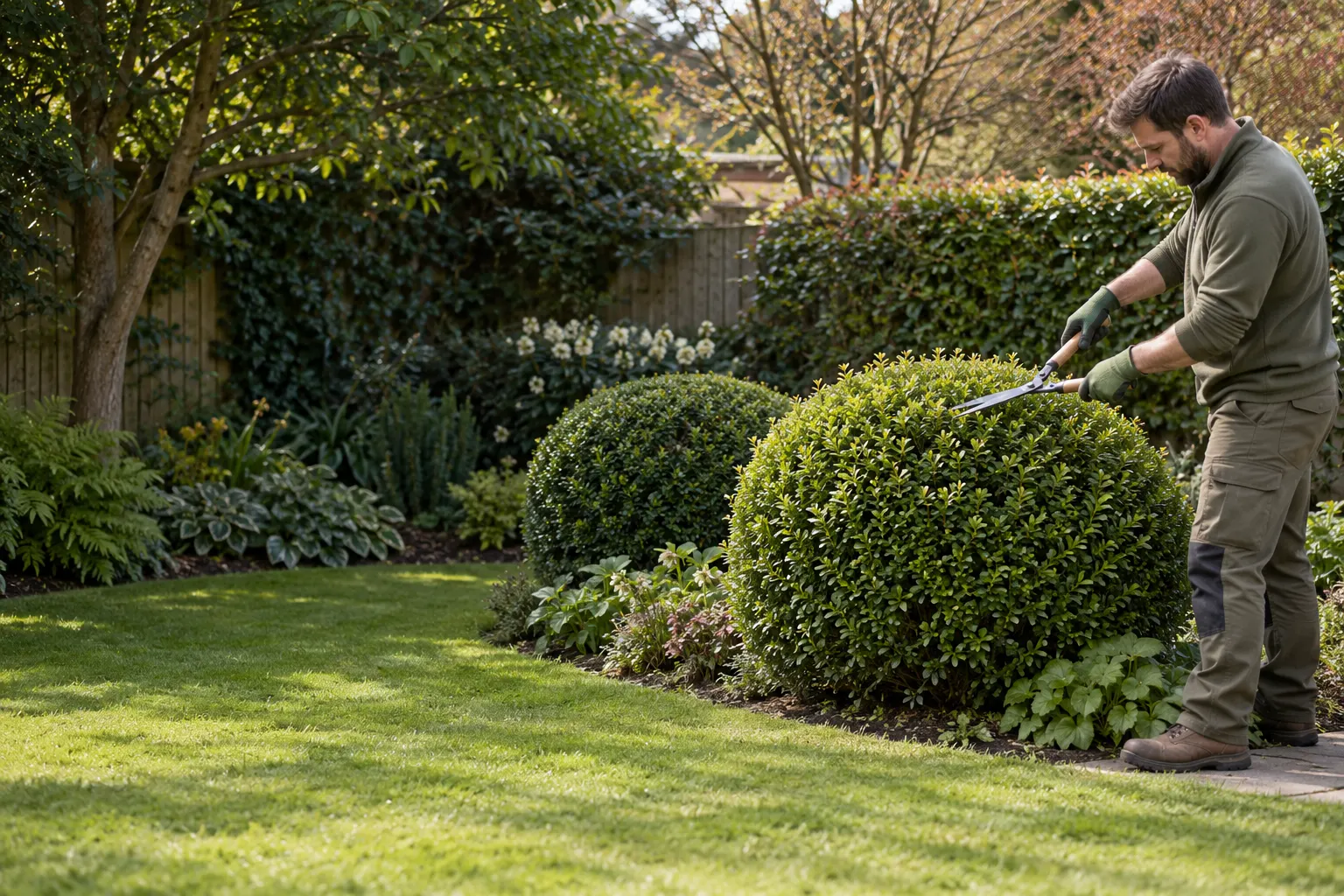
Care for established clipped forms
Gardeners Abbey Wood
We maintain existing shaped shrubs with light, selective trimming and close attention to the planting beneath them. Our gardeners follow the living outline, collect the small fragments and finish adjoining grass without cutting into the shrub. A substantial change of size is treated separately from keeping a familiar form in proportion.
- How do you maintain a rounded shrub? We review its curve from several positions and work on suitable new extension, preserving the intended form beneath it.
- What happens to an existing shaping guide? Our collection separates loose clippings from retained wire or frames, keeping those components in place where they belong.
Light clipping with a defined outline
What does your established-shrub maintenance involve?
Our work begins with the particular plant and the shape already being maintained. We identify the extension suitable for shortening, follow curved or angled surfaces with controlled tool positions and review the result from the ground. The operation retains the established form; creating a different shape or undertaking a heavy reduction requires a separate plant-specific proposal.
How do you work on a matched pair?
We assess the two plants individually before balancing their appearance. Their amounts of extension, retained foliage and existing thin areas guide the cuts on each side. Our gardeners work towards the intended paired composition while preserving appropriate healthy growth on both specimens. A larger renovation is identified separately, with the treatment and likely remaining outline related to each plant’s actual condition.
The existing living outline
Selective attention to new extension
Our gardeners read the rounded surface from the path and another suitable ground position before selecting the first stems. New extension can blur a maintained outline, and an isolated long shoot can exaggerate that impression. Working around the existing curve gives the trim a consistent reference without using the longest projection to set a smaller size for the whole specimen.
The plant determines the suitable depth and timing of our work. A clipped evergreen and the flowering shrub beside it can occupy one bed while needing different treatment. We identify the retained framework and suitable foliage on each specimen, then select the light extension work appropriate to it. Any substantial resizing has its own plant-specific proposal alongside that ordinary maintenance.
Through Garden maintenance, this focused clipping can be combined with weeding, grass cutting and collection around the specimen. We establish an outline that can be viewed and reached from suitable positions, then work through its accessible sections. Existing gaps are recorded within the plant assessment, and healthy foliage around them is retained appropriately. That gives further care a clear reference for the specimen’s present structure and any planned renewal.
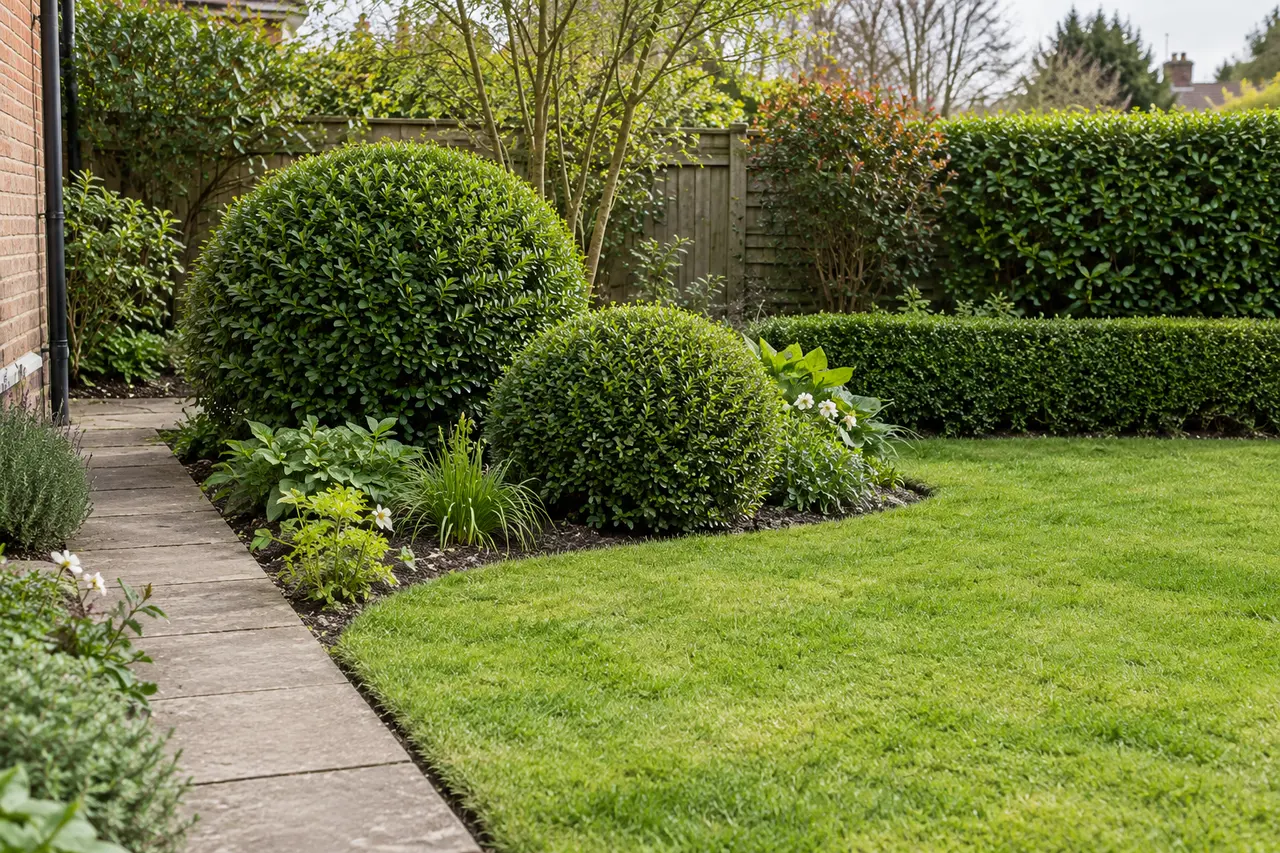
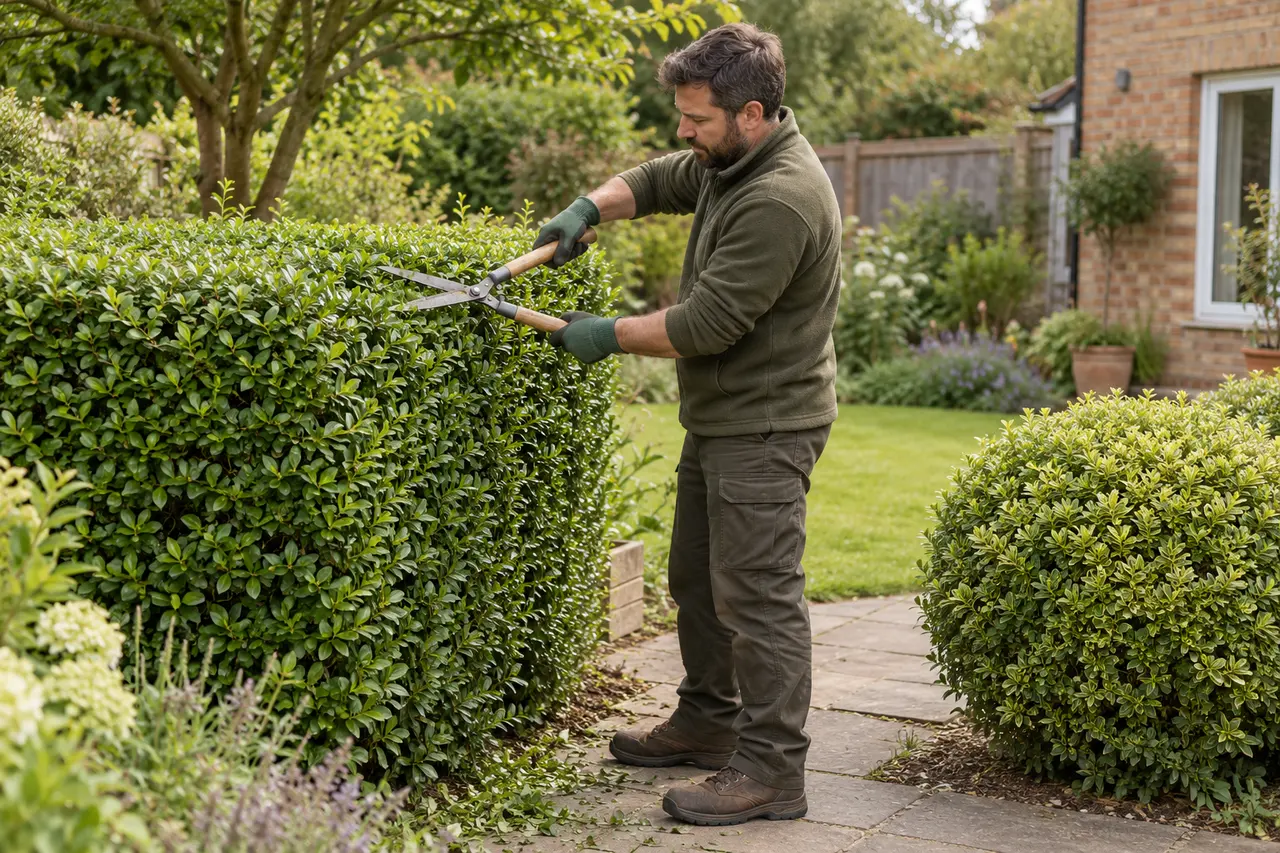
Hedges beside individual specimens
Separate treatment for flat faces and curved forms
A hedge face and a rounded shrub retain their different roles during our visit. We establish where each plant ends and follow the screen’s intended line separately from the specimen’s curved surface. This avoids carrying a convenient straight hedge pass through a plant whose shape requires smaller, individually controlled changes. The two finishes can sit together without becoming one continuous horizontal cut.
Our working position follows the reach available around each plant. We move to another suitable place to review the far side, keeping the tool movement controlled while continuing the curve. Nearby planting stays clear of the standing area. A small accessible form and a broad specimen can therefore receive different working arrangements, with the practical extent identified before the detailed trimming begins.
Nest checks cover shrubs and hedges before affected cutting, with disturbing work postponed where nests are being built or used. On suitable growth, we gather light fragments as a section is completed. Clearing the worked surface allows the next outline check to distinguish attached extension from a loose clipping resting on the leaves, reducing unnecessary repeat cuts across an area already finished.
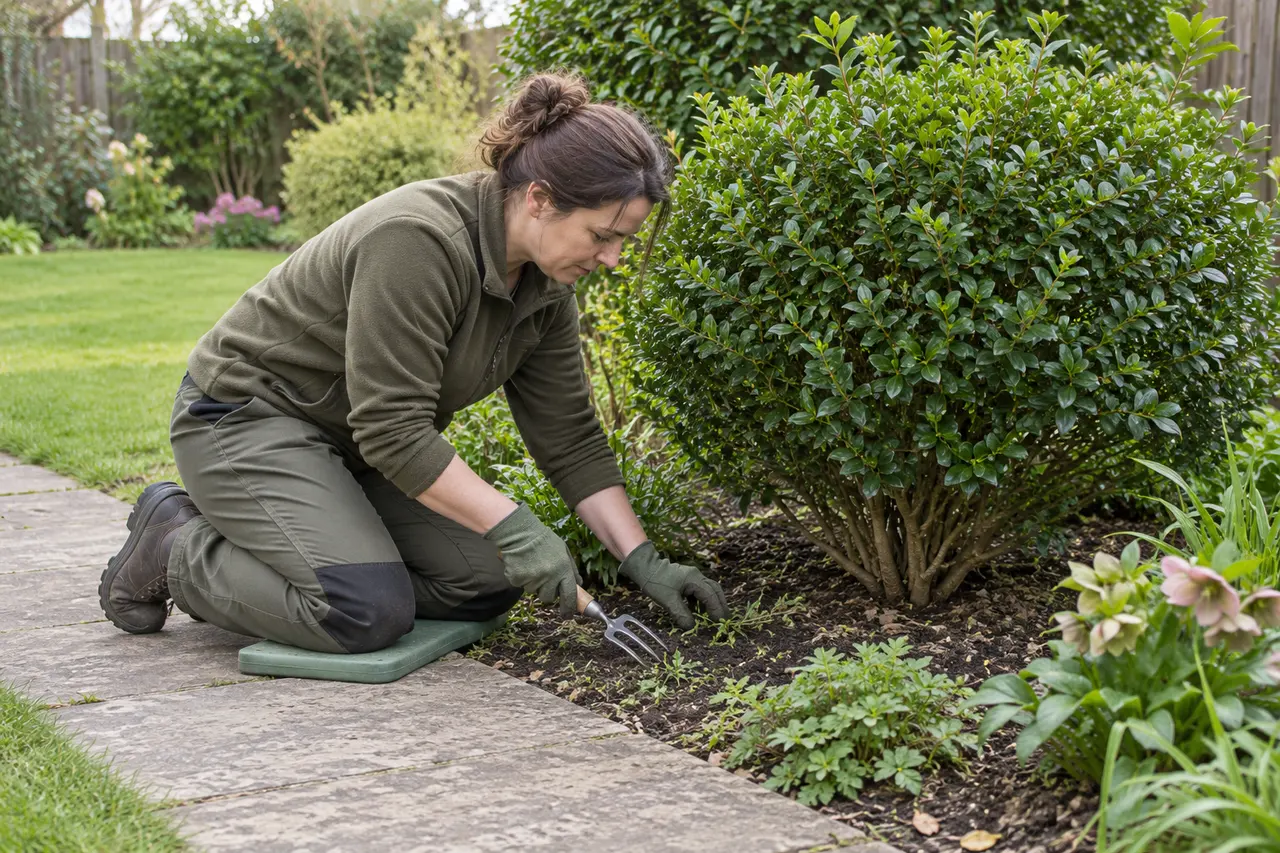
Hand care beneath the clipped surface
Weeding around retained lower foliage
Our soil-level work preserves the leaves forming the lower part of the specimen. We approach accessible weeds from a suitable bed edge, separate their stems from the shrub’s own growth and loosen the identified unwanted roots. The completed base retains the plant’s intended low outline, with useful foliage in place and an accessible margin for subsequent care of the soil around it.
We ease accessible weed roots out with controlled hand work and keep the pulling movement clear of low branches. Suitable displaced soil returns around the established root area while woody stems retain their appropriate level. The operation follows the actual weeds and available hand positions, giving the soil beneath the clipped form selective care with its occupied structure preserved through the collection.
Where additional planting is included, we relate the proposed positions to the clipped surface and the access needed for later care. Young plants require room to develop without immediately pressing into the specimen. Our preparation accounts for suitable materials and aftercare as well as the planting hole, so a temporary opening is not filled at the expense of the next trimming or watering position.
- Our outline checks use more than one suitable ground-level view.
- Attached extension stays distinct from loose material awaiting collection.
- The retained form includes its appropriate lower foliage.
- Small leafy fragments are gathered before adjoining mowing where practical.
- Major resizing receives a different proposal from light surface maintenance.
The lawn beside the specimen
A grass finish that preserves overhanging foliage
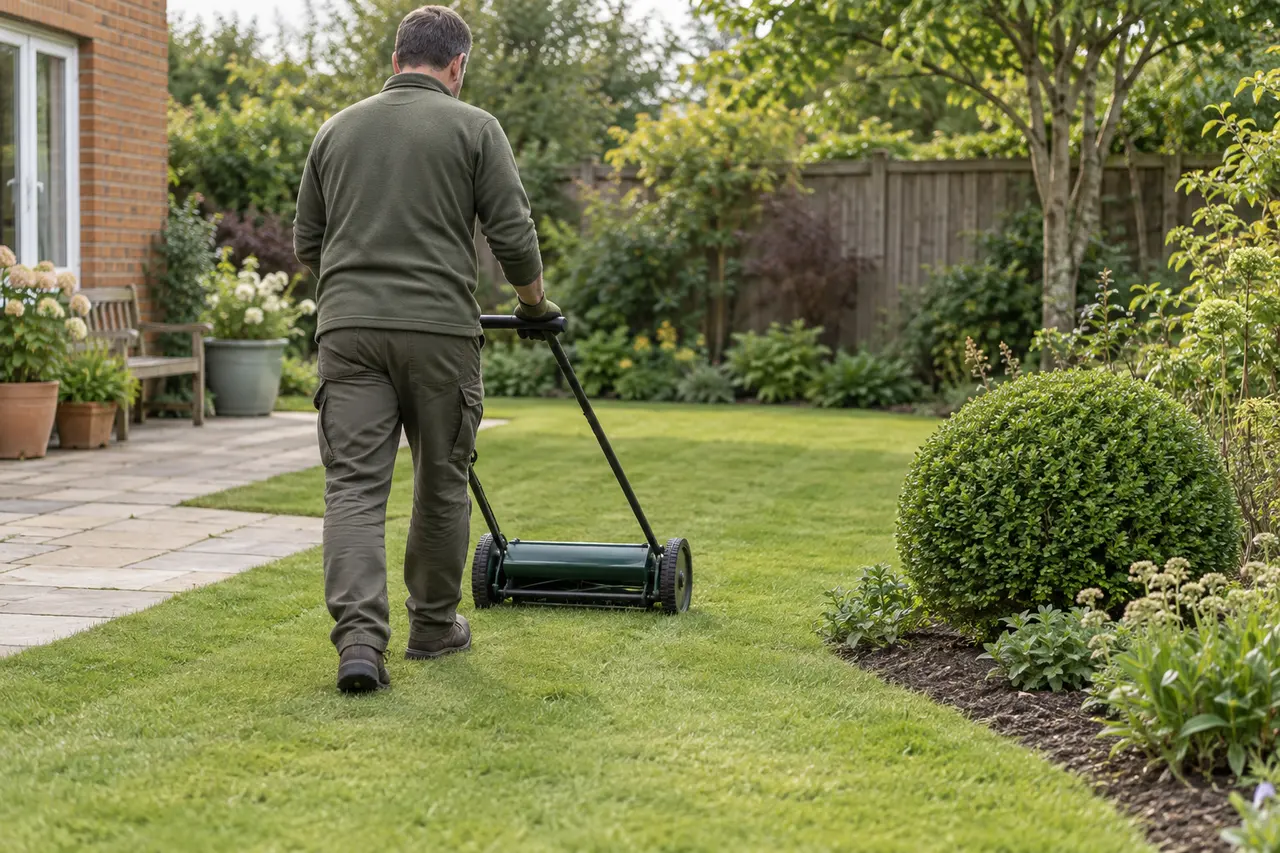
We locate the actual turf margin before mowing, including places where low shrub leaves extend beyond the bed. The route and equipment movement stay on suitable grass clear of that retained foliage. Narrow strips outside the deck’s useful reach receive an appropriate separate finish. Our completed edge leaves the lawn line readable while the living lower surface continues to belong to the clipped specimen.
When clipping and grass cutting share the visit, we gather accessible leafy fragments before mowing where practical. Fine evergreen pieces are collected from the receiving surface and directed to their identified destination. That sequence keeps the grass ready for its own cut and preserves any distinction between material staying in the garden and the outgoing load produced by the shrub work.
The lawn is assessed on its own surface conditions and available turning room. We clear loose objects, retain suitable support for the machine and finish the intended grass edge without pressing against the shrub’s base. That separate attention leaves both boundaries readable: the maintained turf has its own finish, while the low clipped foliage continues to belong to the specimen above it.
Collection after detailed clipping
Small fragments removed around retained guides
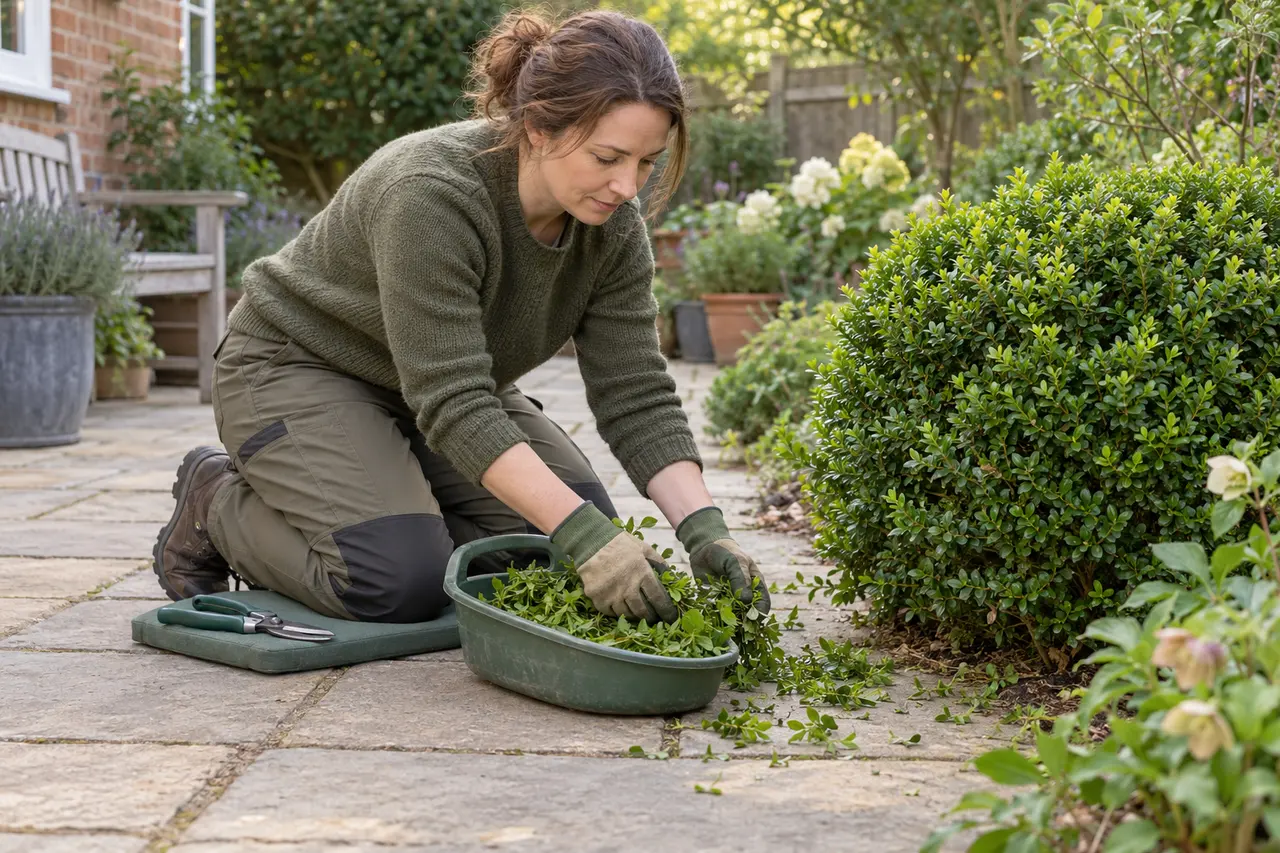
Light trimming produces numerous small pieces among the leaves and nearby paving. We gather accessible fragments through manageable working sections, review the exposed surface and retrieve the material that has fallen below it. Close collection around the foliage preserves the outline for inspection. Each finished portion then provides a visible reference as the next suitable part of the specimen receives attention.
Existing frames and guides receive a separate check within this close work. Our gardeners identify retained wire or supports before gathering fragments around them, preserving the component’s position within the living form. Loose packaging and any damaged pieces remain distinguishable for their appropriate handling. The resulting collection leaves useful guiding material accessible and keeps its role clear for the plant’s next maintenance stage.
A wider garden clean-up can include material beyond the clipped specimens while their forms remain in place. Our sorting separates fastening pieces and unrelated rubbish from green cuttings, following the handling described in the garden-waste guide. At the finish, the receiving ground and shrub surface remain available for inspection, with attached growth visible and the loose fragments produced by the completed trim gathered appropriately.
Care through the next growth cycle
Maintenance that responds to changing extension
The next light trim follows what has actually grown, including differences between sides of one specimen and between neighbouring plants. We use the previous outline as context for the intended form, not as an instruction to remove an identical length everywhere. Where extension is slight or a surface is already thin, the suitable amount of work can differ from the more vigorous part beside it.
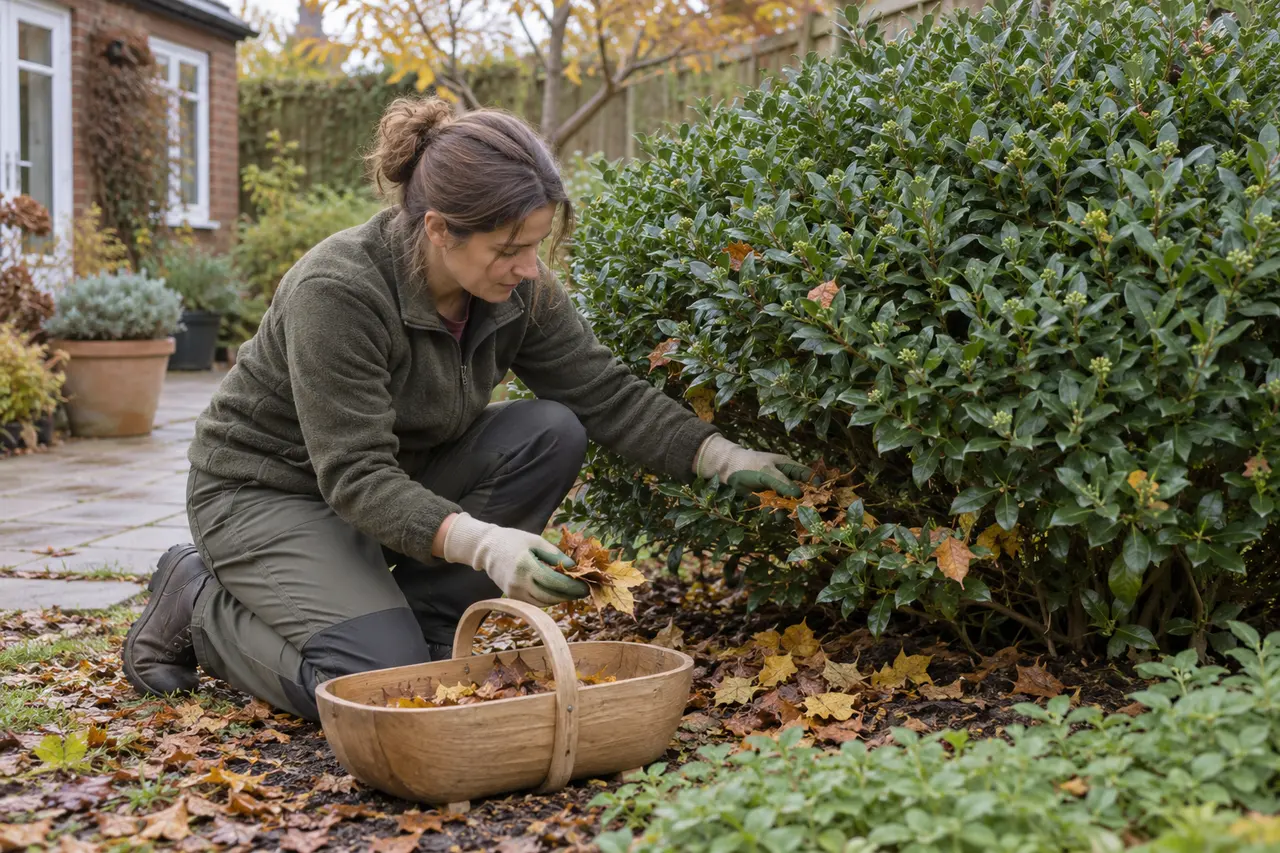
Our seasonal leaf collection lifts suitable loose leaves from the lower edge and opens a clear view of the retained foliage. A thin area is assessed against the plant’s existing framework, while stronger extension receives the suitable light attention it needs. This gives continuing maintenance a practical distinction between different parts of the specimen and preserves a useful record of the growth left in each position.
Related work alongside shaped planting
Garden design around repeated forms
Our garden design can develop the relationship between entrance specimens, repeated forms along a bed or one clipped plant beside looser growth. We relate their eventual scale to the space between them and the viewpoints from which the arrangement is seen. Where matching is intended, the proposed plants’ growth habits inform that composition alongside their supplied size, giving the pair room for suitable continuing care.
Specified tree work and separate report requirements
Our tree-work proposal identifies the cutting operation proposed for a tree and the practical result included in that quotation. A separately commissioned written condition report has its own purpose and required output. We keep those two deliverables clear within the enquiry, so the work specification relates to the branches being attended to while any requested documented opinion remains identifiable as a separate professional requirement.
Paving preparation before pressure cleaning
Preparation for jet washing includes suitable collection of loose grit from the receiving surface. We sweep and gather that abrasive material before the main wash, directing it to its intended destination and keeping it clear of neighbouring planting. The cleaning stage can then progress over the prepared paving with the loose preparation load already removed and the surface available for controlled washing.
Gutter work where deposits are frozen
For gutter cleaning, we identify whether the channel presents loose leaves or material held within ice. The actual condition informs suitable timing and the method proposed around the channel and fittings. Ice-bound deposits require an appropriate arrangement distinct from ordinary loose-material collection. We keep that condition explicit before the task proceeds, with any affected section clearly identified in the practical work plan.
The tree’s visible condition at handover
A Christmas-tree delivery includes a handover at which visible concerns about the supplied tree or container can be recorded against the actual item and order. We keep that observation clear before preparation or decorations obscure it. Any concern and the appropriate supplier response remain connected to the condition at delivery, without substituting later alterations for a reliable record of what arrived.
Detailed clipping and collection within the work
These general gardening guide rates cover the agreed time. Suitable light work around a small shape includes identifying its outline and gathering the fragments as well as the cutting itself.
| Gardening time | Guide rate |
|---|---|
| First hour | £83 |
| Each subsequent hour | £65 |
GBP guide rates. Confirm the complete work, materials, waste arrangements, VAT treatment and applicable access, parking or congestion costs.
Established-form maintenance questions
How do you handle one projecting shoot?
We trace the projecting shoot and assess a suitable cutting point against the living form being retained. Where appropriate for the plant, the selected correction attends to that extension while preserving the surrounding surface. Its attachment, the remaining foliage and the intended outline guide our movement, leaving the result related to the actual branch rather than a general resizing of the specimen.
Will base weeding remove the lower leaves?
Our base care retains foliage belonging to the chosen form while accessible weeds receive controlled hand attention. The working position follows the space below the leaves, with the retained plant stable throughout the extraction. Any portion beyond suitable reach remains identified for a different approach, keeping the completed soil-level task and the specimen’s intended lower outline clear at the finish.
How are existing wire guides handled?
We identify whether a guide remains part of the specimen’s intended form before gathering around it. Useful retained components stay in position, while loose or damaged pieces have their own handling decision. Our collection follows the accessible plant fragments through the surrounding branches and leaves the guide’s role understandable for the next inspection of the shape.
What result is realistic around a bare patch?
Our trim works with the plant’s existing foliage and framework. Cutting removes growth and cannot immediately fill an empty area, so we assess the patch before selecting a deeper surrounding reduction. The appropriate treatment follows the specimen’s identity and condition, with healthy retained growth kept distinct from an expectation of instant symmetry.
Focused care for the forms already established
Our work connects the clipped specimens with the soil, grass and collection tasks immediately around them. Through our broader gardening services, the existing forms in Abbey Wood can receive suitable detailed care while the surrounding garden remains usable and its retained planting stays recognisable.