

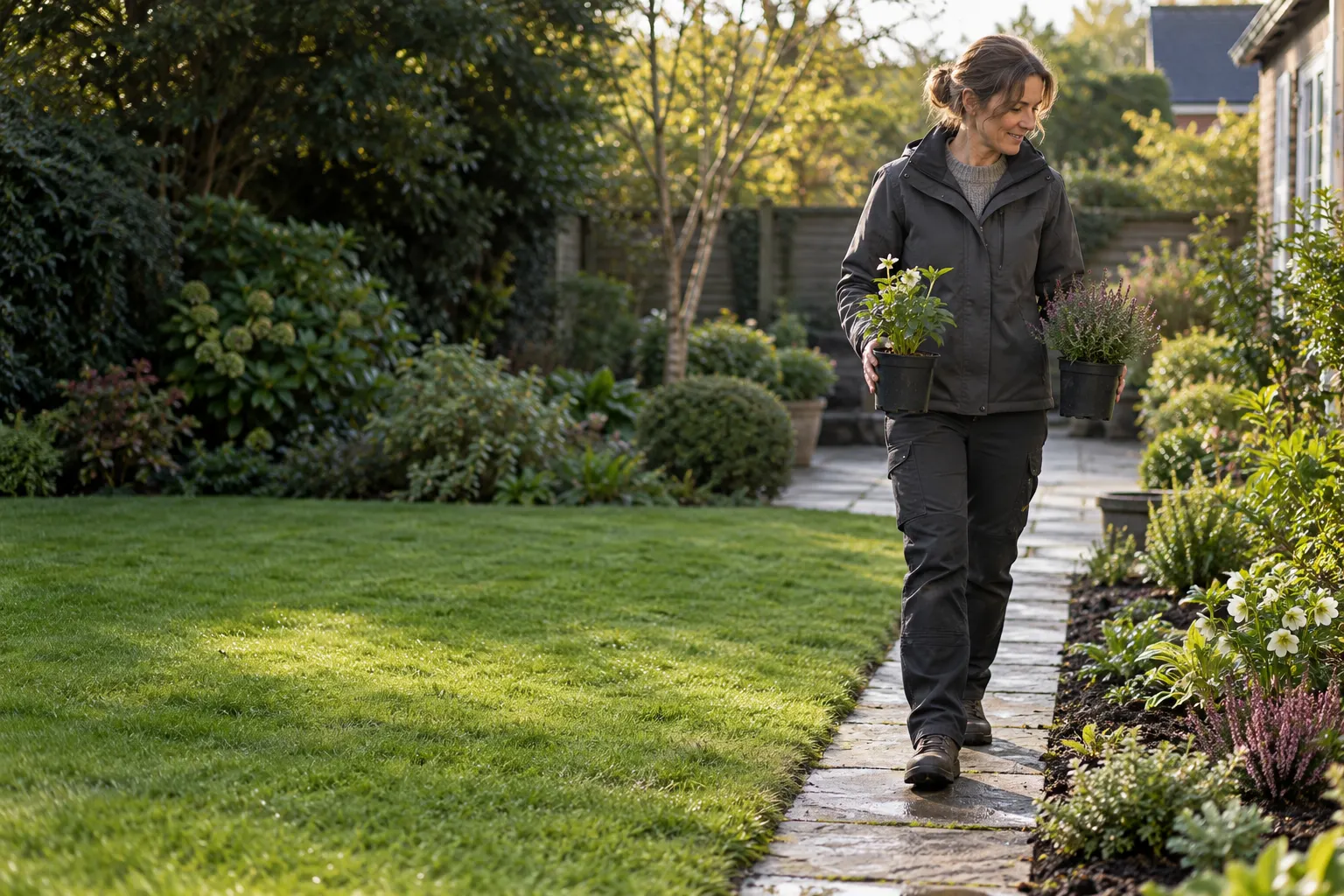
Northolt · New-plant care alongside established garden maintenance
Gardeners Northolt
We care for recent planting through selective weeding, watering and collection around its root areas. Established grass and boundaries receive their own work while those plants settle. Their identity and approach remain clear through the visit, giving subsequent maintenance a known growing space to attend to as small additions develop among the larger planting.
- How do you water recently added plants? Our gardeners check the actual root ball and receiving soil, directing water to the growing area for that plant’s establishment stage.
- How is a business tree display positioned? The proposed position keeps escape routes, signs and extinguishers unobscured, with the business’s own fire-safety arrangements remaining separate.
Young planting maintained for its establishment stage
What do your gardeners do around recently planted areas?
We weed accessible soil, gather loose material and maintain neighbouring grass with new plants identified throughout. The care follows their growth and conditions, with room to approach the root areas from a firm position. This places establishment attention within ordinary garden maintenance, keeping the smaller additions visible and the surrounding planting available for its different tasks.
How is new-plant maintenance different from established-shrub care?
The gardener identifies recent additions and considers their root balls, condition and receiving soil. A settled shrub can need a different immediate operation. Close checks and hand work follow those stages, with water and cutting selected for the plant involved. This gives young planting appropriate attention while preserving a coordinated maintenance visit across the established beds.
The root area beneath small plants
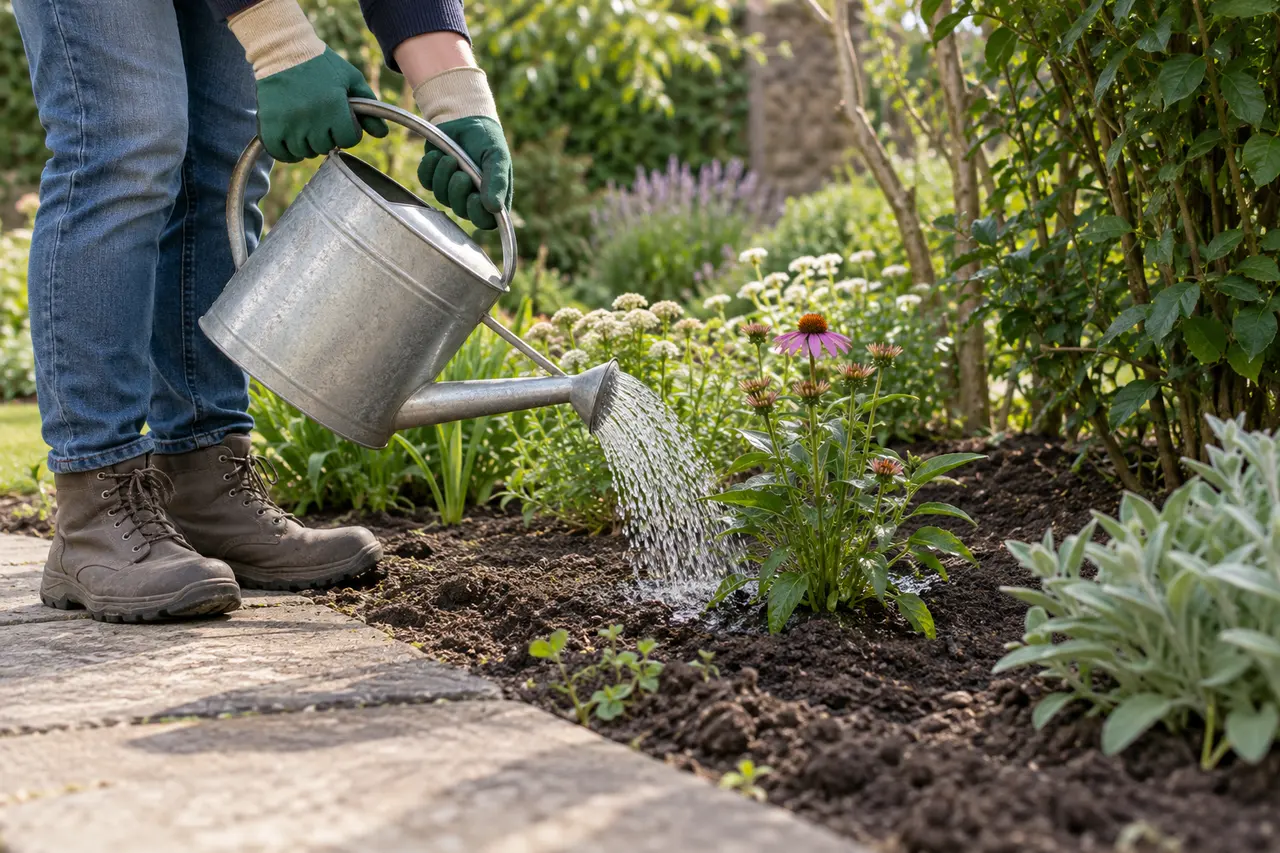
Watering addresses the recently planted growing space
We check the area supplying the young plant’s roots even where larger established foliage surrounds it. The moisture within a recently planted root ball can matter separately from the appearance of neighbouring leaves. A briefly darkened surface after rain does not alone describe what reached below. The plant’s appropriate care therefore follows its own soil position, keeping the watering task connected to the roots that are still establishing.
Water is applied with control around the root area and allowed to enter its receiving soil. The crown stays at an appropriate level, with displaced material kept from washing against it. Amount and frequency follow the plant, weather and conditions. The task therefore provides direct establishment attention, keeping the growing space visible and the adjoining path available after watering is completed.
Our Garden maintenance can include plant checks alongside ordinary upkeep. A shifted, loose or struggling specimen is reviewed for its actual condition, with its identity and care information available. The next action can then address that plant specifically. This gives recent additions continuity through their establishment while other mature growth continues to receive its own maintenance around them.
- We identify recent additions before weeding and cutting.
- Watering is directed to each relevant root area.
- A firm approach is kept for reaching the young plants.
- Loose fragments are gathered from small foliage after nearby work.
- Mowers and turning wheels stay outside freshly worked soil.
Space within the developing bed
Young plants left room for their expected spread
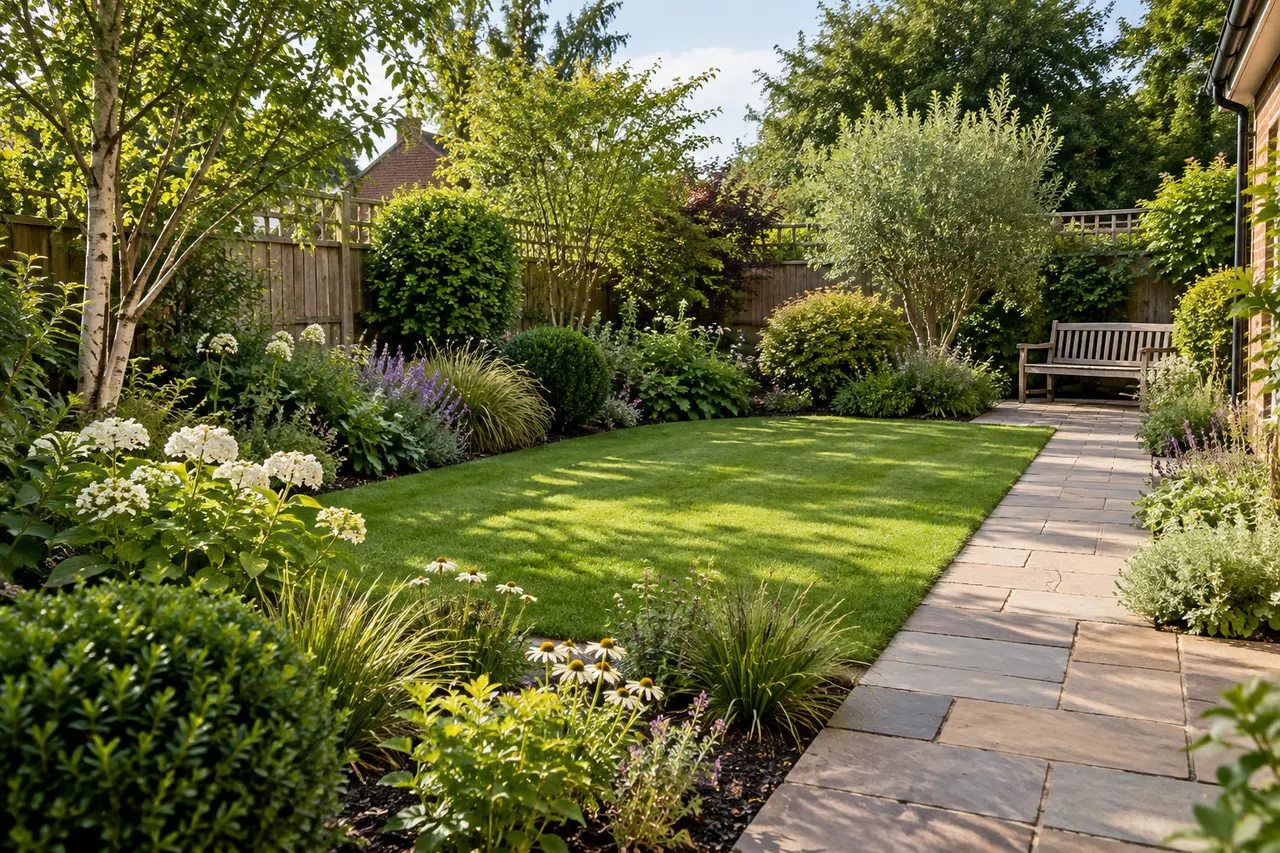
Our planting consideration includes the space left between small plants for future roots and foliage. An open-looking bed is not automatically missing a purchase. Before additions are proposed, the intended spread of those already planted is considered with access for care. This keeps a new bed from becoming crowded simply because every visible gap was filled before the first planting developed beyond its initial size.
While the bed remains open, we gather weeds and loose fragments and keep small plant bases visible. Work uses a firm approach outside the rooting spaces. Where a central plant needs another route, that portion is identified before proceeding. This provides close attention around the additions while preserving their space for the foliage and roots that will develop there.
Our finish includes a close view of planting positions and their care access. Loose labels and empty pots are collected, with suitable displaced soil returned under control and crowns left at the correct level. This completes the hand work beneath the wider display. The next visit can approach the actual plants from a usable surface with their growing areas still recognisable.
Lawn cutting beside establishing roots
Equipment routed on established grass outside the bed
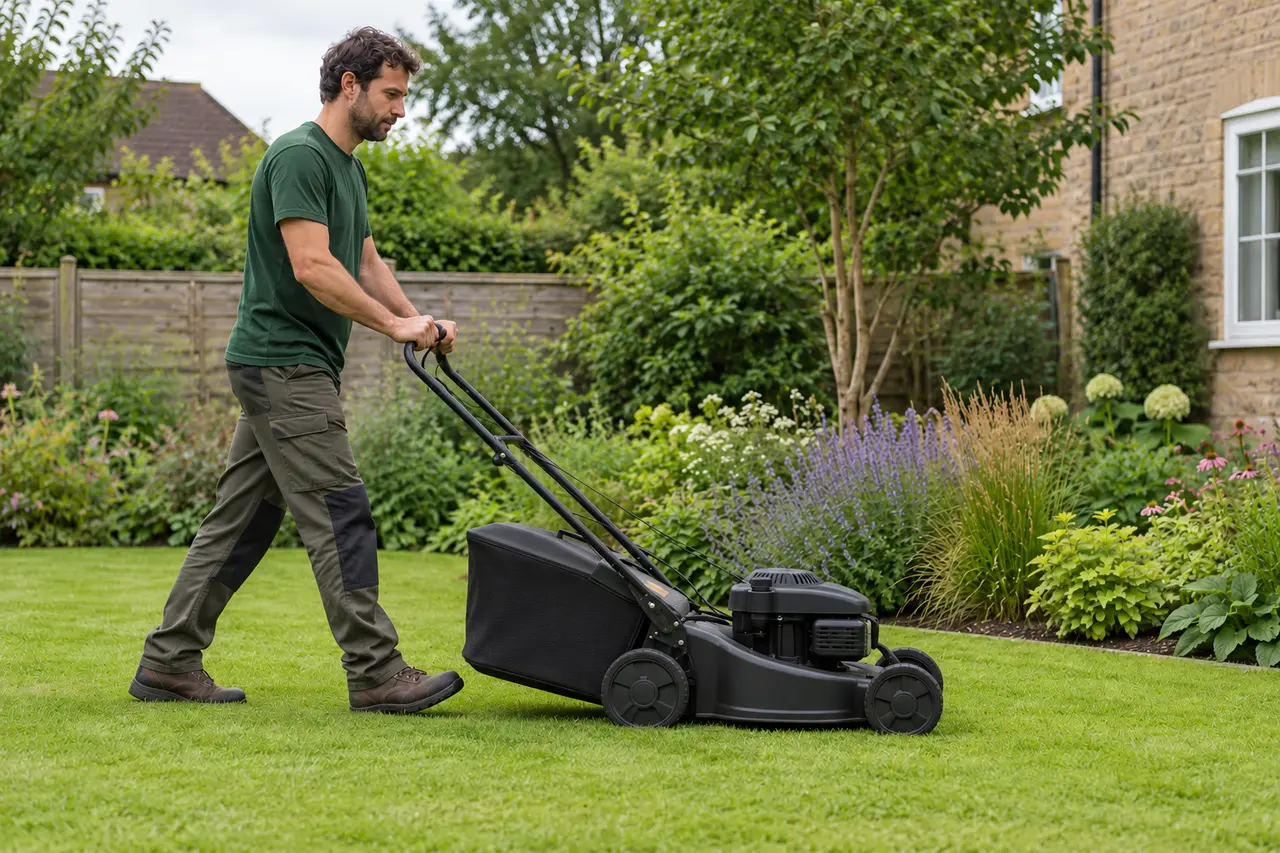
The mower follows firm grass where the adjacent bed remains soft from planting or watering. The route includes turning space away from new roots, with pots, hand tools and hoses gathered from the cutting area before equipment starts. This prepares the lawn operation on its own surface while leaving aftercare access around the plants. The bed is not used as extra room to complete a convenient turn.
For the grass cut, we select an appropriate height and check hard objects or concealed edging. Low trailing growth is identified before the machine reaches the margin. The plants are not used as a guide rail or trimmed simply because they occupy the easiest mowing line. A narrow strip can receive another finish where required, particularly while small new growth is easily hidden by taller adjoining grass.
Loose grass is collected from the worked margin with small plants left clear. Bed and lawn tasks can proceed at different stages: wet or frosty grass can wait while accessible plant checks continue from firm ground. The gardener selects the useful operation for the available surface. This keeps the visit productive while preserving each area’s appropriate care conditions.
Established boundaries beside new specimens
Hedge trimming kept distinct from young-shrub growth
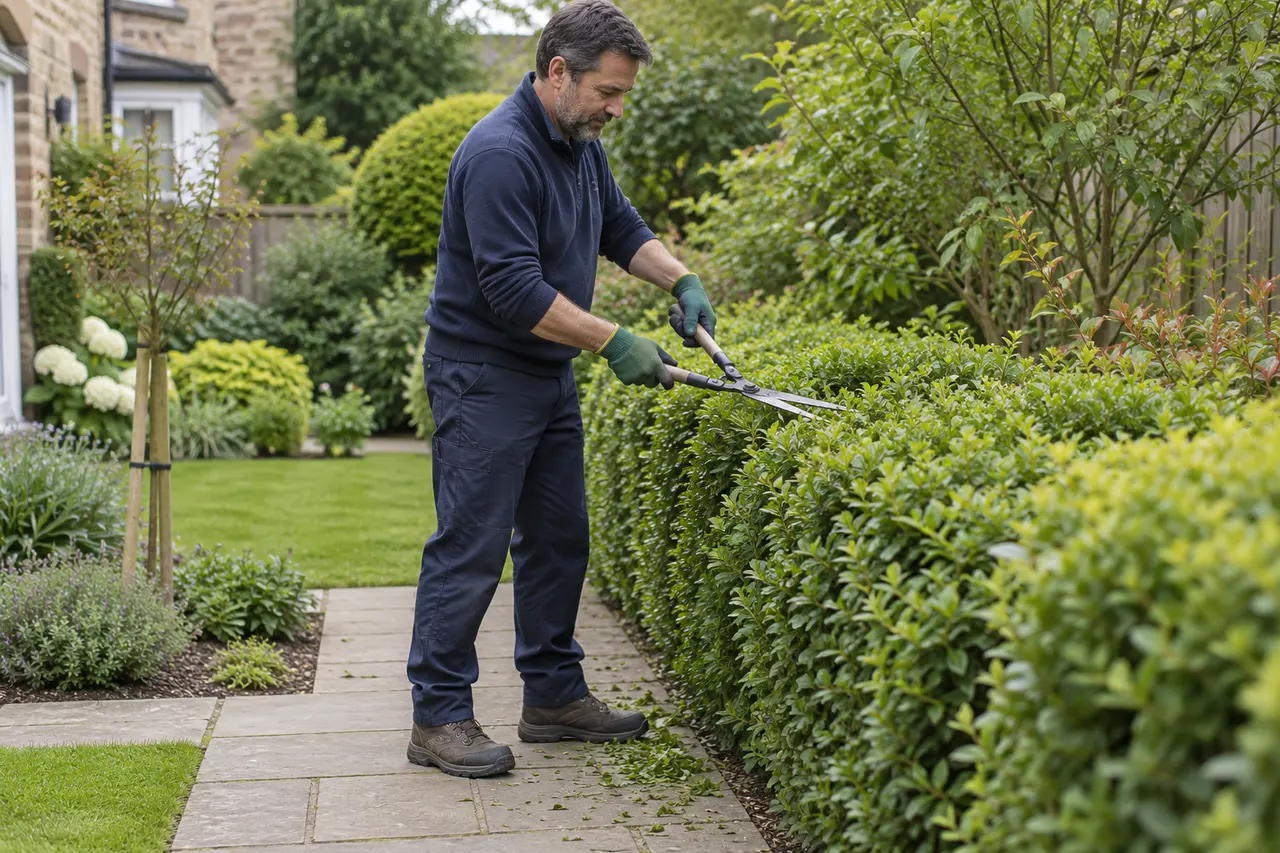
Before hedge work, we identify the screen and individual shrubs beside it. New shoots on a recent addition can be developing its future framework, so their origin remains visible through the trim. The boundary receives its defined cut with those separate plants kept clear. This maintains the established hedge while the new specimens retain the growth intended for their development.
Hedge work follows the species, current growth and controlled working position. Plants below remain outside the standing area, with clippings gathered away from their crowns. Checks for nests being built or in use precede cutting and affected work is postponed. An accessible section does not extend the operation into unseen growth or unarranged neighbouring space simply because the same tool could be pushed farther along the face.
Where a young plant needs formative attention, its identity and intended growth guide that specific operation. Shortening is not described as a universal way to accelerate establishment or make it match an older neighbour. The appropriate next task may involve roots and surrounding soil instead. Larger reductions, substantial branches or inaccessible work remain distinct from light routine trimming, keeping the developing plant’s needs visible within the proposal.
Selective weeding around additions
Small planted specimens identified before wider clearance
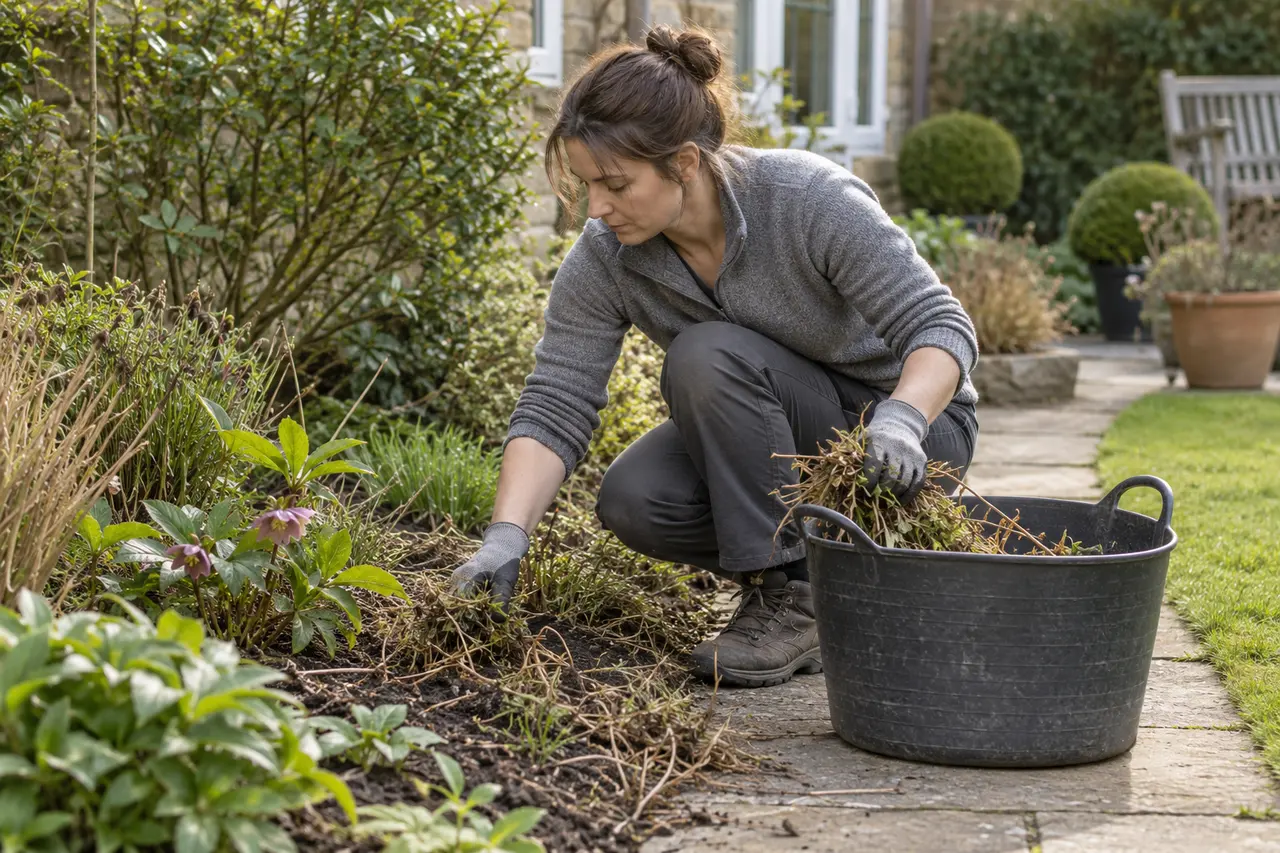
Our gardeners work from known planting positions before broader collection begins. Accessible weeds are loosened individually where roots meet the new growth, with the root ball kept seated. This makes the actual additions the reference for hand work in the bed. The surrounding unwanted material is then gathered while their location and care space remain apparent.
Our garden clean-up identifies sections ready for the selected clearance method and portions needing closer hand work. Loose stems and litter are lifted before rooted material, with an affected section paused where a sharp or unknown object changes handling. New planting stays outside the temporary loading position. Material from the rest of the garden is not gathered over it merely because its open soil looks available.
The garden-waste information separates green cuttings from empty pots and damaged supports in the collected load. Items being kept have a distinct position where they remain identifiable. The collection point and carrying route reduce repeated trips across young planting as removal proceeds. This completes the outgoing arrangement without making a clear-looking bed depend on the same new roots receiving every load from the wider garden.
Continuing care between larger tasks
The settled planting followed through seasonal changes
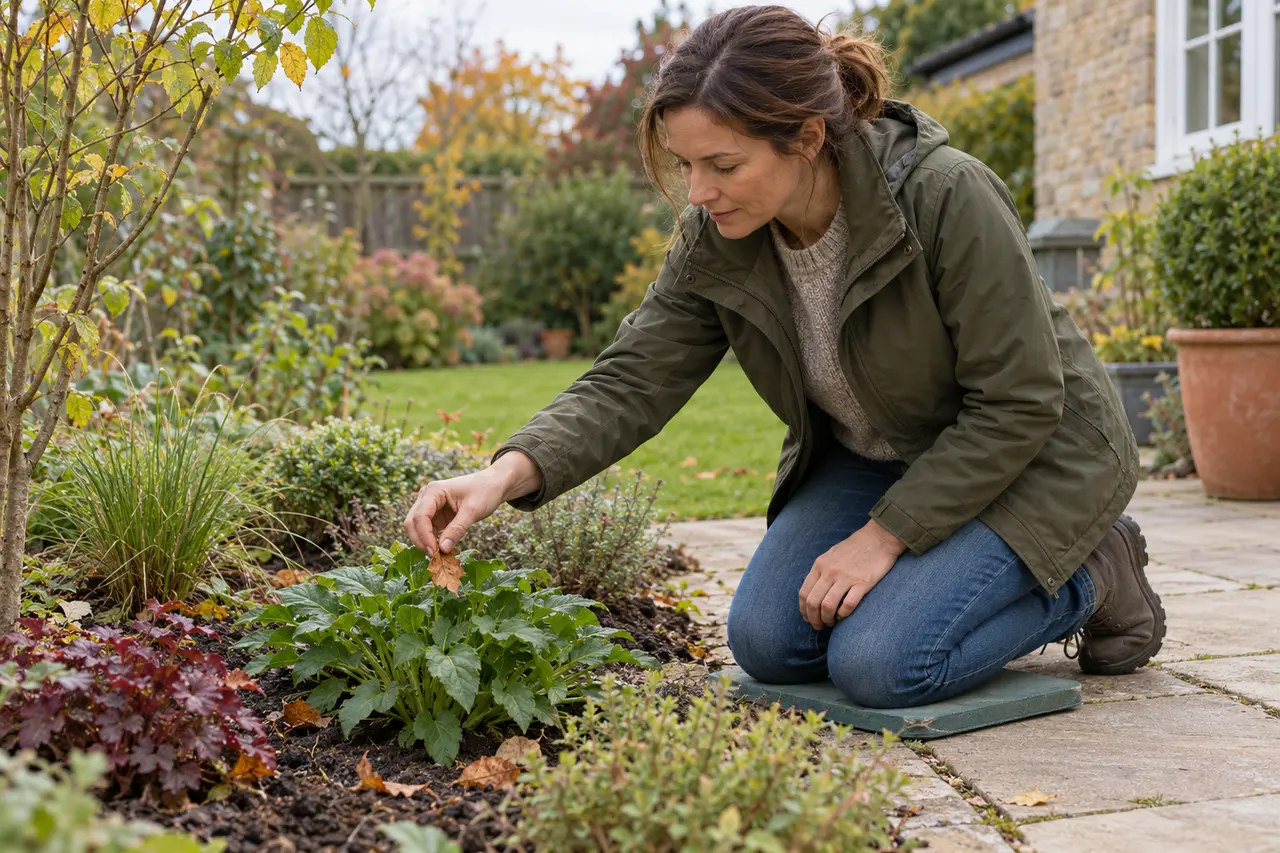
Our seasonal gardening programme follows the changing priorities of a newly planted bed. Dry warmth can make root-area moisture a closer task, while autumn leaves can cover a small crown previously easy to see. The gardeners gather accessible material gently, maintain the working approach and remove unwanted growth from the open soil. The sequence changes with the plants instead of treating each visit as another attempt to start the bed again.
Useful living foliage remains while spent material is selected plant by plant. Appropriate deadheading is kept distinct from stripping a whole specimen because its neighbour has finished. Where mulch is commissioned, the material follows the planting and stays clear of low growth and woody stems. A covered surface does not replace moisture checks or establish that the bed can thrive without the continuing care its plants require.
After difficult weather, we identify specific changes such as displaced plants, soil on paths or growth caught at a support. Each is given appropriate attention. Settled roots and the room left for later spread remain part of the maintenance decision. The bed can recover its usable surface while retaining the arrangement already established for the developing plants.
Further operations introduced at the appropriate stage
Design interprets a reference for the real growing space
Our garden-design brief can identify the colours or border character wanted from an inspiration photograph and develop them for the actual planting position. The picture does not show the conditions beneath its display. Selection therefore follows the interpreted idea and receiving space, not a promise to reproduce every visible feature identically. This gives the proposal a workable planting basis alongside the visual qualities that prompted the enquiry.
Tree removal planned for the available handling space
Where tree removal is proposed, available space informs the method and material handling. Sectional work can be required within a garden, with the surroundings considered alongside the tree’s height. The quotation identifies that actual operation. This gives the removal a defined professional approach and keeps its workload connected to the place in which the tree must be handled.
Pressure cleaning accounts for nearby electrical features
Before pressure cleaning, visible outdoor sockets, lights and other electrical items are identified beside the working area. They are not treated as paving or targeted by the jet. The setup must provide appropriate protection without assuming an existing fitting is safe for water exposure. Moving electrical installations remains outside the cleaning operation, keeping the proposed surface work distinct from alterations to the features around it.
Roofline collection protects planting beneath the channel
For a gutter clear-out above young plants, collection is planned around the bed below. Small caught pieces are lifted carefully, with standing and loading positions outside the planting. Root balls remain seated and the loose load moves to its destination. This completes immediate tidying around the worked channel while preserving the soil and plant levels beneath it.
Business seasonal displays consider fire-safety access
Our Christmas-tree service can consider a reception display within the business’s existing arrangements. The proposed position keeps escape routes open and signs and extinguishers unobscured. Those requirements inform the receiving position as well as appearance. Tree installation does not replace the business’s fire-risk assessment or certify the wider decorated display, keeping the seasonal tree operation separate from that continuing responsibility.
Gardening time for close aftercare and established areas
Our quotation includes the specified root-area and plant-care tasks alongside mowing or trimming. The general rates below guide gardening time. Close hand work and larger cuts each receive a place in the description, giving the visit an allowance for the developing bed as well as established open areas. Separately commissioned planting changes remain identifiable within the full proposal.
| Gardening time | General guide price |
|---|---|
| First hour | £83 |
| Each subsequent hour | £65 |
Prices in GBP. The complete quotation specifies work, supplies, waste arrangements, VAT treatment and any applicable access or parking charges. More substantial planting or specialist work remains separately identified within that arrangement.
Maintenance after new plants enter the bed
Does a damp surface mean a young rootball has enough water?
The gardener checks the relevant root ball and receiving soil before selecting water. Damp surface colour and wet surrounding foliage are considered alongside the actual growing area. A struggling plant receives attention to its identity and condition before the next action. This keeps the task connected to the young roots and provides an appropriate care decision through establishment.
Should the gaps between small plants be filled straight away?
Before additional plants are proposed, we account for the existing planting’s intended spread and access for its care. An open space can serve establishment and maintenance while small plants develop. New material is selected for a considered need, not simply to eliminate every visible patch of soil immediately. The resulting bed preserves room for both future growth and the practical attention required while it establishes.
Can the labels come out after the first tidy-up?
Recent additions stay identifiable through discreet useful labels or an accurate planting record, especially where they resemble other small growth or disappear seasonally. Loose or redundant items are gathered from the lawn route. This preserves the information needed for later care without leaving hidden plastic or other objects beside the mower’s line. The identifying function continues even when the bed no longer looks newly planted.
Will cutting back a young shrub make it establish faster?
Young-shrub pruning follows a defined plant purpose and stage. Identity, condition and intended form guide the operation, with roots or surrounding soil receiving attention where that is the actual need. Cutting is not presented as a universal accelerator of establishment. The developing plant keeps its own care requirements while neighbouring established growth receives its separate maintenance.
Can leaf collection continue around plants that are still settling?
Accessible leaves can be collected while planting settles, with hand lifting around young growth where needed. Feet, tubs and accumulated loads remain outside the rooting positions. The finish leaves small crowns visible and a clear approach for their continuing care. This gives the bed useful seasonal attention while preserving the planting work and soil levels already completed there.
Young planting left identifiable and accessible
Our full gardening services leave new plants identifiable within their growing areas, with loose material collected and a practical approach for further attention. Their current stage stays clear beside established planting. Later care can then follow those actual positions through development, preserving root space and access while the garden’s smaller additions grow into their intended form.