

Hillingdon · Plant maintenance around existing watering equipment
Gardeners Hillingdon
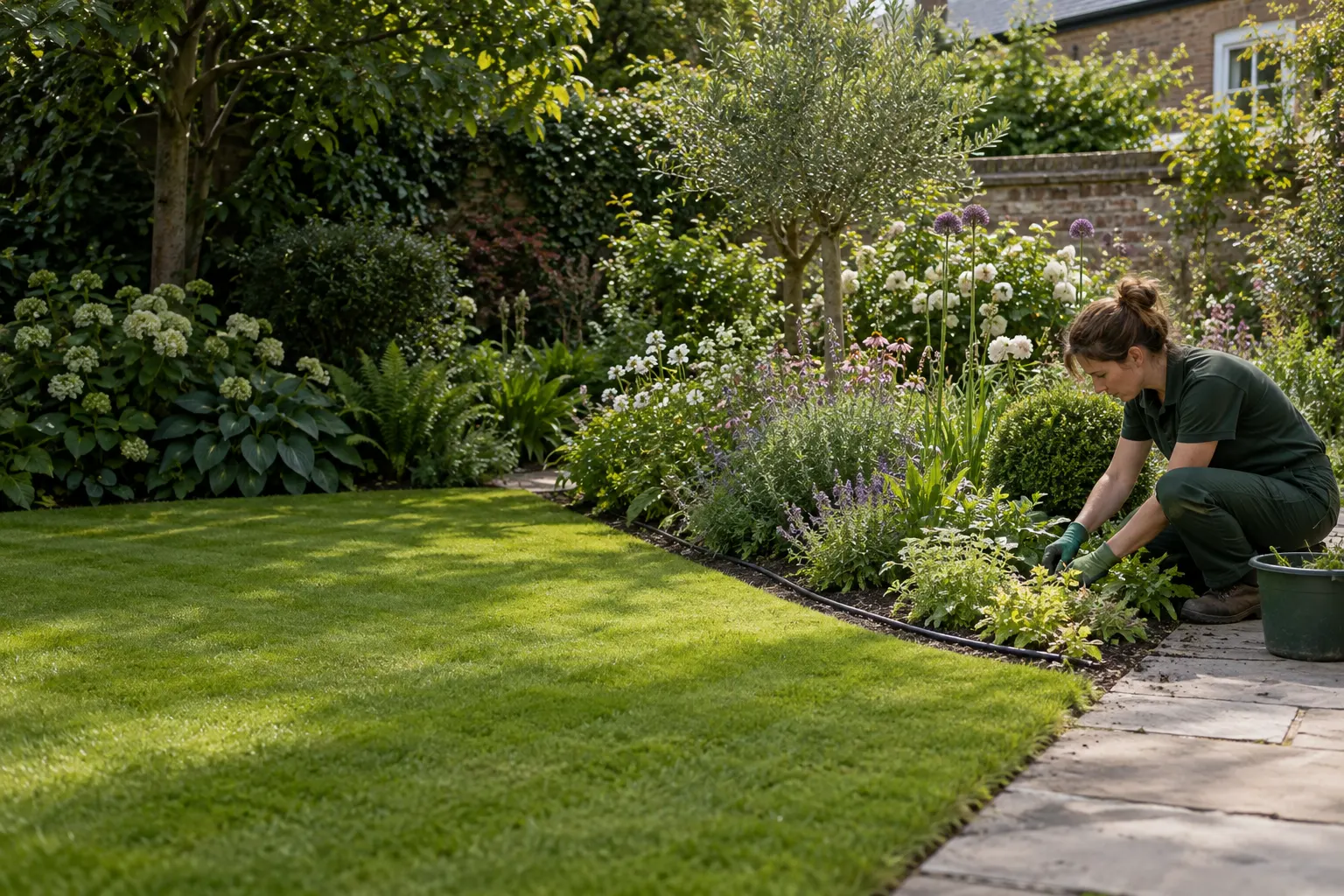
We weed planted beds, maintain grass and collect cut growth around the watering fittings already in the garden. Visible tubes and watering points are identified before tools and materials enter the bed. The finished work leaves the planting attended to and its care points accessible, without treating ordinary maintenance as an irrigation alteration.
- How do you handle weeds crossing irrigation tubing? Our gardeners trace the visible growth and fitting, loosening the weed selectively and stopping force where the connection is unclear.
- What does your team leave accessible after bed work? Watering points and visible lines remain clear of gathered vegetation, tubs and tools, ready for the next ordinary plant-care task.
Gardening organised around the existing equipment
How do your gardeners weed beds containing watering lines?
We identify visible lines and approach the weeds with controlled hand work where access allows. The task follows the unwanted plant’s roots without turning over the whole bed or mistaking tubing for loose growth. Equipment remains understandable as the operation proceeds. This gives us room to maintain the plants around it while keeping the existing watering arrangement separate from the vegetation selected for removal.
How is plant care distinguished from irrigation-system work?
Our maintenance follows the commissioned plant tasks and appropriate watering instructions. Installed equipment alone does not show how much water each plant receives or whether its needs are met. Changes to the installation, repairs and programming remain separate requests. The visit can attend to the growing space without implying that a weeding operation also adjusts the system controlling its water supply.
The planted working area
Visible lines and watering points identified before tool use
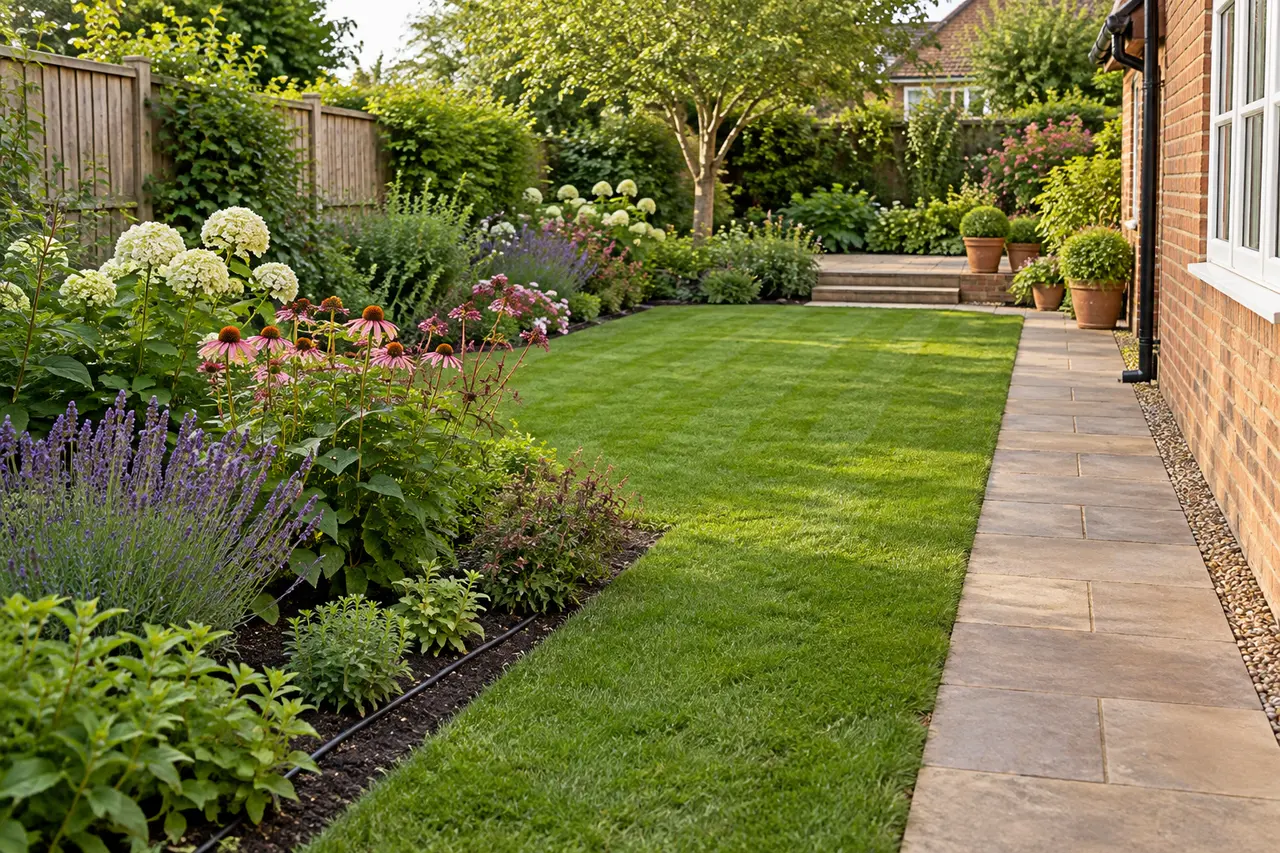
Before working into the bed, the gardener locates its accessible watering point and the route of visible tubing. Foliage can hide a line exactly where a fork or foot would otherwise go. Known installation information is used for concealed portions, without guessing the route of every buried component. The working position is chosen around what can be established on the ground, giving plant care a clear practical approach.
During garden maintenance, tubs and loose tools are kept outside the existing line arrangement. A fitting is not used to support a carried load, and an uncovered outlet is not immediately covered by a fresh collection pile. The bed is weeded and tidied with its care points still reachable. This makes the maintained planting easier to work around afterwards without altering the installed equipment as an incidental part of collection.
- We locate visible tubing before positioning a fork beside it.
- Movable hoses are kept outside the selected mowing route.
- Cut stems are lifted clear of visible watering fittings.
- Watering points remain accessible after the bed is tidied.
- Known line information stays available for later digging decisions.
Selective weed removal
Unwanted roots loosened beside visible fittings
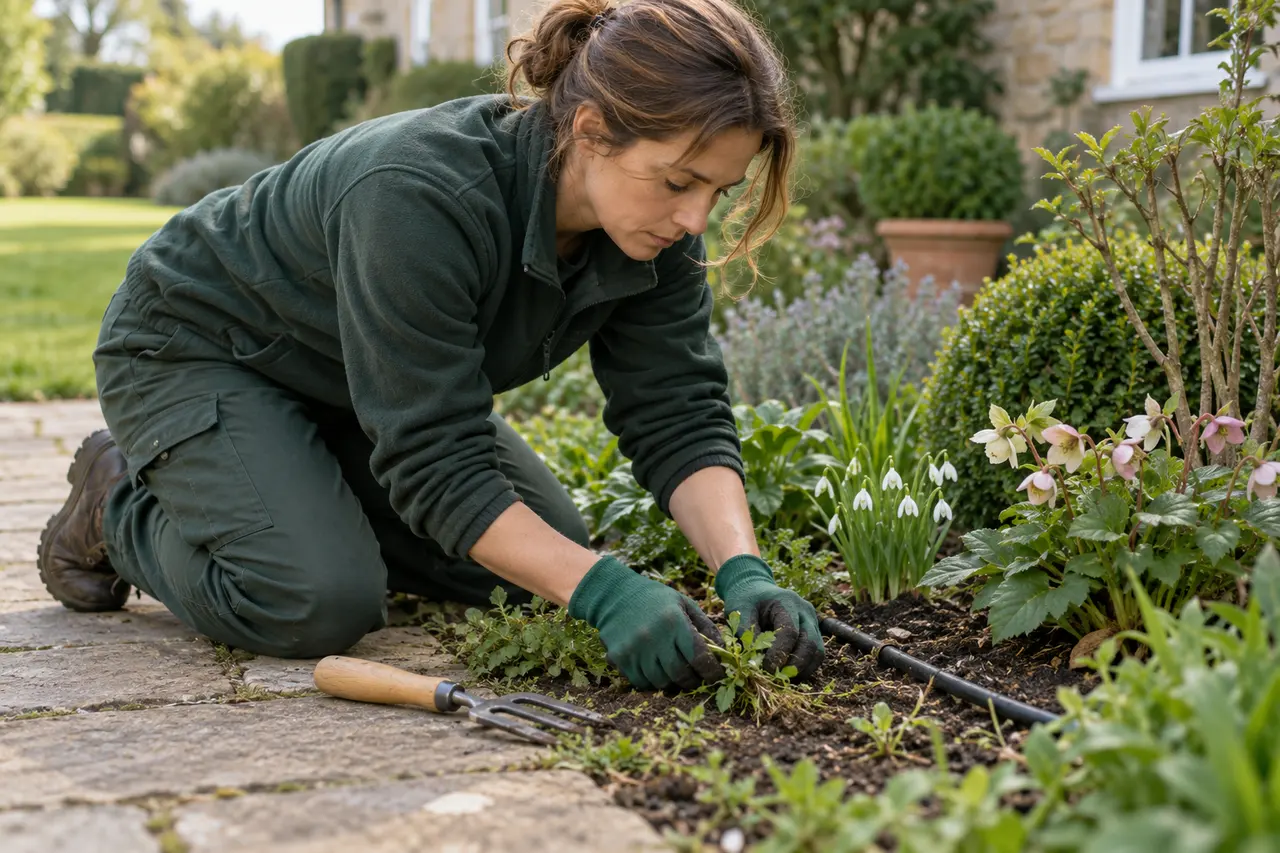
A weed root and fine tube can cross beneath the same foliage. We trace the unwanted growth and loosen it through a small controlled operation where both plant and fitting can be seen. If the resistance cannot be explained, the pulling stops while the crossing is made clear. This keeps the weeding focused on the unwanted roots instead of moving a connected arrangement through the bed to free them.
Our targeted bed work accounts for established roots and known lines. We gather loosened weeds as the operation proceeds, preserving a visible surface for the next tool position. Where planting or substantial soil work is commissioned, the receiving space is established with the existing arrangement understood. This gives the larger operation its own preparation while ordinary weeding continues around accessible plants.
Preparing the mower route
Movable hoses distinguished from fixed connections
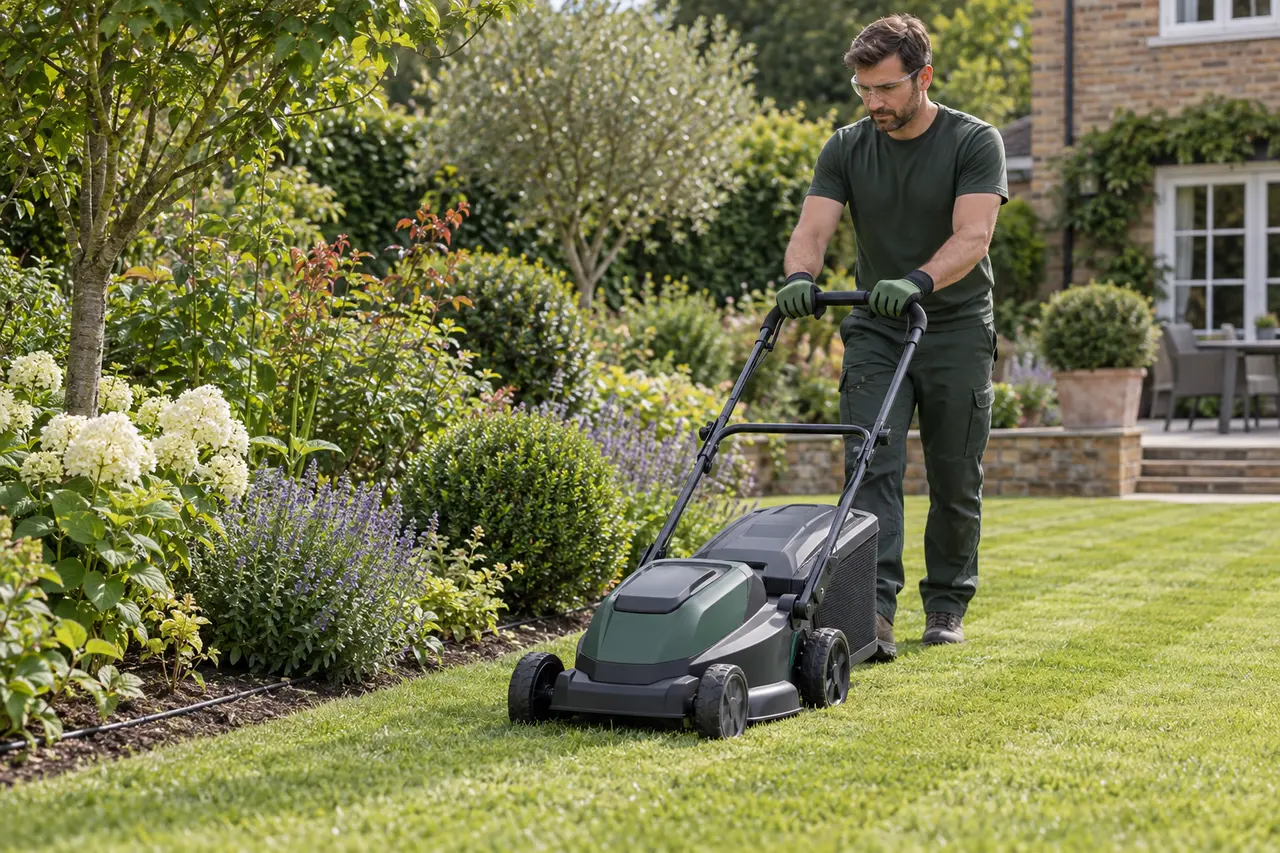
An identified loose hose can be moved to its agreed position before mowing. Connected or fixed lines are treated differently and are not pulled across the garden simply to expose additional grass. Our gardeners keep remaining fittings visible and outside the machine’s route. The available cutting line follows that actual arrangement, so a neat edge is not obtained by placing strain on a connection whose movement has not been established.
The lawn-care task follows the condition and growth of the grass, with loose objects collected and accessible edges finished appropriately. Where equipment limits a strip, that position is identified instead of forcing the mower through. We maintain the lawn alongside the planted bed without assuming the mowing route takes priority over every installed feature. The finish leaves the grass attended to within the route actually available for that operation.
Hedge and shrub cutting
Working space established outside the watering fittings
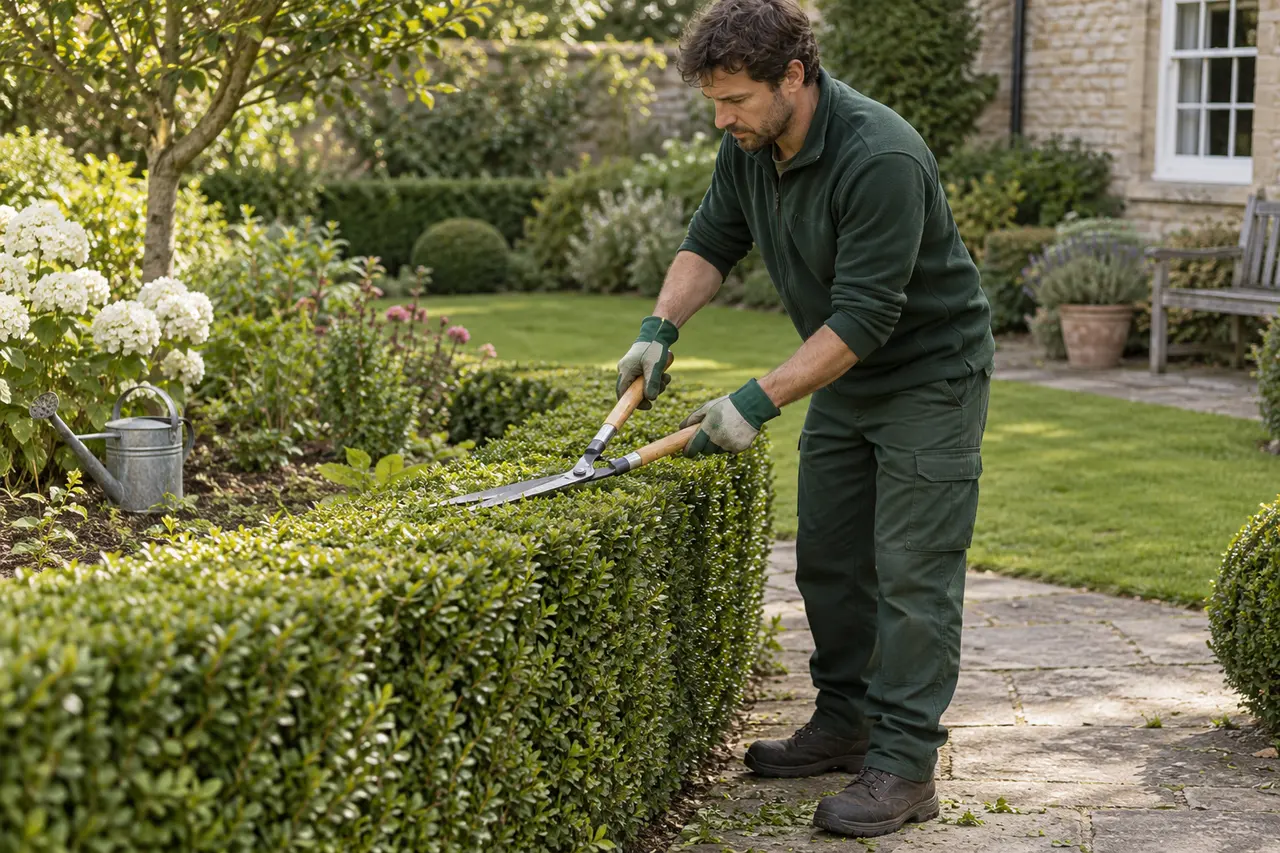
Before trimming growth over a watering point, we locate the fittings and the space needed for the tool. The gardener stands on firm ground outside delicate planting, with room to control the shears. The method does not rely on holding tubing aside with one hand while operating equipment that needs both hands. Visibility at the base and movement around the cutting face are considered together before trimming begins.
Accessible growth is trimmed for the plant and intended result, with nests being built or in use left undisturbed and affected work postponed. Once cutting stops, reachable clippings are lifted from the base so the fittings remain visible. Collection is completed as its own action, not with open blades still reaching through the bed. Heavy branches or substantial reductions outside routine trimming receive a separate work decision.
Gathering the detached material
Caught stems released before the load is lifted
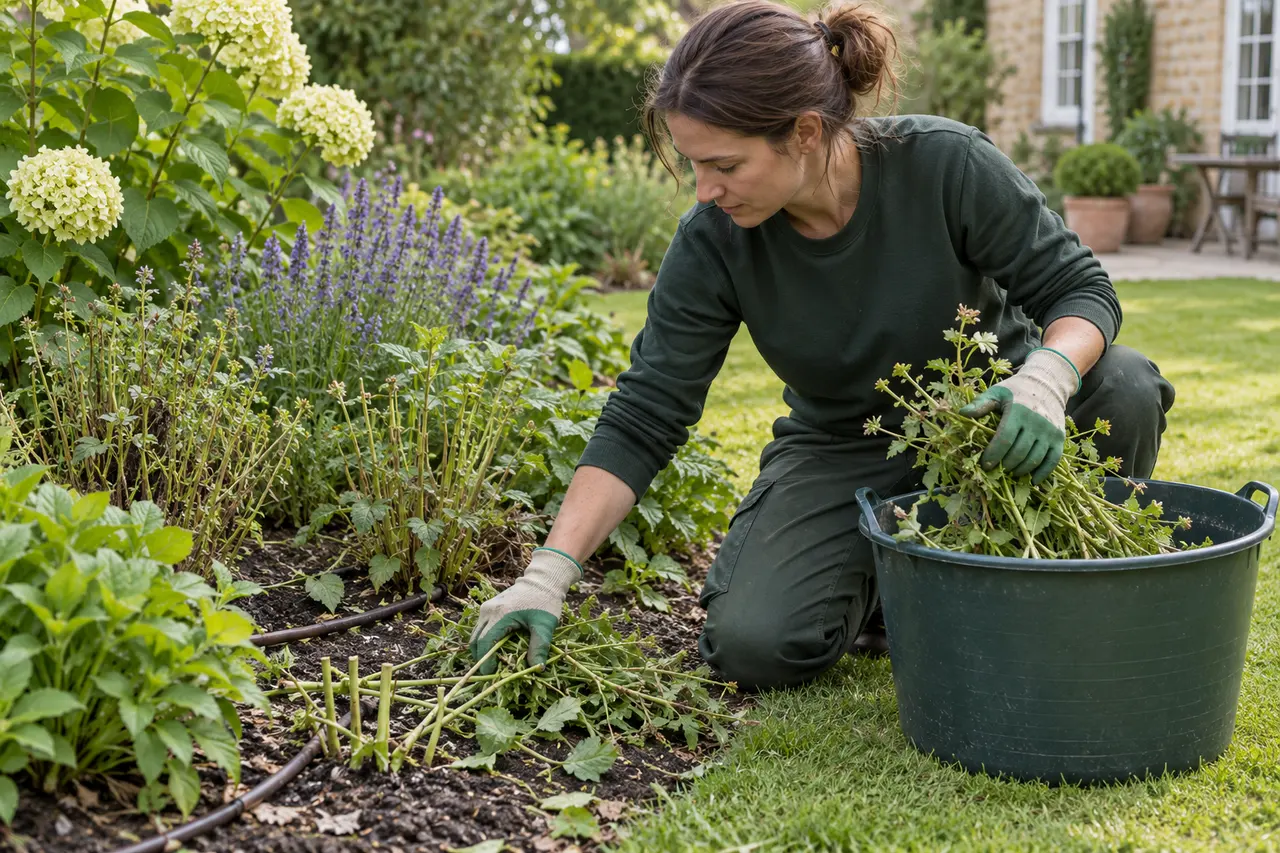
Long cut stems can hook around a hose loop, support or fitting. We free the accessible pieces and divide the collection into manageable loads before lifting. The route remains clear enough to see what each batch contains. This avoids dragging a complete tangle towards the gate and drawing installed or reusable items out of the bed with it. The outgoing material is distinguished by its actual connections, not only by its leafy appearance.
Our garden clean-up distinguishes discarded objects from installed equipment and reusable items. The waste-disposal guide separates green cuttings from other material, while the collection starts with identifying what is meant to leave. An uncertain fitting is left visible for the owner’s decision instead of being treated as obsolete because growth concealed it. The cleared bed becomes easier to understand, with equipment still belonging to it kept out of the waste load.
Seasonal collection within the planted area
Care points kept clear through leaf fall
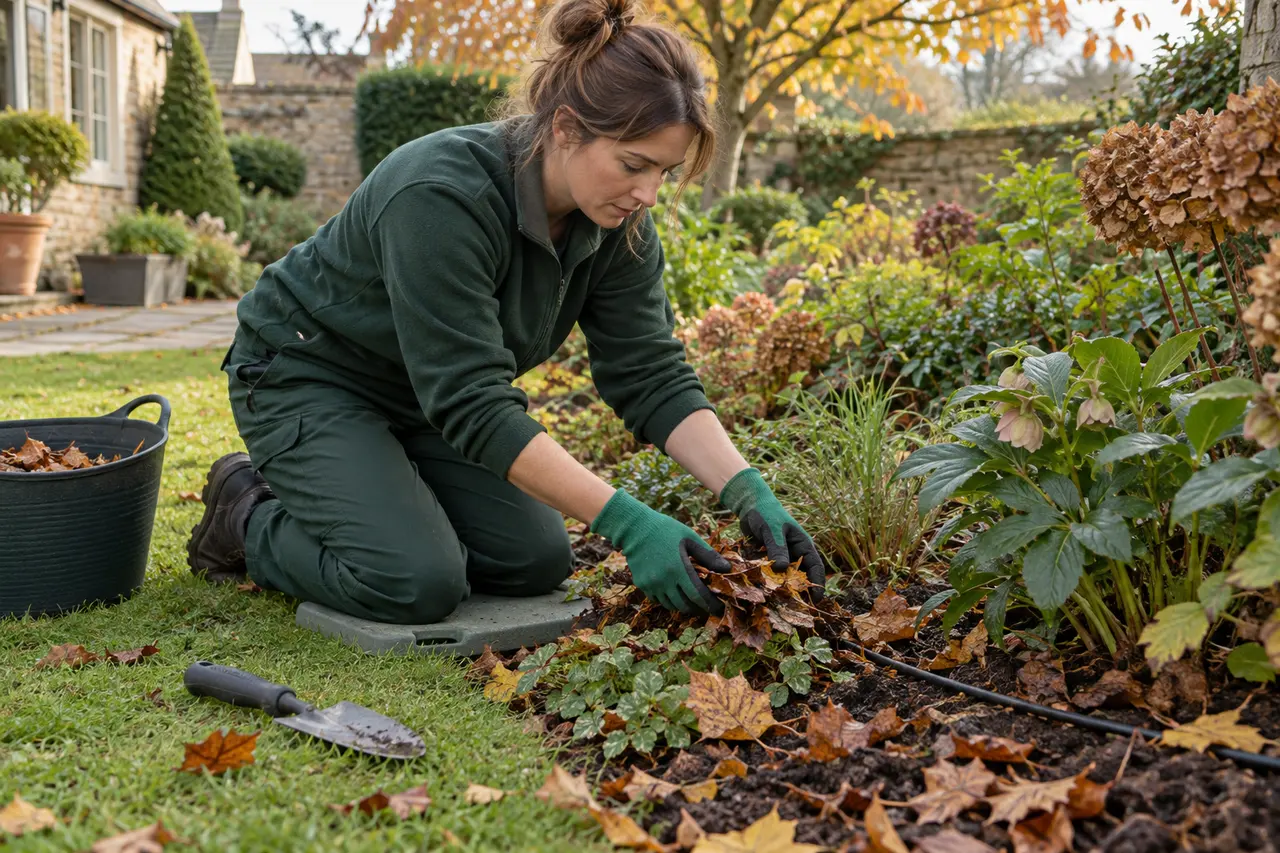
Leaf fall can conceal low plants and watering points. We lift accessible material from the required positions, keeping the bed visible for the next care task. Full containers move to their collection place outside the uncovered access. The completed section then retains the useful opening created by the work, with loose leaves gathered away from both plant bases and the route to them.
Our seasonal leaf build-up keeps the collecting tub outside the watering point and its approach. Batches are emptied before loose material spreads back across the cleared bed. Accessible pieces are gathered around crowns, leaving space for watering and close hand work. This gives the seasonal collection a finished receiving arrangement and keeps the ordinary care positions available after the larger load has moved.
Additional services with their own working requirements
Planting design includes future watering access
Our garden-design proposal considers how the bed will be reached as plants develop. A fitting visible among small plants may later sit within dense mature foliage, so future working gaps are part of the arrangement alongside the display. The planting proposal and any alteration to the watering installation remain identified operations. This connects design with the growing garden without assuming one commission automatically supplies changes to the other system.
Young-tree care follows its intended structure
Our tree-care proposal identifies the intended structure of the young tree. A central leader receives formative consideration distinct from a hedge top, while naturally multi-stemmed trees keep their own framework. The selected operation follows that identity and current growth. This gives each specimen an appropriate proposed result, preserving the useful structure as the garden develops around it.
Paving treatment follows its labelled stages
Where a product is proposed for lichen during paving cleaning, its labelled application and contact stages govern the sequence. The method includes the relevant next step, rinsing and access requirements for that product. The quotation identifies that treatment and its role within the surface clean. This keeps the operator’s actual procedure and the work included clear alongside the ordinary pressure-washing operation.
Gutter enquiries based on safely obtainable views
Our gutter-cleaning enquiry can use broad views from accessible ground to identify the requested elevation and the area beneath it. A section not visible from there is recorded as a limit of the enquiry information. The household is not expected to climb or lean from a window to supply a closer image. This distinguishes useful preliminary views from the access operation required to carry out the actual cleaning.
Incoming and outgoing seasonal trees coordinated separately
Where a Christmas-tree delivery accompanies a requested collection, we identify both operations and their intended order. The receiving space may be occupied differently during removal and installation. A new purchase is not treated automatically as a same-visit exchange. The offered seasonal arrangement therefore states what happens to the existing tree and how the selected new tree is delivered or installed, instead of leaving the household to infer a swap service.
Gardening time around existing installations
The general gardening rates below relate to time. Our quotation accounts for selective hand work, accessible cutting and controlled collection around the existing fittings. These close operations can differ from an unrestricted broad pass through an equally sized open area.
| Gardening time | Guide price |
|---|---|
| First hour | £83 |
| Each subsequent hour | £65 |
Prices in GBP. The complete quotation identifies the work, waste arrangements, VAT treatment and any applicable parking or access charges, keeping plant maintenance and separately requested installation work distinguishable within the arrangement.
Plants, connected lines and the maintenance sequence
Should I move every connected hose before the visit?
We establish which hoses are loose and movable and which lines remain fixed or connected before selecting their handling. The existing position can then be accommodated within the work. Movement is not decided by pulling every visible line to see which connection tolerates it. This gives mowing and bed care a known starting arrangement while keeping unidentified fittings outside an improvised clearance.
Can a gardener reprogramme the watering timer while tidying?
A plant-maintenance booking does not by itself include timer programming. Our gardeners follow the commissioned care and keep any requested equipment change separate. Where a timer requires attention, the actual request is identified for an appropriate arrangement instead of being adjusted incidentally during weeding. This preserves the distinction between looking after the plants and changing the controls operating their installed supply.
What if a weed cannot be pulled clear of a tube?
Where weed roots cross tubing, the gardener stops pulling and exposes the connection. A smaller hand operation or another approach can then be chosen with the plant and fitting visible. The work loosens the unwanted growth while maintaining the roots and equipment that remain. This gives the difficult patch its own controlled treatment within the otherwise accessible bed.
Can new planting go over an existing line?
New positions are set out before excavation where roots and fittings may occupy the apparent gap. We establish the plant’s receiving space with the existing lines understood, then select the preparation needed there. This coordinates the growing area and installation before digging. The plant task can proceed from that defined arrangement, with any separate equipment question addressed outside an improvised repair during weeding.
Where should a broken watering component go during clearance?
A broken component is kept separate and identifiable for the owner’s decision about retention or replacement. Plastic and rubber pieces are not mixed into green cuttings. Attached parts are not cut free simply to make collection easier. This lets the clearance finish with its actual materials distinguished, including an item that may need further attention outside the ordinary plant-maintenance operation.
Maintained planting with its care points accessible
Our garden-maintenance options leave the worked bed easier to weed, water and understand. Loose growth is collected, visible fittings remain identifiable and the approach to care points stays clear. The result is attended planting around the existing arrangement, with any separate equipment question still recognisable instead of concealed beneath a tidy surface or absorbed into the outgoing load.