

Winter-flowering borders maintained with a selective finish
Gardeners South Woodford
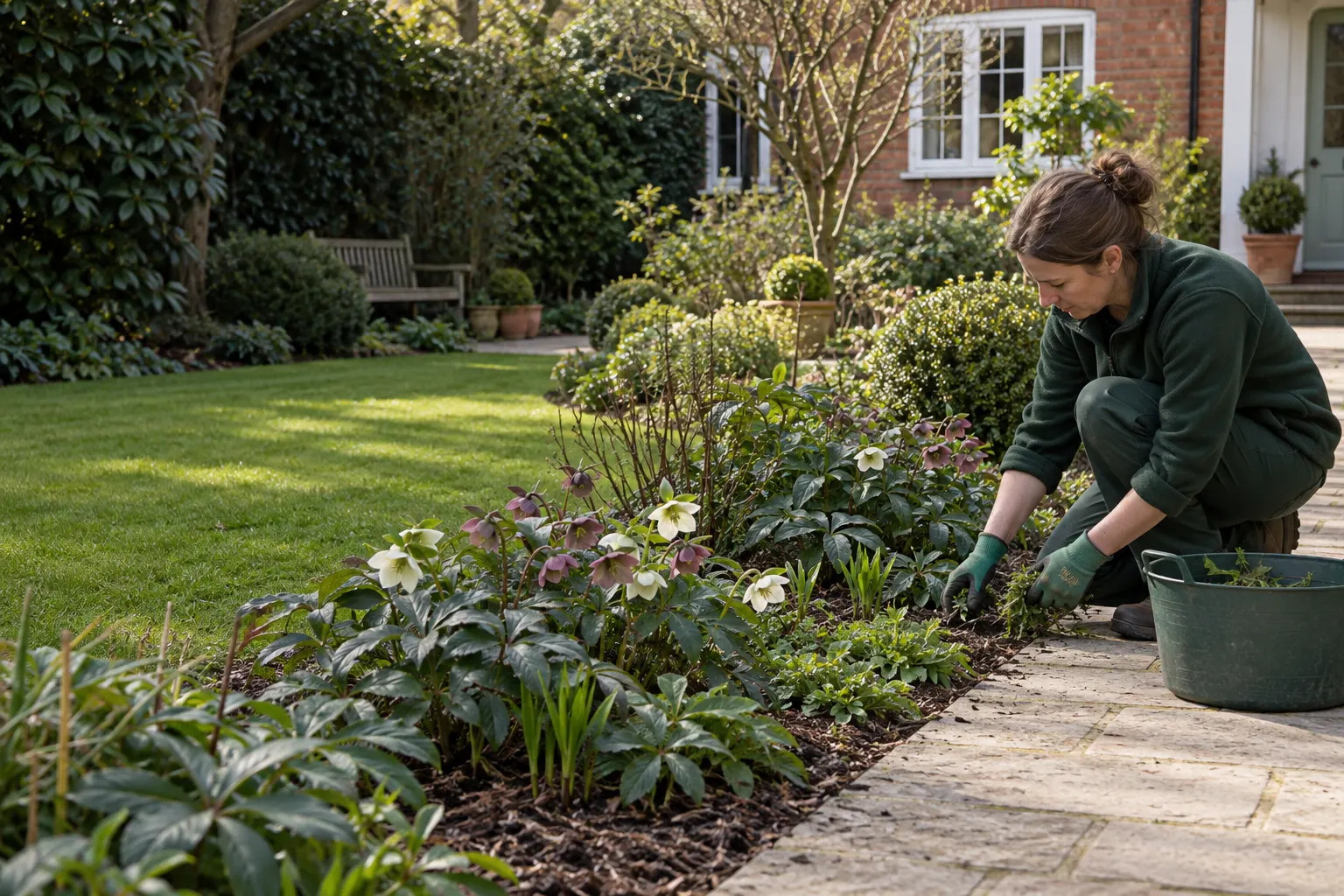
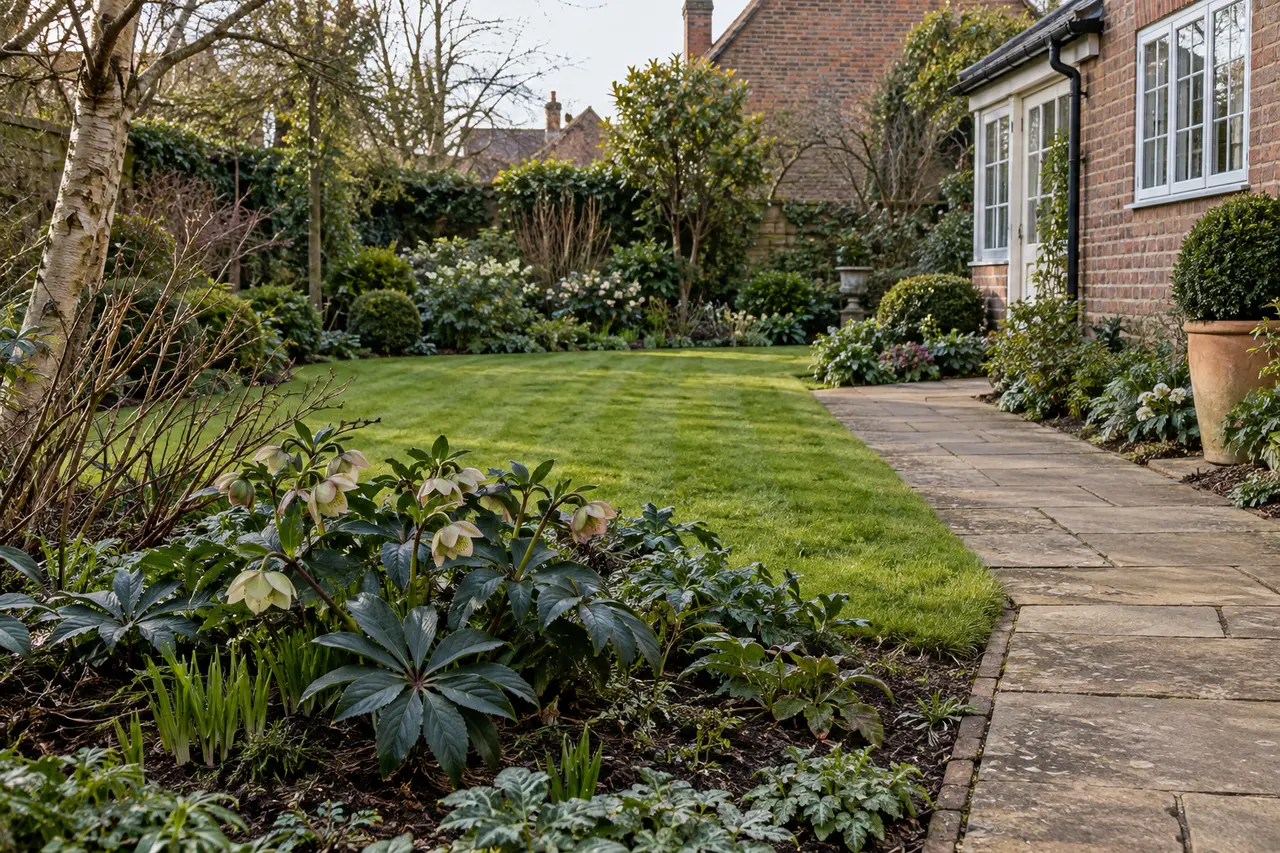
Our gardeners in South Woodford maintain winter-flowering borders alongside the lawn and boundary work. Suitable hellebore leaf care opens the view of emerging flowers, with the retained stems and growing centres protected during weeding and collection. The service combines this close attention with the larger surfaces around it, leaving a cared-for garden in which the seasonal planting remains part of the finished scene.
- How do you protect the next hellebore leaves? Our later visits retain developing foliage, adjusting the work as it replaces the old leaves removed during the earlier flowering stage.
- How can design improve the hellebore display? Our planting arrangement takes account of the viewing position and downward-facing flowers, rather than relying on adding more of one colour.
Selective maintenance of the flowering clumps
Which plants receive your older-leaf treatment?
Our gardeners identify the hellebore's growth structure before selecting its leaf work. Stemless Oriental hybrids, Helleborus × hybridus, can receive appropriate older-foliage removal around flower emergence, with the new flower stems retained. Stemmed types receive a different assessment. This keeps the treatment attached to the actual plant, with the assessment covering the separate requirements of each identified hellebore within the mixed winter border.
How is collection handled where leaf spot is known?
Known affected dead foliage is kept identifiable during removal and its appropriate disposal. Hellebore leaf spot can carry forward in that material, providing infection for the following season, so the collection has a plant-hygiene purpose as well as improving the view. Our handling keeps the known affected pieces together through the gathering. Their receiving load and appropriate destination remain identifiable as the selected foliage leaves the planted bed.
Close work through the winter foliage
Old stalk selection around emerging flowers
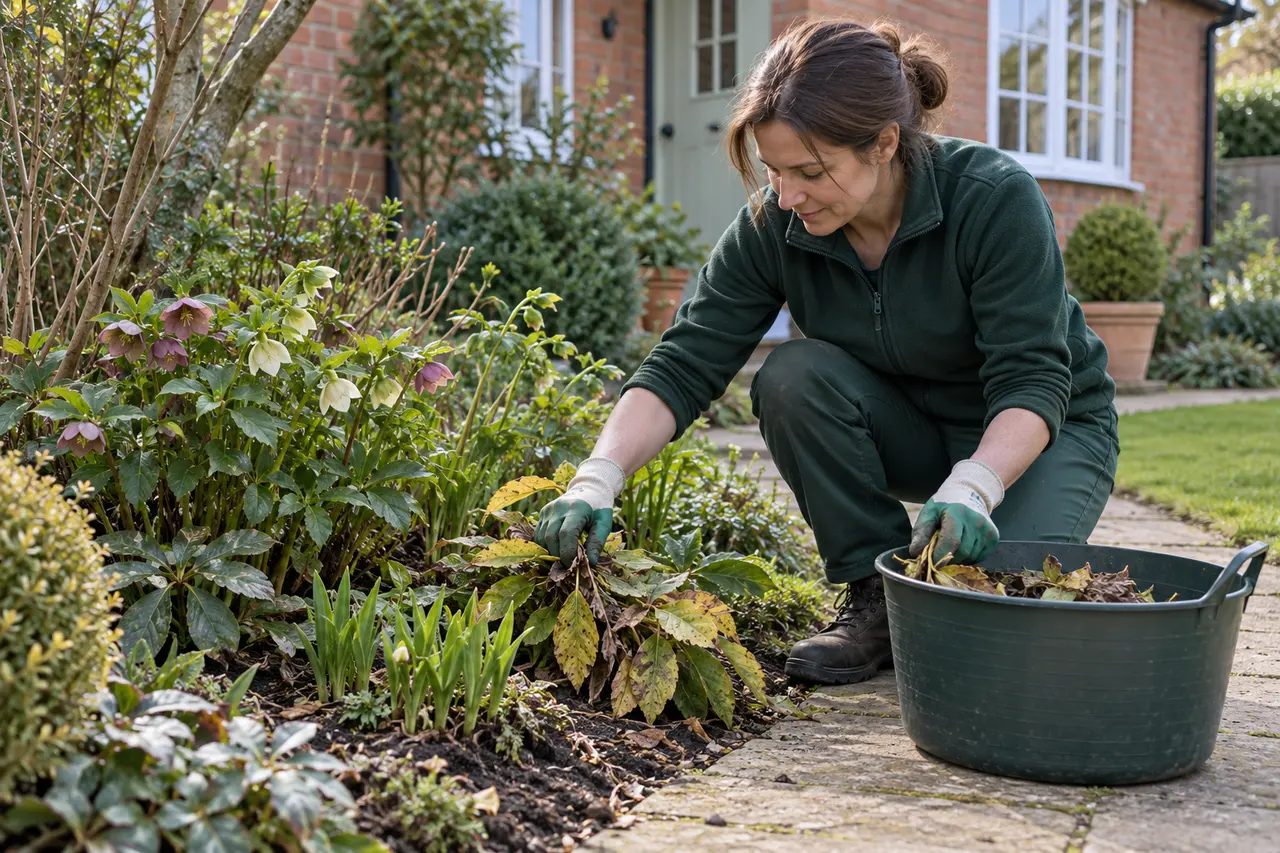
On a suitable established Oriental hybrid, the gardener works selectively through the broad skirt of older foliage around the emerging flower stems. Each selected stalk is followed to its cutting position, with the flowers kept visible and outside the blades. The work progresses through identified leaves with the selected stalk and emerging flower stems remaining visible throughout the individual hand cuts. This leaves the flowering plant intact while removing the older material included in the treatment.
Our garden maintenance allows time for this close approach alongside the larger tasks. A collecting container is positioned on a suitable surface within reach, and detached leaves are taken out as the gardener progresses. With the next stalk visible, one selected clump can be completed before work moves into its neighbour. This keeps the cutting movement controlled and prevents reaching through one plant to make a poorly seen cut in another.
- Individual old leaf stalks selected at their appropriate cutting points.
- Emerging flower stems retained clear of the cutting movement.
- A stable collecting position outside the living clump.
- Detached foliage gathered as each selected plant is completed.
- Useful leaves retained on plants outside the specified treatment.
Detailed weeding around the display
Accessible soil worked without leaning through the flowers
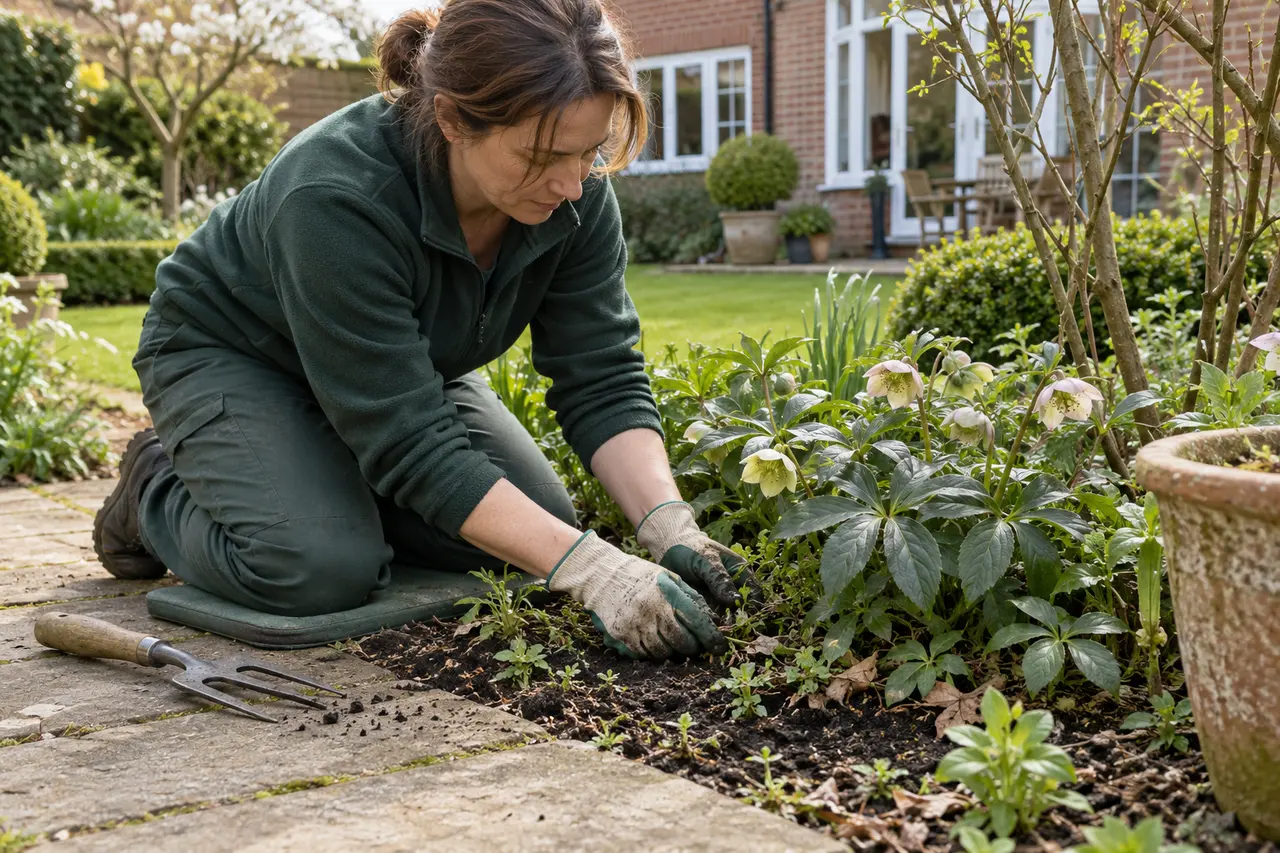
Our gardeners approach close weeding from a suitable side of the bed, allowing room for the hand and tool as well as the unwanted plant. Forearms and handles are kept clear of the flower stems while a reachable patch is worked. The standing position changes where possible to keep weight on firm ground and maintain suitable room for the hand tool. Working in these accessible patches leaves the retained base stable and gives the removal a controlled route through the planting.
Once the unwanted root is loosened, it is lifted without shaking soil across the open flowers. Displaced soil returns to its proper position instead of forming a ridge against the retained clump. The collecting tub follows the current working patch, reducing repeated movements of loose weeds over the display. This close handling matters where flowers occupy a narrow opening between established neighbours, and forms part of the service's practical finish within the bed.
Mowing beside the winter planting
Lawn work with a separate collecting route
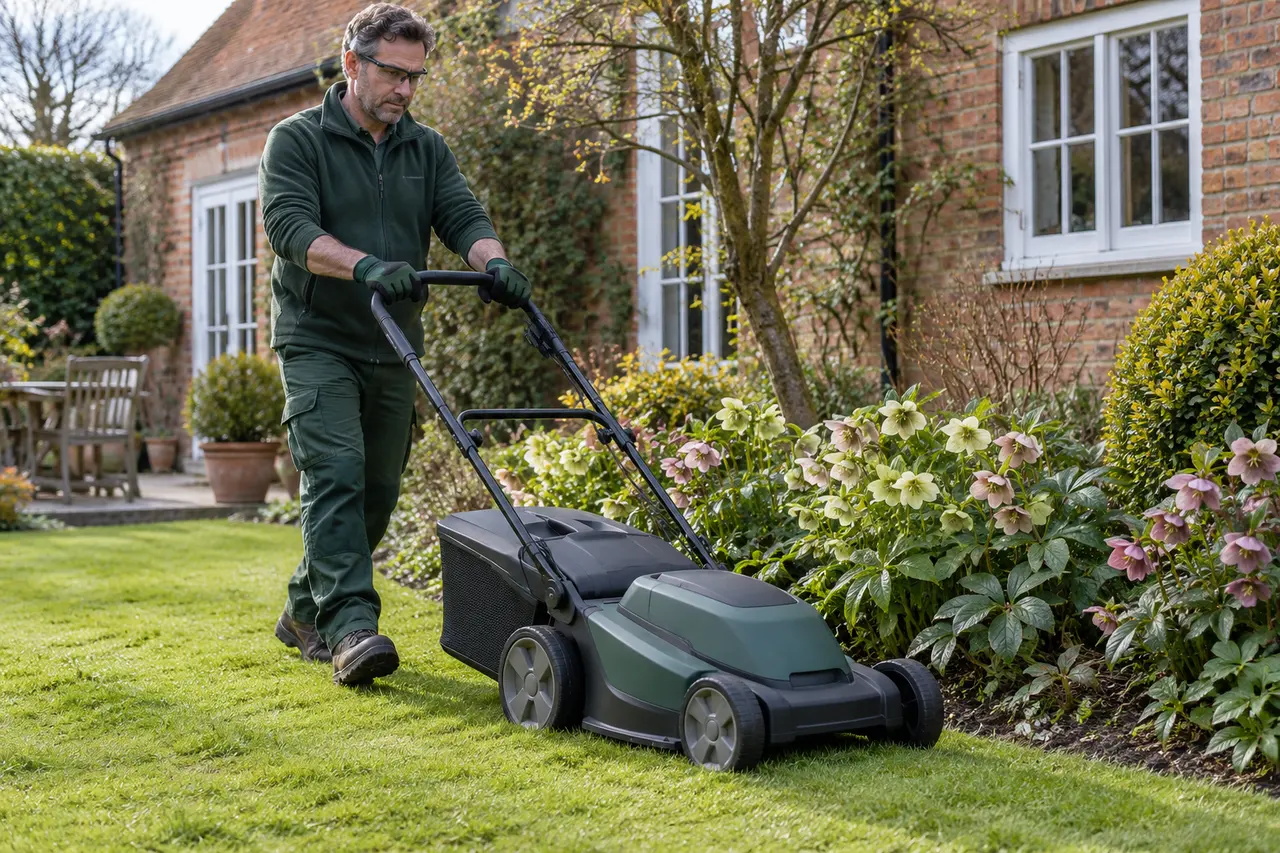
Where the adjoining lawn is suitable for cutting, our team clears its working route of leaf tubs and hand tools before the machine starts. The collector is given a usable emptying position that does not require it to pass over the hellebores. This preparation keeps the grass-cutting equipment and its load outside the carefully tended bed. The mowing and close border work can then progress without sending fresh clippings through the flowering foreground.
Our lawn care follows the actual grass condition, with a suitable cut and supported working surface. Turning movements stay on the intended lawn with supported turning room established as the machine approaches the end of its grass pass. The edge receives a final check from the grass side for accessible loose clippings. This produces a coherent lawn finish beside a planted bed of different heights, preserving the display instead of treating both surfaces as one uniformly cut area.
Hedge work above the planted bed
Clippings gathered without flattening the flowering foreground
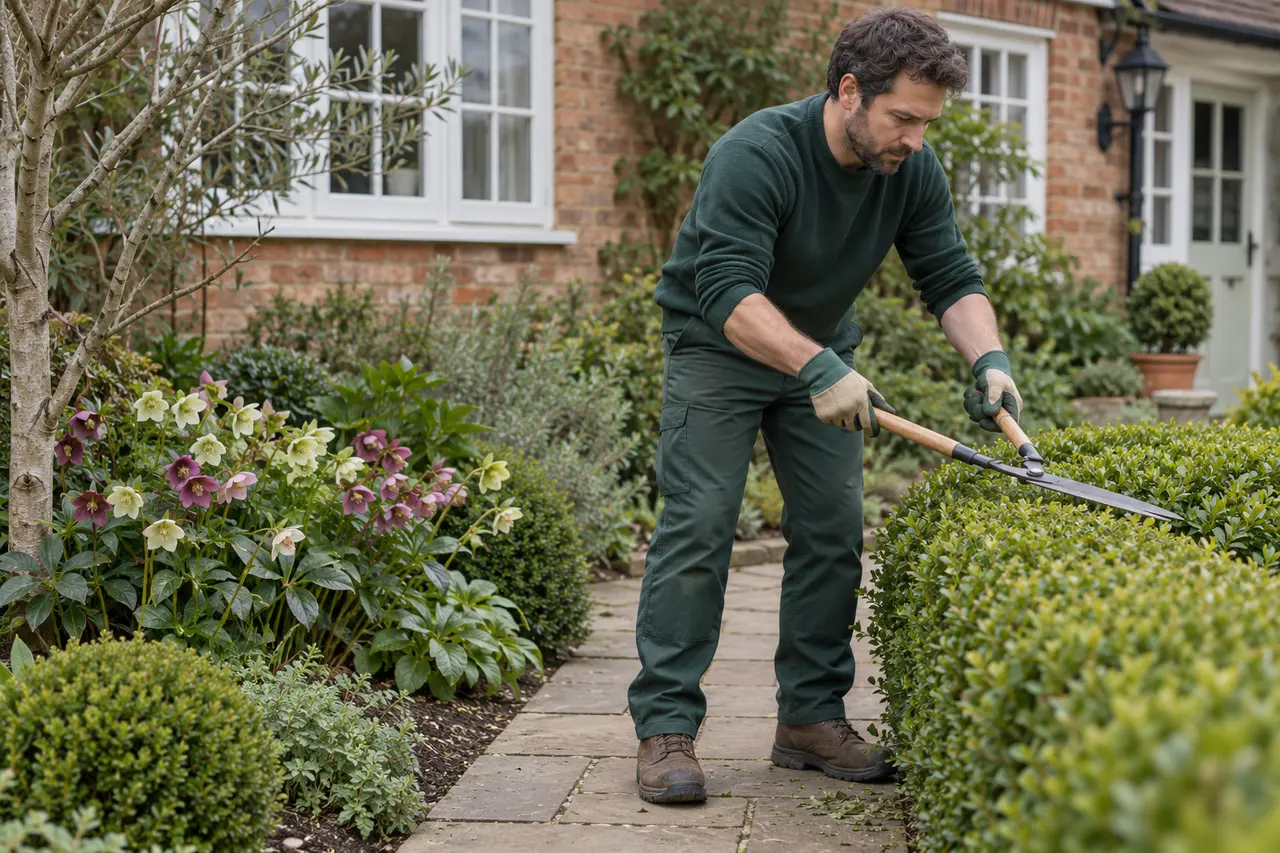
For a reachable hedge behind low flowers, the receiving arrangement is established before trimming begins. Our team positions collection materials so they can be lifted away without dragging across emerging stems or being pressed onto the plants below. Firm footing remains part of that arrangement. Where the available position cannot support both controlled cutting and protection of the bed, the working approach changes instead of continuing with a load resting on the foreground.
We check for nests being built or in use and postpone affected cutting. Suitable trimming keeps manual-shear handles and elbows clear of the low planting, followed by a stopped-tool collection of accessible fragments. The covering and containers leave the area carefully, with the hedge face and flowering bed each receiving attention. The customer's finish therefore includes both the intended boundary outline and the retained planting through which the tools and clippings have been handled.
Leaf collection with the plants retained
Selected foliage collected around retained clumps
The garden clean-up follows the selected leaf removal, even where the collected foliage forms a substantial load. Living crowns and emerging stems stay planted while the detached pieces are gathered. Any resistant material is checked before lifting, with its point of attachment identified before any further suitable separation is attempted. This gives the customer the intended open view of a retained plant, with the outgoing foliage collected without converting the task into wholesale clearance.
During garden-material collection, ties, labels and other objects are separated before they disappear into the tub. Known plant-health material remains identifiable for its appropriate handling and destination; a spotted leaf alone is not treated as a confirmed diagnosis. The load is not automatically directed into one home-composting stream. Our collection completes the close tidy with the actual selected material dealt with, and the finished surface left accessible for the following suitable bed operation.
Maintenance as the foliage develops
Later visits follow the new growth
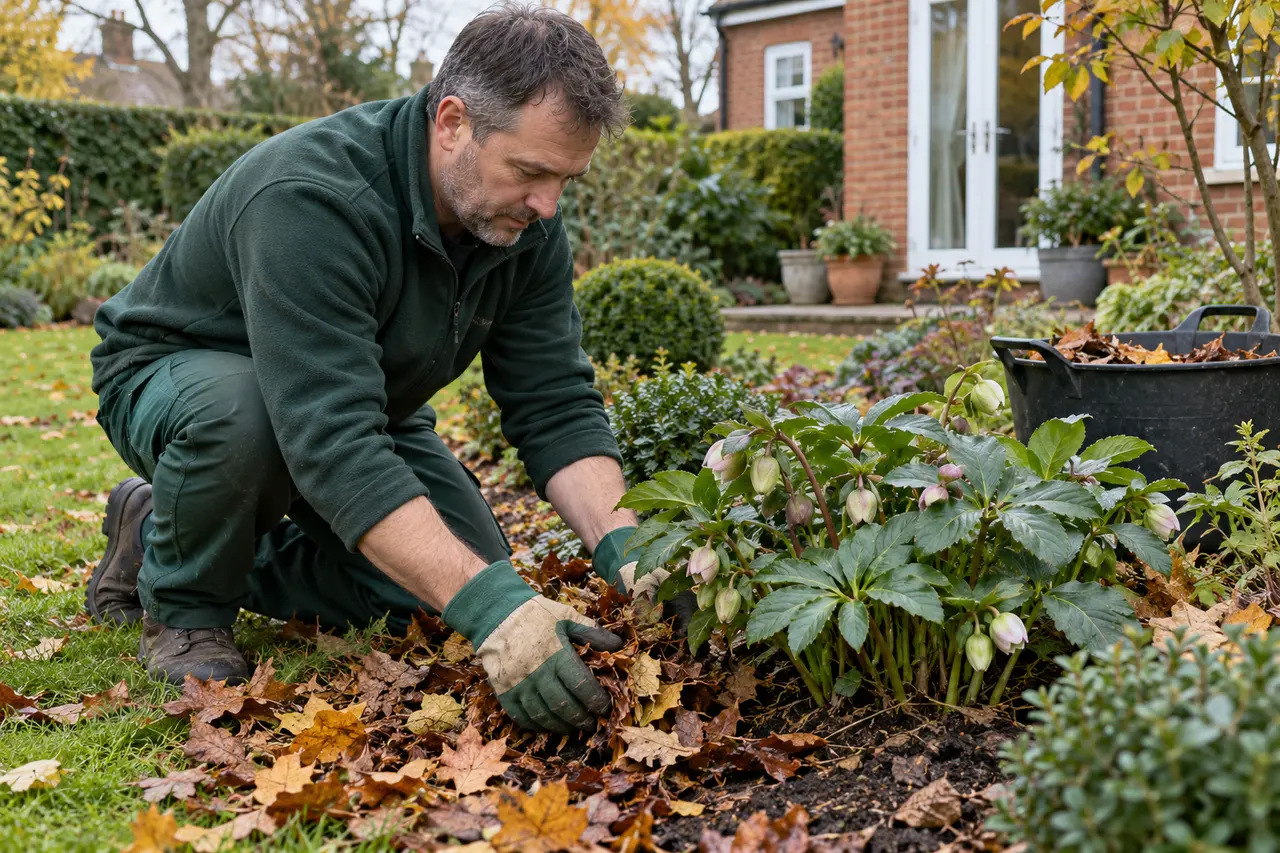
After the older-leaf treatment, the team works around the next developing foliage with the emerging stalks kept visible as the next accessible ground-level task is carried out. The temporarily open space remains available to the plant, with buckets and mower collectors kept out of it. Later litter collection follows the new leaf stalks and the flower stems, keeping hands and handles visible through the gaps. The service changes with the growing clump instead of repeating the earlier removal across its replacement leaves.
Accessible tree leaves are lifted during seasonal border care through the openings around retained flowers and emerging leaves. The collection approach follows those available gaps as the gardener moves around the flowering plant. Where a hellebore has recently been planted, establishment watering follows its condition and growing position. Winter flowers do not mean that a new root system is already established there. The team therefore treats the display, fresh foliage and surrounding soil as related parts of the visit that can require different small operations.
Additional services around the winter garden
Planting design based on the view of the flowers
Our planting design takes account of the position from which a winter bed is normally seen. Many hellebores present downward-facing flowers, so a direct overhead view can show their backs more readily than their interiors. The arrangement relates the chosen plants to a window, route or suitable existing viewing level. An outward-facing selection can serve a different purpose from extra colour, allowing the design to improve the actual presentation of the flowering bed.
Tree work based on the cavity and remaining structure
Our tree surgery considers the cavity as part of the actual tree, with its remaining tissues and the appropriate proposed operation informing the service. Concrete does not restore sound living wood, and preparatory removal inside the opening can damage the boundary between decayed and remaining tissue. The proposed work therefore concerns the tree's condition and an appropriate operation. Packing the hollow is not substituted for that decision merely to make its surface appear complete.
Pressure cleaning with an identified washwater destination
Our cleaning approach establishes an appropriate destination for jet-washing runoff before directing the wash. A visible grate alone does not establish suitable drainage: surface-water systems can discharge to a watercourse without the treatment associated with a foul sewer. The working method relates collection or disposal to the actual route. This keeps the dirty water within the handling arrangement instead of allowing the nearest opening to determine where the products of the clean go.
Gutter service that includes the identified leaf-trap insert
Where a downpipe has a separate leaf trap, our gutter cleaning preparation identifies its removable sieve alongside the roof-level channel. Material can remain in that device after the gutter above has been cleared, so its deposit needs its own appropriate removal. Handling follows the maker's arrangement for the actual sieve, including specified seasonal removal where relevant. The finish distinguishes an emptied trap from an open channel, without forcing the caught material onward through the system.
Tree installation related to usable reservoir space
Preparation for a delivered Christmas tree takes account of the water space left with its trunk fitted in the stand. Different internal shapes and trunk sizes leave different usable amounts, even where the outside dimensions appear similar. The stand's instructions and actual fitted arrangement guide that assessment. This keeps the installation and subsequent care information related to the item in use, and the available water space considered with the fitted trunk occupying its actual position in the reservoir.
Gardening rates for close and larger-scale tasks
Time spent selecting old leaves and collecting them carefully belongs alongside the larger mowing and hedge tasks. Use these general gardening guide rates as a starting point for the specified visit.
| Gardening time | Guide price |
|---|---|
| First hour | £83 |
| Each subsequent hour | £65 |
GBP guide rates. Confirm the complete work, waste arrangements, VAT treatment and any applicable access or parking charges in the quotation.
Questions about the hellebore service
How is a greening hellebore flower treated?
Our selection follows the intended plant-care result with the identified flower stage and its continuing value in the selected display considered together. The showy parts are sepals, and their changing colour can remain part of a long display. A bloom can therefore remain within the maintained bed while it is still wanted. Removal is carried out for the selected purpose, keeping a natural stage of the flower separate from an automatic clearance signal.
What planting level do your gardeners use for hellebores?
We keep the plant at the level at which it grew in its original container, with appropriate planting and subsequent care for the new position. The base is not buried as an improvised way of holding a leaning stem upright. Where a lean needs attention, the actual cause informs the work with the original growing level retained while the appropriate response to that individual stem is considered.
Does the border service automatically add fertiliser?
Our treatment follows the plant and its growing conditions. Border-grown hellebores seldom need additional feeding, while drying out or waterlogging can be more relevant to poor growth. We therefore assess those conditions before selecting an additional product. Container plants receive their own treatment because their compost and resource limits differ from border soil; a feeding assumption is not transferred between the two settings.
How does your team care for a winter container display?
Container care follows the identified plant, compost, drainage and watering needs. A temporary winter display can require a different next position from a permanent border clump, while some more demanding types benefit from suitable shelter available to the container. Our work reflects that next stage and the actual planting task, with the proposed position and suitable subsequent care related to the identified plant and its container.
Continuing care for the next foliage stage
Our garden-care services follow the changing hellebore after the initial older-leaf treatment. New foliage remains with the plant as it fills the opened space, and the following visit is planned around that growth. The continuing service supports the developing clump alongside the rest of the garden, with those emerging leaves becoming the retained foliage around which later accessible care is carried out.