

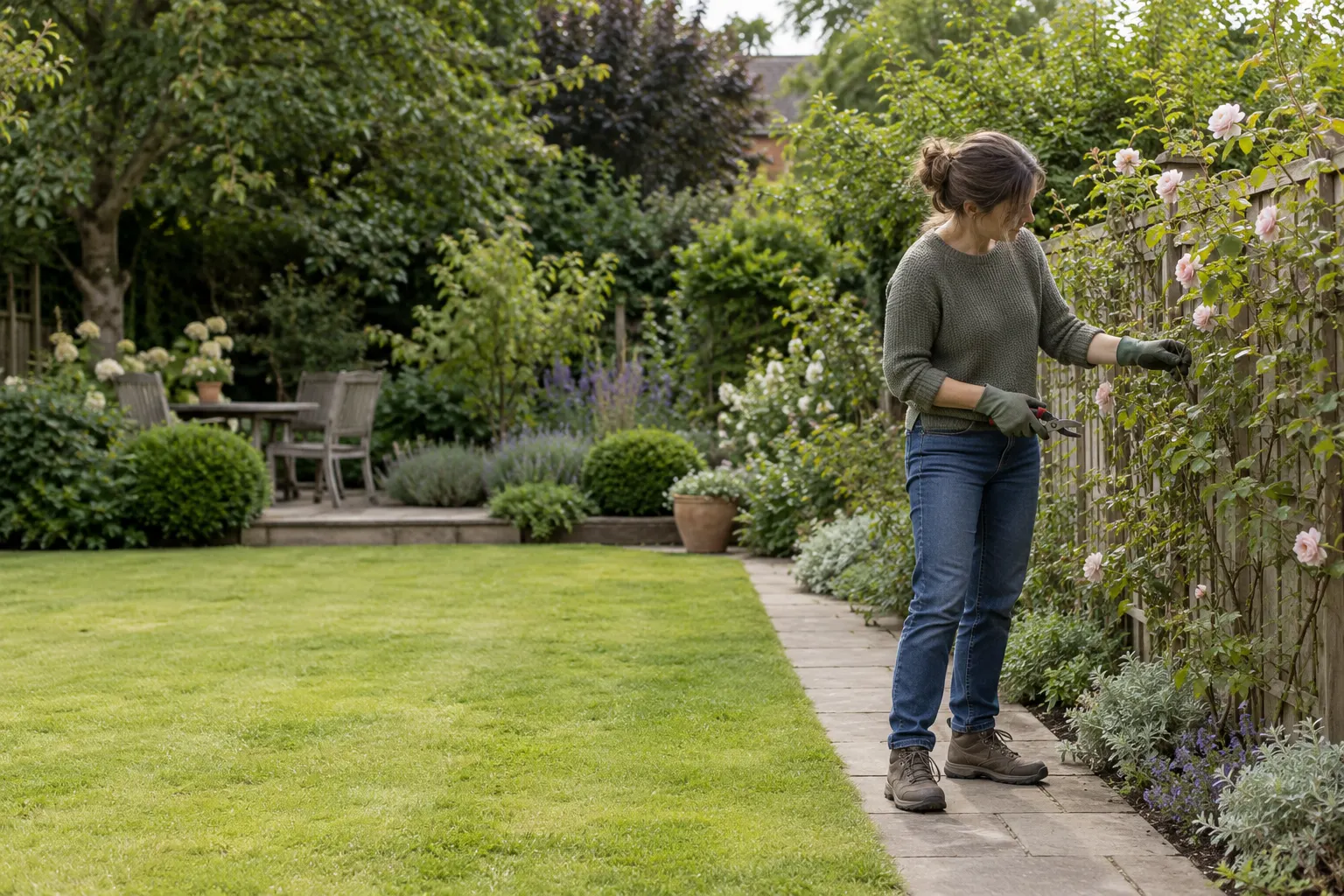
Hainault · Selected cane renewal for established rambling roses
Gardeners Hainault
Our gardeners undertake suitable reachable rambler pruning after its display, distinguishing older flowering stems from the young canes chosen to replace them. Removal, thorny-material collection and guidance onto existing sound support are treated as connected operations, alongside appropriate care for the surrounding grass and planted areas.
- What does your rambling-rose maintenance retain? We identify suitable young replacement canes before removing selected older growth, preserving the plant’s continuing arrangement on its existing sound support.
- How is routine rambler care separated from renovation? Our proposal distinguishes reachable after-display pruning from substantial renewal of a neglected framework, with timing and workload suited to that operation.
Replacement canes selected before older growth is removed
When do your gardeners undertake routine rambler pruning?
We generally consider routine pruning after the late-summer display, with wanted hips included in the timing. Most ramblers flower once, and identification guides the proposed work. The selected reachable operation is distinguished from major renovation of a heavily neglected plant. Our task follows the actual rose and the replacement growth intended to remain on its existing support.
How are long young canes handled within the renewal?
Our gardeners select vigorous young canes before removing the chosen old stems. These can contribute to the following display and occupy the released space. Growth extending beyond the former outline is considered for training into its intended position. The renewal sequence therefore begins with the continuing arrangement understood, keeping useful replacements identifiable throughout cutting and collection.
Older flowering stems and younger replacements
The retained framework established before the cutting begins
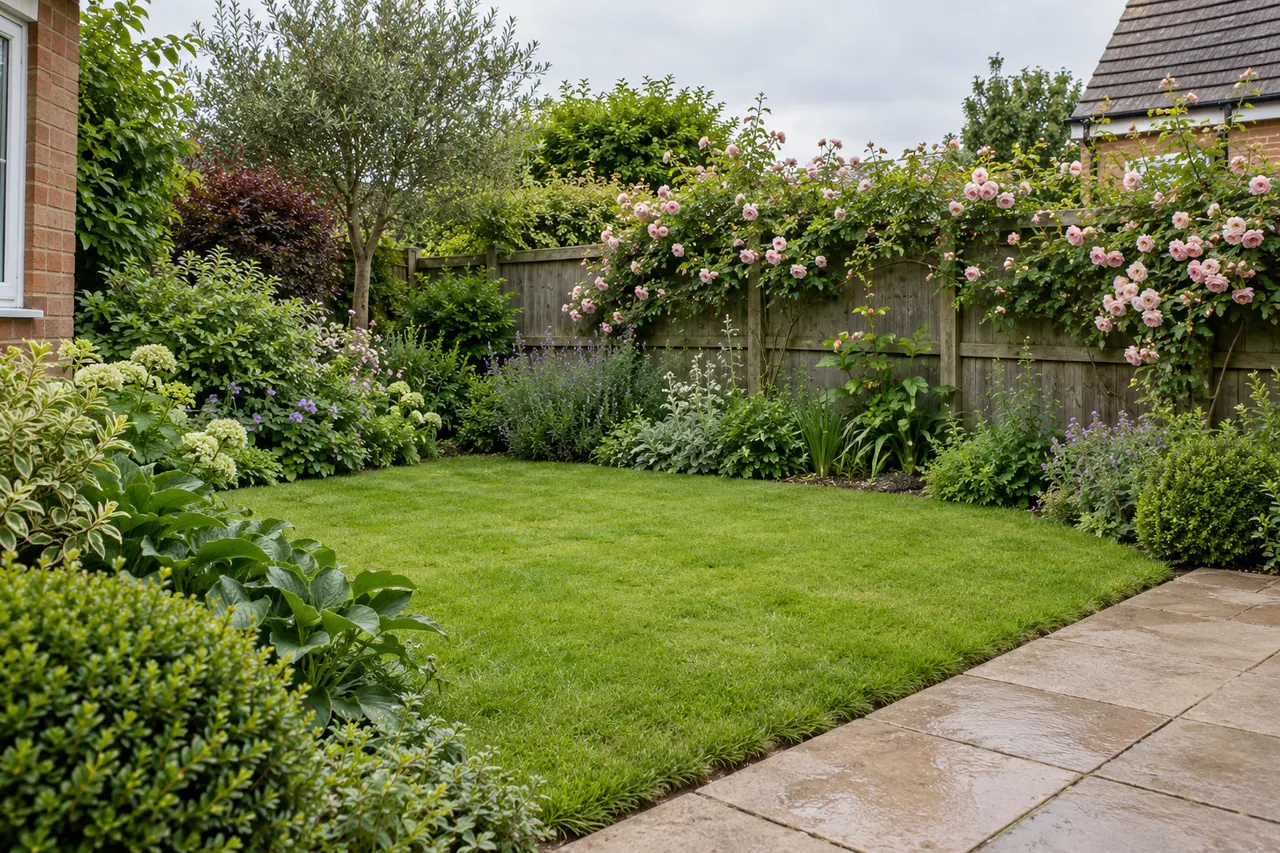
We follow older stems towards their bases and identify younger canes sharing the support. Their different roles remain apparent even where they cross the same fence panel. The proposed renewal keeps useful replacements and removes selected older material in a controlled sequence. This gives the operation a continuing plant arrangement to work towards as space is released within the framework.
Our selection follows the RHS rambler-pruning approach, distinguishing routine maintenance on an existing covered support from major renovation. Suitable work can remove a proportion of older stems while retaining and training younger replacements. The actual space, plant condition and retained arrangement determine the extent. We do not apply an example count indiscriminately to a smaller or weaker rose, where the available growth may call for a different selection.
The reachable operation is included within garden maintenance, with the intended canes identified before cutting. The task describes renewal, collection and the existing supporting arrangement. Each stage follows the continuing rose, giving the gardener a defined plant operation while surrounding work proceeds around the stems and space selected to remain.
Controlled cutting at the selected stem
Old canes traced through the living framework
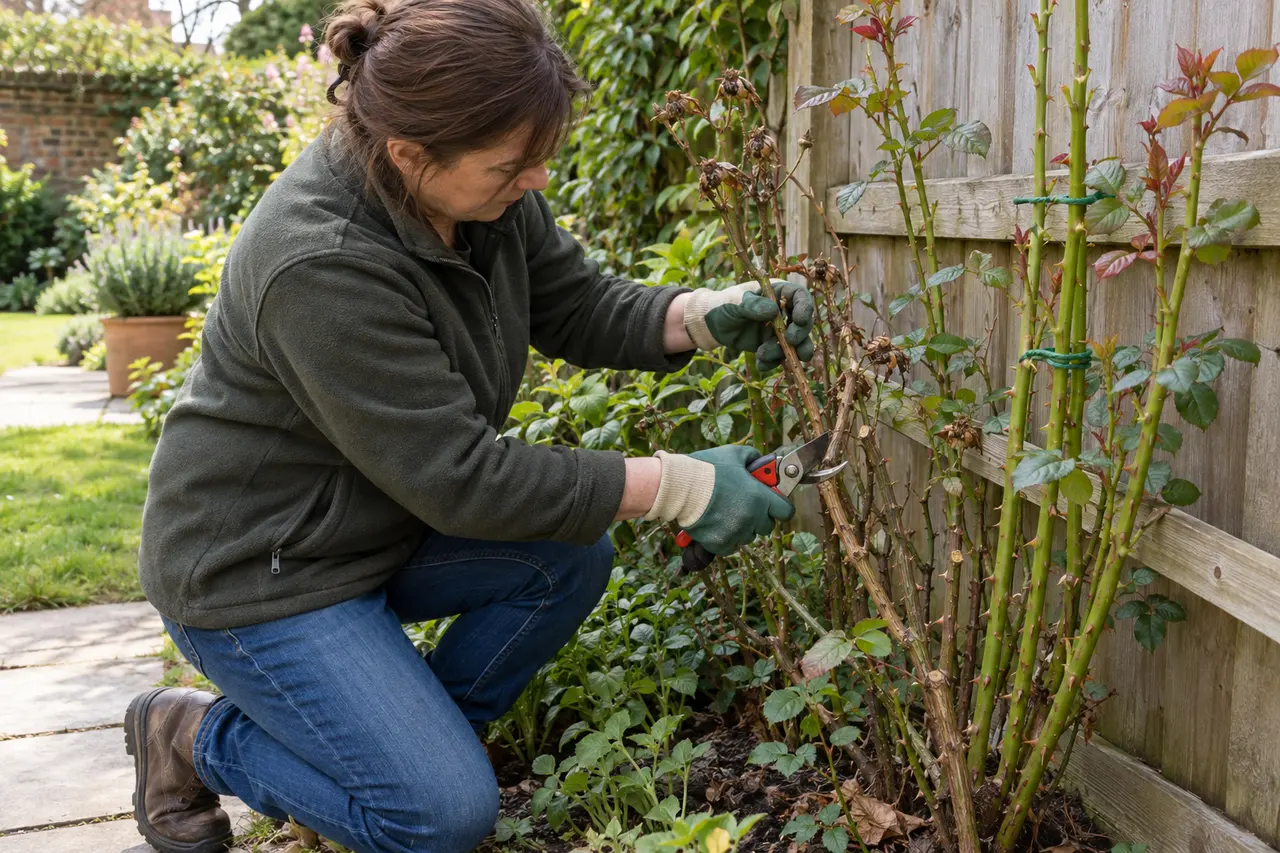
The gardener identifies the chosen old cane and adjacent young growth before tool placement. Crossing stems are followed to their origins, keeping the cutting point visible. After detachment, the selected length is released through the framework with its path understood. This coordinates removal and handling around the plant staying in place, leaving its younger canes distinguishable as the operation progresses.
Tools are selected for the manageable stem and available working position. Small secateurs are not forced through substantial old wood beyond their suitable use. Heavy framework and extensive renovation are considered separately from routine selection, keeping the younger retained growth identifiable. Where the stem cannot be confidently followed through the tangle, the gardener improves that identification before making an irreversible cut into the continuing plant.
A restricted support can require a different routine selection from an expansive one, including replacement of flowered stems with chosen new canes. Our approach follows that particular rose and the space available for its arrangement. We establish which replacement is wanted before working through the easiest visible pieces, so the useful well-positioned cane is not discovered in the collection pile after its place has been cleared.
- Our gardeners trace the selected old cane through its crossings.
- Suitable young replacements are retained for the released space.
- The tool is matched to the visible selected stem.
- Thorny lengths are gathered in manageable controlled batches.
- Retained growth is secured before adjoining grass is finished.
Handling the detached thorny lengths
Projecting ends controlled during collection and carrying
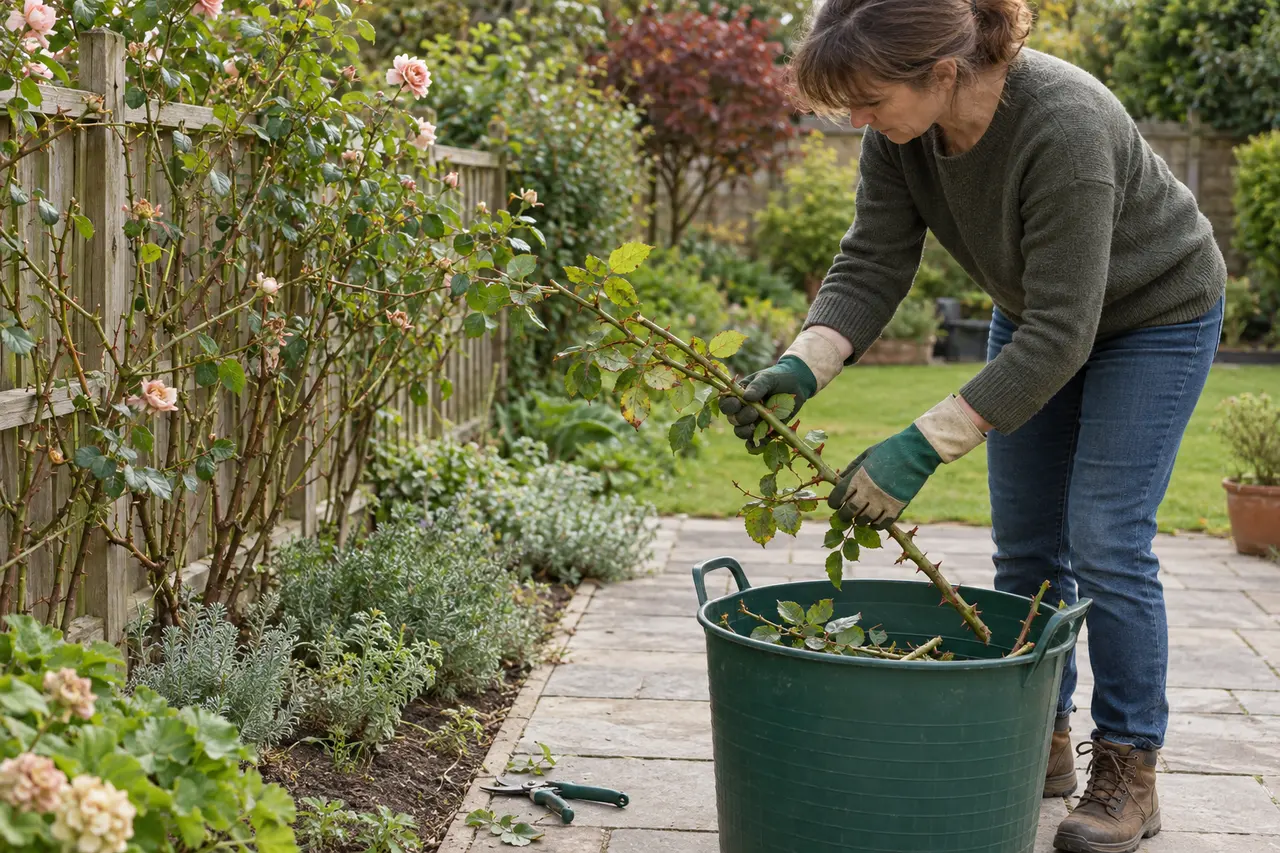
Our gardeners handle detached rose lengths in manageable batches with suitable gloves and clothing, keeping projecting ends outside other people’s working space. Where further shortening is needed for collection, it is carried out on identified detached material with an appropriate tool. The handling takes account of clothing and neighbouring stems that prickles can catch. A springy bundle is not compressed by hand to force it into a smaller container.
The collection position provides an open side for laying canes in while sharp ends stay clear of carrying routes. Our garden clean-up includes the complete thorny load, from conspicuous long lengths to shorter pieces on paving. Those fragments are gathered as the work advances. The route remains usable for other materials after each batch moves, with the collection arrangement maintained throughout.
The destination of the rose cuttings identifies its destination within the handling arrangement. Loose ties and support fragments are separated from the cut canes as they appear. Small ends are gathered before the container moves, keeping the cleared route available for the next stage. The team therefore finishes beneath the load as well as removing its visible upper pile, preserving the usable space beside the rose.
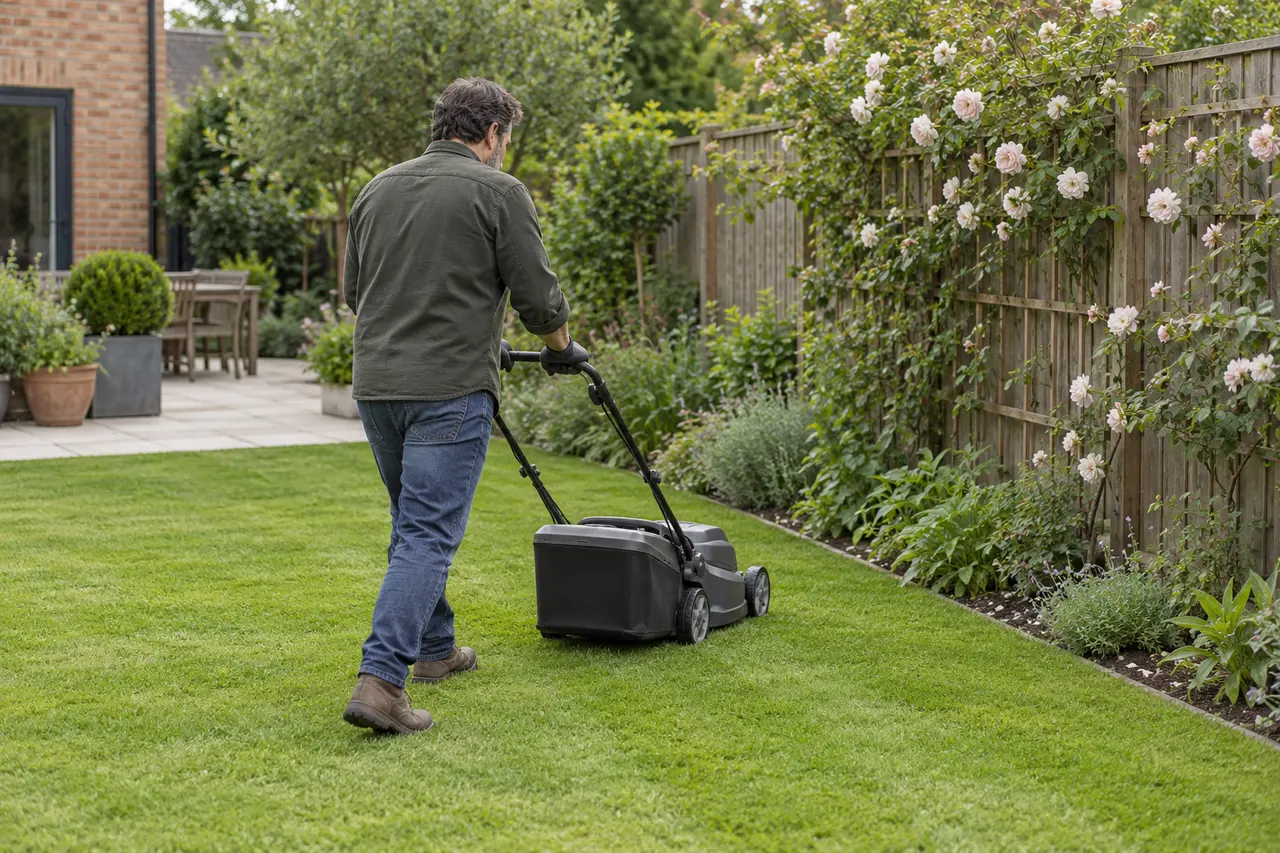
Lawn care beside the trained rose
The retained arrangement kept outside the mowing route
After the main cane load is gathered, the team checks adjoining grass for accessible short offcuts with equipment stopped. Smaller brown fragments can lie below grass tips even where no long stems remain. Their collection prepares the route; the mower is not used to discover what was missed. This attention is completed alongside securing the replacement canes that will remain beside the lawn, keeping detached pieces and living growth distinguishable.
Once selected canes are secured outside the route, our lawn-care work follows the grass surface with wheels and turns within it. The border base stays outside the cut. Removal of an old stem can expose more soil, so the gardener keeps the existing lawn edge identifiable through that changed view. The new space belongs to the renewed bed until a separate planting or layout decision changes it.
Overlapping rose and hedge growth
Detached hooked canes released from retained hedge foliage
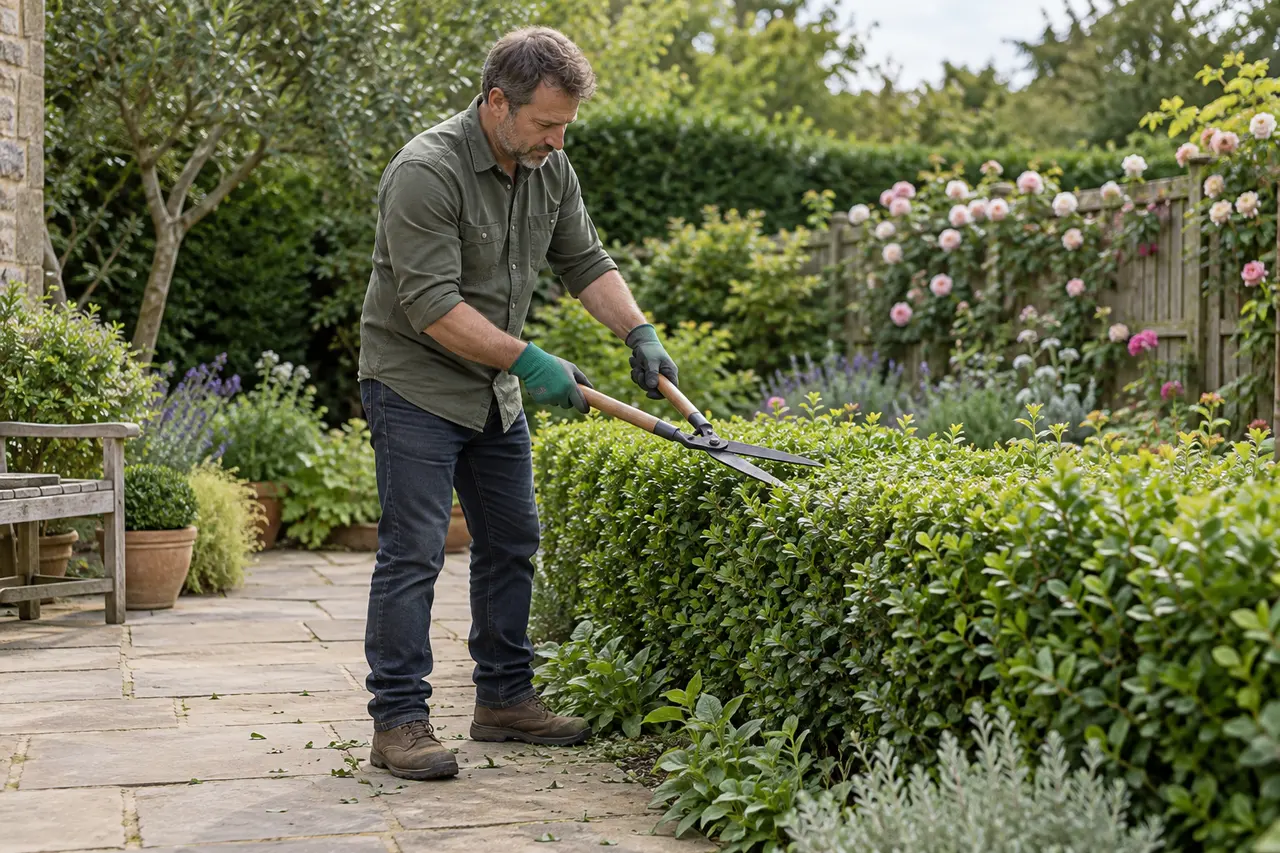
Where prickles hook into hedge foliage, the gardener follows the selected rose length through its contact points. Detached material is eased free with the neighbouring growth visible and supported as needed. The rose and hedge remain separate plants through collection. This gives removal a controlled route and preserves the living boundary while the identified cane is brought into the outgoing arrangement.
The hedge receives its own suitable species-specific cut, with affected growth checked for nests being built or in use and disturbing work postponed. At each working position, the intended plant and appropriate tool remain clear. Loose material is then collected from the accessible shared foreground. The fact that both plants occupy one boundary does not turn the operation into an indiscriminate reduction across their combined outer surface.
Training the replacement growth
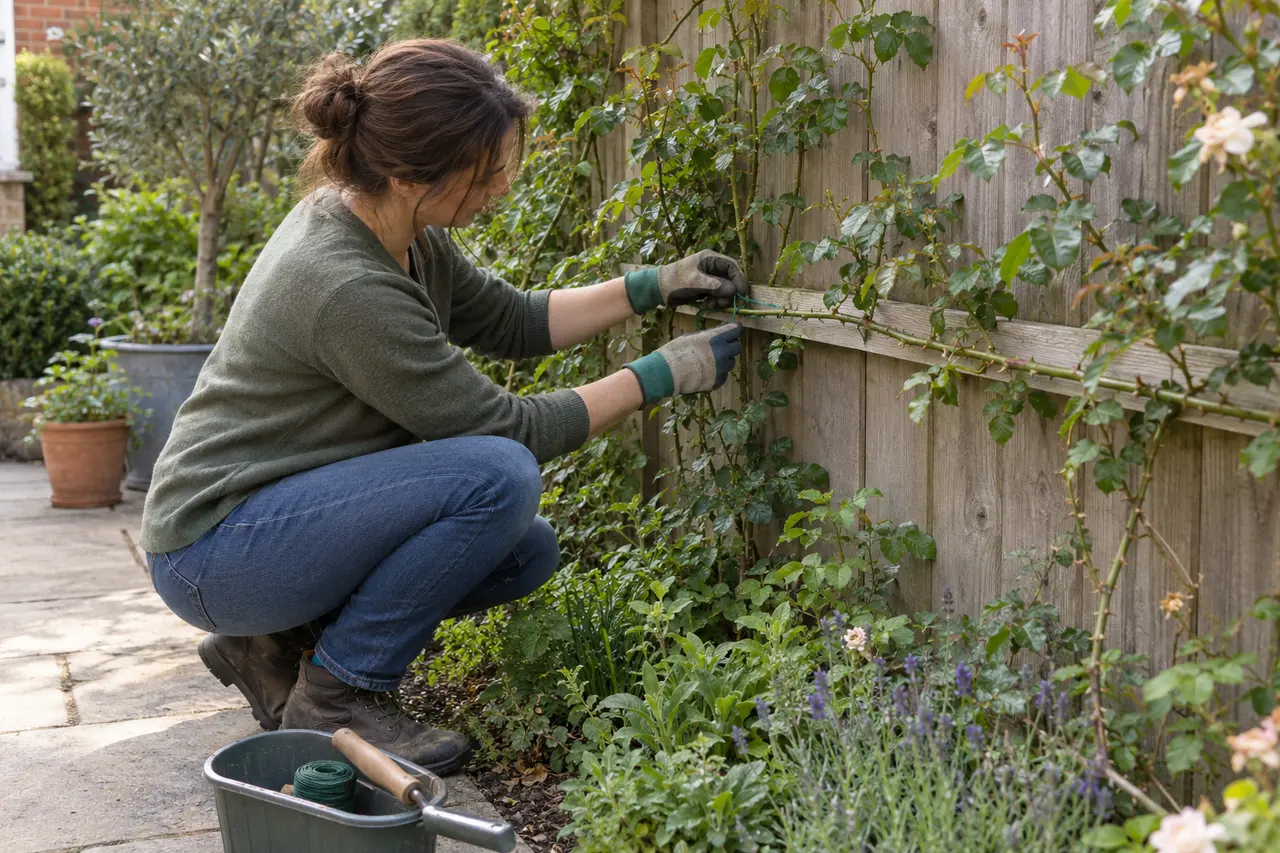
Flexible retained canes guided onto the existing sound support
We guide flexible selected canes gradually into the space released by renewal. Their actual condition determines the curve available on the existing sound support. Stiffer sections receive their own position rather than a sharp forced bend. This keeps the training responsive to the plant’s material, with useful young growth set out for the intended arrangement as the older stems leave.
The RHS describes fanning new rambler stems and tying them horizontally. Our guidance keeps individual canes and attachments visible, with room for thickening. Existing fixing condition is considered before use. This provides an understood arrangement on the sound support available, preserving the identity of each replacement and the space it needs as the rose develops.
The selected replacements remain identifiable within the seasonal care record, distinguishing younger retained framework from growth considered at a later visit. Subsequent attention can then follow the renewal actually undertaken. It is not reduced to repeatedly shortening all shoots to the outline left on the last gardening day, which could remove the developing arrangement chosen to occupy the space released by older stems.
Further services with distinct handling requirements
Rose design considers how flowers are presented
Our rose-planting brief considers the chosen variety’s actual flower presentation alongside colour. Clusters of smaller flowers create a different effect from larger individual blooms. The arrangement identifies the display wanted across the support and the growth carrying it. This gives selection a clear visual purpose based on the developing plant, including the scale and distribution of flowers within its intended position.
Suspended tree material receives a professional work plan
For tree work, a fallen stem held in a neighbouring canopy is treated as material still under load, not ordinary loose clearance. Its supporting tree and suspended position are considered together in the professional plan, with people kept clear. Moving other material can change that support. Our proposal therefore distinguishes the hung-up situation from a branch lying ready for ground collection, without introducing a pull-from-below method into routine garden tidying.
Surface washing accounts for dissolved gritting salt
Where gritting salt remains near planting, its movement is included in the proposed cleaning water. Dissolved salt can travel in runoff and damage plants, so the handling arrangement identifies the receiving area and water route. The task addresses that transfer during surface work. Existing plant injury remains a separate condition, with the paving clean described for the actual residue and surface being treated.
Gutter equipment configured for the actual wet deposits
For gutter cleaning, the vacuum is configured for its actual wet deposits using that model’s liquid-handling instructions. The collection system and filtration are selected for the equipment in use. This keeps the setup specific to the operation, with different components accounted for where models differ. No universal filter-removal recipe is substituted for the manufacturer’s requirements.
Seasonal tree displays kept separate from real flames
Our seasonal care information for a Christmas tree includes London Fire Brigade’s precaution against real-flame candles on or near the tree. Suitable flameless decoration can provide a candle-like effect within branches, while actual candles require a separate appropriate arrangement. The information does not present a fresh or watered tree as flameproof. This keeps a particular display hazard clear without suggesting the tree’s format or water condition makes a burning decoration suitable.
Gardening time for selected renewal and material handling
Our quotation identifies reachable plant selection, cutting and thorny-material handling alongside surrounding upkeep. The general rates below guide gardening time. Substantial renovation is separately considered for the framework and workload, giving that larger operation its own proposed extent and seasonal timing within the complete arrangement.
| Gardening time | Guide rate |
|---|---|
| First hour | £83 |
| Each subsequent hour | £65 |
GBP guide rates. The complete quotation identifies the commissioned operations, materials, outgoing waste, VAT treatment and any applicable parking, access or congestion charges. Routine after-display work and separately assessed renovation remain distinguishable.
Routine rambler care and its different next stages
How does the renovation window differ from ordinary after-display pruning?
Our proposal separates routine pruning after the summer display from suitable renovation considered between late autumn and late winter. The bare framework can be easier to see during that separate dormant-season operation. Plant identity and the work required determine which proposal applies. Renovation is not presented as the same ordinary renewal cut repeated whenever the garden receives a visit, and the retained arrangement informs its extent.
Should a fine wire be pulled tight directly around a retained cane?
Retained canes receive guidance with the attachment visible and room for development. A fine tight fastening can constrict growth, so its fit is reviewed as the stem thickens. The gardener keeps each cane identifiable through the training. This carries the intended arrangement into later maintenance with the fixing and the growth it supports still available for appropriate attention.
Can any vigorous rambler simply be kept permanently in a small pot?
Where a container is proposed, we consider the actual rambler variety, root space and continuing care with its support and longer-term position. Vigorous growth needs an appropriate receiving volume. Top cutting alone cannot provide that missing space. The planting decision therefore follows the plant’s expected development as well as the smaller size visible in its nursery container.
Does a rose running high through a tree fit a reachable maintenance instruction?
The working position of the selected growth defines the appropriate approach. A cane starting beside a path does not make its high canopy growth part of reachable maintenance. Our proposal distinguishes ground-level pruning from high or heavily supported material needing a separate work arrangement. This keeps the actual cut within its intended operation instead of following the cane upward and silently extending the task into overhead work.
A continuing rose with an identified replacement arrangement
Our gardening work in Hainault leaves selected younger canes arranged in the released space, with outgoing thorny material gathered and access clear. That continuing framework is identifiable for subsequent care. The useful result is a renewed plant with its next display supported by an understood replacement arrangement, connecting the operation completed now with the canes being maintained afterwards.