

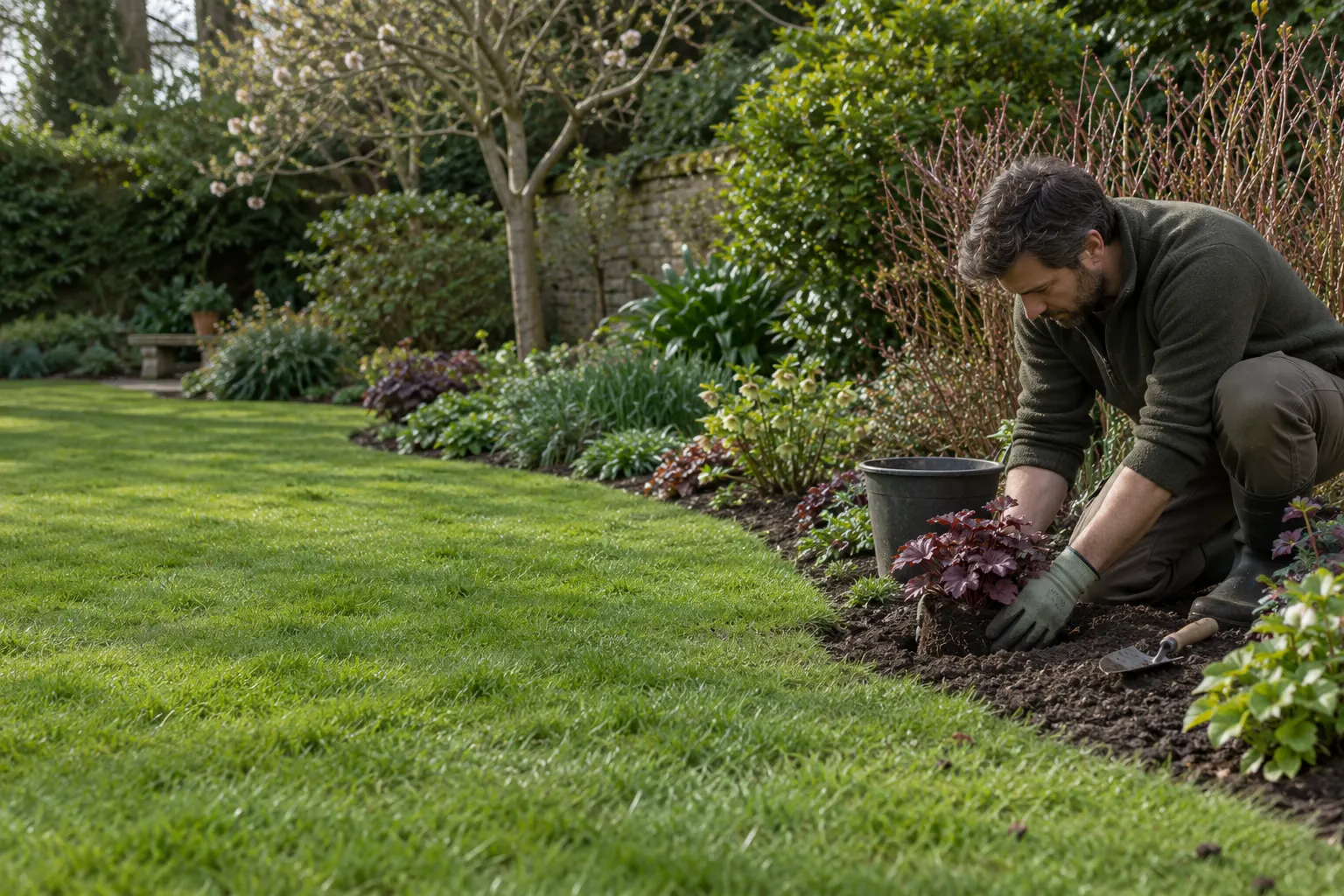
Low planting cared for at its actual soil line
Gardeners Becontree
Our gardeners assess heucheras at the base, distinguishing a shallow-rooted clump lifted over winter from older woody growth or a damaged root system. Where suitable reseating is included, we support the rootball, prepare its receiving position and leave the crown at the surface. Surrounding collection and grass work protect that newly settled place.
- How do you reseat a lifted heuchera? We assess its roots and prepare suitable support, returning the crown to the surface without covering the growing centre.
- How is leaf patterning distinguished from a concern? Our inspection separates flat cultivar colouring from raised pustules and checks both leaf surfaces without treating colour alone as a diagnosis.
The root position determines the suitable operation
What does your spring heuchera work involve?
We examine the soil line and roots of each selected heuchera before suitable replanting. A shallow-rooted clump lifted slightly over winter can receive support at its appropriate level, with the crown at the surface. The work follows the actual affected position while other soundly seated plants remain in place, keeping the operation proportionate to the individual base being attended to.
How do you treat a plant with reduced roots?
Our assessment identifies the roots remaining beneath a loose plant and records any damage or reduction, including a possible root-feeding concern. Suitable reseating follows that actual material, with further attention identified where needed. The completed position and the known root condition stay connected in the record, giving subsequent plant care a clear view of what the operation has addressed.
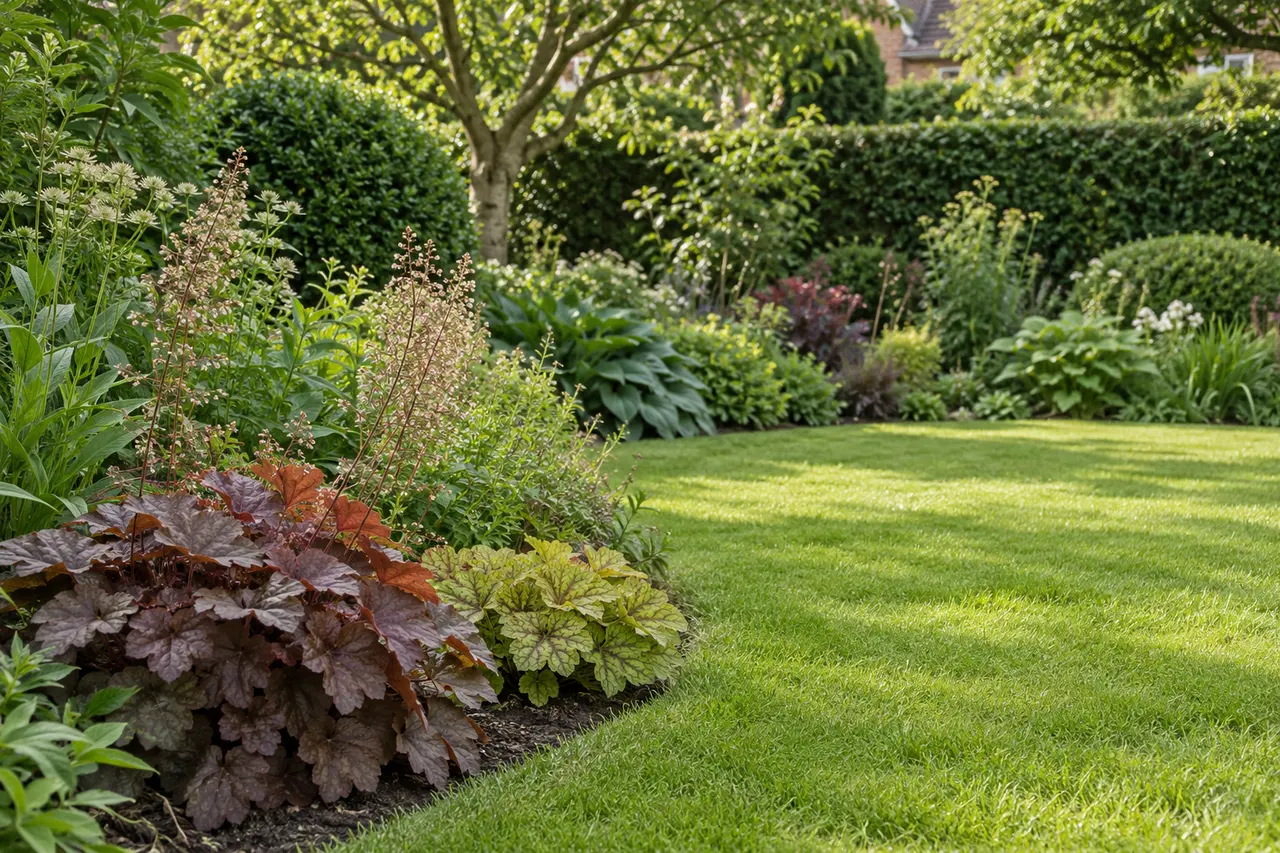
The crown beneath the outer leaves
Assessment of the clump’s soil line and support
We move the outer foliage necessary to see the heuchera’s base and accessible roots. Rounded leaves can hide a raised position, a gap below or older woody growth, so those observations are distinguished before the next movement. The visible soil line provides the working reference while the retained plant remains supported and its actual placement is established.
Suitable operations described in spring heuchera care include replanting a shallow-rooted specimen where it has lifted. An ageing woody plant receives its own renewal assessment. We relate each choice to the base and roots present, preserving the appropriate crown level and root contact. That gives the resulting low foliage a suitable supported position for continuing care in the bed.
Within garden maintenance, selected clumps receive the particular attention their bases require. Neighbours that remain soundly seated stay undisturbed. We define the working area from the loose position and accessible roots, then complete its suitable preparation and placement. The planted surroundings retain their structure while the individual clump’s receiving soil and finished level receive close attention.
- Our initial view establishes the actual soil line below the outer leaves.
- Visible retained roots guide whether reseating is appropriate.
- The manageable rootball is supported throughout its movement and placement.
- Soil is settled around roots with the crown remaining at the surface.
- The worked planting position remains clear of equipment and collection movements.
The supported rootball and receiving soil
Suitable replanting at the crown’s intended level
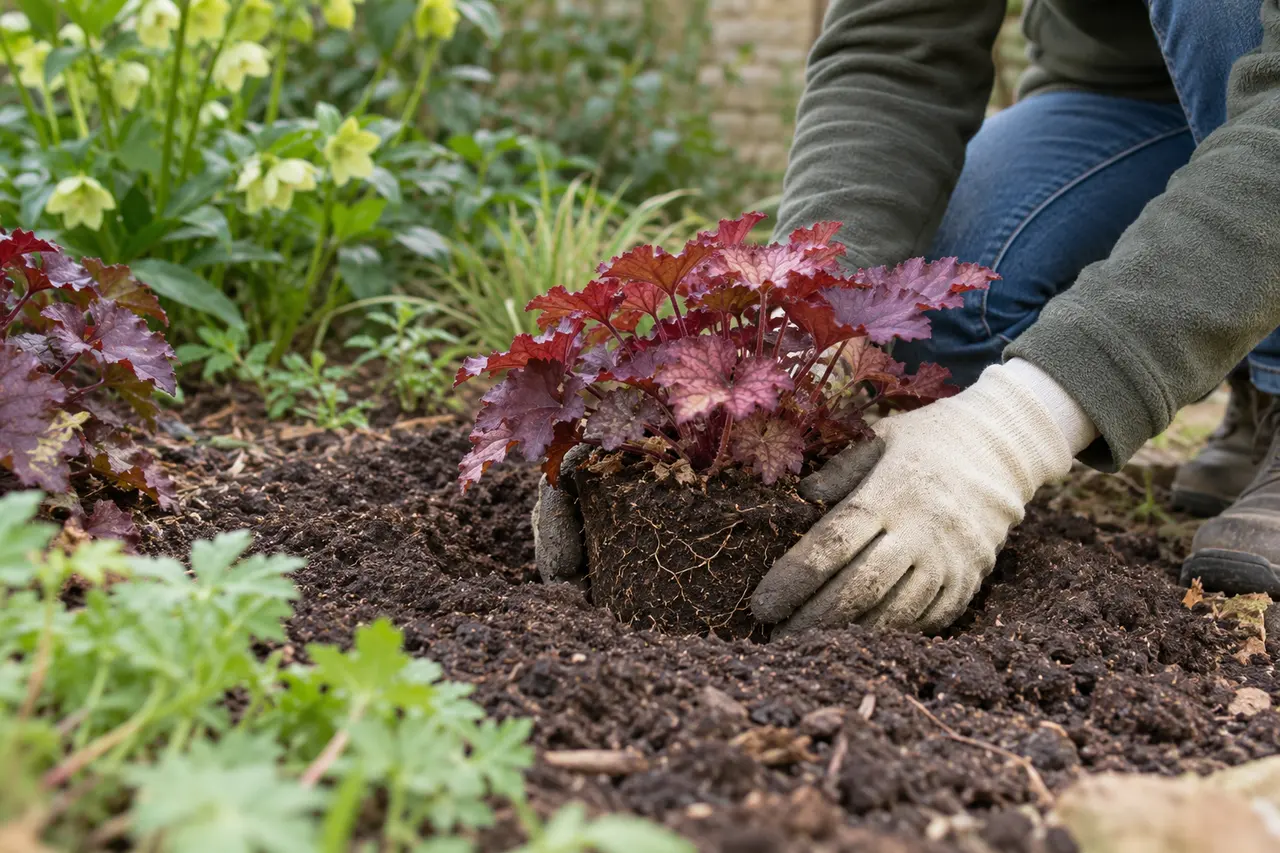
Where suitable replanting is included, we loosen the immediate soil and support the manageable rootball as it is raised. Its identity and original position remain associated with it on a suitable clean receiving surface. The remaining roots are kept together while the new position is prepared, preserving the retained material through each part of that small handling operation.
Our preparation provides appropriate room for the retained roots, with the plant returned at a level leaving its crown at the surface. Soil is worked around the rootball to establish suitable contact, and the growing centre remains clear above that fill. We review the seating as the material is settled, keeping the plant’s actual base visible within the finished position.
Suitable follow-up watering responds to the plant and receiving conditions, allowing settlement while the prepared soil stays in place. We then review the finished level and support, attending to any sunken crown or remaining void. This joins placement and water care within the completed operation, leaving an identifiable soil line for later checks as the plant settles further.
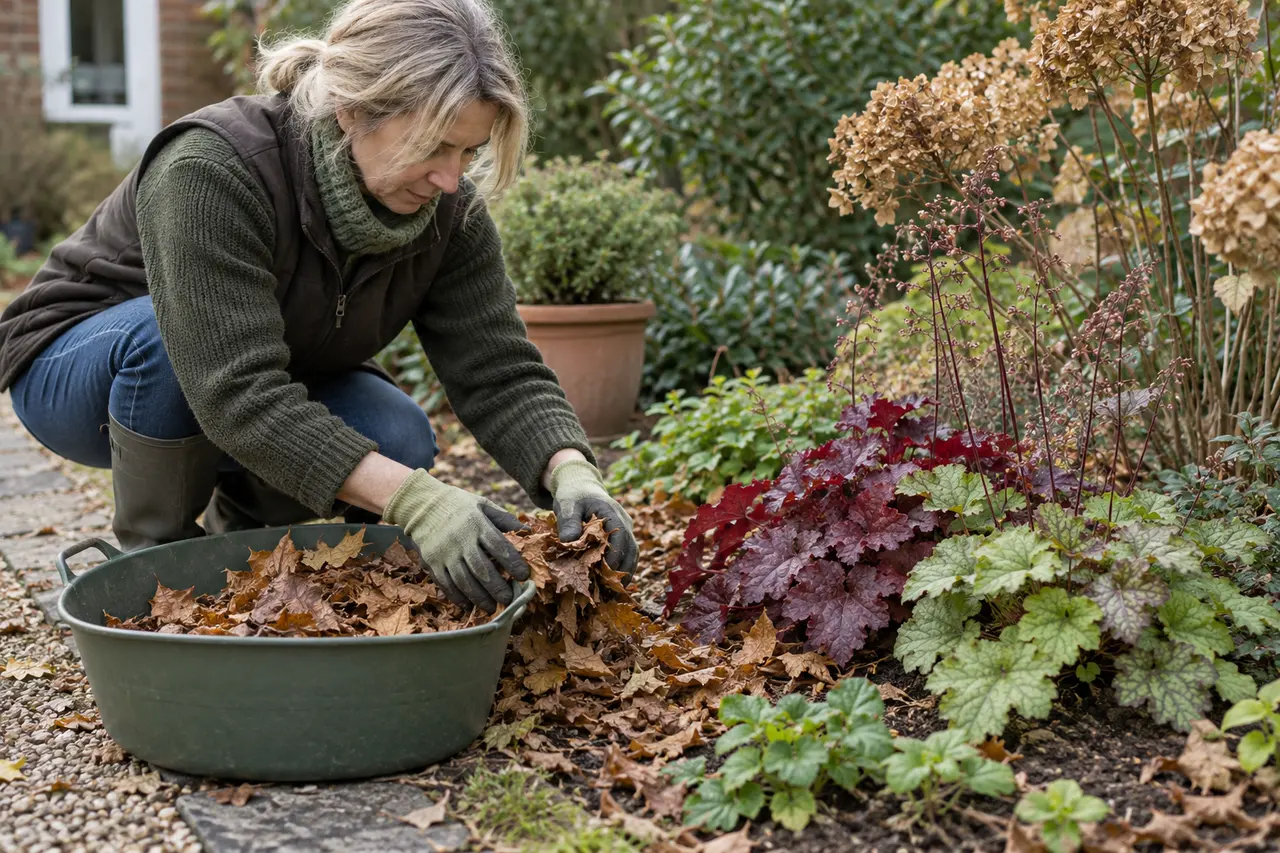
Collection around newly seated growth
A clear margin without reopening the root position
We gather fully detached leaves from the accessible surface around the finished soil line. Small pieces between low stems receive controlled hand attention with the newly seated clump stable. The approach follows the fragment’s position, keeping the surrounding working view clear as each portion is retrieved and leaving the retained plant ready for subsequent care at its established level.
A connected garden clean-up keeps useful bed soil distinct from material selected to leave. Displaced soil on the path and working surface is gathered for its appropriate return, with unrelated waste separately identified. This retains the prepared planting material through the collection and leaves the crown’s finished level visible once tools and receiving containers are cleared from the area.
Our removed-material arrangement follows detached foliage and other identified waste, with any plant-health concern recorded separately from ordinary litter. We lift the gathered load by a suitable route clear of the new position. The finished base then remains visible and stable, with its prepared soil retained as the rest of the collecting arrangement leaves the worked edge.
Adjoining grass kept as a separate surface
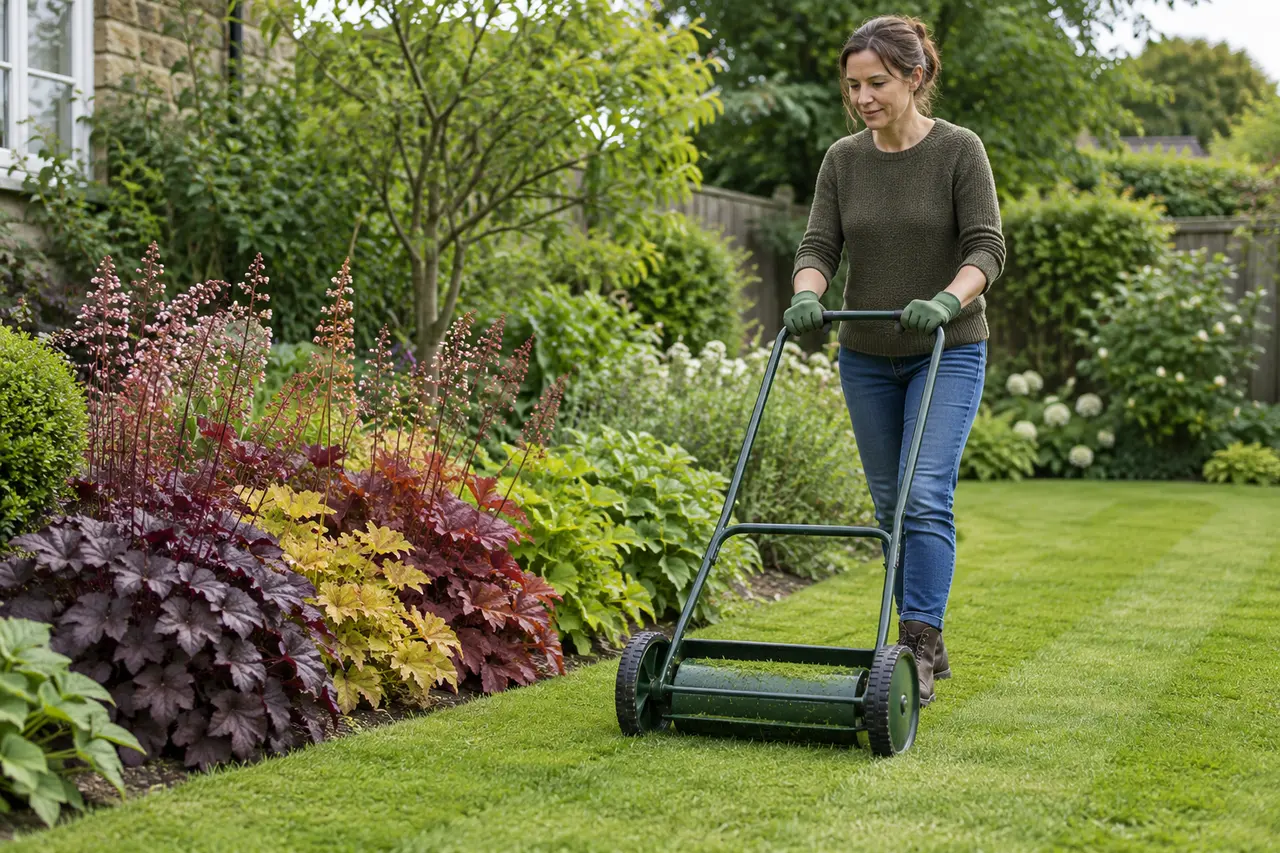
Mowing around the worked planting position
We establish the recently attended soil’s extent before lawn work. The repositioned shallow roots retain a clear planted area while mower and operator movement stay on suitable established turf. Our route provides room for the whole equipment pass beside that boundary, leaving the new position outside its wheels and repeated standing places while the grass receives its separate cut.
The grass cutting follows turf ready for the operation. Bags, collectors and loose tools stay in suitable places clear of the new clump during emptying and finishing. An accessible narrow margin can receive an appropriate separate method, keeping the ordinary lawn result connected to the available grass and the planted surface beside it undisturbed.
At the finish, loose grass is collected from the open margin where needed, leaving the heuchera crown visible at the intended height. Fresh clippings are not allowed to form an incidental thick covering over that base. The two neighbouring surfaces retain different treatment: the grass has its suitable cut while the soil position remains undisturbed for the plant to settle and establish contact.
Hedge cuttings above low clumps
Collection and handling outside the foreground planting
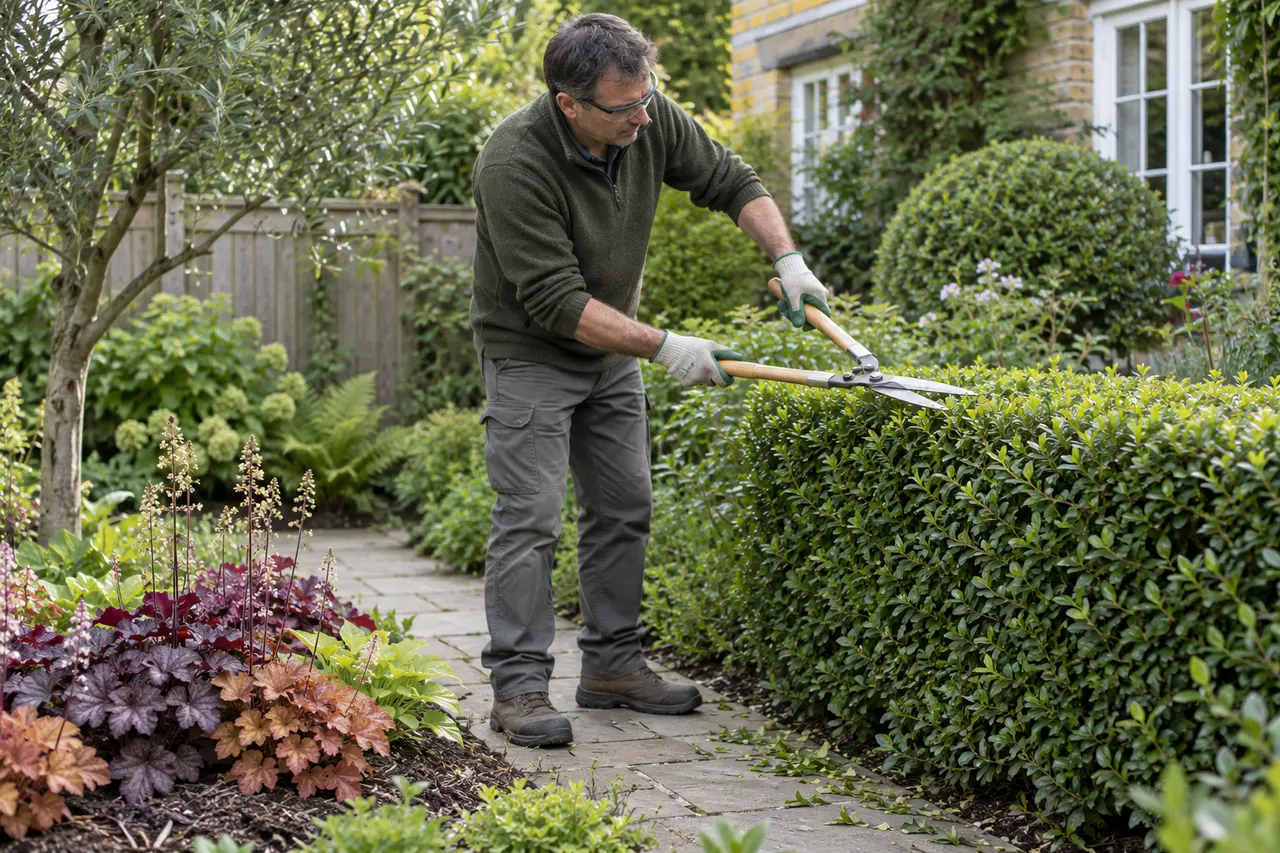
Our hedge preparation identifies a receiving place for its load clear of low heuchera foliage. A suitable route beside the bed keeps sheets and tubs off newly seated positions. The arrangement accounts for later lifting as well as initial collection, allowing the boundary fragments to be gathered and moved while the prepared clumps remain settled in their own soil.
The cutting operation follows firm supported footing and a face within controlled reach. We check the affected vegetation for nests being built or used and postpone disturbing work where necessary. Blades stop before receiving material is moved, and the handles remain clear of low foreground growth. This keeps the higher hedge task separate from the plants beneath it throughout the active pass.
After cutting, we retrieve accessible fragments in manageable portions from the surrounding surface. The clumps remain in their established positions as the receiving arrangement is lifted clear. Any difficult remaining portion has an identified approach of its own, keeping the finished planting available for continuing care while the hedge collection is completed around its retained footprint.

Observation through subsequent settling
Later care without unnecessary repeat lifting
Our later seasonal care can review the soil line and any movement around the base after settlement. That observation remains proportionate: an intact clump is not pulled up merely to demonstrate that roots are developing. Suitable moisture attention and accessible weeding follow the receiving position, allowing the plant to remain seated while the surface around it continues to receive practical attention.
Foliage can develop while new root contact is establishing. Our subsequent handling keeps equipment and waiting loads clear of that position, with suitable hand attention around the visible base. If renewed looseness or another change appears, we assess the actual condition using the earlier reseating record as context. This gives the next plant-care decision a known practical starting point.
Further services around the low-planted bed
Planting colour related to the receiving position
Our planting design relates heuchera foliage colour to the selected cultivar’s requirements and actual exposure. Pale and golden leaves contribute to the arrangement alongside their suitable growing conditions. We consider the plant with its neighbours and receiving position, giving the visual composition and continuing care a connected basis as the chosen specimens develop within the bed.
The handling plan for authorised boundary cuttings
Where authorised tree work concerns a neighbour’s overhanging branches, our material arrangement records ownership alongside the operation. The cuttings are offered back to their owner, who may decline them, and the resulting destination is kept clear. That gives the gathered load its appropriate responsible handling while the completed branch work remains distinct from the subsequent collection decision.
A usable water-supply route through the gateway
Our jet washing setup follows the supply hose through the gateway and the movement needed by people using that opening. We position the line to retain an open feed clear of sharp kinks or gate pressure. The passage and connection function together through the operation, with the equipment receiving water while the agreed access remains practical beside the active cleaning area.
Retained gutter guards refitted as specified
Where guard removal is specifically included for access, our gutter-cleaning work arrangement records the intended refitting of the retained parts. Sections and fixings return according to their design in the appropriate profile. The finished channel and cover are reviewed together, leaving the component positioned for its intended role after the deposit beneath it has received the agreed clearance.
Product identification for retained festive lights
Preparation around a Christmas tree can retain model details for a reused light set so current manufacturer or official recall information is available. Applicable instructions remain connected to the identified product and any relevant recall status. This provides a clear factual basis for the set’s appropriate use alongside the display, with the actual equipment and its information distinguishable at handover.
Specified reseating and its preparation
General gardening time follows the selected clumps and surrounding tasks. Confirm any growing material, supplies and removal arrangements separately in the work proposal.
| Gardening time | Guide rate |
|---|---|
| First hour | £83 |
| Each subsequent hour | £65 |
GBP guide figures. Confirm the complete work, materials, outgoing waste, VAT and relevant parking, congestion or access costs.
Questions about our heuchera care
How do you treat an ageing woody specimen?
We assess the living growth and roots of an ageing woody specimen before selecting suitable renewal or division. Its condition remains distinct from a healthy small clump lifted slightly from the soil. The chosen operation follows the actual base, keeping its retained material and receiving level clear while any appropriate further plant task is identified for that individual specimen.
How is a possible rust concern recorded?
Our inspection distinguishes raised orange-brown pustules, particularly beneath leaves, from the flat marbling of many cultivars. Both leaf surfaces and the actual condition remain visible for assessment. Any relevant concern is recorded with the plant for appropriate attention, while ordinary collection continues around the detached litter and the retained foliage remains identifiable.
What happens to the fine flowering stems?
We identify the fine flower stems and their role in the display before selecting any height change around the foliage mound. Heucheras can carry small blooms above their leaves, so the intended flowering material remains clear through the soil-level task. Its appropriate subsequent treatment follows the plant’s actual stage alongside the finished position of its crown and roots.
How does winter leaf loss affect your tidying?
Our winter attention follows the actual cultivar and condition. Some heucheras lose foliage in colder weather, when old leaves can protect the crown and shelter overwintering insects. Suitable spring tidying can then follow that retained cover. We keep the current base and living growth identifiable through the seasonal sequence, giving each stage the appropriate close plant attention.
The right operation for the base actually present
Our gardening service keeps the lifted clump distinct from an ageing woody plant or one with damaged roots. In Becontree, that focus directs the suitable reseating or renewal while the adjoining grass, hedge load and surface collection remain clear of the retained low planting.