

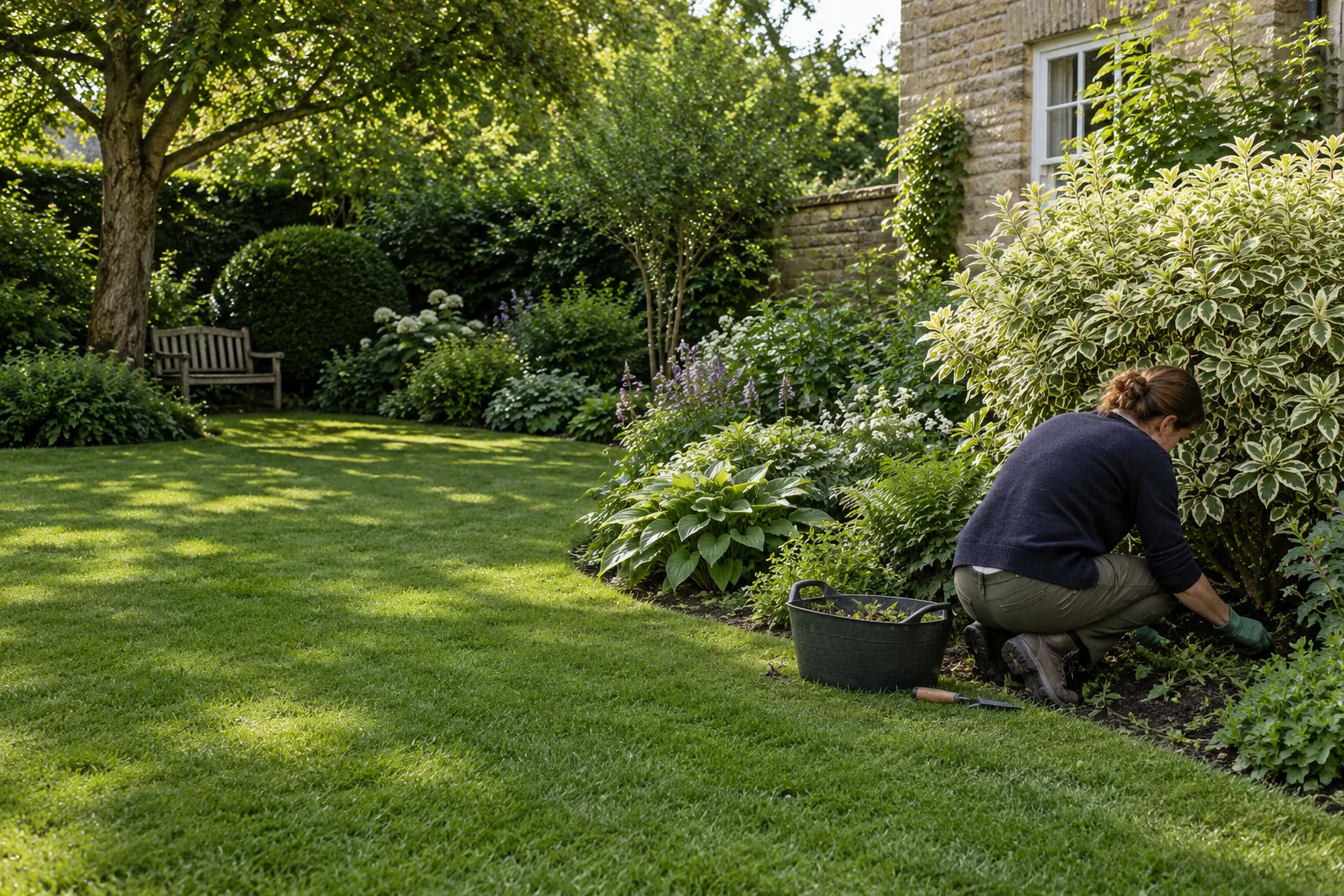
Selective care for the foliage you chose
Gardeners Wanstead
Our Wanstead gardeners maintain variegated shrubs through selective attention to the actual shoots. A suitable cut follows the origin of identified plain-green growth while the wanted patterned foliage remains on its framework. The service also attends to accessible weeds, adjoining grass and the detached material produced by the work, giving the retained shrub care within a useful maintained garden.
- How do your gardeners identify a reverted shoot? We examine the leaves along the stem and its origin, distinguishing wholly plain-green growth from normal green areas within a variegated pattern.
- How does your paving clean protect an airbrick? We keep the washing route and displaced dirt out of the ventilation opening, preserving its purpose rather than using it to receive rinse water.
Identification before selective removal
Does your service remove every green area of a patterned shrub?
No. Our gardener distinguishes normal green parts of the cultivar's leaf pattern from a wholly plain-green shoot. The relevant growth is followed to its origin before suitable pruning is selected for the plant. This gives the operation a clear target without cutting individual green patches from otherwise normal leaves or treating differences between adjacent leaves as proof of a reverted branch.
How does your selective work differ from an outer trim?
Our selective operation traces the identified plain-green shoot into the framework and follows a suitable removal point for that shrub. An outer trim can shorten its visible end while leaving the origin in place. The team therefore keeps the plant's identity, response and wanted growth in view, with the condition inside the crown determining the cut.
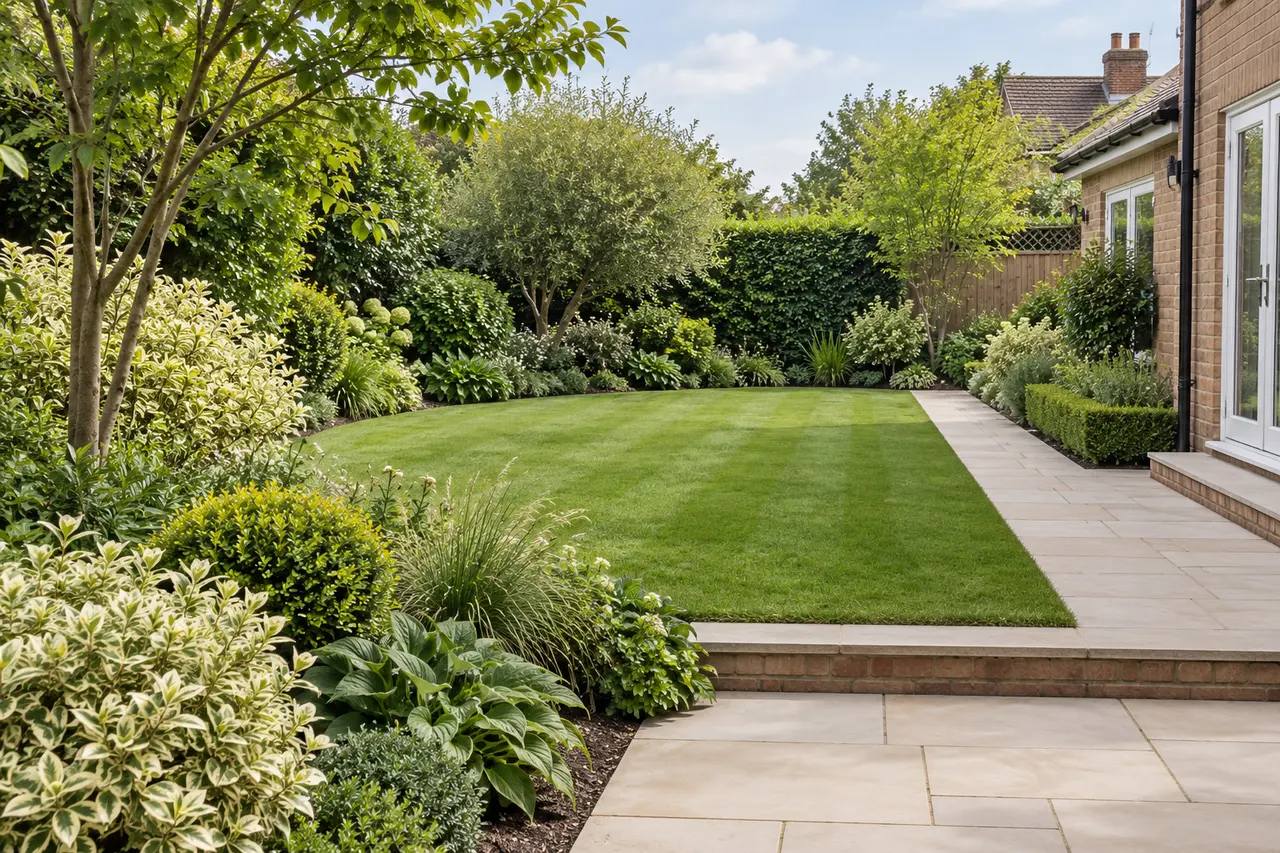
The plant's pattern and individual shoots
Normal variegation and reverted shoots
Before work starts, the gardener identifies the foliage pattern belonging to the chosen plant. Green centres, pale edges and irregular splashes can all form part of normal variegation. The relevant leaves need not look identical for the shrub to retain its character. Our assessment follows that identity across the growth.
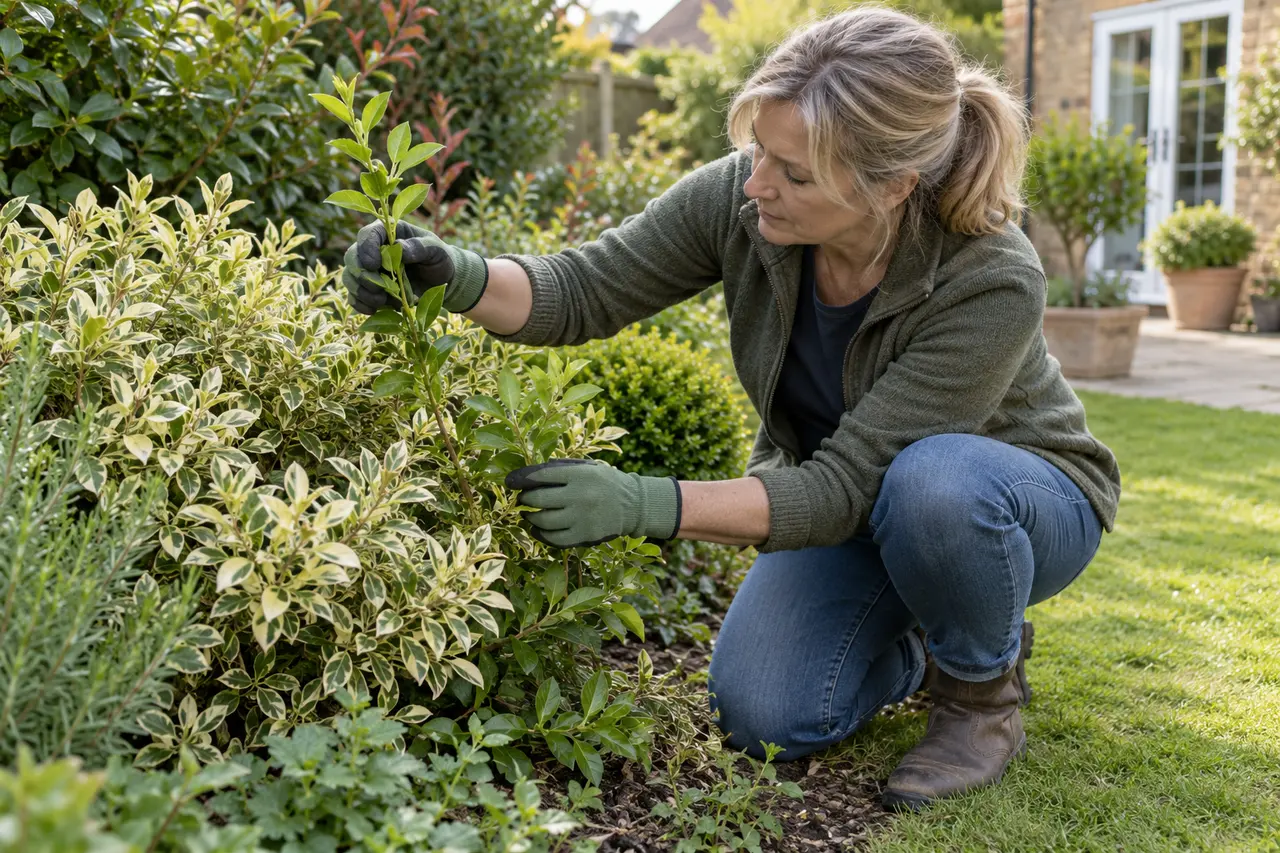
Identified Plain-green reverted shoots receive a different response because they can grow vigorously and gradually dominate the retained plant. Our inspection follows several leaves along the suspect stem and its connection into the framework. This establishes whether the target is a coherent piece of unwanted growth. The subsequent operation can then address that shoot.
Our garden maintenance retains the selected foliage while tending the surrounding bed. Existing cultivar labels remain associated with the shrubs they identify, and the selective work can be noted for subsequent care. A new plain-green shoot is then assessed against that known plant on the following visit. This keeps the service focused on actual changes in its growth instead of repeatedly reconsidering the whole specimen as though its intended appearance were unknown.
- Several leaves inspected along the same suspect shoot.
- Plain-green growth traced to its origin before the suitable cut.
- Normal green areas retained within the chosen leaf pattern.
- Existing cultivar labels kept with the plants they identify.
- Detached shoots retrieved from neighbouring retained foliage.
A targeted pruning operation
The cutting point within the retained framework
The position of confirmed reverted growth determines the handling required to reach its origin. An outer shoot may be readily traced, while a stem woven through several branches takes closer separation. Our gardener moves the retained foliage only as needed to see the connection. The unwanted tip is not used to pull the surrounding framework apart, keeping the intended removal distinct from accidental damage to the branches around it.
For a suitable shrub, the operation removes reverted growth to its appropriate origin or to growth carrying the wanted variegation. Timing and the actual cut follow that plant's response. The service distinguishes this selective work from an overall reduction: a shoot unwanted because of its leaf character and a different branch making the specimen too wide are separate targets. This keeps the treatment related to its purpose throughout the operation.
After the cut, the detached piece is lifted along a controlled withdrawal route and checked clear of the crown. This avoids a severed tip remaining among the healthy leaves and later turning brown there. Selective removal can expose an uneven area immediately. Our completion preserves the appropriate retained framework.
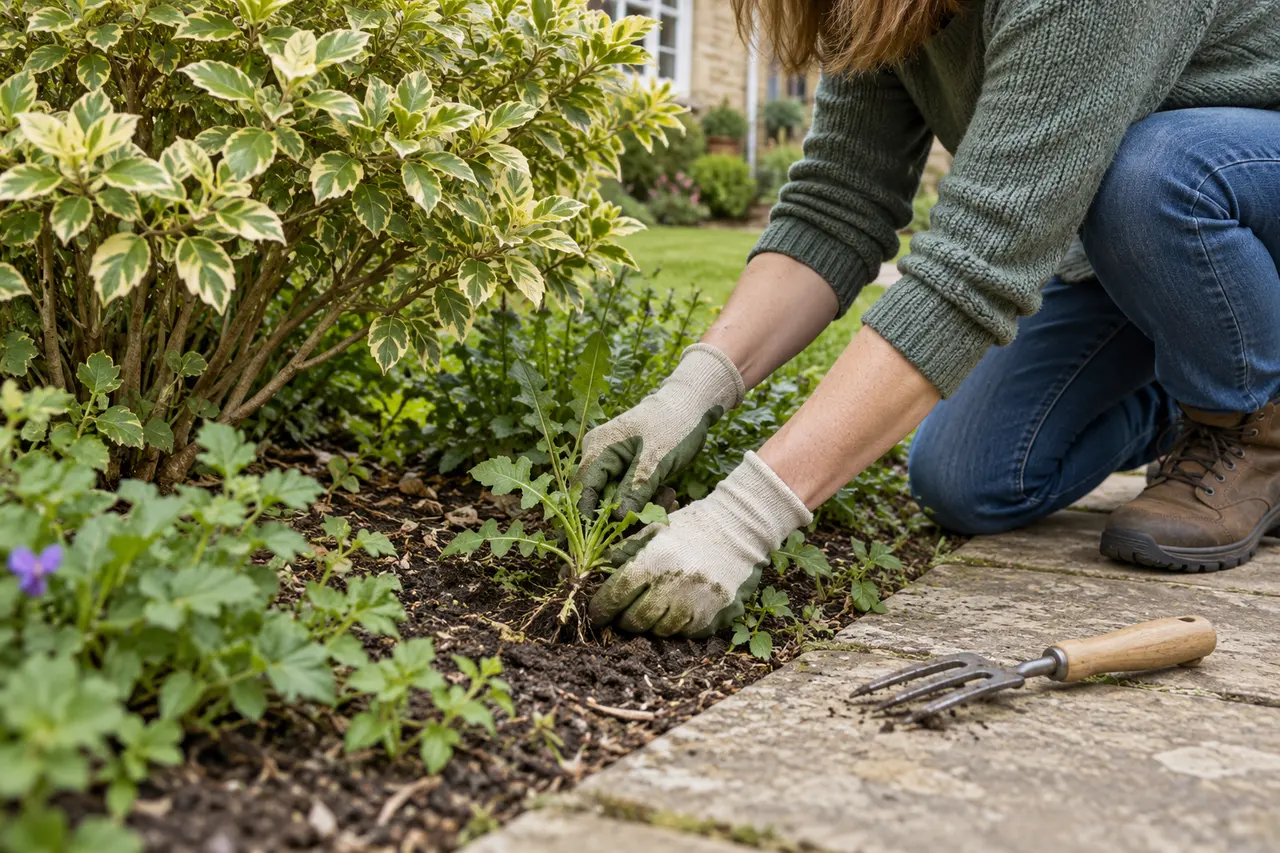
Hand care around the retained base
Accessible weeding beneath the low canopy
A low outer canopy can hide weeds while the shrub still looks neat from the path. Our gardener works through the available openings, distinguishing separate weed stems from the retained woody plant. Accessible unwanted roots are lifted with a suitable tool and controlled handling. The shrub's branches remain part of the plant being protected.
The exposed bed surface is treated with attention to the roots and neighbouring plants already occupying it. Opening a view beneath the shrub does not itself justify deeper cultivation. Where unwanted growth is entangled with a retained root mass, the immediate method is adapted to that restriction. This gives the customer useful targeted weed control without a pull through the whole mixture turning ordinary bed care into disturbance of the established specimen.
Removed weeds are gathered before the next pruning operation can mix them back into the bed. Labels, ties and stones remain separate from the green collection as the material is handled. A suitable existing mulch layer is distinguished from the loose unwanted debris. Our finish therefore follows the retained bed arrangement, leaving useful cover in place.
Mowing beside the planted edge
A controlled grass margin beside the shrub
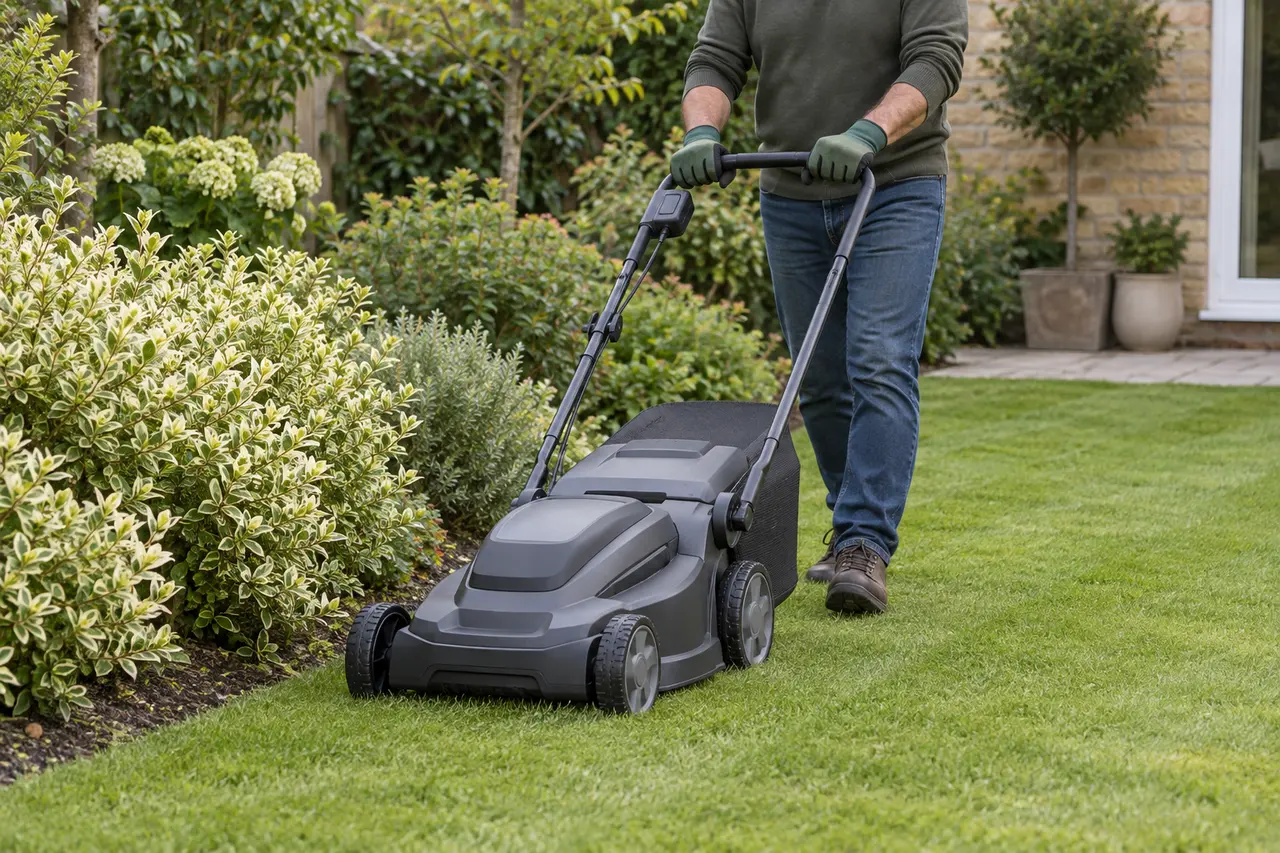
Pale-edged leaves extending towards a lawn can obscure the distinction between foliage and grass. Our preparation identifies the actual margin and removes detached twigs before mowing. The mower stays on supported grass, with a suitable working arrangement keeping retained shoots clear of the cutting area. This establishes the real available pass.
The adjoining grass receives controlled finishing where it can be reached suitably. Repeated equipment contact can injure woody stems even while the outer leaves appear healthy, so the retained base remains protected during that operation. An obscured line is approached with an appropriate method. Any intended change to the shrub's overhang remains a considered pruning decision, separate from the action needed to finish the grass beside it.
Our lawn-care service also follows the growing surface's actual condition. Scattered thin or bare areas are assessed separately from the routine cut before any recovery work is proposed. Nearby patterned foliage does not establish their cause. The team therefore distinguishes the lawn's needs from the bed's requirements.
Different tools for different results
Separate hedge and specimen-shrub treatments
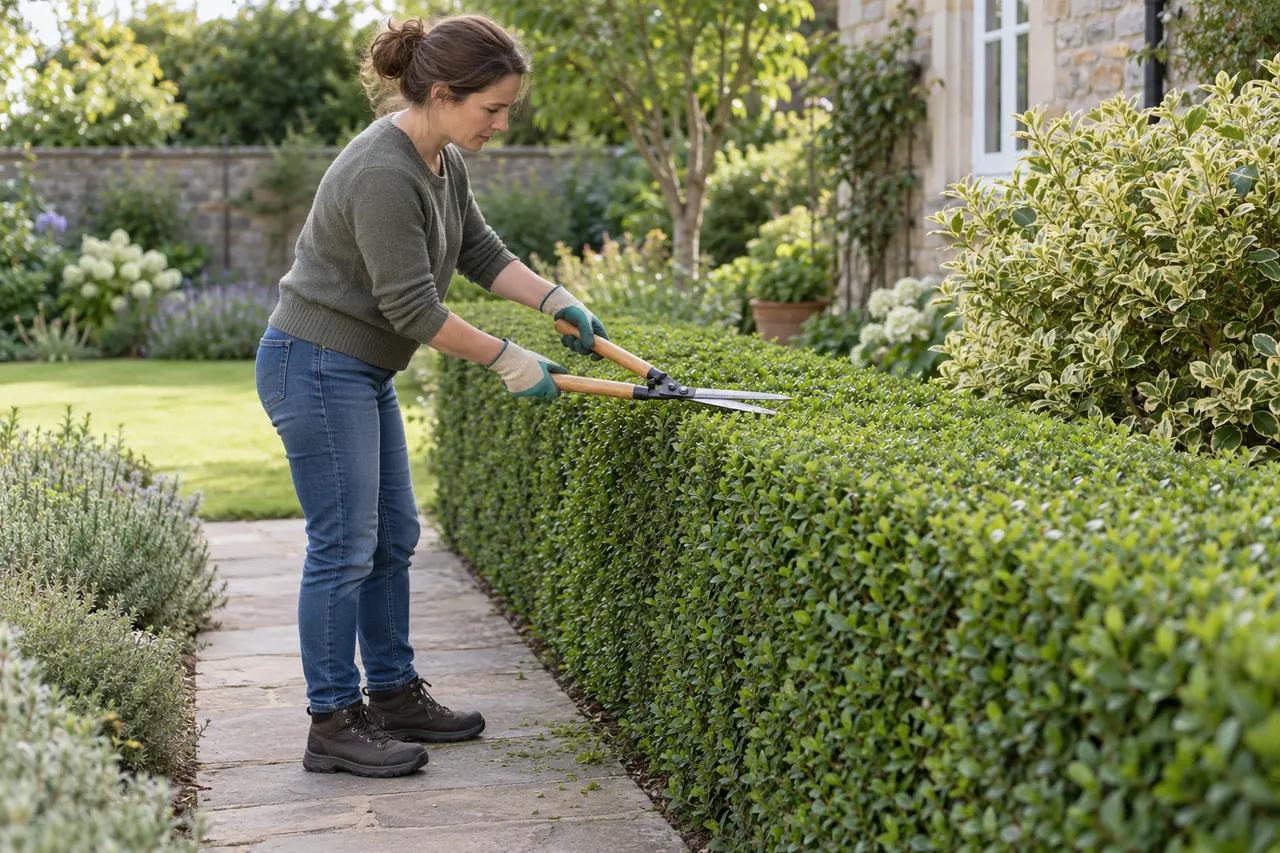
An even hedge face and one selected shoot inside a variegated specimen call for different operations. Our team follows those aims with suitable tools and an identifiable retained line or framework. A broad pass across both plants could alter the specimen's natural form while leaving the reverted stem farther inside it. Keeping the tasks separate preserves the intended result for each plant instead of letting the adjacent hedge dictate the specimen's treatment.
For suitable reachable hedge work, the gardener identifies the available extension and the line being retained. The plant's response to old-wood cutting matters where a thin or exposed patch appears, so that area is not automatically deepened to make the face match. Trimmings are collected as the operation progresses and kept clear of the separate specimen. This leaves its wanted foliage recognisable and accessible as the neighbouring boundary is finished.
Nest checks relate to the planting actually affected, including the interior of dense shrubs and hedges. The work changes where an active nest could be disturbed; a calendar date does not establish that a plant is clear. Our team keeps a postponed section distinguishable from unfinished ordinary cutting while completing other suitable tasks around it. This provides an accurate account of the boundary attended to without treating wildlife restrictions as permission for a different cut.
Collection reveals the retained framework
Detached shoots collected from the crown and bed
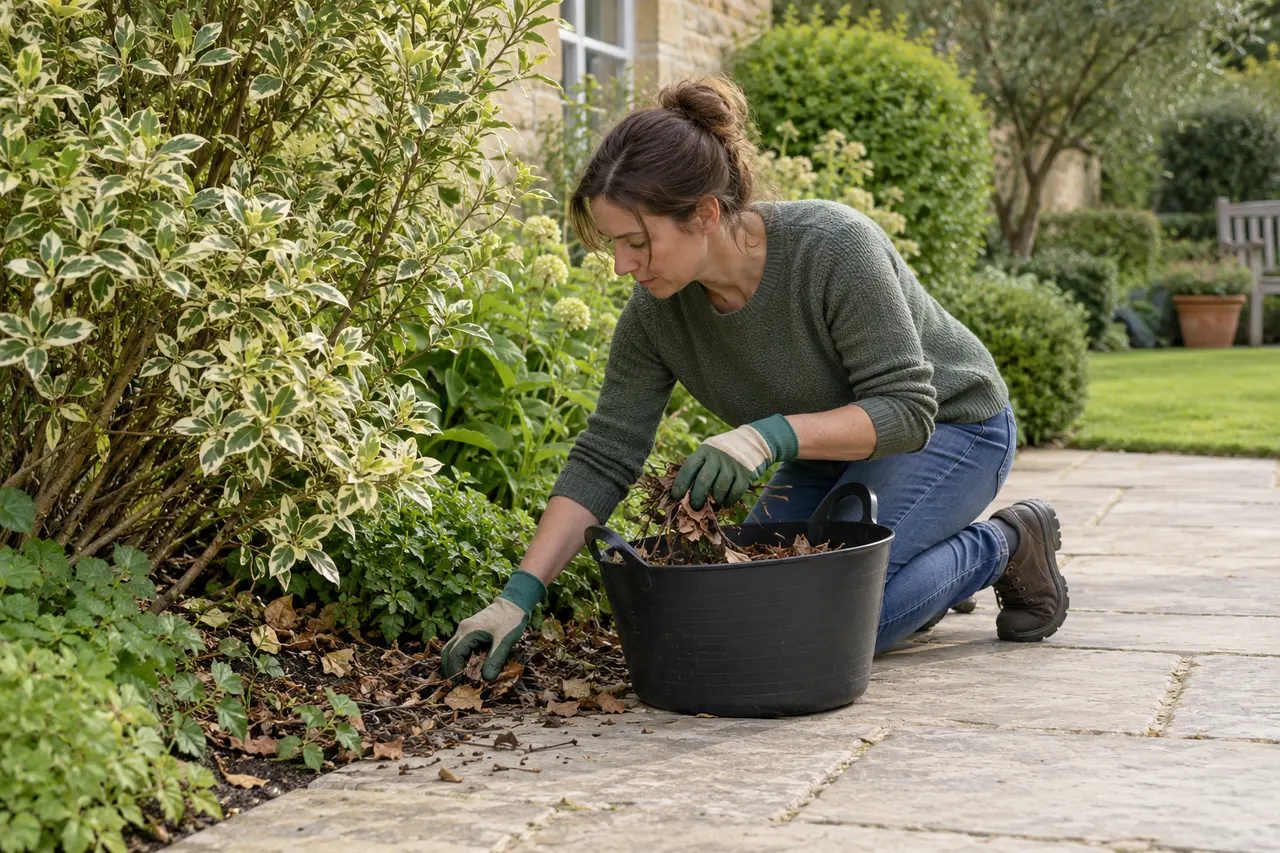
Detached pieces can blend into patterned leaves and obscure the view of what remains attached. Our garden clean-up retrieves those loose cuttings from the plant and the surrounding surface after selective work. The material is lifted with care around the retained low crown. This gives the customer a clear finished view without vigorous raking through healthy foliage merely to achieve a faster-looking empty surface beneath it.
Collection distinguishes the actual materials as they emerge from the bed. A plastic identification label or old tie is kept apart from suitable plant cuttings. Our garden-waste handling follows that mixture and the specified destination. This links the clean-up to the contents found in the garden, leaving retained useful items identifiable and the outgoing load clear as it is gathered.
Our returning seasonal upkeep checks for new plain-green shoots while their growth is visible. The plant identity and earlier selective operation inform that attention without prescribing another deep cut at every visit. Any new growth is assessed at its own connection and at a suitable time for the shrub. This keeps the follow-up proportionate to what has appeared while the garden's mowing, weeds and loose material receive their ordinary continuing care.
Further work for the garden's layout and surfaces
Foliage contrast within the planting design
Our garden design considers where a variegated plant provides a useful focal point and where plain foliage offers a quieter background. The scale of its pattern is viewed beside neighbouring plants and from relevant seats or windows. This gives contrast a deliberate position instead of repeating patterned leaves throughout every gap. Cultivar identity and growing requirements remain part of the selection, connecting the visual arrangement to the plants suited to occupy it.
Tree assessment follows the location of sap flow
Our tree surgery distinguishes sap appearing at a fresh pruning cut from unexplained fluid emerging elsewhere through bark. In susceptible trees, pruning at an unsuitable time can lead to bleeding at the wound, so its location and when it started matter to the proposed response. Future work follows appropriate species timing. A wound is not repeatedly enlarged as a general remedy, and persistent or otherwise concerning symptoms receive appropriate further consideration.
Paving cleaned beside retained ventilation
During our paving clean, the airbrick at a wall's base remains a ventilation feature. The working route keeps the jet and displaced dirt away from its openings. The preparation preserves that purpose without blocking the vent to conceal it from the wash. This relates the cleaning method to the existing building edge, while keeping an unseen space behind the opening distinct from the surface being cleaned.
Gutter deposits distinguished from roof components
Our gutter cleaning separates loose deposits from attached material belonging to the roof edge. Dark material there may be underlay or an eaves support tray rather than accumulated leaves. The gardener does not pull away a roof component to produce an apparently empty channel. Where a damaged or displaced part becomes apparent, it is identified for appropriate separate attention, preserving the distinction between clearing debris and changing the arrangement directing water into the gutter.
Living Christmas trees and later planting
Our Christmas-tree delivery request distinguishes the ordered rooted item from any later garden planting. Where that further operation is included separately, the plant's original root level, suitable position and actual conditions govern the work. The trunk is not deeply buried to disguise the outline of its former container. This treats it as a living plant with growing requirements.
Guide rates for our selective maintenance work
General gardening guide rates apply to the agreed maintenance time. Tracing selected shoots, working beneath retained foliage and gathering the cut pieces are part of the work to allow for.
| Gardening time | Guide rate |
|---|---|
| First hour | £83 |
| Each subsequent hour | £65 |
GBP guide prices. The quotation should establish work, waste removal, VAT treatment and any applicable access or parking charges as a complete arrangement.
Questions about our variegated-shrub care
Does your feeding service restore colour to reverted growth?
Feeding does not turn an identified reverted shoot back into the selected variegation. Our suitable selective pruning addresses that growth for the particular plant. Any additional feeding follows the shrub's actual needs as a separate maintenance decision. This keeps the work relevant to the cause of the changed appearance instead of adding a product to a shoot that requires a different response.
How do your gardeners assess winter screening from variegated shrubs?
The actual species and cultivar determine whether the plant retains leaves through winter. Variegation describes the colour pattern and occurs in both evergreen and deciduous shrubs. Our assessment therefore distinguishes that pattern from seasonal habit when maintaining or planning a screen. Normal leaf loss in an identified deciduous plant is not treated by itself as evidence that the wanted foliage has reverted.
How is the shape handled after one reverted branch is removed?
Our immediate result follows the retained suitable framework, which can leave a temporary uneven area after selective removal. Further pruning is assessed against the plant's identity and intended form. The customer therefore receives the targeted operation and a clear view of its effect, with a broader size or shape change kept as a separate decision.
What does your follow-up cover if plain-green growth returns?
Our gardener traces the new shoot to its connection with the retained plant. Suitable attention follows that actual growth, the plant's identity and its pruning time. This lets later maintenance address a new development without repeating a general reduction or treating previous selective work as a promise that no further reverted shoots can appear.
Preserving the shrub's selected character
Our garden-care service follows the reason a patterned shrub belongs in its position. Attention to the source of vigorous plain-green growth helps retain that intended character without repeatedly shortening the whole specimen. The result is a considered retained framework with the foliage that gives it its place in the planting.