

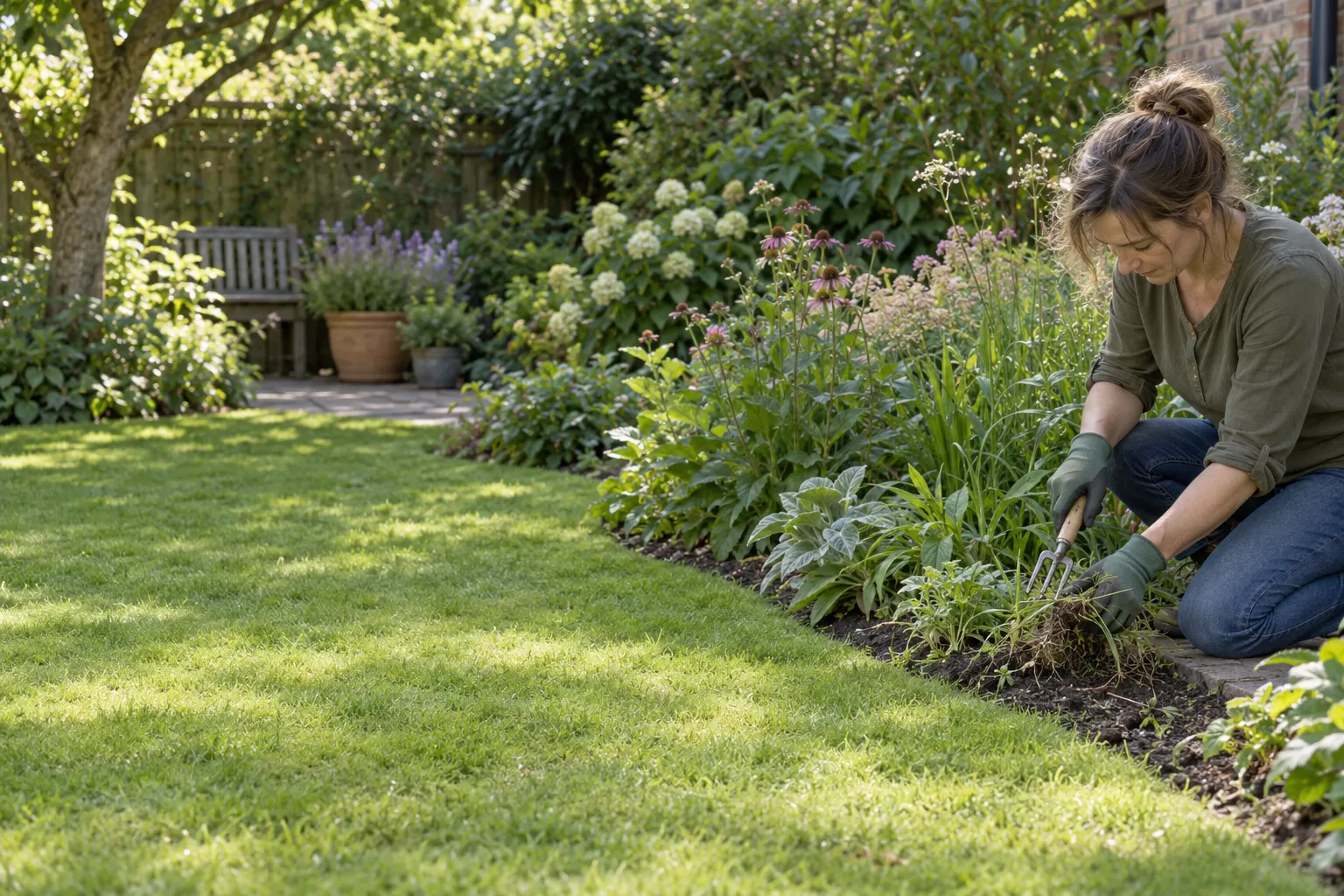
Selective border work following connected couch-grass growth
Gardeners Chingford
Our gardeners work on identified couch grass within retained planting, loosening accessible rhizomes and gathering the live fragments as the soil opens. We follow the connections between visible tufts, loosening accessible rhizomes and gathering the identified material through a controlled working patch. The surrounding lawn and hedge receive their own suitable attention, with planting material kept clear of the removed weed load.
- How do you approach a small new tuft? We identify its connection while accessible growth can be followed individually, before a denser rhizome network develops among the planting.
- How is a moved perennial checked? Our preparation keeps hidden couch-grass fragments in the rootball or soil distinct from the wanted plant before it enters another bed.
Connected weed growth worked around retained plants
What does your couch-grass hand work address?
We follow the identified shoot into its accessible underground connection, with the visible growth and retained surrounding roots guiding each hand movement. Living rhizomes can produce further growth, including from surviving fragments. Our work loosens and gathers the parts suitably reachable among the retained planting, leaving the completed extent and any remaining entangled area identifiable.
How do you preserve the established bed during weeding?
Our gardeners use suitable hand tools through manageable portions while neighbouring plants remain seated. Each accessible connection is followed before the next section is opened. Dense entanglement within a wanted rootball receives its own assessment, with any larger lifting and replanting identified as a separate suitable operation.
The unwanted shoot and its connection
Identified couch grass separated from retained narrow-leaved plants
We start at a visible shoot and its surrounding soil, establishing the particular unwanted growth before loosening its base. Ornamental grasses and other retained plants remain recognisable nearby. That identified growth gives the hand operation a clear starting point while ornamental grasses and other wanted plants remain distinguishable around the working area.
Our local loosening follows the pale rhizomes connecting the tufts. These underground stems can produce roots and new shoots, so one leaf cluster may represent only part of a larger living connection. We keep that working view open as accessible lengths come free. The visible gap left by one lifted tuft is not presented as evidence that all growth connected to it has left the bed.
A garden-maintenance booking can include this targeted border weeding with suitable positions for tools and the person following the roots. The identified couch-grass growth gives the operation its identity, while retained plants remain separate around it. An unfamiliar pale root is not cut merely for resembling part of the weed. The task progresses through material that can be followed and identified within the available space.
- Our hand work traces an identified unwanted shoot into its underground connection.
- Retained ornamental grasses remain outside the selected removal material.
- Accessible rhizomes are loosened through manageable portions with the retained root area and the next connection kept visible.
- Removed living fragments stay separate from plants and soil intended for reuse.
- Later attention follows fresh growth at the actual places already worked.
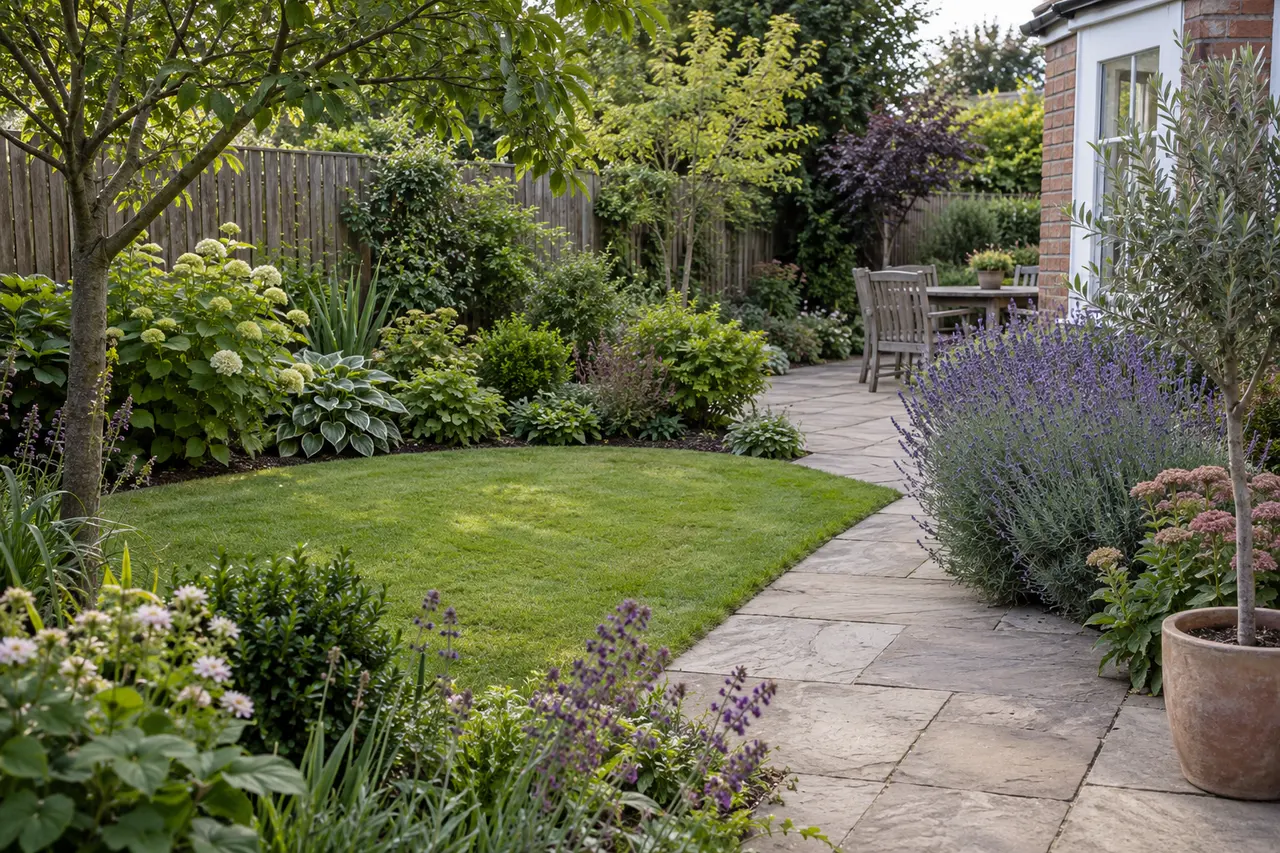
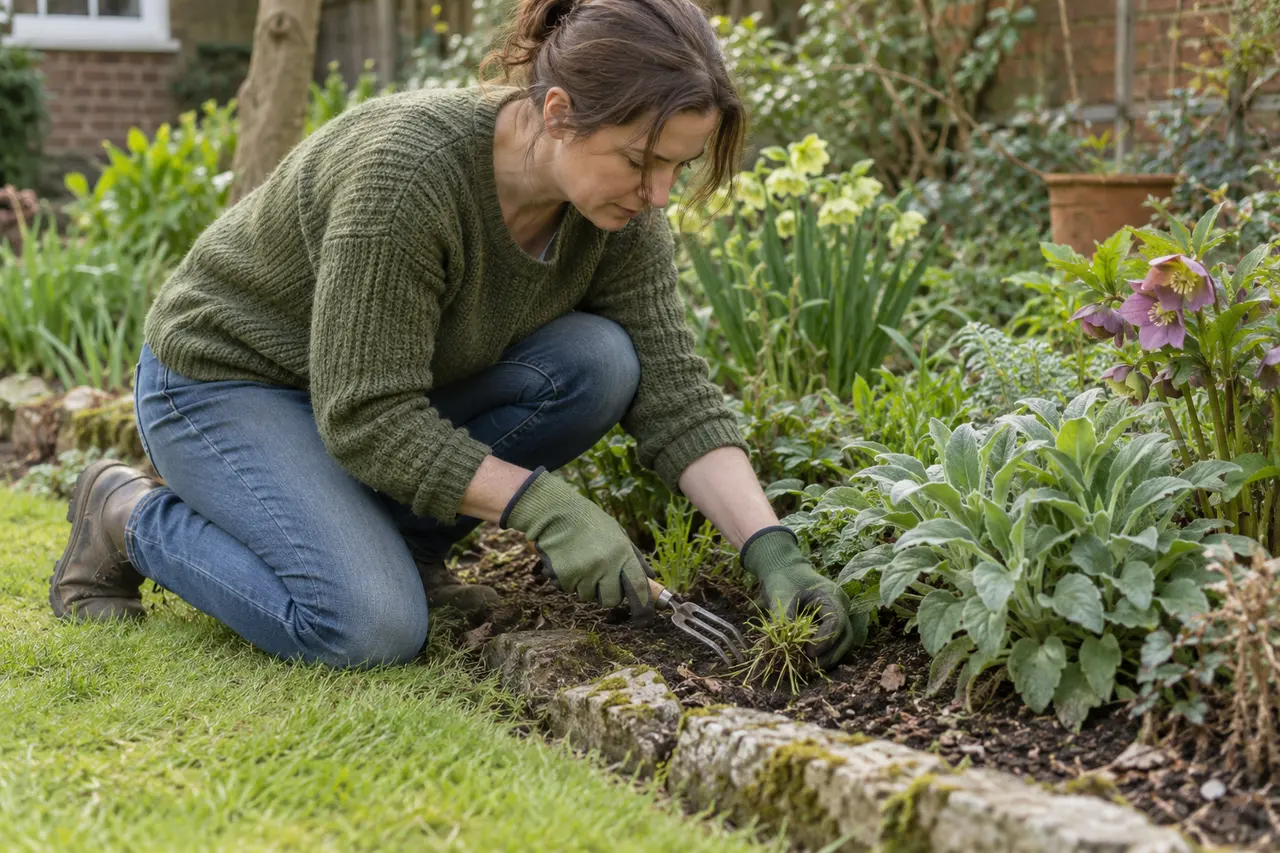
Controlled loosening within the planted soil
Accessible rhizomes eased out through a readable patch
We loosen soil around the identified shoot with a suitable hand fork before drawing out an accessible length. The tool supports that progression without using a retained perennial as a lever. An abrupt pull can break the connection and conceal the next living portion, so we work slowly enough to see where it continues. Completing a small readable patch gives the next movement a practical reference.
The preparation does not turn the whole border over simply to provide a cultivated appearance. Chopping rhizomes can leave more fragments capable of growing again, so our collection follows the sections actually lifted. Known shallow fittings and retained roots set the practical limits of the operation. Keeping the next connection visible is more useful than producing one broadly scraped surface whose remaining growth has become harder to trace.
Where the weed passes through a dense wanted rootball, we record that specific difficulty before extending the job. Any lifting would involve suitable handling of the retained plant, its receiving position and subsequent replanting care as well as the unwanted growth. Our accessible hand work can therefore proceed as its own defined task while the more substantial operation receives a separate appropriate proposal.
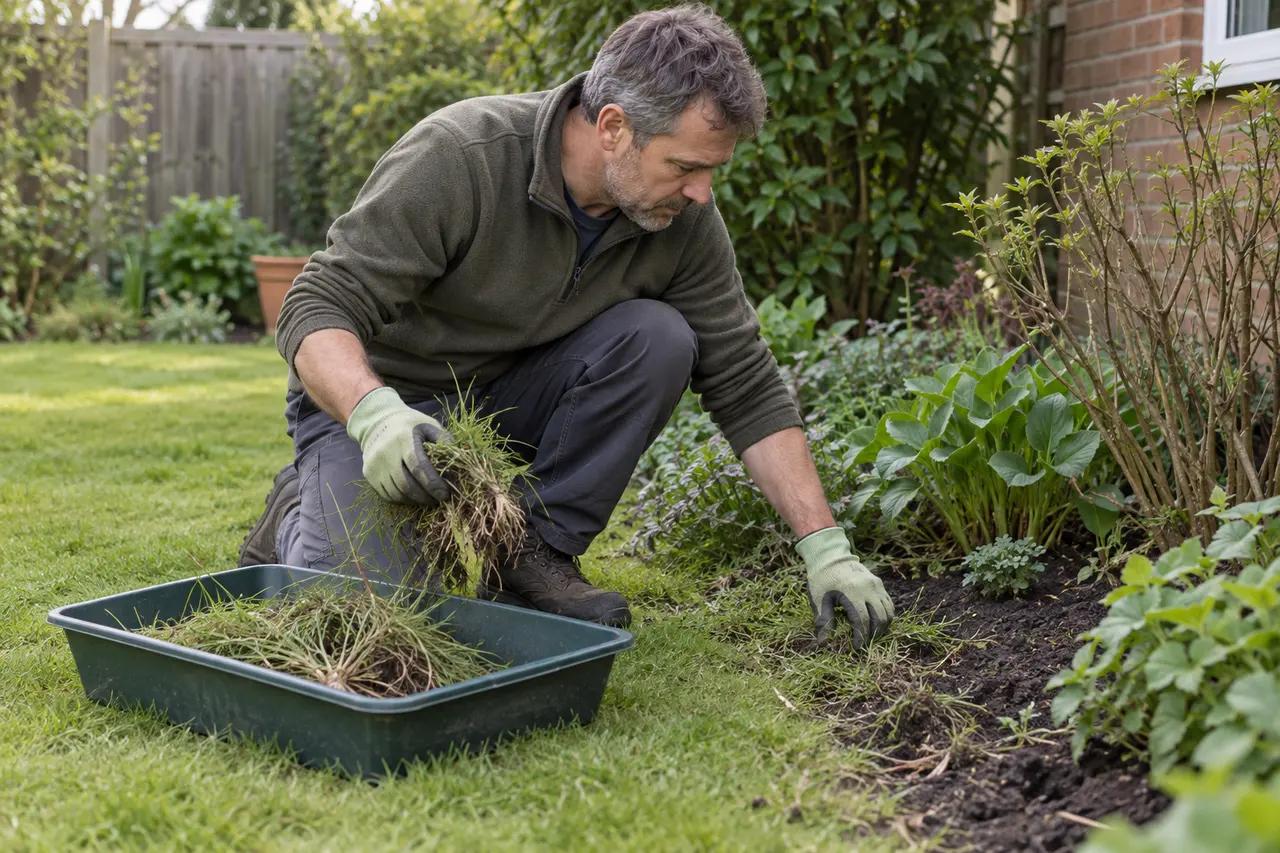
Living fragments kept in the removal load
Collection that avoids redistributing rhizomes with soil
We place lifted grass and its connected material in a suitable receiving position as the work progresses. Pale strands enter the identified collection as they are lifted, leaving the prepared soil available for inspection before the next portion is opened. Clinging earth is also kept connected to the load until its contents are understood, because transferring apparently useful soil can carry an unnoticed living fragment into the next bed.
Live couch-grass rhizomes and seedheads are kept out of an ordinary home-compost batch. Our garden-waste arrangements distinguish that load from leaves or other retained material intended for composting. The receiving container keeps those contents identifiable through their movement from the patch to the appropriate material destination.
A denser backlog may need a garden clean-up that first reveals the plants being retained before a wider area is selected for removal. We separate old pots, supports and unrelated objects from the vegetation. The loading position stays clear of the plants recovered during opening, preserving their visibility and access through the last collection movement.
Turf maintained beside the weeded bed
A distinct lawn cut at the existing border line
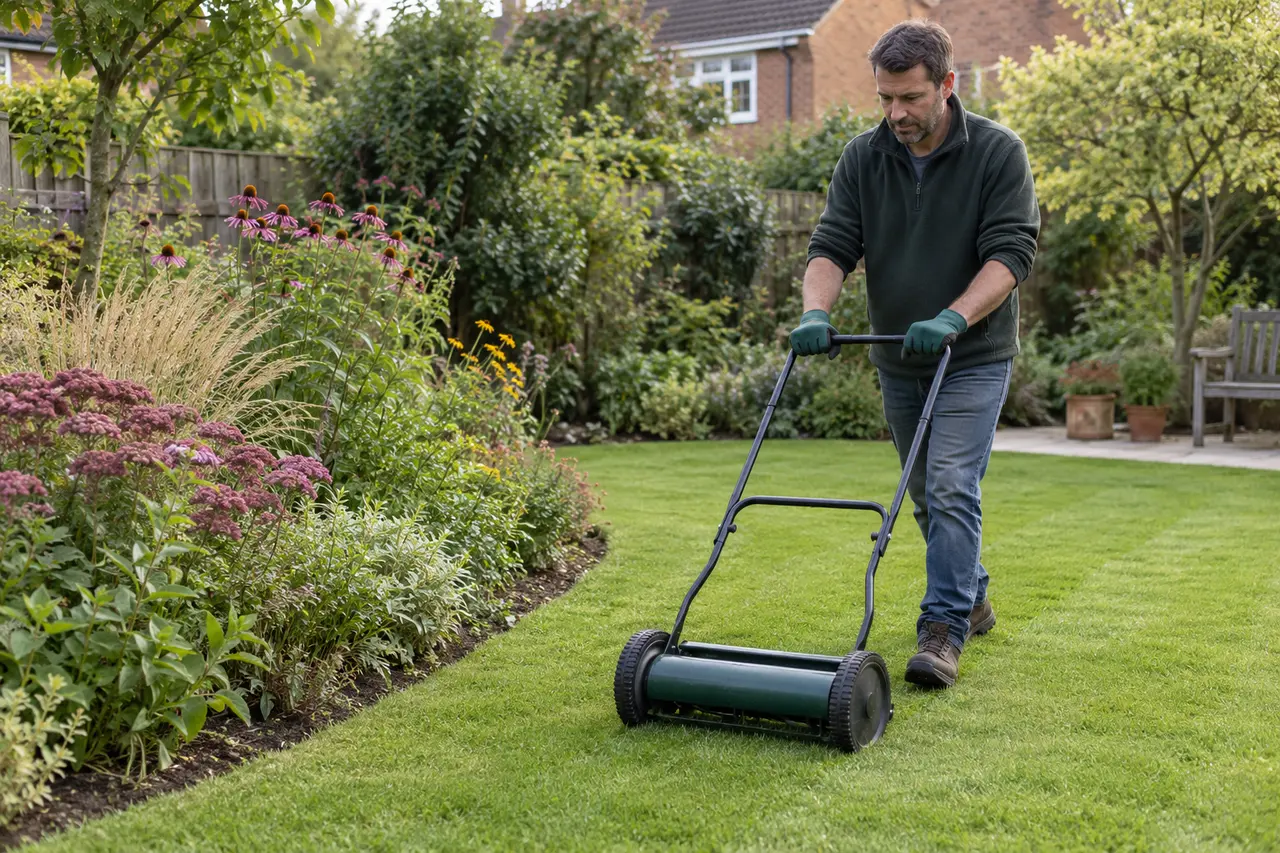
Our hand-weeding area and the mowing surface retain separate limits. Root fragments and tools are collected clear of the machine’s route before cutting starts, and the pass follows the existing lawn edge. A tuft selected for removal among border plants does not set the treatment of all grass on the property. The intended bed retains its planted-soil boundary beside the separately maintained lawn, with both receiving areas understandable at the finish.
Our lawn care can maintain suitable accessible grass while the border receives its own detailed operation. Ground and visible objects are checked, the cut follows the receiving turf and clippings receive the included handling. Any recovery proposal remains separate. The finished interface leaves the weeded soil available for inspection and the grass cut completed with its clippings handled through their appropriate route.
The hedge load above the soil-level task
A clear working view beneath the screen
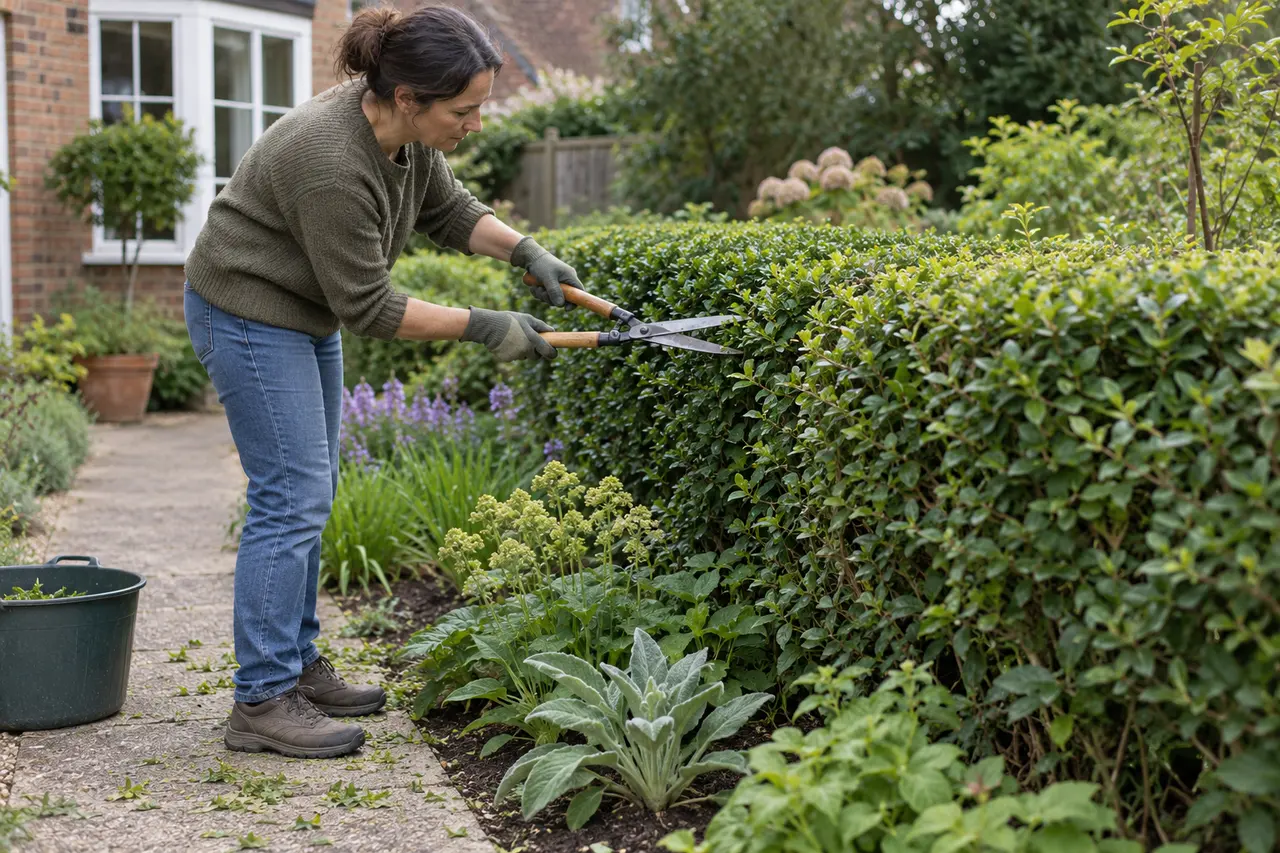
Where hedge trimming shares the area, our sequence accounts for its fragments before following the next underground connection. Small pieces can hide a grass shoot’s base and interrupt the working view. We position the receiving material for suitable gathering without spreading it through the examined soil, completing a manageable portion before another area is opened for the root-level work.
The hedge follows its own species, suitable outline and controlled reach. We check affected vegetation for nests being built or used and postpone disturbing cutting where necessary. Once the blades have stopped, accessible fragments are gathered from below. This preserves the difference between a finished outer screen and the hand-weeding task under it, giving each operation its own visible completed result.
Fresh growth after the first operation
Continuing attention at the connections that reappear
Our later work follows visible growth at the places already attended to. A surviving rhizome can produce another shoot, so the finished appearance after collection is not used to claim that every living underground section has gone. We trace each fresh accessible shoot, following its connection through a targeted working portion while retaining the surrounding planted surface for continued care.
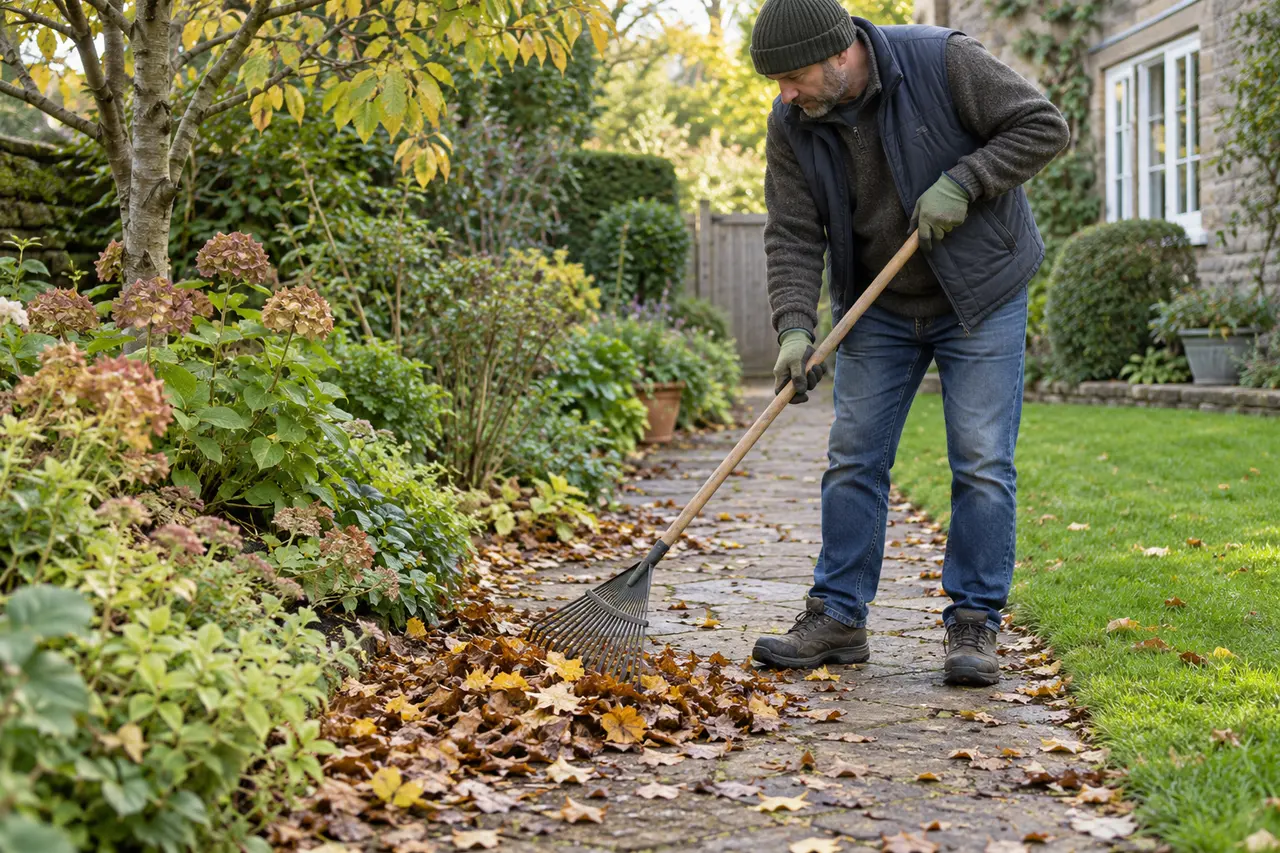
During seasonal border care, loose leaves are lifted from the immediate view needed to find the shoot’s base. The operation does not require removal of every useful surface covering. Notes of difficult entangled positions keep later attention connected to the actual remaining condition, so the next visit does not open an unrelated completed patch while the known inaccessible connection is overlooked.
New or moved planting stays separate during that work and its rootballs receive attention for hidden unwanted growth before entering prepared ground. This can keep fragments from travelling into a fresh position with a wanted perennial. The plant’s name identifies its intended growth, not everything contained in the surrounding soil, so our preparation follows the full received mass as well as the recognisable top.
Further services alongside targeted border recovery
Planting implementation with persistent weeds accounted for
Our new planting scheme can include the preparation required for a known persistent-weed problem before additional rootballs occupy the ground. We connect that sequence to the retained planting and proposed layout, keeping the practical establishment work visible beside the design. A drawing of a full bed does not itself carry out the soil preparation, and the new scheme is not presented as a permanent eradication guarantee.
Known bat-roost information retained in tree planning
Our tree work planning keeps a known bat roost explicit even where no bats are visible at a particular time. The relevant ecological or licensing advice belongs before any affected operation. An apparently empty cavity is not treated as an ordinary opening to block or damage, and a quick visual check on the work day does not replace attention to that known constraint.
Paving cleaned according to its remaining surface
Preparation for pressure cleaning distinguishes loose dirt from pieces separating off an already flaking paving face. Our method follows the condition of the remaining material; collecting those particles does not replace the worn surface or restore its original texture. The work therefore avoids repeatedly removing more fragile material merely to chase one uniform colour across an area whose surface has already changed.
Gutter deposits collected before they reach stored water
Where drainage feeds a water butt, our gutter cleaning arrangement accounts for the connection and the method keeping loosened deposits out of the store. Gathering the material at channel level has a different result from flushing it into retained rainwater and dealing with it later. Any appropriate diversion follows the actual system, leaving the butt distinct from the receiving container used for the clear-out load.
An arranged destination for the outgoing seasonal tree
Our Christmas tree collection arrangement follows an accepted position and route for the specified item. An old tree placed in woodland is not a managed recycling result merely because it looks natural; it may also carry decorations or other contaminants. The selected collection or accepted recycling arrangement provides the tree’s actual receiving position, with its material and any contaminants handled through the agreed route.
Connected-root attention within the gardening time
Close root work between retained plants differs from clearing an open patch. These general gardening rates guide the agreed time; a larger lifting or replanting operation has its own identified work.
| Gardening allowance | Guide rate |
|---|---|
| First hour | £83 |
| Each subsequent hour | £65 |
GBP guide rates. Confirm tasks, supplies, waste handling, VAT treatment and any applicable parking, access or congestion charges in the complete quotation.
Questions about our selective couch-grass work
How do you distinguish rhizomes from fine feeding roots?
Our tracing follows the underground stems capable of producing further shoots and roots. Those rhizomes have a different role from the fine feeding roots even where they lift together. Recognising the connection informs the hand operation, because a remaining living stem section can develop new growth after the visible tuft has been removed.
How is couch grass checked in a moved perennial?
We assess the lifted mass and associated soil for hidden rhizome fragments before it is replanted elsewhere. Removed weed stays separate from the wanted plant and its new position. A reliable flower name does not establish that the whole rootball contains only that perennial, so the receiving operation considers the material around its roots too.
Does your border task remove couch grass everywhere?
Our work follows the area in which it is identified as unwanted. A species-rich lawn or wildlife portion may have a different intention from a bed containing smaller plants. We keep those boundaries distinct, so targeted hand weeding does not become an unrequested removal instruction across parts of the garden that are being managed for another purpose.
What is useful about attending to early accessible growth?
We can follow an identified small tuft individually before a denser rhizome network develops among retained roots. That makes controlled access to the connected material more practical. Later selective attention can still be useful as further growth appears; the early operation improves the working opportunity without claiming that no new shoots will ever emerge.
Connected growth followed through a defined working patch
Our Chingford garden-care services can connect close border weeding with the appropriate lawn and hedge operations around it. The finish keeps lifted living fragments apart from the planting being saved, leaving a readable worked patch and a clear basis for attention to any later returning shoots.